If you have ever gone trekking in Nepal, or even spoken to someone who has been there, you have probably heard the phrase Dal Bhat Power 24 Hour. It is something that you hear a lot on mountain trails in teahouses and when backpackers talk to each other. It is like a joke that everyone understands. Guides say it with a smile trekkers say it after they have been hiking all day. Locals nod their heads when they hear it.
At first it sounds funny like something you would see in a fitness advertisement, there is more to it than that. Dal Bhat Power 24 Hour is about what it’s like to go trekking in Nepal. It is about being able to keep going about keeping things simple and about the power of traditional food.
Dal Bhat Power 24 Hour is not just something people say. It is about the routine of people who live in the Himalayas, where food is not just about taste but about having the energy to keep going on long and difficult journeys. For travelers it is something they experience every day and it is something they will always remember about Nepal.
What Does Dal Bhat Power 24 Hour Mean?
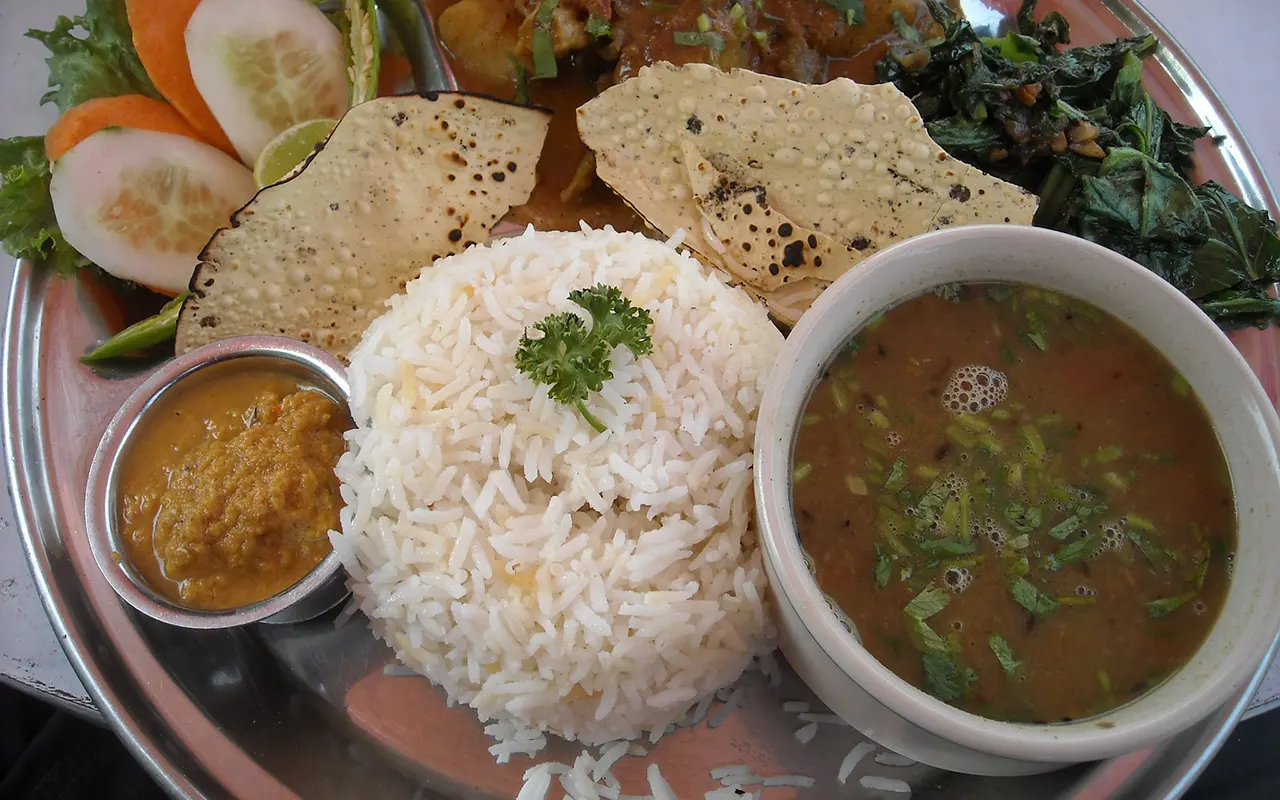
To understand what Dal Bhat Power 24 Hour means we need to look at what each word means. Dal is a type of lentil soup that’s full of protein and other important nutrients. Bhat means rice, which’s the main food in Nepal and gives people the energy they need. Together Dal and Bhat are the basis of one of the common meals in Nepal.
The Power 24 Hour part is where it gets interesting. It means that this meal gives you energy to last all day which is something that trekkers really appreciate after walking for hours in difficult terrain.
The phrase Dal Bhat Power 24 Hour probably started as something guides and porters said to each other because they have been eating this meal for a time. Over time it became popular with trekkers from countries and now it is like a motto for anyone who goes trekking in Nepal.
What is Dal Bhat? A Quick Overview
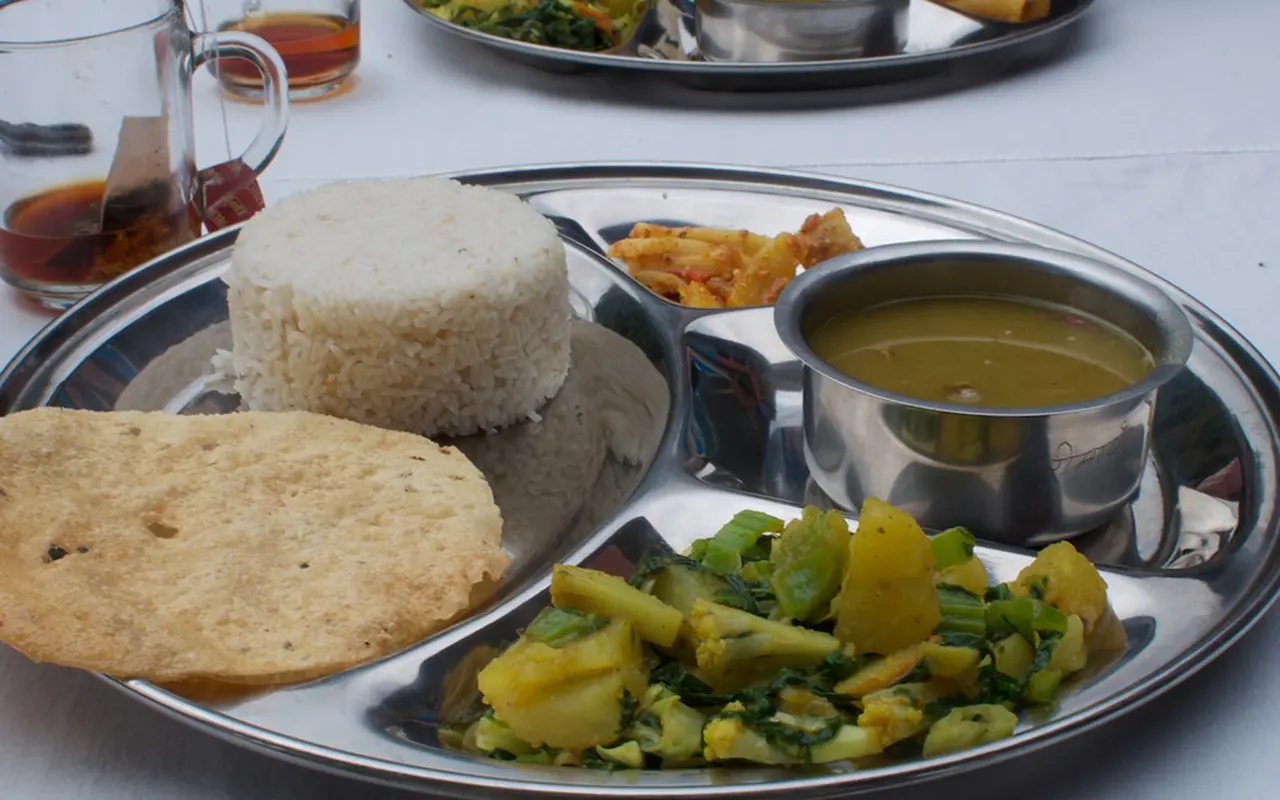
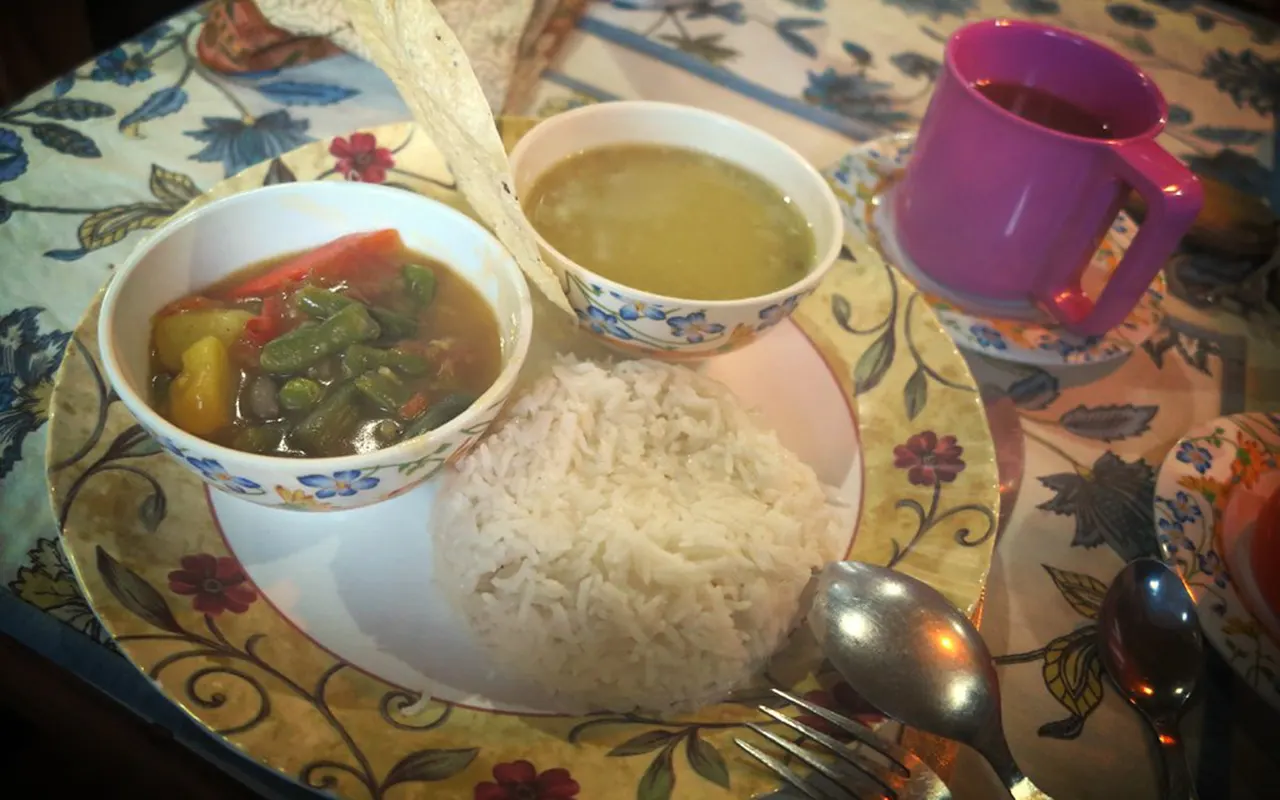
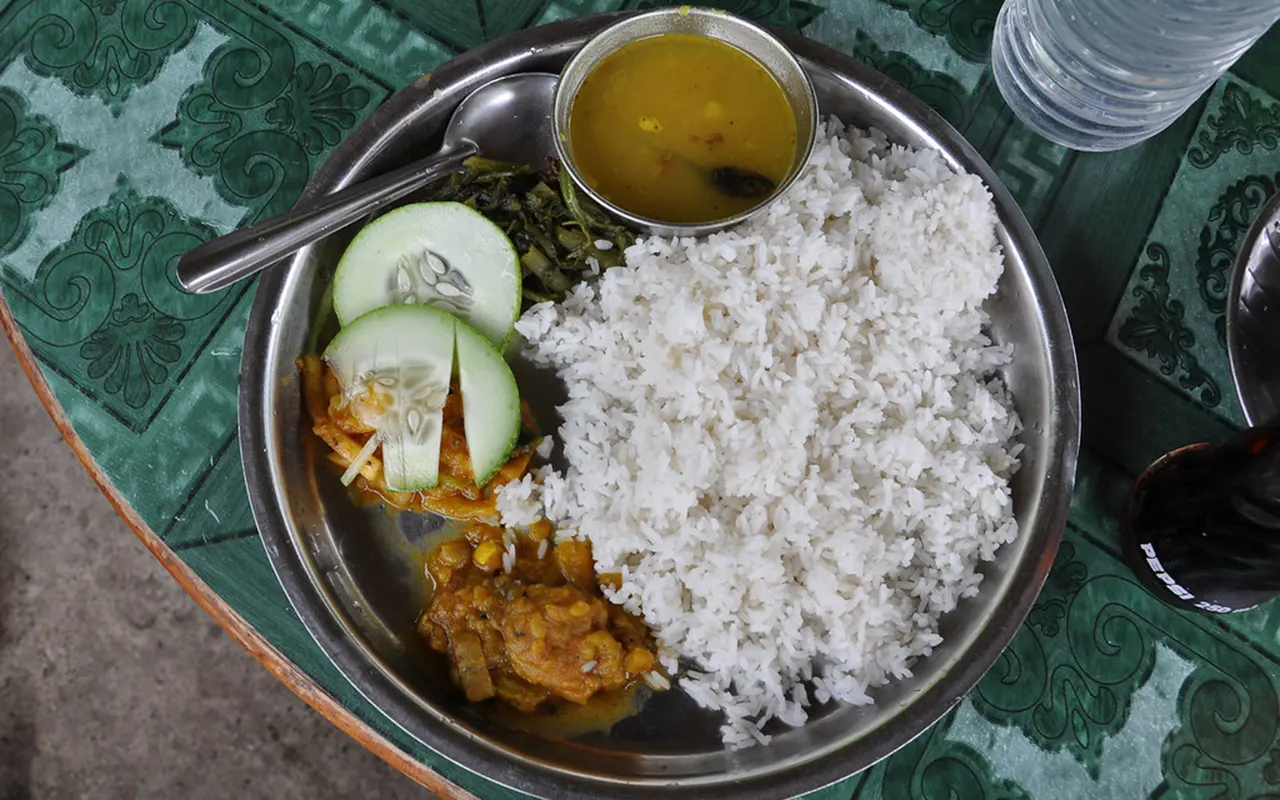
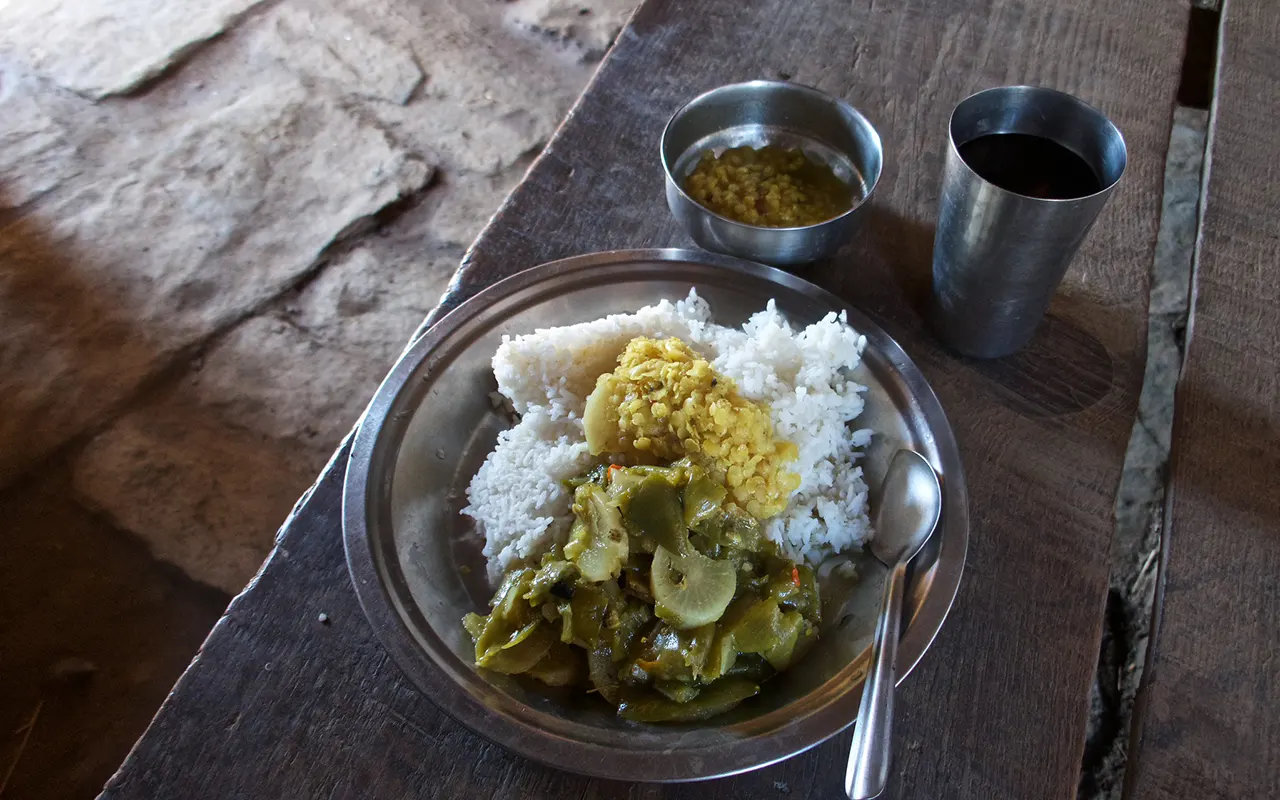
Dal Bhat is the traditional meal in Nepal and it is something that people eat all the time. It is not one dish but a lot of different things that are served together on a plate.
The main parts of Dal Bhat are rice and a bowl of lentil soup. You also get a lot of things like vegetable curry, leafy greens and pickles. Sometimes it comes with meat, yogurt or other things like fried potatoes.
The great thing about Dal Bhat is that it is balanced. It has carbohydrates, protein and fiber which makes it filling and nutritious. This is especially important in a country where people are physically active every day.
In parts of Nepal Dal Bhat is a little different. In cities like Kathmandu you might find complicated versions, with a lot of different dishes. In the mountains it is simpler but it is still the same basic idea.
The Origin of the Phrase
The phrase “Dal Bhat Power 24 Hour” is really connected to Nepal’s trekking culture. In places like Everest Base Camp and the Annapurna Circuit Dal Bhat is the common meal you can find.
Guides and porters who walk for hours on high-altitude trails have been eating this food for years. They joke that Dal Bhat gives them the strength to keep going no matter how tough the journey gets.
Over time this joke became a phrase that people repeated a lot and it became famous. Trekkers started using it sharing it in conversations, blogs and social media posts. What started as a joke turned into a symbol of trekking life in Nepal.
Why Dal Bhat is Famous Among Travelers
Energy Boost for Trekking
One reason Dal Bhat is so popular among travelers is that it gives you sustained energy. Trekking in Nepal means walking for hours a day sometimes at high altitude where you get tired quickly.
The mix of rice and lentils is a combination of carbohydrates and protein. This helps keep your energy levels up throughout the day making it perfect for hikes.
Trekkers often notice that after eating Dal Bhat they feel more energized than after eating meals. This practical benefit reinforces the idea behind “Power 24 Hour” and Dal Bhat.
Unlimited Refills Culture
Another unique thing about Dal Bhat is the tradition of refills in many teahouses. When you order a plate you can usually get rice, lentils and vegetables without extra cost.
This makes it not filling but also great value for money. For trekkers who burn a lot of calories during the day this is an advantage.
The refill culture also adds to the experience as it makes you eat slowly and enjoy the meal than rushing through it and forgetting about Dal Bhat.
Availability Everywhere
Dal Bhat is available almost everywhere in Nepal. Whether you are in a city or a remote mountain village you can count on finding Dal Bhat.
This consistency makes it a reliable choice for travelers. On trekking routes, where menu options may be limited Dal Bhat becomes a staple that you can trust for both quality and nutrition and that’s why Dal Bhat is so popular.
Nutritional Power of Dal Bhat
From a perspective Dal Bhat is surprisingly well-balanced. Rice gives you carbohydrates for energy while lentils offer protein and essential nutrients. Vegetables add vitamins and fiber completing the meal and making Dal Bhat a great choice.
This combination is particularly suitable for high-altitude trekking, where your body requires energy and nutrients to function effectively and Dal Bhat provides that.
Compared to Western meals, which may be heavier or less balanced Dal Bhat offers a simpler yet more efficient source of nourishment. It fuels your body without causing heaviness making it ideal for days and supporting the idea of “Dal Bhat Power 24 Hour”.
The Dal Bhat Experience
Eating Dal Bhat is not about the food, it’s about the experience of eating Dal Bhat. Traditionally the meal is eaten by mixing rice with lentil soup and side dishes creating a blend of flavors in each bite of Dal Bhat.
Many locals eat with their hands, which adds a connection to the meal of Dal Bhat. Travelers often start with utensils. May eventually try eating the local way as part of the cultural experience of Dal Bhat.
Meals are often shared in a setting especially in trekking lodges. This creates opportunities for conversation, storytelling and connection with travelers and locals, over Dal Bhat.
Dal Bhat on the Trekking Trail
When you are on a trekking route Dal Bhat is not something you eat. It is something you look forward to every day. After walking for a time sitting down to a warm plate of Dal Bhat feels really good.
You can find Dal Bhat at teahouses along the trail, they serve it all the time. A lot of trekkers eat it twice a day, after a while it becomes something that you can count on.
People often, share stories when they eat Dal Bhat together when take a break from walking. This makes the simple meal feel special.
Where to Try Authentic Dal Bhat
You can find Dal Bhat anywhere. Some places make it the way it is supposed to be and if you eat it at someone’s home it is usually the traditional. They cook it with care and serve it in a warm and welcoming place.
In cities like Pokhara there are restaurants that serve Nepali food. They have fancy versions of Dal Bhat.
For a lot of travelers the best way to eat Dal Bhat is on the trekking route. The simple setting makes the food feel more special.
Tips for First-Time Travelers
If you are trying Dal Bhat for the time it is best to eat it for lunch or dinner. The portions can be big so do not eat much at once. If they offer you more you can always have some later.
Eating Dal Bhat like a local can be fun. You mix everything together and use your hands but it is okay to use utensils if you want to.
The taste of Dal Bhat can be different depending on the spices and how it is made. It is usually mild and comforting, a lot of travelers like it more as they eat it.
Why “Dal Bhat Power 24 Hour” Became a Cultural Icon
The phrase “Dal Bhat Power 24 Hour” is funny but it also means something. It is about the connection between food being strong and traveling in Nepal.
For people it is a way of life. They value it and stay strong and for travelers it is something they share with each other.
Travelers often remember the phrase even after they leave Nepal. It reminds them of their trip. What they learned.
Final Thoughts
The phrase “Dal Bhat Power 24 Hour” is special. It is funny but useful and it has cultural meaning. People who have been to Nepal understand it well.
Dal Bhat is more than a meal. It gives you energy it is a tradition. It is something travelers share.
If you visit Nepal you definitely should try Dal Bhat. It is a part of the country’s identity. It helps you understand what makes Nepal special.
Sometimes simple things, like a plate of rice and lentils can make an impression.
Nepal has long been one of the world’s most iconic trekking destinations, known for its dramatic Himalayan landscapes, rich cultural heritage, and remote mountain trails. Nepal has many trekking destinations, but it has always been known as a place where adventure travel is limited to specific, controlled routes. These sensitive zones, usually found along international borders or in culturally sensitive areas, have traditionally required strict permits, licensed guides, and, most notably, a minimum group size.
However, in a significant policy change announcement in March 2026, Nepal adopted new regulations, which currently allow the restricted areas of Nepal to be accessibly visited by solo trekkers with conditions. This has created a lot of buzz among the international trekking fraternity.
This article will discuss the most recent changes in some detail, how they impact travelers, and provide full knowledge of the new rules, requirements, and consequences.
Understanding Restricted Area Trekking in Nepal
Restricted regions in Nepal are those geographically, politically, environmentally, or culturally sensitive areas that need special permits. These places are often found close to the borders with Tibet (China) or in the distant Himalayan territories, where there is a lack of infrastructure and preservation of traditional cultures.
The most popular restricted trekking destinations are Upper Mustang, Upper Dolpo, Manaslu (including Tsum Valley), Nar-Phu Valley, Humla, and Kanchenjunga. The areas are characterized by pristine landscapes, prehistoric monasteries, and the Tibetan-inspired cultures.
Restricted areas were always closely regulated, unlike popular trekking destinations like Everest Base Camp or Annapurna Base Camp, which have been open to solo trekking. The policies are to protect the locals, preserve sensitive ecosystems and to ensure the safety of trekkers in remote locations.
The Previous Rule: Why Solo Trekking Was Not Allowed
In restricted areas, a minimum of two trekkers were required during trekking. The solo travelers were not allowed to issue a Restricted Area Permit (RAP). They were required to either be matched up with a partner or to join a group that was arranged by a registered trekking agency.
Practical difficulty posed a challenge to many solo travelers to align travel dates or itineraries with those of other travelers. In some instances, it resulted in informal or workaround solutions, which were not necessarily optimal.
The limitation was initially put there to ensure safety and surveillance. The mountainous nature of Nepal can be unpredictable and the dangers involved may include altitude sickness, landslides, extreme weather and inadequate communication. Governments thought that group trekking facilitated easier control of emergencies and less risk.
What’s New: Solo Trekkers Now Allowed in Restricted Areas
This long-standing rule is altered in the major update that was introduced in March 2026. Nepal has given clearance through its Department of Immigration to permit solo trekkers to buy a permit to experience restricted area trekking in Nepal.
It implies that solo foreigners do not have to join two or more people to visit these areas. They can independently apply to get permits, and trekking through the restricted areas is now more accessible than before.
This change was made following constant criticisms by tourism stakeholders such as the Trekking Agencies Association of Nepal (TAAN), who said that those rule was reducing tourism growth and deterring independent tourists.
Important Condition: Solo Does Not Mean Without a Guide
Although the new rule has given solo trekkers an opportunity to obtain permits, it is worth noting that, still, no individual trekking without a guide is allowed in restricted places.
According to the new rules, individual trekkers need to register with an authorized trekking agency, a licensed trekking guide is required, and the agency will take care of logistics and emergency rescue.
It implies that solo trekking is no longer applicable when traveling without a group of people, but with the help of a professional.
Guide requirements are a method of assuring safety, correct route navigation and according to local requirements.
Ready to book your trip with us? Fill out the inquiry form below
Digital Permit System and Easier Application Process
The digitization of the permit system is another significant difference brought about by the change in policy.
The process of obtaining restricted area permits has become quicker and easier, as trekkers can now apply to the restricted area using an online platform.
One of the useful changes is that tourists can use their visa application number (submission ID) to apply even prior to reaching Nepal. It enables improved planning and minimizes delays.
The new system makes the process easier and more efficient for both trekkers and agencies. As in the past it would have taken more days to get permits, including physical paperwork.
Safety Measures and Regulations Still in Place
Although the regulations regarding solo trekkers are loosened, Nepal has ensured that the restricted area trekking is highly safe.
The guide-to-trekker ratio is one of the most important regulations, and there are up to seven trekkers per guide.
This, as far as solo trekkers are concerned, translates to a guide to one person or a small group. The guide is very important in the area of monitoring altitude-related hazards, navigating remote roads and trails, organizing rescue missions, where necessary, and ensuring adherence to local traditions and laws.
The trekking agency in charge of the trip is also tasked with emergency response and logistics, which adds to the safety measures.
Why This Change Matters for Tourism
It is believed that the move to permit solo trekkers to visit restricted areas will have a positive effect on the tourism sector in Nepal.
In the past, the two-person minimum policy deterred a large number of individual travelers, particularly those who enjoy the benefits of flexible and self-paced modes of travel. Nepal is opening its most remote and beautiful places by eliminating this barrier.
This new policy will also grow the number of international tourists, boost the number of domestic workers, such as guides and porters, rebuild rural economies in isolated areas, and enhance general trekking management.
Officials consider the modification to be a balance between availability and security.
Popular Restricted Trekking Routes in Nepal
Now, solo trekkers have access to some of the most attractive restricted trekking routes in Nepal with the new rules in place.
One of the most well-known restricted regions is the Upper Mustang, where the landscapes resemble deserts and the walled cities of ancient times, including the city of Lo Manthang. The area has an average elevation of nearly 3,800 meters (12,467 feet).
Another isolated and culturally diverse place of interest is the Upper Dolpo, which is characterized by steep topography and the existence of lakes of great height. Dolpo is considered to be one of the most challenging areas to trek, as there are many areas that are located over 4,000 meters (13,123 feet) above sea level.
Manaslu Circuit is a well-liked restricted trek that encircles Mount Manaslu (8,163 meters / 26,781 feet), and is associated with breathtaking mountain scenery and various cultural lessons. The highest elevation in this trek includes Larkya La Pass at 5,160 meters (16,929 feet).
The Nar-Phu Valley is an isolated area in the Annapurna region that is characterized by spectacular scenery and high altitudes which usually over 4000 meters (13,123 feet).
They provide a less compromising and more genuine trekking experience than mainstream trails.
Difference Between Open and Restricted Trekking Areas
The restricted and open trekking areas in Nepal are separated.
In most cases, independent trekking without a guide can be undertaken in open trekking areas like the Everest region, the Annapurna region (except Nar-Phu), and the Langtang Valley. Infrastructure in these regions is highly developed, with teahouses, alpine trails, and communication networks.
Conversely, special regions demand Special permits (Special Permit Restricted Area Permit), licensed guides, agency, and additional documentation.
The new regulation changes the group size requirement, but does not alter the entire regulatory framework.
Why Restricted Areas Still Require Strict Control
The new flexibility has some limits that are closely controlled because there are a number of reasons that are important.
These areas are usually close to sensitive international boundaries, especially with Tibet, and it is important to monitor them. They also harbor delicate ecosystems and exotic cultural practices that must be preserved.
There is also poor infrastructure in these regions. It has fewer teahouses, medical centers, and communication lines than the well-liked trekking paths. Professional guidance is essential in this regard.
The existence of guides also benefits the local communities by providing jobs and making the benefits of tourism more evenly spread.
What This Means for Solo Trekkers
This is a big step for solo travelers.
It is much more flexible and independent, and at the same time, safe and responsible tourism. Tourists no longer have to modify their itinerary to seek trekking partners, and can explore Nepal on their own terms.
It should be noted, though, that trekking in restricted zones is more costly than trekking in open zones. The most expensive costs are Restricted Area Permit fees, Guide fees, and Agency service charges.
Even with this expense, the experience is worthwhile as many trekkers find it exclusive and authentic to these regions.
Challenges and Considerations
The new rules are a positive change, but certain points should be mentioned.
This is due to the fact that fully independent trekking cannot be practiced in limited sections due to its obligatory guide requirement. There are those who may want to enjoy absolute freedom, and this can only be found in open trekking areas.
Restricted area permits may be costly, in places like Upper Mustang and Upper Dolpo. Power trekking to higher altitudes, usually over 4,000 m (13,123 feet) in altitude needs proper acclimatization and physical conditioning as well.
The distance and weather conditions may complicate these treks more than the usual routes.
The Future of Trekking in Nepal
The most recent update to the policy is indicative of the changing attitude towards tourism in Nepal. The government is attempting to strike a balance between three main priorities: accessibility, safety and sustainability.
By enabling solo trekkers in Nepal to visit restricted places in a controlled environment, the authorities are also ensuring the relevant safety measures.
This step also lead to more changes in the trekking industry, specifically regarding online services and traveller comfort.
Conclusion
Allowing individual trekkers to enter restricted areas is a major change in Nepal’s trekking policies. It eliminates an old-fashioned obstacle and maintains the necessary processes of security and control.
Those who are keen on restricted area trekking in Nepal, this is a thrilling opportunity to visit some of the most isolated and culturally varied parts of the country with more flexibility.
Nevertheless, the main essentials are the same: trekking should be guided, permits are necessary and responsible trekking is required.
Now, with planning and knowledge of the new regulations, solo trekkers will be able to explore the lesser-known secrets of the Himalayas as it has never been experienced before.
Climbing an 8000-meter mountain is a big dream for many people, but it often seems too expensive. The good news is that even the lowest cost of an 8000 m mountain can be achieved by those who are careful and spend reasonably. All the mountains are not equally expensive. Some have extremely high permit fees, expensive flights, and huge supporting staff, and others are cheaper and simpler to arrange. This implies that even budget mountaineers can pursue a high-altitude adventure without necessarily picking the most expensive one.
An expedition is very expensive and relies upon a great number of factors, such as permits, transportation, guides, equipment, meals, insurance, and emergency rescue. There are those climbers who spend huge amounts of money on luxury services, and those are those who reduce the costs by joining group departures, renting equipment, and selecting local operators. This makes a big difference.
To most individuals, the concept of the cheapest 8000m summit is more than just money saving. It is also the search for a mountain that is of good value, has reasonable logistics, and a realistic possibility of success. Having the correct information, great preparation, and a trusted company, reaching the summit in the Himalayas may be much easier, safer, and cheaper than most individuals initially might think.
Understanding the Costs of an 8000m Expedition
You should also know where the money goes before settling on the cheapest 8000m peak. An 8000m expedition has several significant expenses, and each of them can alter the final price in a significant manner.
Climbing permits, guide services, transport, accommodation, food, equipment, oxygen, insurance, and emergency support have been identified as the most common. The combination of these can make the final cost range between the relatively low-priced climb and the extremely high-priced one.
One of the fixed costs is permit fees. These are determined by the government of the country that the mountain belongs to. Next are the logistics, which can constitute the largest portion of the budget. This involves guides, Sherpas, base camp staff, transport to the mountain, and the price of establishing camps. Another high cost is equipment. Purchasing all the necessary equipment to go high can run in the thousands of dollars, and this is the reason why many low-end mountaineers opt to rent some equipment.
Transport and lodging are also important. Before and after the climb, international flights, hotel accommodations, and food are all counted. Insurance is also necessary since the rescue at high altitude can be extremely costly. The knowledge of these costs makes the climbers compare and decide on the cheapest 8000m peak in a smart, realistic manner.
Permits and Government Fees
Every high-altitude climb incurs some unavoidable permits and charges by the government. Even if you desire to at least be able to reach the cheapest 8000m peak, you just have to spend money on official fees to start with.
These fees are imposed by the government and can be extremely varied based on the nation, the season, and the mountain itself. The permit is one of the most expensive in certain locations. In others, it is far more affordable and contributes to the generality of the expedition being inexpensive.
Nepal has numerous of the 8000-meter mountains, and its permit system is expensive, particularly throughout spring. Everest is by far the costliest, with other Nepali mountains like Manaslu, Lhotse, Makalu, and Dhaulagiri costing significantly less.
Permit fees are lower during the autumn in Nepal, and you can do the expedition in autumn to cut down on the overall budget. Besides the basic climbing permission, there can be park entry fees, owing to local charges, garbage deposits, and liaison officer expenses.
In most cases, Pakistan is cheaper to permit. Mountains like Gasherbrum II, Gasherbrum I, Broad Peak, and Nanga Parbat tend to be cheaper than in Nepal. This is one of the reasons why the 8000m peaks in Pakistan are cheaper. Lower permit fees make climbing more affordable for budget mountaineers. Because the permit cost is lower, it becomes easier to plan a cheaper expedition overall.
Logistics: Guides, Transport, and Accommodation on a Budget
Logistics can take the biggest expense in the 8000m expedition budget. Once you decide on the cheapest 8000m peak, the expenses can escalate within a short period unless transport, support crew and accommodation are put into consideration.
That is why smart logistics are so significant to climbers who do not want to spend much money and still do not want to be deprived of safety. A good operator will assist in striking the right combination of comfort, support, and price in a viable manner.
Support staff and guides cost a lot. Expeditions organized by international operators tend to be significantly costlier compared to the locally arranged ones. The experienced Sherpa guides, porters, and base camp staff are usually provided at a significantly lower cost by local companies in Nepal and Pakistan. This is among the most effective cost control methods for many budget mountaineers. Being a member of a group trip is also beneficial as a lot of the costs are distributed, such as base camp gear, cook staff and set ropes.
Another important area is transport. There are also those mountains that can be accessed via road, and hence reduce costs since they do not have to fly at high costs or use helicopters. There are treks in Nepal where a jeep ride is taken, after which the trek starts. In Pakistan, most climbs involve extensive overland journeys and walks to base camp, which is less expensive than air travel.
Budget-friendly accommodation is most of the time easy and sensible. Logistics will allow one to make the 8000m peak that may otherwise seem unrealistic and unfeasible when planned wisely.
Gear: Rent vs. Buy and Other Equipment Tips
One of the largest aspects of personal expenses during an expedition is high-altitude climbing equipment. Gear choices can be of great importance to people looking to achieve the cheapest 8000m peak.
When you have to purchase down clothes, high-altitude boots, crampons, harnesses, sleeping bags, etc., all the technical equipment is very expensive. This is why a combination of renting, borrowing, and purchasing only the most significant idea is used by numerous climbers to save money.
Gear renting is quite a feasible solution, particularly in such destinations as Kathmandu, where numerous stores provide expedition gear at a cheaper cost than the cost of purchasing new equipment. This is convenient to the budget mountaineers who might only get to use the equipment once or twice. Down suits or high-altitude boots can be rented and save money.
Second-hand equipment is also a good purchase, provided that the gears are in good condition and will not fail during extreme weather.
Simultaneously, certain equipment must be selected with a lot of care. Personal clothing layers, such as boots, personal clothing, socks, and any other item that directly influences the comfort and safety, must fit and work well. Major costs are also added by the use of oxygen systems.
The right choice of gear can assist climbers to be ready for the lowest cost of reaching the 8000m peak and, at the same time, remain safe, comfortable, and equipped to face tough conditions in the mountains.
Best Climbing Seasons and Weather Considerations
Choosing the right season is just as important as choosing the right mountain. It is essential to choose the right season as well as the right mountain. The cost and success of climbing the 8000m peak are influenced by the season for climbers seeking the lowest cost.
Everything is different in the high mountain weather. An improved season will enhance the chances of success on a summit, decrease delays and increase the efficiency of the entire expedition. Meanwhile, certain seasons have increased permit fees or busier routes and time is an issue both in safety and budget.
The peak climbing season in Nepal is spring. The climate is typically on the more predictable side, and various teams prefer trekking in this season on big mountains such as Everest, Lhotse, and Makalu. The spring season can be expensive for permits, though.
Another good alternative in Nepal is autumn. Generally, it has lower permit charges, less congestion, and clear weather, which is appealing to budget mountaineers, particularly at summits such as Manaslu.
The Karakoram mountains have summer as the primary climbing season in Pakistan. This is the period when most of the climbing is done to peaks such as Gasherbrum II, Broad Peak, and K2 since the season is more conducive to climbing.
Winter is not a feasible low-cost alternative in most cases, since it is colder, more hazardous, and may require additional support and equipment.
The selection of the appropriate season assists climbers in being more planned, more favorable, and more balanced in the budget in reaching the cheapest 8000m peak.
Ready to book your trip with us? Fill out the inquiry form below
Safety and Rescue Logistics
Safety must always come before savings. Climbers must never compromise on the necessary safety precautions in order to cut the price, even in the event that they are seeking the lowest possible price in reaching the 8000m peak.
It is risky to have to climb over 8000 meters, and carrying out a rescue in remote mountainous regions may be complex, time-consuming and costly. Good planning includes knowing the rescue system, having the right insurance and having an operator whose emergency plans are well defined.
Helicopter rescue services are more available in Nepal, especially in popular climbing areas. This makes emergency evacuation easier in many mountain regions. Injured or sick climbers can most of the time be evacuated to lower camps or base camp by helicopters, which may be quite costly. That is the reason why high-altitude rescue insurance is required.
You also need trained guides, medical provisions, and additional oxygen to be used in case of an emergency. The operator should clearly explain what steps will be taken if a climber becomes sick or gets injured during the climb. This helps climbers understand the emergency plan before the expedition starts.
Rescuing is not impossible in Pakistan, but it can frequently be more difficult as the mountains are far. The functioning of helicopters is based on weather, military coordination and distance. This enhances the importance of self-rescue and high team support.
Safety needs to be considered as a fundamental factor, and not an additional service to budget-minded mountaineers. It is only logical that the peak of 8000m would be the most affordable, but it should be accompanied by sound rescue planning, appropriate training, and a solid team that would approach the emergency seriously.
Budgeting Tips for International Travelers
International climbers need to think beyond the mountain itself. Travel costs to and out of the expedition can be high, even if you opt for the cheapest 8000m peak, unless you manage them. The final budget is influenced by flights, hotels, meals, baggage charges, local transport, and so on. These additional expenses can be minimized through proper budgeting to render the entire expedition cheaper for budget mountaineers.
One of the simplest methods of saving money is to book international flights in advance. Flexible travel times usually come in handy. Packing should also be done well, as the additional baggage fees may turn out to be costly when packing mountaineering equipment. Budget hotels and guesthouses are common in cities such as Kathmandu or Islamabad, hence there is no necessity to stay in costly areas. Dining in local restaurants and purchasing stuff in local stores can also lower the expenses per day.
Exchanging money should be smart, and some local currency should be retained to spend on smaller expenditures.
Another significant component of budgeting is insurance. It might look like an additional expense, but it can save you a lot of money in case of mishaps. Tips, delay, and personal expenditure are also prudent to plan.
A realistic budget also enables climbers to be prepared throughout the expedition. This renders the trip to the cheapest 8000m summit more organized, less stressful, and manageable.
Comparison of All 8000m Peaks Cost: Which is the cheapest?
Knowledge of the difference in costs of climbing the 148000-meter peaks of the world assists mountain climbers in planning their adventure in a wise manner.
The following table is a comparison of the permit fees and estimated cost of the expedition to assist those who have limited funds and thus want to know the cheapest 8000m peak.
Based on this comparison, Gasherbrum II is the most affordable 8000m peak, mainly due to, again, lower permit fees and relatively cheap logistics in Pakistan.
Nevertheless, the issue of accessibility, safety assistance, and level of experience is to be considered by climbers who want to select the appropriate mountain to engage in the journey during their 8000m experience.
Choosing a Reputable but Affordable Operator
One of the most significant aspects of the expedition planning is to find the right operator. Remember that a low price is not always the best, and the cheapest company is not always the one that may be chosen.
In case you want to climb the cheapest 8000m peak, then you ought to seek an operator who offers reasonable prices, transparent services, and a safety record. Good value entails a trade-off between price and trust, experience, and quality support on the mountain.
A reputable operator must offer a complete cost breakdown. This must indicate clearly what is provided, and these may include permits, transport, guides, base camp services, oxygen, accommodation, and food. Making information clear will assist climbers in making comparisons of offers in the right way. It also avoids hidden charges. In the case of budget mountaineers, transparency is just as important as price.
Reviewing the safety systems of the operator and their climbing history is prudent. A local firm can be far cheaper than a big foreign name with efficient logistics and qualified Sherpa guides. Enquire concerning rescue strategy, acclimatization timetables, guide to client ratio, and summit assistance.
All permits should also be taken care of by the company legally and professionally. The idea when selecting support of the cheapest 8000m peak is not necessarily to spend less. It is to spend well with a team that provides certainty, security, and an increased likelihood of making it to the top successfully.
Why Choose Nature Explore Treks for Your 8000m Adventure
Nature Explore Treks is recommended to those who seek to have a mountain experience at a fair price. Any person intending to achieve the cheapest 8000m peak can consider having a local firm to facilitate the expedition and make it cheaper and more viable.
Nature Explore Treks aims to provide the climbers with the support that they really require, and not add any unnecessary luxury expenses that make the final price high.
Clear-cut pricing is one of the largest strengths of Nature Explore Treks. The company focuses on explaining costs in a very straightforward manner so that the climbers know what is included from the beginning. This will prevent confusion and simplify budgeting.
The company also collaborates with the local guides and Sherpas who have years of experience in the mountain range, weather conditions, routes, and any challenges that might arise at high altitudes.
Another reason why Nature Explore Treks should be chosen is the safety. There should be a price-saving service, but not at the compromise of the quality, and the company poses as attentive to thorough planning, appropriate equipment, acclimatization, and rescue support.
It also provides practical assistance prior to the expedition and during the expedition, such as logistics, local advice, and flexible arrangements according to the needs of each climber.
To the people who dream of the 8000m peak at the minimum possible price, Nature Explore Treks provides an ideal combination of price, familiarity with the local people, security, and quality service.
Achieve Your 8000m Dream – Without Breaking the Bank
It might appear out of reach to summit an 8000-meter mountain, but with proper planning, that will be achievable. The fact that the cheapest 8000m peak does not imply that you reduce your ambition. It involves making wise choices on where to go, when to travel, how much to spend, and who to believe. High-altitude mountaineering is not as expensive as many people would have thought with the proper approach.
Good information is the most likely to guide one in the best direction. Peak comparisons, knowledge of permits, gear cost estimation, and selecting an operator that offers value and safety should be in the plan of climbers.
Climbs like Gasherbrum II and Manaslu show that reaching above 8000 meters does not always require extremely high costs. With careful planning, climbers can achieve these big mountains without spending a huge amount of money. To the budget mountaineers, there are actual opportunities of reaching high without spending money on useless extravagances.
Nature Explore Treks could assist in making this plan into action. After comparing mountains or deciding which ones to climb, the next thing is to receive clear advice and a realistic budget. Request a more detailed quote, get to know what is included and develop a plan that fits your experience and financial constraints.
It all starts with a single choice, by deciding to take a step toward the cheapest 8000m mountain peak. The right support can make your 8000m dream challenging, safe and attainable without having to break the bank.
Bumthang Valley is located in the diverse mountainous zone of Bhutan. The majestic beauty is also rich in nature, and its beauty, it also offers the spiritual aspect, for which Bhutan is best known.
With centuries old monasteries and belief of different mythologies, Bumthang valley is considered the spiritual heartland of Bhutan. The significant places, such as Jakar Dzong, also known as the castle of White Birds, and Jambay Lhakhang, which is one of the oldest temples in Bhutan, with other such sites makes it the spiritual heart of Bhutan.
Bumthang valley is located at the centre of Bhutan at the Bumthang District, which is rich in it’s Serena beauty too. It is surrounded by high mountain peaks and alpine hills, making it a scenic destination for travel enthusiasts and visitors.
Among several iconic places to travel and explore in Bhutan, Bumthang Valley always stands as one of the most admired and chosen places by travel enthusiasts due to its Spiritual harmony, natural beauty and traditional living style of the Bhutanese people.
Due to its spiritual significance and its natural beauty, it offers both a pilgrimage experience and a travelling taste. It makes it one of the most admired and chosen places inside Bhutan to Travel.
Here, we are about to talk about the features and aspects of the Bumthang valley to ensure insights for you to make your plan for your next bucket list properly. Stick up to end to get properly into the land of Bumthang Valley of Bhutan.
Understanding Bumthang Valley
The name Bumthang derives from the words “Bum” meaning “vase” or “sacred vessel” and “Thang” meaning “plain” or “flat land/valley”, making it Bumthang, a flat land.
In spiritual significance, local believes the name is connected to a holy treasure, along with sacred relics, which are hidden in the valley. It is believed to be especially connected with Guru Rinpoche and Terton Pema Lingpa. The sacred vase symbolises spiritual abundance, blessings, and hidden teachings, which fits well with its reputation as the spiritual heartland of Bhutan, keeping some of the oldest monasteries and temples of the country.
There are mainly four valleys inside the Bumthang, which make it a big valley overall. They are Chokhor, Tang, Ura and Chhume.
The altitude of this valley lies between the elevations of 2600m and 3000m above sea level. The temperature is ideal as it remains mild throughout the year. The landscape offers a great view of layered hills and snow-capped mountains.
Birthplace of Bhutanese Buddhism
Bumthang is very significant for the birth of Buddhism in Bhutan. Guru Rinpoche, also known as Padmasambhava, is credited with bringing Vajrayana Buddhism to Bhutan in the period of 8th century . He is also revered as the “second Buddha” and is believed that he have mediated in several sites across Bumthang, leaving behind the spiritual imprints as well as blessings that continue to sanctify the valley. Rinpoche’s teaching laid the foundation for Bhutanese Buddhist practices, rituals and monastic practices in Bhutan, founding Buddhism.
Later Bumthang people played an important role in the early propagation of Buddhism along with the local rulers and monks. It helped them to establish monasteries and temples, which later became the centres of a religious learning hub with numerous Buddhist schools and monasteries all across the valley. It made Bumthang Valley the centre of speritual hub.
Sacred Monasteries and Temples of Bumthang Valley
Jakar Dzong(castle of the White Bird)
JakarDzong, which was built in the 17th century, dominated the Bumthang landscapes with its spirituality. It is believed that a white bird indicated the location for the fortress. And beyond its administrative role, it serves as a spiritual hub, housing monks and hosting the religious ceremonies all around the year round.
Kurjey Lhakhang
It is one of the most sacred temples in Bhutan. Kurjey Lhakhang is built on the mediation site of Guru Rinpoche. It houses the imprint of Rinpoche, believing a relic radiates the blessings. Pilgrims visit to obtain and seek spiritual guidance there.
Jambay Lhakhang
Jambay Lhakhang is one of the oldest temples in Bhutan. It was built in the 7th century by the Tibetan King Songtsen Gampo. The temple remains a centre for rituals, prayers and the ceremony site for the annual Jambay Lhakhang Drip festival. It is celebrated with the Spiritual legends speaking about the miraculous events during its construction and ongoing blessings for its devotees.
Tamshing Lhakhang
Founded in 1501 by the saint Pema Lingpa, the Tamshing Lhakhang is a pivotal Nyingma monastery. Its walls are adorned with ancient murals which stays depicting Buddhist teachings. Pilgrims often visit to receive blessings and participate in meditation, honouring the spiritual lineage of Pema Lingpa.
Festivals and Living Spiritual Traditions
Jambay Lhakhang Drul
It is celebrated annually. The festival of Jambay showcases sacred mask dances and rituals. It commemorates the temple’s foundation as well as embodies the centuries-old traditions. Locals and pilgrims gather to receive blessings and participate in communal celebrations.
Tamshing Phala Choepa
This festival honours Pema Lingpa’s legacy in the spiritual world of Buddhism. Monks perform elaborate rituals and devotees from different regions. Engage in prayers, fostering the sense of community and spiritual continuity further.
Mask Dances, Rituals and Blessings
Mask dances are usually performed to expel negative energies and to invoke divine protection from them. Rituals also include offering prayers, lighting lamps, and receiving blessings from monks. These traditions and culture of Bhutan keep the valley spiritually vibrant.
Role of Festivals in Local Spiritual Life
Festivals are not only the merely cultural events but are integral to Bumthang’s identity. It reinforced community bonds as well provide opportunities for mediation, reflection and merit-making to people.
Daily Life in Bhutan’s Spiritual Heartland
The daily life of people of Bumthang is deeply connected with their culture and traditional practices.
Monks in Bumthang receive rigorous education in Buddhist philosophy, their rituals, and meditation. More often, local youths join monasteries for spiritual training, preserving religious knowledge and practices.
Prayer flags are scattered across the valleys, spreading blessings, fluttering in the wind. Mani walls inscribed with mantras line paths, and chores make the sacred sites.
As well, people of Bumthang engage in daily prayers, meditation, and offerings. From sunrise to sunset, spiritual awareness guides their routine, whether in farming, crafts, or household chores, creating a very harmonious balance. In their daily life.
Natural Beauty with Spiritual Meaning
Bumthang’s landscape features sacred mountains, crystal clear rivers, and pristine forests. Many natural sites in the valley are considered abodes of deities or their mediation spots, enhancing the valley’s spiritual aura.
The Bhutanese people see nature as a living embodiment of spiritual energy. Pilgrims and travelers gets and opportunity to experience a sense of peace and reverence as walking through the valley, along with rivers, becoming a meditative practice.
Bumthang’s limited development preserved forests, and sacred landmarks offer a serene environment. The intertwine sperituality and beauty of nature make the valley feel timeless and deeply contemplative.
Best Time to Visit Bumthang Valley
Spring and Autumn
The time during spring and Autumn is considered ideal for visiting Bumthang Valley. During these times, both seasons offer moderate temperatures, stable weather, better visibility, clear skies, as well festivals season. So during these two seasons of Spring and Autumn, Bumthang valley is considered to be the best time to get there, which not only offers peak nature of Bhutan but also the deep cultural immersion and traditional festivals in practice.
Also, these two season offers the best features, which you can have better in comparison to other seasons of the year.
Winter
Winters also offer quite solitude and crisp air. It brings a contemplative environment very ideal for meditation and reflective travel. Snow-capped peaks enhance the Valley’s serene beauty. You may also find most of the peaks covered with snow, adding more beauty to the landscapes. It adds more flavour to the scenic enthusiast who loves to enjoy the serenity of nature.
Here are some brief features you will get during different seasons in Bumthang Valley,
Spring: pleasant and colorful blossoms
Autumn: clear skies and mild temperatures
Winter: cold but tranquil
Summer: Occasional rains but lush landscapes
Ready to book your trip with us? Fill out the inquiry form below
How to Reach Bumthang Valley
Flights to Bumthang Airport
Regular flights operate from Paro to Bumthang and other regional airports. Domestic flights are popular and convenient for travellers with limited time and who are in short vacation. It also offers you a great aerial view of traditional Bhutan and its serene mountainous beauty.
Road Journey from Thimpu or Punakha
A road trip offers the scenic drive from Thimphu, which takes 9 to 10 hours, or from Punakha, which takes about 5 to 6 hours. It provides an opportunity to experience Bhutan’s landscapes and interact with local communities. A road trip is always considered the best during travel, as you get more time and opportunity to interact with the scenery and local lifestyle in different places.
Travel permits
Travellers or visitors require Bhutanese visas and travel permits. Different museums and programs may cost entrance fee. Hiring licensed tour operators offers and ensures smooth access to valleys, monasteries, and cultural sites.
Where to stay in Bumthang Valley
Hotels and Guesthouse
Bumthang valley offers and has comfortable hotels and guesthouses catering to different budgets. It consists of local cuisines and cultural experiences. Most of these local guesthouses and hotels are also affordable, with good services and great hospitality.
Farm Stays and Local Homestay
Another great option to enhance your stay further is to stay with local families, which provides insight into daily life, spiritual routines, and traditional farming practices, enriching the travel experience. This can be picked as the best way to enhance your travel experience during the Bumthang Valley to include an authentic taste of Bhutan.
Spiritual Retreats and Monastery stays
The Bumthang valley offers retreat programs for meditation and spiritual learning, which allow visitors to engage directly with monastic life. You can also participate in those chanting and mediation which are often conducted daily by the Monasteries.
Responsible Travel in Bumthang Valley
Respecting Monasteries and Local Customs
Travellers and visitors are recommended to dress modestly. Remove shoes when entering sacred spaces, following the monastery’s regulations. Respect local customs and always be respectful towards the spiritual sites. They are not only significant for religious people, but also their beliefs.
Photography Etiquette
Before taking photographs of monks, rituals, or any sacred objects, always seek permission. And recommended to avoid flash photography in temples as well as respect their privacy. So, always be responsible while taking photographs of any specific subjects.
Supporting Local Communities
Purchasing local crafts, hiring local guides, and participating in community-led initiatives help to contribute positively to Bumthang’s economy. It also helps with cultural preservation. Also, the locally crafted and made products are always a good thing to take with you as a token.
Why Bumthang Valley is the Spiritual Heartland of the Himalayas?
Bumthang’s unique combination of sacred Monasteries, living spiritual traditions, vibrant festivals, and pristine natural landscapes makes it a very spiritual place to be in. It makes it the heart of spiritual heart of Bhutan.
Travelers always leave with a profound sense of peace, cultural understanding, and spiritual enrichment, carrying home memories. The valley always offers faith, nature, and daily life that coexist harmoniously.
Conclusion
Up to here, we provide you with the insight about the Bumthang valley, and its natural features as well as cultural immersion, which makes it the heart of spiritual harmony and a beauty icon of Bhutan. All these features are the experiences that travellers and visitors get an opportunity to explore and to experience.
Bhutan is always known for its religious harmony and the great hospitality of its people. As well as unspoiled nature and historic sites too stands as the ultimate feature to explore. The mountains in Bhutan hold such enormous beauty and a very vibrant experience to have.
So, Bhutan is always open for visitors and travellers, all around the year round. You just need to pack yourself. Get yourself out and experience the mountainous gem of Bhutan.
The Manaslu Circuit Trek is famous for its awesome sceneries, highly varied and rich culture, and experiences which are found only on this trek. For such a trek, one should be prepared about all the aspects of the trek-very important of which are the permits and regulations involved in this journey.
Here in, we are going to discuss all the grouping and combinations necessary as far as permits, regulations, and best practices are concerned with trekking in the Manaslu Circuit.
Overview of Manaslu Circuit Trek
What to Expect
The Manaslu Circuit Trek lies in the Manaslu Conservation Area, circumventing mighty Manaslu Mountain, which rises to 8,163 meters (26,781 feet). Normally, this length of the trek covers 14 to 18 days and contains complete diversities from subtropical forests of low elevation to high-altitude deserts.
stunning Mt. Manasalu standing front of Budhi gandaki river
On their journey, trekkers also get to go through various cultural inherencies, exploring the traditional villages of Gurungs and Tibetans.
Permission Requirements
This area falls into a conserved area, and for conservation and regulation, it requires permits. The purchase of necessary permits ensures locals’ ecosystem remains intact and that trekkers are contributing to the local economy one way or another.
This also helps the government manage the number of visitors in sensitive areas to maintain the natural and cultural integrity of the region.
Manaslu Circuit Trek Permits Requirements
Manaslu Conservation Area Permit
Manaslu Conservation Area Permit ( MCAP ) is compulsory for all of the trekkers in the Manaslu region. Besides, MCAP provides an entry to the conservation area to finance the conservation to conserve the local wildlife as well as habitats.
Manaslu Conservation Area project fees
Foreigners: About NPR 3,000. ($ 25), 10 days, plus NPR 500 ($ 4) per day for extended days. Citizens from the SAARC member nations: around 1,500 NPR or around $12.50 for 10 days, and then approximately NPR 300 (USD 2.5) per day beyond that.
How to get
MCAP is issued from the offices of the Nepal Tourism Board in Kathmandu or Pokhara. Ensure this permit is procured before you begin your trek for smoothness in all the proceedings.
Annapurna Conservation Area Permit-ACAP
Even though the Manaslu Circuit itself doesn’t fall under the Annapurna Conservation Area, trekkers often pass through parts of this area to get into the Manassu area. Thus, if your trek includes parts of the Annapurna Circuit, you’ll need an ACAP too.
Price
Foreigners: About NPR 3,000 (about 25 dollars). SAARC Nationals: About NPR 1,000 (about 8.50 dollars).
How to Obtain
Like MCAP, ACAP can also be obtained from the Nepal Tourism Board or at the checkpoints along the Annapurna region. This permit shall be with you when crossing into the Annapurna territory.
Special Trekking Permit
The special trekking permit is basically for the Manaslu Circuit and is very important in the protection of this route, accounting quite well for the trekkers around this relatively remote area.
Cost
Normally the special trekking permit costs around NPR 2,000.00 (17.00 $) per head for the first seven days and NPR 500.00 (about 4.00 $) for each extra day.
How to Obtain
This permit is available only through a registered trekking agency in Nepal. The Manaslu is a controlled trekking area solitary trekkers are not allowed to trek in the Manaslu region without a licensed guide or agency.
Registration with a Trekking Agency
As licenses cannot be taken by individual trekkers sans agency, the choice of the trekking agency will be very crucial. First, one can check with the Nepal Tourism Board if the agency is listed. Second, one would get to know about leading programs in the Manaslu region.
mount manaslu view from lho gaun.
Manaslu Circuit Trekking Regulations
Trekking with a Guide
As mentioned, compulsory requirements for trekking Manaslu compulsorily requires going with a registered guide. These have contributed to better safety and responsible trekking in the local environment, leading to its conservation. A guide will be handy in controlling the trail, understanding the culture, and dealing with any emergencies that come up.
Restrictions in Group Size
A trekker is supposed to do the Manaslu Circuit in teams of two or more. That means solitary trekking is not allowed in this sector due to various reasons, mainly safety reasons and conservation of the environment. There would be less damage to the environment when there are more trekkers and thus it develops a feeling of companionship while hiking.
Respect for Customs
Village Trekking: Village trekkings have a lot of things to observe in them. Most importantly, one must salute the culture and traditions of the locals. Mainly, Gurungs and Tibetians are enshrining the Manaslu region and thus respect the culture-dressing modestly, asking permission before clicking pictures of people or their properties.
Environmental Responsibility
It is recommended that one should inflict as little impact on the environment as possible. This includes:
Disposal of Litter: Non-degradable litter shall be packed out and disposed of through environmentally responsive disposal. If possible, and when available, all waste shall be disposed of through indicated areas.
Principles of Leave No Trace: The guide shall ensure they adhere to the ‘leave no trace’ principles to ensure trails remain free and clean and the environment taken care of.
Protection of Wildlife: No form of wildlife must be disturbed as such picking of any form of plant or flowers is requested to avoid on the path.
Accommodation Guidelines
While there are a good number of teahouses and lodges available on the Manaslu Circuit, giving back to the locals is still important. Make use of the locally-owned accommodations as it goes a long way in developing the local economy and gives an added taste of authenticity.
How to Prepare for the Permits and Regulations?
Plan Ahead
Plan for the easy trek. Research what permits are needed, and regulations set, and consider the best season to go on the Manaslu Circuit. Spring is considered the ideal season for trekking in the Manaslu area because usually the weather remains stable and trails are cleared from snow.
Engage a Reputed Trekking Agency
A good trekking agency will ensure that the availability of permits is to the book, following all regulations. A good agency will also take you through the application process for a permit, adhere to all the local regulations, and deliver guides with experience in the region.
Prepare Documents Needed
In preparation for your application for a permit, make sure you are with the required documents, which are: Passport: It must be valid for at least six months’ validity from the date of your arrival in Nepal. Passport-Sized Photos: A couple of recent passport-sized photos for the permits. Travel Insurance: Comprehensive travel insurance covering high-altitude trekking and emergency evacuation.
Permit Budget
While it is decidedly possible to go trekking in Nepal inexpensively, the same cannot be said of the permits. Just be sure that you make this cost part of budgeting, as it is just one of those things you will just have to do.
Manaslu trekking
The actual cost of the permits depends upon how long a trek you are going on and if you plan on crossing over into the Annapurna region.
Be Informed
Before going on trekking, it’s good to get recent information about changes in regulations and/or permitting requirements. At times, changes to the regulations are necessary because of the need for conservation, policy at the local level, or environment.
Being informed will go a long way in ensuring that you comply with, and have fewer hindrances while trekking.
More Things to be Aware of During Your Hike
Climate and Environment
Manaslu can be very unpredictable and at any time of the moment, the weather can turn. Although it can get very warm during the day, the night temperature becomes really cold even in the trekking season. Prepare for possible rain or snow during spring and autumn.
Acclimatization
Proper acclimatization is the key to high-altitude trekking. Manaslu Circuit offers good opportunities for graded ascent whereby one gets enough time and scope to get acclimatized with the gain in altitude. It is always better to incorporate rest days in your itinerary to get better acclimatized.
Fitness Preparation
This would include training in various Manaslu Circuit challenges such as steep ascents, and rugged terrain among others. The frequency of cardiovascular exercises, strength training, and practice in hiking contribute to developing endurance and strength that will be needed on the trek.
Cultural Sensitivity
Harmony with the culture of locals will make your trekking experience far more enriching. Learn about Gurung and Tibetan cultures, their tradition, and their way of living. This respect develops goodwill and may create all the difference in making useful interactions during your trek.
Emergency Preparedness
Any trekking region away from civilization requires someone to be prepared for eventualities. Let the agency have an appropriate emergency plan; this in turn needs to have an evacuation plan. Bring a basic first-aid kit along with you and memorize the general emergency contact numbers.
Final sayings for your Trek
The Manaslu Circuit Trek is quite an extravaganza in beautiful sceneries and heavily placed culture with amazing experiences, while at the same time, preparation in terms of permits and regulations forms one of the most important parts of the journey.
world 8 , eight thousand high mountains Alt. 8167m)
Also, it is good to know what permissions can be required and respect any regulations for the best planning to avoid setbacks. Respect the culture of the locals, protect the environment, contribute to the local economy in route, and enjoy such a trek.
It is your lifetime adventure; remember, responsible trekking enhances your experience and protection of this beautiful region. You will surely enjoy it as it is a challenge to come across the beauty of the Manaslu circuit. Let the memories of the moments spent here be fresh for a pretty long period.
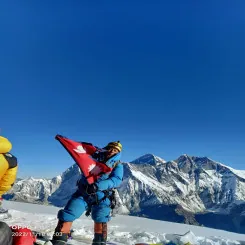
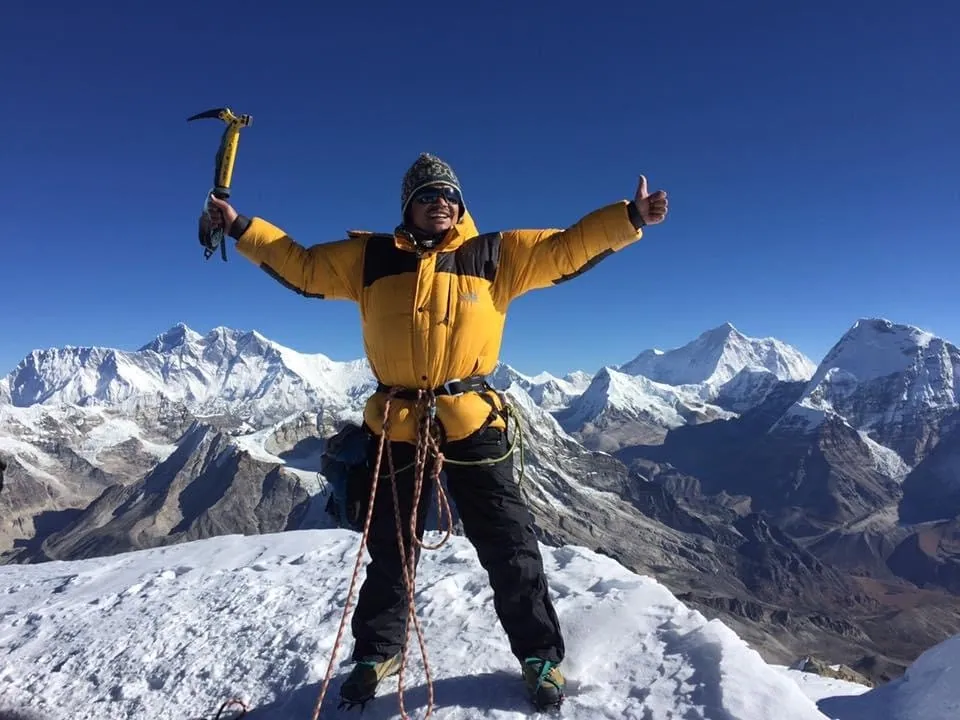
Mera Peak, at an altitude of 6,476 meters, is considered Nepal’s highest trekking peak. The peak is located in the Everest region, providing a chance to climb a high-altitude peak without any major technical obstacles that come with climbing.
Considered among easier peaks to scale, the Mera Peak climbing is nevertheless not devoid of several series of obstacles that must be cautiously prepared both physically and psychologically. It is, therefore, an ideal objective for trekkers with some mountaineering experience who want to take on a more demanding adventure.
Climbing Mera Peak requires much more than basic trekking skills, despite its less technical route. The altitude is high, weather conditions can change suddenly, and the physical ascent itself calls for prior planning and proper training among the most advanced climbers. The panoramic view of the magnificent Himalayas including Everest, Lhotse, Cho Oyu, Makalu and Kanchenjunga can be seen from the top.
In this blog, we are going to discuss the main problems one will face while doing the peak climb of Mera Peak and some tips regarding how one can successfully conquer this amazing mountain.
From comprehending the physical demands of the climb to navigating the technical aspects, this guide will walk you through preparing for your adventure and making the climb as smooth as possible.
Physical Challenges
There are generally several physical challenges of Mera Peak climbing, perhaps the most important one comes from the high altitude at 6,476 meters. The air becomes about one-third as thin thus, there is very little oxygen in the air for the human body to use. Higher altitudes can bring altitude sickness to many climbers.
Symptoms include headaches, dizziness, nausea and shortness of breath. This is vital so you must have adequate acclimatization, done by a gradual ascent and taking rest days at higher altitudes. Drinking plenty of water and eating well will help your body adjust.
Another very important factor is endurance. Long days of trekking, steep ascents and conditions that can be physically demanding are in store for you. You will have to be in good physical shape since the trek involves hours of walking every day mostly on uneven ground. Preparing your body through cardio exercises and strength training before the trip will enable your body to handle the strain of the climb.
Cold at a high altitude can be brutal, especially at night. The temperature usually drops at night to very low levels which sometimes causes internal coldness, which lowers energy levels and stamina. Well-insulated clothes, gloves, and other clothing trap body heat and stave off frostbites.
Lastly, another big challenge is gear management. Wherever porters and guides will carry the major share of the gear, you still need to carry such things as personal water, gear, and snacks. Keeping your things in order and distributing your loads evenly will help you preserve energy and focus on the climb.
Technical Challenges
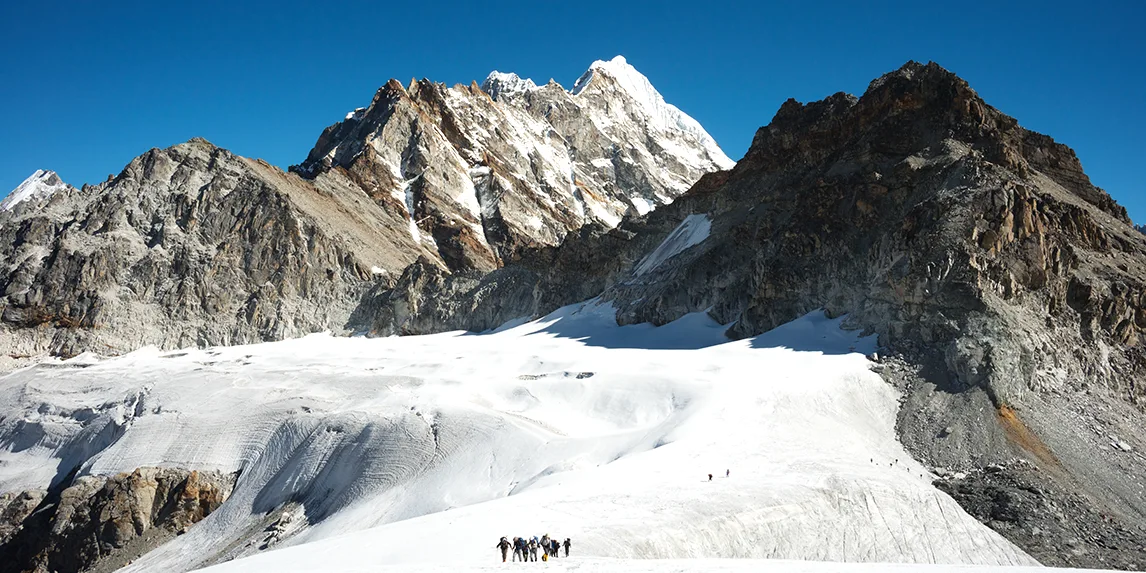
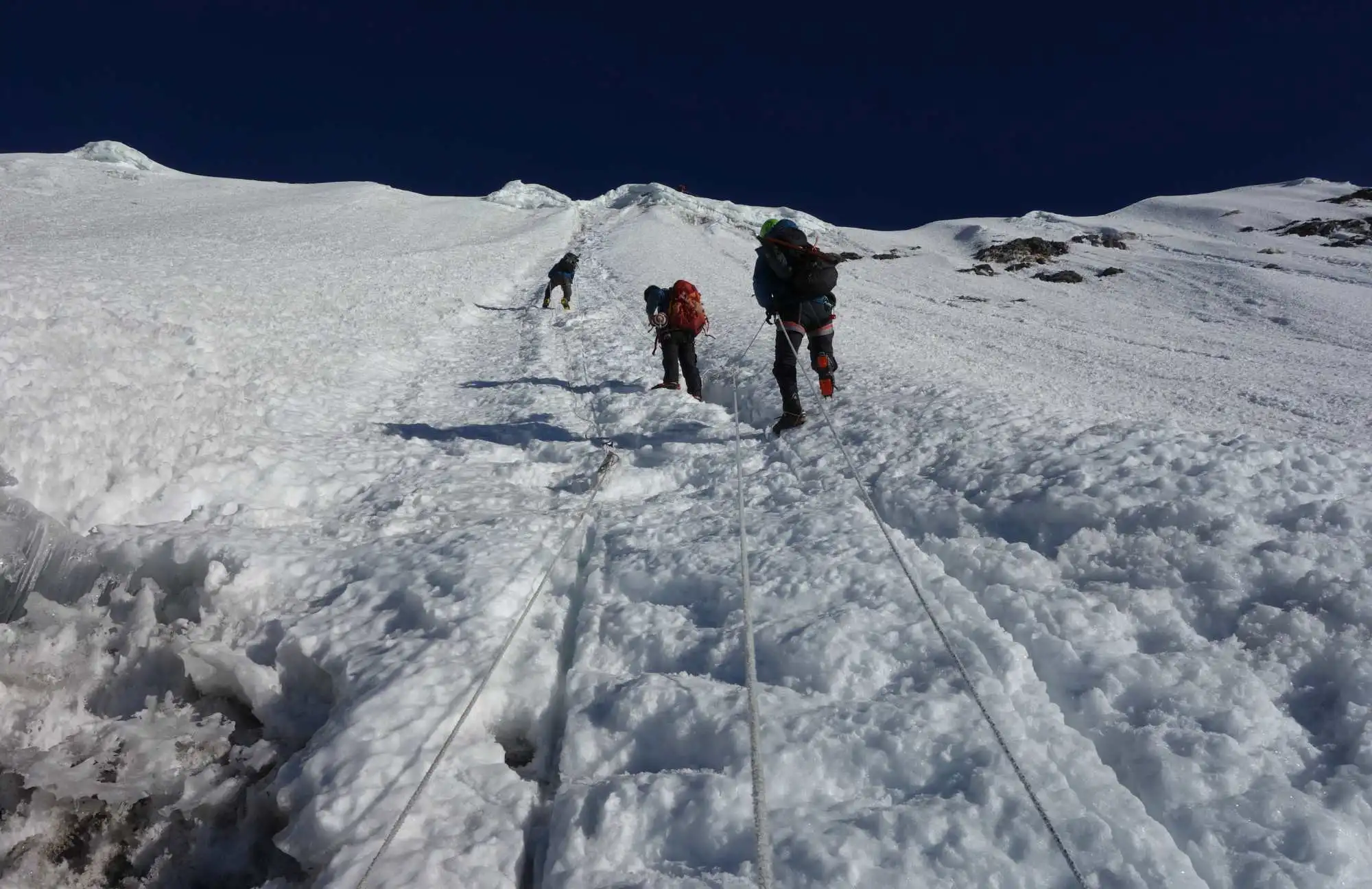
Although Mera Peak does not require advanced technical climbing skills, a series of important technical challenges have to be faced by climbers. First of all, glacier crossing is one of the major obstacles. For the safe crossing of these icy stretches, the climbers make use of crampons and ice axes for grip and balance. Ropes will also help in stabilizing things and offer protection on steep sections of the glacier.
Other hazards include risks posed by crevasses: and deep cracks in the ice that are dangerous. You will have to get an education on these breakthroughs of ice and the know-how of safely going over them. Guides will open the path but always you must exercise care and stick to what has been put out in their instructions.
As you near the summit, the slopes grow steeper and the air even thinner. The lesser amount of oxygen makes breathing and efficient movement through it increasingly hard. That’s when proper mountaineering techniques, use of the right equipment, and pacing come into play. Having an experienced guide ensures safety and gives support when one needs to overcome technical challenges.
Weather and Environmental Challenges
Climbing Mera Peak means coping with unpredictable weather; this can be one of the serious challenges while reaching such a high altitude. Sudden snowstorms with strong winds and whiteout situations, when visibility reaches almost zero, can take place and make it difficult to navigate.
Conditions can thus get worse, increasing the chances of a climber losing his/her way. One has to be prepared at any moment for bad weather during the entire expedition, especially on the summit push.
mera peak climbing in Nepal
Other weather conditions include low visibility due to thick fog or heavy snow that may reduce visibility even when using the services of a guide. This will make it difficult to view the trail and slow the progress, adding to the overall difficulty of the climb. During such times, one has to be focused and follow the guide closely, as getting lost is dangerous.
The environment around Mera Peak is fragile, and climbers must be sure not to destroy it in any way. It’s a call for respect to the natural surroundings by following eco-conscious practices like carrying out all waste, not damaging plant life and minimizing noise. Environmental awareness will allow trekkers to take better care of this beauty and thus protect the fragile ecosystems of the Himalayas for future trekkers.
Psychological Challenges
Climbing Mera Peak is as much a mental challenge as it is physical. The greatest psychological challenges involve maintaining mental stamina. The climb requires long exhausting days of trekking and at times, the fatigue can feel overwhelming. Staying determined and focused on the goal even when you’re tired is key to pushing through the tough moments.
Isolation can also be harsh. In these remote high-altitude regions, you may feel disconnected from the outside world. The feeling of being so far from home can be lonely, especially during those challenging parts of the climb. Having a good team behind your back and keeping in contact with your fellow climbers will help you overcome this feeling of isolation.
Not every attempt at the summit will go down successfully; weather conditions, health, or other unforeseen circumstances may get in your way. You learn from those setbacks and stay positive. Every attempt is about learning, so you take the journey and not the destination.
Preparing for the Climb
Preparations for Mera Peak mean good, regular exercise and planning for safe and successful climbing that is, intense training and fitness, so the program includes mostly cardio exercises like running, cycling, and hiking to improve endurance. Strength training especially for your legs, core and upper body will help you to handle the physical demands of the trek. It’s also beneficial to do some high-altitude treks beforehand to get used to the effects of thinner air.
Mera Peak climbing
Acclimatization is one of the most important aspects of prevention against altitude sickness. Gradual ascent with planned rest days at higher altitudes will help your body get acclimatized to the change in oxygen. The itinerary of the trek should provide for such acclimatization stops, very essential for your general health and well-being.
It is also important to pack the right gear, including your luggage layers for warmth, waterproof outerwear, and well-fitting trekking boots. The summit push will require crampons, ropes, and ice axes for safety, as well as gloves, a headlamp, and a good sleeping bag for the cold nights ahead.
You also want to hire a professional guide for your expedition. Professional guides will manage the logistics and safety of getting information about the route and handling unforeseen problems so that you have time to focus entirely on climbing.
Why Climb Mera Peak?
Mera Peak is a gorgeous climb—a panoramic view at almost every turn, making virtually every step of the challenge a pleasure. From here, on the summit of the world, one’s gaze could make out several stunning peaks from Everest to Lhotse, Cho Oyu, Makalu, and Kanchenjunga, the largest, colossal giants in the world surely make the climbing memorable.
The other very strong reward is the sense of achievement: reaching the top of Mera Peak, the highest trekking peak in Nepal, is such a great personal achievement since it’s a test of endurance, skill, and strength of mind, so the feeling of pride and the overwhelming sense of satisfaction while standing at the top can’t be expressed in mere words.
Moreover, the climb is culturally enriching. Passing through Sherpa villages on the way up, you will understand the peculiarities of the Himalayan lifestyle. Scenic landscapes and encounters with the locals turn this journey into a chance to not only test your physical abilities but also get closer to the beauty and culture of the Everest region.
Mera Peak Climbing
Climbing at Mera Peak is an exhilarating and rewarding adventure, but it comes with its own set of challenges. Preparation for overcoming these will be necessary, whether the challenge is physical, related to high altitude and endurance, or technical, regarding glacier crossings and crevasses. Mental stamina, acclimatization, proper gear, and being prepared for bad weather are crucial elements to a successful summit.
But it’s always important that you know your limits during a climb and put your safety out in front of the mountainous incline. The trek is both personal growth and learning that you undergo to reach the peak. So, if you’re up for a challenge, carefully plan and prepare yourself for climbing.
The entire climbing experience can be both safer and more fulfilling when you plan it with expert guides or trekking companies that can provide you with expertise in logistics, safety and environmental matters. Their expertise will support you through the physical and logistical challenges, enabling you to appreciate the stunning beauty and rich culture of the Himalayas more effectively.
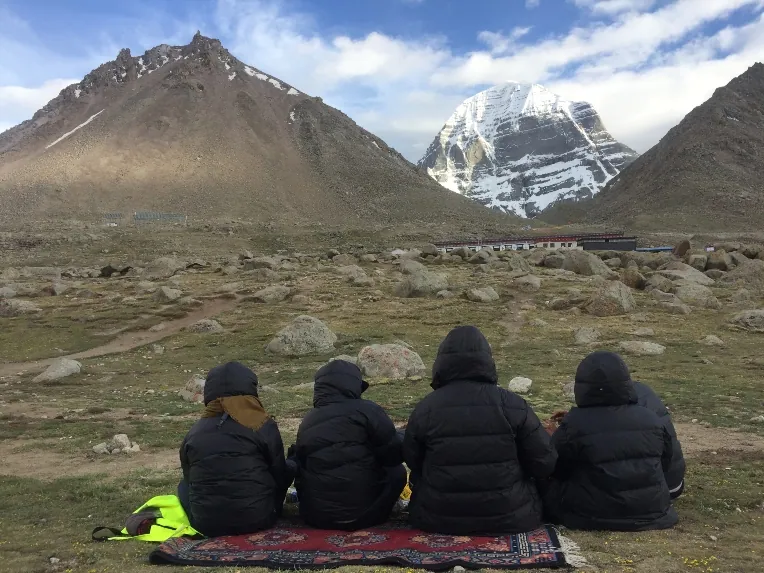
Mount Kailash is a phenomenal peak in the Himalayas. The peak holds a deep meaning for millions of pilgrims and adventurous tourists. Called sacred by the followers of several religions like Hinduism, Buddhism, Jainism, and Bon, this mountain is a pilgrimage site.
While there are different ways to take a Mount Kailash tour, starting from Nepal has its advantages for the best experience possible. We go on to look at, in this article, the top benefits of beginning your Mount Kailash journey from Nepal from experiences.
Overview of Mount Kailash
Spiritual Significance
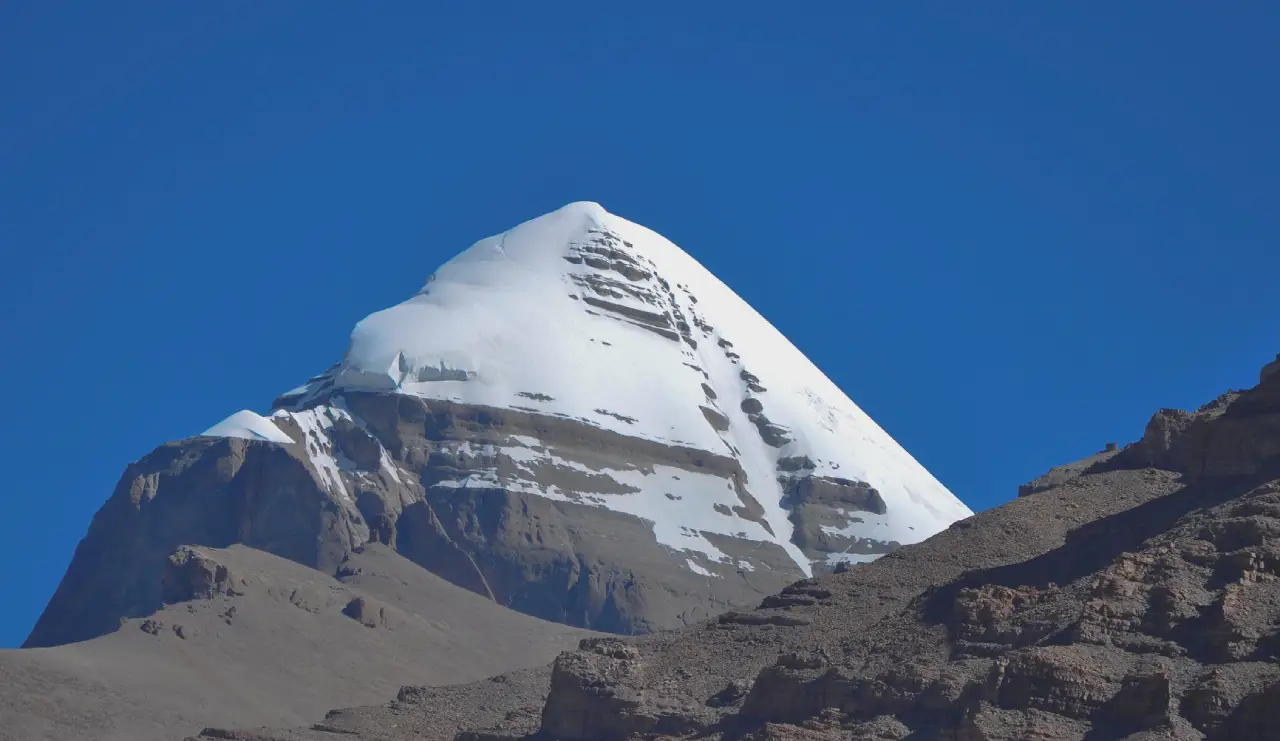
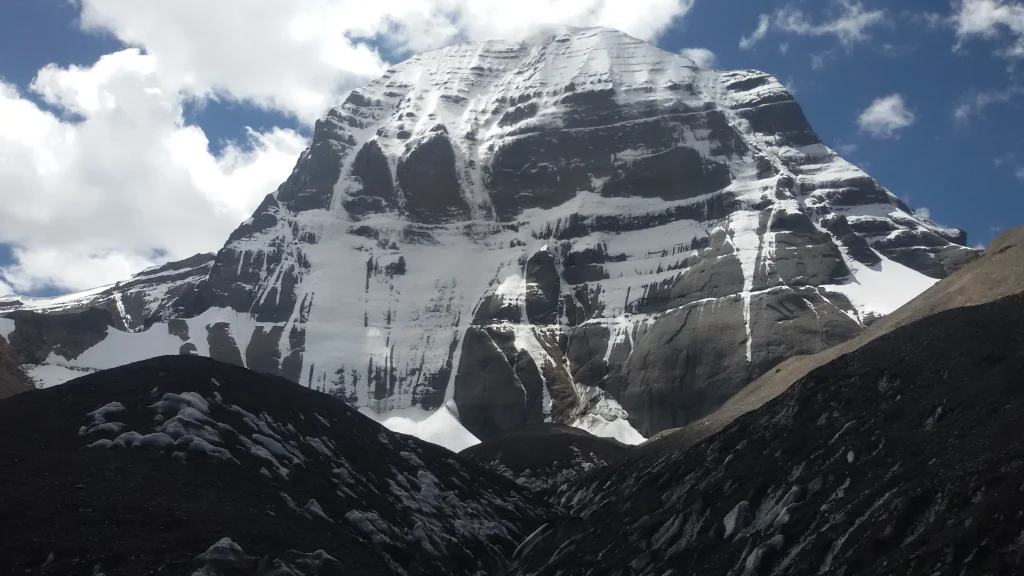
Mount Kailash is an astonishing 6,638 meters high and is considered the Axis of the Universe. In Hinduism, it is believed to be the abode of Lord Shiva, while Buddhists regard it as the home of the cosmic deity Demchok.
No less than four holy lakes lie around the mountain Manasarovar, Rakshastal, Zongkul, and Lhamo Latso-again, each of these has its particular religious significance.
Circumambulation around Mount Kailash is called Kora, which is believed by many to be a necessary practice of pilgrimage. Therefore, it purifies sins and brings about liberation.
Natural Beauty
Besides being spiritually indispensable, Mount Kailash is also an awesome geographical wonder. Additionally, the peculiar pyramid shape of the mountain, the blue color of Lake Manasarovar, and the vast expanses of the Tibetan plateau make the landscape beautiful.
This pragmatic natural beauty, amidst the rich cultural heritage, has made Mt. Kailash a primary trekking and spiritual destination.
Mount Kailash Alt. 6640 m North face side
Starting Your Tour from Nepal Key Benefits
Accessibility and Convenience
Nepal is the most convenient starting point for your Mount Kailash tour. Most Mount Kailash tours normally begin in Kathmandu, the capital of Nepal. It is because the city is well-connected with most major international airports. Tourists may arrive via Kathmandu and then join a guided tour or find their way to the Tibetan border.
Direct Routes
Starting point Leaving from Kathmandu, several travel agencies have a direct overland route to the Zhangmu border with Tibet. It saves time compared with other starting points and enables you to get to Mount Kailash more efficiently.
Complications to Avoid
Starting from Nepal will avoid some of the complexities one might have to go through in the case of Chinese visas when starting from any other country. If one intends to travel with a reputable agency, then most of the details regarding visas are included in the travel package, making it easier for you.
Cultural Immersion
Nepal represents a host of cultures, traditions, and religions. Comprising a 15 days Mount Kailash tour in Nepal is an added advantage as one gets ample time to be acquainted with the culture of Nepal before one goes to Tibet.
Cultural Diversity
There is a blend of ethnic groups in Nepal, from the Newars to the Gurungs to Sherpas. Each contributes uniquely to the country’s cultural identity pulsating festivals, traditional music, and handicrafts. All this diversity heightens your experience and helps understand the spiritual importance of Mount Kailash.
Kathmandu Heritage Sites
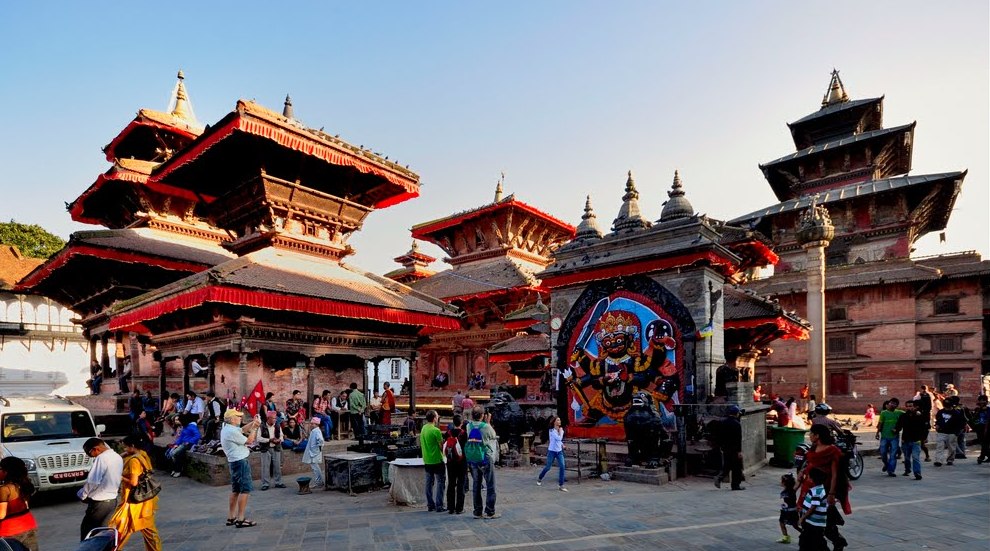
Take a day or two to visit Kathmandu’s UNESCO World Heritage Sites Swayambhunath (Monkey Temple), Boudhanath Stupa, and Pashupatinath Temple. These sites give an insight into the rich spiritual and architectural heritage of Nepal.
Kathmandu Durbar Square
Spiritual Preparation
Starting the tour in Nepal allows for spiritual preparation before having to face whatever Kailash trek has in store. The serene environment of Kathmandu Valley and its spiritual landmarks will help one prepare mentally and spiritually for the journey ahead.
Meditation and Yoga Retreats
Several yoga and meditation retreats open their gates to guests who practice mindfulness and internal peace. Retreating for a few days will help in centering oneself in preparation for the challenges Mount Kailash Kora asks-physically and spiritually.
Rituals and Ceremonies
This also would be an exquisite form of spiritual participation in local rituals and ceremonies for travelers in Nepal. It will give an edge to the spiritual experiences. A blend of interaction with local spiritual leaders enables strengthening the bonding toward the pilgrimage and the significance of Mount Kailash.
Guided Tours with Local Expertise
Most tours to Mount Kailash from Nepal are offered from a stream of experience in trekking agencies that understand the minute details of the journey. There are several advantages tagged to it, including.
Knowledgeable Guides
The guided tours ensure that you have knowledgeable local guides who are familiar with the region, its customs, and the best practices for a successful pilgrimage. This can include insight into the spiritual significance of the sites you will visit, further enhancing your experience.
Safety and Support
Traveling with a reputable agency adds many layers to safety, as well as support. The guides are trained for emergencies and know how to negotiate difficult landscapes. They will be able to assist with acclimatization for a safer trek, especially at high altitudes.
Scenic Journey
The trail from Nepal into Mount Kailash is full of smacking scenery, with breathtaking views of the Himalayan range, lush valleys, and charming villages.
Majestic Landscapes
From terraced fields and rushing rivers to towering peaks, the views are spectacular on the way from Kathmandu to the Tibetan border and further on to Mount Kailash. Scenic beauty en route enhances the overall experience of going to Kailash.
Cultural Encounters in Route
Moreover, the route is also lined with opportunities to encounter local communities and observe their lives. Such interaction with the people offers an insight into the culture and traditions oozing from every nook and corner of the region, drawing a person to the pilgrimage more closely.
Different Options for Trekking
A tour starting from Nepal has different options for trekking to suit every kind of requirement and health condition of the individual trekkers.
Pre-Kailash Trekking
Most tour packages include additional trekking in either the Annapurna or Langtang areas before finally arriving at Mount Kailash. These treks acclimate you while showcasing Nepal’s great landscapes and culture.
Post-Kailash Exploration
Once the Kora is complete, one can choose to either see more of Tibet or head back to Nepal to experience more trekking or cultural tours. Such flexibility does make the journey more enriching.
Mount Kailash north view from Dirapuk
Community Support and Responsible Tourism
Many trekking agencies in Nepal are into responsible tourism and community support. Starting your Mount Kailash tour from Nepal, therefore, helps you to contribute to local economies and support sustainable tourism.