
 English
 Dutch
Dutch Japanese
 Hindi
Hindi Italian
 Spanish
 French
 German
 Chinese
 Korean
 Arabic
 Hebrew
 Russian
 Portuguese
 Danish
 Czech
Czech Polish
 Swedish

290 reviews in 


20
Days
Days
US$ 2350 US$ 2400Per Person (Group Size: 1-10)
Group Discounts- Best price guaranteed
- Secure & easy online booking
- Flexible booking dates
- Decades of experience
- No. of Pax Per person
- 1 - 1 personUS$ 2800
- 2 - 4 peopleUS$ 2400
- 5 - 8 peopleUS$ 2250
- 9 + people 9999 US$ 2100


- No. of Pax Per person
- 1 - 1 personUS$ 2800
- 2 - 4 peopleUS$ 2400
- 5 - 8 peopleUS$ 2250
- 9 + people 9999 US$ 2100
Have Questions?




At a Glance

Duration
20 days
Destination
Nepal
Trip Difficulty
Moderate
Max altitude
5388m
Group Size
1-10 Pax.
Activity
Trekking,hiking & sightseeing
Accommodation
Hotel in Kathmandu, lodge & tea houses during the trek.
Meals
Breakfast, Lunch & Dinner during the trek
Vehicle
Private car/bus/jeep and flightOverview of Kanchenjunga Ciruit Trek
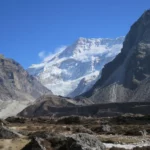
The Kanchenjunga Circuit Trek, also known as Kanchenjunga base camp trek is an adventurous trek that takes you to the eastern part of Nepal and promises to immerse you in the pristine beauty and landscapes of the region. Kanchenjunga (8598m) is the world’s third highest mountain, supported by Jannu (Kumbhakarna, 7710m, 25300ft), Chhang Himal, and many more snowy peaks. On the trek, we will encounter Limbu, Rai, and Sherpa natives.
In October, Limbu and Rai have a festival to celebrate Uvauli. This festival is a celebration of harvesting the crops from the fields. They also celebrate the sowing of the crops in May and bring them to their home, which is called Udhauli. The Sherpa celebrates festivals like Lhosar (January/February) and Dumji (June/July). Ghurkhas are recruited from this area.
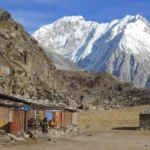
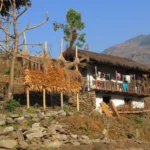
Wildlife abundance like Blue sheep, Masked Deer, snow leopards, and picturesque natural scenery of farmland, rhododendrons, and green alpine valley are worth staking. An incredible view of the north face of Kanchenjunga from Pangpema is our precise vision trek. The attractive Tibetan settlement of Ghunsa has sturdy wooden houses, numerous prayer flags, and smiling villagers.
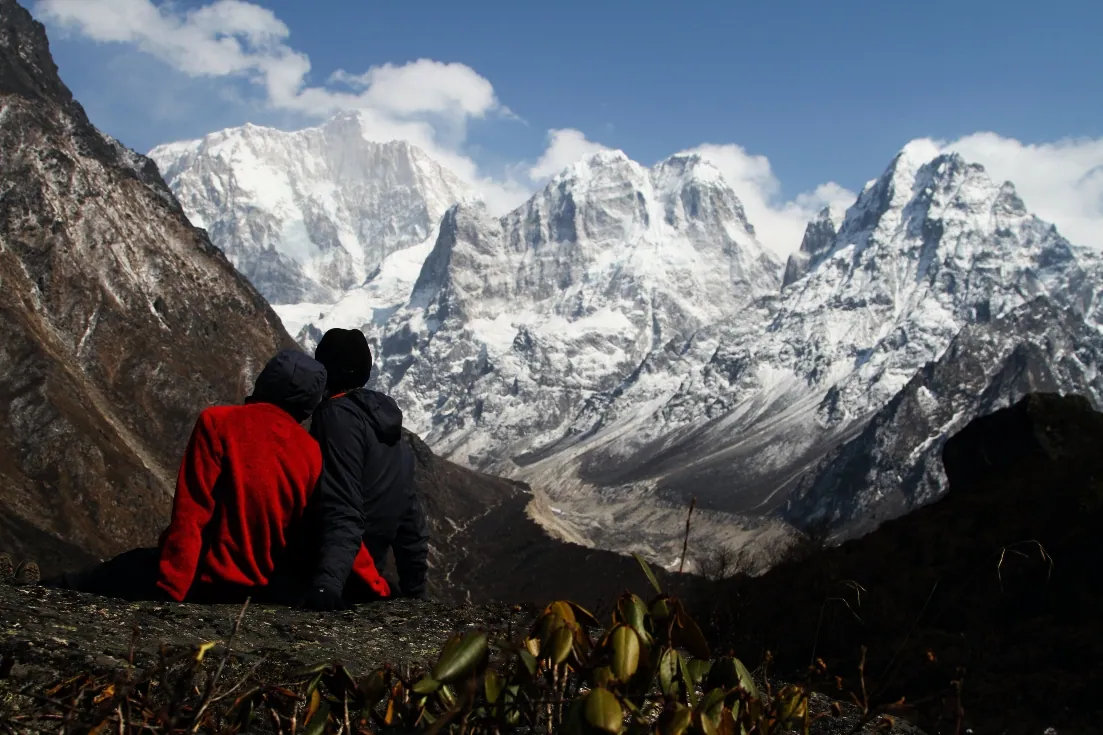
Route summary—The kanchenjunga trek starts after a scenic flight from Kathmandu to Bhadrapur and a drive to Taplejung Bazaar. You can also go by jeep further up, but it depends on the road conditions, as it is a newly opened route. In summer and early autumn you can’t go much further by jeep, as the road can be muddy with landslides. So the basically kanchenjunga trek starting point is Taplejung and continuing, you will trek through the beautiful villages Hills, snowscapes, and Mountains to Ghunsa village in 4-5 days, and you won’t go too long ascending; it will be just a few hundred meters up everyday till Ghunsa. Before we reach Ghunsha, we can’t see many mountain views in close distance, as the trail lies between the two big hills and a deep valley as well as the Tamor and Ghunsha rivers. Once we reach Ghunsha, then you will reach behind the big hills and close to the mountains, and you will feel like you are now in a remote place and far away from city life.
After a day’s rest in Ghunsha we trek continue to Lonak – Khambachen, and finally you will reach the Pangpema base camp alt. 5100m above sea level. After Ghunsa to North base camp, the trail is more difficult as we reach the higher section of the route and you can see the magnificent views of Mt. Janu (Kumbakarna). The Mt. Kanchenjunga range includes hundreds of beautiful mountain peaks in the distance. After successfully reaching the north base camp of KanchenJunga we went back to Ghunsa again and continued trekking to the South base camp via the Sela la pass (4600m). If you are planning to do only the north base camp, then you can continue back to Taplejung on the same route we went up, but if you are planning to visit both base camps of kanchenjunga and then the trip is longer, and we go through the sele la pass to connect to the south base camp, a week more trek.
After visiting both kanchenjunga base camps, we will go back to Taplejung via Tortung, Nyamphudin, and Taplejung and drive back to Bhadrapur and fly back to Kathmandu. Where your trek ends.
Highlights of Kanchenjunga Ciruit Trek
- Witness the view of Majestic Mt.Kanchenjunga-World’s third highest peak and it’s neighbouring peaks including Jannu,Kabru and Rathong.
- Discover the untouched beauty of the eastern Himalayas.
- Challenge yourself by crossing high mountain passes, including Mirgin La Pass (4,663 m/15,299 ft) and Sele la Pass(4,290m/14,074 ft).
- Explore the remote villages such as Ghunsa and interact with locals and learn about their unique way of life.
- Discover a diverse range of flora and fauna, including rare and endangered species like red panda,Himalayan Black bear and variousspecies of Birds.
Travellers sharing their experience


Route Map and Altitude Chart
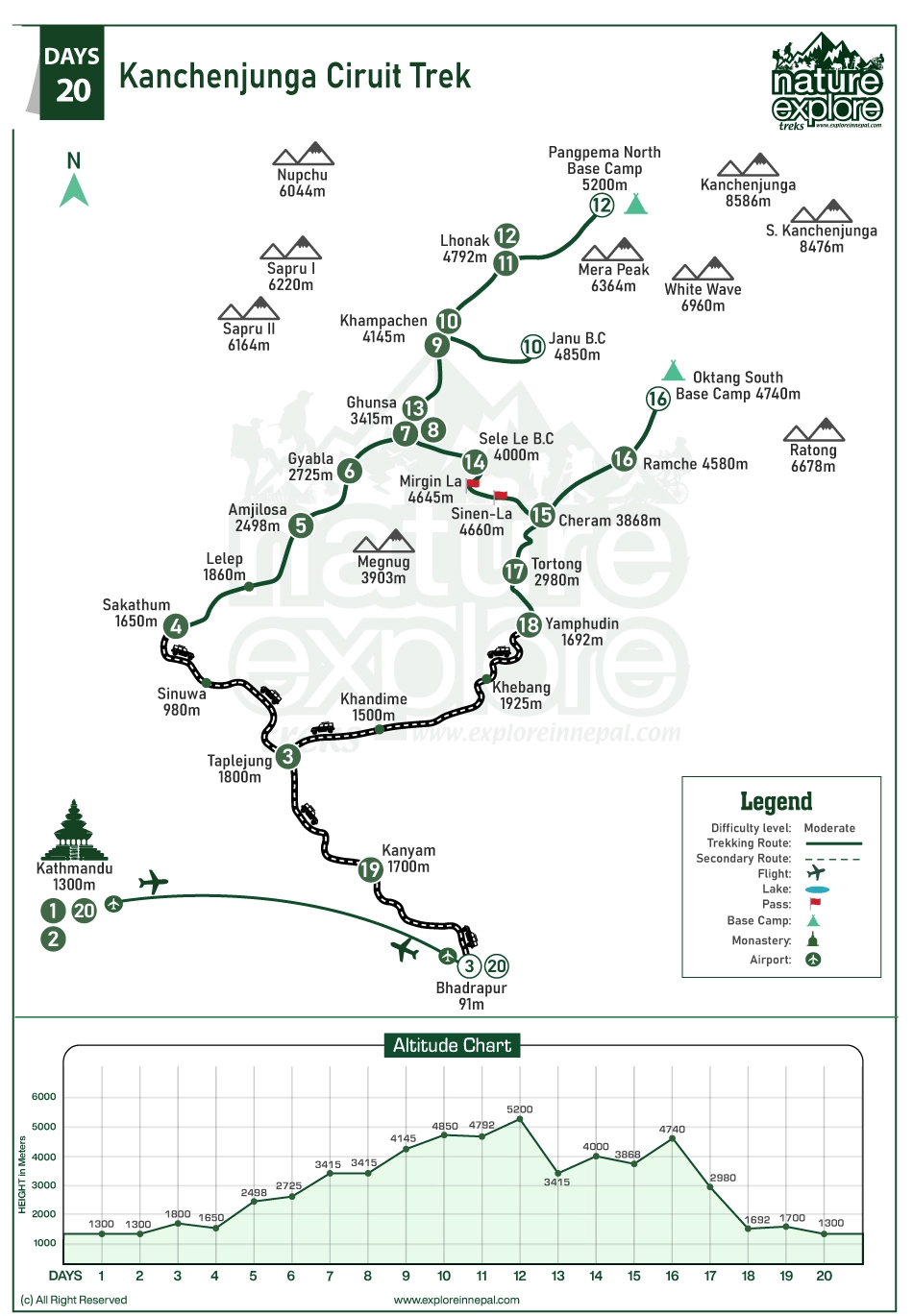 Download Map
Itinerary
01
Day 01 Arrive in Kathmandu,alt.1300m
You’ll arrive at Tribhuvan International Airport as per your flight schedule.Our team will be at airport to welcome you and pick you up on jeep or car depending upon the group size.We Will then escort you to your hotel.
Max altitude
1300m/4265.092 ftMeals
BreakfastAccommodation
Hotel02
Day 02 Trip preparation day
For day 2,you can explore Kathmandu and visit some UNESCO-listed places.You’ll meet your guide,they will describe about the trek to you.Additionally,if you did not find or forget to buy some gear then you can purchase or rent in kathmandu and prepare accordingly for the trek.
Meals
BreakfastAccommodation
Hotel03
Day 03 Fly to Bhadrapur,(40-45min) alt.91m and Drive to Taplejung -6 o 7 hours.
Today,You’ll take a flight which typically takes around 40 to 45 minutes to reach bhadrapur, situated at an altitude of 91 m.
After arriving at Bhadrapur,you will take a drive to Taplejung which will take 6-7 hrs during this 6-7 hrs ride you will encounter flatlands and agricultural fields and as you progress further,the roads starts to ascend into hills surrounded by the lush greenery.
Duration
Flight -50 minutes and Drive to Taplejung 6-7hoursMax altitude
1800m / 6266 FtMeals
Breakfast, Lunch, DinnerAccommodation
Local Teahouse04
Day 04 Drive to Sakathum,alt.1650m
Todays drive from Taplejung to Sakathum follows a scenic route alongside the Tamor river.At first the trail goes through the lush green fields ,providing trekkers the picturesque view of the surrounding countryside.As the trek progress,it enters the dense forest.
Throughout the journey, trekkers will encounter several ascents and descents. The trail then leads to the Ghunsa River. After crossing it, the trail becomes quite easy, where you will feel more relaxed and eventually we will reach Sakathum.
Duration
4 hrsMax altitude
1660mMeals
Breakfast, Lunch, DinnerAccommodation
Local Teahouse05
Day 05 Trek to Amjilosa,alt.2498m
Today’s trek to Amjilosa is challenging yet rewarding as we have to navigate through tricky trails and varied terrain and we will also gain altitude. Setting out from Sakathum,the trail begins with a river crossing and continues along a steep ascent.
As the trail goes its way upward, trekkers are treated with the stunning view of the surrounding mountain and valley. This ascent can be quite challenging but as soon as it descends, we will be back to river level. We will then cross the river and follow the trail through the Solima area, navigating rocky terrain and dense vegetation.The descent is steep and demanding requiring careful footwork .Despite the difficulties we will reach Amjilosa eventually.
Amilosa is famous for its stunning natural beauty,including towering mountains,lush forests and cascading waterfalls and is rich in hospitality
Duration
6-7 hrsMax altitude
2,510m/8234 ftMeals
Breakfast, Lunch, DinnerAccommodation
Local Teahouse06
Day 06 Trek to Gyapla,alt.2725m
After breakfast on Amjilosa, our journey continues along the river shore through dense jungle filled with rhododendron, fir, and bamboo. Our journey continues, admiring the natural beauty of waterfalls, eagles gliding effortlessly, and yaks grazing peacefully. As we gradually make our way towards Gyabla, we might spot wildlife on the trees or on the slopes .
Duration
6-7 hrsMax altitude
2,750mMeals
Breakfast, Lunch, DinnerAccommodation
Local Teahouse7
Day 7 Trek to Ghunsa,alt.3415m
From Gyapla, the valley open out so we will walk along an easier path towards the pole. Today,it’ll start to feel cooler as we climb above 3000m. We’ll continue through the forest and past Phage village, a Tibetan refugee camp set up decades ago.
In Phole village, there’s a monastery and there you might see women weaving carpets. It takes around another half an hour to reach Ghunsa, a larger Tibetan village with colorful prayer flags on wooden houses. There you’ll find lodges and shops.
The trail then goes through green fields and larch forests.Following it we’ll descend to the riverbed of Ghunsa Khiola.Crossing it we will reach Ghunsa village.
Duration
6-7 hrsMax altitude
3415m/11204 ftMeals
Breakfast, Lunch, DinnerAccommodation
Local Teahouse8
Day 8 Rest at Ghunsa-acclimatization 3415m
Today in Ghunsa, we will rest and get used to the altitude. In the afternoon,we’ll hike up to Lpasan La Monastery and return to Ghunsa for the night. Ghunsa is a Sherpa village, offering opportunities to interact with locals and learn about their culture, festivals, and traditions.
Max altitude
3415m/11204 ftMeals
Breakfast, Lunch, DinnerAccommodation
Local Teahouse9
Day 9 Trek to Khampachen,alt.4145m
Leaving Ghunsa, our path goes through pine and vibrant rhododendron forest. While the trail from Ghunsa to Khambachen is relatively straightforward, the higher elevation adds a challenge, making the journey more difficult.
As we come out of the forest, we cross a wooden bridge and reach Rampuk Kharka. Continuing our trek,we’re treated to the sight of cascading waterfalls. From here, a fresh view of Mt.Jannu greets us, offering a new perspective on its majestic beauty. After a few hours of walking, we will finally reach Khambachen.
Duration
5-6 hrsMax altitude
4,099m/13448 ftMeals
Breakfast, Lunch, DinnerAccommodation
Local Teahouse10
Day 10 Trek from Khambachen to Jannu Base Camp , (15km)(6-7 hrs)- alt.4,750-4,850m
Today is a challenging but extraordinary day. The route towards the Jannu Base Camp is remote, rocky and wild. Jannu, known as “The sleeping god” and “The Terror peak” is one of the most dramatic mountains in the world. Its vertical west face is legendary among climbers. Few trekkers visit this base camo making it special and untouched.
Meals
BreakfastAccommodation
Local Teahouse11
Day 11 Trek to Lhonak,alt.4792m
Today trek to Lhonak is full of excitement. This is likely the last stop before reaching the Kanchenjunga Base Camp. We will start our journey today before dawn. We have breakfast and begin our walk. We will travel through rocky fields and large boulders along the hillside.
From here, you make a slight descent and walk along the banks of a river. As you follow the path, you pass a waterfall and cross a bridge. Then, gently climbing the hill, you reach Ramtang Monastery. After a short visit to the Gompa, you continue to walk for a couple of hour and reach Lhonak
Duration
6-7 hrsMax altitude
4,785m/15698 ftMeals
Breakfast, Lunch, DinnerAccommodation
Local Teahouse12
Day 12 Trek to Pangpema North Base Camp(alt.4750m)and return back
Today is the most exciting part of the Kanchenjunga Base Camp Trek, as you will head to the major highlight of the trip.Today’s journey starts with the hearty breakfast in the morning.
Following a forest path adorned with beautiful seasonal flowers. As you continue climbing, the trees gradually thin out until there are none in sight by the time you reach Kanchenjunga Base Camp after several hours of trekking. The viewpoint at the base camp offers a breathtaking sight of Mt.Kanchenjunga and other majestic peaks. After spending some time in the views we will descend back to Khambachen.
The walk downhill is quicker and throughout the way you’ll be treat to numerous views of iconic mountains and valley .After sometime you will arrive back to Khambachen.
Duration
7-8 hrsMax altitude
5,200m/17060 ftMeals
Breakfast, Lunch, DinnerAccommodation
Local Teahouse13
Day 13 Trek to Ghunsa,alt.3415m
On day 12 you will retrace your steps back from Khambachen to Ghunsa, taking your time appreciating the natural beauty as the trail goes through colorful rhododendron and pine forests with the stunning views of Mera Peak,Cross Peak and many more .We will take the same routeto head back to Ghunsa.
Duration
6-7 hrsMax altitude
3,415m/11204 ftMeals
Breakfast, Lunch, DinnerAccommodation
Local Teahouse14
Day 14 Trek over Sele le Pass(alt.4689m)camp and Sele,alt.4000m
We will start our day with enjoying breakfast while watching the sunrise. After that, we will hike to the magnificent Sele Le Pass, navigating a steep and challenging trail adorned with vibrant flyers and flags and weaving through the dense forest of moss, rhododendron, and juniper.
As we ascend, you will immerse yourself in a panoramic view of snow-capped peaks. Reaching the majestic Sele La pass marks a significant milestone in your journey; you will be at an altitude of 4689m. We will stay there for a while admiring the beauty and descend towards Sele,we where cozy lodge awaits us.
Duration
6-7 hrsMax altitude
4689m/15383 ftMeals
Breakfast, Lunch, DinnerAccommodation
Local Teahouse15
Day 15 Trek over Mirgin La Pass (4,645 m) and Sinion / Sinelapcha La Pass (≈4,660 m) to Cheram (3,868 m).
Today is one of the most adventurous days of the Kanchenjunga Circuit Trek as you cross two high mountain passes. The trek begins early from Sele Le and gradually climbs along a remote alpine ridge toward Mirgin La Pass (4,645 m). From the top, trekkers enjoy spectacular panoramic views of the surrounding Himalayan peaks and deep valleys. The trail then continues over another scenic high pass, Sinion La (also called Sinelapcha La) at 4,660 m, before descending through rugged alpine terrain toward the valley below.
After crossing the passes, the route gradually descends through rocky trails and yak pastures until reaching the peaceful settlement of Cheram (3,868 m). This beautiful village, surrounded by high mountains and glaciers, is an ideal place to rest after a challenging but rewarding day in the remote Kanchenjunga Conservation Area. The trek usually takes around 6–7 hours today.
Duration
6-7hrsMax altitude
4645m/15239 ftMeals
Breakfast, Lunch, DinnerAccommodation
Local Teahouse16
Day 16 Trek from Cheram (Tseram) to Ramche, then hike to the Oktang Viewpoint (near Yalung Base Camp, 4,740m | 15,551ft) and return to Ramche.
Another highlighted day of this trek as we hike up to Oktang (Yalung South Base camp) at an elevation above 4700m from sea level. Crossing through the Yalung Glacier, you will be mesmerized by the amazing view of the Rathon (6680 m) and Karbu (7415m). Along the way we will stop for lunch at Ramche tea shop, where we can leave our unnecessary equipment and clothes, as we will come back for an overnight stay in the same place. We will continue trekking to Kanchenjunga South BC or the Oktang viewpoint. You shall enjoy the closer view of Mt. Kanchenjunga range including hundreds of beautiful towering peaks around. And then you will back to Ramche for overnight stay. The total trek will be today 7-8 hours.
Duration
6- 7 HrsMax altitude
4700MMeals
Breakfast, Lunch, DinnerAccommodation
Local Teahouse17
Day 17 Trek back to Tortong,alt.2980m
Today’s trek from Ramche to Tortong is considered quite easy. Setting out for a day after having breakfast in Ramche. We will find ourselves on the trail that gently goes through the serene surroundings, with Simbuwa Khola accompanying us along the way.
As we walk, we’re greeted by the vibrant hues of rhododendron adorning the forest. Today’s trek is easy and offers the spectacular views that will sure captivate us. After walking for, like, 5 hours, we will lose elevation, descending approximately 1000m until we reach our next destination, Tortong. If you still feel like you want to go a few hours more, you can go further down to another town.
Duration
4-5 hrsMax altitude
2980m/9776 ftMeals
Breakfast, Lunch, DinnerAccommodation
Local Teahouse18
Day 18 Trek to Yamphudin (1,692 m) via Lasiya La Pass
Today’s trek will take us to Yamphudin, the biggest village around this area. We start by climbing up to Lasia La Pass, which is tough but is worth it for the amazing views.
After reaching the top, we will then head downwards to Yamphudhin, where we will meet people of different ethnic groups like Sherpa, Limbu, and Rai.For overnight, we will stay at a comfortable lodge and be ready to explore more tomorrow.
Duration
5-6 hrsMax altitude
1692m/5551 ftMeals
Breakfast, Lunch, DinnerAccommodation
Local Teahouse19
Day 19 Drive to Kanyam(Illam) 8-9 hrs
Today we will have a scenic drive to Kanyam (Illam), a journey that promises to be both breathtaking and immersive. As we travel through picturesque valleys and verdant tea gardens, the beauty of the countryside unfolds before us. Along the way we may pause to admire cascading waterfalls and panoramic views of the Himalayas.
After a journey of 8-9 hours, we will arrive in Kanyam, where at first we will be greeted with the aroma of freshly brewed tea. Illam is often referred to as the “Tea Capital of Nepal” due to its extensive tea gardens that cover the hillside of the district. The tea produced in Illam is renowned for its quality and distinct flavor. Here you can buy some tea as a souvenir to your family or friends
Duration
8-9 hrsMeals
Breakfast, Lunch, DinnerAccommodation
Local Teahouse20
Day 20 Drive to Bhadrapur airport ,then fly back to Kathmandu
Today, we will leave Illam behind and head towards Bhadrapur Airport while enjoying the vistas that nature has to offer. Cherishing the beauty of the landscapes, we will make our way towards the airport.
As we soar above the mountain, we will take a last moment to look at Kanchenjunga-the world’s third-highest mountain. Landing at Kathmandu, you will be escorted to your hotel. Your journey ends here but if you want to be involved in other activities, then we can arrange it for you.
Duration
50minMax altitude
1300m/4265 ftMeals
Breakfast, Lunch, DinnerAccommodation
Local TeahouseBeginning of the trek you can go by drive further up and cut in itinerary few days if you are tight with time ,but if you flexible with time we suggest all adventure lovers start walk from Taplejung and cover the whole trek itinerary as per we mention above in itinerary section. We are open to discussion in any questions and concerns about this trek programs. Do hesitate to reach out if you have any questions or confusion.

Is this offered itinerary not suitable for you?
Inclusion/Exclusion
What's Included?
- Airport pick and drop.
- Hotel in Kathmandu one on arrival and in departure B/B
- Three times meals on trek (breakfast, lunch &, dinner)
- Hot drinks Tea or coffee-Fresh fruit after dinner everyday
- Accommodation on a normal basis twin sharing room.
- Experience English-speaking guide.
- Porter. (Two people one porter) Each porter carries 25kg.
- Kanchenjunga conservation fee
- Kanchenjunga restricted area especially permit
- TIMMS CARD
- Rural municipality entrance fee.
- All the ground transportation
- Airfare from Kathmandu Biratnagar – Kathmandu
- Treated drinking water.
- All the Ground transportation.
- First aid kit.
- Nature explore trek down jacket(to be returned after the trek)
- Duffle bag for the trip (to be returned after the trek)
- Sleeping bag (to be returned after the trek)
- Trekking poles (if need only)
- Last night Dinner at Nepali kitchen with a culture dance show at Nepali typical resturants.
- All the trip necessary documents.
- Gov. Vat and tax.
Complimentary
- Nature Explore Trek T-shirt gift
- Trek Map
- Nature Explore Trek Cap
- Trekking successful achievements certificate
What's Excluded?
- Personal travel insurance.
- International airfare.
- Lunch and dinner in Kathmandu.
- Trekking equipment.
- All type of beverage.
- Extra expenses like Battery charge, WIFI- Hot shower, Laundry during the trek.
- Tipping for staff.
Trip Information
Best season to go trekking to the KanchenJunga trek :
Best Season for the Kanchenjunga Circuit Trek are generally considered to be the spring (March to May) and autumn(September to November)months. Spring (March to May) offers stable weather with clear skies ,moderate temperatures and blooming rhododendron forests adding vibrant colors to the landscapes. During the daytime, temperatures typically range from around 10°C to 20°C (50°F to 68°F) at lower altitudes. As you ascend higher into the mountains, temperatures gradually decrease, ranging from 5°C to 15°C (41°F to 59°F) at mid-altitudes and possibly dropping below freezing at higher elevations. Nighttime temperature can drop, especially at higher elevations and in late spring. The temperature ranges from around -5°C to 5°C (23°F to 41°F).
Autumn (September to November):
Another great season for the Kanchenjunga Circuit Trek: autumn brings clear skies, mild temperatures and excellent visibility, offering stunning panoramic views of the himalayan peaks. The weather is generally stable, making it ideal for trekking. Another great reason to trek in this season is that the season brings out the festive vibe, as two main festivals fall in this season, so while on the trek, trekkers will feel that festive vibe full of positive and happy energy. Daytime temperatures in autumn are generally mild and comfortable, ranging from around 10°C to 20°C (50°F to 68°F) at the lower altitudes. As you ascend higher, temperatures may range from 5°C to 15°C (41°F to 59°F) at the higher altitude. Nighttime temperatures during autumn are cooler compared to spring but still relatively moderate. You can expect nighttime temperatures at the mid-altitude to be around 0°C to 10°C (32°F to 50°F).
Difficulty level of Kanchenjunga trek
The Kanchenjunga Circuit Trek is considered to be the most challenging trek, as the trek takes place in a remote location, has rugged terrain, is at a high altitude and is long in duration. The trek involves ascending to high altitudes with several passes exceeding 4000 m (13,123 ft), resulting in altitude sickness being a concern for the trekkers, so proper acclimatization and awareness of altitude-related symptoms are essential. The trek passes through the remote and isolated areas of himalayas so the facilities, such as lodges, teahouses, and media services, may be limited, requiring the trekkers to be well prepared for the trek. The trek involves crossing several high mountain passes and rocky and steep terrain and some sections may require trekking poles and basic mountaineering skills.
The kanchenjunga Circuit Trek demands good physical fitness and endurance due to the long days of hiking, steep ascents and descents and high altitude. Before embarking on the trek, it is essential to have good physical fitness and endurance, as the trek is long in the remote areas and at high altitude. As trekkers ascend to higher elevations, the air becomes thinner, resulting in decreased oxygen levels. This leads to altitude sickness with symptoms such as headache,nausea,fatigue and dizziness. Proper acclimatization is crucial so that the body can adapt gradually to the changing altitude.
Weather in the Himalayas can be very unpredictable, with the possibility of snowfall,rain and strong winds at the higher altitudes. Trekkers must be prepared for changing weather conditions by carrying the appropriate clothing and gear, including waterproof clothes, insulated clothing and good-qualitytrekking boots. Overall, the Kanchenjunga Circuit Trek offers an unforgettable memory in the himalayas however the trek is quite difficult so the trekkers need to be physically and mentally prepared for the things like limited basic facilities and should do some cardiovascular exercise before embarking to trek kanchenjunga circuit trek.
Important Things to Know before embarking on the Kanchenjunga Circuit Trek.
Before embarking on the Kanchenjunga Circuit Trek, there are several factors that you need to know:
Permits: Make sure you have obtained the necessary permits for the trek. This trek usually includes the Kanchenjunga Conservation Area Permit and the Restricted Area Permit since the trek passes through the restricted regions.
Altitude Acclimatization: Proper acclimatization is crucial for this trek . Plan your itinerary, putting on some rest days to allow your body to adjust to the increasing altitude. As you know your pace and body properly so tailor the itinerary according to it always remember that completing the trek with a healthy body is important, as you can enjoy the process of the trek and also enjoy the view.
Pack wisely: Pack appropriate clothing,gear and equipment for varying weather conditions at higher altitudes, including warm layers. Don’t forget the essentials like sunscreen, sunglasses, a first aid kit, water purification, a headlight, a battery charger, etc.
Physical fitness: The kanchenjunga Circuit Trek is a physically demanding trek involving long days of hiking and crossing high mountain passes. So, prior to the trek physical fitness and stamina-building exercises are recommended To tackle the challenges of the trek.
Guides and Porters: Consider hiring a local guide and porter for the trek, as this trek terrain and route are hard to navigate. Having a guide will make you feel safe and guides are familiar with the terrain and culture and will provide valuable insights throughout the trek and allow you to focus on enjoying the experience.
Insurance: Consider purchasing travel insurance that covers the trekking activities, including medical evacuation in case of emergency and trip cancellations or interruptions or delays due to some circumstances. Investing in comprehensive travel insurance provides trekkers with financial protection and assistance services to reduce risks and uncertainties associated with trekking in remote and challenging treks like the Kanchenjunga Circuit.
What to expect accommodation in KanchenJunga Trek :
Accommodation for the Kanchenjunga Circuit trek is basically teahouses or the Lodge.This type of tea house is run by the local families, offering simple rooms with twin beds. Rooms providing pillow,blanket and beds. Teahouses like this provide common dining areas, shared bathrooms and meals cooked with freshly picked vegetables. However, in remote areas where teahouses are scarce, trekkers should be prepared for limited facilities. It’s recommended to carry the essential supplies, such as food and water purification tablets.
Transportation Facilities during the Kanchenjunga Trek:
We’ll arrange transportation from the airport to pick you up in a jeep or car depending on the group size. For the trek,we’ll take a flight to Bhadrapur and upon arrival, we’ll drive to Taplejung to officially begin our hike. On our return journey,we’ll drive from Lalikhakra to Kanyam, which will take approximately 8-9 hrs, before continuing to Bhadrapur airport for our flight back to Kathmandu.
Landscapes,Wildlife and Culture in the Kanchenjunga Area
The trek goes through the Kanchenjunga Conservation Area. The home to Kanchenjunga, the world’s third-highest mountain in the world after Mt. Everest and K2. The area showcases a diverse range of landscapes and wildlife, making it a captivating destination for trekkers and nature lovers.
The trekking route goes through the lush rhododendron forest, alpine meadow adorned with colorful flowers and rugged mountain terrain. If you get lucky, trekkers may encounter a variety of wildlife, such as the elusive snow leopard, red panda, Himalayan Black bear and species of birds and insects.
In this region ethnic communities group like rai,limbu and sherpa people inhabit it, each with their own unique tradition,festivals and the unique architecture you’ll see on the monasteries and villages.
Overall, the Kanchenjunga area offers the mesmerizing blend of natural beauty, wildlife encounters and cultural experience, making it truly an unforgettable memory for the trekkers.
Why with Nature Explore Trek for your journey to Kanchnejunga trek:
Planning a trek with us will surely guarantee your successful trek with lots of memories. As we are the dedicated team with over 20 years of experience in this sector, we believe that customer satisfaction is rewarding for us, so we always make sure we meet your satisfaction by providing the best accommodation and transportation facilities.
We are also flexible and we are available 24/7 to answer your queries and for our guides, they are very experienced and were mainly brought up in those Himalayas, so they have deep knowledge and familiarity with the environment puts them at an advantage. With repeated trekkers and 5-star reviews on Tripadvisor, we prioritize your safety and believe that trekking is not just about reaching the destination but also about creating memories that last a lifetime. Rest assured, we are committed to providing you with the best experience on the Kanchenjunga Circuit trek
Kanchenjunga Ciruit Trek FAQ'S
Q
What is the total distance of the Kanchenjunga Circuit Trek?
The Kanchenjunga Circuit Trek covers approximately 220-250 kilometers(136-155 miles)depending on your itinerary .
Q
Is there a short trek option to Kanchenjunga Circuit Trek?
Yes,the Kanchenjunga Base Camp short Trek is an option for those who have limited time.It focuses on either North or South Base Camp and can be completed in about 14-18 days.
Q
How difficult is the Kanchenjunga Circuit Trek?
The Kanchenjunga Circuit Trek is considered a difficult trek due to its remote location,high altitude,long duration and challenging terrains.So make sure you prepare both physically and mentally before embarking for the trek.
Q
What permits do I need for the Kanchenjunga Circuit Trek?
Trekkers need to obtain Kanchenjunga Conservation Area Permit(KCAP) and a special restricted area permit for the Kanchenjunga region.These permits can be obtained through the trekking agency.
Q
Is it necessary to have a guide and porter?
Yes,We highly recommend you to have a guide and porter while doing Kanchenjunga Circuit Trek as the trek takes place in remote areas it gets hard to navigate and having a guide ensures you to stay on the right path.
Additionally ,a guide can provide a valuable insights into a local culture and environment which enhances your experience.A porter help you carry your heavy loads which will makes your trek physically less demanding.
Q
Can I charge my electronic devices during the trek?
While you are trekking in the lower part charging facilities are available however as you reach to the higher part of the trek it becomes more scarce and expensive so,it is advisable to carry portable charges and an extra battery.
Q
Are there any altitude-related risks?
Yes,Trekkers can experience altitude sickness during Kanchenjunga Circuit Trek as the trek maximum altitude is 5416m . It is important to be aware of symptoms of altitude sickness such as headache,nausea,dizziness and shortness of breath .Make sure you are ascending slowly, drink plenty of water and have a proper acclimatization then you don’t need to worry about Altitude sickness.
If you feel any symptoms then make sure you tell your guide instead of thinking you can get over it sometime neglecting those sign can lead to severe health issues,so immediate attention and appropriate measures ensures your health safety.
Q
How do I book the Kanchenjunga trek permit and guide from Kathmandu?
Yes, you can book the Kanchenjunga trek through the website, or visit our office in Thamel.
Q
Can I do the Kanchenjunga trek without a guide or porter?
You are not allowed to do the Kanchenjunga trek without a guide. Since it is a restricted area, there are remote and adventure trekking routes in Nepal.
Q
Do I need a restricted area permit for the Kanchenjunga trek?
Yes, you need the restricted area permits to go trekking in Kanchenjunga.
Q
How far in advance should I book the Kanchenjunga trek?
Minimum, we request to book your Kanchenjunga trek for 2 or 3 months. If you book in advance, this helps to arrange the trek and advance all necessary trip arrangements
Q
How much does the Kanchenjunga trek cost in total?
The Kanchenjunga circuit trek cost starts from USD 1600–2500. It depends on the group size and number of trekking days. For a normal itinerary to visit both base camp north and south cost starts USD1600 in group and $2500 in private couple group.
Alternatively, you can only hire a guide and porter and then the remaining trip, you can pay yourself too. Guide cost per day USD 35 and Porter cost $30 per day.
Q
What documents are required for the trek permit?
Yes, you can join the group trek to Kanchenjunga, but it is not 100% guaranteed since it is a remote, far and long trekking package. If you book an advance early with the flexible itinerary, then we can also help you to find the trekking partner for you.
Q
How many people are required in a group for the restricted area permit?
Minimum 2 people are required to make restricted permits but still solo trekkers can go trekking. Applying for permits requires only two passport details.
Q
What is the best route, North Base Camp or South Base Camp?
The best we suggest is to do the first North base camp and then the south base camp. Since we organize many trips via the north face and Sele la pass and visit the south base camp, the success rate is higher.
Q
How many days does the Kanchenjunga trek take?
If you do the only north base camp, it takes 16-18 days, and if you plan to visit both base camps, then it takes 22-25 days, followed by a classical route.
Q
Is there any shorter itinerary option for the Kanchenjunga trek?
Yes, it is possible to customize the itinerary since the car road is connected to the higher elevation or further. You can cut some begging days off and start the trek further up to the valley. And at the end of the trek you can ride back by jeep from further up the hill. Which saves a 3–4 day trek
Q
What is the total distance of the trek?
The total distance of this trek is per day we trek 10km to 12km approx. per day. The total could be 190km to 220km.
Q
What are the starting and ending points of the Kanchenjunga trek? Taplejung, Suketar, or Bhadrapur?
Kanchenjunga base camp trek starting point is Taplejung after scenic flight from Kathmandu to Bhadrapur and drive to Taplejung and ends near Taplejung and drive back to Bhadrapur and take a flight back to Kathmandu.
Q
What is the highest point of the Kanchenjunga trek?
The highest point of Kanchenjunga trek is Pangpema North base camp alt. 5100m above sea level.
Q
How difficult is the Kanchenjunga trek compared to Everest or Manaslu?
Yes, Kanchenjunga trek is more difficult than Everest base camp or Annapurna basecamp since it is remote, long and adventure trek, no connection of wi -fi, telephone to all places. The trails lie into the difficult terrains, etc.
Q
On the Kanchenjunga trek, is camping still required, or are there enough teahouses?
No, you don’t have to carry a tent for the Kanchenjunga trek since there are many teahouses available nowadays.
Q
Can I combine North and South Base Camp in one trip?
Yes, you can combine the north Kanchenjunga base camp and south base camp trek.
Q
Can I do the Kanchenjunga trek in December or January?
No, it is not recommended in December and January to do the Kanchenjunga trek.
Q
What is the weather like during the spring and autumn seasons?
The weather in autumn and spring to do the Kanchenjunga trek is ideal since the weather is clear skies, sunshine and favorable temperature. Spring (April and May) and autumn (October, September and November) are recommended times to trek in the Kanchenjunga trek. But the weather is unpredictable due to the climate change in the world.
Q
Is the trail open during monsoon (June–August)?
Yes, the trail is open but may miss the views as we used to see in the autumn and spring seasons. Do not recommend trekking in monsoon to the Kanchenjunga trek.
Q
How cold does it get at Pangpema or Oktang?
It depends on the months you reach there; if you are in early autumn or spring season ends in April, it may not be cold. But if you are there in late autumn and early spring, it is cold since it is very close to Mt. Kanchenjunga and other higher mountains.
Q
How hard is the Kanchenjunga trek?
The Kanchenjunga trek is a medium-category, harder trekking route since it is located in the far, remote and adventurous route at a higher elevation.
Q
What level of fitness do I need?
You have to be at a good fitness level to do this trek. It is better if you have past experience doing the adventure high-elevation treks in Nepal. Minimum you have to train for this trek for 6 months and for children’s and senior trekkers, this route is not recommended since it is a remote and adventurous trekking route.
Q
Do I need travel insurance that covers helicopter rescue?
Yes, it is highly recommended to have good coverage insurance in case of an emergency situation for the Kanchenjunga trek.
Q
What kind of accommodation is available during the trek?
During the Kanchenjunga trek, you will spend the night at teahouses and lodges, but accommodations are basic teahouses and few places you may find a better teahouse too.
Q
What kind of food can I expect during the trek?
During the Kanchenjunga trek the foods are basically available but still you can get delicious Nepalese organic foods, congenital foods, Indian items, etc.
Q
Is the Kanchenjunga region safe for solo trekkers?
Yes, it is safe to do the solo trekking to the Kanchenjunga trek, but do not go alone; go with the professional guide.
Q
How remote is the Kanchenjunga trail compared to Everest or Annapurna?
The Kanchenjunga trek is very remote compared with the Annapurna and Everest region treks. Since it is far from the city and still basic in the infrastructure developments. And it is located behind the big mountains, hills and snowcaps, close to the India border.
Q
Are there any health posts or emergency services available?
Yes, there are basic health posts at the beginning of the trek and at Ghunsa but not every place we are trekking along the route since it is a remote area of Nepal.
Q
What communication facilities are available (mobile, Wi-Fi, satellite phone)?
During the Kanchenjunga trek, at the beginning of the trek, the local sim card works, but in the higher section of the trek, where there is no signal and it is covered by the mountain, it is recommended to carry the satellite phone.
Q
How do I reach the starting point of the Kanchenjunga trek?
To the starting point of Kanchenjunga trek we take a flight from Kathmandu to Bhadrapur and a day drive to Taplejung via Ilam. Where the Kanchenjunga trek starts. And end the same drive back to Bhadrapur airport and fly back to Kathmandu, where the Kanchenjunga trek ends.
Q
which is the best company to book Kanchenjunga Trek
The best company to book with your kanchenjunga trek with Nature Explore Trek as we organize the many groups every year and our team are familier with this region.

Got a question about Kanchenjunga Ciruit Trek?
Reach out to our travel experts.Related Blogs
May 7, 2024
Scenic Trek in Nepal
August 29, 2024
Best trekking destination In Nepal- 2025/2026
Customer Reviews
290 Excellence Reviews
20
Days
Days
US$ 2350 US$ 2400Per Person (Group Size: 1-10)
Group Discounts- Best price guaranteed
- Secure & easy online booking
- Flexible booking dates
- Decades of experience
- No. of Pax Per person
- 1 - 1 personUS$ 2800
- 2 - 4 peopleUS$ 2400
- 5 - 8 peopleUS$ 2250
- 9 + people 9999 US$ 2100
- No. of Pax Per person
- 1 - 1 personUS$ 2800
- 2 - 4 peopleUS$ 2400
- 5 - 8 peopleUS$ 2250
- 9 + people 9999 US$ 2100
Have Questions?
Similar Packages
US$ 2400