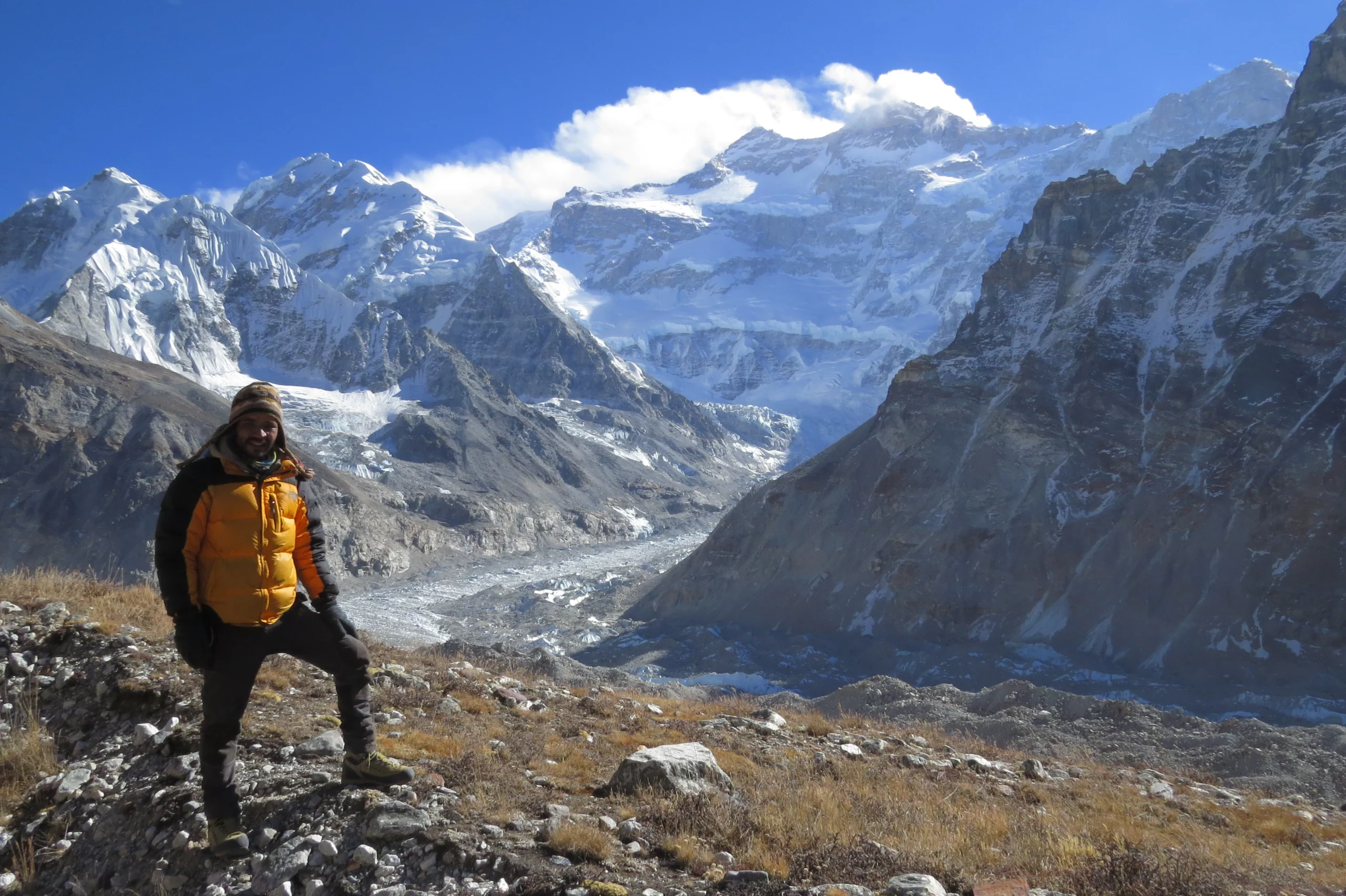
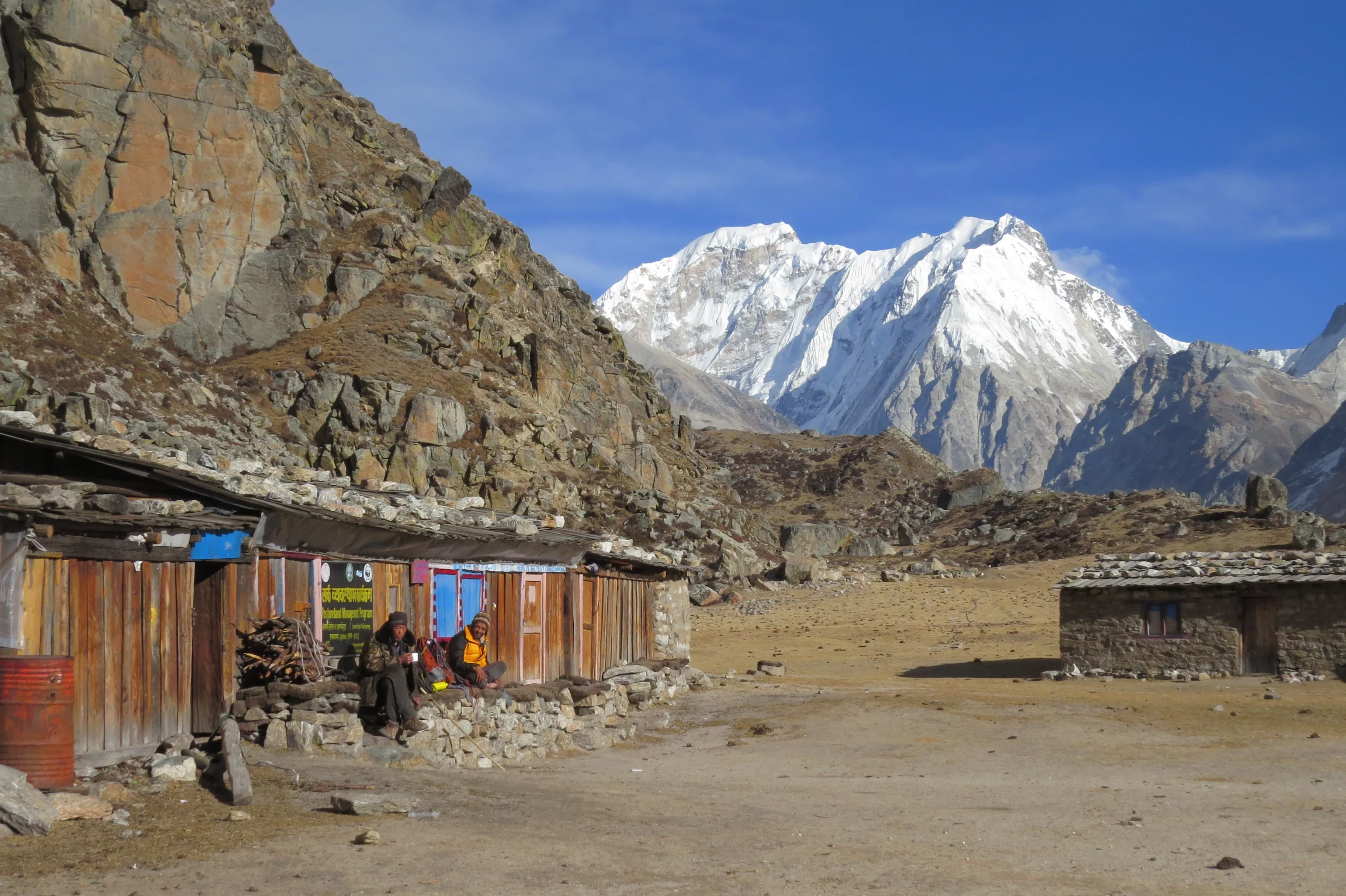
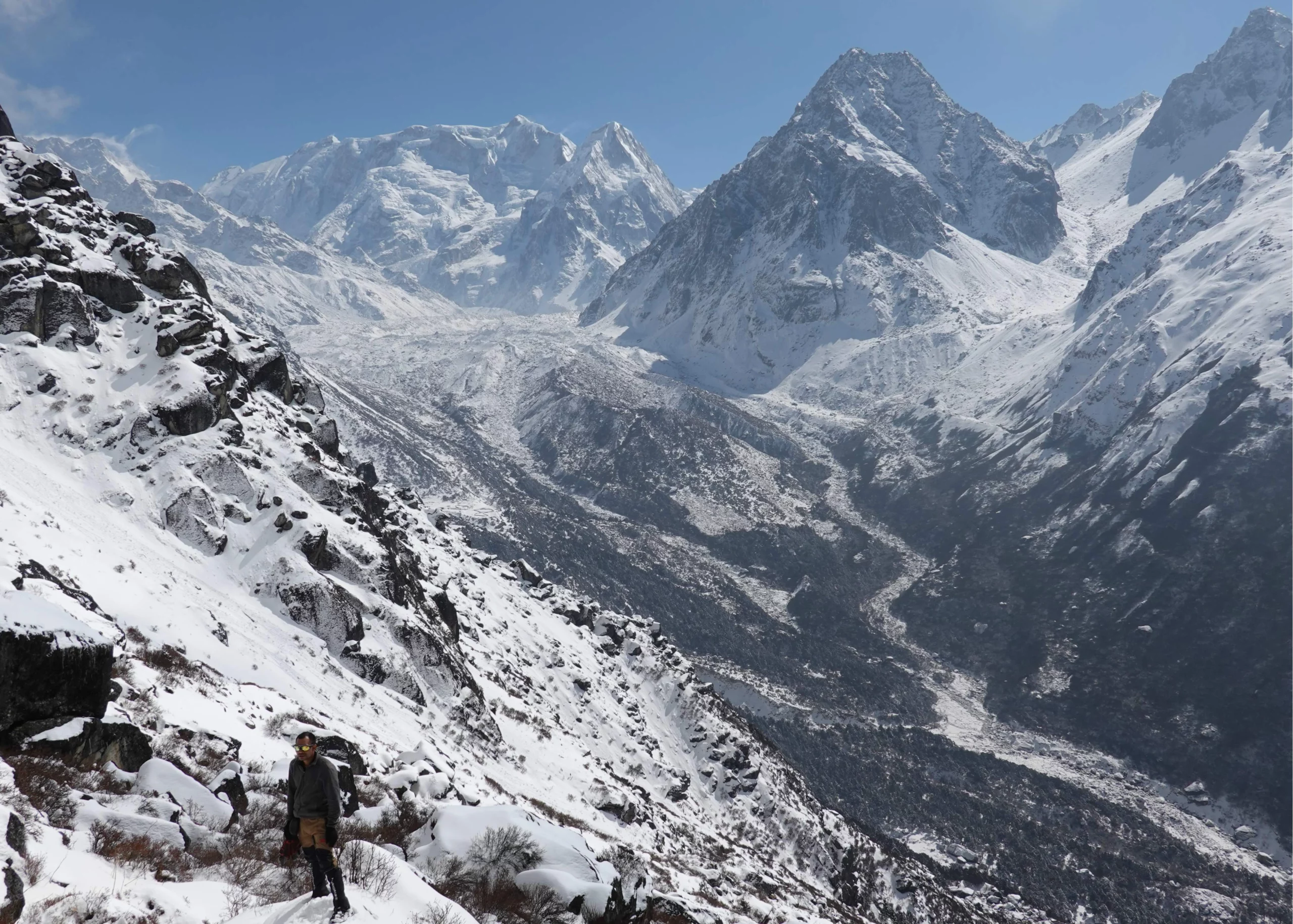
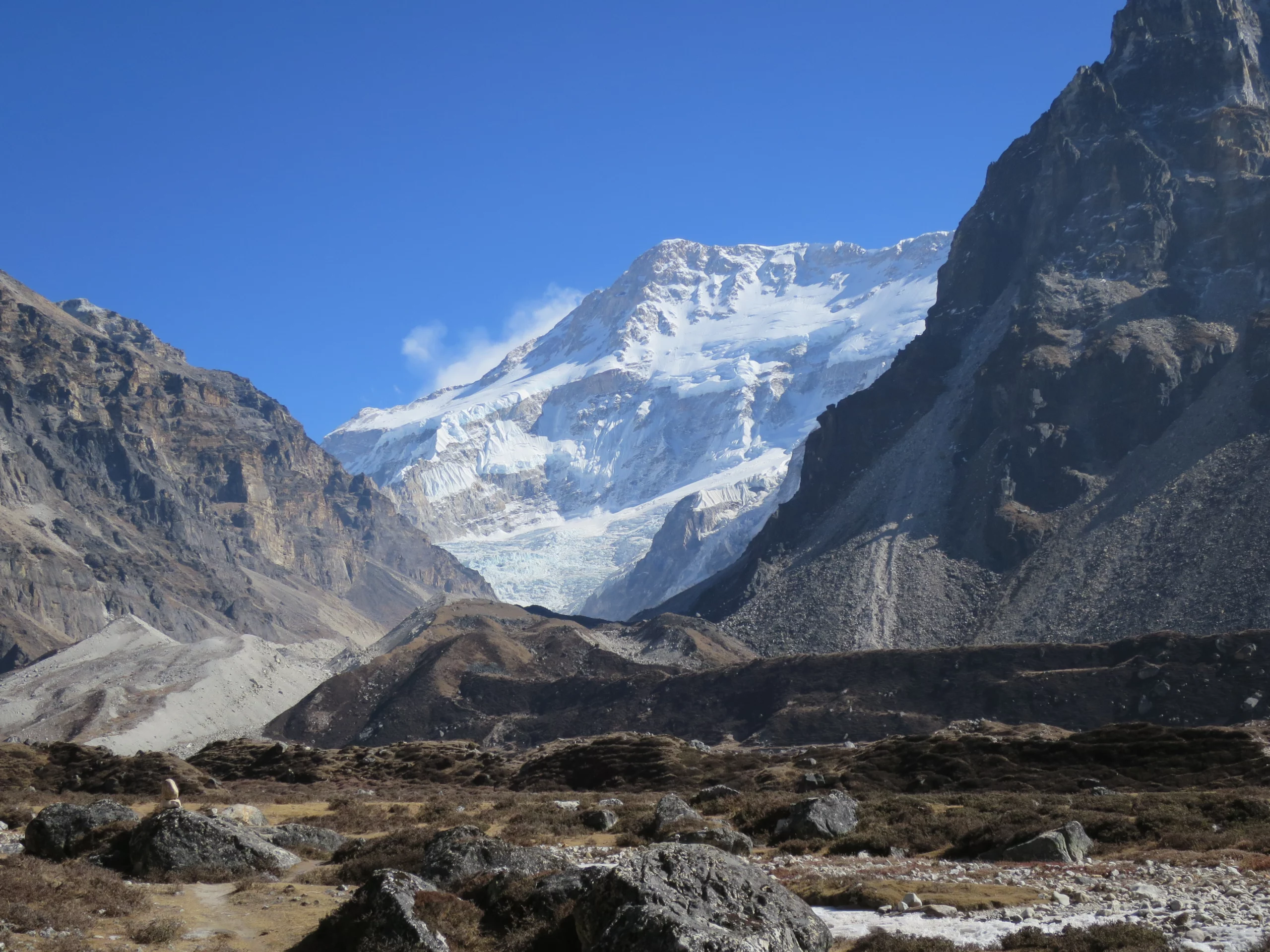
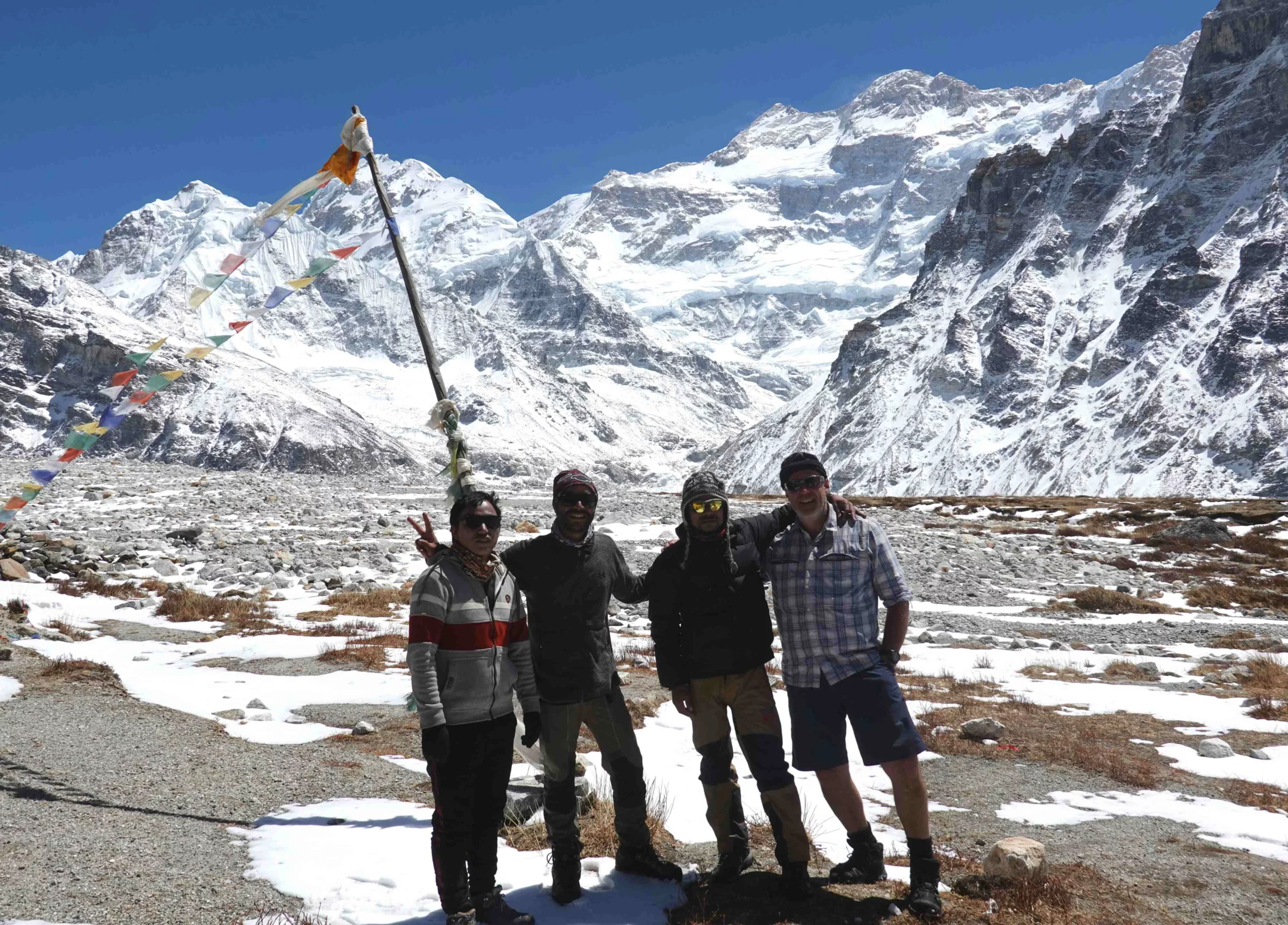
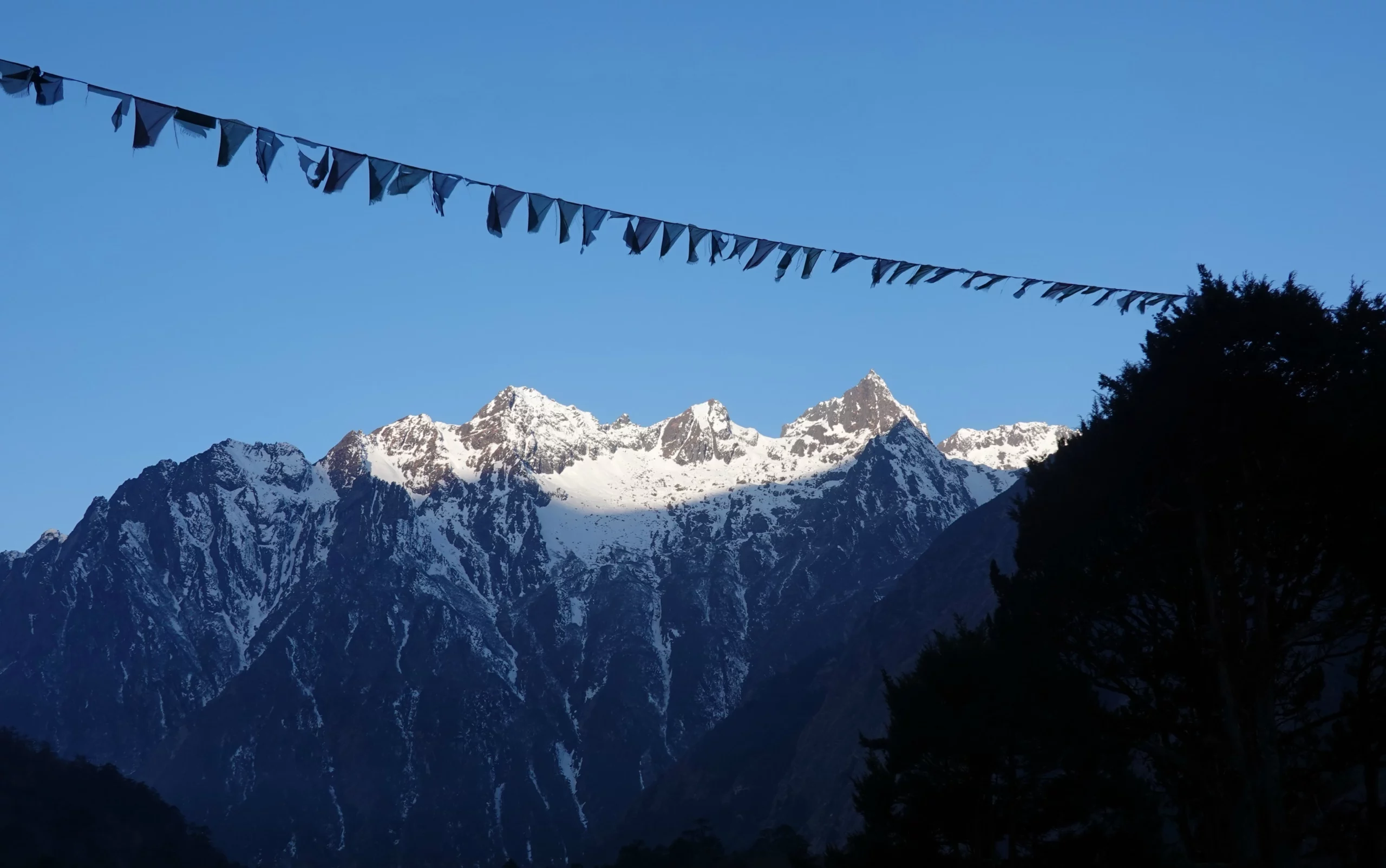
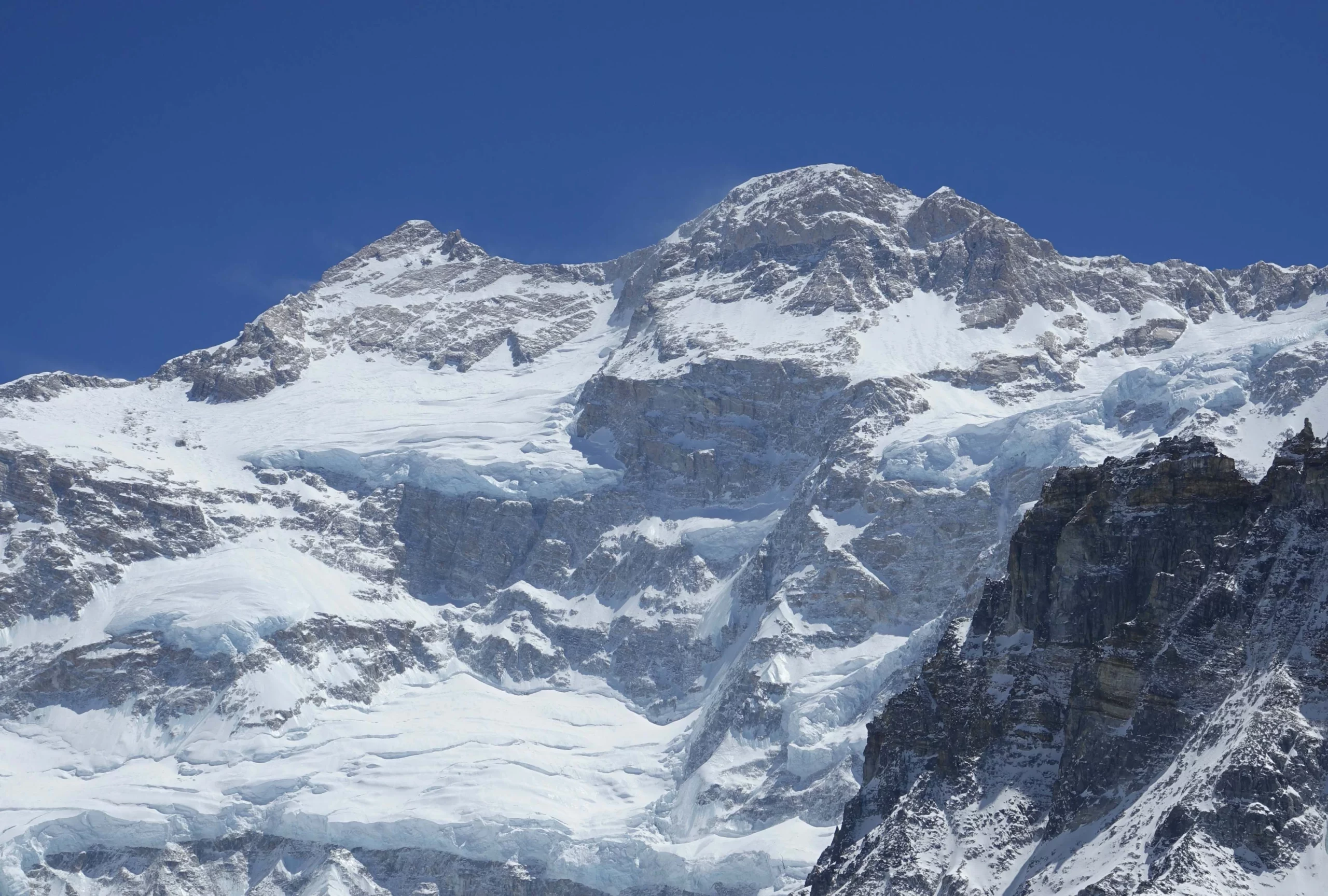
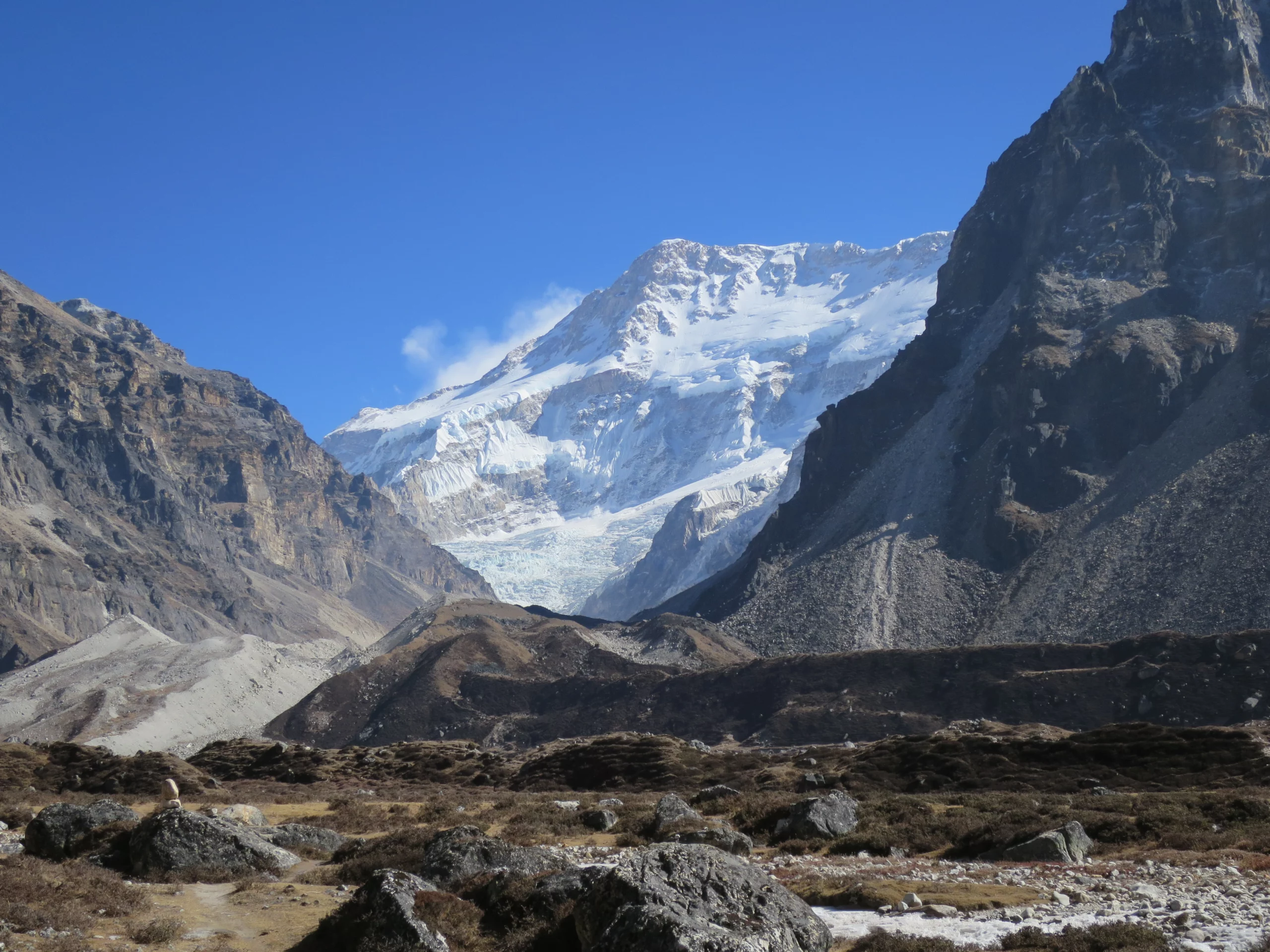
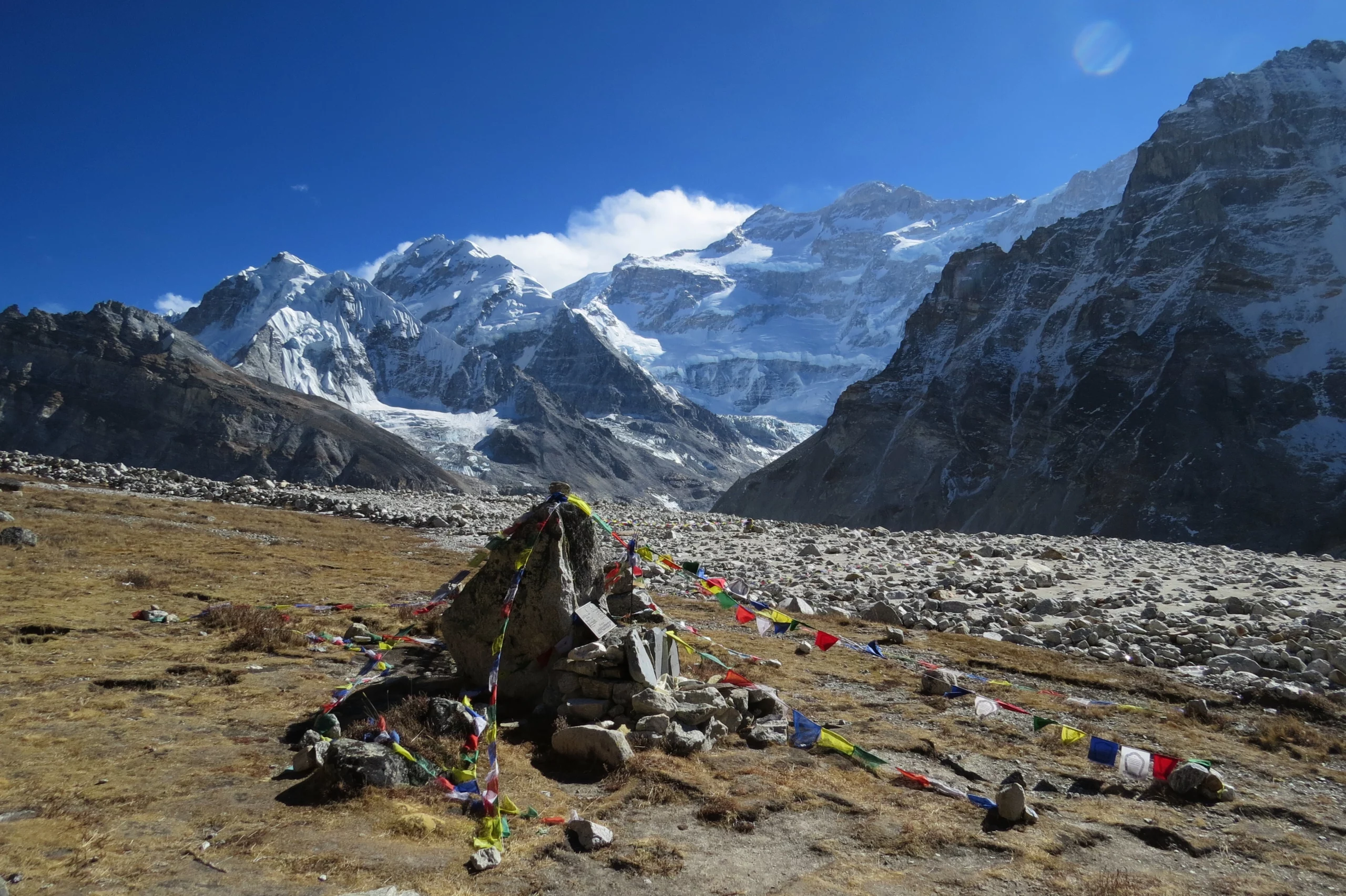
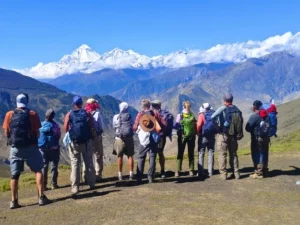
Kanchenjunga, standing tall at 8,586m is not only the third highest mountain in the world but also one of the most mystical and culturally significant peaks on Earth. It is located between the remote borders of Sikkim in India and eastern Nepal. Many travelers visit this region inorder to enjoy its snowy peaks, clean air, quiet valley and amazing views.
Kanchenjunga is not just a tall mountain. For local people it’s a holy place filled with stories, beliefs and traditions. The area around it is also home to beautiful forests, rare animals and friendly mountain villages.
In this article you will learn the Top 10 important facts about the kanchenjunga that every traveler should know. These facts will help you understand the mountain better and appreciate its natural and cultural importance
1. Kanchenjunga: The Third Highest Peak in the World
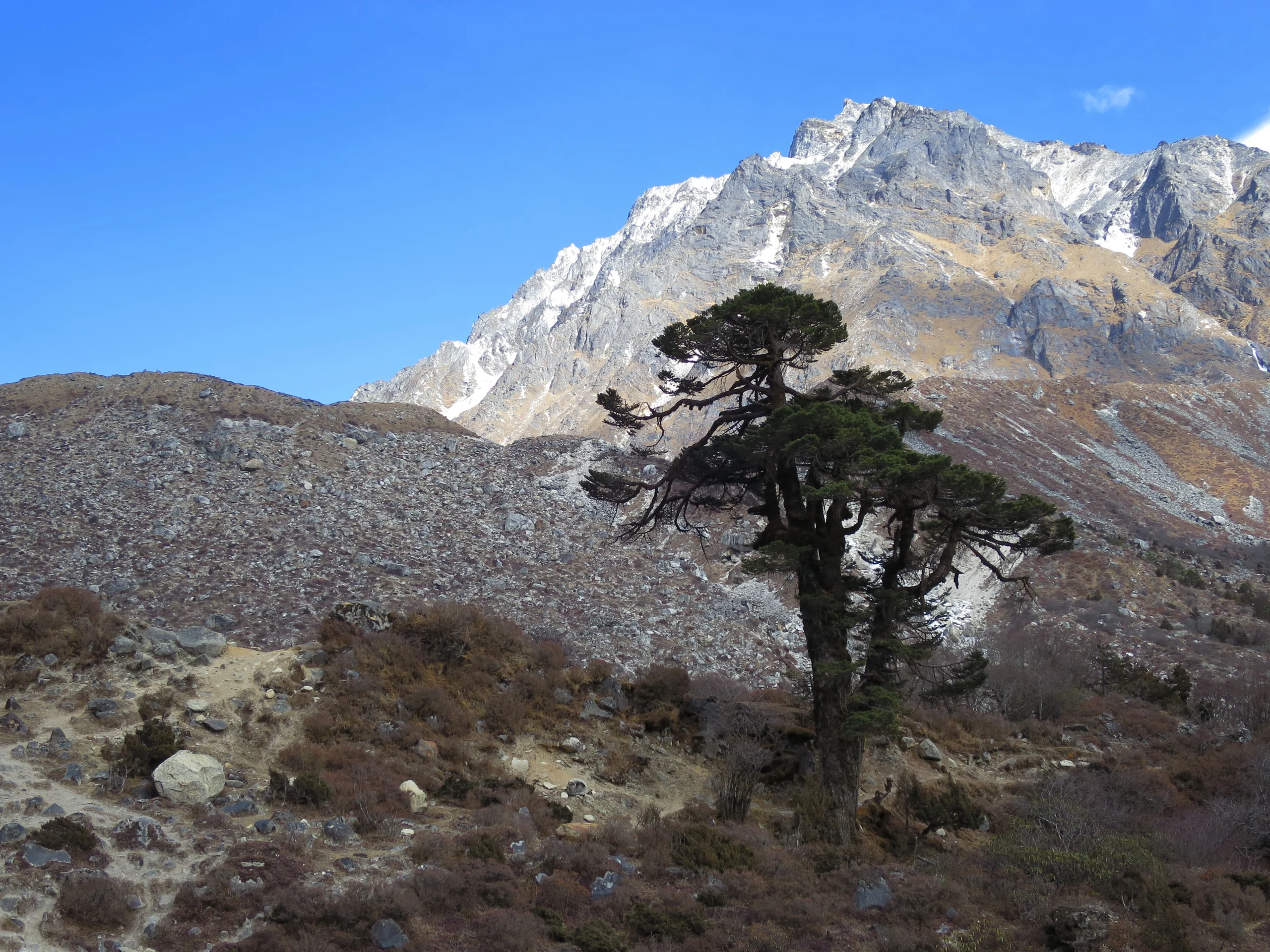
Kanchenjunga is the third highest mountain on Earth, rising to a height of 8,586m (28,169 ft). It stands tall in the eastern himalayas and is known for its massive structure, steep ridges and breathtaking beauty. The mountain is surrounded by the deep valleys, thick forests and snowy landscapes that create a dramatic and awe-inspiring sight.
This mighty peak is a part of the Kanchenjunga Himal range, which includes several other high mountains and glaciers. Because of its remote location, the region is peaceful, untouched and full of natural charm. Unlike Mount Everest or other famous peaks, Kanchenjunga has fewer climbers , making it a more serene and less crowded place for adventures.
Many travelers are drawn to Kanchenjunga not only for its height but also for its mysterious and spiritual aura. The mountain holds a special place in the hearts of local people and visitors often say they feel a deep sense of calm and wonder .
Since the area is quite far-flung, the atmosphere is peaceful and pristine. Neither Mount Everest nor any other prominent peak can match the fewer ascended totals that have reached Kanchenjunga. It is a much more tranquil environment for adventurers.
A large number of adventurers are drwn to Kanchenjunga not only because of its height but also because of the mysterious and religious overtones associated with the mountain. Kanchenjunga is a favorite for the people and a large number of adventurers feel a certain calm and sense of wonder as they observe the mountain. Its looks and religious significance make kanchenjunga one of the most fascinating mountains in the world.
2. Meaning of the Name “Kanchenjunga “
The origin of the name Kanchenjunga is from the Tibetan language and it is the translation of ‘kan-chen-dzo-nga’ and it means ‘Five Treasures of the Snow’. The Five Treasures stand for precious things such as gold, silver, gems, grains, and holy texts. The Five Treasures are believed to have been protected by the mountain spirits. This makes Kanchenjunga not only a geographical location but also a holy site.
The locals also believe the mountain safeguards such treasures and thus provides prosperity and blessings for the neighboring villages. The people living around the Kanchenjunga ranges usually perform religious abd prayers as a symbol of their spiritual bond with the mountain. For the visitor, knowing that addsa is another name for Kanchenjunga introduces a cultural and spiritual dimension to their trip. It helps them understand that Kanchenjunga is more than just an object that can be climbed or photographed it is also a holy place that local people hold in religious esteem.
3. The Sacred Mountain: Why Climbers Respect Its Summit
Kanchenjunga is considered a sacred mountain by the people of Sikkim and Nepal . They believe the summit is the home of gods and climbing to the very top is seeen as disrespectful . Because of this many climbers stop just below the summit following a tradition that shows respect for local beliefs.
This tradition started in the 1950s when the first climbers reached near the top but refused to step on it. Even today , expeditions honoe this rule making kanchenjunga unique among the world’s highest peaks.For travelers knowing the meaning behind the name adds a rich cultural layer to their visit . It reminds them that kanchenjunga is not just a mountain to Photograph it is sacred place. Understanding the local beliefs helps visitors appreciate the land , respect its culture and feel connected to the stories that surround this mahectic peak.
4. Location & Borders: Where Exactly Is Kanchenjunga?
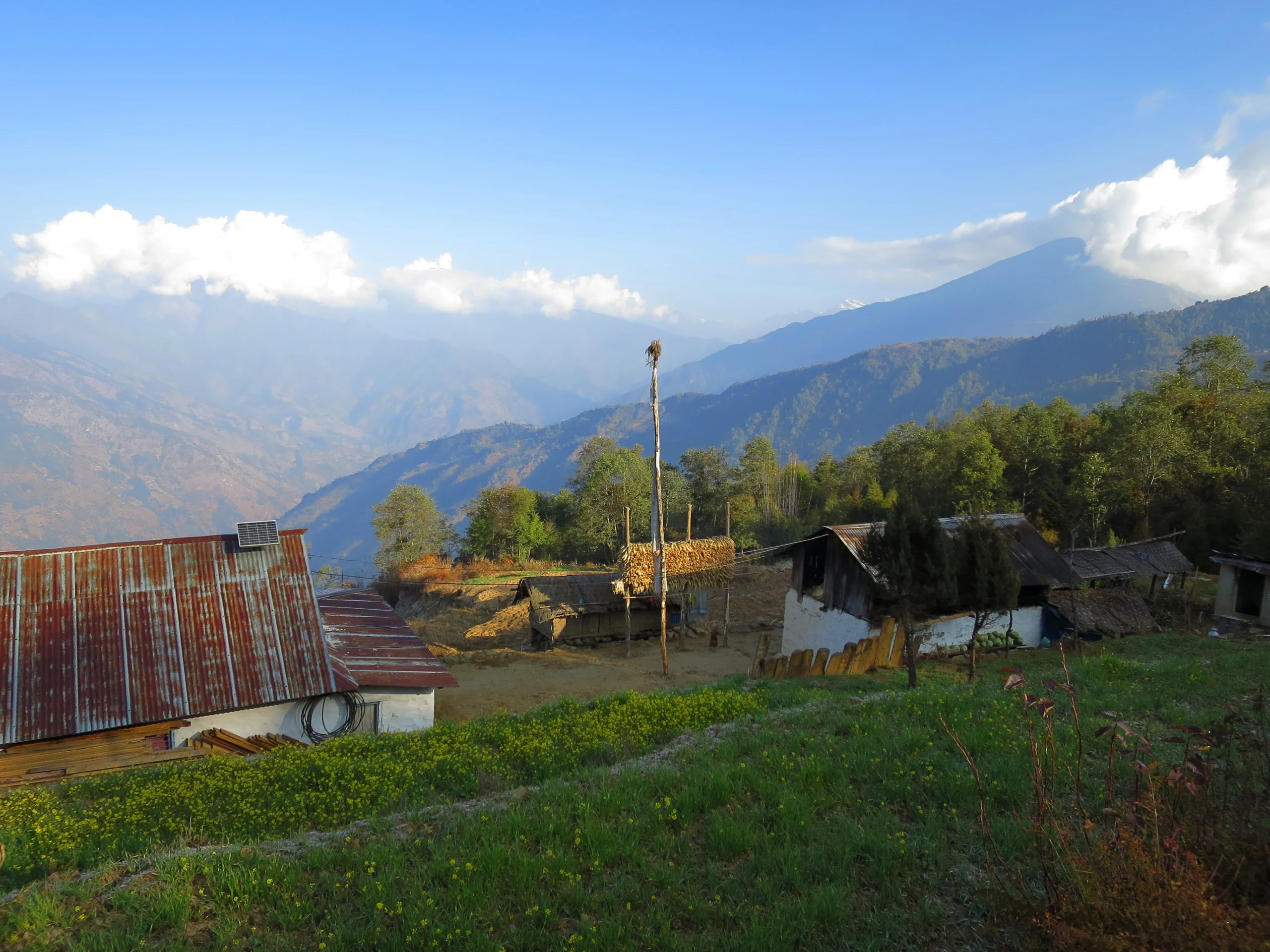
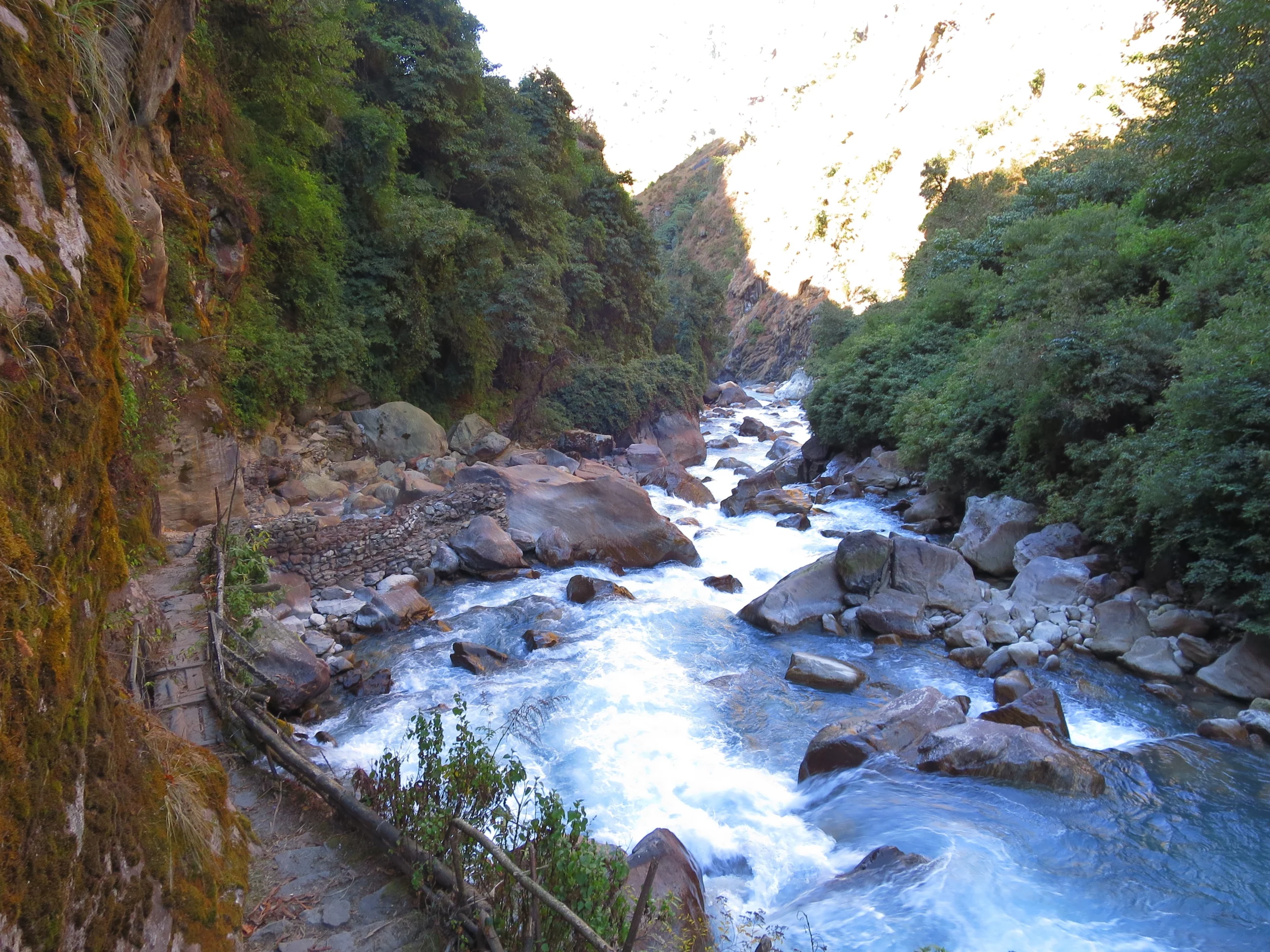
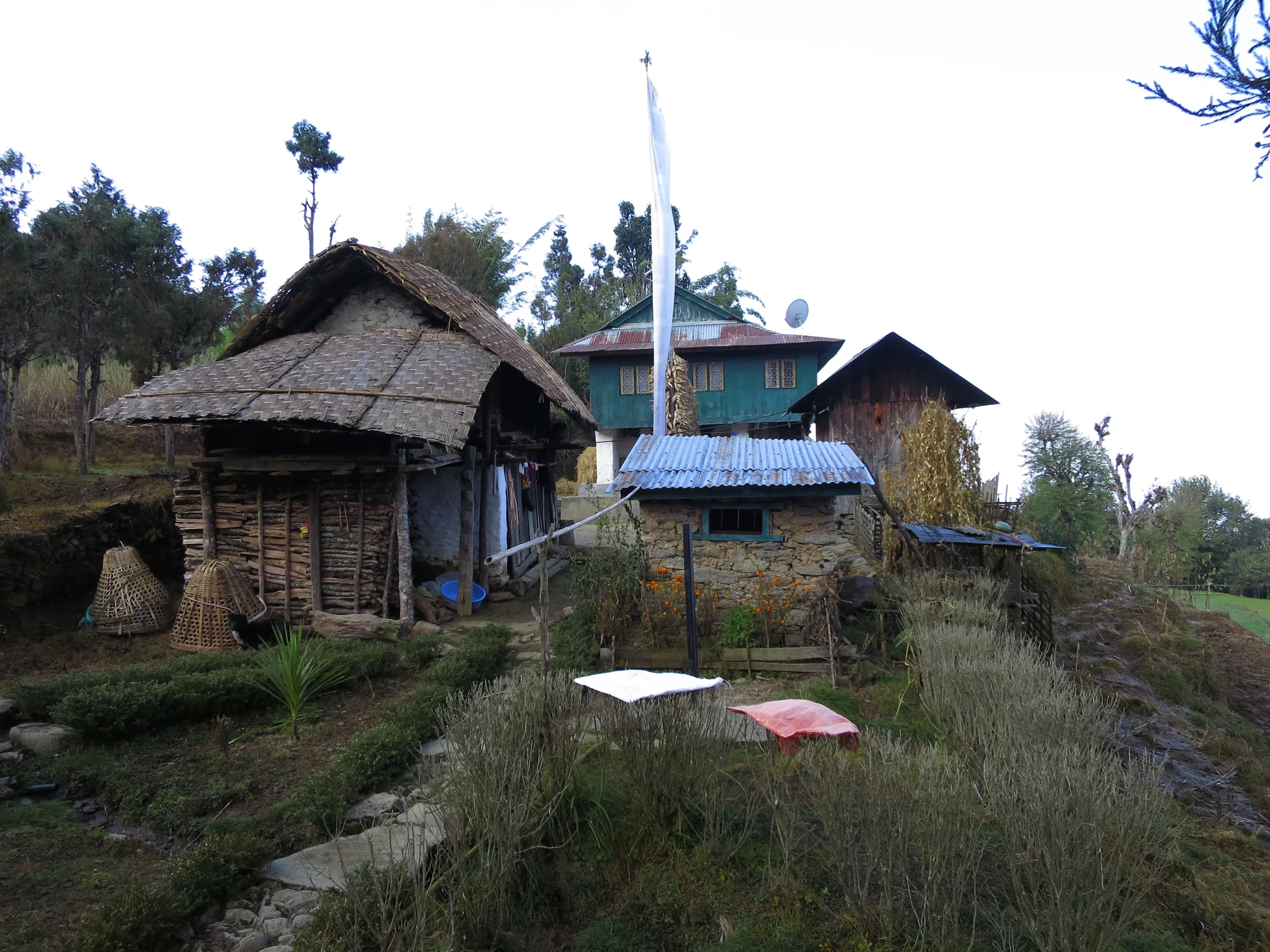
Kanchenjunga is located in the eastern Himalays, forming a natural border between Nepal and Sikkim , india . The area is rugged and remote surrounded by the dense forests , rivers and small villages. Its isolation has helped preserve the natural beauty and the culture of the region.
The mountain is part of the Kanchenjunga Himal range which stretches over hundreds of kilometers. Many trekking routes in the area allow travelers to experience both the Nepali and Indian sides of the mountain each offering unique landscapes and cultures.
Because of its location, Kanchenjunga is less commercialized than other himalayan peaks. This means trekkers and visitors can enjoy a more peaceful and authentic experience surrounded by the nature and untouched wilderness.
5. Unique Flora and Fauna in the Kanchenjunga Region
The Kanchenjunga region is a biodiversity hotspot which is nestled in the eastern Himalayas, offering the travelers a rare opportunity to experience the pristine ecosystems. Its unique combination of altitude , climate and terrain supports a remarkable variety of plants, animals and birds many of which are rare and are endangered.
Flora
The vegetation around the Kanchenjuna varies with the altitudes:
At Lower Elevation s(1000-2500m) : It has lush subtropical forest which is dominated but the oak, pine and bamboo grovers. You will fins flowers like Rhododendron , magnolias and camellias which add the vibrant burst of color during the blooming season aka spring season
Mid-Elevation (2,500-400m) : Mid – Elevation is coevred with the dense temperature forests of fir, birch and hemlock prevail. Alpine meadows will begin to appear with will be dotted with the edelweiss, primulas and gentians which will give the trekkers a painterly landscapes
High Elevations (Above 4000m): In this harsh condition the vegetation allow only hardy alpine flora, mosses, lichens and small flowering plants apated to freezing temperatures are strong winds.
Fauna
The remote and the protected nature of the Kanchenjunga region provides the safest habitat for an impressive range of the wildlife
Mammals
The region is home to the several rare and the endangered mammals including the snow leopard, red panda, Himalayan black bear, musk deer, blue sheep and Himalayan Tahr. Though the sightseeing of them is quite rare due to the animals elusive nature, their presence highlights the ecological importance of that area.
Birdlife
Kanchenjunga is a paradise for the bird watchers, with over 250 species of the birds recorded in the region. Some of the notable species includes the Himalyan monal (Nepal’s national bird), blood pheasant, snow partridge, satyr tragopan and golden eagle. The diverse birdlife adds color, sound and the movement to the trekking experience
Reptiles and Amphibians
In the lower and the mid-elevation zones travelers may encounter various of the frogs, lizards and non-venomous snakes which thrives in the moist forest environments and contributes to the regions ecological balance.
Conservation and Protected Areas
During your Kanchenjunga trek much of the trekking route passes through the Kanchenjunga Conservation Are, Nepal’s Largest protected are. The region is joinyly managed with the involvement of the local communities, promoting the sustainable tourism and wildlife conservation. These efforts helps the preserve the fragile ecosystems while supporting traditional livelihoods.
6. First Successful Ascent: A Historic Achievement
The first successful scent of kanchenjunga was accomplished by the British team in 1955, under the leadership of Charles Evans. The two persons who reached the highest point were identified as Joe Brown and George Band. This is a significant landmark in the history of Himalayan mountaineering, considering the fact that kanchenjunga is one of the remotest mountains in the world.
The most special aspect of this climb is that it honored religious beliefs of the local population. The people of Sikkim and Nepal believe that Kanchenjunga is a holy mountain, and its summit is home to God. In reverence to that, Joe Brown and George Band climbed down a few meters below its summit, and this has remained a tradition that is followed to date by all climbers.
At that time, mountain gear and weather prediction were quite primitive making the expedition highly dangerous. The success of the 1955 expedition proved that there was not only skill and endurance involved but also cultural delicacy and lack of arrogance. They handled the situation with grace and respect that came from both the mountaineers and the locals in admirationFor the tourist, the story of the first ascent of kanchenjunga is more than a mere historical event; it holds significance and meaning. The first ascent of kanchenjunga is one of the few instances where there is a balance between the human achievement and the religious reverence that kanchenjunga is distinct from the other highest.
7. Challenging Terrain: Why Kanchenjunga Is One of the Toughest Climb
Kanchenjunga is famously known as one of the most difficult, as well as a dangerous peak, to be ascended in the whole wide world. It is, in fact, the third-highest mountains in the world, but still, it gets fewer climbers than that of Everest or K2 mountains.Reasons that make kanchenjunga the most difficult mountains to be climbed are as follows
Severe Weather Conditions
The mountain has unpredictable climatic changes. High-speed wind, intense snowfall, and extreme cold weather are most prevalent in this region, even during peak climbing seasons. Electrical storms may suddenly emerge, resulting in low visibility, the danger of frostbite, as well as avalanches. Such extreme factors make it difficult for climbers.
Steep Slopes and Technical Difficulty
Kanchenjunga has steep ridges, ice walls, and massive glaciers. A great number of sections will demand high technical skills, ice climbing, and snow and rock navigation. The mountain has long routes that will call for physical endurance coupled with psychological strength to push the mountaineers to their limit.
High Risk of Avalanches and Icefalls
The mountain has a history of frequent avalanches and collapsing icefalls, which pose serious threats to the climbers. Glaciers shift constantly and snow conditions can become unstable, especially after the heavy snowfall. These dangers make Kanchenjunga one of the riskier 8000m peaks.
Remote location and Limited Rescue Options
Kanchenjunga is located in the remote and less accessible region of the himalayas. Rescue operations are difficult due to the limited infrastructure, long distances and unpredictable weather. This isolation means climbers must be highly self-reliant and well-prepared for the emergencies
High Fatality Rate
Because of all these challenges, kanchenjunga has historically had a higher fatality rate compared to the many major peaks. The combination of technical difficulty, weather hazards and remoteness makes it a serious undertaking the suitable only of highly experienced mountaineers
For traveler and trekker enthusiasts, understanding these challenges builds greater respect for the mountain. Kanchenjunga is not just tall it is powerful demanding and unforgiving, earning its reputation as one of the toughest climbs on Earth.
8. Best Viewpoints for Travelers
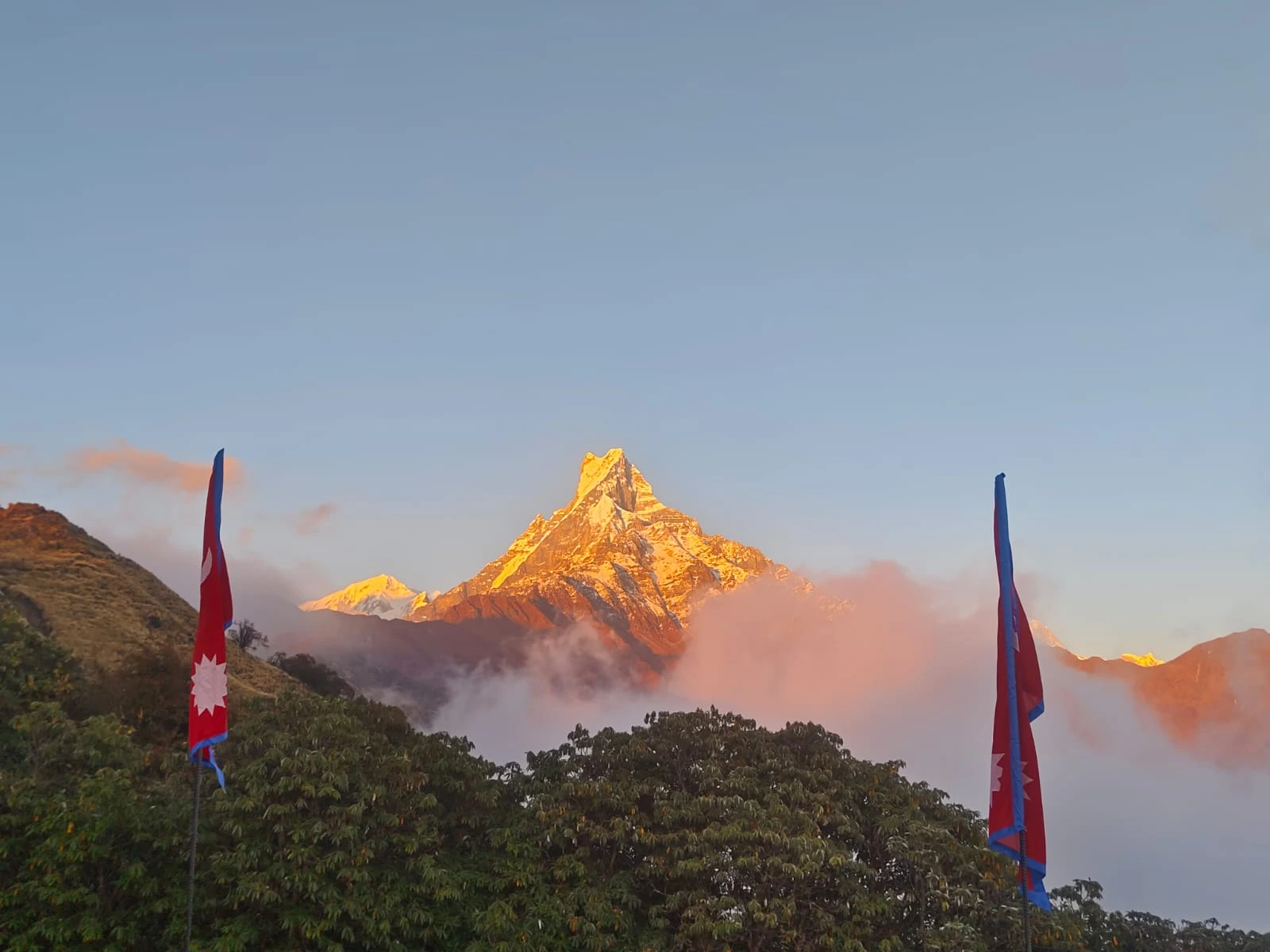
Kanchenjunga is one of the most beautiful and revered mountains in the world and the best part is that traveler donot need to climb it to enjoy its breathtaking beauty. Several viewpoints across the Nepal, Sikkim and Darjeeling which offers the spectacular panoramic views of the Kanchenjunga massif especially during the clear morning when the peaks glow in the golden light.
Pang Pema itself is one of the finest viewpoints of the kanchenjunga. From here, travelers can witness the massive north face of the Kanchenjunga along with the surrounding peaks, glaciers and icefalls. The sheer scales and the remoteness makes this viewpoint the unforgettable one.
Oktang (South Base Camp )
Oktang offers dramatic views of the south face of kanchenjunga and the stunning Yalung Glacier. The rugged terrain , icefalls and the towering peaks provide a closer and more intense perspective of the mountain’s wild character.
Lhonak Valley
Lhonak valley is located on the North Base Camp route, the Lhonak valley provides the expansive views of the Kanchenjunga , Jannu (Kumbhajkarna) and other high peaks. Its wide, open landscape and the glacials scenery makes ot one of the most scenic areas of the trek.
Sele La Pass(4,290m)
Slele La is high mountain pass which offers the panoramic views of kanchenjunga including the surrounding Himalayan ranges. Prayers flags fluttering in the wind adds the spiritual atmosphere to this breathtaking viewpoint.
Here is the list of Viewpoint from Sikkim and Darjeeling
Gurudongmar Lake Region
Dzongri Viewpoint
Goecha La
Tiger Hill
Observatory Hill
9. Kanchenjunga Base Camp Treks (North & South Routes)
The Kanchenjunga Base Camp Trek is one of the most remote and rewarding trekking experiences in the himalayas. Unlike the crowded routes in the Everest or Annapurna regions, this trek takes the travelers deep into the untouched landscapes, traditional villages and pristine mountain wilderness. The trek offers the two main routes: North Base Camp and South Base Camp, while each of them provides the different perspective of the kanchenjunga.
North Kanchenjunga Base Camp (Pang Pema)
The North Base Camp also known as Pang Pema, lies at an altitude of approximately 5,140m . This route offers breathtaking views of the massive north dace of the Kanchenjunga along with the surrounding peaks and glaciers. Trekkers walk through the alpine forests, river valets and high mountains terrain before reaching to the base camp.
The North Base Camp trek is less technically demanding than south route but still requires the good physical fitness and proper acclimatization . It is ideal for the trekkers who wants to dramatic mountain views without the extreme technical challenges
South Kanchenjunga Base Camp (Oktang)
The South Base Camp, called Oktang is situated at about 4,700m . This route is known for its stunning views of glaciers, icefalls and the impressive Yalung Glaciers, The south side offers the closer views of the mountains rugged and he dramatic features.
This route is slightly more challenging due to the steeper trails and the longer walking days. However, it rewards the trekkers with the spectacular scenery and a deeper sense of the wilderness and isolation
10. Myths, Legends, and Local Beliefs
Kanchenjunga is not just the third-highest mountain in the world. It is a sacred and is deeply spiritual peak which is revered by the local communities in the eastern Nepal, Sikkim and the Tibet. For centuries the mountain has been surrounded by the myths, legends and religious beliefs that adds up the powerful cultural dimension to the trekking experience.
The Sacred Five Treasures of the Kanchenjunga
The name Kanchenjunga comes from the Tibetan words meaning “ The five Treasures of the Great Snow “ . These five treasures symbolize gold , silver, precious stones, grains and the holy scriptures which is believed to be hidden within the mountain. According to the legend, these treasures will be revealed to the humanity only when the world faces the extreme hardship , making the Kanchenjunga a guardian of the future prosperity.
Protector Deities and Mountain Spirits
Local communities , especially the limby, Rai , Sherpa and Tibetan Buddhist people believe that the kanchenunga is the home to the powerful mountain deites. The mountain is regarded as the protector god, watching over the land, people and wildlife. Many villagers perform ritual and offers the prayers before journeys , harvests or major life events to seek the blessing from the mountain spirits. In Tibetan Buddhism, kanchenjunga is considered as the “ Dzonga” which is a sacred hidden valley blessed by the Guru Rinpoche(Padmasambhava). It is believed that the spiritual energy flows strongly in this region and many monks meditate here seeking the enlightenment and the inner peace.
The legend of Yeti (The Abominable Snowman)
Kanchenjunga is also one of the region which is most commonly associated with the yeti folklore. Locals tells the stories of large, mysterious footprints which are found in the snow and encounters with a giant, human-like creature believed to be inhabit the high himalayan wilderness. While modern science remain very skeptical, the yeti legend remains an important part of the local storytelling as well as the cultural identity.
Respect for the Summit : A Sacred Tradition
One of the most unique traditions which is related to the Kanchenjunga is the belief that humans shouldnot step on its true summit. Out of respect for the mountain deity climbers traditionally stop a few meters below the peak. This practice began with the forest successful ascent in the 1955 and is continue to be honore by many of the mountaineers today.
Nature as a living Entity
For the indigenous people of the kanchenjunga region nature is alive and sacred. Rivers, forests, glaciers and mountains are believed to have spirits. Harming the nature without the respect is thought to bring the misfortune. This belief has helped to preserve the region’s pristine environments and rich biodiversity.
Trekking to the kanchenjunga Base Camp is more than physical adventure ot is a journey into the living mythology and ancient belief systems. The isolation, silence and raw beauty of the region allows the trekkers to feel a profound connection with the mountain, culture and spirituality that have shaped life here for the generations.
Why You should choose Kanchenjunga Trek ?
The Kanchenjunga Trek is an ideal choice for trekkers who wants a deep meaningful, and adventurous Himalayan experience far from the bust and commercial trekking routes, As one of the Nepal’s most remote region, it offers the true wilderness, where trails pass through the untouched forests, dramatic valleys, massive glaciers and the high alpine landscapes dominated bu the majestic presence of the Mount Kanchenjunga, the world third highest peak.
Beyond its natureal beauty , the trek is rich in cultural and spiritual significance with ecounters among Limbu, Rai , Sherpa and Tinetan-influenced communities whose traditional lifestyles, monasteries , prayer flags, and rituals reflect a profound respect for nature The mountain itself is considered sacredand ancient beliefs along with the Yeti Lagends which obviulusly goves the region a mystical atmosphere . Trekking through the Kanchenjunga Conservation Area also allows the travelers to experience remarkable biodiversity, including rare wildlife and pristine ecosystems that have been prepserved through the local beliefs and the limited human impact.
Although the trek is physically demanding and the best suited for the experienced trekkers . The trek will reward you with the immense solitude, raw natural beauty , cultural authenticity and powerful connection to the mountains that few other treks in Nepal can offers.
Which is the best season to go to Kanchenjunga Trek
The best seasons to go onn the Kanchenjunga Tek are spring and autumn as these periods offers the most stable weather, clear mountain views and safer trekking condition in this remote Himalayan region .
Spring (March to May)
Spring is one of the most ideal seasons for the Kanchenjunga Trek. During this time , the weather is generally stable and the temperatures gradually warm as winter fades. In the lower trekking area (1500-2500m), daytime temperatures ranges form the 10°C to 20°C while nights are cool but comfortable around 5°C to 10°C in the higher regions (4000-5000m ) daytime temperatures average 0°C to 10°C, dropping to -5°C to -10°C at night.
The forests burst into the color with blooming rhododendrons, magnolias and the wildflowers creating some of the most scenic landscapes of the year. In terms of visibility its excellent making the spring perfect for the mountain views and the photography and the trails are generally in the good condition after the winter snow begins to melt.
Autumn (September to November )
Autumn is equally popular and often considered as the best overall season for the Kanchenjunga Trek. After the monsoon rains, the air becomes the crisp and clean, offering the outstanding visibility of the himalayan peaks. In the lower regions, daytime temperatures ranges between 12°C and 22°C, with nighttime temperatures around 5°C to 10°C. In the upper elevations, daytime temperatures usually stays between the -2°C and 8°C, while nights can fall to -8°C to -15°C.The weather is dry ans stable, days are mostly sunny and the risk of landslides is minimal making the trekking safer and more enjoyable. Additionally major cultual festival such as Dashian and Tihar often occurs during this season so people are on festive mode , resulting them to be more welcoming than ever. Meaning you will get chance to experience the festival, culture and tradition.
Winter (December to February)
Winter trekking in the Kanchenjunga is possible but extremely challenging and recemmende only for every experienced trekkers. In the lower areas, daytime temperatures ranges form the 5°C to 12°C, but nights can drop close to 0°C or below. In the higher regions temperatures remain well below the freezing with the daytime temperature being around the -5°C to 5°C and nighttime temperatures plunging to -15°C to -25°C. . In the winter season due to the heavy snowfall it can block the high passes and the trails which makes the trekking more difficult and sometimes w=impossible. However those who venture during winter are rewarded with incredible solitude and the crystal-clear mountains views
Monsoon (June to August)
The monsoon season is not recommended for the Kanchenjunga Trek. During this period, the lower regions experince the warm and humid conditions with daytime temperatures between the 20°C and 30°C, which higher areas remains the cooler at around 5°C to 15°C. Heavy rainfall leads to slippery trails, frequent landslides, swollen rivers and the leech-infested forests. Cloud often coves the mountain views and trekking kind of becomes more uncomfortable and risky
Overall , Spring (March-May) and autumn (Spetemer-November) are the most suitable seasons for the Kanchenjunga Trek offering the stable weather, comfortable temperatures and clear mountain views, Autumn is especially favored fr its reliability while spring out for its colorful landscapes and the mild conditions.
Ready to book your trip with us? Fill out the inquiry form below
Final Say
Kanchenjuga is more than just the third highest mountain in the world. It is a land of deep spirituality , untouched wilderness and raw himalayan adventure. From its powerful height of 8,586m to the sacred meaning behind its na,e Kanchenjunga holds a unique place in both nature and culture. Every fact about this mighty peak revelas why it remains one of the most respected and the mysterious mountains o Earth. For travelers seeking the peace, authenticity and a true connection with the himalayas , the kanchenjunga region offers something truly special .
Its remote trails rich biodiversity, ancient traditions and respectful climbing culture make it stand apart form more than other commercial trekking destinations. Understanding these key facts before visiting heps travelers appreciate not only the mountain’s physical beauty but also its spiritual and cultural importance to local communities.
Nature Explore Trek organizes Kanchenjunga trek every season , especially in spring and autumn season with the experience guides and strong reliable porters who know the region extremely well. Our Knowlegdeable team understands the trails , culture, and challenges of this remote area and is dedicated to providing the safe comfortable and high-quality service throughthe journey.
Kanchenjunga Base Camp Trek is located in the eastern part of Nepal, which lies in the Taplejung district of Nepal and the Kanchenjunga trekking trail leads the adventure seekers to visit the massive, beautiful Mt. Kanchenjunga base camps like North base camp and South base camp. Mt. Kanchenjunga stands at an elevation of (alt. 8586 m (28160 ft); it is the world’s third-highest mountain, which is bordering Nepal and is south of Sikkim, India.Kanchenjunga trek has three popular trekking routes like kanchenjung north base camp trek- 15 -17 days, Kanchenjung full circuit trek -22 days and south kanchenjunga base camp trek -14/15 days.
The Kanchenjunga base camp trek itinerary basically starts from Taplejung after a scenic flight from Kathmandu to Bhadrapur, Jhapa, and a drive from Bhadrapur to Taplejung. There are three different itineraries you can follow to reach to the Kanchenjunga base camp such as if you do the north base camp kanchenjunga it takes 15/16 days and if you plan to visit the both base camp north and south base camp it takes 20-22 days in total. Most adventure lovers used to visit both base camp treks at once, as they are very beautiful, remote wilderness trekking trails where you can see the magnificent views of the Mt. Kanchenjunga range and Mt. Janu, which includes several mountain views and cultural diversities of the eastern part of Nepal. Only a few groups or individuals used to visit the only south base camp as the north base camp of Kanchenjunga is a more popular and beautiful trail.
Here are the three separate itineraries of the Kanchenjunga trek for 2026 & 2027 :
Kanchenjunga North Base Camp alt.5,143 meters
Kanchenjunga North base camp Trek Itinerary 2026/2027:
The Kanchenjunga north base camp trek is one of the short and sweet treks that leads you to reach the north side of Kanchenjunga base camp at an elevation of 5100m above sea level. The Kanchenjunga base camp trek is a very beautiful trail that lies in the beautiful landscapes of eastern Nepal. It offers the magnificent views of the Kanchenjunga mountains, and Janu Himal (known as the Kumbakarna Himal) includes a number of beautiful peaks. Moreover, the trail leads you through the traditional villages, charming people and fascinating culture and nature surrounding the trail. You may encounter the Red panda , wildlife, Himalayan Leo pard in distance sometime and many more animals that we can see along the trek to Kanchenjunga base camp.
The Kanchenjunga north base camp trek itinerary takes approximately 15 to 17 days in total from Kathmandu to return to Kathmandu. After taking a flight from Kathmandu to Bhadrapur and taking a long drive to Taplejung, basically, the trek starts from here. You will walk through the lush forest, passing through the Rai, Limbu and Sherpa people villages, beautiful views of Hills, snowscapes, and Mountains add more beauty along the trek to Ghunsa (alt. 3500 m). reaching to ghunsha you don’t feel it harder as the trail goes; it simply easily ascends and descends along the Tamor river and Ghunsha Khola.
After the Ghunsha you can feel the higher altitude, as the trek route lies above 3500m. Ghunsha – Khambachen and Lonak are the higher section of this trek as the routes leads you mountains, glaciers, and higher hills and in the meantime you can feel the less Oxyzen on buddy as you reach above the 3500m above where we find the less greenery more dries. But the higher region of the trek is more beautiful, as you can see the close views of the Mt. Kanchenjunga ranges and other mountain views.
Reaching Kanchenjunga North base camp (Pangpema BC alt. 5100m) is your biggest achievement—to stretch your legs at the third tallest mountain base camp. You can have a great view of Mt. Kanchenjunga north face, which includes hundreds of beautiful peaks surrounded by it. After accomplishing the goal to reach Kanchenjunga north base camp, north base camp trek routes take you back to Taplejung in a 4-5 day descent. The trail is familiar, as you used to hike the same route on the way up.
General itinerary
Day 1: Arrive in Nepal and transfer to your Hotel alt. 1300m
One of our representatives will pick you up at the airport and transport you to your Hotel. Rest and relax after the long flight to Kathmandu.
Welcome to dinner.
Interaction with guide
Trek briefing.
Day 2: Trip preparation:
Today is your day for preparation. After breakfast your guide will meet at the hotel and check your gear items. If you don’t bring it along with you, you can still buy it in Kathmandu. We will show you the good shops.
Preparing for the trek
Packing bags
Making permits
Rest and preparation for the journey to Taplejung (next day).
Breakfast is included.
Day 3: Fly to Bhadrapur and Drive to Taplejung—7 hrs. Alt. 1820m – 246km
Early morning flight to Bhadrapur from Kathmandu (45 minutes) and drive to Taplejung by jeep in 7-8 hrs.
Guide will meet at Hotel 6:30 am
Drive to domestic airport and fly to Bhadrapur
Drive to Taplejung via the Ilam tea garden, Pachhtahr, and Phidim. 7-8 hrs
Overnight at Tamlejung Lodge
Included: Breakfast, Lunch and Dinner
Hot drinks – Tea or Coffee after each meal.
Day 4: Drive to Sekathum or Japantar, depending on road conditions. 5 hrs (alt. 1650 m) Ft. 5412), 40-45km.
After breakfast, you will drive to Sekarthum or Japantar, depending on the road conditions. It takes 4-5 hours off-road. Gradually ascends and descends.
It crosses several traditions, charming people, culture…
We can see the snowscapes, Hills , Mountains Rivers
Crossing the suspensions bridge
Eat at local restaurants
Stop sometimes for toilets
Overnight at teahouse,
Included: Breakfast, Lunch and Dinner
Hot drinks – Tea or Coffee after each meal.
Day 5: Trek from Sekathup to Amjilhasa , 6 Hrs , alt. 2495 ft (8183), 6 km.
Gradually ascending through the Tamor river, you will cross the suspension bridge and explore the traditional villages, local people and their lifestyle.
Gradually ascends to 800m more in higher elevation.
Follow the Tamor river, which is a very famous river in Nepal.
Stop for lunch and enjoy the views and every moment of nepalese culture, nature and landscapes.
Overnight at teahouse,
Included: Breakfast, Lunch and Dinner
Hot drinks – Tea or Coffee after each meal.
Day 6: Trek from Amjilhasa to Gyabla, 4-5 hrs (alt. 2725 ft, 8938) 8.5km
Another 6-7 hr hike day starts after breakfast. The gradual ascents and descents take 6 to 7 hours to reach Gyabla from Amjilhasa. Trek through the peace and quiet and cross the lush forest of rhododendron, Bamboo , oak pine trees.
Trek 6-7 hrs
Cross the beautiful forest of rhododendron, Bamboo and
You may see the Red panda and more wildlife animals.
Beautiful views of mountains, snowscapes
Stop for lunch on the way.
Overnight at teahouse,
Included: Breakfast, Lunch and Dinner
Hot drinks – Tea or Coffee after each meal.
Day 7: Trek from Gyabla to Ghunsha. 6 hrs (alt. 3418 m, 1106 ft) 11km.
Another great adventure day starts after the warm breakfast. The trail gradually ascends to Ghunsha today. Along the way you will see the nice views of mountains, snowcapes and the beautiful views of the lower sections of the trek as you reach the higher region of the valley and you can look back a long way down with beautiful scenery. Reaching Ghunsa, you find more facilities like hot showers, internet, comfortable beds and clean lodges, delicious foods, etc.
6-7 hrs walk
Stop for lunch
Enjoy the views
Gradually ascends and descends
Overnight at teahouse,
Included: Breakfast, Lunch and Dinner
Hot drinks – Tea or Coffee after each meal.
Day 8: Rest day
Today is a rest day. You can start the day late. After breakfast we can do the short hike, about a couple of hundred meters up from Ghunsha for proper acclimatization. This will help you go to a higher elevation on the trek.
Rest and relax after the return from the hike.
Hot Shower and talk with your family, as we can get the internet here.
You can also do the laundry yourself if needed
Explore the Ghunsha and enjoy the stay
Overnight at teahouse,
Included: Breakfast, Lunch and Dinner
Hot drinks – Tea or Coffee after each meal.
Day 9: Trek from Ghunsha to Khambachen—6-7 hrs (alt. 4150m Ft.13641) 10-11km.
After breakfast we start the trek to Khambachen from Ghunsha. As the trail goes up through the lush forest and hills, we cross the waterfall and glaciers. Before we reach Khambachen, you can see the Janu mountain views in the distance. Khambachen is one of the beautiful spots where we spend the night, which is surrounded by the mountains and rivers.
7 hrs walk
Stop for lunchalong the trail.
Gradual ascents from Ghunsha
Walk through the forest, hills, and glaciers.
First views of Janu mountain.
Overnight at teahouse,
Included: Breakfast, Lunch and Dinner
Hot drinks – Tea or Coffee after each meal.
Day 10: Visit the Mt. Janu base camp Known as the Kumbakarna mountain)
Janu mountain (Kumbakarna) is a very beautiful mountain on this trek. From Khambachen we recommend you visit this secret mountain base camp for closer views, which takes 4-5 hours from Khambachen.
Mesmerize you by Janu mountain views
Another great acclimatization day before reach to Pangpema north base camp
Hike 4-5 hrs and return.
Enjoy the splendid views of mountain ranges in the distance
Packing lunch
Afternoon rest and relaxation.
Overnight at teahouse,
Included: Breakfast, Lunch and Dinner
Hot drinks – Tea or Coffee after each meal.
Day 11: Trek from Khambachen to Lonak, 6-7 hrs, alt. 4795 m (15727 ft) 10km
Another big day of this trek. We will gently follow the bank of the river before reaching the Ramtang monastery in three – four hours. Continue the trek to Lonak, gradually ascending another 3 hrs. Today trek is more challenging, as you are trekking at a higher elevation and also feel less oxygen on our buddy. So we may not have the same level of walking speed. But we go slowly and enjoy the breathtaking mountain views and landscapes.
6-7 hrs walk
Lunch on the way
Great views of Mt. Janu and the Kanchenjunga range in the distance.
Harder than previous days’ trek
Feels altitude and walk slowly
Breathtaking views and crossing the river, glacier, and snowscapes. Mountains.
Overnight at Teahouse
Breakfast, Lunch & Dinner
Hot drinks
Day 12: Trek from Lhonak to Pangpema Base camp , North KanchenJunga base camp alt. 5144m.Ft.16872) and return to Khambachen for overnight stay. 8-9 hrs. Approx 14 -15km
Today is the biggest highlight of this trek. Early in the morning after breakfast, we trek to Kanchenjunga north base camp (Pangpema Base Camp, alt. 5100m) and we go back to Lonak for an overnight stay. Today’s trek is a very challenging adventure trek, as you have to walk many hours in the higher elevation through and across mountains, hills, and glaciers. The train is more challenging and the trails gently ascend. Advantage: On days you can see the many more beautiful peaks and the close distance of the North side of Mt. Kanchenjunga. If you are there in April/May, you can meet the Expedition group at the base camp. Once you reach base camp, then you can celebrate as you achieve and fulfill the dream to reach Kanchenjunga base camp. And we will be back to Lonak for an overnight stay.
Trek to Kanchenjunga North Base camp 5-6 hours and return in 3-4 hours
Reach at Kanchenjunga north base camp alt. 5100m
Highlighted and rewarded views days
Complete the dream to reach the base camp of Kanchenjunga.
Complete the longest day’s trek at a higher elevation
Pack lunch
Demanding , many hours of walking at higher elevation feels like a tired, exhausted day
Overnight at Teahouse
Lunch, Dinner & Breakfast.
Hot drinks
Energy bars and snacks for the way to Basecamp.
Day 13: Trek back to Ghunsha (alt. 3415 m,) , 20-22km , 8-9 hrs.
Today is another long descent to Ghunsa in 6-7 hrs. The trail is friendly as we already walk up and we stop for lunch at Khambachen and then continue the trek back to Ghunsha. another long day descends to ghumsha
Friendly trail
Lunch at Khambachen
Enjoy the great views
Hot shower, wifi at Ghunsha
Comfortable room
Delicious food
Close ends the trek
Overnight at Teahouse
Lunch, Dinner & Breakfast.
Hot drinks
Day 14: Trek back to Amjilash. 6/7 hrs
Continue descending to Amjilhasa; it’s a 6 – 7 hour walk. We feel more comfortable, relaxing as we already reach higher elevations, and now we walk in the lower elevation. If you continue to visit the south face, then you can take the trail to sele la pass via the sela camp. But if you are going only for short days to visit the North base camp and then will follow back this itinerary.
Trail take us to the long descends
Enjoyable walk
Cross suspension bridge
Last views of Kanchenjunga from Phale
Enjoy the views of breathtaking landscapes, hills snowcapes
Hot lunch
Overnight at Teahouse
Lunch, Dinner & Breakfast.
Hot drinks
Day 15: Trek back Sekarthum, 5 hrs
Today is a short day descending to Sekarthm from Amjilhasa camp. If we get the local jeep, we will drive back to Taplejung too.
Short descents 4-5hrs
Overnight at Teahouse
Lunch, Dinner & Breakfast.
Hot drinks
Take a jeep drive back to Taplejung or the closest place.
Day 16: Dive back to Ilam (8-9 hrs)
Early in the morning we will take a drive to Ilam or Bhadrapur. It is a day drive to reach Ilam. Ilam is more famous, as there is a tea garden and nice views of mountains in the back. You can decide at the same time.
Drive back to Ilam or bhadrapur 6-7 hrs
Overnight at guesthouse
Lunch, Dinner & Breakfast.Hot drinks
Take a jeep drive back to Taplejung or the closest place
Day 17 Drive to Bhadrapur and fly back to Kathmandu. 2-hour drive and 45 minutes flight back.
If we stay in the Ilam tea garden, then early in the morning we will start to drive back to Bhadrapur airport, and we will take a flight back to Kathmandu in the afternoon. It is a 45 minutes flight back to Kathmandu. Transfer to your hotel, where your kanchenjunga north base camp trip ends.
It is a tentative itinerary that most of the trekkers used to follow to the Kanchenjunga north base camp trek only. You can also customize the itinerary and can customize it as per your timetable.
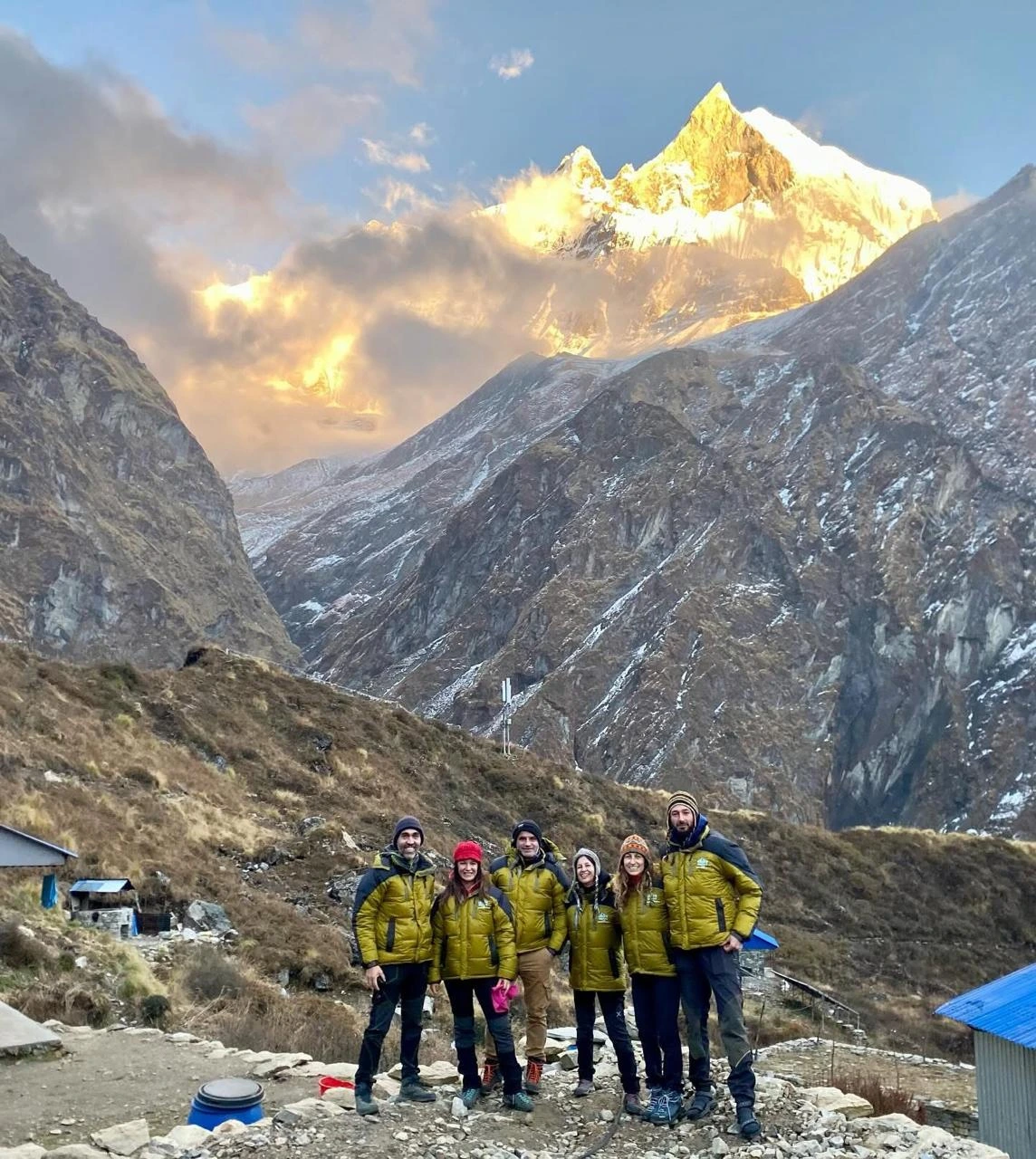
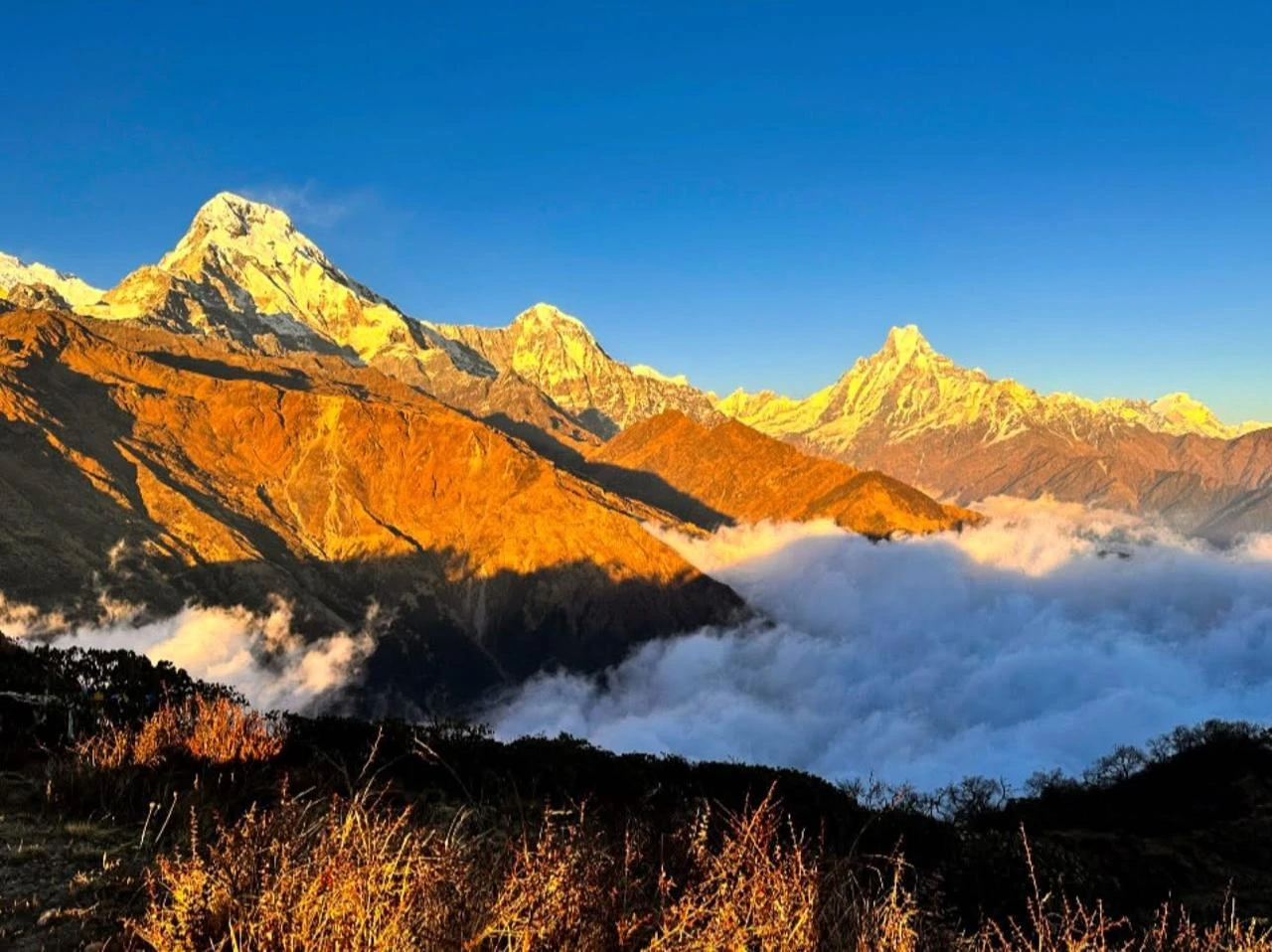
Sunrise view over Kanchenjunga ranges
2. Kanchenjunga circuit Trek Itinerary:
The Kanchenjunga circuit trek is part of the north Kanchenjunga base camp trek. If you do the circuit trek, you will visit the north and south base camps of Kanchenjunga. If you do the trek for 20/22 days and visit both the north and south base camps, it is generally called the kanchenjunga circuit trek. Connecting to both base camps, there is a popular high pass called Sele la pass at an elevation of 4600m from sea level. It is lower than the North base camp of Kanchenjunga. Most of the trekkers used to visit both base camps, as when you visit the north and south base camps, it means you can see more views, and exploration visits to the iconic world 3rd highest mountain base camp include close views of Mt. Makalu and the Everest region in the distance. Doing kanchenjunga circuit trek, you will also have time to explore unique places like Teseram, Yamphudin, Tortung, Pathivara temple, Suketar Bazaar, etc. we suggest to every traveler, if you are planning to do the kanchenjunga trek or dreaming of reaching Kanchenjunga base camp, we highly recommend to do the both base camps trek, where you can see more views and explore the hidden gems of Nepal.
Itinerary:
Day 1: Arrive in Nepal and transfer to your Hotel alt. 1300m
Nature Explore Trek airport representatives will pick you up at the airport, the TIA airport, with a warm welcome and transport you to your Hotel.
Rest and relax
Welcome to dinner.
Introduction with guide
Short Trek briefing.
Breakfast is included at Hotel
Day 2: Trip preparation:
Today is your day for preparation. After breakfast your guide will meet you at the hotel and check your trek equipment items. You can also hire equipment here if you don’t have enough. We help you to show the good shops.
Preparing for a the trek
Finally packing the bags
We make permits today, as they require your physical passport to obtain the restricted permit.
Rest and get ready for the big day and journey to Taplejung tomorrow.
Breakfast is included at Hotel
Day 3: Fly to Bhadrapur and Drive to Taplejung—7 hrs. Alt. 1820m – 246km
Early morning scenic flight to Bhadrapur from Kathmandu ( time 45 minutes) and drive to Taplejung by jeep in 7-8 hrs.
The guide will meet you at the Hotel at 6:30 am; be ready with your luggage.
Store unnecessary goods at Hotel stores or we can also keep them at our office store.
Pack breakfast; we will ask the hotel to make it ready before we go to bed.
Drive to the domestic airport in 45 minutes, and fly to Bhadrapur, Jhapa, in 45 minutes.
Continue driving to Taplejung via the Ilam tea garden, Pachhtahr, and Phidim. 7-8 hrs
Overnight in a lodge at Tamlejung
Breakfast, Lunch and Dinner
Hot drinks – Tea or Coffee after each meal.
Day 4: Drive to Sekathum or Japantar, depending on road conditions. 5 hrs (alt. 1650 m, Ft. 5412), 40-45km.
After a long day yesterday, we took a flight to Bhadrapur and drove there. We can start the day late in the morning, like 8-9 am. The day starts after breakfast; we drive to Sekarthum or Japantar, depending on the road conditions. It takes 4-5 hrs through the off-road. Gradually ascends and descends.
Cross the several traditional villages, charming people and their fascinating culture.
Enjoy the views of snowscapes, Hills , Mountains and Tarun river
Cross several suspensions bridge
Warm hospitality and enjoy the ethnic food and drinks.
Overnight at teahouse,
Included: Breakfast, Lunch and Dinner
Hot drinks – Tea or Coffee after each meal.
Day 5: Trek from Sekathup to Amjilhasa , 6 Hrs , alt. 2495 ft (8183), 6 km.
First day of the walk after a few days’ drive from Bhadrapur. We go through the rhododendron forest, cross the waterfall, and gradually ascend through the gradual ascending through the Tamor river, you will cross the suspension bridge and explore the traditional villages, local people and their lifestyle.
Gradual ascents to 800m more in higher elevation.
Follow the Tamor river, which is a very famous river in Nepal.
Stop for lunch and enjoy the views and every moment of nepalese culture, nature and landscapes.
Overnight at teahouse,
Included: Breakfast, Lunch and Dinner
Hot drinks – Tea or Coffee after each meal.
Day 6: Trek from Amjilhasa to Gyabla, 4-5 hrs (alt. 2725 ft, 8938) 8.5km.
We trek today for 6-7-hour after breakfast. The trail leads us to the gradual ascents and descents, which take 6 to 7 hours to reach Gyabla from Amjilhasa. Trek through the peace and quiet and cross the lush forest of rhododendron, Bamboo , oak pine trees.
Trek 6-7 hrs
Cross the beautiful forest of rhododendron, Bamboo.
You may see the Red panda and more wildlife animals.
Beautiful views of mountains, snowscapes
Stop for lunch on the way.
Overnight at teahouse,
Included: Breakfast, Lunch and Dinner
Hot drinks – Tea or Coffee after each meal.
Day 7: Trek from Gyabla to Ghunsha. 6 hrs (alt. 3418 m, 1106 ft) 11km.
Another great adventure day starts after the warm breakfast. The trail gradually ascends to Ghunsha today. Along the way you will see the nice views of mountains, snowcapes and the beautiful views of the lower sections of the trek as you reach the higher region of the valley and you can look back a long way down with beautiful scenery. Reaching Ghunsa, you find more facilities like hot showers, internet, comfortable beds and clean lodges, delicious foods, etc.
6-7 hrs walk
Stop for lunch
Enjoy the views
Gradually ascends and descends
Overnight at teahouse,
Included: Breakfast, Lunch and Dinner
Hot drinks – Tea or Coffee after each meal.
Day 8: Rest day
Today is a rest day. You can start the day late. After breakfast we can do the short hike, about a couple of hundred meters up from Ghunsha for proper acclimatization. This will help you go to a higher elevation on the trek.
Rest and relax after the return from the hike.
Hot Shower and talk with your family, as we can get the internet here.
You can also do the laundry yourself if needed
Explore the Ghunsha and enjoy the stay
Overnight at teahouse,
Included: Breakfast, Lunch and Dinner
Hot drinks – Tea or Coffee after each meal.
Day 9: Trek from Ghunsha to Khambachen—6-7 hrs (alt. 4150m Ft.13641) 10-11km.
After breakfast we start the trek to Khambachen from Ghunsha. As the trail goes up through the lush forest and hills, we cross the waterfall and glaciers. Before we reach Khambachen, you can see the Janu mountain views in the distance. Khambachen is one of the beautiful spots where we spend the night, which is surrounded by the mountains and rivers.
7 hrs walk
Stop for lunchalong the trail.
Gradual ascents from Ghunsha
Walk through the forest, hills, and glaciers.
First views of Janu mountain.
Overnight at teahouse,
Included: Breakfast, Lunch and Dinner
Hot drinks – Tea or Coffee after each meal.
Day 10: Visit the Mt. Janu base camp Known as the Kumbakarna mountain)
Janu mountain (Kumbakarna) is a very beautiful mountain on this trek. From Khambachen we recommend you visit this secret mountain base camp for closer views, which takes 4-5 hours from Khambachen.
Mesmerize you by Janu mountain views
Another great acclimatization day before reach to Pangpema north base camp
Hike 4-5 hrs and return.
Enjoy the splendid views of mountain ranges in the distance
Packing lunch
Afternoon rest and relaxation.
Overnight at teahouse,
Included: Breakfast, Lunch and Dinner
Hot drinks – Tea or Coffee after each meal.
Day 11: Trek from Khambachen to Lonak, 6-7 hrs, alt. 4795 m (15727 ft) 10km
Another big day of this trek. We will gently follow the bank of the river before reaching the Ramtang monastery in three – four hours. Continue the trek to Lonak, gradually ascending another 3 hrs. Today trek is more challenging, as you are trekking at a higher elevation and also feel less oxygen on our buddy. So we may not have the same level of walking speed. But we go slowly and enjoy the breathtaking mountain views and landscapes.
6-7 hrs walk
Lunch on the way
Great views of Mt. Janu and the Kanchenjunga range in the distance.
Harder than previous days’ trek
Feels altitude and walk slowly
Breathtaking views and crossing the river, glacier, and snowscapes. Mountains.
Overnight at Teahouse
Breakfast, Lunch & Dinner
Hot drinks
Day 12: Trek from Lhonak to Pangpema Base camp , North KanchenJunga base camp alt. 5144m. Ft.16872) and return to Khambachen for overnight stay. 8-9 hrs. Approx 14 -15km
Today is the biggest highlight of this trek. Early in the morning after breakfast, we trek to Kanchenjunga north base camp (Pangpema Base Camp, alt. 5100m) and we go back to Lonak for an overnight stay. Today’s trek is a very challenging adventure trek, as you have to walk many hours in the higher elevation through and across mountains, hills, and glaciers. The train is more challenging and the trails gently ascend. Advantage: On days you can see the many more beautiful peaks and the close distance of the North side of Mt. Kanchenjunga. If you are there in April/May, you can meet the Expedition group at the base camp. Once you reach base camp, then you can celebrate as you achieve and fulfill the dream to reach Kanchenjunga base camp. And we will be back to Lonak for an overnight stay.
Trek to Kanchenjunga North Base camp 5-6 hours and return in 3-4 hours
Reach at Kanchenjunga north base camp alt. 5100m
Highlighted and rewarded views days
Complete the dream to reach the base camp of Kanchenjunga.
Complete the longest day’s trek at a higher elevation
Pack lunch
Demanding , many hours of walking at higher elevation feels like a tired, exhausted day
Overnight at Teahouse
Lunch, Dinner & Breakfast.
Hot drinks
Energy bars and snacks for the way to Basecamp.
Day 13: Trek back to Ghunsha (alt. 3415 m,) , 20-22km , 8-9 hrs.
Today is another long descent to Ghunsa in 6-7 hrs. The trail is friendly as we already walk up and we stop for lunch at Khambachen and then continue the trek back to Ghunsha.
Another long day descends to ghumsha
Friendly trail
Lunch at Khambachen
Enjoy the great views
Hot shower, wifi at Ghunsha
Comfortable room
Delicious food
Close ends the trek
Overnight at Teahouse
Lunch, Dinner & Breakfast.
Hot drinks
Day 14: Trek from Ghunsha to Mrinla Camp (alt. 4200m , 4-5 hrs.
After breakfast, as it is an easy day, you can start the day late in the morning. We will start the day with gentle ascents with the beautiful views of snowscapes, mountains and hills. The trail leads us through a ridge of mountains, and you will have a good view of the scenery. The trail goes through the Gyabla, which are the isolated villages. If you plan to trek in the off-season and the teahouses are closed on the south base camp side, then it is not possible to do the south basecamp trek unless you are prepared for the camping trek. So we have to get all the information before we plan to do the south base camp. Normally it’s open in the high pick season.
Short trek day
700 m gentle ascend
Higher chances of seeing the snow leopard as we trek through the dense forest.
Enjoy the great views of landscapes.
Hot shower, wifi at Ghunsha
Basic rooms
Delicious foods
Lunch, Dinner & Breakfast.
Hot drinks
Day 15: Trek from Sele la pass camp to Tserem Over the Miring la pass (alt. 4600m) 9-10 hrs.
It is the highlight day of this trek as we cross one of the popular passes in the Kanchenjunga region and it connects both Mt. Kanchenjunga base camps in one trek. Early in the morning after breakfast, we start the day. You will enjoy the magnificent views of sunrise and sunset over the passes, mountains and hills. Today we will hike many hours, as it is longer with adventure and challenges. So, we will prepare the warm equipment and the energetic packed lunch. You need a professional guide who has done the trek, as the trail demands and some sections give confusion. If you have a guide who has been there before, it is easy, as he/she will lead the trail and take you to the safe side of the camp.
Longest day of this trek.
Cross the Miring la pass (alt. 4600m)
9/10 hrs walk
Gentle ascents and long descents before ends the day
Enjoying the great views of snow mountains, hills, and landscapes.
Basic rooms
Delicious foods
Lunch, Dinner & Breakfast.
Hot drinks
Day 16: Trek from Tserem to Ramtse-Oktang, south Kanchenjunga base camp alt. 4700m. 7-8 hrs. And return to stay overnight at Ramtse.
It is another big day as we trek from Tserem to Ramtse and continue trekking to Kanchenjunga south base camp. We trek first steeply to Ramtse, about 3 hrs of gradual ascents, where we can leave our unnecessary clothes and bags, as we come back to stay overnight here. We will continue the trek to Oktang base camp and back to Ramtse for an overnight stay. Option: if you think it is a long day hike, you can break it into two days, such as taking a rest at Tserem or just hiking a short day from Tserem to Ramtse and the next day hiking to Oktang, the south base camp. Some people also take a rest in Tserem after a long and big pass day from sele la pass and the next day they used to go directly from tserem to kanchenjunga south base camp, and return to Ramtse.
Another long day
9/10 hrs walk
Gentle ascents
Enjoying the great views of snow mountains, hills, and landscapes.
Basic rooms
Delicious foods
Lunch, Dinner & Breakfast.
Hot drinks
Day 17: Trek from Ramtse- return to Tsrem and continue descending to Tortung, 5-6 hrs., alt. 2900m
Today is a long way down from Ramtse to Tortung via the tserem. To the tserem, the trail is more familiar. And then the trail leads continue to descend, followed by Simbuwa khola. We cross the beautiful views of snowscapes, hills, mountains and lush forests, and we may also see the wild animals sometime.
Short hike day
5 to 6 hrs walk
Descends
Enjoying the great views of snow mountains, hills, and landscapes.
Basic rooms
Delicious foods
Lunch, Dinner & Breakfast.
Hot drinks
Day 18: Trek from Tortung to Yamphudin, 5-6 hrs., alt. 2900m via the Lasiyala pass.
First in the morning we will ascend to Lasiyala pass about 2 to 3 hours, and we will descend to Yamphudin in another 3 to 4 hours, which is the biggest local town in this area. Where we get more facilities like comfortable lodges and food and explore the local villages and meet with the local people like sherpa, Rai and Limbu, who are the most popular ethnic groups who live in the mountain region of Nepal.
Medium hike day
5 to 6 hrs walk
Ups and downs
Enjoying the great views of snow mountains, hills, and landscapes.
Explore the local people villages
Test the organic food and drinks
Basic rooms
Delicious foods
Lunch, Dinner & Breakfast.
Hot drink
Day 19: Drive back to Ilam by jeep in 8 hrs. Alt alt 1500m
The road is already connected to Yamphudin so we will take a jeep drive back to Ilam. It’s about an 8-9 hrs drive through the scenic views of local villages, hills, and landscapes.
Scenic drive
9-hour drive
Gradual ascents and descents.
Enjoying the great views of snow mountains, hills, and landscapes.
Overnight at Lodges
Breakfast & Lunch, Dinner
Hot drinks
Day 20 : Drive back to Bhadrapur airport and fly back to Kathmandu in 45 minutes.
This morning we took a short drive back to Bhadrapur airport to catch a flight to Kathmandu. The flight duration is about 45 minutes to Kathmandu. The trek is ending. We invited you for a farewell dinner program with some cultural dance shows at typical Nepalese restaurants.
Day 21 : free day in kathmandu
Today is your reserve day. If the trek plan goes well as per plan, you have one extra day in Kathmandu before leaving Kathmandu. If you need an extra day on the trek, then we can use this day. It’s always better to have extra additional time, as it is one of the longest, hardest trek routes in Nepal.
Day 22: Fly back to your next destination.
Oktang Base Camp
3. Kanchenjunga South Base Camp Trek Itinerary:
The Kanchenjunga south base camp trek generally starts with a scenic flight from Kathmandu to Bhadrapur and we take a drive from Bhadrapur to Taplejung – Yamphudin and basically we start to walk from here.
Kanchenjunga south base camp is not as popular as the north base camp and kanchenjunga circuit trek. Most of the adventure lovers first want to do the north base camp and then cross the sele la pass and connect to the south basecamp route. But very few people have done the north base camp already and still want to do the south base camp, and you may want to visit the south base camp trek of Kanchenjunga.
Some adventure trekkers, those who have a plan for a long trek, connect to Kanchenjunga base camp and the Makalu base camp trek via the Lumba Sumba pass, then it is a good idea to go to the first Kanchenjunga south base camp and cross the Sele la pass and visit the north Pangpema base camp—back to Ghunsa and continue the trek to the Olagchong valley, then continue the trek to Lumba sumba pass to connect the Makalu region.
Some people still follow the first Kanchenjunga south base camp trail and then go to the north base camp trek as well. It depends on your interest and time. But we highly recommend to everyone those people who are looking to explore both base camps of kanchenjunga then go to the first north base camp and then return to the south base camp as the normal route. This is the route most of the adventure people used to follow.
Here is the general suggested itinerary of the Kanchenjunga south base camp trek:
Day 1: Arrive in Nepal and transfer to your Hotel alt. 1300m
One of our representatives will pick you up at the airport and transport you to your Hotel. Rest and relax after the long flight to Kathmandu.
Welcome to dinner.
Intersection with guide
Trek briefing.
Day 2: Trip preparation:
Today is your day for preparation. After breakfast your guide will meet at the hotel and check your gear items. If you don’t bring it along with you, you can still buy it in Kathmandu. We will show you the good shops.
Preparing for a the trek
Pack bags
Make permits
Rested and ready for the big day and journey to Taplejung tomorrow.
Breakfast is included.
Day 3: Fly to Bhadrapur and Drive to Taplejung—7 hrs. Alt. 1820m – 246km
Early morning flight to Bhadrapur from Kathmandu (45 minutes) and drive to Taplejung by jeep in 7-8 hours.
Guide will meet at Hotel 6:30 am
Drive to domestic airport and fly to Bhadrapur
Drive to Taplejung via the Ilam tea garden, Pachhtahr, and Phidim. 7-8 hrs
Overnight at Tamlejung Lodge
Included: Breakfast, Lunch and Dinner
Hot drinks – Tea or Coffee after each meal.
Day 4: Drive to Yamphudin – 5 hrs (alt. 2080 m)
It crosses several traditions, charming people, culture…
We can see the snowscapes, Hills , Mountains Rivers
Crossing the suspensions bridge
Eat at local restaurants
Stop sometimes for toilets
Overnight at teahouse,
Included: Breakfast, Lunch and Dinner
Hot drinks – Tea or Coffee after each meal.
Day 5: Trek from Yamphudin to New Joroni or Tortung , 6/7 hrs. Alt. 2980 m
Basically the trek starts after two long days of flying and driving from Kathmandu to Yamphuding. Since the new drive road is connected to the higher region of the valley, you don’t have to walk from Taplejung nowadays. The first day of your trek leads you to the Jorong or Tortung; as there are alternative routes, both will take you to the south base camp. We suggest taking the Torongding, but some people also take the Jorong. Both routes meet before the Tserem. It doesn’t matter which you take to reach Tserem.
Today is about a 6/7 hrs walk. On the way we stop for lunch and we will have beautiful scenic views of snowscapes, hills, and traditional villages, and we follow the bank of river gradual ascends and descending.
Crossing several traditional villages , charming people, and their fascinating culture.
Enjoy the views of snowscapes, Hills , Mountains Rivers
Cross the suspensions bridge
Eat at local restaurants
Overnight at teahouse,
Included: Breakfast, Lunch and Dinner
Hot drinks – Tea or Coffee after each meal.
Day 6: Trek from New Joroni or Tortung to Tsereem, 6/7 hrs, alt. 3800m.
We start our trek with a gradual long ascent around 1000m up through the lush forest, cross the Pawa Khola and enjoy the great views of landscapes, hills, river and snowscapes.
Enjoy the views of snowscapes, Hills , Mountains Rivers
Cross the suspensions bridge
Eat at local restaurants
Overnight at teahouse,
Ascending 1000m.
Hike through the forest and hills, cross the rivers
Lunch is on the way.
Included: Breakfast, Lunch and Dinner
Hot drinks – Tea or Coffee after each meal.
Day 7: Acclimatazation /Rest day
We take today as a rest day for good enough acclimatization before we go to a higher elevation to the South base camp. After breakfast you can walk a few hundred meters up and return, which is helpful to digest the altitude. In the afternoon you can take a rest and relax as well as prepare for the following days.
Day 8: Trek from Tserem to Kanchenjunga south base camp (alt. 4700m) and return to Ramche (alt. 4500m) for overnight stay. 8/9 hrs.
Today is the highlight day of this trek. You will reach the world’s 3rd biggest mountain’s south base camp at 4700m. You will have a close view of Kanchenjunga including several beautiful peaks. We will follow the Yalung glacier and enjoy the magnificent views of mountains, snowscapes, and glaciers in the close distance. Early in the morning after breakfast, we will start the long day walk today. We trek about 2 – 3 hrs to reach Ramche, where we can drop our unnecessary clothes, bags, etc., as we come back for an overnight stay today. We continued trekking to Oktant kanchenjunga south base camp another 2.5 to 3 hours to reach the base camp. After enjoying the views and completing the dream to reach base camp, we return a few more hours back to Ramche for an overnight stay.
First closer views of Mt. Kanchenjunga
Reach Kanchenjunga south base camp alt. 4780m
Enjoy the views of snowscapes, Hills , Mountains Rivers
Reaching to the higher elevation.
Eat at local restaurants
Overnight at the teahouse.
Ascending 1000m.
Hike through the forest and hills, cross the rivers
Lunch is on the way.
Included: Breakfast, Lunch and Dinner
Hot drinks – Tea or Coffee after each meal.
Day 9: Trek back to Tortung via the Tserem, 5-6 hours. (Alt. 2900m)
We trek back to Tortung via the Tserem. It mainly descends more than a 1000m. The trail is more familiar. We stopped for lunch on the way. Note: if you are planning to visit the north base camp, then you will trek to Sele la pass side instead of returning, and that ends the trek. We go to the north base camp via the Sele la pass – Ghunsa continues to the north base camp and back to Taplejung—Kathmandu.
Long descents
Hike through the forest and hills, cross the rivers
Lunch is on the way.
Included: Breakfast, Lunch and Dinner
Hot drinks – Tea or Coffee after each meal.
Day 10: Trek from Tortung to Yamphudin, 5-6 hrs., alt. 2900m via the Lasiyala pass.
First in the morning we will ascend to Lasiyala pass about 2 to 3 hours, and we will descend to Yamphudin in another 3 to 4 hours, which is the biggest local town in this area. Where we get more facilities like comfortable lodges and food and explore the local villages and meet with the local people like sherpa, Rai and Limbu, who are the most popular ethnic groups who live in the mountain region of Nepal.
5 to 6 hrs walk
Ups and downs
Enjoying the great views of snow mountains, hills, and landscapes.
Explore the local people villages
Test the organic food and drinks
Basic rooms
Delicious foods
Lunch, Dinner & Breakfast.
Hot drink
Day 11: Drive back to Ilam by jeep in 8 hrs. Alt alt 1500m
The road is already connected to Yamphudin so we will take a jeep drive back to Ilam. It’s about an 8-9 hour drive through the scenic views of local villages, hills, and landscapes.
Scenic drive
9-hour drive
Gradual ascents and descents.
Enjoying the great views of snow mountains, hills, and landscapes.
Overnight at Lodges
Breakfast & Lunch, Dinner
Hot drinks
Day 12 : Drive back to Bhadrapur airport and fly back to Kathmandu in 45 minutes.
This morning we took a short drive back to Bhadrapur airport to catch a flight to Kathmandu. The flight duration is about 45 minutes to Kathmandu. The trek is ending. We invited you for a farewell dinner program with some cultural dance shows at typical Nepalese restaurants.
Day 13 : free day in kathmandu
Today is your reserve day. If the trek plan goes well as per plan, you have one extra day in Kathmandu before leaving Kathmandu. If you need an extra day on the trek, then we can use this day. It’s always better to have extra additional time, as it is one of the longest, hardest trek routes in Nepal.
Day 14: Fly back to your next destination.
Above all three itineraries is a suggested general itinerary. You can also customize the itinerary as per your interest and timetable, as the Kanchenjunga region offers many optional day hikes and side trips during the trek.
Attitude and acclimatization during the kanchenjunga base camp trek:
The highest altitude of the Kanchenjunga trek is 5100m above sea level in the North Base Camp of Kanchenjunga. Basically, high altitude starts after 2500m above. The beginning of the kanchenjunga trek route is located between 1000m to 3500m so you don’t feel the high altitude until you reach Ghunsa. After Ghunsa, the altitude gain gradually increases day by day to the North base camp alt. 5100m. Making the Kanchenjunga trek itinerary is a very important role to play to make the trek successful. We always suggest to you, please make enough acclimatization days before we reach the higher region of the trek. In general, we include a few days of acclimatization in Ghunsa, Lonak and Tserem if you are doing the full Kanchenjunga trek. going slowly with the proper acclimatization helps you to succeed on the trek. If you plan to do it quicker and without proper acclimatization, it can affect the trek, and you can’t complete the trek due to the high altitude effect.
Avoid the high altitude sickness you have to have strong physical and mental preparation as well during the trek please drink plenty of water, take extra rest days, flexible itinerary, not rush to going up, eat healthy and diet foods and compltly avoide the alcohol and smoke. If you takecare all above suggested lits you will have less worries high altitude sickness.
So, proper acclimatization, a good itinerary and good planning can play a vital role in completing the Kanchenjunga trek. To this message to every adventure lover and traveler, and to those who are planning to do the trekking to the Kanchenjunga region, please make a flexible itinerary and do not plan to complete the trek in a short time if you don’t have enough time, as kanchenjunga trek itinerary requires many days.
Mt. Kanchenjunga south Face alt. 8,586 meters
Trek Difficulty and Fitness Level
The Kanchenjunga trek is one of the hardest, most challenging as well as adventure trekking routes that lies in the remote, peace and quiet which located to the eastern part of Nepalese himalayas. If you are planning to do the kanchenjunga trek its demands good physical and mental preparation before the trek begins, as it is located on remote, far-in-the-mountain, adventurous trails during the trek.
Basically, everyday you have to trek 6/7 hours. A lot of ups and downs while crossing several hills, mountains, and glaciers and reaching the different altitude level everyday which makes the trek difficult. Once you reach the higher regions of the trek, you may feel less oxygen, body, which makes it difficult to breathing and hard to walk when we have less oxygen in the body. Compared with the Annapurna region and Everest region trek routes, the Kanchenjunga is quiet harder trek. As it is located in the remote area, basic infrastructure, asphalted road, electricity and internet facilities has not reach every part in the region.
The altitude, landscapes, and terrains are completely harder than the easy trekking in Nepal. The Kanchenjunga trek demands more preparation and past trekking experience before you want to do this trek.At least you have to do some basic training for 5-6 months before the trek starts, like running, Yoga, Hiking in the higher altitude with a heavy backpack and train cardiovascular training for easy breathing in the higher region of the trek. Before the Kanchenjunga trek starts you should do at least one few-day trek to check your stamina, preparation and your boots. If you prepared basically all of the above, the kanchenjunga trek can be easier for you, and you can complete the trek without any big issue.
Best time to go to the Kanchenjunga trek
The best time to do the kanchenjunga trek is autumn and spring seasons every year. As the weather is favorable like sunshine, clear skies, and reasonable temperature, there is no snow in the mountains or rain in the lower section of the trek.Autumn, september, October and November are the best times to do the trek. You will have clear visibility of mountain scenery, blue skies, and sunshine. After the weather clears, you will have great views of mountains, landscape and hills in the close distance. Autumn is always recommended for doing the trekking to Kanchenjunga.
Spring season March, April and Mayare the second biggest season after the autumn season in Nepal. As the weather is stable, there are good views, clear skies and sunshine. During the spring season the temperature is warmer than in the autumn season. Most of the big expeditions happens in the spring season so while you are trekking in this season you can meet many expiditors at the base camp of the Kanchenjunga climb sometime.
Winter season (December, January, and February) is not recommended, as the weather is cold, the temperature falls, it can be snowy in the mountain and not good visibility.
Monsoon season – June, July and Mid septemberis also not recommended, as it is rainy season in Nepal. It can be the no visibility, cloudiness, rain, landslide, flooding, etc. we don’t recommend it to anyone who wants to do this trek in monsoon season or Winter season.
Ready to book your trip with us? Fill out the inquiry form below
Permits and Regulaion
When you plan to do the kanchenjunga trek the permits are required from the Nepal government. You have to buy the Kanchenjunga restricted permits, Kanchenjunga Conservation permits, and TIMS card. The restricted permits cost per week $20 per person per week, conservation permits cost Rs 3000 per head, and TIMS cards cost Rs 2000. You can’t get the kanchenjunga trek permits individually; you have to go through the registered trekking companies like Nature Explore Trek.
The government license holder guide is mandatory to do the kanchenjunga trek as it is a restricted area with remote and adventurous trekking routes in nepal. Without hire a guide and buying permits, the trek is not allowed for trekkers. Along the way there are many local police checkpoints, and if they find you without taking a guide and permits, you have to pay the big punishments; they will not allow you to do the trek further up.
The Accommodation and Food
The accommodation and food are basic during the trek, as the trekking area is located in the remote area and a long way from cities . The basic infrastructure is still not very well developed in the region. The accommodation you can get is a basic shared twin-bed room and toilet is common in most of the places. But some place you may get better facilities too but don’t expect the luxury accommodation on this trek.
Food basically you can get the Nepalese organic food items like Dal bhat, breads, noodles, potatoes, eggs, fried rice, porridge, muesli, chapati, macaroni, pasta, etc., and hot drinks like black tea, milk tea, ginger honey tea, black coffee, and milk coffee. Compared to the Annapurna and Everest region the food and accommodation are basic in the kanchenjunga trek.
Packing List (Essential)
As the kanchenjunga trek is remote, adventure and hard, you need to pack your bags carefully with enough warm clothes. Here are the basic items that you should bring with you.
-20 sleeping bags
Warm down jackets/Gore-Tex
Water- and windproof jackets/rain ponchos
70-80 letter backpack
30-35 liter day backpack
New Good quality boots which cover the ankles
Pairs of warm trouser
Pairs of warm long t- shirt
Pairs of short t-shirts
Light trousers, like flexible zippable ones. when need we can make them shorts
Basically kanchenjunga trek cost starts from USD 2200-2500 per person in the full board packages, which include everything like Guide, Transportation, Food (Breakfast, Lunch and Dinner) Hot drinks (tea and coffee), all trek necessary permits, airfare to bhadrapur both ways, accommodation during the trek and in kathmandu before trek and at the end of the trek, etc.
Alternatively, you can only hire a guide and porter, which costs USD 40 per day for the guide and USD 30 for the porter, including their meals and accommodation. Food, accommodation, and the rest of the expenses are on you.
Trekking to north kanchenjunga base camp 15/16 days only north Kanchenjunga base camp trek cost comes in the full board package for USD 1500-1800 per person, which includes everything like Guide, Transportation, Food (Breakfast, Lunch and Dinner) Hot drinks (tea and coffee), all necessary trek permits, airfare to bhadrapur both ways, accommodation during the trek and in kathmandu before the trek and at the end of the trek, etc.
Alternatively, you can only hire a guide and porter, which costs USD 40 per day for the guide and USD 30 for the porter, including their meals and accommodation. Food, accommodation, and the rest of the expenses are on you.
The Kanchenjunga south base camp trek for 14/15 days; the cost roughly comes in the full-board packages of USD 1300-1500 per person, with everything included as mentioned above. And with the same alternative, you can only hire a guide and porter; the rest you pay yourself.
Insurance and Safety
If you are planning to do the kanchenjunga trek we highly suggest you have good insurance that covers medical and evacuation if needed in the emergency situation. As it is long, remoteness and a trek, anything can happen anytime from high altitude or accident, etc., so please buy good insurance that can help you in the emergency situation. and converge above 5000m.
Here are the suggested insurance companies; you may check with them
World Nomad—very popular companies among the trekkers
IMG Global insurance – great options for the high-altitude trekkers
Nepal Trekking Insurance—this is nepalese local insurance company.
American alpine company—this is ok too.
Professional Guide & Strong Porter.
If you are planning to do the kanchenjunga trek a professional guide and strong porter are the most important to have with you. We recommend it to you – those who have been there with a group. As it is remote, and the difficult trek trail requires a professional guide, it is highly recommended. It’s the remoteness, and not many people used to do this trek the trail can be quite narrow, and the trail makes the confusion during the trek. It can be easier to navigate the trail and communicate with local people. Local people can’t speak the english so when you have a professional guide, it’s helpful to translate the language.
For safety and security, too, a guide is very important to have with you. Especially in the higher section of the trek, in case we lose the trail, there is heavy snow, avalanches, landslides, and poor visibility along the trek. as well strong porter to have on the team is very important, as they are the backbone who carry your equipment, and they have to walk with you. If there is a leaner or someone who never does these types of treks with groups, it can be a problem on the trails, so a professional guide and a strong porter to have with you are very important.
We have an experienced team that has been guiding for many years and has been on this trek many times with groups. We know how to take care of our customers and with the trail, our team is familiar, as they have been many times with groups.
Why you do the Kanchenjunga Trek—10 Highlights:
Kanchenjunga trek is known as the one of the most remote and adventurous wilderness trekking routes in Nepal that lies in the eastern part of Nepal, bordering the south of Sikkim, india Doing a trek to the kanchenjunga trek means you do not just hike in the mountains; you are going to put your legs at the world 3rd highest mountain (alt. 8586m) Base camps north and south. Both base camps are the iconic, legendary base camps of kanchenjunga mountains. The Kanchenjunga trek offers the trekkers the best views of the Kanchenjunga mountains and Janu (Kumbakarna Mountains), which includes hundreds of beautiful surrounding peaks. Moreover, you will cross the several traditional villages of Rai, Limbu, and Sherpa people in the higher sections of the trek.
Here are the 10 highlights that you are going to see during the full circuit Kanchenunga trek
World’s third highest mountain Kanchenjunga (alt. 8685m) base camp (North and south basecamp) – trekking to the kancjenunga you reach at the base camp of world 3rdhighest mount base camp like North and South. Both are above 4500m from sea level. Offers magnificent views of kanchenjunga,Mt. Janu. includes hundreds of beautiful peaks.
Visit both the old North and South Base camp: very few groups of trekkers used to do this trek. which is epic and iconic and offers magnificent views in the distance.
Really remoteness and True wilderness trail – Kanchenjunga trek is known as very remoteness, and we can meet the rare wild animals like Red panda, Snow leopard.
This is the perfect trail for those who are looking to visit the untouchable beautiful landscapes of Nepal.
Crossing the Higher Sela Pass (alt. 4600 m) – Sele la pass is one of the most beautiful, long and adventure high pass connect the both Basecamp of kanchenjunga mountain.
It offers the strengthened views of mountains, snowscapes, Hills and landscapes in the distance.
Explore the traditional villages of Rai and Limbu in the lower region and tibetan influences in the higher region of the trek.
Glacier, Icefall and & Alpine trail: we will cross several glaciers, like Yalung glacier, Kanchenjunga glacier , and hike through the icefall, waterfall, and higher sections of the trail we will walk in the alpine style too, as it demands.
The trek offers the Perfect experience for the adventure travelers who are looking for similar types of remote, peace and quiet trail trekking after the annapurna and Everest region treks done in Nepal.
The Kanchenjunga trek gives you Once in the lifetime experience in the Himalayas, as it’s one of the best, most remote and adventurous, scenic, and popular trekking routes in Nepal.
Panoramic Mountains views – Kanchenjunga trek offers panoramic moutnans views in the close distance, like the Kanchenjunga range, Mt. Janu, and Mt. Yalung, and includes several mountains in the distance.
Wildlife & Biodiversity Hotspot—The kanchenjunga trek trail lies in the kanchenjunga conservation area, where we can see the Wildlife animals like red pandas, leopards, long-tailed monkeys, different species of birds, and many more.
Final Say:
The Kanchenjunga trek is one of the most popular adventure and remoteness trekking routes. Those travelers who are looking for remote and high-adventure trekking in nepal then the kanchenjunga trek is perfect for you. The kanchenjunga trek itinerary depends on which routes you want to do the trek on; basically, the trek itinerary starts from 15 days to 25 days. If you want to do the full kanchenjunga circuit trek it takes 22/25 days, including arrival in Kathmandu and departure from kathmandu. And if you only want to do the north base camp of kanchenjunga it takes 14/15 days. Visit to south kanchenjunga base camp takes 10-14 days.
Most of the adventure lovers used to do the trek to both Kanchenjunga base camp south and north, in an epic Himalayan trip instead of making a two-holiday plan to visit the same area. Visiting at the same time is a smoother trip for you and you will have more convenience and it saves your budget and time, and you will feel the adventure of the trekking experience at the same time. We suggest too, if you are planning to do the trekking kanchenjunga region do the full circuit trek, which gives you a once-in-a-lifetime experience.
Nature Explore Trekking organizing the Kanchenjunga trek every single season autumn and spring, of the year. We have an experienced guide and a strong porter who have been on the trek with the group several times. Our team is very knowledgeable and familiar with the trail. Our team knows how to take care of our clients and provide good service during the trek.
Before booking a trek with us, you can check our TripAdvisor and Google reviews from our past clients about their experience on the Kanchenjunga trek with us. We have 100% excellent feedback and we deliver what we talk about in email. Many agencies share different information and provide the service differently. Which makes a huge difference in the trip’s budget, service and overall trek experience. So, please do not hesitate to contact us for your next adventure trekking to the Kanchenjunga trek. We will make your next experience in Nepal one of true love and reward you with majestic mountain views.
Kanchenjunga Trek Weather by Month varies by altitude and season, with lower valleys staying mild while higher alpine regions remain cold throughout the year. The Kanchenjunga region is a wild and remote area. It is one of the best but hardest and most challenging places to trek. Mt. kanchenjunga is the world’s third highest peak at 8,586m, which is supported by Jannu (Kumbhakarna, 7710m, 25300ft), Chhang Himal, and many more snowy peaks. It offers limbu and rai village, cultures, and untouched forest while trekking in Kanchenjunga. The trail passes through high mountain passes, villages of culture, and valleys, providing an awesome scenario of nature and himalayan culture.
The Kanchenjunga trek can be done throughout the year but the best seasons for trekking are during the autumn and spring seasons, when the weather is stable, the skies are clear and additional group departures are available. These periods offer the perfect balance of beautiful scenery, safe trail condition and comfortable temperatures.
Spring Season (March-June)
The spring season begins after winter ends, from March to mid-june every year. Spring offers Flowers, lush valleys, and a mild trekking climate. The temperature of this season is warmer and dry. This season is perfect for those who want less mud and mostly melted snow.
Autumn Season (september-November)
The Autumn Season starts in september after the monsoon ends. This is the season where it offers clear skies, reliable weather, mountain views, landscapes, and hills. This season is also known as the festive season in nepal,which are big festival and they are Dashain, Tihar, Chhat, Loshar, mane ramdu.
Here is the monthly report for Kanchenjunga Trek
Kanchenjunga Trek in January:
January is also the month of the winter season, which is one of the coldest months of kanchenjunga trail. The areas in the higher region will be covered by heavy snow. Many high passes and base camp routes will not be accessible. You can clearly view the mountain due to the clear weather. This month is only recommended for the expert trekkers who are fully prepared with the winter gear. The temperature that will be reached in the lower region is 8 to 12°C in the daytime and 0 to 4°C at night. And the temperature reached in the higher region is -8 to -3°C in the daytime and -15 to -22°C at night.
Kanchenjunga Trek in February:
February is also considered a winter month. In this month, the temperature starts to warm up in the lower region but is cold in the higher region. You can get clear visibility of skies in this month. The temperature reached in the lower region is 10 to 15°C in the daytime and 2 to 6°C at night. And the temperature reached in higher regions is -6 to -2°C in the daytime and -14 to -20°C at night. This season is perfect for those who want to trek, enjoy view and play with snow.
Kanchenjunga Trek in march:
March is just the beginning of the month of june. In this season, it’s more reliable to trek and offers blooming rhododendrons in mid-altitude, and landscapes become green. The temperature in Lowest region of the trek is 12 to 18°C in the daytime and 4 to 8° at night. And the temperature in the highest region of the trek is -3 to 2°C in the daytime and -12 to -18°C at night. Days became warmer and nights became so cold in these months.
Kanchenjunga Trek in April:
April is also one of the best months to trek kanchenjunga. In this month, Kanchenjunga offers clear skies and awesome views of himalayas. Also, Rhododendron forest are at their peak bloom. The temperatures are suitable for the trek. Temperature in the lowest region reached 15 to 22°C in the daytime and 7 to 10°C at night. And in the highest region it reached 0 to 5°C at daytime and -10 to -15°C at night.
Kanchenjunga Trek in May:
May is the last month before the monsoon. Highest region are colder but its suitable for trekking in this month. Kanchenjunga offers clear skies in the morning and maybe cloudy skies in the afternoon. The temperature reached in the lowest region is 18 to 25°C in the daytime and 10 to 14°C at night. And the temperature reached in the highest region is 2 to 7°C in the daytime and -6 to -12°C at night. Weather is unpredictable so there is a chance for pre-monsoon showers.
Kanchenjunga Trek in June:
June is the beginning of Monsoon. In this month, the trail will be slippery and wet in the lower region and filled with leeches. Clouds block out the views of himalayas and mountains and high risk of avalanche. The temperature reached in the lower region is 20 to 27°C in the daytime and 12 to 16°C at night. And in the higher region the temperature reached 4 to 8°C in the daytime and -4 to -10°C at night.
Kanchenjunga Trek in July:
July is in monsoon and this is a month that is less recommended for the trek. In this season, there will be heavy rainfall, which can cause landslides, slippery trails, and avalanches, and you will not get the proper view of the himalayas. The temperature reached in the lower region is 22 to 28°C in the daytime and 14 to 18°C at night. And the temperature reached in the highest region is 5 to 9°C in the daytime and -3 to -8°C at night.
Kanchenjunga Trek in August:
August is also the monsoon month. This month trek is possible but very hard to succeed. The trail is muddy, and the trail becomes dangerous. Most of the area during the trek is colder and wet. No clear views of mountains in the monsoon. The temperature reached in the lower region is 22 to 27°C in the daytime and 13 to 17°C at night. And the temperature reached in the highest region is 5 to 10°C in the daytime and -2 to -7°C at night.
Kanchenjunga Trek in september:
September is just the beginning of Autumn season. In this season, kanchenjunga offers clear skies, fresh air, and reliable weather. In this season, the temperature reached 11° to 19°c at the daytime and 7 to 5°C at night and the lowest altitude for the trek is 2,000 m and the highest altitude is 5,100 m, where the temperature reached for the highest altitude is 0 to 5°c at the daytime and -8 to -12°c at night. As the weather is unpredictable and global climate changes, we can’t guarantee exactly 100%, but we can tell you based on the past years experience that normally from mid september the weather is good and visibility is clear.
Kanchenjunga Trek in October:
October is the second-best autumn season for this trek. In this trek, it offers clear skies and views of himalayas. In early October the weather is still rainy and cloudy, as we have experienced for the past 5-7 years and After the mid october its changes are clear and it makes everyone feel that autumn is back with the clear weather and sunshine. The Precipitation for this trek is very low. At high altitude it might be snow. The temperature reached in the lower region is 12 to 17°C at daytime and 3 to 0°C at night and in the higher region it is –2 to 4°C at daytime and –10 to –15°C at night.
Kanchenjunga Trek in November:
November is highly recommended to all adventure lovers, as the weather is much clearer, with blue skies and clear visibility. If you are a photographer or making some nice pictures and videos from the kanchenjunga, November is the best month to do the Kanchenjunga Trek. The temperature in this season at lower regions reached 8 to 14°C at daytime and 0 to –3°C at night and in higher regions it reached –4 to 2°C at daytime and –12 to –17°C at night.
Kanchenjunga Trek in December:
December is the beginning month of winter. In this month, we can see snowfall and the trail is fully covered by heavy snow. The temperature will be freezing in the higher region and the common days are shorter than other seasons. The temperature reached in the lower region is 8 to 14°C in the daytime and 2 to 6°C at night. And the temperature reached in the higher region is -6 to -12°C in the daytime and -15 to -20°C at night. Trekking is possible with proper cold-weather preparation but highly recommended not to trek in this season.
Best time to trek Kanchenjunga
Best months:
March, April, October, and November are the best and peak months for kanchenjunga Trek. In these months, you can get clear skies, proper Himalayan views, rhododendron blossoms, flora and fauna, and traditional and cultural villages of rai and limbu. The trails are highly busy during these months; many trekkers start to adventure and trek to the different parts and places of nepal, and kanchenjunga is also one of them.
Good months:
Late September and Early December are also recommended to trek the kanchenjunga region. In these months, Late september is the most reliable time for the trek and early december is in winter season, which is best for those who enjoy snow which offers spectacular views and clear skies. These months are highly demanded for the trek due to weather, temperature, and scenarios.
Avoid months:
June–August (monsoon) and January–February (deep winter) are less recommended for the trek. The trail is filled with heavy snow during winter and leeches during monsoon. You will not get a clear view and scenario of mountains due to clouds and the weather in higher regions. Tea houses and many viewpoints are closed in these months due to cold. These months are only recommended for those who are fully prepared with cold gear and experienced trekkers.
Ready to book your trip with us? Fill out the inquiry form below
Temperature Table This table helps to find the best month, including temperature in lower and higher regions.
Month
Lower Region Day (°C)
Lower Region Night (°C)
Higher Region Day (°C)
Higher Region Night (°C)
January
8 to 12°C
0 to 4°C
-8 to -3°C
-15 to -22°C
February
10 to 15°C
2 to 6°C
-6 to -2°C
-14 to -20°C
March
12 to 18°C
4 to 8°C
-3 to 2°C
-12 to -18°C
April
15 to 22°C
7 to 10°C
0 to 5°C
-10 to -15°C
May
18 to 25°C
10 to 14°C
2 to 7°C
-6 to -12°C
June
20 to 27°C
12 to 16°C
4 to 8°C
-4 to -10°C
July
22 to 28°C
14 to 18°C
5 to 9°C
-3 to -8°C
August
22 to 27°C
13 to 17°C
5 to 10°C
-2 to -7°C
September
11 to 19°C
5 to 7°C
0 to 5°C
-8 to -12°C
October
12 to 17°C
0 to 3°C
-2 to 4°C
-10 to -15°C
November
8 to 14°C
0 to 3°C
-4 to 2°C
-12 to -17°C
December
8 to 14°C
2 to 6°C
-6 to -12°C
-15 to -20°C
Rainfall & Snowfall Expectations
December-March are the heavy snow months. This month is not recommended for first-time trekkers. The trail is fully covered with snow and the temperature in the higher region is very cold. But lower regions are warmer than higher regions. June-August are the months of heavy rainfall. This month is risky and makes for a challenging trek due to heavy rainfall, leeches, and slippery trails. You can trek in this month but will not get a proper view of mountain and the sky remains cloudy. The bad weather may affect your health and the causes are hypothermia, cough, frostbite, and the worsening of altitude sickness symptoms.
What to Pack for Each Season
These items are specified for only those seasons that are required in that season only:
The best season comparison Chart is below in the table:
Criteria
Spring (Mar–May)
Autumn (Sept–Nov)
Winter (Dec–Feb)
Monsoon (Jun–Aug)
Weather Stability
⭐⭐⭐⭐
⭐⭐⭐⭐⭐
⭐⭐⭐
⭐⭐
Mountain Scenery
⭐⭐⭐⭐
⭐⭐⭐⭐⭐
⭐⭐⭐
⭐
Rainfall
Very Low
Low
Low
Very High
Snow Conditions
Snow at high passes early in the season
Minimal Snow
Heavy Snow
Snow above 4,000 m
Trail Conditions
Dry
Best / Dry
Snowy
Slippery, Muddy
Flora & Fauna
Rhododendrons Blooming
Forests Turning Golden
Dormant
Lush but Wet
Crowd Level
Medium
High
Low
Very Low
Wildlife Sightings
Good
Good
Limited
Limited due to Rain
Travel Safety
High
Very High
Low
Very Low
Best For
Photography
Overall Best
Adventure Lovers & Experienced Trekkers
Avoid Unless Experienced
Overall Rating
⭐⭐⭐⭐
⭐⭐⭐⭐⭐
⭐⭐⭐
⭐⭐
Outline Itinerary
Day 1: Arrive in Kathmandu, alt. 1300 m Day 2: Trip preparation day Day 3: Fly to Bhadrapur,(40-45min) alt.91m and Drive to Taplejung—6 or 7 hours. Day 4: Drive to Sakathum, alt. 1650 m Day 5: Trek to Amjilosa, alt. 2498 m Day 6: Trek to Gyapla, alt. 2725 m Day 7: Trek to Ghunsa, alt. 3415 m Day 8: Rest at Ghunsa-acclimatization 3415m Day 9: Trek to Khampachen, alt. 4145 m Day 10: Trek from Khambachen to Jannu Base Camp (15 km) (6-7 hrs)- alt.4,750-4,850m Day 11: Trek to Lhonak, alt. 4792 m Day 12: Trek to Pangpema North Base Camp (alt. 4750 m) and return back Day 13: Trek to Ghunsa, alt. 3415 m Day 14: Trek over Sele le Pass(alt.4689m)camp and Sele,alt.4000m Day 15: Trek over Mirgin La Pass (4,645 m) and Sinion/Sinelapcha La Pass (≈4,660 m) to Cheram (3,868 m). Day 16: Trek from Cheram (Tseram) to Ramche, then hike to the Oktang Viewpoint (near Yalung Base Camp, 4,740m | 15,551ft) and return to Ramche. Day 17: Trek back to Tortong, alt. 2980 m Day 18: Trek to Yamphudin (1,692 m) via Lasiya La Pass Day 19: Drive to Kanyam (Illam) 8-9 hrs Day 20: Drive to Bhadrapur airport, then fly back to Kathmandu
Difficult of the trek
The kanchenjunga Trek is considered a hard and strenuous trek. It is harder than everest base camp and annapurna circuit due to long walking days, high altitude, rugged terrain and remoteness. The average walking per day is 6 to 8 hours but some days it takes 10 hours. You need 3 weeks of strong endurance and consistency. The several days will be spent at 4,000 m above altitude, which makes the risk of Acute Mountain Sickness (AMS), Dehydration, Headache, Fatigue, Shortness of breath.
The trek is very hard, so the trek required basic mountaineering skills. The trek demands good physical fitness and endurance due to the long days of hiking, steep ascents, descents and high altitude. Before embarking on the trek, it is essential to have good physical fitness and endurance, as the trek is long in the remote areas and at high altitude. As trekkers ascend to higher elevations, the air becomes thinner, resulting in decreased oxygen levels. This leads to altitude sickness with symptoms such as headache,nausea,fatigue and dizziness. Proper acclimatization is crucial so that the body can adapt gradually to the changing altitude.
Weather in the Himalayas can be very unpredictable, with the possibility of snowfall, rain and strong winds at the higher altitudes. Trekkers must be prepared for changing weather conditions by carrying the appropriate clothing and gear, including waterproof clothes, insulated clothing and good-qualitytrekking boots. Overall, the Kanchenjunga Trek offers an unforgettable memory in the himalayas however the trek is quite difficult so the trekkers need to be physically and mentally prepared for things like limited basic facilities and should do some cardiovascular exercise before embarking to trek kanchenjunga trek.
Altitude sickness
Altitude sickness occurs when you ascend to high elevations too quickly and your body can’t adapt to lower oxygen levels. The common symptoms for altitude sickness are headache, nausea, dizziness, fatigue, loss of appetite and disturbed sleep. The severe forms are HAPE (fluids in lung), which is caused by shortness of breath, cough, and chest tightness, and HACE (brain swelling), which is cause by confusion, loss of coordination, and severe headache. We can prevent it by ascending slowly, taking rest/acclimatization days, drinking plenty of fluids, avoiding alcohol, and considering medication like acetazolamide if advised by a doctor. If you find any of the symptoms in you stop ascending, descend immediately and seek medical help. Altitude sickness is a serious risk on high treks like Kanchenjunga, so proper acclimatization is essential.
Final say:
The kanchenjunga region weather is unpredictable due to high altitude and remoteness. Spring and the autumn season are the best seasons, which offer stable conditions, clear views, and manageable temperatures. Best time, proper gear, and basic physical exercises are essential to safely complete this trek.
The Nature Explore Trekking team is the best professional team born and brought from the everest region of nepal. Our team members are familiar with trek routes, mountains, and hills, as they are from the countryside. You can book this trek with us without any doubt, as we have been the most trusted and reputed trekking agency for many years. You can read our TripAdvisor reviews and feedback, which are excellent. We have an easy booking process and to ensure your trek with us, you have to send 15% of the trip in advance to our official account, and the remaining balance you can bring in cash with you and pay before the trek starts. Let us know in advance, and we will save your departure date and the early spot. Leave your footprint here and take with you great memories of trekking in nepal.
The Everest Base Camp Trek is one of the most famous trekking journeys in the world. Thousands of people visit Nepal each year to explore the Khumburegion, Sherpa culture, and be close to the base of the mountain Everest. Although it is an unforgettable experience, proper budgeting before starting this trek is very important.
The Everest Base Camp Trek Cost depends on many things. These are the trekking season, the package one wants, the comfort, the group size, and how many services are offered. Some trekkers prefer a simple trek with basic lodges, while others choose more comfortable or even luxury services.
This guide explains all major costs in a clear and simple way, so you know what to expect when planning your Everest Base Camp Trek in 2026 or 2027. It includes permits, flights, guides and porters, accommodation, food, insurance, gear, tips, and seasonal price change. It also relates to budget, standard, and luxury trekking options.
Everest Base Camp Trek Cost For Permits and Documentation
Every trekker must possess official permits to enter the Everest region. These permits are checked at several points along the trail, making them mandatory for all trekkers.
The trekking in the Everest region does not need the TIMS card anymore. Rather, trekkers should be carrying the following 2 permits.
• Sagarmatha National Park Permit.
This permit is estimated to cost 30 USD per individual. Sagarmatha National Park is a reserve site that harbors Mount Everest and numerous other mountains. This is a license that gives you entry and walks within the park. It can be obtained in Kathmandu or at Monjo village before reaching Namche Bazaar.
• Khambu Pasang Lhamu Rural Municipality Permit.
This permit is approximately 17 to 20 USD. It is helpful in local development in the Khumbu region and can be accessed in Lukla or Monjo.
The total cost of these 2 permits is approximately 45 to 50 USD each. These permits are often included as part of the overall price of most guided trekking packages and, as a result, the trekkers do not have to organize them.
Besides a trekking permit, every foreign visitor requires a Nepal tourist visa. A 30-day Nepal tourist visa costs approximately 50 USD and can be obtained at Kathmandu airport. Most Everest Base Camp treks require a visa of at least 20 to 30 days, depending on the itinerary and buffer days.
Kathmandu to Lukla Flight and Transportation Cost.
Flying to Lukla is one of the biggest and most important expenses of the Everest Base Camp trek. The Lukla airport is the primary access point to the Everest region, with flights being limited and determined by the weather.
The average flight expenses are:
Kathmandu or Ramechhap to Lukla round-trip flight is approximately 350 to 450 USD per head.
High demand during spring and autumn results in higher prices.
Weather causes flights to be delayed or cancelled.
Due to frequent weather changes in the mountains, it is always prudent to have additional days in your trek offer. Many trekkers may need to wait 1 or 2 extra days for clear weather.
In case the flights are cancelled, helicopter options are sometimes taken:
One-way shared helicopter flight typically costs between 500 and 800 USD per head.
Round-trip helicopter flights may be approximately 1,000 to 1,200 USD on a shared basis.
Helicopter private flights are more expensive but less stressful and time-consuming.
Compared to flights, road transportation is significantly cheaper:
Kathmandu to Ramechhap by private vehicle costs approximately 120 to 130 USD.
Local buses and shared jeeps are cheaper and are taken by most budget travellers.
Some trekkers prefer to travel by road and start the trek from Jiri or Salleri, which helps save flight costs, but increases the number of additional days of trekking.
Guide and Porter Cost
Hiring a licensed guide is strongly recommended for safety, navigation, and overall support during the Everest Base Camp trek. In fact, most trekkers prefer to hire a guide and a porter, particularly first-time visitors.
They assist with route navigation, handling problems associated with altitude, transporting heavy luggage, and enabling trekkers to pay more attention to the journey and less to logistics.
Average daily costs are:
• Guide cost
Around 30 to 40 USD per day (This incorporates salary, food, accommodation, and insurance)
• Porter cost
Around 20 to 30 USD per day. A single porter typically carries luggage for two trekkers. For a typical 12 to 14-day Everest Base Camp trek, guide costs usually range from 360 to 560 USD. The average price of porters is between 240 and 420 USD.
A majority of the standard trekking packages have the services of a guide and porter, which makes trekking more enjoyable and easier. Guides also help manage altitude safety and day-to-day planning and communication with lodge owners.
Everest Base Camp Trek Cost For Accommodation
Mount Everest, Nepal
The only major accommodation in the Everest Base Camp trail is in the local tea houses. These are simple mountain lodges that provide basic rooms and meals. Prices increase as altitude increases since everything is transported by the porters or the animals.
The most common accommodation prices include:
Simple tea house rooms are priced between 5 and 15 USD/night.
Rooms with private bathrooms are between 20 and 80 USD per night.
Luxury mountain lodges are 100-300 USD per night.
Smaller villages such as Phakding and Monjo are cheaper, whereas tourist attractions such as Namche Bazaar, Dingboche, and Lobuche cost more. In the peak seasons, the rooms are filled fast, and the prices tend to increase.
Luxury lodges offer better beds, heated rooms, attached bathrooms, and better quality meals. Trekking packages normally have accommodation in tea houses throughout the trek.
Food and Meal Cost on Trail
All meals during the Everest Base Camp Trek are taken at local tea houses along the route. The higher you go on the trail, the more expensive the food is due to the distance that the supplies need to cover, either by porters or by animals.
In upper villages, food options are limited, and prices are higher than in lower villages. which are available everywhere. It is best to plan your daily food budget in advance to avoid unexpected expenses during the trek.
Daily food costs are usually:
3 meals daily cost 25-35 USD.
Dal bhat is the cheapest and most nutritious meal.
The prices of Western food products are higher at high altitudes.
Other food-related costs are:
Bottled water is more expensive as you climb up the trail.
Hot showers typically cost 5 to 8 USD.
It costs 3-5 USD to charge electronic appliances.
Internet services are scarce and tend to be costly.
The trekkers who make reservations for standard or luxury packages are likely to be fed. Hikers who come alone pay at the tea house, and therefore budgeting is of greater significance.
Insurance, Gear, and Personal Equipment Cost
Travel insurance is essential for the Everest Base Camp trek. Your insurance should cover trekking up to 6,000 meters with a helicopter emergency rescue.
The cost of insurance can vary between:
100-200 USD based on coverage and age.
Gear costs consist of:
A sleeping bag would cost around 5 to 8 USD/day to rent.
Hiring a down jacket is approximately 5 to 10 USD per day.
The trek may require full gear rental between 100 and 300 USD.
To save money, many trekkers hire gear in Kathmandu rather than purchase new equipment.
Other minor costs include:
Trekking poles, gloves, hats, and socks.
Toiletries and medicines
Snacks and energy bars
Tipping and Extra Cost
The culture of tipping is usually accepted and welcomed in Nepal, in the trekking sector. Tips are an essential aspect of the income of guides and porters as a form of appreciation for the effort and support provided, and the assistance of the guides and porters during the trek.
Typical tipping amounts are:
Guide tip approximately 100-150 USD/trekker.
Porter tip about 50 to 70 USD per trekker.
One should always have additional cash:
200-300 USD in case of emergency and minor costs.
The trail has a few ATM, and is not always functioning.
Ready to book your trip with us? Fill out the inquiry form below
Comparison of Budget, Standard, and Luxury Trek Costs
The cost of the Everest Base Camp Trek depends mainly on the level of comfort you choose and the services included in your package. Certain trekkers are content with the rudimentary facilities and primitive accommodations, and others with more comfortable rooms and other assistance or luxury. These differences will make you decide on the option that best suits your budget, traveling style, and expectations.
• Budget trek
Costs around 800 to 1,200 USD(covers basic tea houses, shared rooms, simple meals, permits, flights, and guide services)
• Standard trek
Costs around 1,200 to 2,000 USD (Includes accommodation improvement, all meals, permits, flights, guide and porter, and hotel stay at Kathmandu)
• Luxury trek
Costs around 3,000 to 8,000 USD or more (Provides high-end lodging, fine dining, smaller group size, customized schedules, and occasionally helicopter flights)
Grouptreks also tend to be less expensive as the cost is shared. Privately organized treks are more flexible and expensive.
Seasonal Cost Differences
The season you choose for the Everest Base Camp Trek has a strong effect on the overall cost. Weather, flight schedules, and how busy the trail is during different months all influence prices.
Spring and autumn seasons are the most active and are priced higher.
Winter and monsoon seasons are less expensive but more difficult.
Shoulder seasons have fewer people and moderate costs.
Prices in off-season months can be 10 to 30 percent lower, and weather conditions are less predictable.
Hidden Costs many trekkers forget
These are small but important expenses that many trekkers overlook while planning the trip. They may not seem like much at first, but they can add up during the trek if you do not plan for them in advance.
Additional nights in Kathmandu because of flight delays.
Additional meals on waiting days.
Altitude treatment or emergency medicine.
Last-minute helicopter flights.
Spare equipment on the track.
Bringing along some extra cash will prevent stress on the trek.
Final Thoughts
The Everest Base Camp Trek can be planned to suit different budgets without compromising safety or the overall experience. You need to decide between a basic budget adventure and a more luxurious experience, but by learning about the total cost breakdown, you can make more informed choices and prevent any unpleasant surprises along the way.
Once you have a clear idea of how your money will be spent, your trip planning becomes much easier. With proper planning, you can enjoy the trip and not be concerned with the cost per day, flight delays, last minute plans. Realistic budgeting also helps you prepare for small extra expenses like meals, tips, or emergency costs.
With good preparation, sensible budgeting, and reliable trekking support, your Everest Base Camp Trek in 2026 or 2027 can be a smooth, safe, and deeply rewarding experience. The actual price of the trek goes beyond the figures to the individuals you will encounter, the scenery you will explore, and the fulfillment that will be felt upon arriving at the base of Mount Everest.
Kanchenjunga Circuit Trek cost varies by trek duration, group size, services, season, and personal expenses like drinks, showers, Wi-Fi, and gear rental costs.The Kanchenjunga circuit trek is one of the most remote, adventurous and challenging trekking routes. It lies in the eastern part of Nepal, in the Kanchenjunga conservation area, in the lap of Mt. Kanchenjunga (alt 8586m). If you and your family are planning to trek the Kanchenjunga circuit in 2026 and 2027 and want to understand about the costs, itinerary , includes , excludes and more details about the packages, please go through these blogs. We provide a cost breakdown that includes more information.
The kanchenjunga circuit trek average cost starts from USD 1500 to $2800 in the full packages, which includes, Transportation both drive and fly , Guide , Porter , Permits , Food, Hot drinks, all the trip logistics, etc. the cost depends on the group size, service, number of days of trek, etc. Alternatively, you can hire a guide; a professional guide costs from USD 35 to $40 per day, including his food and accommodation.
The Kanchenjunga circuit trek cost depends on the group sizes and the service that you want to include and not include in the packages. If you are planning for a solo private trek, then the cost can be expensive and if you plan to join a group trek to kanchenjunga trek the cost is cheaper, as you can share the Guide, Transportation, Porter , permits, and accommodation cost with another traveler.
Alternatively, you can only hire a professional guide and porter, permits, transportation, and all the trip necessary logistics with trekking companies like us and the remainder of the trip expenses you can pay directly to the teahouse. Hire a guide for kanchenjunga trek or buy the full package for this trek; whatever you find comfortable you can decide and we are always ready to help you with both options.
The Kanchenjunga circuit trek cost also depends on the trekking companies’ experience, profession, and guides and how they organize the trek. Since there are more than 3000 trekking companies that have trek package and you can find different costs for the same trek, itienray and inclusions/exclusions, you have to understand that you decide; you have to rethink twice and choose the best local trekking company that is more experienced and organizes such adventures and remote and big trips.
It doesn’t matter about the cost difference, like a few hundreds USD but your trip should be successfully completed, and no hidden cost should show up on the trek. Many companies show the cheaper cost on the internet, but while you are trekking, additional costs rise slowly everyday. This is our advice for choosing the right company for adventure trekking to kanchenjunga trek.
Highlights:
Reach the third world’s highest mountain base camp.
A scenic flight to Bhadrapur and drive to Taplejung.
Trekking through the beautiful landscapes, Hills
Cross the multiple Rai, Limbu, & their Traditional villages and lifestyles.
Cross suspension bridges Over the Tarun River.
Visit Mt. Janu (Kumbakarna) Base camp.
Cross the sele la pass and visit Kanchenjunga South Base Camp, Oktang.
Explore the old tibetan Ghunsa village
Explore the remorse, adventure and unique trekking route
Mesmerize yourself with the wonderful views of the eastern part of Nepal with mountains, Hills, snowscapes, Culture, nature and traditional religions.
Kanchenjunga Trek Itinerary:
Kanchenjunga circuit trek itinerary starts from 15-22days. It depends on which routes you want to trek. if you only want to do the kanchenjunga north base camp trek you can complete the trek in 14-15 days, and if you want to connect to the south base camp via the sele la pass then it takes another week, like 20-22 days, to complete the full kanchenjunga circuit trek. You can also do only the Kanchenjunga south base camp trek. It takes 15/16 days.
Here is the general itinerary that most of the trekkers used to follow nowadays after the car road reached further up. But you can always customize the itinerary. We are a very flexible and helpful team.
Day 1: Arrive in Nepal and transfer to your Hotel alt. 1300m
Day 2: Trip preparation
Day 3: Fly to Bhadrapur and Drive to Taplejung—7 hrs. Alt. 1820m – 246km
Day 4: Drive to Sekathum or Japantar, depending on road conditions. 5 hrs (alt. 1650 m) , Ft. 5412), 40-45km
Day 5: Trek from Sekathup to Amjilhasa , 6 Hrs , alt. 2495 ft (8183), 6 km
Day 6: Trek from Amjilhasa to Gyabla, 4 -5 hrs (alt. 2725 ft, 8938) 8.5km
Day 7: Trek from Gyabla to Ghunsha. 6 hrs (alt. 3418 m, 1106 ft) 11km
Day 8: Rest day
Day 9: Trek from Ghunsha to Khambachen—6-7 hrs (alt. 4150m Ft.13641) 10-11km.
Day 10: Visit the Mt. Janu base camp Known as the Kumbakarna mountain)
Day 11: Trek from Khambachen to Lonak, 6-7 hrs, alt. 4795 m (15727 ft) 10km
Day 12: Trek from Lhonak to Pangpema Base camp , North KanchenJunga base camp alt. 5144m. Ft.16872) and return to Khambachen for overnight stay. 8-9 hrs. Approx 14 -15km
Day 13: Trek back to Ghunsha (alt. 3415 m,) , 20-22km , 8-9 hrs.
Day 14: Trek to Sele la camp side , (alt.4290m. 13776) 4 hrs, 8 km
Day 15: Trek to Tseram (alt. 3840m) via the Cross the Sele la pass (alt. 4600m. Ft.15088) 9 -10 hrs.
Day 16: Trek from Tseram to Ramche, 3.5 hrs, ( alt. 4600m 15088Ft)
Day 17: Trek from Ramche to South Kanchenjunga basecamp (Oktang), alt. 4860m. (15940 ft) and back to Ramche for overnight stay.
Day 18: Trek back from Ramche to Torangdin (alt. 3000m. Ft.9840)
Day 19: Trek back to Yamphudin from Torangdin (alt. 1700m , 8-9 hrs.
Day 20: Trek from Yamphudin to Ilam by drive in 7-8 hrs (alt. 1600 m)
Day 21: Drive back to Bhadrapur airport and afternoon Fly to Kathmandu. Where your trek ends.
Best time to go to the Kanchenjunga Trek:
The best time to go to the kanchenjunga circuit trek season is the autumn and spring seasons every year. Autumn season: September, October, and November; and Spring season Mid-March, April and May are good times to go, as the weather is favorable, with sunshine, clear skies, reliable temperatures, and good visibility of mountains in the distance. The weather is unpredictable, but this is generally good weather to go trekking in Nepal, including the Kanchenjunga region. Here is the month-by-month weather update based on past experience.
Mid-March to Mid-April—spring season is the second biggest trekking season in Nepal. We recommend going on a trek to Kanchenjunga after mid-March, when the weather starts to get better and the temperature will increase day by day. During the daytime it will be sunny and clear skies. In the late afternoon sometimes there can be a storm and light rain and light snow in the mountains, but it melts quickly as the temperature is hot.
The temperature will be during the day 15-17 °C and at nighttime it can fall to 8-10 and higher sections of the trek, the temperature can be a little cold and windy as you get close to the Kanchenjunga mountain range. The temperature during the daytime you can expect to be 12-14°C and at nighttime it can fall to 5-7°C. If you plan to go early march to the end, March can be colder than April.
Overall mid march to april is a good time for trekking to the Kanchenjunga trek.
After the Mid-April to the end of May:
Mid-April to the end of May is the perfect time to do the Kanchenjunga circuit trek as the weather can be favorable, such as sunshine, crystal-clear weather, blue skies and warm temperatures. In early March there can be light rain and snow in the mountains, but it will not stay long on the trail as the temperature increases day by day. Which melts quickly.
In the spring season, April-May are the best months to do the adventure and remote treks in Nepal. The temperature can be 15-20°C in the lower area during the daytime and 10-12°C at nighttime. higher sections of the kanchenjunga trek can be 12-14 °C and fall to 6-8°C at nighttime. As a result, most of the big expedition groups plan to climb the mountains in April-May. We recommend for the potential travelers to trek to kanchenjunga circuit during these months.
Mid-September – October:
After the monsoon ends in Nepal, the autumn season welcomes many trekkers in Nepal as the weather improves with sunshine, clear skies and reliable temperatures. During these months you can have a fresh-air green valley and good visibility of mountains, as the cloud duet will be down after the monsoon season.
As the weather is unpredictable, there can also be rain, floods and landslides in the lower sections of the trek, especially from September to early October. From mid-October there are fewer chances for landslides and floods. The temperature can be 12-15°C during the daytime and 5-8 at nighttime. And in the higher sections of the trek, it can be 10-12°C during the daytime and 2-3°C at night at the end of October.
Mid-October to November:
The weather will be crystal clear, with blue skies and sunshine. Very good visibility, no haze or fog. From mid-October to the end of November is highly recommended for trekking to kanchenjunga circuit trek. A disadvantage can be the cooler chill and temperature, and water can be frozen in the higher sections of the trek, especially after the mid november. With this good weather you have a good opportunity to catch the nice photography and short clips of Mt. Kanchenjunga, which includes several mountain ranges.
If you prepare well mentally and physically and are not worried about the cold weather, then go to the Kanchenjunga circuit trek in October-November. The tentative temperature can be 12-15°C at daytime and falls to 5-8°C at nighttime. In the higher sections of the trek, it can be 8-10 in the daytime and 2-5 to -10°C at nighttime, depending on which months you will be there. Like, from early October to early November, it can be not that cold but in November, it will be colder.
Winter season like December, January, and February, is not a recommended time to do the kanchenjunga trek as the snow and cold block the route; teahouses can be closed because of the cold and not many people used to go trekking.
Monsoon season, from early June to July, August and early September, is not recommended because of its rain and clouds, so you can’t see the mountain views and the trail can be broken from landslides and floods as well. You may meet many leeches on the trail and the trail is completely covered with grass.
Ready to book your trip with us? Fill out the inquiry form below
Kanchenjunga circuit trek cost in breakdown :
The Kanchenjunga circuit Trek cost depends on the group size and what is included/excluded in the cost that you get offered from organizers. Basically, the cost starts from USD 1600 per person to $2800. The cost is also quoted as per the number of days, your interest in visiting places like side hikes, some of the specifics required, etc. if you do the only short Kanchenjunga north base camp trek tentative cost is USD 1600 to USD 2000 in the full board package.
And if you want to do the longer route, the full kanchenjunga circuit trek for 20/22 days costs USD 2200 to $2500 per person. Alternatively, you can only hire a professional guide and porter, and then food, accommodation, and drink expenses you can pay yourself. Basically food and accommodation cost each day $40 to $50. It depends on how you spend it. Cold drinks are not counted in the suggested per-day cost.
Here is the cost breakdown.
S.N
Particular
Cost (USD)
Includes / Remarks
1
Professional Guide (per day)
$40 – $45
Food and accommodation included
2
Strong Porter (per day)
$30
Food and accommodation included
3
Kanchenjunga Restricted Area Permit (3 weeks)
$60 / person
Government permit
4
Kanchenjunga Conservation Area Permit
$30 / person
Government permit
5
Food & Accommodation
Lower area: $30–$35 Upper area: $40–$45
Cold drinks not included
6
Transportation (Private Vehicle)
$100 – $140 (group)
Jeep / Bus
7
Flight: Kathmandu ⇄ Bhadrapur
$250 (round trip)
Foreign passport holders Buddha Air, Yeti Air, Saurya Air
8
Company Service Charge
$150 / person
Logistics & management support
10
Guide & Porter Insurance
$35 / person
Emergency only Coverage up to NPR 1,500,000
11
Equipment Hire (Sleeping bag, stick, down jacket)
$1.5 – $2 / day
Optional
12
Soft Drinks (Coke, Fanta, Red Bull)
$2.5 – $3
Price depends on location
13
Hot Shower, Wi-Fi, Mobile Charging
$2 – $4
Higher altitude costs more
14
Alcoholic Beverages (Beer, Rum)
$5 – $9
Local rum is cheaper
15
Hot Drinks (Tea / Coffee)
$2 – $5
Per cup
16
Hot Water / Laundry
$1 – $3
Depends on place
The price is subject to change every season; it’s in the year 2025 as per the record. But it would go quickly a lot higher. We always suggest carrying extra funds with you. If you don’t spend all of them, you can convert them back to your currency. If you buy the full board packages, most of the above cost is included. Cold drinks, wifi, beverages, Hot shower, charging, etc. are usually not included in the cost.
Included items in the full-board package.
Breakfast, Lunch and Dinner everyday.
Hot drinks each meals behind a cup
Flight to Bhadrapur from Kathmandu and return at the end
Transportation by Jeep or bus, as per the group size, as mentioned in the itinerary above.
Professional guide
Porter weight limit 20kg) can be shared between 2 trekkers.
Kanchenjunga restricted permits and conservation both
Airport pickup and drop-off
Accommodation as per the
Three star Hotel in Kathmandu as per the itinerary includes breakfast.
All the trip necessary logistics support
Fresh seasonal fruits
All the entrance fees at temples, Monasteries, etc.
Airport pickup and drop-off as per the itinerary before the trek and at the end of the trek.
What do we provide complimentary?
Sleeping bag -20-return at the end of the trek
Down jackets—returned at the end of the trek
T-shirt as a small gift
Trekking Map
Farewell Dinner.
What is not included in the full package?
International airfare
Trekking equipment
Personal Travel insurance
Additional expenses like wifi, charging, extra snacks, cold drinks, and extra hot drinks,
Extra then mention the itinerary
Any change and add the side trip, or add some extra time on the trek
Tips for the guide and porter.
Alternatively, you can hire a guide, porter, transportation, domestic transportation, permits and kanchenjunga circuit trek logistic support with us and food, accommodation, and drinks by yourself too.
Kanchenjunga Trek: Important Things You Must Prepare Before You Go.
Here are the most important tips you should know before you start this trek. Which can play the cruel role of making the successful trip to the Kanchenjunga trek.
Physical and mental preparation:
As the Kanchenjunga trek is remote, difficult, adventurous, and a long trekking trail in the eastern part of Nepal, physical fitness is very important. You must have some past trekking experience of trekking in high altitude to do this trek. Beginners and families with kids are not recommended, as it is remote and a long adventure trek. Every day you have to hike 6-7 hours, which is approximately 10-15 km a day.
The trail leads up and downhill. At the beginning of the trek, you don’t feel it as hard, as it lies at a lower elevation, but once you reach the higher elevation, it adds more demands on your physical stamina. Minimum you have to train for 4-5 months before trek departure, but if you are travelers and have recently done some high-altitude treks, then there is no need to consider 4-5 months of training. The suggested training is running, hiking, Yoga, meditation, and doing a week-long trek. If possible, checking your boots and stamina with a heavy backpack can help you to become physically stronger and ready for the Kanchenjunga trek.
Mental preparation is another important aspect, as this trek lies in the remoteness and not many facilities are available. The infrastructure is basic; food and accommodation are basic except in some places during the trek. So you have to be mentally ready, as you are trekking in a remote, basic place where you are exploring the wilderness trekking for a few weeks.
Unpredictable Weather;
As the weather is unpredictable due to the climate changes, it has the same effect on the kanchenjunga trek as well. Basically, we have two good weather trekking seasons in Nepal: spring and autumn. As at this time of year we have the weather of sunshine, clear skies, and good visibility, which means we will have a great view of the Kanchenjunga mountains in the distance. Spring – March, April and May and autumn october, november early december. As the weather is unpredictable during the suggested season/months above, it can be different weather too like rain, snow and clouds.
When you have extra time with you, you can extend the itinerary and wait for the good weather in case there is not good weather. As based on recent weather forecasts sometime in October, November or March and April, also, it can not be good weather. We suggest to every potential traveler those who are looking for trekking to kanchenjunga trek please be prepared for such weather conditions. Pack enough clothes and rain and snow gear.
Limited Communication
The Kanchenjunga trekking route lies in the far, remote and long adventure mountain region of Nepal at the eastern part of the country and on the border with Sikkim, India. Due to the remoteness and distance from cities, the basic infrastructure is still not improved like other parts of Nepal in the Everest and Annapurna regions.
So, at the beginning of the trek you can have basic facilities like wifi, internet, good accommodation, hot showers, and telephone signal, but when you reach the higher elevation of the trek, you will feel more remote and you can’t get many days of internet or phone signal and food and accommodation are basic because transportation is very difficult from lower region markets to the upper section of this trek. We hope these basic facilities will be improved soon and you will have more facilities on this trek, like in the Annapurna and Everest regions of Nepal.
Flexibility in the itinerary
Since you are planning for the long , remote and adventure trekking to kanchenjunga region we suggest you have some extra time with you. If you need any additional days during the trek, you can use them for unpredictable weather, if you want to extend the trip, or if any unpredictable conditions come up during the trek. A flexible itinerary will give less stress and a smoother trip, which will make the Kanchenjunga trek more enjoyable.
Travel Insurance
We highly recommend having good high-altitude covered emergency cover insurance. The maximum altitude of the trek is 5100m above sea level. If anything comes up, then we have to call the emergency evacuation, like a helicopter, to take us to the nearest hospital and cover the medical bills. And some of the insurance companies also cover if you lose your things like trekking equipment or baggage, while you are traveling to nepal and returning home, etc. it is very important to have good insurance.
Here are some recommended insurance companies; you can check with them.
(A) Word nomad,
(B) American Alpine club,
( C.) IMG Global insurance ,
(D) Himalayan Guardian insurance. It is a local Nepalese based insurance company.
Respect Local Culture and People.
As the kanchenjunga trek goes through a number of local villages, fascinating culture, and charming people. Rai, Limbu, and Sherpa people who used to live in this area of Nepal for years and years. Each of them has their own culture, traditions, and religions. At the beginning of the trek you will cross the traditional houses of the Rai and Limu people and see their basic daily lifestyle. If you want to take a picture of them, first ask them and take a picture. It’s more respectful to them.
You may see their traditional shaman dance and cultural dances like Udhauli, Ubhauli and crossing the temples, which make you more interested in trekking before we reach the higher elevation of the trek.At higher elevations of this trek you can meet the sherpa people and see old monasteries like in Ghunsha, Khambachen, Tserem, Lonak, and Yamphudin.
Enough Cash Is Mandatory
Please take with you enough cash for the trek, as there is not an available ATM machine or bank, and you also can’t exchange the USD or Euro. Someplace they can exchange it but they give a low rate. So you can lose the money. We suggest having enough nepali rupees in cash with you. If you don’t spend all of them, you can convert in your currency. And recommend carrying the nepali currency.
Important documents and Permits
Before you start the kanchenjunga trek you have to prepare all the necessary trip documents and trek permits. The Kanchenjunga trek lies in the restricted area of Nepal so you have to buy the restricted permits and the Kanchenjunga conservation permit. Both you can make in Kathmandu. You can’t make them individually; you have to go through a nepal government registered company like Nature Explore Trekking.
List of required documents for the kanchenjunga trek.
a valid passport,
passport-size photos to put in permit,
travel insurance,
passport fees to have with you.
Emergency contact details (if needed)
Pack Proper Gear
Packing the right gear plays a big role in completing the Kanchenjunga trek. If you have the right gear with you, this gives you more inner strength and motivation. So before you pack your bags for the Kanchejunga trek please recheck and rethink and pack the right equipment. If you have a personal choice brand that suits you, then you can bring it from your home country. You can also buy most of the nice trekking gear in Kathmandu at thamel. Here are hundreds of shops and they provide the multiple items of trekking gear on the recommended list for packing. From low quality to high quality, you can buy both brands in Kathmandu. It’s good to have options with you in case you forget to bring or pack something and then at the last hour you can buy them in Kathmandu before the trek begins.
Major items List of the equipment for the kanchenjunga trek.
Warm big down jackets/Gore-Tex
-20 sleeping bags
Walking stick
70-80 liter backpack
Day backpack, 25-30 liters
Travel documents include passport and extra photo copies
Warm long pairs of trouser
Wind- and waterproof jackets and trousers
Gloves
Three pairs of Warm socks
Walking boots which cover the ankles
Long sleeves pair – quick dry
Short shirt pair – quick dry
Travel towel
Toiletries
5-6 underwear
Basic Medical kit bag
Warm hat
Sunscreen +50
Touchlights and extra batteries, etc.
Finding the right company with the Professional guide and Porter:
If you are planning to do the kanchenjunga trek please find a reputable company and professional guide and a strong porter. They are very important, as the trek is an adventure with long trekking routes as well as a remote region of nepal. We highly recommend to you to go with who has been guiding the group and who knows more about the trail and kanchenjunga region. You can find the many local and international companies that organize this trek but not everyone is professional at organizing the trek like Kanchenjunga.
So choosing the right company with the professional guide and staff is the main key to the success of your trek. We (Nature Explore Trek) have been organizing several treks in kanchenjunga circuit trek for many years and our guide and staff are very professional. If you are planning to go on the kanchenjunga trek please do not hesitate to book the trip with us, and we encourage you to read our past clients’ feedback on tripadviser, google review too.
Final Say:
The Kanchenjunga circuit trek is one of the most popular adventure trekking routes, which lies in far east nepal, bordering Sikkim, India. Planning the trekking to kanchenjunga need good preparation, like a well-planned itinerary, research about the trek, navigating the trail and understanding about the cost for the kanchenjunga trek. Due to its remoteness, far from the cities, it takes many days to complete the whole trek. Generally, the cost starts from USD 1600 to $2000 per person for the short-day itinerary trek, like 15-16 days.
But if you do the trek to both kanchenjunga base camps, then at minimum it takes 20-22 days and the cost starts from $2200/2500 per person. The Kanchenjunga trek cost also depends on the group size, inclusions/exclusions, etc. Alternatively, you can only hire a guide and Porter and then you can pay for the food, accommodation, drinks, and transportation yourself.
The Nature Explore Trekking team is the best professional team born and brought from the mountain region of Nepal. Our team are familiar with the trek routes, mountains, and hills, as they are from the countryside.
You can book your trek with us with no doubt, as we have been a trusted and reputable trekking agency for many years. You can read our TripAdvisor reviews and feedback, which are excellent. We have an easy booking process and to ensure your trek with us, you have to send to our official account 15% trip in advance to our official account, and the remaining balance you can bring in cash with you and pay before the trek starts. Let us know in advance, and we will save your departure date and the early spot. Leave your footprint here and take with you great memories of trekking in nepal.
Mardi Himal Trek Group Join is suitable for anyone with good basic fitness and a willingness to enjoy simple teahouse accommodation while walking through the breathtaking Himalayan landscapes. It’s especially recommended for first-time trekkers budget-conscius travelers and those seeking a scenic but less crowded alternative to other popular routes.
The Mardi Himal Trek is one of Nepal’s most beautiful short treks, which offers close-up views of Machhapuchhre (Fishtail) and the Annapurna range and a serene off-the-beaten-path experience. This trek is ideal for those travelers who want a close himalayan experience without the longer commitment of classic routes like the Annapurna Circuit or Everest Base Camp. Lying quietly to the east of the famous Annapurna Base Camp trail, Mardi Himal is known for its peaceful environment, stunning ridgeline walks and breathtaking panoramic views of Machhapuchhre (Fishtail), Annapurna South , Hiunchuli and Mardi Himal itself.
This trek has rapidly become a favorite for those trekkers who are seeking natural beauty, scenic diversity and authentic culture, all within a manageable trekking timeframe of like 5-7 days. From the lush rhododendron forests to the high alpine meadows and the dramatic rocky ridges, the trail offers a charming blend of the landscapes that changes every day. As you ascend to the High Camp and the Mardi Himal Viewppoin approx 4200m you reach one of the most spectacular sunrise points in the Annapurna region; it is an unforgettable highlight of the journey.
By joining our Mardi Himal Group Join for 2026 and 2027, trekkers can experience this stunning route in a budget-friendly, social and safe setting. Group joining trek helps to reduce the cost by sharing the guide, porter, logistics, permit service and transportation. They also offer the opportunity to meet like-minded people from around the world, making the trek more enjoyable and enriching.
Our fixed departure dates are professionally operated by the professional guides with years of experience in the Mardi Himal region. Whether you are a solo traveler, a couple or a small group, joining our scheduled departures allows you to trek worry-free with all the planning, accommodation, permits and safety management all are taken care of.
With our early bird discount for 2026 and 2027 you can secure your preferred date in advance, prepare comfortably and look forward to an adventure that blends nature, culture and friendly group dynamics.
If you’re dreaming of seeing the himalayas up close without a long or difficult trek, joining the Mardi Himal trek group is the perfect choice. It is beautiful, affordable, safe and truly memorable
Why Choose the Mardi Himal Group Join Trek?
Joining a group for the Mardi Himal Trek offers the perfect balance of safety, affordability and enjoyable company, making it especially suitable for solo travelers and first-time trekkers. The trail is beautiful and it’s not that much crowded and trekking with a group will add the sense of confidence and connection that will make the experience even more meaningful.
Lower Overall Cost
Joining a group for the Maradi Himal trek means all the major expenses, such as guide, porter, transportation, and accommodation, are equally shared. This significantly reduces the total cost compared to doing it all alone privately
Guaranteed Fixed Departure Dates
Our fixed departures dated for 2026 and 2027 are secure and are guaranteed. So you can simply choose the date that fits your travel schedule and we will handle the rest.
Meeting the New Travelers
Group trekking brings together people from different countries and backgrounds. You will get to know about the people who share the common interest of trekking and traveling, and you might create friendships that may last beyond the trek. You can share the stories, cultural experiences, etc.
Stress-Free Planning
Group treks come with a clear structure, professional guidance and all necessary arrangements, which are already made. You won’t need to worry about the permits, tea houses reservation or route planning
Safe and Supportive Trekking
Safety is my highest priority in the mountains. Being part of a group ensures quicker response in case of altitude sickness, fatigue or other emergencies. You are never alone on the trails.
Professional Experienced Team
Our guides have long-standing experience; they have been in this field for almost a decade, meaning they are well aware of the Mardi Himal area. Their mountain knowledge, first-aid training and local insight greatly enhaneces the trekking experiences throughout the trek
Highlights of the Mardi Himal Trek
Panoramic, close-up Himalayan views of Annapurna South, Machhapuchhre, Hiunchuli and Mardi Himal
A peaceful, less crowded route compared to other treks
Beautiful rhododendron and oak forests with wildlife and birdlife
Stunning sunrise and sunset experiences from High Camp and Mardi Viewpoint.
Authentic local culture in traditional Gurung and Magar villages
Tea-house accommodation with the warm hospitality
Perfect for those trekkers who want a short but rewarding Himalayan adventure.
Best Season for Mardi Himal Trek
The Mardi Himal Trek can be done throughout the year but the best season for joining a group is during the autumn and spring seasons, when the weather is stable, the skies are clear and additional group departures are available. These periods offer the perfect balance of beautiful scenery, safe trail condition and comfortable temperatures.
Spring Season (March-June)
Spring is one of the most popular times for the Mardi Himal trek. The temperatures are warmer, the days are longer and the forests are filled with the blooming rhododendron, making the trail colorful and vibrant. Although the visibility can sometimes be slightly hazy in late spring, the weather remains pleasant and ideal for trekking. This is also a time when many trekkers join open groups so the group departures are frequent.
Autumn Season (September to January)
Autumn brings the clearest mountain views of the entire year. From late September to December the skies are crisp and dry, offering excellent visibility of Machhapuchhre (Fishtail), Annapurna South and surrounding peaks. The temperatures start to cool and gradually drop towards the winter, but the overall trekking conditions remain stable. This season is perfect for photographers as sunrise and sunset views from High Camp are exceptionally sharp.
Monsoon (June to August)
In Monsoon season also trekking to Mardi Himal is possible, but there are few things you need to consider, like the trails getting muddy, leeches and sometimes cloudy skies. But once the rain stops and clears the clouds, the view is truly worth the trail, which is filled with greenery. With the proper gear you can do the trek successfully; however, it is not highly recommended to do the trek in this month.
Winter (Late November – February)
Winter in the Mardi Himal region is quiet, serene and cold. The skies are usually very clear, giving some of the most spectacular views of the Annapurna and Machhapuchhre ranges. The lower sections of the trail have less greenery compared to spring but the crisp air and snow-dusted peaks create a magical atmosphere for trekkers who enjoy solitude and photography. Nights at the high camp can drop below freezing and the daytime temperatures are low at higher elevations. So the proper winter gear is essential. Trails near High Camp and the Mardi Himal viewpoint may be slippery or partially snow-covered, which requires caution.
Fixed Departure Dates for 2026 and 2027
The Mardi Himal Trek has already been announced for 2026 and 2027. These dates fall within the main trekking seasons of spring and autumn in Nepal which also means there is higher chance to meet other individual travelers or groups joining the Mardi Himal trek
Ready to book your trip with us? Fill out the inquiry form below
Do I need previous trekking experience? Is the trek suitable for beginners?
Yes, The Mardi Himal Trek is considered beginner-friendly. If you can walk for like 5-6 hrs a day, you can manage well. It’s a good choice for first-time trekkers, solo travelers, couples or anyone wanting a manageable Himalayan experience without extreme altitude or technical climbing.
How long do we walk each day when following a typical itinerary?
On a typical Mardi Himal group-join trek, trekkers have to walk for like 4-7 hrs per day, covering roughly 10-15 km depending on the pace and the trail conditions. The trek is designed to be beginner-friendly, so moderate fitness will be sufficient and the daily distances allow you the time to rest, enjoy the scenery and acclimatize properly. A standard itinerary lasts like 5-7 days, starting from Pokhara, ascending through the forests, alpine meadows and villages, and reaching the High Camp and the Mardi Himal viewpoint for breathtaking sunrise views. Shorter or slightly extended itineraries can be arranged, giving you the flexibility for acclimatization photography or extra sightseeing
What permits are required, and how much do they cost?
Trekking Mardi Himal requires a licensed guide for non-Nepali vsisitors inorder to ensure safety, navigation and emergency support. Foreigner trekkers must also obtain an ACAP (Annapurna Conservation Area Permit) and a TIMS card, which are typically included in a group-join package. SAARC nationals pay a reduced ACAP fee (NPR 1000), while Nepali citizens may have lower or no fees.
Is a licensed guide required for the trek (especially for foreigners)?
Technically, the Mardi Himal trail can be walked independently if you are a Nepali citizen or trekking in your own country group but for the foreigner, hiring a licensed guide is strongly recommended and often expected. While foreign trekkers are required to carry TIMS and ACAP permits, a licensed guide ensures safety on remote and high-altitude sections, helps navigate less-marked trails, manages logistics such as teahouses and meals, and monitors for altitude-related health issues. Additionally, many trekking insurance policies and agencies require guides for foreign clients in case of emergencies or evacuations. Having a guide not only ensures legal compliance and safety but also enriches the trekking experience with local knowledge and support.
What is the approximate cost for a group-join Mardi Himal Trek? What’s included?
The Cost for the Mardi Himal Trek group joining for 2026 and 2027 depends on various factors like group size, the service that you want to include in the packages, and the point that you are planning to join form like from pokhara or from kathmandu. Basically the cost includes : Accommodation throughout the trek, Transportation , hot drinks, Three times meals during the trek, porters, permits, professional guides, etc. also you have the option to hire only a guide and porter; for the accommodation, food, transportation, you will pay yourself.
Here is the cost difference and cost for the 2026 and 2027 on group basis for Mardi Himal Trek
S.N
Group Size
Cost per person (USD)
1
1–3
$650
2
4–6
$600
3
7–9
$550
4
10+
$500
Cost Includes:
Airport Pickup and drop-off by private (Car/Jeep/Bus as a group size)
Hotel in Kathmandu as per the itinerary
Hotel in pokhara as per the itinerary
Three times meals a day(Breakfast,lunch and dinner)
Hot drinks(Tea/Coffee)
All the necessary ground transportation during the trek
Accommodation on the trek is a normal twin-sharing basic room
Professional guide
Porter (2 persons, 1 porter, max. weight 25 kg)
Annapurna Conservation permits and TIMS cards as required from the Nepal government
Tourist bus for Kathmandu-Pokhara-Kathmandu
Duffle bag to keep your goods (to be returned after the trek)
Down Jacket (To be returned after the trek)
Basic Medical kitnag
Mineral water
All trip necessary arrangements
Excludes
International airfare
Personal insurance (incase of emergency only)
Trekking equipment
Extra night at a hotel in Kathmandu and Pokhara
Not mentioned in above or itinerary section
Tipping for guide or porter
Extra cold drinks
What kind of accommodation and food to expect?
Accommodation along the Mardi Himal trek is basic but cozy and traditional, revolving around local teahouses that offer the most basic comforts after a tiring day of trekking. The usual setup of rooms consists of two beds, a single blanket to share, and wooden walls that tell about the rustic beauty and simplicity of the Himalayas. Common bathrooms are the facilities at most teahouses, and although the services may not be of much comfort, they provide the basic things needed for a safe and comfortable stay at the top. Due to the very cold nights, trekkers are advised strongly to carry their own sleeping bag for extra warmth and hygiene. The teahouses, despite their simplicity, build an intimate and friendly atmosphere that makes the trekking more enjoyable.
The food provided during the Mardi Himal trek is intense, delicious, and full of nutrition -all that the hikers require during a multi-day ascent. The majority of the menus consist of a mixture of Nepali, Tibetan, and simple Western dishes, with dal bhat being the main source of energy for long trekking days. Some of the most common foods are momo (dumplings), thukpa (noodle soup), fried rice, pasta, and different kinds of potato dishes. There are plenty of vegetarian options, and tea or coffee is made available all day in the common dining rooms, which get their heat from a wood or yak-dung stove. Although meals are typically part of group-join packages, other things like bottled water, Wi-Fi, snacks, charging, and hot showers may be an extra cost. Dining becomes one of the most remarkable things during the teahouse trekking, providing warmth, talks, and an opportunity to meet other trekkers from different parts of the world.
How long does the trek take—what is a common group-join itinerary?
The Mardi Himal Trek is like a 1-2 week trek. It’s a very short trek, which will take you up to 4500m . Here is our 9-day trek itinerary for the trek. Please note that you can customize the itinerary according to the group pace, days, routes, etc.
Outline Itinerary
Day 01: Drive from Kathmandu to Pokhara (alt. 740m.) ,6 to 7 hours.
Day 02: Drive from Pokhara to Kande and trek to Deurali (alt. 2100 m), 5 hours.
Day 03: Trek from Deurali to Forest Camp (alt. 2500 m) 5 hours Or Rest camp
Day 04: Trek to Badal dada through low camp (alt. 3310 m). 4/5 hours
Day 05: Trek to High Camp (alt. 3620 m), 3 hours
Day 06: Early morning hike to Mardi himal viewpoint (4500m.), 6 to 7 hours. and trek back to low camp
Day 07: Trek back to Siding , (alt. 1280m.) 3 hours and drive back to Pokhara
For Whom is joining the Mardi Himal group join good for—and who might avoid it?
The Mardi Himal group join is designed for those travelers who want to enjoy the structured trekking, shared costs and social atmosphere of hiking with others. It offers guidance, safety and a fixed itinerary, which is perfect for many trekkers but not the right fit for everyone. Here’s who benefits most and who may want to choose a private trek instead.
Ideal for
Solo travelers looking for company and a safe trekking environment.
Those who are budget-conscious and want to reduce overall trip costs
First-time Nepal trekkers needing structure, guidance and daily support
Social travelers who enjoy meeting new people and sharing the journey.
Those seeking safety with licensed guide and a team around them
Travelers comfortable with a fixed schedule and group-based decision
Early birds who join us until January will get 10 % discount
Not ideal for
Trekkers who want full flexibility in pace, daily timing or route changes.
People who prefer quiet, private trekking experiences.
Very fast or slow walkers who may struggle with group pacing
Travelers with special dietary, health or comfort needs requiring personalized attention
Anyone planning to add extra acclimatization or rest days outside the standard group plan.
Final Say
The Mardi Himal group Join is an ideal option for travelers who wish to experience this beautiful himalayan journey while sharing a guide, transportation, permits, porters and overall trip logistics through a reputable trekking agency in Nepal. This group join package is perfect for trekkers who are traveling on a budget those who enjoy hiking with like-minded people and anyone eager to meet new people form around the world. Joining a group will surely enhance the trekking experience and provides a fun , social atmosphere as you make your way towards the stunning Mardi Himal Base Camp.
Autumn and spring are the most popular seasons to find group departures in Nepal as the weather during these months is clear and stable offering sunshine , blue skies and breathtaking mountain views. These season are considered the best time for the Mardi Himal Trek, creating ideal conditions for the trekking and photography. For travelers looking to join a group we highly recommend choosing these times of the years of the unforgettable experience.
Nature Explore Trek is a trusted and reputable agency serving adventure lover since 2015. Our guide team cosnsits of professionals who were born and raised in the Himalayan region. They possess extensive local knowledge are trained in basic first aid and altitude sickness management, and are skilled in handling any common issues that might arise during the trek. You can also check our reviews on Tripadvisor , Google reviews before booking our trip . You will not regret it at all, Please feel free to contect us anytime through the email- [email protected], whatstapp +977-9851131287 , Messenger, Viber and more we are always happy to provide additional details or assist with your questions.
The Annapurna Base Camp Trek is well known among adventure lovers and every adventure lover has a dream to do this trek once in a lifetime. Annapurna base camp trek group joins fixed departure dates in 2026 and 2027. We have already announced the fixed departure dates for those who are seeking and looking to find other potential travelers.
The advantage for those travelers is to book for 2026 and 2027 with an early bird Annapurna Base Camp trek discount of 10% from the total amount. The Annapurna base camp trek is popular and easy among beginner trekkers. Anyone who starts their first trekking to the Himalaya, Nepal, and wants to go on a beautiful trekking with an easy-moderate level that offers the beautiful mountain scenery and wants to know the local culture, landscapes, Nepalese hills, and snowscapes at a close distance, then it’s your right decision to do the Annapurna Base Camp trek.
Moreover, the Annapurna base camp trek is scenic and beautiful, surrounded by the majestic Annapurna mountains from the Annapurna I (alt. 8091m) to the Annapurna IV peaks, including the South Annapurna,(alt. 7219m) Machhapuchhare (Fishtail) (alt. 6993m), Himchuli (alt. 6400 m), Gangaurna, and Dhaulagiri I (alt. 8186 m) in close distance. Exploring traditional Nepalese villages, mixed ethnic culture, and local people’s daily basic lifestyle adds more enjoyable treks. The ethnic groups who live in the Annapurna region, like the Chhetri, Gurung, Magar, and Sherpa, each have their own identity, culture, and religion. Especially in the autumn season, if you are trekking to an annapurna base camp in a group, you will experience the festival vibes of Dashain, Tihar, Chhat, etc.
The Annapurna base camp trek group join route starts with a scenic drive from Kathmandu to Pokhara (alt. 740 m), about 200 km in 6/7 hrs. After spending an overnight drive to Naya Pool–Thikhedunga–Hille–Ulleri–Ghorepani and hiking to Poon Hill sunrise viewpoint (alt. 3210 m) over the Annapurna, Dhaulagiri, Machhapuchhare, Himchuli, and South Annapurna ranges. Continuing the trek route leads us to Tadapani–Chhomrong–Dovan–Deurali–Machhapuchhare base camp (alt. 3700 m) and finally reaches the Annapurna base camp trek at an elevation of 4130 m from sea level.
We warmly welcome everyone to join a group trek to Annapurna base camp. Especially those travelers who are searching for a group trek to Annapurna Base Camp. Choosing a group to join for trekking an Annapurna base camp trek gives you several advantages, like sharing the trip cost for things like guides, transportation, accommodation, permits, and porters, which make the trip budget-friendly. The Annapurna base camp trek group joins the trek, which is suitable for those travelers looking for a company and sharing the cost, guide, permits, and transportation with the fixed departure dates with the general itinerary of the Annapurna base camp trek. Groups joining the Annapurna Base Camp trek are not recommended for those travelers who are looking for a customized itinerary, are tight with the schedule, are planning to do the alternative side trips, or are photographers.
At the Annapurna Base Camp with our Himalayan Warriors.
Why choose the group joining the trekking Annapurna Base Camp trek?
A group joining the Annapurna Base Camp trek has a lot of advantages, such as sharing the cost, guide, porter, and transportation, and safety and security are the main key benefits for those travelers.
Advantages
Sharing the trek cost: Joining a group trek to Annapurna Base Camp, the cost will be lower as you will share the cost with other travelers. which makes the trip more budget-friendly.
Meet new people: a good opportunity to meet the new people and share the experience and culture during the trek.
Fixed Itinerary & Departure Date: In a group, the Annapurna Base Camp trek itinerary and departure dates are fixed, and there are higher chances to depart on the trip as per the schedule.
Safety—In a group, always feel safe and secure, especially in the higher section of the mountain. If someone is injured by altitude sickness, in case any emergency cases happen, then when you are in a group, it helps to quickly rescue them to the safe places.
Hassle-free: when you plan to join a group trek to Annapurna Base Camp, you will have less hassle preparing for the trek because you are sharing the basic trip arrangements, and you can share the information with the group participants.
Smooth Trek: As you are going in a group, all the necessary arrangements for the trek can be easier, like early booking teahouses, which includes all basic arrangements for the trek.
More Fun and Enjoyment: In a group, it’s always more fun to make some noise and laugh, especially when we take photos in a group and walk together as a group. This gives you more encouragement and less nervousness if you are beginners, etc.
Disadvantages of Annapurna Base Camp Group joining a trek:
As much as you have advantages of joining a group trek, there are some disadvantages as well. So, if you are one of the travelers planning to do this trek solo or take a private trip with a guide, then don’t plan to join the Annapurna base camp trek.
Can’t customize the itinerary—as a group can’t customize the itinerary, you have to follow the same itinerary. On the trail there are limited sources and choices.
Not similar fitness level—as you are meeting new people for the first time, you don’t know the fitness level of the group participants, so it can be uncomfortable while you are walking. Some people may walk fast and some may be late in walking.
Follow the group’s rules and regulations. When we hike, we have to stick in a group and walk together; as a group, it’s easier to lead the guide.
Limited choice in food and accommodation—Food and drinks have limited choices, especially at lunchtime, as we have just one hour.
Shared-based accommodation: during the trek the accommodation is arranged on a shared basis. You may not be comfortable sharing the room with new people. For an additional cost, you can get an extra room only in the lower sections of the route.
Walk with the group. If you are experienced adventure hikers and join a new group of beginners with less experience hiking in mountains, then it might be difficult to adjust to the same level of walk.
Different cultures and natures of humans: as you meet new people from different countries and join the annapurna base camp trek and share the culture, nature and travel talk, it may not be comfortable. But not for all. Miss the side trips: as you have to follow the group as per the itinerary, scheduled and if you want to do any side trips and spend extra nights in nice places, it is not possible to join a group. but if all participating groups agree, then we can extend or reduce the itinerary as per all group members’ decisions.
Suggestion: if you don’t mind most of the above points, then I highly recommend joining the group trek. But if you are not comfortable with all the points above, then it is better to plan the private trek with a professional guide and porter.
The Annapurna Base Camp Trek group joins the best season
The best season to go on an Annapurna Base Camp group trek starts from mid-March, April, May, and June in the spring season, and in the autumn season, it starts from September, October, November, December, and January every year. During these months you have a higher chance to meet the group. If you are planning to do this trek in a private group or solo, you can choose the most convenient date for you.
In midwinter, like January, and in the monsoon season, trekking to Annapurna Base Camp is not suggested, as the weather is not clear; it’s cloudy, with poor visibility, muddy, and lots of green and grassy lands and leeches in the lower sections of the trek.
If you are looking for really clear visibility and nice photos and video clips, then we suggest doing this trek in mid-October, November, or December, but the temperature will be colder. In the spring season, from mid-March to April and May, the temperatures are warmer, but the views are not as clear as in autumn’s clear views.
After having lunch clicked some picture with group
Annapurna Base Camp trek group join fixed departure dates for 2026 and 2027
Annapurna Base Camp fixed departure dates have already been announced for 2026 and 2027 from March, April, May, September, October, November, and December, which are the main tourist seasons in Nepal, and there are higher chances to meet the individual travelers or groups who join the Annapurna Base Camp trek.
Spring season Departure dates for 2026
March 2026: 7th, 16th, 25th April: 2nd, 10th, 18th, 25th
Ready to book your trip with us? Fill out the inquiry form below
The Annapurna Base Camp trek group joins the general itinerary:
The Annapurna Base Camp trek group joins the itinerary. Basically, two routes are well known among the trekkers. One route goes from Ghorepani-Poon Hill, and a short route leads you through the Nayapool-Jhinu Dada. The long routes via Ghorepani Poon Hill take 9 nights and 10 days from Kathmandu and end in Pokhara. the short itinerary (routes) takes 5 nights and 6 days from pokhara to Pokhara, just the quick annapurna base camp trek.
The group joins the Annapurna Base Camp trek itinerary via Poon Hill:
Day 1: Drive from Kathmandu to Pokhara (alt. 740 m), 200 km from Kathmandu. In 6/7 hrs. Day 2: Drive from Pokhara to Naya-Pool – Birethati – Hille and trek to Ulleri. 5-6 hrs (alt. 1900 m,) 7 km walk, and 85-90 km drive. Day 3: Trek from Ulleri to Ghorepani (alt. 2800), 5 hrs – 8km Day 4: Hike to Poon Hill viewpoint (3210 m) and continue trek to Tadapani (alt. 2600 m) for 6/7 hrs, 11-12 km total. Day 5: Trek from Tadapani to Lower Sinwa via the Chhomrong village. (alt. 2100m) 6-7 hrs, 12km Day 6: Trek from Lower Sinwa to Himalaya/Deurali, 6/7 hrs, 2900 m/alt. 3300 m. 10-11km Day 7: Trek to Annapurna base camp via the MBC in 5/6 hrs alt. 4130m – 9-10km Day 8: Trek back to Bamboo, 6-7 hrs, (alt. 2300m) 12-13km Day 9: Trek back to Jhinu dada (Hot spring) 4 hrs alt. 1700 m, 7-8 km Day 10: Trek back to Pokhara by driving from Jhinu Dada. The trek ends here.
Day 11 : Drive or fly back to Kathmandu. (alt. 1300m) drive time 6-7 hrs and flight time 25 minutes
Day 11 is the alternative option for those who have no more time in Nepal and return to Kathmandu to go to the next destination. Trips in Pokhara, and then you can explore Pokhara, Chitwan, Lumbini, etc. if you plan to visit more sites in Nepal. We are happy to help you to arrange your traditional tour.
Annapurna Base Camp short itinerary—group joins
Day 1: Drive from Pokhara to Nayapool to Jhinu Dada and trek to Lower Sinwa, 5-6 hrs alt. 2100 m Day 2: Trek from Lower Sinwa to Himalaya/Deurali, 6/7 hrs, 2900 m/alt. 3300 m. 10-11km Day 3: Trek to Annapurna base camp via the MBC in 5/6 hrs alt. 4130m – 9-10km Day4: Trek back to Bamboo, 6-7 hrs, (alt. 2300m) 12-13km Day5: Trek back to Jhinu dada (Hot spring) 4 hrs alt. 1700 m, 7-8 km Day6: Trek back to Pokhara by driving from Jhinu Dada. The trek ends here.
Day 7: Drive or fly back to Kathmandu. (alt. 1300m) drive time 6-7 hrs and flight time 25 minutes Day 7 is the alternative option for those who have no more time in Nepal and return to Kathmandu to go to the next destination. Trips in Pokhara, and then you can explore Pokhara, Chitwan, Lumbini, etc. if you plan to visit more sites in Nepal. We are happy to help you to arrange your traditional tour.
Why should you do the Annapurna base camp trek?
The Annapurna Base Camp trek group joins in 2026 & 2027. It is one of the legendary trekking routes that lies in the Annapurna Conservation Area and is surrounded by beautiful Annapurna. The Dhaulagiri and Machhapuchhare mountain ranges in the distance. You can enjoy the sunset and sunrise views over the mountains from several viewpoints. Explore the mixed culture and pass through the traditional Nepalese villages and watch local people’s basic lifestyle make for a more enjoyable and new experience. Moreover, the Poon Hill viewpoint’s sunrise and sunset views reach to the world’s biggest Annapurna glacier, and the strengthened views of the Annapurna mountains offer a great trekking and adventure experience.
Poon Hill viewpoint (alt. 3210 m): Poon Hill is the most popular viewpoint from where we can see the sunset and sunrise views over the Annapurna mountains and Dhaulagiri range, which includes several beautiful peaks that surround it. Both Annapurna and Dhaulagiri are mountains above eight thousand meters high.
Experience the unique culture and explore the traditional villages and their basic lifestyle. As the annapurna is known to be reach in nature, culture, fertile paddy rice fields, and beautiful landscape, the lower-to-upper section of this trek adds more beauty of this trek.
Reach the Annapurna Base Camp at 4130 m (13000 ft)—reaching the Annapurna Base Camp is one of the biggest and most memorable achievements of adventure hikes in Nepal. Annapurna Base Camp offers in close distance Annapurna I, Machhapuchhare I (Fishtail), Gangapurna, Annapurna South, and Hiunchuli, which include hundreds of beautiful peaks and sunrise and sunset views. Mount Annapurna I has an altitude of 8091 m, and we can see the glacier very close to the teahouse where we spent the night. It is a great opportunity to explore the biggest glacier.
Delicious foods—the Annapurna regions provide the warm hospitality with delicious foods. Annapurna region grows a lot of fresh green vegetables, rice, and a wide variety of vegetables, including the organic fruits like apple, oranges, bananas, guavas, etc.
Natural hot spring—it is the natural hot spring water that comes from mountains on the bank of the Modi River at Jhinu. You can take a bath with natural hot water. It can be a good relief for you after many days of walking.
Explore the beautiful city of Pokhara: Pokhara is one of the beautiful cities of Nepal, surrounded by the Annapurna mountains and Fewa Lake. You can take some time and visit this quaint city of Nepal. There are a number of activities that you can do, like paragliding, ziplining, pony riding, visiting temples, hiking, boating in a few lakes, mountain flights, sunset and sunrise views from Sarankot, etc.
Experience the great experience of trekking in Nepal: No matter if you are beginners or experienced, families and couples can join this trek, and you can do it, as this trek is in the easy-to-medium trekking category. And if you can’t continue all the way up to Annapurna Base Camp, then you can customize the itinerary and return early after Ghorepani Poon Hill. On an Annapurna Base Camp trek, there are a number of possible side trips to hike. You can choose any of those trails that suits you.
The trail is surrounded by the beauty of nature: An Annapurna Base Camp trek is surrounded by the beauty of nature and culture. From the beginning of the trek to the end of the trek, every day you can see the wonderful views of mountains and explore the beautiful villages, exchanging culture.
Spend overnight at Annapurna Base Camp—Mt. Annapurna is the world’s 8th highest mountain, standing close to Annapurna BC, and you can spend nights close to this beautiful mountain.
Group joins Annapurna Base Camp Trek cost:
The Annapurna base camp group joins the trek for 2026 and 2027; the cost depends on the group size, the service that you want to include in the packages, and the point that you are planning to join from, like from pokhara or kathmandu. Basically the cost includes food, ( breakfast, Lunch and Dinner) , Hot drinks , Professional guide, Porters , permits , Accommodations, Transportations etc. alternatively you can only hire a guide and porter, and food and accommodation, transportation and other trip expenses you can pay for yourself.
Here is the cost difference and cost for the 2026, and 2027 in group joins annapurna basecamp trek
S.N
Group Size
Cost (USD)
Itinerary Days
1
2–3 Pax
$750 – $800
9/10 Days
2
4–7 Pax
$700 – $750
9/10 Days
3
8–10 Pax
$650 – $700
9/10 Days
4
11–14 Pax
$600 – $650
9/10 Days
5
15+ Pax
$610
9/10 Days
The Annapurna base camp group join cost includes:
Food—Breakfast, Lunch & Dinner Accommodation as per the itinerary in twin sharing is based in the lower sections of the trek and higher sections of the trek can add more people in one room because of the limited guesthouse capacity, but you can get the individual bed.
Professional guide – Who has been a guide for many years. And familiar about the trails
Porter—two trekkers will get one porter and the weight limit is less than 25kg.
Permits—all the annapurna base trek required permits, like annapurna conservation ACAP permits , TIMS cards, and local necessary permits.
Transportation: sharing based transportation as per the itinerary, Bus/ Jeep and car as per the group size.
Two nights in a Hotel in Pokhara, before the trek starts and at the end of the trek, as per the itinerary. The 3-star-level Hotel includes breakfast.
Sleeping bag, Warm down jacket we provide in return at the end of the trek.
Trekking, a map, a T-shirt, and a sun hat we provide as gifts from the company.
Fresh seasonal fruits
All the necessary documents, etc.
What is not included in the group join cost?
International airfare
Travel insurance (in case of emergency)
Trekking equipment
Bar Menu: all types of beverage
Wi-fi, charging mobiles, cameras, hot showers, etc.
Accommodation and food in kathmandu (if you need any assistance, we are happy to help you for find the Hotels)
Not mentioned above.
Tips for guide and porter
Who Should Join This Trek?
Group join annapurna base camp trek those travelers are recommended like who are looking for budget friendly, share a guide , porter and tight with the budget. Travelers who are looking to have more fun, share an experience and culture, and meet new people from another country. If you are one of those person looking for more company, make some new experiences, and share the travel and hike to the mountains in the group. We recommend joining the group trek to Annapurna base camp.
Lower budget travel
Looking for safe and secure trek, especially the solo female trekkers
Adventure lovers who want to share the experience together in group
Love to meet new people and walk in group
Flexibility in time and itinerary
Share the table with group and love to
Open people – friendly people and not serious —never mind small mistakes from the group members like walking slowly or going fast, etc.
Who Should Not Join This Trek?
Those travelers who do not recommend joining a group trek an annapurna base camp trek like tight in timetable, looking for side trips , and want to customize the itinerary and want to do this trek peace and quiet. If you are not flexible with basic arrangements like accommodation, food choice, walking speed, etc.
Want to customize the itinerary
Comfortable with the budget
Planning for good photograph and videos
Senior citizens
Families with their beloved small kids
I want to do this trek privately with a guide and porter.
Looking for peace, quiet and not crowded.
Not physical and mental preparation, etc.
Looking to do the side trips like Mardi Himal, Khopra dada trek ,
Not flexible with the time.
Annapurna Base Camp group Joins from Pokhara:
One of those travelers looking to join a group from pokhara instead of kathmandu for annapurna base camp trek? Yes, it is possible, and you can join the group trek to Annapurna base camp trek. If you are already in pokhara and join the trek from pokhara to pokhara it is possible and the cost will be less, as you don’t use the accommodation and transportation between kathmandu to pokhara. Still, you have to book in advance for the pre-preparation of the trek. As per the schedule, we will give you the meeting point with the group and then you will continue trekking an annapurna with the group.
Final say
The Annapurna Base Camp group joins a trek that is suitable for those travelers who are looking to share the guide, transportation, permits, porters and trip logistics through the reputable trekking agency from Nepal. The Annapurna Base Camp trek group joins benefits for those travelers travelling with lower budgets, looking to share the adventure of trekking and hiking experiences, and meeting new people. It is a great opportunity to meet the people from another country and those who have the same interest and vision to complete the annapurna base camp trek in a group.
There are higher chances to meet for group joins on treks in the autumn and spring seasons in nepal as many travelers used to travel during this time of year. Autumn and spring are the best times to go annapurna base camp trek as the weather is clear, with sunshine, blue skies and clear visibility to the mountains and snowscapes in the distance. We highly recommend it to those travelers who are looking for a group to join on a trek.
Nature Explore trek and team is a reputable adventure lover and has been established in the market for providing the best service among the adventure-loving travelers since 2015. Our guide team were born and grew up in the mountain region. We know how to take care of our guests, and our guides are knowledgeable about basic first aid, mountaineering sickness, or any common issues that happen during the trek. We are a team of young energetic people born and brought up in the mountain region of nepal. Please do not hesitate to book your trek with us. We also have good feedback on TripAdvisor, Google reviews, etc. we are more than happy to provide you more details through email, whatsapp , messengers vibers etc .
5 Best 6000m Peaks in Nepal for Beginners and Intermediate Climbers offer thrilling Himalayan adventures with stunning views, perfect for aspiring climbers.Nepal is a paradise for the mountaineers , offers some of the world’s most spectacular himalayan peaks. While the 8000m giants often steal the most of the spotlight the country is also home to hundreds of the stunning mountains above the 6000m that provides equally thrilling climbing adventures.
These high peaks are perfect for those climbers who want a challenging yet achievable himalayan experience without stepping into the extreme expedition territory . In this blog we will highlight the top 5 peaks above 6000m in Nepal which are known for their beauty , accessibility and unforgettable summit views. Whether you are preparing for your first himalayan climb or looking to add a new peak to your journey, these mountains offers the perfect blend of adventure, skill and breathtaking scenery.
Among the most popular 6000- meter peaks are Mera peak known for its accessible yet rewarding climb Island Peak a favorite for the first time climbers seeking a true mountaineering experience and Lobuche East and West which combines the technical ice and rock sections with spectacular Everest region views . Chulu East and west which stands proudly in the Annapurna regions are the perfect for those climbers who are seeking a mix of adventure and serenity. Meanwhile larkya peak located in the remote Nar-Phu valley offers an off-the beaten path himalayan experience with the pristine landscapes and panoramic summit vistas.
These peaks not only provide you the unforgettable climbs but also will let adventurers experience the natural beauty , rich culture and awe-inspiring mountain panoramas that Nepal is famous for .
Mera Peak (6,476m)
Mera peak is one of the Nepal’s most iconic trekking peaks which is rising high above the remote Hinku valley in the eastern part of the himalayas. It is known as the highest trekking peak in nepal, it offers an unmatched combination of both accessiviluty and altitude making it a dream summit for beginners and intermediate climbers. The journey to the Mera peak takes you far form the busier Everest base campp trails into the quieter pristine forests, yak pastures, frozen lakes world which has untouched mountain landscapes. As the trek ascend the scenery shifts dramatically form the lush rhododendron and bamboo forest to wide open aline terrain and finally into the glacier zone where the peak stands proudly against the sky.
What makes Mera Peak truly special is its extraordinary 360 degree summit panorama which is often described as the most spectacular view from any trekking peak in Nepal. From the summit climbers will witness the world’s five highest mountains i.e Everest, Lhotse, Makalu , Cho Oyu and Kanchenjunga forming a giants of horizon.Trail is although long and demanding its actually peaceful , scenic and rewarding.
Difficulty level of Mera Peak
Mera peak is technically considered as the moderate. While the altitude makes it challenging but the actual climbing involves mostly gentle glacier slopes . There are not that much extremely steep ice walls or complicated rock section. You will need to walk with crampons , ue an ice axe and tackle a short fixed rope section near the summit so conclusion is that if you are beginner level climber then this peak will be suitable for you. The only difficulty will lies in copying with the thin air above 6000m maintaining the stamina for a long day and staying warm in high winds and freezing temperatures.
What you will see from the Top of Mera Peak
The visual you will see form the top of the Mera peak is unforgettable. As you trek higher the world opens up into enormous white landscapes and crystal clear horizons . Snowy ridges will stretch endlessly and deep valley will fall away beneath you. The true magic will begins at the summit where you will witness view five 8000m mountains at one sweeping arc you will see Mount Everest, Lhotse, Makalu , Cho Oyu and Kanchenjunga and this is what makes the Mera-Peak world Famous.The glacier shines from the early morning light and the sky truns pink and orange and the mountain appear so close it feels unreal.
Route and Climbing Style
Like every other trek or peak climbing in Eastern part of Nepal it begins with a scenic flight to Lukla which is followed by a quiet trek into the Hinku Valley. The journey passes through the Paiya, Panggom, Ningsow, Chhetra Khola, Kothe, Thangnak and eventually Khare which is the main base for acclimatization and the training.
From Khare climbers will ascend into the long Mera Glacier where you will practice crampon walking and rope technique . The route is wide open and mostly straightforward offering a slow but steady climb towards the Mera High Camp which will perched dramatically on a rocky ridge above the snowline . Nights here are very cold but the view is incredibly beautiful with stars filling the sky.
Summit day begins very early usually around 2 or 3 Am. Climbers move in a rope team across the glacier following a gently rising snow slope for the several hours. The final section to the true summit is steeper and often is fixed with ropes for the safety . Once this final ush is completed the summit ridges appears and the panoramic himalayan world unfolds around you very beautifully.
Outline Itinerary
Day 01: Arrive at Kathmandu, 1300 m
Day 02: Sightseeing in Kathmandu
Day 03: Fly to Lukla, trek to Chhuthanga, 3500 m, 4-5 hours
Day 04: Trek to Thuli Kharka via Zwatra La Pass, 4050 m (pass 4600 m), 6-7 hours
Day 05: Trek to Kothe, 3500 m, 5-6 hours
Day 06: Kothe to Thagnag, 4300 m, 4 hours
Day 07: Thagnag to Khare, 4900 m, 3 hours
Day 08: Acclimatization day in Khare, 4900 m
Day 09: Khare to Mera High Camp, 5500 m, 6-7 hours
Day 10: Mera High Camp to Summit and back to Khare, 6461 m / 5100 m, 9-10 hours
Day 11: Reserve day in case of bad weather, 4900 m
Day 12: Khare to Kothe, 3500 m
Day 13: Kothe to Thuli Kharka, 4050 m, 5-6 hours
Day 14: Thuli Kharka to Lukla, 2840 m, 5-6 hours
Day 15: Fly to Kathmandu, 1300 m
Island Peak (6,189m)
Island peak also known as Imja Tse is one of the Nepal’s most iconic and popular peaks. It stands beautifully in the middle of the Imja valley appears like an island of ice rising from a sea of snow hence the name was given because of its features from the early explorers. For many beginner climbers who want to experience the technical himalayan mountaineering Island peak is the perfect taste for them.
What makes Island peak more incredibly appealing is it is perfect blend of adventure, accessibility and technical challenge. The climb involve s glacier travel , crossing the crevasses with ladder and tackling a steep hedwall near the summit area . Climbers choose this peak as this peak closely resemble the real techniques used on the 8000m giants. Yet with the proper acclimatization and guidance it remains within the reach of motivated beginners and intermediate climbers.
Difficulty level of Island Peak
Island peak is considered more technical than Mera Peak and it demands a solid understanding of basic mountaineering skills. Although it is still achievable for the beginners with the proper training climbers must be prepared for its steeper slopes , exposed ridgelines and the glacier travel. The ascent to the Island peak requires the use of fixed ropes, jumar ascenders, crampons and an ice axe giving climbers a true taste of the technical himalayan climbing . You may also encounter aluminum ladders placed across the deep crevasses a technique which is some what similar to what climbers experience on Everest which adds an exciting challenge.
The most difficult or we can say demanding section of the climb is the final 250-300m headwall a steep snow and ice slope that leads directly to the summit ridge. This portion required steady footwork, good stamina and confident in using the fixed lines. Once you reach the summit ridges the exposure on the both side can make you feel intimidating but it also provides some of the most breathtaking views in the entire Khumbu region.
While the mountain is not extremely difficult the combination of altitude cold winds, thins air and technical terrain will make this a serious adventure. With proper acclimatization, strong physical fitness and mental determination your accent to Island peak willbe successful .
What you will see from the Top of Island Peak
The summit views from Island peak is nothing short of awe-inspiring views. You can expect 360 degree panorama of some of the highest mountain in Earth from the snow ridges to glaciers there will be no sort of view which will fail to mesmerized your eyes. To the north and northeast the towering giants of Lhotse, Makalu and Baruntse dominates the skyline their snow clad peaks sparkling in the sunlight. To the west there is graceful peak Ama Dablam which rises like a sharp spire often describe as one of the most beautiful mountain in the world. Below the expansive there is Imja Glaciers which stretches like a frozen river winding through the valley in the sendless shades of white and blue.
Sunrise view from the summit looks exactly like a painter’s canvas which is filled with mountain glow of gold shadows that stretch across the valley and the icy glaciers that reflects the soft morning light. As the sun rises higher surrounding peaks gradually reveal their dramatic ridges and deep crevasses. The feeling that you get once you stand on the top of Island peak will be mixed physically you will be drained but mentally you have that sense of achievement and peace and also feel the connection with the mountain.
Outline Itinerary
Day 01 : Arrive at Kathmandu alt 1300m
Day 02 : Fly to Lukla and then trek to Phakding alt.2610m
Day 03 Trek from Phakding to Namche Bazaar alt.3410m
Day 04 Rest day at Namche Bazaar alt.3400m
Day 05 Trek to Tengboche alt.3800m
Day 06 Trek to Dingboche alt.4410m
Day 07 Rest day in Dingboche alt.4410m
Day 08 Trek to Lobuche alt.4900m
Day 09 Trek to Everest Base Camp (alt.6261m)-Gorak sherap 5100m
Day 10 Hike to Kala Pattar (alt.5550m) Trek back to Dinboche – 4410m
Day 11 Trek to Chhukung – 2 hours – 4700m
Day 12 Trek to Island Peak Base Camp.alt.5000m
Day 13 Climb to Island Peak summit (alt.6176m)from base camp then back to base camp
Day 14 Reserve day
Day 15 Trek Back to Pangboche -alt. 3900m – 4 to 5 hours
Day 16 Trek Back to Namche Bazzar – 6 hrs – alt. 3400m
Day 17 Trek back to Lukla,alt.2780m
Day 18 Fly back to Kathmandu,alt.1300m
Lobuche East (6,119m)
Lobuche East is one of the most popular trekking peaks in the Everest region . It rises beautifully adobe the khumbu glacier and provides the climbers with an exciting combination of adventure , moderate technical climbing and breathtaking himalayan scenery. For many climbers lobuche East is the natureal next step after Island peak as it offers a slightly more technical experience without being extreme difficult.
The trail to the lobuche east passses through the famous EverestBase Camp route which means you will get to experience the Sherpa culture , mountain villages and the dramatic landscapes of the khumbu valley .
What Makes Lobuche East more attractive is its combination of challenging terrain, stunning views and accessibility. The climb includes rocky sections, snowy slopes and ridge climbing giving climbers a true taste of real himalayan mountaineering . Unlike other peaks, lobuche East offers a more exposed route and the sharper ridges which is why climbers choose it after gaining some experience on other peaks like Island and Mera Peak
Difficulty level of Lobuche East
Lobuche East is considered more technical and demanding compared to other popular trekking peaks in Nepal and it requires a good understanding of basic mountaineering techniques. While it is achievable for the beginners with proper preparation the climb itself is not easy and is often known for its steeper slopes , exposed ridgelines and mixed rock-ice terrain . Climbers need to be physically strong , mentally prepared and comfortable using the climbing equipment.
From high camp the route immediately becomes more challenging. The first section involves steep rocky scrambling in the dark , often with loose stones, requiring the careful footwork and balance. After reaching the glaciers climbers need to put on crampons and harness and rope up for the icy section. The glacier crossing including vaigating the crevasses , hard ice patches and uneven patches and uneven terrain which can be tiring at the high altitude.
As you move higher the slope gradually becomes steeper. The ascent requires the use of fixed ropes and jumar and climber must climb steadily while maintaining the smooth rhythm. The higher you go the more you will feel the effects of thin air , cold winds and physical exhaustion.
The most difficult part of lobuche East is the final push to the summit ridge. This section is a narrow exposed snow ridge with steep drop-offs on both sides. Climbers need to stay focused control their breathing and move confidently while being attached to the fixed rope . The ridge may feel intimidating because of the exposure especially if its windy but it also provides the most dramatic views.
What makes Lobuche East truly challenging is the combination of altitude (above 6000m) , cold temperatures , early morning start, steep ascents and technical terrain. The climb tests your endurance, mental determinations and ability to stay calm while using the technical gear. However with the proper acclimatizations a strong fitness base and guidance form the experienced climbing sherpas reaching the summit is very achievable for motivated beginners and intermediate climbers.
What you will see form the Top of Lobuche East
From the summit of Lobuche East the views are absolutely breathtaking . Climbers will enjoy the 360 degree panorama of some of the most iconic mountains in the Everest region. To the east you will see the massive walls of Everest , Lhotse and Nuptse while to the south the beautiful Ama Dablma stands tall with its perfect pyramid shape. To the noth and west peaks like Pumori, Changtse and the long stretch of the Khumbu Glacier appear in unbelievable clarity.
The sunrise view from the summit id unforgettable . As the first light hits the snowy peaks the mountains glow n golden and orange shaded and glacier below looks like a frozen river shining under the morning sun. Standing on top of lobuche East gives climbers a deep sense of achievement and a peaceful connection with the himalayas making it one of the most rewarding experiences in the region.
Outline Itinerary
Day 01: Arrive at Kathmandu,alt.1300m
Day 02: Visting around Kathmandu and trek preparation
Day 03: Fly to Lukla-Phaking(alt.2780m lukla ,2610m phakding)
Day 04: Phakding to Namche Bazar,alt.3400m
Day 05: Acclimatization at Namche Bazar,alt.3400m
Day 06: Namche to Tengboche,alt.3800m
Day 07: Tengboche to Dingboche,alt.4410m
Day 08: Acclimatization at Dingboche,alt.4410m
Day 09: Trek from Dingboche to Lobuche,alt.4900m
Day 10: Lobuche to Everest base camp(alt.5364m)-Gorak shep alt.5120m
Day 11: Trek from Gorak shep to Kala Patthar viewpoint (5550m, 18304 Ft.) and back to Lobuche,alt.4900m
Day 12: Trek from Lobuche to High Camp,alt.4940m
Day 13: High camp-summit-high camp,alt.4940m to summit alt.6120m)
Day 14: Reserve day encase for bad weather or any issues during the Expedition
Day 15: Lobuche high camp to Pangboche,alt.3900m
Day 16: Pangboche to Namche,alt.3400m
Day 17: Namche Bazar to Lukla,alt.2780m
Day 18: Fly to kathmandu,alt.1300m
Chulu East (6,584m)
Chulu East is considered one of the most beautiful and admired peaks to climb in the Annapurna region, proudly rising above the Manang Valley. The peak stands as a giant, snow-covered pyramid surrounded by dramatic, steep rock walls, glaciers, and towering Himalayan peaks. Often referred to as the “sister peak” to Chulu West, Chulu East is less technical but provides an exciting and genuine mountaineering experience.
Chulu East is the perfect choice for many climbers looking to get a real taste of Himalayan alpine climbing. The route includes rocky ridges, steep snowy slopes, glacier crossings, and breathtaking high-altitude scenery. It is an ideal peak for those wanting an adventurous climb that tests body and mind without being overwhelmingly technical.
What really makes Chulu East special however, is its stunning location in the Annapurna range. Climbers love combining adventure and culture crossing the high passes, trekking through Manang’s traditional villages, and seeing the locals’ Tibetan-influenced lifestyle firsthand. All this leads to a very exciting summit push from high camp under the silent star-filled Himalayan sky.
Difficulty Level of Chulu East
Chulu East is a moderately technical peak that requires good fitness, strong determination, and basic mountaineering skills. While it is more accessible than Chulu West, the climb still includes steep rocky sections, glacier crossings, and high-altitude challenges that make it a serious adventure. The ascent from high camp begins with rocky slopes that can feel tough, especially in the dark, requiring careful footwork and balance.
Once you reach the glacier, you will rope up, walk with crampons, and navigate icy surfaces and crevasses, which demands focus and proper technique. Higher up, the snow slopes become steeper, and climbers use fixed ropes and a jumar to ascend steadily. The final summit ridge is narrow and exposed, with sharp drops on both sides, and is often accompanied by cold winds adding to the difficulty. Thin air above 6,000 meters, long hours of climbing, freezing temperatures, and technical parts make Chulu East a demanding but extremely rewarding climb. With proper acclimatization and guided by experienced climbing Sherpas, this peak is very achievable for motivated beginners and intermediate climbers.
What You Will See from the Top of Chulu East
The summit of Chulu East is one of the most breathtaking views in the whole Annapurna region. From the top, you are surrounded by a dramatic 360-degree panorama of towering Himalayan peaks and endless glaciers. Right in front of you rise the magnificent Annapurna II, III, and IV, their massive snow faces glowing under the morning sun. To the west, the sharp and striking Tilicho Peak stands proudly above one of the world’s highest alpine lakes. Beneath your feet, the vast Manang Valley spreads out like a deep, rugged canyon dotted with tiny villages and ancient trails. Far in the distance, you can see the rolling snowfields stretching toward the Tibetan plateau. As the sun rises, the mountains turn golden, the glaciers sparkle, and the entire landscape looks unreal-like standing on a frozen rooftop of the world. The peaceful silence, the wide open spaces, and the incredible beauty make the summit moment unforgettable, filling you with a deep sense of achievement and connection with the Himalayas.
Outline Itinerary
Day 1: Kathmandu Arrival , alt. 1300m Day 2: Trip preparation day Day 3 : Drive to Dharapani or Bagarchapp via Beshishar Alt 2000m Day 4: Trek to Chame ( 4 to 5 hours) 2600m Day 5: Trek to Upper Pisang Alt. 3300m Day 6: Trek to Nagwal Alt 3650m Day 7: Rest and acclimatization day Day 8: Trek to Chulu East base camp Alt 4400m Day 9: Base camp to high camp Alt 5330m Day 10: Summit day (Chulu East Alt. 6,429m.) return to base camp Day 11: Trek back to Humde alt. 3200m Day 12: Trek back to Chame alt. 2600m. Day 13: Drive to Kathmandu via Beshishar alt. 1300m.
Chulu West (6,419m)
Chulu West is one of the most challenging and rewarding peaks in the Annapurna region. Rising proudly above the Manang Valley, it offers climbers a true Himalayan adventure: technical climbing, steep snow slopes, and exposed ridges all combined into one. Unlike Chulu East, this peak is more demanding, making it ideal for climbers who want to put their skills and endurance to the test in a high-altitude environment.
What makes Chulu West particularly exciting is its raw wilderness and remote location. The climb starts from the high valleys near the Annapurna Circuit, passing through virgin alpine landscapes, yak pastures, and traditional Manangi villages. As one ascends, the scenery gets more dramatic with sharp ridges, glaciers, and deep valleys stretching below. For climbers seeking a serious mountaineering challenge, Chulu West offers adventure and an unrivaled sense of isolation in the high Himalayas.
Difficulty of Chulu west
Chulu West is one of the most technical peaks in the Annapurna region, offering a true Himalayan expedition experience. The climb starts with long approaches through high valleys in Manang, passing yak pastures, alpine meadows, and rugged rocky terrain, which slowly acclimatizes the body to high altitude. From high camp onward, climbers will encounter steep snow slopes and glacier sections, where careful navigation employing crampons and ice axes takes center stage.
Fixed ropes are often used for icy and exposed ridges, particularly on the final summit push, which also is a narrow knife-edged ridge with steep drop-offs on both sides. High altitude and the thin air above 6,000 meters, combined with cold winds and long summit days, make the climb physically exhausting and mentally demanding. Climbers must maintain concentration, steady breathing, and endurance while commanding exposure and technical sections. With proper acclimatization, fitness, and guidance from experienced Sherpas, Chulu West is a highly rewarding climb that tests both skill and perseverance, giving a true sense of accomplishment to those who reach the top.
What You Will See from the Top
The summit of Chulu West offers a truly panoramic view that is well worth every ounce of effort expended on the climb. From its summit, climbers can see the breathtakingly beautiful Annapurna peaks-Annapurna II, III, IV, and Gangapurna-above them, while the long, serpent-like glaciers wind their ways down below like frozen rivers through the valleys.
To the west, Tilicho Peak-one of the most eye-catching mountains anywhere in the area-rears up, its icy faces sparkling in the sunlight. Far below them, the Manang Valley presses, with its dotted tiny villages, meandering trails, and deep glacial basins, while surrounding ridges form dramatic, rugged silhouettes against the sky. During sunrise, the mountains glow golden and orange; the glaciers are reflected in soft light, with the entire scene appearing almost surreal. The quiet and remoteness of Chulu West heighten the sense of isolation and grandeur, further making the summit an unforgettable, humbling experience in the Himalayas.
Outline Itinerary
Day 01: Arrive in Kathmandu alt.1300m
Day 02: Drive to Bhulbule alt.800m
Day 03: Trek from Bhulbhule to Jagat alt.1300m
Day 04: Trek from Jagat to Bagachhap alt.2000m
Day 05: Trek to Chame,alt.2600m
Day 06: Trek Chame to Pisang,alt.3100m
Day 07: Trek fromPisangto Manang,alt.3500m
Day 08: Manang acclimatization day.
Day 09: Trek from Manang to Yak Kharka,alt.4050m
Day 10: Trek from Yak Kharka to Chulu west base camp,alt.4900m
Day 11: Trek to Chulu high camp,alt.5500m
Day 12: Climb to Chulu west Summit (alt.6420m),and trek back to base camp,alt.5000m
Day 13: Reserved day for unfavorable weather condition.
Day 14: West Base Camp to Thorung Phedi,alt.4500m
Day 15: Trek from Thorung Phedi to Muktinath alt.3800m
Day 16: Trek to Jomsom alt.2700m
Day 17: Fly/Drive back to Pokhara ,alt.740m
Larkya Peak (6,249m)
Larkya Peak is a hidden gem near the famous Larkya La Pass on the Manaslu Circuit. It is one of the least frequented peaks in Nepal, making it ideal for adventurers who would love a quiet, off-the-beaten-path Himalayan climb. The peak rises above the high-altitude landscapes of the Manaslu region, offering sweeping views of glaciers, deep valleys, and rugged mountain ridges.
What makes Larkya Peak so unique is the element of remoteness along with its natural beauty. The climb takes you through pristine alpine valleys, across high passes, and near ancient monasteries reflecting the Tibetan-influenced culture of the region. This peak differs from other popular peaks in that it offers climbers a chance to experience relatively solitary travelling in the Himalayas, yet still remaining a proper mountaineering challenge. With proper acclimatization and preparation, it is achievable for motivated beginners and intermediate climbers seeking a rewarding high-altitude adventure.
Difficulty Level of larkya peak
Larkya Peak, near the famous Larkya La Pass on the Manaslu Circuit, is a moderately technical peak that combines accessibility with a true high-altitude Himalayan adventure. The climb begins with trekking through pristine alpine valleys, passing high passes, rivers, and remote Tibetan-influenced villages. As the ascent progresses, climbers encounter glaciers, moraine ridges, and snow-covered slopes that require crampons, ice axes, and sometimes fixed ropes for safety.
The upper slopes, particularly around the summit ridge, are exposed and can be windy, placing demands for careful foot placement, focus, and steady balance. Long summit days, thin air above 6,000 meters, and low temperatures add to the challenge, requiring both physical endurance and mental resilience. While not as technically difficult as Chulu West or Island Peak, Larkya Peak still provides a serious Himalayan climb that tests stamina, high-altitude experience, and determination, making the summit feel like a hard-earned and incredibly rewarding achievement.
What You Will See from the Top of Larkya Peak.
From the summit of Larkya Peak, one of the most spectacular and tranquil high-altitude panoramas in Nepal unfolds before the climbers. The gigantic Manaslu, 8,163 meters above sea level, crowns the skyline, framed by Himlung Himal, Cheo Himal, and many other peaks that are less well-known but strikingly beautiful in their own right. Below them, snowfields and glaciers stretch down endlessly, forming frozen rivers that cut deep valleys into the alpine landscape.
Larkya La Pass can be seen in the distance, connecting the high Manaslu valleys to the west and carrying an aspect of remoteness few other peaks have. Sunrise watches the first golden and pink shades bathing these mountains, while the glaciers shimmer in silver under the early light. The huge scope and silence of this landscape overpower every mind with peace and a sense of awe. It gives an exhilarating feeling of the attainment of one’s objective while standing on its summit and conveys a deep connection with raw, pristine beauty in the Himlayas having this stunning view of the Himalaysn
The huge scope and the silence of this landscape overpower every mind with peace and a sense of an awe. It gives an exhilarating feeling of the attainments of one’s objective while standing on its summit and conveys a deep connection with raw. The huge scope and the silence of this landscape overpower every mind with the peace and a sense of a n awe. It gives an exhilarating feeling of the attainments of one’s objective while standing on its summit and will coneevery a deep connection with raw.
Outline Itinerary
Day 01: Arrival in Kathmandu (1350 m / 4429 ft)
Day 02: Free day in Kathmandu and sightseeing (1350 m / 4429 ft)
Day 03: Scenic drive to Soti Khola (700 m / 2297 ft) – 7-8 hours
Day 04: Trek to Machha Khola (870 m / 2854 ft) – 7-8 hours
Day 05: Trek to Jagat (1410 m / 4625 ft) – 6-7 hours
Day 06: Trek to Deng (1860 m / 6102 ft) – 6 hours
Day 07: Trek to Namrung (2660 m / 8727 ft) – 6-7 hours
Day 08: Trek to Sama (3530 m / 11,581 ft) – 6-7 hours
Day 09: Acclimatization day – Hike to Manaslu Base Camp (3530 m / 11,581 ft)
Day 10: Trek to Samdo (3860 m / 12,664 ft) – 3-4 hours
Day 11: Acclimatization at Samdo (3860 m / 12,664 ft)
Day 12: Trek to Larkya Phedi (4494 m / 14,740 ft) – 3-4 hours
Day 13: Trek to Larkya Peak Base Camp (5170 m / 16,961 ft)
Day 14: Trek to Larkya Peak High Camp (5650 m / 18,536 ft) – 4-5 hours
Day 15: Summit Larkya Peak (6249 m / 20,501 ft) and trek to Bimthang (3720 m / 12,204 ft) via Larke La Pass (5160 m / 16,929 ft) – 8-9 hours
Day 16: Trek to Tilje (1860 m / 6102 ft) – 7 hours
Day 17: Trek to Dharapani and scenic drive to Kathmandu – 2 hours walk + 8 hours drive
Conclusion
Nepal’s 6000-meter peaks are the very definition of challenge, beauty, and accessibility combined which eliminats the need for climbers to be in extreme expedition style to enjoy the high Himalayas. The lavish views from Mera Peak, the technical excitement of Island Peak and Lobuche East, the culturally rich adventures of Chulu East, Chulu West, and the isolated peace of Larkya Peak are a few of the unique and unforgettable experience offered by every mountain.
This kind of climbing not only challenges your body and mountaineering prowess but also allows you to completely absorb the beauty of the landscape, the richness of the culture, and the tranquility of the wilderness that you associate with Nepal. No matter what your level of experience is, these 6000-meter peaks will definitely provide you with a memorable Himalayan experience that will linger with you even after you are back from the mountains.
Annapurna Circuit Trek Group Join- Fixed Departure Date:
The annapurna circuit trek is one of the most popular adventures – classical trekking routes in Nepal lie around the annapurna mountains range. Annapurna Circuit Trek Group Join- Fixed Departure Date for 2026 and 2027 with the early bird discount. Book today and save 10% from annapurna circuit group join trek package.
The legendary annapurna circuit trek offers the best views of the distance of annapurna mountains, beautiful villages, fascinating culture, landscapes, and snowscapes, including the world’s most popular Thorong la pass alt. 5416m above sea level. If you and your friend are planning for trekking an annapurna circuit trek in 2026 and 2027 and looking for a group to join for an annapurna circuit trek then book this trek today and save some money. You will be trekking with the expertise of mountain guides who are familiar with the route and have guided the group in the mountains for many years.
Acclimatization day at Manang village.
Welcome to join the Annapurna circuit group trek and make it budget-friendly and enjoyable, fun, safe and security , meet new people; share the expenses of the trek cost; and make a good trekking experience an annapurna with a memory for a lifetime. If you are travelling solo and looking for company to trek an annapurna then joining a group trek to annapurna circuit trek is the best idea to share the experience, culture and travel history together. Please go through the details below for more information.
Why choose the group joining trekking annapurna circuit trek ?
Planning to join a group trek to the annapurna circuit trek have several advantages for you. From the saved cost to make the best trekking experience in a lifetime.
Low cost – joining a group trek and an annapurna circuit trek you get the cheap cost because the annapurna circuit trek cost will be shared, such as Guide, Porter, Transportation, Accommodation , etc.
Fixed departure date: when you plan to join a group trek, the departure date is guaranteed. You can choose any date convenient for you.
Meet with the potential travelers—you can find the other travelers who are looking for a similar trek experience and share the cost and make a safe trek an annapurna. During the trek you will have a good opportunity to exchange culture and travel history and get some chances to know more about travelling.
Stress-free to plan the trek: you will have less stress to plan the trek as you can share the information with the other travelers. It can be helpful to each other.
Smoother trek: as you are in the group the trek can be easier to organize like making permits and arranging transportation, and pre-booking accommodation in group and trekking with the professional guide and strong porter will be a different experience for you.
Safe trek : During the trek, in case any emergency happens like an accident or altitude sickness, then if you are in the group, you can get quicker help and evacuate to a safe place faster than on a solo trek.
Annapurna circuit group join trek – Best season:
The best time to trekking is after the monsoon ends in Nepal from early September, October , November till the mid December and Spring season mid March , April, May, and June every year. During these months the weather is clear skies, sunshine, reliable temperature, and good visibility, and the mountains are more welcoming.
Trekking an annapurna circuit trek is not recommended in monsoon season like in July and August, or in the winter season, January and February, as the weather is not clear; it is cloudy, hazy, and rainy in summer and snowy in winter and the temperature falls.
On the way to Yak kharka from Manang.
Annapurna circuit trek group join fixed departure dates for 2026 and 2027
Here are the fixed departure dates for the annapurna circuit trek for 2026 and 2027. Individual or couple: if you are looking to join a group trek an annapurna please make your reservation with us without any hesitation. We promised to make your trip the best experience trekking in Nepal.
Group joining dates for 2026:
March , 15, 25 April : 2, 8, 16, 25
May: 3, 10, 18, 25 June: 2, 15
Autumn season 2026:
September : 10, 22, October: 2, 10, 15 , 26
November: 3, 12, 18 , 26 , 30 December: 4, 10, 20
Group joining dates for 2027:
March , 15, 25 April : 2, 8, 16, 25 May: 3, 10, 18, 25 June: 2, 15
Autumn season 2027:
September : 10, 22, October: 2, 10, 15 , 26
November: 3, 12, 18 , 26 , 30 December: 4, 10, 20
Ready to book your trip with us? Fill out the inquiry form below
Why you choose for the Annapurna circuit group Join Trek:
Annapurna circuit trek is one of the best, most popular and adventure-scenery-rewarding trekking trails in Nepal. By doing an annapurna circuit you can have a good trekking experience and explore the hidden gem of nepal and learn local culture and religion, including the strengthened views of annapurna mountains in close distance. Here are some highlights of the trek and why you doing annapurna circuit trek
Explore the beautiful local villages,
as the annapurna circuit trek lies from lower evasion alt. 750m to the higher elevation of 5416 m. along the way you will cross numbers nepalese local villages and we can see their basic daily lifestyle.
Cultural diversity:
what a good weather. picture took on the way to Annapurna circuit trek!
as the annapurna circuit trek is covered, the long area from the lower sections of the trek to the higher sections of the route, you will cross many traditional temples, monasteries, chortens, mani walls, prayer flags, meditation caves many more. Lower sections of the trek you will meet more hindust religions culture and higher sections of the routes you will explore mor buddhist culture such as we visit the old monastries, Museum, Tshorten, Mane wall etc
Thorongla pass (alt. 5416m) –
its the biggest and adventure high pass that we cross on this trek. It is the most highlighted day of this trek, as it takes 9-10 hrs and reaches an elevation of 5416m from sea level. Rewards with the annapurna and Dhaulagiri mountains.
Manang Valley:
Manang valley in the summer season
The beautiful Manang valley is very famous during this trek as you see the old monasteries, the mane wall surrounded by buddhist culture, and the Annapurna mountain ranges leading to the beautiful Manang village. Religions. Significantly, reach buddhist religious and historical places, years-old local habitation and their daily lifestyle, which make it feel like a really blessed place where you can meditate, Pray and feel like you’re in heaven with beautiful manang landscapes kissed by the white Annapurna mountain range.
Muktinath temple :
the Muktinath temple is a popular site that lies beneath the Thorong la pass and Lower Mustang at Muktinath village. It’s a busy place where hundreds of pilgrims used to visit every year locals and international. Muktinath is a powerful temple and believed to be the home of the god Vishnu. Here are one hundred and eight tops and small places where you can take a shower and pray to Vishnu for a better life and more blessings, reminding you of the annapurna journey back to Pokhara. Muktinath also has many old monasteries and old caves, and the landscape is more dry and less green as well surrounded by Mt. Dhaulagiri, Nilgiri and Dhampush peak includes many peaks. Natural Hot spring in Tatopani—at the end of the trek you will also get the great opportunity to take a bath at nature Hot spring. It is more relief for you after the long trek around the annapurna
Strengthen the scenery of Annapurna mountain and the Dhaulagiri range in the distance.
From the beginning of the trek to ends you will be surrande by annapurna mountains ranges from Annapurna II, III, IV and Gangapurna , Tilicho peak , Pisang peak , Thorng la peak , Chulu east and west peak and Muktinath side Mt. Dhaulagiri, Nilgiri, and Dhampush peak includes many beautiful peaks.
Annapurna circuit group joins the general trek itinerary:
Trekking group heading to Thorong la pass
Annapurna circuit group joins the itinerary, which basically starts from 8 days to 14 -15 days. Group joins the general itinerary we have for 9 nights and 10 days. The trek starts from Dharapani after a scenic drive from Kathmandu and ends in Pokhara after taking a drive from Mukatinath. But solo private groups and any private group can customize the trip as per your interest and timetable. You can add the side trip to Tilicho lake, Ice lake , and you can walk back to Jomom and Marpha, and instead of driving, you can take a short flight back to Pokhara from Jomsom or you can extend the trip to Poon Hill-ABC.
Group joins annapurna circuit trek trekkers also can extent the time if everyone in group agree in same optins and at the end of trek if someone want to ends quicker and if some of you want to extend the trip it is possible and we always happy to help in this condition. Those who back out early, some of our guides will take you back and some guides will guide you on the extended routes. But this is only possible after the Thorong la pass from Muktinath, as from here you can have alternative options available to explore more or end the walk in Muktinath.
Day 1: Drive from kathmandu to Dharapani via Beshishar (alt. 1860m , 6100 ft), 190-200km (65km from Beshishar to Dharapani) 9-10 hrs with the breaks for lunch and toilets.
Day 2: Trek from Dharapani to Chame, alt. (2670m) Ft. 8760.) , 5 hrs, 10 km.
Day 3: Trek from Chame to Upper Pisang (alt. 3300m , 10870 ft.) , 6 hrs trek, 12km
Day 4: Trek from Upper Pisang to Manang via the Nwal, (alt. 3500m , 11480 Ft.) , 8 hrs
Day 5: Acclimatization day in Manang. Visit the Chhongkhor viewpoint (alt. 4400m ) 3-4 hrs.
Day 6: Trek from Manang to Yak Kharkha, 4 hrs (4050 m, 13285 Ft.) 8 km
Day 7: Trek from Yak Kharka to Thorong la Phedi / High Camp (Alt. 4500m , 14760 Ft. ) 4 hrs , highcamp 5 hrs (alt. 4700m)
Day 8: Trek from Thorong phedi to Muktnath (alt. 3800 m, 12464 ft) through the Thorong la pass (alt. 5416m 17765 Ft.) 9/10 hrs. 15-18km
Day 9: Drive back from Pokhara via the Hot spring (Tatopani) 6/7 hrs via the Jomsom, Marpha, and Beni bazaars, and finally reach Pokhara. (Alt. 740m.), 172km
Day 10: Drive back to Kathmandu. 6/7 hrs, 200km alt. 1300m treks end here.
Alternative options: if you want to extend the trek to Ghorepani PoonHill viewpoint and the Annapurna base camp trek, then you have to stop the drive in Tatopani and then you can walk up to ghorepani to meet the Annapurna base camp trail in ghorepani.
It is the annapurna circuit trek group that joins itinerary but if you have your private group and solo trekkers, you can always costomize the itinerary and make a completely new itinerary as per your interest and time.
Annapurna circuit trek group join package cost for 2026 and 2027.
Annapurna circuit trek group join package cost basically starts from USD 700 – 800 perperson as per the general itienray . The cost includes meals (Breakfast, lunch, and Dinner) Transportation sharing-based, professional Guide , Strong porter (each two people), Hot drinks, Trekking permits, (ACAP) Daily trekking maps, trek logistics, Shared room in tea houses as per the itinerary, fresh fruits,First-aid kit, oximeter, etc.
The cost also depends on the service you want to include in the package. And as an alternative option, you can also only hire a guide and porter, and you can pay for permits, accommodation and food drinks, and extra expenses by yourself.
The additional in-full-package service you have carries some cash for cold drinks, bottled water, wifi, laundry, the bar menu, tips for the guide and porter, travel insurance, and trekking equipment not mentioned in the itinerary that we don’t include in the cost.
Who Should Join This Trek?
Budget travelers
Who are looking to join the new company to make this trip more enjoyable?
Adventure travelers who have good fitness level for this type of the trek
Looking for safer trips, especially solo female travelers
First-time high-altitude trekkers
Open people – friendly people and not serious people—never mind for small mistakes in groups, etc.
Anyone who loves the scenic nature of Nepal. And the cultural diversity of annapurna region.
Who should not join in the group joins
Looking for a customized itinerary
Comfortable with the budget
Short-time visitors in nepal
Photographer
First time in trekking
Senior trekkers
Want to do the trek without a rush and more comfortably
Want to have peace and quite during the trek
Want to do the side trips like to Tilicho lake, Ice lake , PoonHill – ABC etc.
Why you book this trek early for 2026 and 2027
Tilicho (Tal) Lake (alt. 4900m)
Guarantee space and prefer date and season
Early birds – 10% discounts
Better chances to join large groups
More time for training and preparation for the trek, which can play a vital role in ending the trek successfully with the group.
Enough time to arrange the basic trip necessary arrangements like permits, pre-teahouse booking, professional guide and all the trek logistics.
Final Say:
Annapurna circuit group joins the trek in 2026/2027 is one of the most popular trekking routes located in the annapurna mountain area. The route lies between the four nepalese popular himalayan disteicted namely Lamjung, Mang ,Mustang and Myagdi. Group joining annapurna circuit trek is budget-friendly and fun, and it’s safe. You get to meet new people and share the culture and experience of the trek. You can have a great trekking experience an annapurna. If you are travelers and looking to share the cost for these trek packages and want to do the trek with less stress but more enjoyment and want to create some lifetime memorable nepal trekking experiences, then join this trek with a group.
view of the Annapurna ranges from Muktinath
The Nature Explore Trek team has many years of experience in group guidance and is knowledgeable and familiar with the routes. We are always flexible with the plan. You can book the group join trek with us. he easily by email or WhatsApp, and ensure your spot on the trek by sending a 15% trip advance and with the clear nepal arrival dates or trek departure date, you want to start this trek and attach a copy of your passport.