
 English
 Dutch
Dutch Japanese
 Hindi
Hindi Italian
 Spanish
 French
 German
 Chinese
 Korean
 Arabic
 Hebrew
 Russian
 Portuguese
 Danish
 Czech
Czech Polish
 Swedish
Introduction
The best way to experience Himalayan mountaineering in Nepal is peak climbing without the need to join a full expedition. Nepal is home to many famous mountains and climbing peaks, giving the trekkers an unforgettable adrenaline rush and memories. Among them, Mera Peak and Island Peak come to the list.
While both climbs are adventurous and satisfying they provide very different experiences. On the surface, they appear identical since they are both under 6500 meters in elevation. So, most of the trekkers compare Mera Peak vs Island Peak to determine which peak matches their capabilities and interests. Both have different climbing styles and challenges, as Mera Peak is known for its non-technical route, whereas Island Peak is more technical.
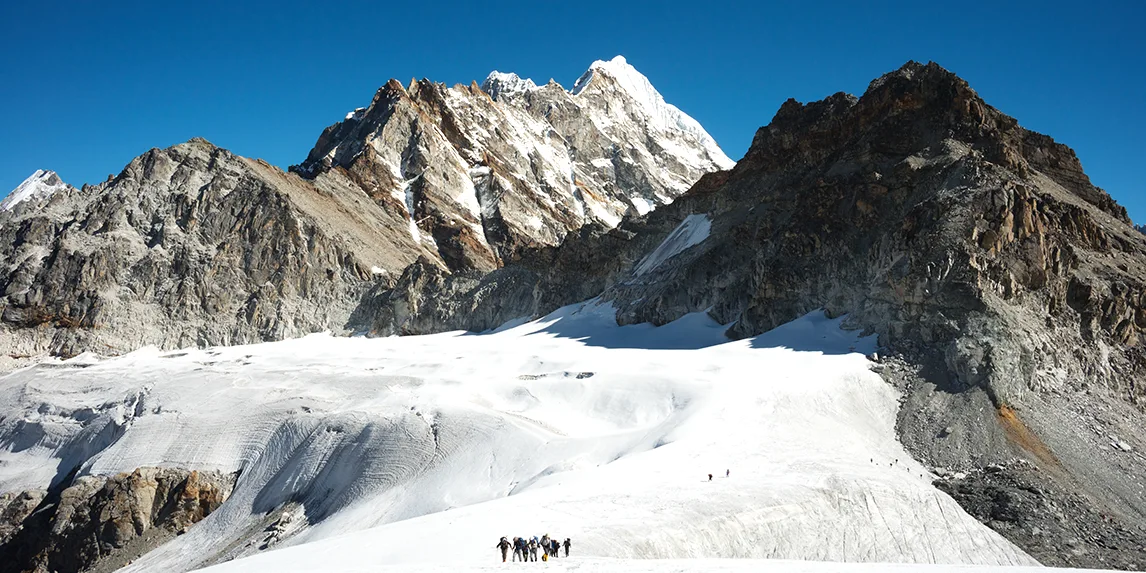
If you are still wondering which is right for you, then this Mera Peak vs Island Peak guide will assist you in comparing their difficulty, altitude, cost, fitness level, experience, scenery, routes, and overall climbing experience. By the end, you will definitely have a clear idea of which climb is better for your adventure objectives.
Overview of Mera Peak and Island Peak
What is Mera Peak?
Located in the secluded Hinku Valley of Makalu Barun National Park, Mera Peak is considered the highest trekking peak in Nepal with an altitude of 6476 meters. Trekkers are rewarded with the pure, serene surroundings that will refresh their souls. The most amazing part is that you don’t have to possess high-end mountaineering skills to climb this peak and experience the breathtaking gigantic snow-covered Himalayas.
What is Island Peak?
Island Peak (Imja Tse) is another iconic trekking peak, standing at an elevation of 6189 meters above sea level. You can find this peak above the Imja Glacier, which has the structure of a pyramid-like shape and the name Island Peak originated as it appears like an island rising from a sea of ice.
Quick Comparison Table
| Feature | Mera Peak | Island Peak |
| Altitude | 6.476 meters or 21,247 feet | 6,189 meters 20,305 feet |
| Duration | 13 to 21 days | 16 to 20 days |
| Region | Hinku Valley (Makalu region) | Everest or Khumbu region |
| Technical Difficulty | Alpine Grade PD (Non-technical) | Alpine Grade PD+ (Moderate technical |
| Physical Difficulty | High (require altitude endurance) | Moderate High (steep climbing) |
| Popular Route | Zatrwa La Pass | Classic Everest Base Camp route |
| Skills Required | Glacier Travel, Basic crampon use, ice axe | Crevasse Crossing, Fixed ropes, jumar |
| Best For | First-timers, high-elevation enthusiasts | Adventure seekers who want to build technical skills |
Mera Peak vs Island Peak Difficulty
Which Peak is Harder?
When comparing the difficulty of Mera Peak vs Island Peak, Island Peak is usually considered a more technically demanding climb. However, the real answer depends on what breaks you. Most climbers underestimate Mera Peak, as there is minimal technical climbing, but it doesn’t mean it’s easy, as the killer is the trek itself. You will be walking 5 to 7 hours a day before the climbing even starts, which can make you very tired from day 5 to 6. Mera Peak climbing will test your stamina and ability to handle high altitudes, making the journey strenuous.
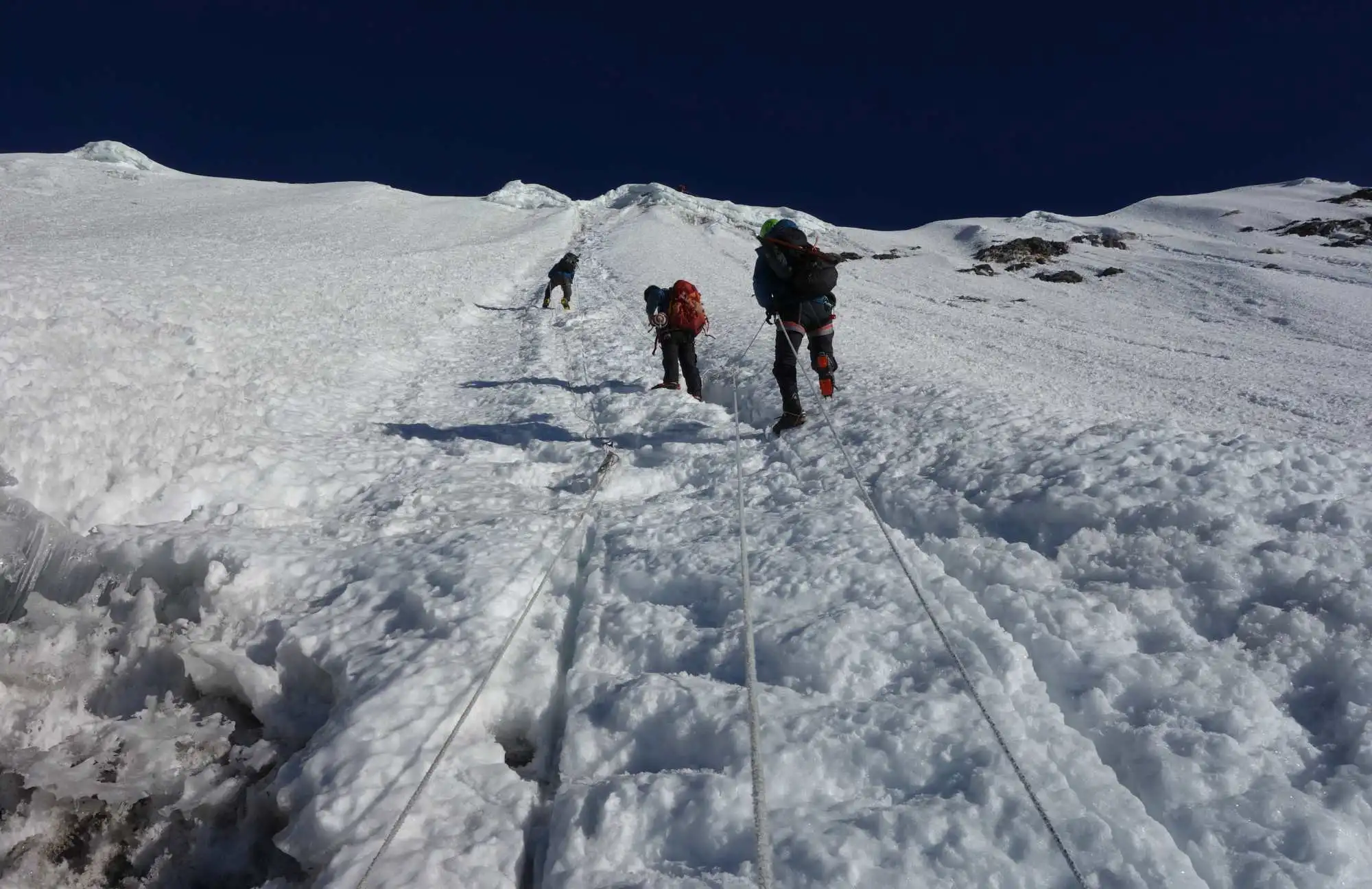
On the other hand, when you embark on the Island Peak climbing journey, the trek portion is harder, but physically fit people can do it just fine. Even though Island Peak is 287 meters lower than Mera Peak, you will have to go through the technical sections that will need the use of mountaineering gear like fixed ropes, crampons, and jumars. You will have to use a ladder for crossing over crevasses, although it will be only 20 meters long but still dangerous. So, yeah, Island Peak will be much harder than Mera Peak.
Technical Skills Required for Mera Peak vs Island Peak
Mera Peak: If you are a beginner and want to start the climbing journey, then Mera Peak climbing 2026 will be the perfect option for you even with little or no experience. You will find out soon that this climb generally involves walking on snow and glaciers using ropes and crampons on moderate inclinations. Before the summit push, your guide will give basic training on using climbing gear and axes.
Island Peak: Compared to Mera Peak climbing, Island Peak climbing in 2026 is more complex and demands more climbing abilities, since you must use harnesses, jumars, ice axes, and crampons on steep icy areas. This journey will also need to take you through the crevasses and exposed ridges, making it more physically and mentally tiresome.
Altitude and Acclimatization Comparison of Mera Peak vs Island Peak
Mera Peak Altitude Challenges: One of the greatest enemies that you faced on this Mera Peak climbing expedition is the high altitude. When you try to climb the peak of 6,476 meters, you have to push your body to fight through thin air near the summit, which can make you slow and feel tired easily. However, this slow, predictable climb with gradual acclimatization will give your body time to adapt and complete this journey.
Island Peak Altitude Challenges: Although Island Peak is lower by 287 meters than Mera Peak, altitude is the primary challenge. The EBC route will get you to 5,364 meters in about 5 to 6 days, which is aggressive. But the advantage is you are still acclimatizing along with getting a higher location each day. However, the compressed timeline may sometimes not allow climbers to fully acclimatize before tackling technical sections. So, to do Island Peak climbing, it requires strong willpower and a physically fit body.
Risk of Altitude Sickness
Acute mountain sickness (AMS) comes with the risk of several symptoms like nausea, headache, dizziness, fatigue, and so on, during the Mera and Island Peak expeditions. However, on the Mera Peak trek, you will spend more time above 5000 meters, whereas on Island Peak, you go for a faster summit push after the EBC route.
Anyway, it is very important that you not only follow the acclimatization days, but also stay hydrated and be vigilant regarding any AMS symptoms to be able to climb safely and cover the route. Carrying medication such as Diamox for combating altitude sickness would be a good idea.
Scenic Experience and Trekking Routes on Mera Peak vs Island Peak
Mera Peak Scenery: When you embark on the journey of Mera Peak climbing, you will walk through the Hinku Valley that will leave you stunned with its charming beauty and serenity. On the way, you can enjoy the trail with the sceneries of rhododendrons, alpine landscapes, 360-degree vistas of towering mountains, and lovely small villages.
Island Peak Scenery: Along the way, you will experience the Khumbu region through its combination of mountain landscapes and vibrant Sherpa culture. Besides, you will have an opportunity to see top tourist spots such as Namche Bazaar, Tengboche Monastery, and Everest Base Camp. Reaching the summit, you are treated to the spectacular views of Baruntse, Nuptse, Lhotse, and Everest itself.
Which Trek is More Beautiful?
When looking at the picture of the beauty for Mera Peak vs Island Peak, it is hard to tell which is more beautiful. They are both very beautiful in their own unique ways. If you long for isolation and the vast horizon of giants, you can go to Mera Peak to enjoy its beauty. But, if you want to enjoy the Sherpa culture along with aim to reach the base of world’s tallest peak, Mt Everest, then, you can choose Island Peak to enjoy its beauty.
Climbing Route and Technical Sections
Mera Peak Climbing Route
The Mera Peak route follows a long yet steady snow route across glaciers and wide slopes. From high camp, climbers will start early ascent and rope up for safety against crevasses. It can take up to 6 to 8 hours to reach the top, navigating 30 to 40-degree slopes. Even though it is not highly technical, you can surely expect a physically demanding trip.
Island Peak Climbing Route
The Island Peak climb becomes more technical, especially when climbers reach near the summit. After a physically demanding rocky climb, they will be required to move onto glacier terrain using ropes and crampons. The main barrier of this journey is a steep ice wall which also contains a narrow ridge near the top. The descent is nearly as tough as the ascent. So, proper preparation and training are needed to complete the journey successfully.
Safety Considerations
When you put Mera Peak vs Island Peak, they both need careful planning and preparation. Weather plays a huge factor in making the climb possible or not. Mera Peak has hidden crevasses that need proper rope team guidance, whereas Island Peak requires strong rope skills and careful movement on steep ice. You cannot turn a blind eye to anything; otherwise, the consequence can be harsh when travelling deep into the mountains.
Best Time to Climb Mera Peak and Island Peak
Both Mera Peak vs Island Peak share similar ideal climbing seasons which are briefly explained below:
Spring Season (March–May): Spring is one of the best and safest seasons to climb both Island and Mera Peak. It offers stable weather with blooming rhododendrons in the lower trails. Climbers can safely navigate the route to the top without facing a harsh climate.
Autumn Season (September–November): Another best climbing season is the fall or autumn. After the monsoon, skies are clear, offering clear views of mountains along with stable weather, making the climb possible with fewer obstacles compared to winter and monsoon.
Winter and Monsoon Challenges: Winter brings extreme cold and heavy snow with a high possibility of flight cancellations to Lukla or the airports near Mera. If climbers still choose to climb, then the weather can be very treacherous. In the same way, the monsoon comes with its own challenges, like persistent heavy rain, leeches in the lower forest, and zero Himalayan views. Both climbs in these seasons are too dangerous and rarely offered by travel agencies.
Cost Comparison: Mera Peak vs Island Peak
Mera Peak Climbing Cost
When you look at the cost in Mera Peak vs Island Peak, Mera Peak’s price can go much higher due to remote logistics push. You will be spending around $25 to $40 per day for each porter and guide. You will be flying to Tumlingtar from Kathmandu with the ticket fees between USD 120 and 180. Basic accommodation and food can cost you USD 15 to 25 per night. So, the basically realistic budget can range from USD 2000 to 3500, including costs of permits, rental gear, transportation and others.
Island Peak Climbing Cost
You can often get an Island Peak climbing package combined with a classic Everest Base Camp trek and climbing permit for one bundled price. You will need to pay around $130 for all permits, including the Sagarmatha National Park permit, Island Peak permit, and Khumbu Pasang Lhamu Rural Municipality entrance permit. A professional guide can charge you between USD 20 and 35 per day. Teahouses can cost USD 20 to 40 per night depending on the type of accommodation you choose. So, the overall Island Peak climbing cost can range between USD 2000 and 3000.
Which Peak is More Expensive?
| Expense | Mera Peak | Island Peak |
| Permit Cost | USD 250–400 (varies by season) | USD 250–300 (spring/autumn) |
| Guide Cost | Higher due to remoteness | Included in the most EBC combo packages |
| Transportation | Kathmandu to Lukla flight, jeep/trail | Kathmandu to Lukla flight |
| Average Package Price | USD 2000 to 3500 | USD 2000 to 3000 |
Generally, the Mera Peak climbing package is slightly higher than the Island Peak climbing package due to longer, more isolated logistics. But it is guaranteed that you will definitely get the best value for your money along with countless memories and joyful moments.
Accommodation and Food Comparison
The types of accommodation and food, as well as the services, differ depending on the location on this Mera Peak vs Island Peak journey.
Tea Houses on Mera Peak Route: You will find basic lodging on the Mera Peak trail offering basic rooms, shared dining spaces, and limited food options like typical dal bhat, noodles, and soup. As you reach higher toward Khare and base camp, the facilities get more limited, showcasing simple living lifestyles.
Tea Houses on Island Peak Route: The plus point on traveling in the Island Peak route in the Everest region is that you can find better-developed facilities from basic to premium lodging options with a wide range of dining options. The only time you spend on the tent will be on the base camp when you prepare a final push to the summit.
Comfort Level Comparison: So, if you are eager to know which expedition offers more comfort, it’s obvious that you will find more in Island Peak due to the better facilities, wide range of food options, and connectivity, making your journey more comfortable. Nonetheless, if you are down to experience wilderness with fewer modern amenities, Mera Peak can be the right option to escape the city’s hectic life.
Fitness Requirements
Fitness Needed for Mera Peak
If you are planning for the Mera Peak climbing expedition, you should have better stamina and endurance. You are likely to spend 5 to 7 hours daily with a tough summit push that can last up to 10 hours above 5500 meters. So, good cardio fitness, strong legs, and mental strength are requirements for fitness in this climb.
Fitness Needed for Island Peak
For Island Peak, climbers must have both endurance and upper-body strength. Along with trekking, you should have the ability to handle rope work and steep icy sections using climbing tools. So, the balance and core strength are also important in this technical difficulty climb.
Recommended Training Before the Climb
For any peak climbing, you should commence your training at least 2 or 3 months before the start date of the expedition. You can focus on running, stair climbing with a backpack, swimming, and so on to build up stamina. You can also do pull-ups and rope-based exercises for Island Peak climbing that will pay off enormously during the actual climb.
Success Rate and Safety Comparison
Mera Peak Success Rate
Mera Peak generally has a higher summit success rate than Island Peak, with a data of 80 to 90%. With good planning of acclimatization and stable weather, many climbers can reach the summit successfully.
Island Peak Success Rate
Island Peak has a lower success rate of 70 to 80% due to more technical climbing sections. Some climbers may also panic on the ice headwall and don’t continue due to fear. Similarly, in spring, 50 to 100 climbers’ queue for the fixed ropes. Some people move slowly, which makes a long line, and changing weather can make people turn back.
Which Peak is Safer?
Both mountains are safe if you choose a professional guide and team. Tourist deaths on either peak are extremely rare. However, Mera Peak is generally considered the safer option for beginners or experienced climbers, as the trail follows gradual snow slopes and open glaciers.
Frequently Asked Questions (FAQs)
- Which peak has better vistas?
Looking out from Mera Peak, you are surrounded by stunning alpine landscapes for a fabulous nature experience. In turn, from Island Peak, it’s the world-famous scenery of the Khumbu region that fills your eyes. So, both peaks offer breathtaking views. - Do you require previous climbing experience?
For Mera Peak, without experience, you can embark on the journey; however, for Island Peak, it is better that you have basic climbing skills to navigate safely without any injuries while making the ascent. - Can Mera Peak and Island Peak be combined?
Of course, but only in advanced expeditions like the Three Cols or Amphu Lapcha route, which are suitable for experienced, skilled climbers only.
Final Verdict: Which Climb is Better?
Choose Mera Peak If
If you are new to mountaineering and want to have a Himalayan experience without the technical challenges, Mera Peak would be a suitable choice. Here, you can explore isolated paths and peaceful settings of the mountains while being amazed by the splendid views of the snow-capped peaks.
Choose Island Peak If
Ideal Peak is suitable for those trekkers with experience who are seeking a more technical climb in the Everest region. The route offers exciting rope sections along with the chance to explore EBC.
Overall Recommendation
Mera Peak and Island Peak are both incredible Himalayan adventures offering unlimited unforgettable memories that will always be in your heart. If you are a beginner looking for a less technical but high-altitude challenge, then go for the Mera Peak expedition, whereas if you are already experienced and skilled in mountaineering and longing for a demanding skill-based climb, then go for the Island Peak expedition.