5 Best 6000m Peaks in Nepal for Beginners and Intermediate Climbers

merapeak c 1

5 Best 6000m Peaks in Nepal for Beginners and Intermediate Climbers offer thrilling Himalayan adventures with stunning views, perfect for aspiring climbers.Nepal is a paradise for the mountaineers , offers some of the world’s most spectacular himalayan peaks. While the 8000m giants often steal the most of the spotlight the country is also home to hundreds of the stunning mountains above the 6000m that provides equally thrilling climbing adventures.

These high peaks are perfect for those climbers who want a challenging yet achievable himalayan experience without stepping into the extreme expedition territory . In this blog we will highlight the top 5 peaks above 6000m in Nepal which are known for their beauty , accessibility and unforgettable summit views. Whether you are preparing for your first himalayan climb or looking to add a new peak to your journey, these mountains offers the perfect blend of adventure, skill and breathtaking scenery.

Among the most popular 6000- meter peaks are Mera peak known for its accessible yet rewarding climb Island Peak a favorite for the first time climbers seeking a true mountaineering experience and Lobuche East and West which combines the technical ice and rock sections with spectacular Everest region views . Chulu East and west which stands proudly in the Annapurna regions are the perfect for those climbers who are seeking a mix of adventure and serenity. Meanwhile larkya peak located in the remote Nar-Phu valley offers an off-the beaten path himalayan experience with the pristine landscapes and panoramic summit vistas.

These peaks not only provide you the unforgettable climbs but also will let adventurers experience the natural beauty , rich culture and awe-inspiring mountain panoramas that Nepal is famous for .

Mera Peak (6,476m)

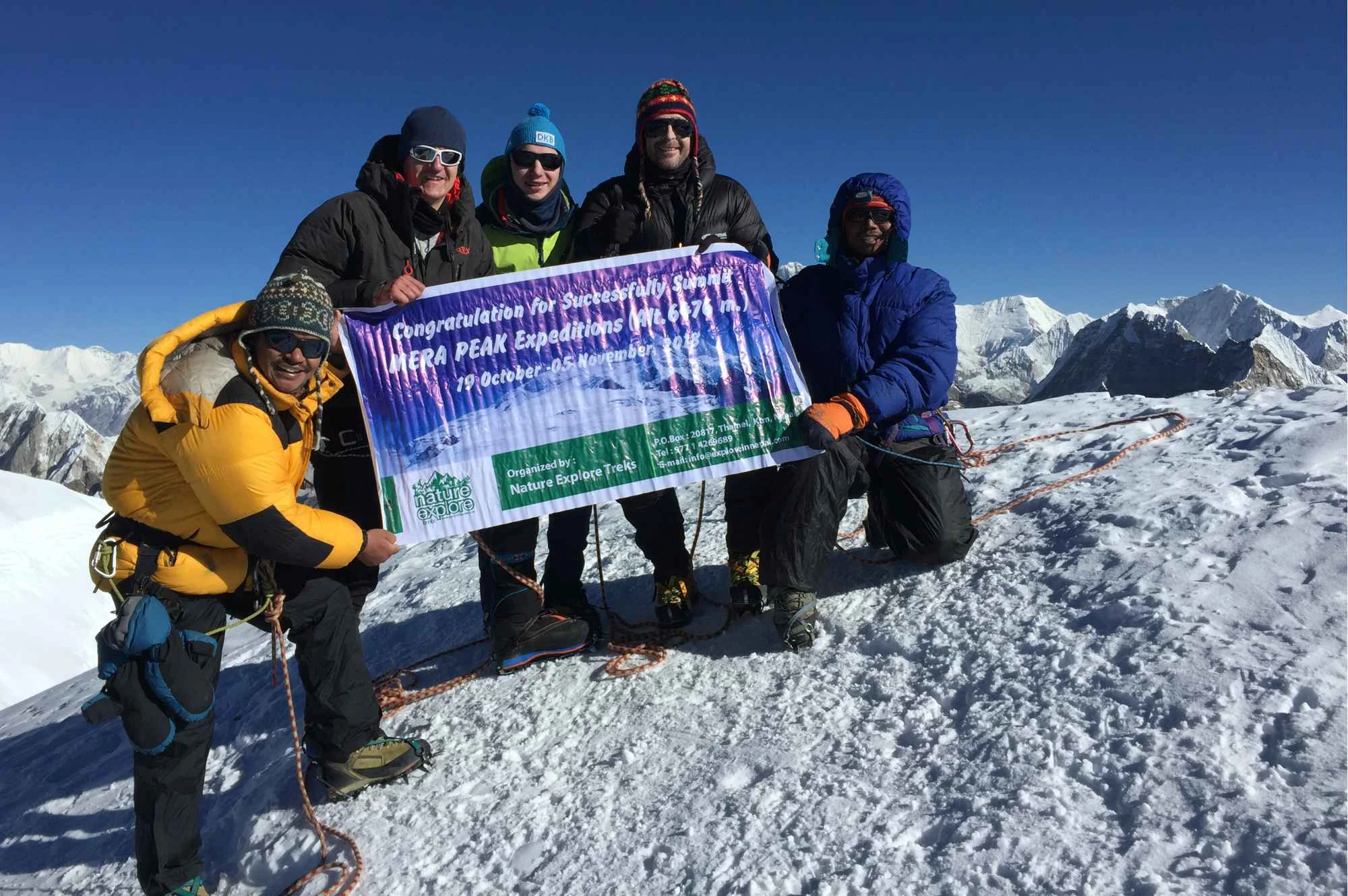
Mera peak is one of the Nepal’s most iconic trekking peaks which is rising high above the remote Hinku valley in the eastern part of the himalayas. It is known as the highest trekking peak in nepal, it offers an unmatched combination of both accessiviluty and altitude making it a dream summit for beginners and intermediate climbers. The journey to the Mera peak takes you far form the busier Everest base campp trails into the quieter pristine forests, yak pastures, frozen lakes world which has untouched mountain landscapes. As the trek ascend the scenery shifts dramatically form the lush rhododendron and bamboo forest to wide open aline terrain and finally into the glacier zone where the peak stands proudly against the sky.

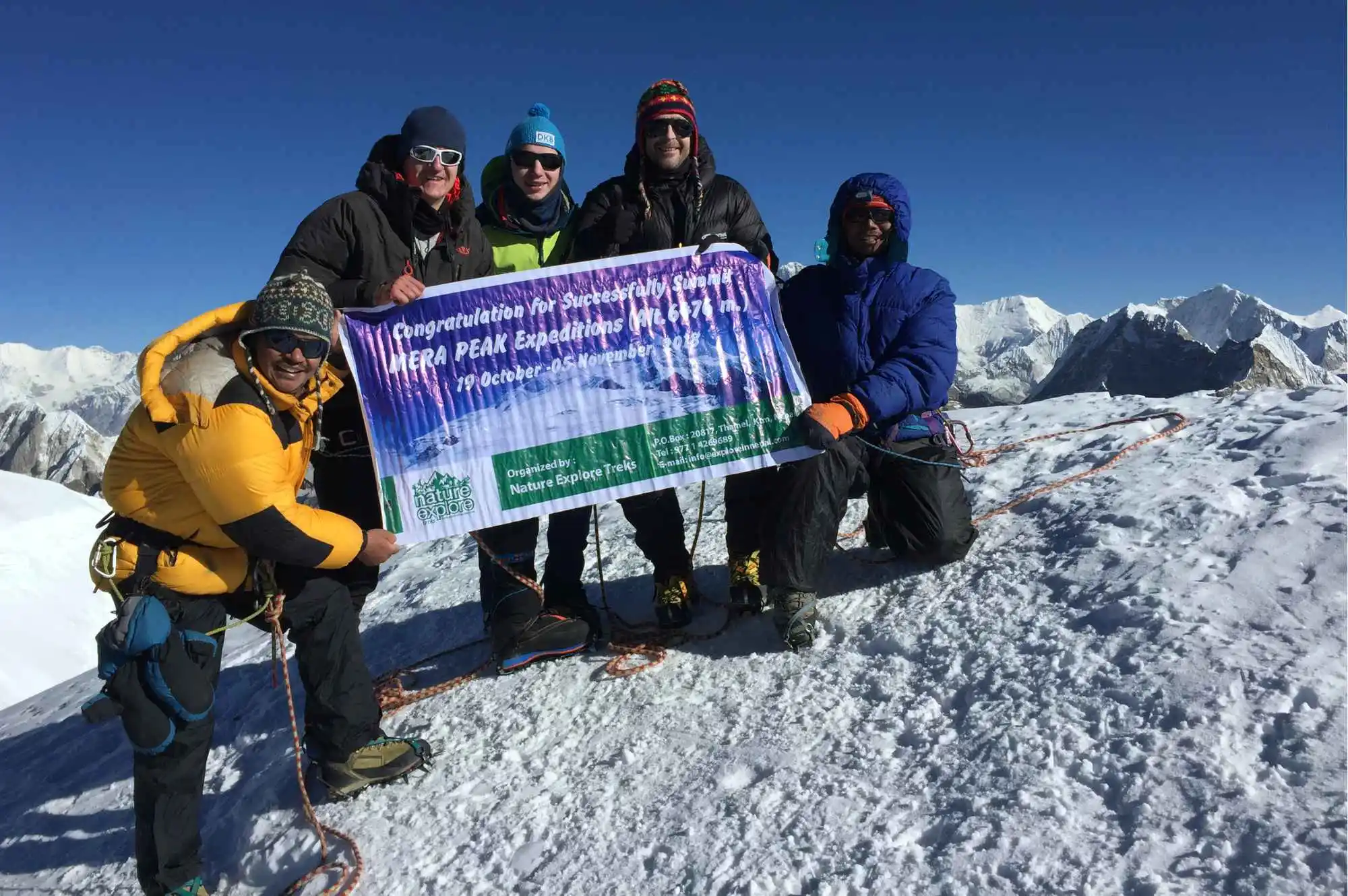
What makes Mera Peak truly special is its extraordinary 360 degree summit panorama which is often described as the most spectacular view from any trekking peak in Nepal. From the summit climbers will witness the world’s five highest mountains i.e Everest, Lhotse, Makalu , Cho Oyu and Kanchenjunga forming a giants of horizon.Trail is although long and demanding its actually peaceful , scenic and rewarding.

Difficulty level of Mera Peak

Mera peak is technically considered as the moderate. While the altitude makes it challenging but the actual climbing involves mostly gentle glacier slopes . There are not that much extremely steep ice walls or complicated rock section. You will need to walk with crampons , ue an ice axe and tackle a short fixed rope section near the summit so conclusion is that if you are beginner level climber then this peak will be suitable for you. The only difficulty will lies in copying with the thin air above 6000m maintaining the stamina for a long day and staying warm in high winds and freezing temperatures.

What you will see from the Top of Mera Peak

The visual you will see form the top of the Mera peak is unforgettable. As you trek higher the world opens up into enormous white landscapes and crystal clear horizons . Snowy ridges will stretch endlessly and deep valley will fall away beneath you. The true magic will begins at the summit where you will witness view five 8000m mountains at one sweeping arc you will see Mount Everest, Lhotse, Makalu , Cho Oyu and Kanchenjunga and this is what makes the Mera-Peak world Famous.The glacier shines from the early morning light and the sky truns pink and orange and the mountain appear so close it feels unreal.

Route and Climbing Style

Like every other trek or peak climbing in Eastern part of Nepal it begins with a scenic flight to Lukla which is followed by a quiet trek into the Hinku Valley. The journey passes through the Paiya, Panggom, Ningsow, Chhetra Khola, Kothe, Thangnak and eventually Khare which is the main base for acclimatization and the training.

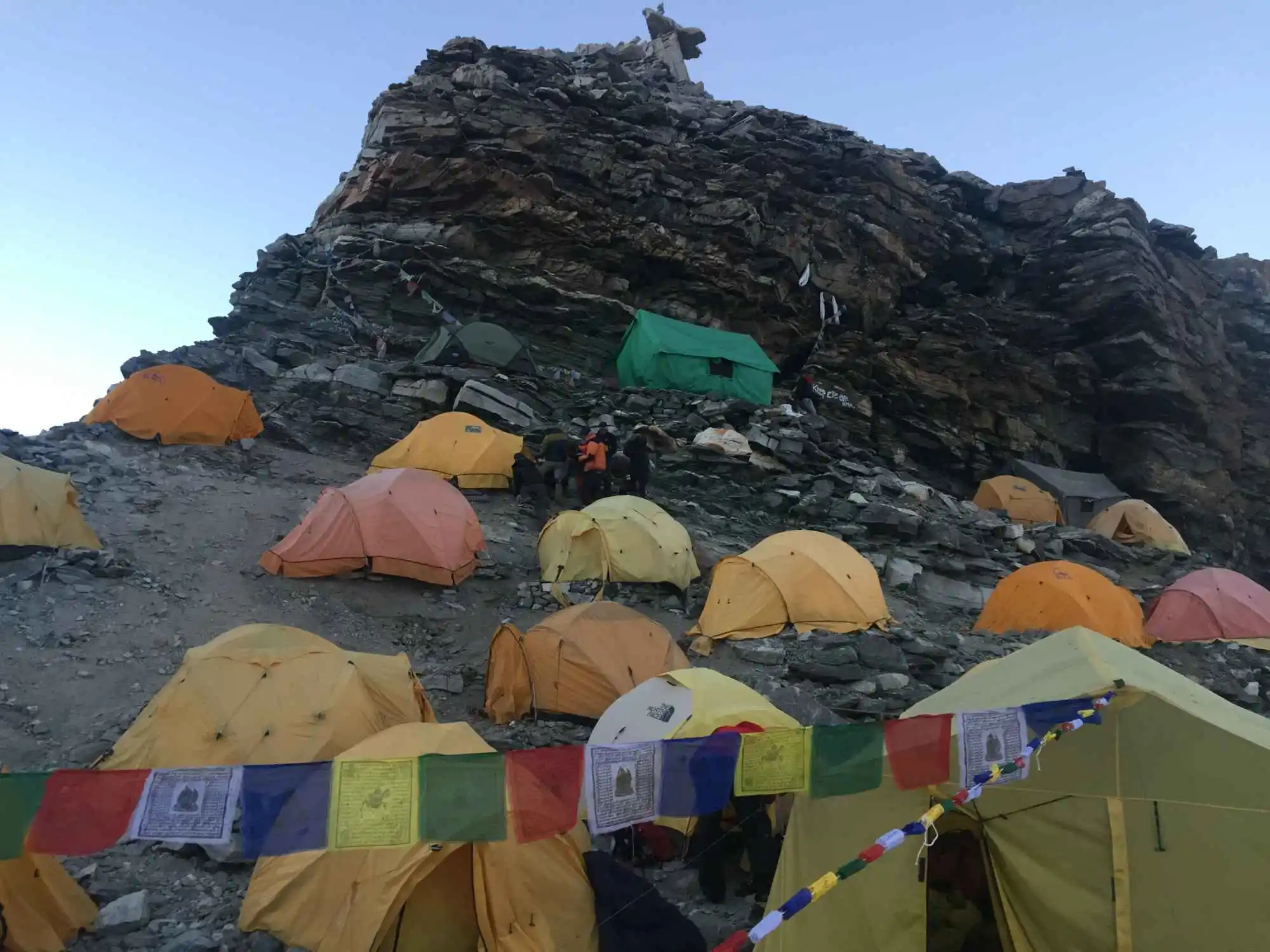
From Khare climbers will ascend into the long Mera Glacier where you will practice crampon walking and rope technique . The route is wide open and mostly straightforward offering a slow but steady climb towards the Mera High Camp which will perched dramatically on a rocky ridge above the snowline . Nights here are very cold but the view is incredibly beautiful with stars filling the sky.

Summit day begins very early usually around 2 or 3 Am. Climbers move in a rope team across the glacier following a gently rising snow slope for the several hours. The final section to the true summit is steeper and often is fixed with ropes for the safety . Once this final ush is completed the summit ridges appears and the panoramic himalayan world unfolds around you very beautifully.

Outline Itinerary

Day 01: Arrive at Kathmandu, 1300 m

Day 02: Sightseeing in Kathmandu

Day 03: Fly to Lukla, trek to Chhuthanga, 3500 m, 4-5 hours

Day 04: Trek to Thuli Kharka via Zwatra La Pass, 4050 m (pass 4600 m), 6-7 hours

Day 05: Trek to Kothe, 3500 m, 5-6 hours

Day 06: Kothe to Thagnag, 4300 m, 4 hours

Day 07: Thagnag to Khare, 4900 m, 3 hours

Day 08: Acclimatization day in Khare, 4900 m

Day 09: Khare to Mera High Camp, 5500 m, 6-7 hours

Day 10: Mera High Camp to Summit and back to Khare, 6461 m / 5100 m, 9-10 hours

Day 11: Reserve day in case of bad weather, 4900 m

Day 12: Khare to Kothe, 3500 m

Day 13: Kothe to Thuli Kharka, 4050 m, 5-6 hours

Day 14: Thuli Kharka to Lukla, 2840 m, 5-6 hours

Day 15: Fly to Kathmandu, 1300 m
Island peak A

Island Peak (6,189m)

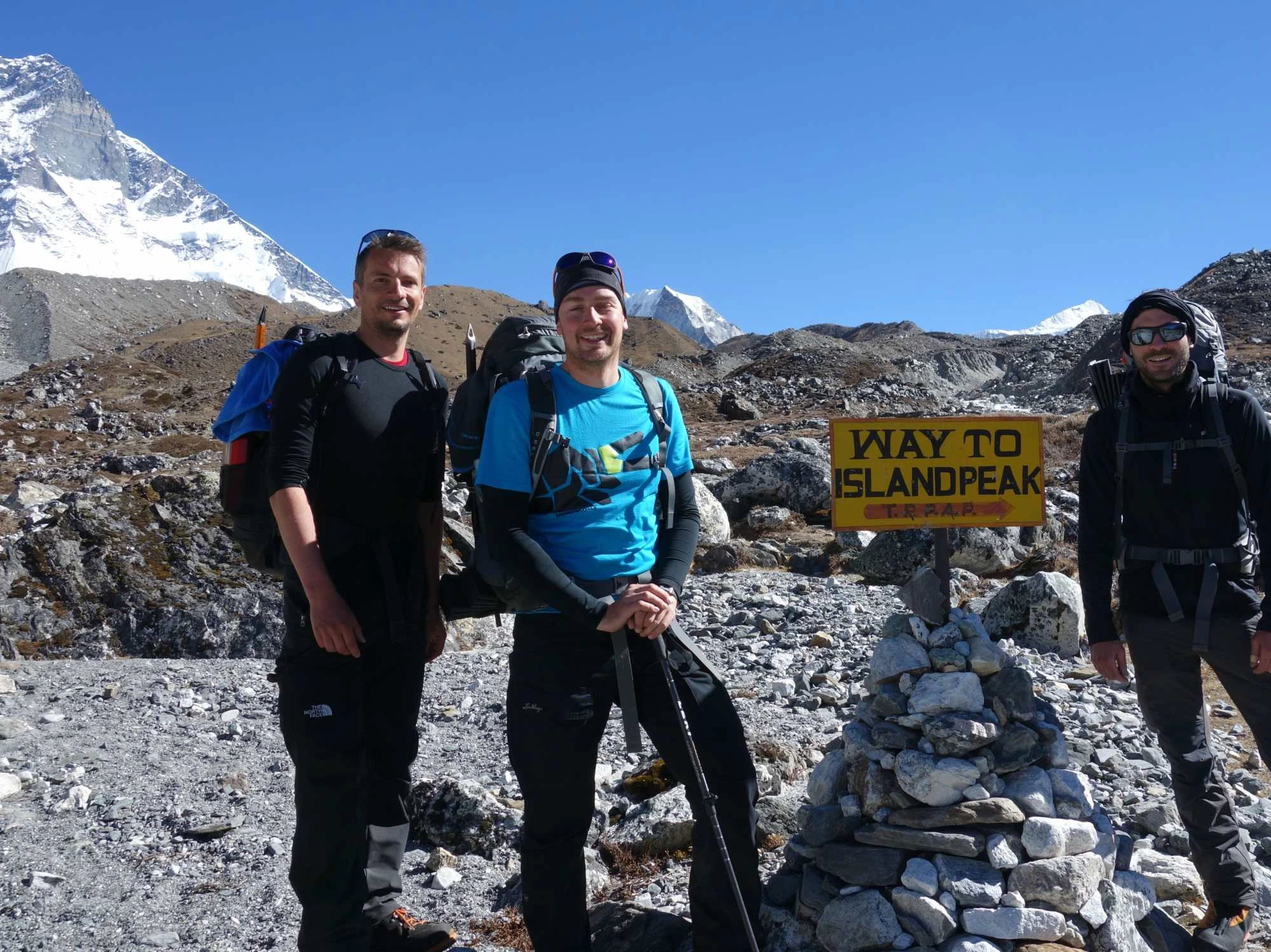
Island peak also known as Imja Tse is one of the Nepal’s most iconic and popular peaks. It stands beautifully in the middle of the Imja valley appears like an island of ice rising from a sea of snow hence the name was given because of its features from the early explorers. For many beginner climbers who want to experience the technical himalayan mountaineering Island peak is the perfect taste for them.

What makes Island peak more incredibly appealing is it is perfect blend of adventure, accessibility and technical challenge. The climb involve s glacier travel , crossing the crevasses with ladder and tackling a steep hedwall near the summit area . Climbers choose this peak as this peak closely resemble the real techniques used on the 8000m giants. Yet with the proper acclimatization and guidance it remains within the reach of motivated beginners and intermediate climbers.

Difficulty level of Island Peak

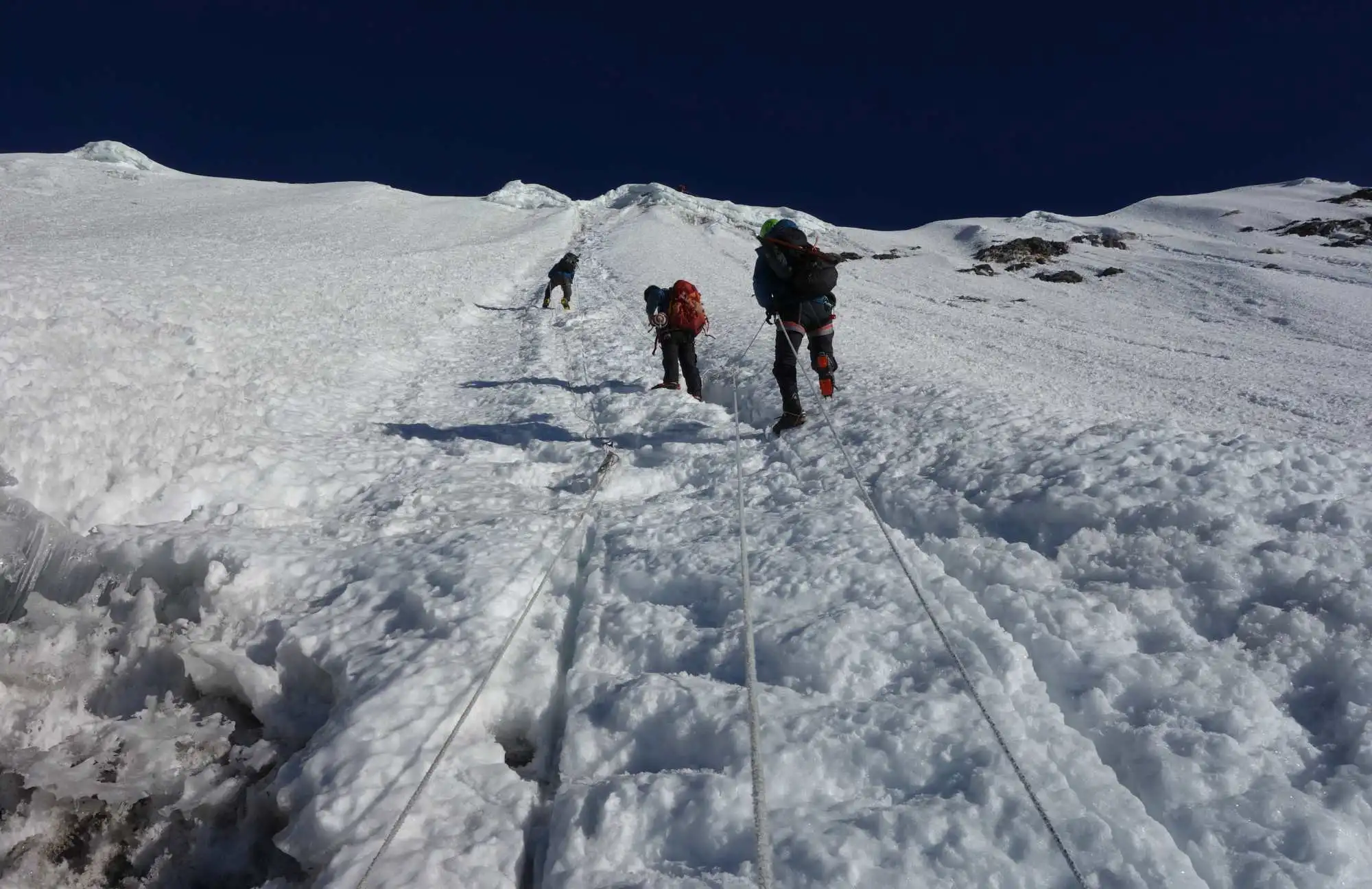
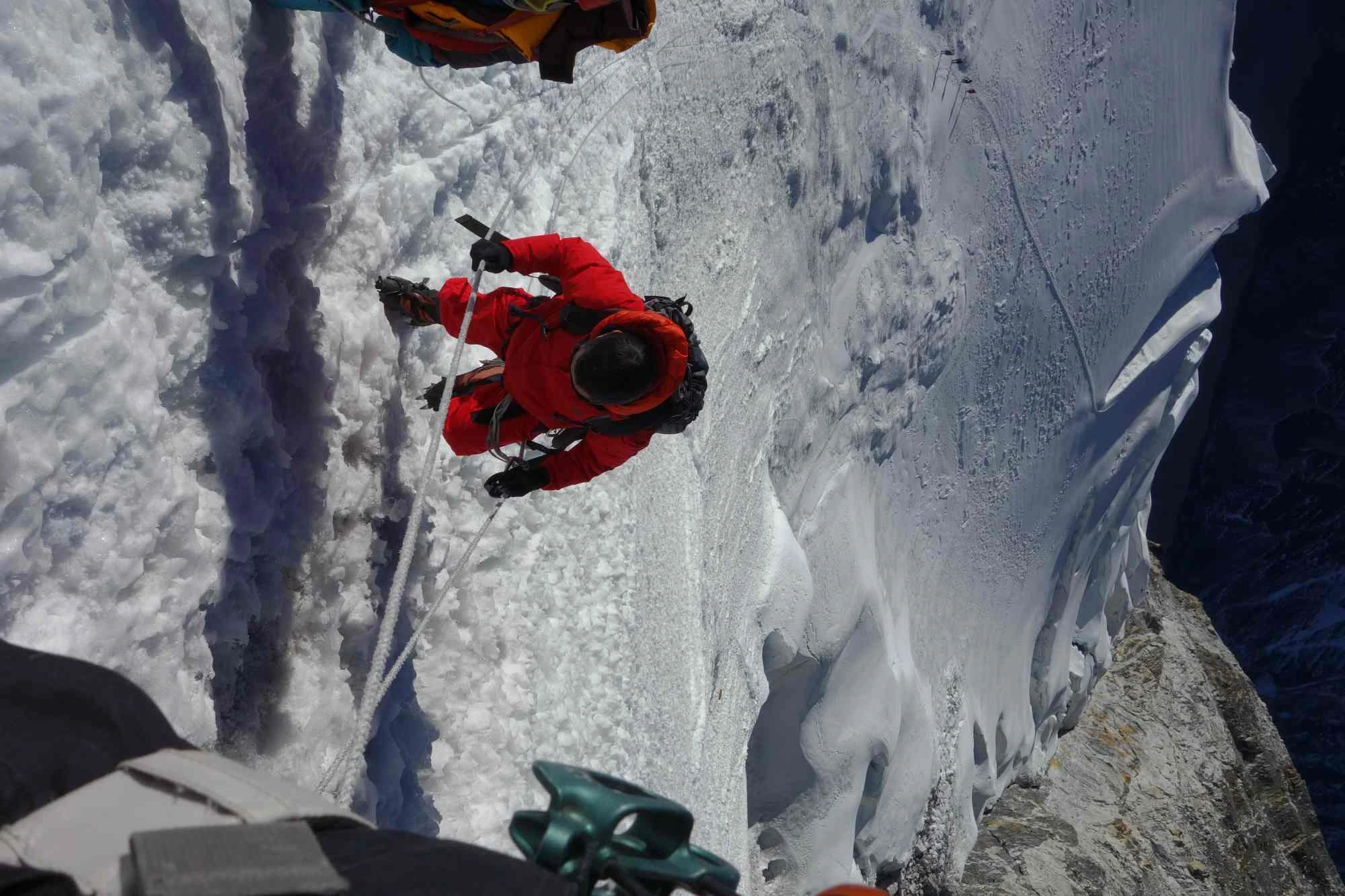
Island peak is considered more technical than Mera Peak and it demands a solid understanding of basic mountaineering skills. Although it is still achievable for the beginners with the proper training climbers must be prepared for its steeper slopes , exposed ridgelines and the glacier travel. The ascent to the Island peak requires the use of fixed ropes, jumar ascenders, crampons and an ice axe giving climbers a true taste of the technical himalayan climbing . You may also encounter aluminum ladders placed across the deep crevasses a technique which is some what similar to what climbers experience on Everest which adds an exciting challenge.

The most difficult or we can say demanding section of the climb is the final 250-300m headwall a steep snow and ice slope that leads directly to the summit ridge. This portion required steady footwork, good stamina and confident in using the fixed lines. Once you reach the summit ridges the exposure on the both side can make you feel intimidating but it also provides some of the most breathtaking views in the entire Khumbu region.

While the mountain is not extremely difficult the combination of altitude cold winds, thins air and technical terrain will make this a serious adventure. With proper acclimatization, strong physical fitness and mental determination your accent to Island peak willbe successful .

What you will see from the Top of Island Peak

The summit views from Island peak is nothing short of awe-inspiring views. You can expect 360 degree panorama of some of the highest mountain in Earth from the snow ridges to glaciers there will be no sort of view which will fail to mesmerized your eyes. To the north and northeast the towering giants of Lhotse, Makalu and Baruntse dominates the skyline their snow clad peaks sparkling in the sunlight. To the west there is graceful peak Ama Dablam which rises like a sharp spire often describe as one of the most beautiful mountain in the world. Below the expansive there is Imja Glaciers which stretches like a frozen river winding through the valley in the sendless shades of white and blue.

Sunrise view from the summit looks exactly like a painter’s canvas which is filled with mountain glow of gold shadows that stretch across the valley and the icy glaciers that reflects the soft morning light. As the sun rises higher surrounding peaks gradually reveal their dramatic ridges and deep crevasses. The feeling that you get once you stand on the top of Island peak will be mixed physically you will be drained but mentally you have that sense of achievement and peace and also feel the connection with the mountain.


Outline Itinerary 

Day 01 : Arrive at Kathmandu alt 1300m

Day 02 : Fly to Lukla and then trek to Phakding alt.2610m

Day 03 Trek from Phakding to Namche Bazaar alt.3410m

Day 04 Rest day at Namche Bazaar alt.3400m

Day 05 Trek to Tengboche alt.3800m

Day 06 Trek to Dingboche alt.4410m

Day 07 Rest day in Dingboche alt.4410m

Day 08 Trek to Lobuche alt.4900m

Day 09 Trek to Everest Base Camp (alt.6261m)-Gorak sherap 5100m

Day 10 Hike to Kala Pattar (alt.5550m) Trek back to Dinboche – 4410m

Day 11 Trek to Chhukung – 2 hours – 4700m

Day 12 Trek to Island Peak Base Camp.alt.5000m

Day 13 Climb to Island Peak summit (alt.6176m)from base camp then back to base camp

Day 14 Reserve day

Day 15 Trek Back to Pangboche -alt. 3900m – 4 to 5 hours

Day 16 Trek Back to Namche Bazzar – 6 hrs – alt. 3400m

Day 17 Trek back to Lukla,alt.2780m

Day 18 Fly back to Kathmandu,alt.1300m
Lobuche east 2

Lobuche East (6,119m)

Lobuche East is one of the most popular trekking peaks in the Everest region . It rises beautifully adobe the khumbu glacier and provides the climbers with an exciting combination of adventure , moderate technical climbing and breathtaking himalayan scenery. For many climbers lobuche East is the natureal next step after Island peak as it offers a slightly more technical experience without being extreme difficult.

The trail to the lobuche east passses through the famous EverestBase Camp route which means you will get to experience the Sherpa culture , mountain villages and the dramatic landscapes of the khumbu valley .

What Makes Lobuche East more attractive is its combination of challenging terrain, stunning views and accessibility. The climb includes rocky sections, snowy slopes and ridge climbing giving climbers a true taste of real himalayan mountaineering . Unlike other peaks, lobuche East offers a more exposed route and the sharper ridges which is why climbers choose it after gaining some experience on other peaks like Island and Mera Peak

Difficulty level of Lobuche East

Lobuche East is considered more technical and demanding compared to other popular trekking peaks in Nepal and it requires a good understanding of basic mountaineering techniques. While it is achievable for the beginners with proper preparation the climb itself is not easy and is often known for its steeper slopes , exposed ridgelines and mixed rock-ice terrain . Climbers need to be physically strong , mentally prepared and comfortable using the climbing equipment.

From high camp the route immediately becomes more challenging. The first section involves steep rocky scrambling in the dark , often with loose stones, requiring the careful footwork and balance. After reaching the glaciers climbers need to put on crampons and harness and rope up for the icy section. The glacier crossing including vaigating the crevasses , hard ice patches and uneven patches and uneven terrain which can be tiring at the high altitude.

As you move higher the slope gradually becomes steeper. The ascent requires the use of fixed ropes and jumar and climber must climb steadily while maintaining the smooth rhythm. The higher you go the more you will feel the effects of thin air , cold winds and physical exhaustion.

The most difficult part of lobuche East is the final push to the summit ridge. This section is a narrow exposed snow ridge with steep drop-offs on both sides. Climbers need to stay focused control their breathing and move confidently while being attached to the fixed rope . The ridge may feel intimidating because of the exposure especially if its windy but it also provides the most dramatic views.

What makes Lobuche East truly challenging is the combination of altitude (above 6000m) , cold temperatures , early morning start, steep ascents and technical terrain. The climb tests your endurance, mental determinations and ability to stay calm while using the technical gear. However with the proper acclimatizations a strong fitness base and guidance form the experienced climbing sherpas reaching the summit is very achievable for motivated beginners and intermediate climbers.

What you will see form the Top of Lobuche East

From the summit of Lobuche East the views are absolutely breathtaking . Climbers will enjoy the 360 degree panorama of some of the most iconic mountains in the Everest region. To the east you will see the massive walls of Everest , Lhotse and Nuptse while to the south the beautiful Ama Dablma stands tall with its perfect pyramid shape. To the noth and west peaks like Pumori, Changtse and the long stretch of the Khumbu Glacier appear in unbelievable clarity.

The sunrise view from the summit id unforgettable . As the first light hits the snowy peaks the mountains glow n golden and orange shaded and glacier below looks like a frozen river shining under the morning sun. Standing on top of lobuche East gives climbers a deep sense of achievement and a peaceful connection with the himalayas making it one of the most rewarding experiences in the region.

Outline Itinerary

Day 01: Arrive at Kathmandu,alt.1300m

Day 02: Visting around Kathmandu  and trek preparation

Day 03: Fly to Lukla-Phaking(alt.2780m lukla ,2610m phakding)

Day 04: Phakding to Namche Bazar,alt.3400m

Day 05: Acclimatization at Namche Bazar,alt.3400m

Day 06: Namche to Tengboche,alt.3800m

Day 07: Tengboche to Dingboche,alt.4410m

Day 08: Acclimatization at Dingboche,alt.4410m

Day 09: Trek from Dingboche to Lobuche,alt.4900m

Day 10: Lobuche to Everest base camp(alt.5364m)-Gorak shep alt.5120m

Day 11: Trek from Gorak shep to Kala Patthar viewpoint (5550m, 18304 Ft.) and back to Lobuche,alt.4900m

Day 12: Trek from Lobuche to High Camp,alt.4940m

Day 13: High camp-summit-high camp,alt.4940m to summit alt.6120m)

Day 14: Reserve day encase for bad weather or any issues during the Expedition

Day 15: Lobuche high camp to Pangboche,alt.3900m

Day 16: Pangboche to Namche,alt.3400m

Day 17: Namche Bazar to Lukla,alt.2780m

Day 18: Fly to kathmandu,alt.1300m

Chulu East (6,584m)

Chulu East is considered one of the most beautiful and admired peaks to climb in the Annapurna region, proudly rising above the Manang Valley. The peak stands as a giant, snow-covered pyramid surrounded by dramatic, steep rock walls, glaciers, and towering Himalayan peaks. Often referred to as the “sister peak” to Chulu West, Chulu East is less technical but provides an exciting and genuine mountaineering experience.

Chulu East is the perfect choice for many climbers looking to get a real taste of Himalayan alpine climbing. The route includes rocky ridges, steep snowy slopes, glacier crossings, and breathtaking high-altitude scenery. It is an ideal peak for those wanting an adventurous climb that tests body and mind without being overwhelmingly technical.

What really makes Chulu East special however, is its stunning location in the Annapurna range. Climbers love combining adventure and culture crossing the high passes, trekking through Manang’s traditional villages, and seeing the locals’ Tibetan-influenced lifestyle firsthand. All this leads to a very exciting summit push from high camp under the silent star-filled Himalayan sky.

Difficulty Level of Chulu East

Chulu East is a moderately technical peak that requires good fitness, strong determination, and basic mountaineering skills. While it is more accessible than Chulu West, the climb still includes steep rocky sections, glacier crossings, and high-altitude challenges that make it a serious adventure. The ascent from high camp begins with rocky slopes that can feel tough, especially in the dark, requiring careful footwork and balance.

Once you reach the glacier, you will rope up, walk with crampons, and navigate icy surfaces and crevasses, which demands focus and proper technique. Higher up, the snow slopes become steeper, and climbers use fixed ropes and a jumar to ascend steadily. The final summit ridge is narrow and exposed, with sharp drops on both sides, and is often accompanied by cold winds adding to the difficulty. Thin air above 6,000 meters, long hours of climbing, freezing temperatures, and technical parts make Chulu East a demanding but extremely rewarding climb. With proper acclimatization and guided by experienced climbing Sherpas, this peak is very achievable for motivated beginners and intermediate climbers.

What You Will See from the Top of Chulu East

The summit of Chulu East is one of the most breathtaking views in the whole Annapurna region. From the top, you are surrounded by a dramatic 360-degree panorama of towering Himalayan peaks and endless glaciers. Right in front of you rise the magnificent Annapurna II, III, and IV, their massive snow faces glowing under the morning sun. To the west, the sharp and striking Tilicho Peak stands proudly above one of the world’s highest alpine lakes. Beneath your feet, the vast Manang Valley spreads out like a deep, rugged canyon dotted with tiny villages and ancient trails. Far in the distance, you can see the rolling snowfields stretching toward the Tibetan plateau. As the sun rises, the mountains turn golden, the glaciers sparkle, and the entire landscape looks unreal-like standing on a frozen rooftop of the world. The peaceful silence, the wide open spaces, and the incredible beauty make the summit moment unforgettable, filling you with a deep sense of achievement and connection with the Himalayas.

Outline Itinerary 

Day 1: Kathmandu Arrival , alt. 1300m
Day 2: Trip preparation day
Day 3 : Drive to Dharapani or Bagarchapp via Beshishar Alt 2000m
Day 4: Trek to Chame ( 4 to 5 hours) 2600m
Day 5: Trek to Upper Pisang Alt. 3300m
Day 6: Trek to Nagwal Alt 3650m
Day 7: Rest and acclimatization day
Day 8: Trek to Chulu East base camp Alt 4400m
Day 9: Base camp to high camp Alt 5330m
Day 10: Summit day (Chulu East Alt. 6,429m.) return to base camp
Day 11: Trek back to Humde alt. 3200m
Day 12: Trek back to Chame alt. 2600m.
Day 13: Drive to Kathmandu via Beshishar alt. 1300m.
 

Chulu weast

Chulu West (6,419m)

Chulu West is one of the most challenging and rewarding peaks in the Annapurna region. Rising proudly above the Manang Valley, it offers climbers a true Himalayan adventure: technical climbing, steep snow slopes, and exposed ridges all combined into one. Unlike Chulu East, this peak is more demanding, making it ideal for climbers who want to put their skills and endurance to the test in a high-altitude environment.

What makes Chulu West particularly exciting is its raw wilderness and remote location. The climb starts from the high valleys near the Annapurna Circuit, passing through virgin alpine landscapes, yak pastures, and traditional Manangi villages. As one ascends, the scenery gets more dramatic with sharp ridges, glaciers, and deep valleys stretching below. For climbers seeking a serious mountaineering challenge, Chulu West offers adventure and an unrivaled sense of isolation in the high Himalayas.

Difficulty of Chulu west

Chulu West is one of the most technical peaks in the Annapurna region, offering a true Himalayan expedition experience. The climb starts with long approaches through high valleys in Manang, passing yak pastures, alpine meadows, and rugged rocky terrain, which slowly acclimatizes the body to high altitude. From high camp onward, climbers will encounter steep snow slopes and glacier sections, where careful navigation employing crampons and ice axes takes center stage.

Fixed ropes are often used for icy and exposed ridges, particularly on the final summit push, which also is a narrow knife-edged ridge with steep drop-offs on both sides. High altitude and the thin air above 6,000 meters, combined with cold winds and long summit days, make the climb physically exhausting and mentally demanding. Climbers must maintain concentration, steady breathing, and endurance while commanding exposure and technical sections. With proper acclimatization, fitness, and guidance from experienced Sherpas, Chulu West is a highly rewarding climb that tests both skill and perseverance, giving a true sense of accomplishment to those who reach the top.

What You Will See from the Top

The summit of Chulu West offers a truly panoramic view that is well worth every ounce of effort expended on the climb. From its summit, climbers can see the breathtakingly beautiful Annapurna peaks-Annapurna II, III, IV, and Gangapurna-above them, while the long, serpent-like glaciers wind their ways down below like frozen rivers through the valleys.

To the west, Tilicho Peak-one of the most eye-catching mountains anywhere in the area-rears up, its icy faces sparkling in the sunlight. Far below them, the Manang Valley presses, with its dotted tiny villages, meandering trails, and deep glacial basins, while surrounding ridges form dramatic, rugged silhouettes against the sky. During sunrise, the mountains glow golden and orange; the glaciers are reflected in soft light, with the entire scene appearing almost surreal. The quiet and remoteness of Chulu West heighten the sense of isolation and grandeur, further making the summit an unforgettable, humbling experience in the Himalayas.

Outline Itinerary

Day 01: Arrive in Kathmandu alt.1300m

Day 02: Drive to Bhulbule alt.800m

Day 03: Trek from Bhulbhule to Jagat alt.1300m

Day 04: Trek from Jagat to Bagachhap alt.2000m

Day 05: Trek to Chame,alt.2600m

Day 06: Trek Chame to Pisang,alt.3100m

Day 07: Trek fromPisangto Manang,alt.3500m

Day 08: Manang acclimatization day.

Day 09: Trek from Manang to Yak Kharka,alt.4050m

Day 10: Trek from Yak Kharka to Chulu west base camp,alt.4900m

Day 11: Trek to Chulu high camp,alt.5500m

Day 12: Climb to Chulu west Summit (alt.6420m),and trek back to base camp,alt.5000m

Day 13: Reserved day for unfavorable weather condition.

Day 14: West Base Camp to Thorung Phedi,alt.4500m

Day 15: Trek from Thorung Phedi to Muktinath alt.3800m

Day 16: Trek to Jomsom alt.2700m

Day 17: Fly/Drive back to Pokhara ,alt.740m

Larkya Peak (6,249m)

Larkya Peak is a hidden gem near the famous Larkya La Pass on the Manaslu Circuit. It is one of the least frequented peaks in Nepal, making it ideal for adventurers who would love a quiet, off-the-beaten-path Himalayan climb. The peak rises above the high-altitude landscapes of the Manaslu region, offering sweeping views of glaciers, deep valleys, and rugged mountain ridges.

What makes Larkya Peak so unique is the element of remoteness along with its natural beauty. The climb takes you through pristine alpine valleys, across high passes, and near ancient monasteries reflecting the Tibetan-influenced culture of the region. This peak differs from other popular peaks in that it offers climbers a chance to experience relatively solitary travelling in the Himalayas, yet still remaining a proper mountaineering challenge. With proper acclimatization and preparation, it is achievable for motivated beginners and intermediate climbers seeking a rewarding high-altitude adventure.

Difficulty Level of larkya peak

Larkya Peak, near the famous Larkya La Pass on the Manaslu Circuit, is a moderately technical peak that combines accessibility with a true high-altitude Himalayan adventure. The climb begins with trekking through pristine alpine valleys, passing high passes, rivers, and remote Tibetan-influenced villages. As the ascent progresses, climbers encounter glaciers, moraine ridges, and snow-covered slopes that require crampons, ice axes, and sometimes fixed ropes for safety.

The upper slopes, particularly around the summit ridge, are exposed and can be windy, placing demands for careful foot placement, focus, and steady balance. Long summit days, thin air above 6,000 meters, and low temperatures add to the challenge, requiring both physical endurance and mental resilience. While not as technically difficult as Chulu West or Island Peak, Larkya Peak still provides a serious Himalayan climb that tests stamina, high-altitude experience, and determination, making the summit feel like a hard-earned and incredibly rewarding achievement.

What You Will See from the Top of Larkya Peak.

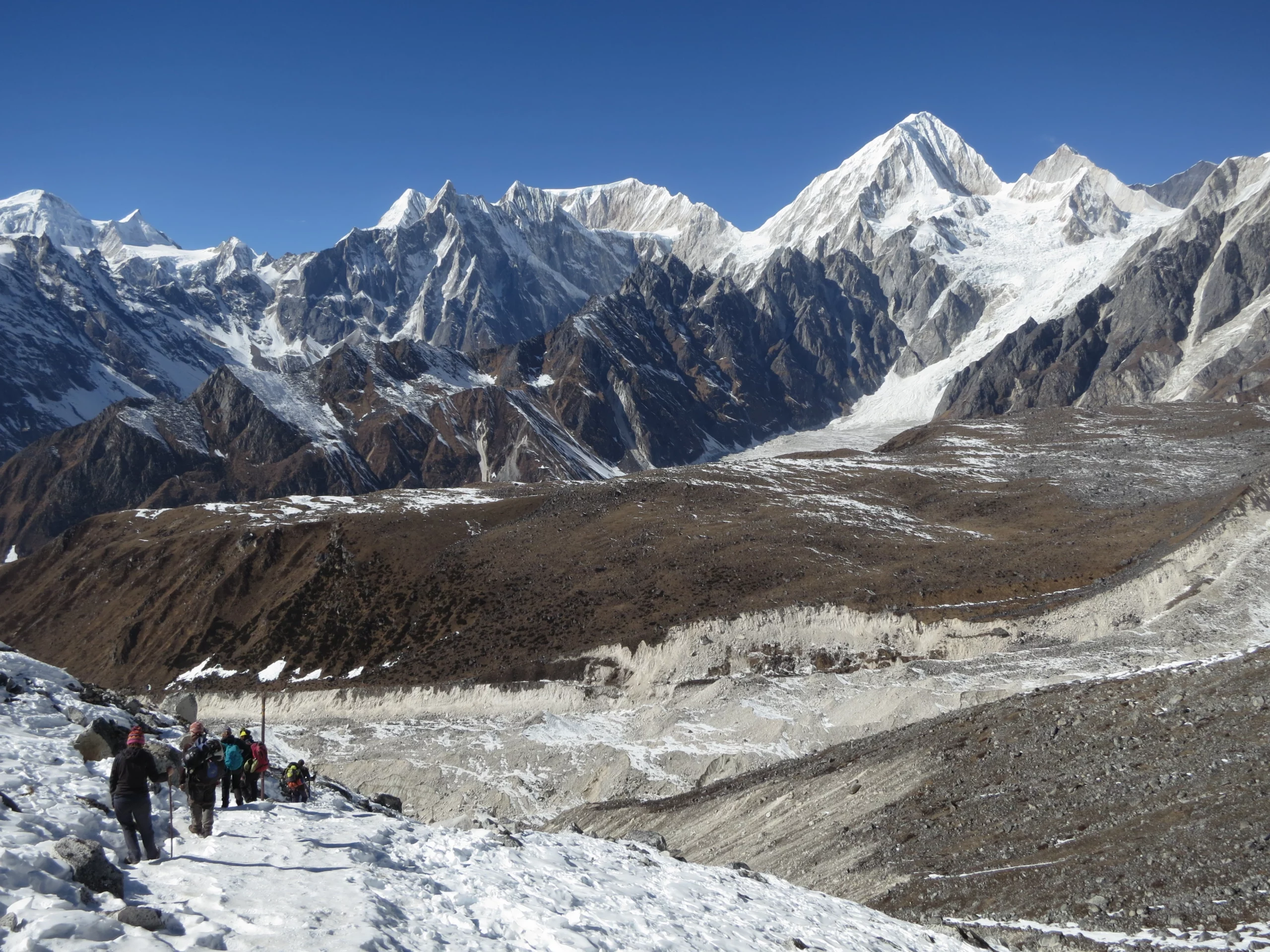
From the summit of Larkya Peak, one of the most spectacular and tranquil high-altitude panoramas in Nepal unfolds before the climbers. The gigantic Manaslu, 8,163 meters above sea level, crowns the skyline, framed by Himlung Himal, Cheo Himal, and many other peaks that are less well-known but strikingly beautiful in their own right. Below them, snowfields and glaciers stretch down endlessly, forming frozen rivers that cut deep valleys into the alpine landscape.

Larkya La Pass can be seen in the distance, connecting the high Manaslu valleys to the west and carrying an aspect of remoteness few other peaks have. Sunrise watches the first golden and pink shades bathing these mountains, while the glaciers shimmer in silver under the early light. The huge scope and silence of this landscape overpower every mind with peace and a sense of awe. It gives an exhilarating feeling of the attainment of one’s objective while standing on its summit and conveys a deep connection with raw, pristine beauty in the Himlayas having this stunning view of the Himalaysn

The huge scope and the silence of this landscape overpower every mind with peace and a sense of an awe. It gives an exhilarating feeling of the attainments of one’s objective while standing on its summit and conveys a deep connection with raw. The huge scope and the silence of this landscape overpower every mind with the peace and a sense of a n awe. It gives an exhilarating feeling of the attainments of one’s objective while standing on its summit and will coneevery a deep connection with raw.

Outline Itinerary

Day 01: Arrival in Kathmandu (1350 m / 4429 ft)

Day 02: Free day in Kathmandu and sightseeing (1350 m / 4429 ft)

Day 03: Scenic drive to Soti Khola (700 m / 2297 ft) – 7-8 hours

Day 04: Trek to Machha Khola (870 m / 2854 ft) – 7-8 hours

Day 05: Trek to Jagat (1410 m / 4625 ft) – 6-7 hours

Day 06: Trek to Deng (1860 m / 6102 ft) – 6 hours

Day 07: Trek to Namrung (2660 m / 8727 ft) – 6-7 hours

Day 08: Trek to Sama (3530 m / 11,581 ft) – 6-7 hours

Day 09: Acclimatization day – Hike to Manaslu Base Camp (3530 m / 11,581 ft)

Day 10: Trek to Samdo (3860 m / 12,664 ft) – 3-4 hours

Day 11: Acclimatization at Samdo (3860 m / 12,664 ft)

Day 12: Trek to Larkya Phedi (4494 m / 14,740 ft) – 3-4 hours

Day 13: Trek to Larkya Peak Base Camp (5170 m / 16,961 ft)

Day 14: Trek to Larkya Peak High Camp (5650 m / 18,536 ft) – 4-5 hours

Day 15: Summit Larkya Peak (6249 m / 20,501 ft) and trek to Bimthang (3720 m / 12,204 ft) via Larke La Pass (5160 m / 16,929 ft) – 8-9 hours

Day 16: Trek to Tilje (1860 m / 6102 ft) – 7 hours

Day 17: Trek to Dharapani and scenic drive to Kathmandu – 2 hours walk + 8 hours drive

Conclusion

Nepal’s 6000-meter peaks are the very definition of challenge, beauty, and accessibility combined which  eliminats the need for climbers to be in extreme expedition style to enjoy the high Himalayas. The lavish views from Mera Peak, the technical excitement of Island Peak and Lobuche East, the culturally rich adventures of Chulu East, Chulu West, and the isolated peace of Larkya Peak are a few of the unique and unforgettable experience offered by every mountain.

This kind of climbing not only challenges your body and mountaineering prowess but also allows you to completely absorb the beauty of the landscape, the richness of the culture, and the tranquility of the wilderness that you associate with Nepal. No matter what your level of experience is, these 6000-meter peaks will definitely provide you with a memorable Himalayan experience that will linger with you even after you are back from the mountains.
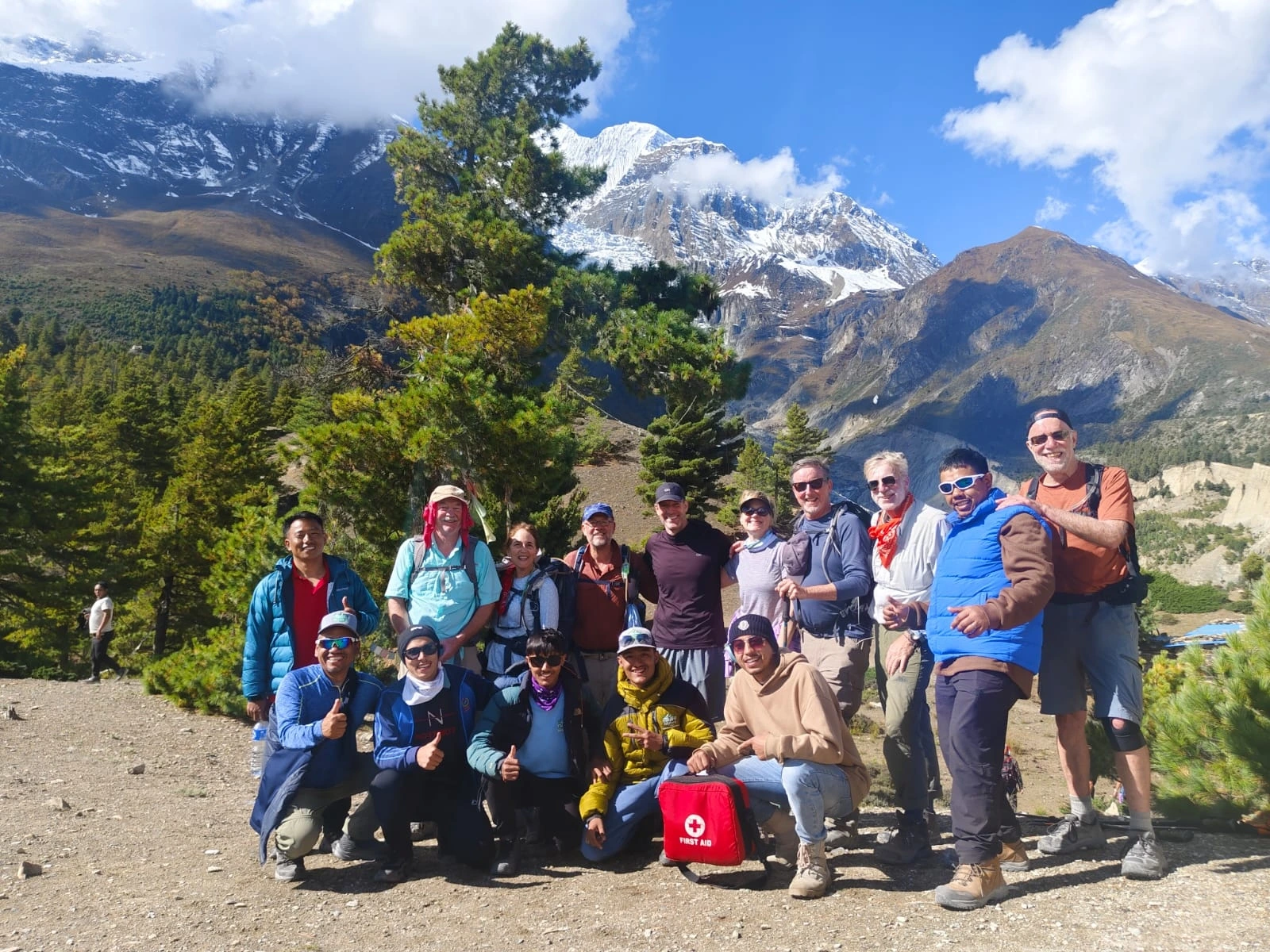
Annapurna Circuit Trek Group Join- Fixed Departure Date, 2026/2027

Annapurna Circuit Trek Group Join- Fixed Departure Date:

The annapurna circuit trek is one of the most popular adventures – classical trekking routes in Nepal lie around the annapurna mountains range. Annapurna Circuit Trek Group Join- Fixed Departure Date for 2026 and 2027 with the early bird discount. Book today and save 10% from annapurna circuit group join trek package.

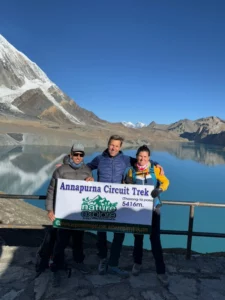
The legendary annapurna circuit trek offers the best views of the distance of annapurna mountains, beautiful villages, fascinating culture, landscapes, and snowscapes, including the world’s most popular Thorong la pass alt. 5416m above sea level. If you and your friend are planning for trekking an annapurna circuit trek in 2026 and 2027 and looking for a group to join for an annapurna circuit trek then book this trek today and save some money. You will be trekking with the expertise of mountain guides who are familiar with the route and have guided the group in the mountains for many years.

Annapurna Circuit Trek Group Join—Fixed Departure Date 2026,2027
Acclimatization day at Manang village.

Welcome to join the Annapurna circuit group trek and make it budget-friendly and enjoyable, fun, safe and security , meet new people; share the expenses of the trek cost; and make a good trekking experience an annapurna with a memory for a lifetime. If you are travelling solo and looking for company to trek an annapurna then joining a group trek to annapurna circuit trek is the best idea to share the experience, culture and travel history together. Please go through the details below for more information.

Why choose the group joining trekking annapurna circuit trek ?

Planning to join a group trek to the annapurna circuit trek have several advantages for you. From the saved cost to make the best trekking experience in a lifetime.

  1. Low cost – joining a group trek and an annapurna circuit trek you get the cheap cost because the annapurna circuit trek cost will be shared, such as Guide, Porter, Transportation, Accommodation , etc.
  2. Fixed departure date: when you plan to join a group trek, the departure date is guaranteed. You can choose any date convenient for you.
  3. Meet with the potential travelers—you can find the other travelers who are looking for a similar trek experience and share the cost and make a safe trek an annapurna. During the trek you will have a good opportunity to exchange culture and travel history and get some chances to know more about travelling.
  4. Stress-free to plan the trek: you will have less stress to plan the trek as you can share the information with the other travelers. It can be helpful to each other.
  5. Smoother trek: as you are in the group the trek can be easier to organize like making permits and arranging transportation, and pre-booking accommodation in group and trekking with the professional guide and strong porter will be a different experience for you.
  6. Safe trek : During the trek, in case any emergency happens like an accident or altitude sickness, then if you are in the group, you can get quicker help and evacuate to a safe place faster than on a solo trek.

 Annapurna circuit  group join trek – Best season:

The best time to trekking is after the monsoon ends in Nepal from early September, October , November till the mid December and Spring season mid March , April, May, and June every year. During these months the weather is clear skies, sunshine, reliable temperature, and good visibility, and the mountains are more welcoming.

Trekking an annapurna circuit trek is not recommended in monsoon season like in July and August, or in the winter season, January and February, as the weather is not clear; it is cloudy, hazy, and rainy in summer and snowy in winter and the temperature falls.

Annapurna Circuit Trek Group Join—Fixed Departure Date 2026, 2027
On the way to Yak kharka from Manang.

Annapurna circuit trek group join fixed departure dates for 2026 and 2027

Here are the fixed departure dates for the annapurna circuit trek for 2026 and 2027. Individual or couple: if you are looking to join a group trek an annapurna please make your reservation with us without any hesitation. We promised to make your trip the best experience trekking in Nepal.

Group joining dates for 2026:

March , 15, 25                          April : 2, 8, 16, 25

May: 3, 10, 18, 25                  June: 2, 15

Autumn season 2026:

September : 10, 22,                            October: 2, 10, 15 , 26

November: 3, 12, 18 , 26 , 30             December: 4, 10, 20

Group joining dates for 2027:

March , 15, 25                           April : 2, 8, 16, 25
May: 3, 10, 18, 25                      June: 2, 15

Autumn season 2027:

September : 10, 22,                                October: 2, 10, 15 , 26

November: 3, 12, 18 , 26 , 30               December: 4, 10, 20


Why you choose for the Annapurna circuit group Join Trek:

Annapurna circuit trek is one of the best, most popular and adventure-scenery-rewarding trekking trails in Nepal. By doing an annapurna circuit you can have a good trekking experience and explore the hidden gem of nepal and learn local culture and religion, including the strengthened views of annapurna mountains in close distance. Here are some highlights of the trek and why you doing annapurna circuit trek

Explore the beautiful local villages,

as the annapurna circuit trek lies from lower evasion alt. 750m to the higher elevation of 5416 m. along the way you will cross numbers nepalese local villages and we can see their basic daily lifestyle.

Cultural diversity:

annapurna circuit trek group join
what a good weather.  picture took  on the way to  Annapurna circuit trek!

as the annapurna circuit trek is covered, the long area from the lower sections of the trek to the higher sections of the route, you will cross many traditional temples, monasteries, chortens, mani walls, prayer flags, meditation caves many more. Lower sections of the trek you will meet more hindust religions culture and higher sections of the routes you will explore mor buddhist culture such as we visit the old monastries, Museum, Tshorten, Mane wall etc

Thorong la pass (alt. 5416m)

its the biggest and adventure high pass that we cross on this trek. It is the most highlighted day of this trek, as it takes 9-10 hrs and reaches an elevation of 5416m from sea level. Rewards with the annapurna and Dhaulagiri mountains.

Manang Valley:

Annapurna circuit trek group join departure date
Manang valley in the summer season

The beautiful Manang valley is very famous during this trek as you see the old monasteries, the mane wall surrounded by buddhist culture, and the Annapurna mountain ranges leading to the beautiful Manang village. Religions. Significantly, reach buddhist religious and historical places, years-old local habitation and their daily lifestyle, which make it feel like a really blessed place where you can meditate, Pray and feel like you’re in heaven with beautiful manang landscapes kissed by the white Annapurna mountain range.

Muktinath temple :

the Muktinath temple is a popular site that lies beneath the Thorong la pass and Lower Mustang at Muktinath village. It’s a busy place where hundreds of pilgrims used to visit every year locals and international. Muktinath is a powerful temple and believed to be the home of the god Vishnu. Here are one hundred and eight tops and small places where you can take a shower and pray to Vishnu for a better life and more blessings, reminding you of the annapurna journey back to Pokhara. Muktinath also has many old monasteries and old caves, and the landscape is more dry and less green as well surrounded by Mt. Dhaulagiri, Nilgiri and Dhampush peak includes many peaks.
Natural Hot spring in Tatopani—at the end of the trek you will also get the great opportunity to take a bath at nature Hot spring. It is more relief for you after the long trek around the annapurna

Strengthen the scenery of Annapurna mountain and the Dhaulagiri range in the distance.

From the beginning of the trek to ends you will be surrande by annapurna mountains ranges from Annapurna II, III, IV and Gangapurna , Tilicho peak , Pisang peak , Thorng la peak , Chulu east and west peak and Muktinath side Mt. Dhaulagiri, Nilgiri, and Dhampush peak includes many beautiful peaks.

Annapurna circuit group joins the general trek itinerary:

annapurna circuit trek group joins, departure dates
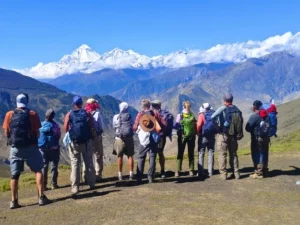
Trekking group heading to Thorong la pass

Annapurna circuit group joins the itinerary, which basically starts from 8 days to 14 -15 days. Group joins the general itinerary we have for 9 nights and 10 days. The trek starts from Dharapani after a scenic drive from Kathmandu and ends in Pokhara after taking a drive from Mukatinath. But solo private groups and any private group can customize the trip as per your interest and timetable. You can add the side trip to Tilicho lake, Ice lake , and you can walk back to Jomom and Marpha, and instead of driving, you can take a short flight back to Pokhara from Jomsom or you can extend the trip to Poon Hill-ABC.

Group joins annapurna circuit trek trekkers also can extent the time if everyone in group agree in same optins and at the end of trek if someone want to ends quicker and if some of you want to extend the trip it is possible and we always happy to help in this condition. Those who back out early, some of our guides will take you back and some guides will guide you on the extended routes. But this is only possible after the Thorong la pass from Muktinath, as from here you can have alternative options available to explore more or end the walk in Muktinath.

Day 1: Drive from kathmandu to Dharapani via Beshishar (alt. 1860m , 6100 ft), 190-200km (65km from Beshishar to Dharapani) 9-10 hrs with the breaks for lunch and toilets.

Day 2: Trek from Dharapani to Chame, alt. (2670m) Ft. 8760.) , 5 hrs, 10 km.

Day 3: Trek from Chame to Upper Pisang (alt. 3300m , 10870 ft.) , 6 hrs trek, 12km

Day 4: Trek from Upper Pisang to Manang via the Nwal, (alt. 3500m , 11480 Ft.) ,  8 hrs

Day 5: Acclimatization day in Manang. Visit the Chhongkhor viewpoint (alt. 4400m ) 3-4 hrs.

Day 6: Trek from Manang to Yak Kharkha, 4 hrs (4050 m, 13285 Ft.) 8 km

Day 7: Trek from Yak Kharka to Thorong la Phedi / High Camp (Alt. 4500m , 14760 Ft. ) 4 hrs , highcamp 5 hrs (alt. 4700m)

Day 8: Trek from Thorong phedi to Muktnath (alt. 3800 m, 12464 ft) through the Thorong la pass (alt. 5416m 17765 Ft.) 9/10 hrs. 15-18km

Day 9: Drive back from Pokhara via the Hot spring (Tatopani) 6/7 hrs via the Jomsom, Marpha, and Beni bazaars, and finally reach Pokhara. (Alt. 740m.),  172km

Day 10: Drive back to Kathmandu. 6/7 hrs, 200km alt. 1300m treks end here.

Alternative options: if you want to extend the trek to Ghorepani PoonHill viewpoint and the Annapurna base camp trek, then you have to stop the drive in Tatopani and then you can walk up to ghorepani to meet the Annapurna base camp trail in ghorepani.

It is the annapurna circuit trek group that joins itinerary but if you have your private group and solo trekkers, you can always costomize the itinerary and make a completely new itinerary as per your interest and time.

Annapurna circuit trek group join package cost for 2026 and 2027.

Annapurna circuit trek group join package cost basically starts from USD 700 – 800 perperson as per the general itienray . The cost includes meals (Breakfast, lunch, and Dinner) Transportation sharing-based, professional Guide , Strong porter (each two people), Hot drinks, Trekking permits, (ACAP) Daily trekking maps, trek logistics, Shared room in tea houses as per the itinerary, fresh fruits,First-aid kit, oximeter, etc.

The cost also depends on the service you want to include in the package. And as an alternative option, you can also only hire a guide and porter, and you can pay for permits, accommodation and food drinks, and extra expenses by yourself.

The additional in-full-package service you have carries some cash for cold drinks, bottled water, wifi, laundry, the bar menu, tips for the guide and porter, travel insurance, and trekking equipment not mentioned in the itinerary that we don’t include in the cost.

Who Should Join This Trek?

  1. Budget travelers
  2. Who are looking to join the new company to make this trip more enjoyable?
  3. Adventure travelers who have good fitness level for this type of the trek
  4. Looking for safer trips, especially solo female travelers
  5. First-time high-altitude trekkers
  6. Open people – friendly people and not serious people—never mind for small mistakes in groups, etc.
  7. Anyone who loves the scenic nature of Nepal. And the cultural diversity of annapurna region.

Who should not join in the group joins

  1. Looking for a customized itinerary
  2. Comfortable with the budget
  3. Short-time visitors in nepal
  4. Photographer
  5. First time in trekking
  6. Senior trekkers
  7. Want to do the trek without a rush and more comfortably
  8. Want to have peace and quite during the trek
  9. Want to do the side trips like to Tilicho lake, Ice lake , PoonHill – ABC etc.

Why you book this trek early for 2026 and 2027

Annapurna circuit trek group joins departure date 2026, 2027
Tilicho (Tal) Lake (alt. 4900m)
  1. Guarantee space and prefer date and season
  2. Early birds – 10% discounts
  3. Better chances to join large groups
  4. More time for training and preparation for the trek, which can play a vital role in ending the trek successfully with the group.
  5. Enough time to arrange the basic trip necessary arrangements like permits, pre-teahouse booking, professional guide and all the trek logistics.

Final Say:

Annapurna circuit group joins the trek in 2026/2027 is one of the most popular trekking routes located in the annapurna mountain area.  The route lies between the four nepalese  popular  himalayan disteicted namely Lamjung, Mang ,Mustang and Myagdi. Group joining annapurna circuit trek is budget-friendly and fun, and it’s safe. You get to meet new people and share the culture and experience of the trek. You can have a great trekking experience an annapurna. If you are travelers and looking to share the cost for these trek packages and want to do the trek with less stress but more enjoyment and want to create some lifetime memorable nepal trekking experiences, then join this trek with a group.

view of the Annapurna ranges from Mutinath
view of the Annapurna ranges from Muktinath

The Nature Explore Trek team has many years of experience in group guidance and is knowledgeable and familiar with the routes. We are always flexible with the plan. You can book the group join trek with us. he easily by email or WhatsApp, and ensure your spot on the trek by sending a 15% trip advance and with the clear nepal arrival dates or trek departure date, you want to start this trek and attach a copy of your passport.

You want to book this trip  

Why Autumn and Spring Are the Perfect Seasons to Climb Mera Peak or Island Peak in Nepal

merapeak c 1 1

Mera Peak (6,476 m) and Island Peak (6,189 m)Autumn and Spring are the perfect seasons to climb Mera Peak or Island Peak because the weather stays clear, stable, and comfortable. are two of Nepal’s most popular trekking peaks, and many climbers choose them because they offer a real Himalayan adventure without needing advanced technical skills. One of the most important choices you make for these climbs is the season. The weather in the mountains changes fast, and the right season can make your whole trip feel smoother, safer, and more enjoyable.

Spring, from March to May, is a warm and lively time in the mountains. The days get longer, the temperatures rise, and the trails come alive with blooming flowers, fresh greenery, and clear morning skies. The snow left from winter settles into a solid layer, which makes walking on glaciers more stable and predictable. It is a peaceful season with gentle weather that helps your body adjust to the altitude.
Autumn, from September to November, is just as beautiful. The monsoon rain clears away dust and haze, leaving the air fresh and the views incredibly sharp. It is the time during which you can observe the mountains that are laid across the horizon in complete clarity. The paths dry, the skies remain mostly clear and the temperatures are pleasant and comfortable on longer days of walking.

Summer, on the other side, is too wet, the trails are too slippery, and the snow is not steady; winter complicates everything with the low temperatures and strong winds. That is the reason why the majority of the climbers select autumn or spring. These two seasons will not only provide the most suitable combination of good weather, clear visibility and good condition of the trails, but it also gives you time and space to enjoy the climb and give in to the charm of the Himalayas to full extent.

Why Autumn Is Ideal for Mera Peak and Island Peak

Stable Weather and Clear Skies

The autumn comes immediately after monsoon and it looks like the mountains are breathing a new life. The clouds dissipate, the weather is sharp, and long periods of still conditions make this season very dependable in climbing. The month of October, especially, is characterized by sunshine and stable conditions that are not likely to shift without prior notice.
The monsoon clean air allows you to have broad, open valley views of the Himalayas every day. When the weather remains stable, you will be able to proceed with your itinerary without much fear of unexpected storms or heavy clouds that may hit you at any moment, and the entire climb will be less stressful and predictable.

Comfortable Daytime Temperatures

Autumn gently cools off the mountains. The temperatures are cool yet comfortable during the day at lower altitudes, but cold high camps are still cold even in autumn, hence warm clothes are nonetheless necessary. Nights are cold but they are better than winter since cold is bearable and can be dealt with easily with right equipment.
This combination of cool days, cold nights but not extreme nights relieves your body of some of its physical burden. The slower pace of climbing also allows you to pay more attention to the trail and the view and less to maintaining warmth.

Better Visibility of Peaks and Landscapes

The most ideal aspect of autumn is that the mountains are extraordinarily clear. With months of rainfall, the dust and haze will be gone, and sharp dramatic sceneries of snow covered mountains can be seen on the very first day of your trek.

Up the mountain the landscape is even more breathtaking, with long open views that are nearly unbelievable. The sky is frequently depicted in saturated colours by sunrises and sunsets that turn the mountains into blazing monsters. This is not only very uplifting but it also guides you well in navigation and route planning.

Safer Trails and Glacier Conditions

When autumn comes, the trails are already dry due to summer rains. This implies a stable surface, well-established footing, and a reduced number of slippery or muddy areas. On the mountains themselves, the snowpack stabilises, making glacier travel more predictable.

Crevasses stand out more clearly, and the risk of fresh avalanche-prone snow is much lower than in monsoon or winter. The route feels steady under your feet, and the slow, consistent weather changes help you get used to the conditions without sudden surprises. All of this makes climbing feel safer and more controlled.

High Success Rate in Summit Attempts

Mera Peak and Island Peak are always most successful during autumn. Under predictable weather patterns, clear skies, and reliable trail conditions, the majority of teams can execute their plan without significant disruptions. The minimal number of weather delays can guarantee that you have more chances to select the ideal summit day.

The warm weather and predictable weather conditions also aid your body to get more adaptable when climbing higher. Because of the favorable climbers weather, October is the month that affirms many climbers of their best chance of making it to the top enjoying the process.

Cultural Festivals Adding Extra Experience

It is also a festival season in Nepal during autumn and this will bring a wonderful cultural touch to your adventure. Such celebrations as Dashain, Tihar, and Sherpa festival Mani Rimdu make the country alive. Villages along the trail are filled with music, lights, and warm gatherings, and you may see people in traditional dress visiting monasteries or performing rituals.

Many trekkers enjoy being part of these moments, even as spectators, because they give a deeper sense of connection to the local culture. It feels like the mountains and the people both share their best side during this time of year.

mera peak c


Why Spring Is Perfect for These Climbs

Warmer Temperatures and Longer Daylight

Spring slowly warms the mountains after the long winter. The days are pleasant at the lower altitudes, and in the higher altitudes the days are cold but more pleasant than during winter. In April and May, you can stroll in light clothes in sunny afternoons, but evenings are icy, but not prohibitive. The days also get longer, giving you more time to walk, rest, and enjoy the scenery. This extra daylight is helpful for both acclimatization and summit day.

Beautiful Trails with Rhododendron Blooms

Spring is the most colourful season in Nepal. The forests fill with blooming rhododendrons in red, pink, and white, making the trail feel peaceful and lively. The fresh greenery, clear air, and bright flowers create a beautiful contrast with the snow-covered peaks. It’s a great season for photography and simply enjoying nature.

Favourable Snow Conditions on the Route

Most winter snow settles and becomes firm by early to mid spring, which makes walking with crampons easier. Early spring can still have some soft snow from recent storms. The snow is usually stable in the mornings and slightly softer in the afternoons, although occasional spring storms can still bring fresh snow in April and May. Crevasse bridges are usually strong in early to mid spring, although some bridges can weaken in late spring as temperatures rise. Overall, the snow conditions feel predictable and supportive.

Less Wind and Calmer Mornings

Spring mornings are known for being calm and clear. The fierce winter winds subside and nighttime hours tend to be mild-just right to begin a climb. The weather will be a clear, smooth climb with good visibility and light wind probably. This will make the climb more comfortable and less of the strain of having to cope with the severe weather.

Great Time for Training Climbers and First-Timers

Spring is a friendly season for beginners. Many groups climb during this time, so the trails and routes are already well established. Guides often hold practice sessions to teach basic climbing skills, and the moderate weather makes learning easier. Spring gives you the right balance of challenge and comfort, which is why many first-time climbers choose this season for Mera Peak or Island Peak.

Why Not Summer and Winter?

Monsoon Summer (June–August)

Summer in Nepal is monsoon season, and it’s one of the worst times for climbing. Heavy rain turns trails muddy and slippery, and landslides become common. Higher up, this rain falls as wet, unstable snow, which increases avalanche risk. The mountains remain covered with heavy clouds during days, and this means that you will not see anything, and flights to other destinations such as Lukla are usually postponed or cancelled because of low visibility.

The weather changes quickly and makes the climb unpredictable and unsafe. Very few people attempt Mera or Island Peak in the monsoon because conditions are unstable, and even experienced climbers face serious challenges during this season. For most trekkers, summer conditions are simply too wet and unreliable.

Winter (December–February)

Winter brings the opposite challenge: extreme cold and strong winds. The weather in high camps is much lower than zero degrees, and the chill of the wind can cause it to feel just as cold as dangerous. Snow can be deep and whiteouts may occur as winter storms have a tendency of appearing without warning subsequently making climbing a dangerous affair.

Days are short, which reduces your available trekking time and forces very early starts. Only highly experienced climbers attempt these peaks in winter, mainly for the quiet trails, but the risks are much higher. For most people, the cold and unpredictable weather make winter a tough and unsafe season for these climbs.

By avoiding the monsoon and winter months, you skip the most hazardous seasons. That leaves spring and autumn, which offer the safest weather, the best visibility, and the most enjoyable climbing experience for Mera Peak and Island Peak.

island peak B

Autumn vs Spring: Which One Should You Choose?

Weather Comparison

Both seasons offer stable, dry weather, which is why they are the main climbing periods in Nepal. Autumn, especially mid-October, is known for very clear skies and long stretches of sunny days. Spring is also reliable, though late May can bring some afternoon clouds as the monsoon approaches.
Early spring can feel a bit chilly, while early autumn may still have a little leftover moisture. Overall, April and October are the best months, both offering excellent visibility and very low chances of storms.
Temperature and Wind Comparison

Autumn begins warm and gradually gets colder toward November. Spring starts cool and becomes warmer by May. If you prefer slightly warmer conditions, late spring is more comfortable.
Winds are usually mild in both seasons, with calm mornings ideal for climbing. Late autumn can get breezy, while late spring can see a few pre-monsoon winds—but nothing like winter storms. For most climbers, temperature and wind differences are small and manageable in both seasons.
Crowd Levels and Trail Conditions

Autumn is the peak trekking season in Nepal, so you should anticipate more visitors on the trails and at the teahouses, particularly in October. Spring is also busy, but crowds are spread out more evenly, and early spring (March) is quieter. Trails are dry and in great condition in both seasons.
Spring routes often become well-established early because many groups are already climbing, while in early autumn you might be among the first after the monsoon. If you prefer a bit more space, early spring or late autumn are good choices.

island peak D

Best Choice for Beginners vs Experienced Climbers

Both seasons work well for beginners and experienced climbers. Spring offers a gentler learning environment with warmer afternoons, longer daylight, and well-trodden routes, making it slightly more beginner-friendly. Many people train for bigger peaks in spring, so you may find yourself climbing alongside others who are also learning.

Autumn appeals strongly to experienced climbers and photographers thanks to its incredibly clear skies and reliable weather. If you value sharp mountain views, autumn wins. If you prefer warmer conditions and more time for practice, spring may be a better fit.

Final Thought

You truly cannot go wrong with either season. Spring offers warmth, flowers, and supportive conditions, while autumn delivers crisp air, amazing clarity, and classic Himalayan views. Most climbers simply choose the season that works best for their schedule—both give you the safe and beautiful experience these peaks are known for.

Challenges You Can Avoid by Choosing These Seasons

Avoiding Monsoon Hazards

It is hard and uncomfortable to climb during summer in the monsoon. There is mud, and leeches, and landslides may clog the tracks. The mountains are covered by thick clouds hence you hardly have any views. Farther up, the rain has become heavy and unstable snow which can easily slide.
Flights to Lukla also are frequently canceled due to fog and storms. All these problems can be avoided by going in spring or autumn. The climate remains rather dry, the mountains can be seen, and the snow on the peaks is much more stable and safe to walk upon.

Avoiding Winter Extreme Cold

In winter, the cold is biting, the winds are fierce, and the snow is deep. Water is frozen, batteries rapidly exhaust themselves, and it is always difficult to keep warm. The cold is also a problem since you have to use very heavy gear and this makes climbing more difficult.

During spring and autumn, the weather is much more comfortable, days are longer and there is little rain. The tea houses are open, more people are present and the entire experience seems safer and more enjoyable.

Reduced Risks of Altitude Sickness

Good weather in spring and autumn allows you to follow a proper acclimatization schedule without being rushed. This greatly helps lower the chances of altitude sickness. Trails, lodges, and rescue services are all fully operational, so help is available if you need it.

The mild temperatures also make it easier to stay hydrated and rested. The early detection of any symptom is provided by the increased number of climbers and guides on the trail and this provides another level of safety.

Lower Chances of Flight Cancellations to Lukla

Flights to Lukla are most reliable in autumn and spring. Clear mornings mean smoother takeoffs and landings. During monsoon, flights often get canceled for days because of clouds and rain. In winter, fog causes the same problem. Choosing spring or autumn means you’re far more likely to fly on time, start your trek without delays, and avoid the stress of waiting at the airport for days.

Tips for Climbing Mera Peak or Island Peak in Autumn or Spring

As soon as you have decided on what season you are climbing, you now need to prepare a safe and successful adventure. The following are a few useful suggestions on how to make the most out of your climb of Mera Peak or Island Peak during the best times of the year:

Ideal Itinerary Length

When you’re planning a climb to Mera Peak or Island Peak, give yourself enough time. These are high mountains, and rushing only increases the chance of problems. A typical Island Peak trip takes around 16 to 20 days, while Mera Peak usually needs about 18 days because the approach is longer.

Make sure your schedule includes proper acclimatization stops in places like Namche, Chhukung, Dingboche, or Khare. The introduction of some additional days as a contingency measure is also a wise thought just in case you require more time to settle or the weather shifts. A relaxed, flexible itinerary makes the whole experience safer, less stressful, and far more enjoyable.

Essential Gear

The Himalaya is extremely cold even in the most favorable seasons, particularly at night and in the morning when on a summit. Proper equipment matters a lot. Wear warm clothes, good down jacket, and a waterproof jacket in case you need to change the dressing depending on the weather. You will require warm, crampon-compatible footwear and rudimentary climbing gear such as crampons, ice axe, a harness and a helmet.

Island Peak also includes fixed ropes and thus you will be using a jumar and something to descend. Carry warm sleeping bag, good gloves, hat, sun glasses, sunscreen and headlamp to start early. A good daypack, a tough duffel to have the porters carry up and trekking poles will help make the trip a lot easier. The appropriate equipment will keep you warm, safe, and comfortable during the climb.

Acclimatization Strategy

The key to successful and easy climb is good acclimatization. Move at your own pace, take on more altitude, use the ancient formula of climbing up the hill in the daytime and sleeping down where you can. Even when you are feeling fit, you should not waste your planned acclimatization days because your body requires that additional time.

Note the way you feel; headaches, nausea, or sleeplessness are symptoms to reduce. Take loads of water, eat and sleep. Other individuals take the Diamox as a form of aid to altitude upon consultation with a doctor. The spring and autumn tend to be predictable in terms of weather and this means that you can be in charge of your time and not caught by storms or extreme cold.

Hiring a Guide and Porters

Having a local guide and porters makes a huge difference on these climbs. An experienced guide is familiar with the mountainous terrain he or she knows the route and is able to identify hazards such as crevasses or unstable weather promptly. They also control technical sections and safety decisions and any problems of altitude that may arise.

Porters carry the heavy loads so you can walk more comfortably and save energy for the summit. Your guide also handles important logistics like permits, flights, teahouse bookings, and base camp arrangements. Beyond safety, climbing with a local team adds warmth to your journey—you learn about the culture, share stories, and build great connections along the way.

Safety Tips on Glacier and Summit Day

Summit day usually starts very early, often around 2 or 3 in the morning, because the snow is firm and the weather is calm at that time. Remain tied on the glacier, keep your crampons in order, and maintain a slow and steady steady pace. Take little pauses to drink water and take something so that you maintain your energy levels.

One thing is that your guide will establish a turnaround time, and you need to observe it even at the point of closeness to the top. The downward will get tedious and you need to keep your wits until you are back at camp. Summit day could be the most gratifying experience of your life with the predictable seasons of the fall and spring and a cautious mind.

Conclusion

Autumn or spring is a beautiful and memorable experience when climbing Mera Peak or Island Peak. Such seasons have the highest possibilities of favorable climate, clear sightseeing, and easy climbing. Once you take your time, get ready, and know the conditions it will be easier and much more fun to climb.
The spring brings warm days, colour forestry and a fresh sensation in the air. Autumn is clear and calm, and the villages feel lively with cultural festivals and local celebrations. Regardless of the time of the year, the mountains are open, calm, and welcoming.

Due to correct planning, patience during ascent, and with the assistance of local guides and porters, the trip becomes equally significant as the one of making the peak. It is an adventure that lingers in your heart even after going back home. Namaste, and happy climbing.

Manaslu Circuit Trek- Group Join

Manaslu Circuit Trek Group Join 1

Manaslu Circuit Trek – Group Join trips allow you to experience one of Nepal’s most stunning off-the-beaten-path treks in a small, friendly group led by experienced local guidesThe Manaslu Circuit Trek is one of Nepal’s most rewarding and less-crowded trekking adventures, perfect for those who crave solitude and authentic Himalayan culture. Officially opened to trekkers in 1991, the trail circles Mt. Manaslu, the world’s eighth-highest peak at 8,163 meters. It still feels untouched compared with the busy Everest and Annapurna regions, despite the rising number of trekkers visiting. That is what adds to its unique charm: pure wilderness, rich culture, and fewer trekkers on the trail.

Joining a Manaslu Circuit Trek group adds a wonderful layer of connection and convenience to this remote journey. Travelling with a group means you will share the experience : the laughter, challenges and breathtaking views among the people who have the same interest as yours . That being said, group trekking may not offer the same flexibility as going solo . You’ll need to move at a group pace adjust to shared schedules and occasionally compromise on personal preference

The Sanskrit word “Manasa” means “intellect” or “soul,” and thus Manaslu roughly translates to “Mountain of the Spirit.” True to that, this trek tests not just your body but also your will and spirit. Each day brings new terrains-lush subtropical valleys, alpine meadows, and icy passes-offering a rare chance to experience the Himalayas in their most natural form.

The Manaslu Circuit Trek Group Join itinerary for 14 days balances adventure, comfort, and acclimatization. Unlike many itineraries that rush the journey, we’ve included two acclimatization and preparation days to ensure you adapt well to the increasing altitude. Either for first-time trekkers or seasoned adventurers, this route promises safety and satisfaction with the support of our experienced trekking guides.

Located in the west-central Himalayas, Manaslu is one of the closest high-altitude trekking routes from Kathmandu. The journey begins with a scenic drive through rural Nepal; terraced hillsides, mountain rivers, and glimpses of towering peaks unfolding in real time.

Larkela pass 1 scaled

Day to Day Itinerary

Day 01: Kathmandu in Arrival (1400m)

Namaste ! Welcome  in the beautiful country Nepal. Our representative will be at Tribhuvan International Airport for your arrival and will take you to your hotel. You can rest and refresh yourself after checking in. If you want later, you can also go for a little walk through Thamel.

Day 02: Outdoor Activities and Kathmandu Discovery

Today is a whole preparation day. After that, some of the places in Kathmandu valley such as Swayambhunath, Pashupatinath or Boudhanath Stupa can be visited as part of the short sightseeing tour. The last-minute trekking gear can be purchased in Thamel later on.

Day 03: The journey from Kathmandu to Machha Khola (930m) 6-7 hours.

After breakfast, the guide will come to the hotel and you will start your beautiful scenic drive towards Machha Khola, the place where your trek starts. The road goes through hilly green landscape, local villages and valleys full of rivers.

Along the way, we will take a break for lunch and we will drive beside the Budhi Gandaki River until we reach Machha Khola. This tranquil village by the river is the entrance to the Manaslu Conservation Area.

Day 04: Maccha Khola to Jagat trek (1300m) 6-7 hrs

Today is your first day of trekking. There are many ups and downs in this trail as it keeps following the river and you will have to cross many bridges and walk through a few Gurung villages. You will go past the hot springs, rocky areas and climb the ridge to Jagat, which is a stone-paved village and serves as the entry to the Manaslu area.

Day 05: Trek and Deng (2360m) from Jagat 6-7 hrs.

The path today rises slowly through the hilly, cultivated fields and the tropical jungle. You will be walking over many suspension bridges and through pretty settlements like Philim which is famous for its…

Day 06: Trek from Deng to Namrung (2,630m) 5–6 hours

After departing from Deng, the route takes you over suspension bridges and through dense pine and rhododendron forests. Little by little, you will get to see Tibetan culture as you pass by mani walls, prayer flags, and chortens.

Following a series of uphills and downhills, you will arrive at Namrung, a lovely village that provides fabulous views of both Ganesh Himal and Himalchuli.

Day 07: Trek from Namrung to Lho (3,180m)  4–5 hours

The hike today is simply the best and the most beautiful one! Coming up in the course of the day, the trail through the forests is surrounded by the Himalayan range, and you will pass Tibetan villages where the air is cool and fresh after Lho which is besides that the most beautiful village on the Manaslu Circuit.At sunset, the first unobstructed view of Mount Manaslu (8,163m) will be the already distant majestic peak.

Day 08: Trek from Lho to Sama Gaun (3,530m)  5–6 hours

The path takes you through magnificent woods, along old monasteries, and mani walls heading towards the larger and more populated village, Sama Gaun. This secluded area is right under Manaslu and it has marvelous views of the mountains.
Day 09: Rest Day and Acclimatization at Sama Gaun (3,530m)

Take the day off as a reward for your efforts, and for acclimatization! You can visit the village, meet the locals, or go on short hikes to Pungyen Gompa or Manaslu Base Camp for breathtaking views of glaciers and peaks.

Day 10: Trek from Sama Gaun to Samdo (3,860m)  4–5 hours

It is a gradual trek that lasts for a very short time, and you only walk through pastures and pass mani walls to reach Samdo, a Tibetan refugee village that lies close to the Nepal–Tibet border. The stunning views of Manaslu, Himalchuli, and Simnang Himal accompany you all day long.

Day 11: Trek from Samdo to Dharmasala (4,460m)  4–5 hrs trek

The short yet steep climb of today will get you to Dharmasala (Larkya Phedi), which is the last stop before crossing the high pass. You can take the afternoon to rest and prepare for tomorrow’s long and demanding days.

Day 12: Cross Larkya La Pass (5,160m) and Trek to Bimthang (3,590m) – 8–10 hrs trek

This day marked the most difficult yet the most satisfying part of the trek. Get up early in the morning to go to Larkya La Pass (5,160m) which is also known as the highest point of the Manaslu Circuit. The view from the top is nothing less than a beautiful panorama of the Himalayans including the Himlung, Cheo Himal, and Annapurna-II along with the Manaslu itself.
Get down carefully to Bimthang which is a picturesque alpine valley enclosed by high mountains.

Day 13: Trek from Bimthang to Tilche (2,300m)  6–7 hrs trek

Having crossed the high Himalayan region, you will now descend through the forests of rhododendron, meadows, and streams that are refreshing. First, the village of Gho will be passed by you and then you will go on to Tilche where you will have the last night on the trail.

Day 14: Drive from Tilche to Kathmandu via Dharapani & Besisahar (1,400m) 6–7 hrs drive

After a breakfast, get into a jeep for an adventurous ride through the mountains back to Kathmandu and stopping at Dharapani and Besisahar along the way. Enjoy the last glimpses of the mighty Himalayas as you retreat to the capital city. Check into your hotel after reaching and toast to the successful completion of the trip.

Best of Nepal 2014. Manaslu and Tsum 158 scaled

Advantage and Disadvantages of Group join for the Manaslu Circuit Trek

Easier Permit Process

The Manaslu region is classified as a restricted trekking area in Nepal. According to the Nepal Tourism Board’s regulations, a minimum of two trekkers is required to obtain a special trekking permit. By joining a group trek you automatically meet this requirement, saving yourself from the hassle of finding a trekking partner or dealing with the permit process on your own. Most trekking agencies handle all paperwork, logistics and necessary documentation on your behalf making the entire process simple, quick and stress-free.

Cost-Effective and Budget- Friendly

Group trekking is often more affordable compared to private or solo treks. When you join a group, the cost of guides, porters, transportation, accommodation and permits is shared among all participants. This shared expense significantly lowers your overall cost allowing you to experience the same adventure at a much reasonable price. For budget-conscious travelers or backpackers group treks are the perfect balance between the affordability and adventure

Enhanced Safety and Support

Safety is one of the biggest advantages of trekking in a group , especially in remote and high-altitude regions like Manaslu . Having companions means there’s always someone nearby in case of altitude sickness, injury or emergency

Your guide and fellow trekkers can provide help, encouragement or immediate assistance when needed. In addition group members often watch out for one another making the journey both safer and more reassuring for everyone.

Motivation , Team Spirit and Companionship

Trekking can be physically and mentally demanding particularly on challenging routes like the Manaslu Circuit Trek. Having a group of like-minded adventurers by your side helps you stay motivated and positive throughout the journey

Encouragement from others can make tough climbing easier and the sharing the experience with fellow trekkers created a strong sense of team spirit and camaraderie. You’ll also find the people with similar interest and passions which makes the trek not only about the destib=nation but also about the connections you make along the way

Social and Cultural Exchange

Joining a group trek allows you to meet people from different countries and cultures creating opportunities for meaningful social and cultural exchange. As you walk through beautiful villages and interact with the local Nepalese communities you’ll also share stories, laughter and unforgettable memories with your fellow travelers. Many trekkers form lifelong friendships during these journeys making the experience even more enriching and memorable.

Disadvantages of Joining a Group trek

Less flexibility and freedom

When you trek in a group , you’ll need to follow a pre-set itinerary and maintain the group’s pace and schedule . This means you might have limited flexibility to stop for photos, explore side trailers or spend extra time in a place you love. While this structure ensures smooth coordination it can sometimes feel restrictive for travelers who prefer a more independent or spontaneous trekking experience.

Group Dynamics and Difference

Each trekking group consists of people with different personalities, preferences and walking speed. These differences can occasionally lead to minor inconveniences or disagreements about rest times, food choices or daily schedules. Learning to adapt and cooperate with other
It is part of the group experience but it may not suit those who prefer to make decisions independently.

Limited Privacy

Group trekking often involves shared accommodation , dining areas, and transport which can make it difficult to find moments of solitude. For travelers who enjoy quiet reflection or personal space this can be a drawback. However many trekkers find the shared experience created a unique sense of community and belonging that outweighs the lack of privacy.

Fixed Departure Dates

Most group treks in the Manaslu region operate on fixed departure dates decided by the trekking agency . This means you’ll need to adjust your travel schedule to match the group start and end dates.

Because the trip is organized for multiple participants the itinerary cannot easily be changes for individuals preferences. While this ensures smooth logistics , it may not be ideal for travelers with tight or unpredictable schedules.

Best Season for the Manaslu Circuit Trek

Choosing the right season can completely transform your Manaslu Trekking experience. The Himalayas are a land of ever shifting moods, mist, sun , snow and blossom . Understanding these seasons helps you pick the ideal time to embark on your journey.

Autumn (September-November)

Autumn is widely regarded as the best and most popular time to trek the Manaslu Circuit. As the monsoon clouds fade away, the skies open up to reveal crystal clear panoramas of snow-covered peaks. Manaslu , Himlung , Cheo Himal and the Annapurna range gleam under the sharp autumn light.

The days are comfortably warm and the nights are crisp offering the perfect balance for high-altitude trekking . Terraced fields turn golden with the harvest and villages hum with activity as locals celebrate festivals like Dashain and Tihar filling the air with joy and color.

In the evening you’ll find yourself sitting by a teahouse fire sipping hot tea, surrounded by trekkers from around the world sharing stories under a blanket of stars. Autumn in Manaslu feels almost magical, serene yet full of life, a season where every step rewards you with unmatched clarity and beauty.

Spring (March-May )

Spring in the Himalayas is a time of rebirth . As the snow begins to melt and the days groe warmer, the Manasly region bursts into color. The hillsides come alive with blooming rhododendrons, magnolias and wildflowers painting the landscape in vivid reds, pinks and purples.

The temperatures are mild, the trails are dry and the visibility remains excellent allowing you to enjoy breathtaking views of Manaslu and the surrounding peaks.

Wildlife is more active during this season. You might spot Himalayan Thars grazing on steep slopes or hear the distant calls of the Danphe, Nepal’s national bird. Villages stir back to life after winter quiet and the sense of renewal is contagious. For photographers and nature lovers spring is a good time to join a Manasly group trek every frame tells a story of life returning to the mountains

Conclusion

The experience of joining the Manaslu Circuit Trek Group is a lot more than a simple mountain walk, it is a spiritual trip. Every step you take in the valleys and high passes becomes a stronger bond with nature, culture, and mostly, with yourself.

Manaslu has something profound to offer: a reminder that the true adventure is not only in reaching the destination but also in the people, stories, and challenges that accompany you all the way through. The lowliness of local hospitality and the grandeur of the mountains are among the things that Manaslu reveals to us.

If you are a lone traveler looking for company or a seasoned adventurer trying to reach your next high-altitude goal, then joining a Manaslu Circuit Trek group will be a remarkable experience to discover one of Nepal’s last great Himalayan frontlines.

Pokhara to Ghandruk Distance: Complete Travel Guide for 2026

Introduction

The Ghandruk village is one of the most beautiful hill settlements in Nepal, which is known as a Gurung village in the Annapurna region. It is located between rows of fields and white snow-capped mountains, providing beautiful views of Annapurna South, Hiunchuli, and Machhapuchhre.

Ghandruk is only a few scenic hours away by road from Pokhara, which makes it the ideal place to visit for both the trekkers and the cultural travelers as well. The trail is a combination of country scenery, mountainous views, and the authentic village life in the Himalayas in a gratifying adventure.

Whether you choose hiking or a scenic drive option, the area is both a beautiful and culturally diverse place. The routes go through wooded hills and suspension bridges as well as the ancient Gurung villages.

This Ghandruk travel guide 2026 is a detailed guide that describes the distance, mode of transport, trekking trails, sightseeing, and some tips that can be used during the journey. It easily and intelligently allows you to organize a brief outing of the town with a memorable find into the Nepalese dramatic foothills of the Annapurna range.

Overview: Why Visit Ghandruk?

Ghandruk is a famous Gurung village that is known for its stone houses, small lanes, and welcoming cultural practices. It offers terrific sights of Annapurna South, Hiunchuli, and Machhapuchre, which gives a great ambiance to the photographers and nature lovers.

Ghandruk is referred to as the gateway of the Annapurna Base Camp trek and Ghorepani trek, and is visited by experienced as well as inexperienced trekkers with a good fitness level. The trails around the area are perfect for undertaking short walks, acclimatization, as well as exploration of the culture in the Annapurna region.

Homestays, traditional architecture, and local cuisine allow the visitor to have a real experience in Himalayan life. Ghandruk is not only a picturesque but also a highly cultural place to visit due to the hospitality of the Gurung people, the cultural museum, and folk performances.

Ghandruk village, South Annapurna, Himalchuli and Fishtail mountan in distance

Pokhara to Ghandruk Distance Summary

The road distance between Pokhara and Ghandruk is about 55 kilometers, via Nayapul or Kimche. It is a picturesque route through which one can view the hills, rivers, and terraced farming lands, and slowly go uphill to the core of the Annapurna area.

The trip will commonly take 3-4 hours, depending on the nature of the road and the vehicle. The pathway comprises both smooth roads and tough mountainous paths, which bring in adventure.

Ghandruk is approximately 32 kilometers from Nayapul, which is the standard starting point of trekking. This hike typically takes about two days, with an overnight stop in Tikhedhunga or Ulleri.

Traveling between Pokhara and Ghandruk by jeep or on foot gives one an idea of the Nepalese rural life. It is a natural beauty, traditional lifestyle, and slow rise experience, and hence is the best short Himalayan adventure.

Quick facts table:

ModeDistanceDurationStarting PointEnding Point
Jeep/Bus55 km3.5-4.5 hoursPokharaGhandruk
Trek~32 km2 daysNayapulGhandruk

Pokhara – Nayapul – Ghandruk (Classic Route)

Starting from Pokhara, the classic route to Ghandruk takes trekkers to Nayapul, about a 42-kilometer drive away. From Nayapul, travelers can either walk or get a jeep, and they will enjoy the scenic countryside views of terraced farms and the views of the Modi River valley along the way.

This is a typical trail for trekkers heading to Annapurna Base Camp. It features quaint villages, rhododendron forests, stone-paved paths, and a moderate ascent that combines adventure and the cultural experience along a rural trek in Nepal.

Pokhara – Kimche – Ghandruk (Direct Jeep Route)

The Kimche route provides a quicker, more comfortable way to get to Ghandruk. Travelers take a 53-kilometer drive from Pokhara to Kimche and then have to hike about 30 minutes uphill in order to get to the stunning Gurung village.

The direct jeep route is a great option for families and short-term visitors. The jeep tour is also suitable for travelers wanting a less strenuous experience while being able to enjoy some mountain views and local hospitality, without a long-term trek or overnight stay.

Transportation Choices

The best and most comfortable way to travel between Pokhara and Ghandruk is to drive using a personal jeep or a car. It is good for small groups or families that would like to be convenient, yet it is costly compared to the transport facilities that are offered on this route.

There are also local buses, which offer cost-effective services to solo travelers and backpackers. Such rides may be bumpy and time-consuming, but they will provide the real picture of local travel culture.

To the trekking lover, the rewarding experience is walking between Nayapul and Syauli Bazaar. The route goes through the green forests and villages, farmlands, to give an all-encompassing experience of the Himalayas, full of natural beauty and cultural experiences.

Adventurous travelers have the opportunity to ride motorcycles to Ghandruk to experience exhilarating curves and an off-road adventure. This mode is only applicable to an experienced rider since the mountain roads may be steep, rocky, and not very easy, particularly during the monsoon period.

Trekking Experience: Pokhara to Ghandruk

The trekking path between Pokhara and Ghandruk provides the best combination of nature and culture. The trail has stone steps, green forests, and attractive tea houses where trekkers are allowed to take a break and refresh, receiving warm local hospitality.

During the journey, the travelers will go through picturesque Gurung villages, including Nayapul, Syauli Bazaar, and Kimche. The villages have traditional architecture, terraced fields, and hospitable people, giving a real insight into the life of the Annapurna foothills.

This is the best trek to do when one is new to trekking or wants to have a short Himalayan experience. This trek is suitable for trekkers with moderate fitness, compensating visitors with mountain scenery and cultural information without having to undergo acclimatization to high altitude.

Typically, the journey takes two days uphill and one day for the return to Pokhara. Several trekkers tend to spend the night in Ghandruk, where they get to eat, listen to folk music, and take part in the breathtaking sunrise above the Annapurna range.

Pokhara to Ghandruk

Attractions in Ghandruk

The Traditional Gurung Museum showcases the heritage, attire, and tools of the Gurung people. You will see traditional tools, weapons, clothing, and housewares that depict the cultural and historical lifestyle of the local village.

Ghandruk’s old stone houses and monasteries evoke a timeless feel and are evidence of genuine Himalayan architecture. Walking through narrow stone-paved ways surrounded by prayer flags and ancient shrines can also be a meditative, spiritually calming experience in scenic mountain surroundings.

From Ghandruk, the traveler can also enjoy sweeping sunrise to sunset views of Annapurna South, Hiunchuli Mountain, and Machhapuchhre Mountain. The changing mountain colors at sunrise and sunset are also special moments for photographers and nature enthusiasts.

Guests can also experience the local homestay culture, where guests are served local Gurung food while the host wears colorful ethnic attire. Ghandruk is also the starting gateway to the Annapurna Base Camp trek, which connects Gurung culture to the Himalayan trekking adventure.

Best Time to Visit Ghandruk

Spring (March–May) is a lovely time to visit Ghandruk. The hills are filled with colorful rhododendron flowers, the skies are clear, and the weather is mild, making it a great season for photography, trekking, and cultural exploration.

Autumn (September–November) is regarded as the best season for views of the mountains and stable weather. Around post-monsoon time, the visibility of the Annapurna peaks is crystal clear. There will also be pleasant, warm temperatures during the day, and the villages will be in lively, beautiful form after the harvest.

Winter (December–February) is a cold time of year, especially in the mornings and evenings, but it usually has clear skies and little traffic on the trails. This is ideal if you plan only a short visit or if you want a calm getaway. This is the ideal season if you want nice, calm, mountain landscapes and don’t mind the scenery being mostly absent of tourists.

Monsoon (June–August) will cover the region in beautiful green and misty charm. Beware that the trails are easily slippery, and there will be many leeches. Make sure to bring plenty of rain gear or whatever you need for the conditions. Plan accordingly, and believe the road conditions will match the season!

Travel Tips for 2025

The current road conditions may usually undergo an improvement, hence it is always worth checking before leaving Pokhara. It may lead to temporary blockage in the hilly terrain, particularly during the monsoon season, thus updated local advice ensures a safer journey.

It is best to get on your way early in the morning to avoid traffic delays or potential landslides on the mountainous roads. Early arrivals also enable the travelers to arrive in Ghandruk before sunset and take a view of the daylight along the way.

Bring light snacks, bottled water, and enough cash, because ATMs are limited beyond Pokhara. Local stores do not accept credit cards, so it is always a good idea to have cash in hand.

Even during short stays, bring warm clothing, as mountain evenings can be surprisingly cold. The temperatures drop soon after the sun goes down; hence, layering up would see you comfortable when you are in a guesthouse, homestay, or even camping overnight.

To have an easier and more fulfilling experience, hire a local guide. An experienced guide will not only increase safety but also offer cultural information and coordination of travel without any issues. They will also support local tourism in the Annapurna region.

Conclusion

Ghandruk is possibly the best Himalayan village to escape from Pokhara, offering a short yet incredibly scenic journey. Ghandruk will provide you with natural beauty, mountain views, and cultural riches, all in an escape to the heart of Nepal.

The journey to Ghandruk is good for novices, families, and cultural travelers alike. The Ghandruk trek combines adventure and comfort: moderate trail systems, traditional hospitality, and incredible views of Annapurna South and Machhapuchhre throughout the entire trip.

Is Nepal Safe for Tourists to Travel Right Now?

If you’re planning a trip to Nepal in 2025, one of the first questions you might ask is: Is Nepal safe for tourists right now?Nepal, the land of the Himalayas, spiritual heritage and warm hospitality has always been a dream destination for travelers. From Everest Base Camp and Annapurna Circuit trek to the sacred sites like Lumbini and Muktinath it offers adventure as well as the peace

However in early September 2025, Nepal made international news due to large-scale protest and political changes. Which made many travelers to doubt if its safe to travel in Nepal anymore and to give clarity about this matter here is a simple and detailed overview of what actually happened and what is the current situation right now

What caused the Protest

The main cause of the protest was due to political corruption and inequality. Many young people felt that politicians and their families were living in luxury while ordinary citizen are struggling for the basic needs , limited opportunity while they are flaunting the luxury. Also the trends in social media was going on exposing those corrupt politician and the things escalated as in the early September of 2025 when the Nepal government decided to banned popular 25 social media platforms like Facebook, Instagram , youtube , whatsapp etc The official reason was to control the misinformation but for young people who rely on these platforms for their works, education and entertainment felt their freedom to speech has been taken .

Students, workers and youth activist who are gen-z began peaceful demonstrations in Kathmandu and other big cities. They carried placards, chanted slogans and gathered in public spaces demanding accountability , transparency and equal opportunity . Note that this movement was not only about social media when mainland news covered it that way but it was to fight against corruption, inequality and political neglect. What started as small rallies quickly grew into Nepal’s “ Gen Z protest movement “ gaining nationwide attention.

How Events Escalated

The protest began as peaceful demonstrations. Students and youth activists gathered in Kathmandu and other major cities , holding placards, chanting slogans and demanding changes However as frustration grew tension between the protesters ans security forces increased rapidly. Police initially tried to control the situation by throwing the tear gas and the rubber bullets however in some areas live ammunition was used which resulted many children who were wearing the college uniform to died about 20 people died because of it which made protester to respond then by throwing the stones, burning tires and blocking roads and the next day because they used real bullet which made many people to die citizen were furious about it so they burned down the house of those corrupt politician , their related hotels . Streets were filled with clashes and to restore order the government imposed strict curfews stopping public transport and creating checkpoints in Kathmandu and other cities . Despite the chaos protestors occasionally paused to ensure tourists and travelers were safe showing the continued respect for the visitors even during the unrest

The Turning Point

The protests reached an ultimum when all the major political parties resigned from their posts, carving out a political vacuum in Nepal never witnessed before. The prompt and mushrooming mass resignation was clearly and implicitly an acknowledgment of the demands and frustrations of the people.

An interim council was formed on a quick basis with a view to stabilize the present condition and for that, Nepal got its first lady Prime Minister, which is yet another landmark in the history of the country.

The leadership pledged fair governance, reforms to be carried out without favoritism, and even restoration of peace and security, along with reestablishing public esteem for trust.

In the wake of this political change, the curfew was lifted, streets opened, public transport started functioning, and normalcy slowly started setting in. Amongst all alleviations to citizens and travelers alike were functioning schools, shops, and markets.

Both the resignation act and formation of a new government put a softer lid on the public outcry. As the outcry dimmed, the protesters slowly dispersed, feeling their voice had been heard, and citizens felt hopeful that Nepal could go forward to greater transparency and equity.

Tourists activating

For any visitor attempting to make a trip there, Nepal remains safe, friendly, and ready to offer any assistance. Though political unrest was witnessed quite recently, the situation has so far been stabilized, and tourism has rebounded with full force. And this is what tourists shall see:

1. Trekking and Adventure

The world-renowned trekking routes-Everest Base Camp, Annapurna Circuit, Upper Mustang, Langtang Valley, and Manaslu-all went untouched with the protests.

Trails, teahouses, and lodges are open, clean, well serviced, and trekkers can count on the assistance of experienced guides and porters.

Adventure activities such as mountaineering, paragliding in Pokhara, rafting, and jungle safaris in Chitwan and Bardia remain fully operational, under safety considerations and local regulations, so one can carry out these activities without any worries.

2. Cultural and Spiritual Sites

Spiritual sites of Nepal, including Lumbini (birthplace of Buddha), Muktinath, Pashupatinath Temple, and Boudhanath Stupa, are peaceful and fully accessible.

Cultural events, local festivals, and traditional performances are again taking place, giving visitors an authentic cultural experience.

The three Durbar Square, i.e., those of Bhaktapur, Patan, and Kathmandu, are open to visitors, allowing an exploration of centuries-old architecture, temples, and local trinkets.

3. local hospitality

Kathmandu, Pokhara, and so forth all vibrant and lively cities, with restaurants, cafés, shops, and local markets-snuggly wrapping within their walls.

Transportation public transports-from taxis, city buses, to domestic airlines-operate with relative punctuality, rendering an easy commute between cities or landing at trekking starting points.

Despite several days of unrest, Nepali people have retained their warmth and hospitality for tourists. Stories and videos emerging from the protests pointed out that even when there was chaos, locals made sure tourists were safe, an indication of a strong cultural regard for their visitors.

4. Safety and Practical Travel Tips

Although the major cities remain calm, tourists are advised to steer clear of political rallies or area-wide protests.
Keep an eye on local news and updates from your trekking agency or guide.

Hold a flexible schedule while trekking or traveling in Kathmandu or Pokhara, since once in a while slight adjustments need to be made.

Emergency services, hospitals, and the police exist and respond, so you should have a safe experience.

5. Economic and Social Rehabilitation

Tourism represents a vital part of Nepal’s economy and social life. Your visit is a vital contribution to the country’s rehabilitation, and your travel will find guides, hotels, and local businesses keen to welcome visitors.Tourism represents a vital part if Nepla’s economy and social life. Your visit is a vital contribution to the countries rehabilitation and your travel will find guides,hotels and local businesses keen to welcome visitors . Visitors will find trekking trails, guesthouses and cultural sites in better condition than ever with local people going out of their way to deliver a great experience for the tourists

Visitors will find trekking trails, guesthouses, and cultural sites in better condition than ever, with local people going out of their way to deliver a great experience for tourists.

6. Overall Experience

Nepal still has to provide unrivalled natural splendor, edge-of-the-seat adventures, vibrant culture, and spiritual fulfillments.Nepal still has to provide unrivalled natural splendor, edge of the seat adventures vibrant culture and spiritual fulfillments.Guests can look forward to the same radiant smiles, the customary “ Namaste “ welcome and genuine concern from the local. From trekking in the Himalayas visiting centuries-old temples or basking in lakeside vistas in Pokhara, Nepal is still one of the safest and most hospitable places on earth

In summary:

In summary, Nepal is open, safe, and welcoming for tourists in 2025. Travelers can confidently explore its breathtaking Himalayan mountains, rich culture, and UNESCO World Heritage sites while experiencing the warm hospitality the country is known for. Whether you’re trekking in the Everest region, discovering spiritual landmarks in Kathmandu, or enjoying adventure activities like rafting and paragliding, Nepal offers a safe and unforgettable journey. With improved infrastructure, reliable travel services, and a strong focus on tourism safety, visitors can truly enjoy the beauty, adventure, and charm that make Nepal one of the world’s top travel destinations.

Nepal Trekking Permit & TIMS Card Guide for 2026 Trekkers

Trekking permit 1

Nepal Trekking Permit is a mandatory requirement for all trekkers visiting protected areas and restricted regions in Nepal.All trekkers in Nepal need to carry trekking permits so as to legally enter the protected regions. They assist in controlling tourism and conservation, and also provide security to the trekkers in the various trekking regions throughout the country in 2026 and even beyond.

The TIMS card, also known as the Trekkers Information Management System card, is an identity and safety card for trekkers. Most of the trekking routes require this, and these permit is employed to keep track of the locations of trekkers and assist them when necessary.

In 2026, the trekking permit procedure in Nepal is still simplified, and new fee systems are introduced, including online application opportunities. Trekkers are also advised to get permits to enter restricted areas and make sure that they have their TIMS card registered and valid.

These permits and the TIMS system are important to understand to avoid payment of fines, easy trekking, and respecting the local rules. Prior planning ensures safe and hassle-free trekking in most of the tourist destinations such as Everest, Annapurna, and Langtang.

Why Are Trekking Permits Required in Nepal?

Trekking permits explain the legal right for all trekkers in Nepal to access protected areas. They are designed to manage tourism, help conservation efforts, and help ensure trekkers’ safety in the many trekking regions of the country in 2026 and beyond.

The TIMS card (Trekkers’ Information Management System card) is essentially a record of a trekker’s identity and safety. This record-keeping system will also ensure that trekkers use set tracks and can be tracked down in case of an emergency or unprecedented circumstances on the trail.

As of 2026, trekking permits in Nepal are still a relatively straightforward process, with just an updated fee structure and digital submissions for applications. Trekkers should obtain their permits before accessing restricted zones, and make sure the TIMS card is properly registered with authorities and that the card is valid.

Understanding how these permits work and the TIMS system is important to avoid getting fined. This provides trekkers with enhanced trekking experiences and reduced stress in the area, ensuring local rules are complied with. With some planning, they will help ensure a safer and stress-free trekking experience in popular trekking regions like Everest, Annapurna, and Langtang.

Types of Trekking Permits in Nepal (2026 Update)

TIMS card

  •  TIMS Card (for individual and group trekkers)

The TIMS card is essential for trekking in many areas of Nepal. There are 2 types of cards: a solo card for individuals trekking alone and a group card for those trekking with 2 or more people, so you can be tracked and safe.

A TIMS card can be easily procured from trekking agencies or any of the Nepal Tourism Board offices. The purpose is strictly for authorities to keep track of where you are so they can rescue you if necessary and track if trekkers are trekking on the prescribed paths, for your safety. In the Khumbu region (Everest), a local Khumbu Pasang Lhamu Rural Municipality permit has replaced the TIMS card.

conservation area permit

  • Conservation Area Project (CAP) Permits

If you would like to trek in an allocated conservation area, such as Annapurna, Manaslu, and Langtang, you need a CAP permit. CAP permits are also a type of entry fee, which ultimately assists with the maintenance of these ecologically sensitive areas and related tourism sustainable initiatives through access control.

The collected fees contribute to the development of infrastructure and economic programs that benefit the communities within. They can develop tourism projects of benefit to the community as a whole. Always keep your CAP permits handy, and be prepared to show them to enforcement officials, as they can and will check on your adherence and degree of compliance with the environmental protection guidelines.

National park permit

  • National Park Permits

The entry of places such as Sagarmatha (Everest), Makalu Barun, and Rara National Parks is mandatory with national park permits. These parks preserve rare wildlife habitats and heritage sites that ensure biodiversity and natural scenery are taken care of by Nepal’s heritage.

Conservation work and ranger work are financed by permit fees. Trekkers are required to pre-apply before getting into these parks, and they carry permits when they go on the treks. The officials inspect them at the entry points or checkpoints to ensure that they are inspected.

Restricted area permit 1

  • Restricted Area Permits (RAPs)

Restricted area trekking permits are required to trek legally and in environmentally sensitive areas such as Upper Mustang, Dolpo, Kanchenjunga, Nar Phu, Manaslu, and Tsum Valley. These licenses aid in regulating entry to the area and maintaining local cultures and delicate ecosystems.

The acquisition of RAPs is accompanied by more papers and governmental permission from registered trekking agencies. The fees help fund the local government and protect environmental conservation activities in such restricted areas, ensuring the security and sustainability of the tourism activities.

TIMS Card Guide for 2026

TIMS card in Nepal applies mainly to three groups: individual trekkers, Group trekkers, and nationals of the SAARC. Individual trekkers get a green TIMS card at a cost of NPR 2,000 so that they can track their safety on solo trekking. Those trekking along with a registered agency or guide obtain a blue TIMS card, which costs NPR 1,000 per person.

The nationals of SAARC are provided with reduced TIMS charges because of regional cooperation agreements. Individual trekkers spend NPR 600, and group trekkers spend NPR 300 per person. These classes are safe, and at the same time, they foster regional trekking tourism in Nepal. All these fees are paid in Nepalese rupees.

TIMS cards can be conveniently obtained in Kathmandu through the Nepal Tourism Board or the Trekking Agencies Association’s office for private trekkers. For Annapurna trekkers, the Trekking Agencies Association of Nepal (TAAN) office in Pokhara also provides the TIMS card, whereas the Everest region does not need a TIMS card. Many licensed trekking agencies will complete the application for you.

2026 has some new developments with TIMS cards. This new development will make the process of verifying trekkers quicker at checkpoints, while also providing safety tracking for trekkers and easier record-keeping. Technology will enable trekkers’ safety tracking and record keeping in the future, creating better trekking management throughout Nepal.

The last thing to consider is that it has both digital and physical versions of the TIMS card to ensure trekkers are obeying regulations, and that trekkers will have access to a new level of safety provided by technology. It is important to collect up-to-date information and carry the proper TIMS card with you on the trek.

Where to Get Trekking Permits in Nepal

In Nepal, trekking permits are issued in the Nepal Tourism Board offices in Kathmandu and Pokhara. Permits to the popular trekking areas are issued through these offices, and they are also one of the major offices for travelers to process the permits officially.

In the case of certain limited regions that require special permission, trekkers would need to apply to the Department of Immigration in Kathmandu. These permits do include special permission or even Restricted Area Permits (RAP), which are only arranged by registered trekking agencies.

Most of the trekkers would prefer to obtain the permits through the trekking agencies because that would provide trekkers with a hassle-free service to apply for the permit and logistics as well. Some trekking areas have entry checkpoints in the region where they also sell permits, but this is not consistent, depending on each area.

Popular Trekking RouteRequired Permits
Everest Base CampSagarmatha National Park + Khumbu Local Permit
Annapurna Circuit/Base CampAnnapurna Conservation Area Project (ACAP) + TIMS Card
Manaslu CircuitManaslu Restricted Area Permit (RAP) + ACAP + TIMS Card
Upper MustangRestricted Area Permit (RAP) + ACAP
KanchenjungaRestricted Area Permit (RAP) + Kanchenjunga Conservation Area Permit (KCAP)
Langtang ValleyLangtang National Park + TIMS Card (only some agencies keep it)
Dolpo (Lower & Upper)Restricted Area Permit (RAP) + Shey-Phoksundo National Park

How Much Do Trekking Permits Cost in 2026?

In Nepal, the trekking permits as of the year 2026 will depend on the area and type. The most typical permits include the Annapurna Conservation Area (ACAP), which currently costs roughly NPR 3,000 for foreigners and NPR 1,000 for SAARC nations, and the Sagarmatha National Park permits, which cost NPR 3,400 for foreigners and NPR 1,500 for SAARC nations.

Restricted Area Permits can be more expensive, costing USD $100-500 depending on the area. You must pay USD $100 per week in areas like Upper Mustang and Dolpa. There will often be additional day fees as well. TIMS cards cost NPR 2000 (USD $17-20), except for SAARC nationals, for whom we offer discounts.

The possible updates to 2026 are that there will be a few designs and modifications that will apply to have a seasonal fee fluctuation and assist in allowing the permits to be digital. However, logistics will not change too much, really, because the whole goal is to ensure adherence to both legal and safety trekking practices in each area of Nepal.

How to Apply for Trekking Permits & TIMS Card

In Nepal, trekkers must buy trekking permits and a TIMS card with the help of documents such as a valid passport with a visa, recent passport-sized photos, and travel insurance. These are the documents that confirm the identity and security in the course of the trekking activity. Make sure your passport validity must cover the trek duration, and insurance must cover helicopter evacuation above 5,000 m.

The process of application is usually the procedure of choosing a trekking route and reaching a registered trekking agency so that the paperwork, payment, and submission can be provided. Both online apps through the digital system of Nepal Tourism Board and face-to-face applications can be done in the same year 2026 through the digital system of the Nepal Tourism Board or through the agency offices.

Important Things to Know Before Applying

In the case of trekking in Nepal, a group with licensed guides and agencies is only permitted to trek in restricted areas. There are no solo hikers in these areas, as it is considered unsafe and uncontrollable.

The trekking permits normally cover the trek period, and single entry is always permitted, but one cannot enter the same trek with a different permit. Once permits have been issued, they cannot be cancelled, transferred, or refunded.

Illegal trekking may result in fines or legal actions since trekking without permits is against the law in the government. To get out of trouble, trekkers are expected to obtain all required permits before commencing the trek and to observe local regulations during the trek.

Travel Tips for 2026 Trekkers

• To avoid wastage of time, apply for trekking permits at least a day before trekking.

• Bring multiple copies of your passport and passport-sized photographs to use in obtaining permits.

• Carry permits along with your trek to be checked at checkpoints.

• Hire a licensed trekking guide for all restricted area treks.

• Make sure that the guide is legit and registered by an agency.

• Apply via official or authorized agencies to have an easy time with the permit application.

• Travel insurance, including high-altitude trekking, must be taken out.

• Keep digital scans of your permits on your phone/email in case of loss.

FAQs

1. Do children need permits?

Usually, children under the age of ten do not need to obtain trekking permits in Nepal.

2. Are digital TIMS cards available in 2026?

In 2026, digital TIMS cards with QR codes will be available and generally accepted.

3. Can I extend permits if my trek takes longer?

Trekking permits can usually be extended if the trek is longer than planned.

4. What happens if I lose my TIMS card?

If you lose your TIMS card, you will need to report it lost to the original issuer to be issued another.

5. Do I need insurance for a permit?

Yes, it is recommended but not mandatory for most trekking permits.

Conclusion

Trekking permits and a TIMS card are required to ensure safety, environmental preservation, and contribute to the welfare of the local people in Nepal. They assist in surveillance of trekking activities by the authorities and also assist in case of an emergency.

Responsible trekking involves consideration of local regulations, taking of all requisite permits, and engaging licensed guides where necessary. This will preserve the natural beauty and cultural heritage of Nepal and will help in the sustainable development of tourism in the region, to be adopted by the younger generations.

Always plan your trek, obtain your permits early on, and always carry them with you when trekking. These measures will make trekking in Nepal an easy, secure, and good adventure in the beautiful trails in 2026 and even beyond.

Short Treks in Nepal with Epic Views for 2026 – Perfect for Beginners

Short Treks in Nepal are perfect for travelers who have limited time but still want to experience the breathtaking Himalayan scenery, rich culture, and charming villages.Nepal is one of the best trekking paradises with trails of all skill levels. Its beautiful scenery and culture are appealing to adventure lovers globally. Beginner-friendly walks bring out the beauty of the Himalayas without the strenuousness of the long multi-week treks.

Short walks are ideal for novices, families, and time-starved tourists seeking a moderately challenging but also fulfilling way. The trails offer an alternative view of the rich scenery and culture of Nepal. They are easy to get to and acclimatize to, and are perfect points of departure.

Although short trek, these treks expose you to Mountain giants, abundant rhododendron forests, and beautiful little villages with epic views. Each trek has a unique atmosphere combining cultural experiences surrounded by natural wonders that create awesome outdoor excursions that are fun and memorable.

The year 2026 is shaping up to be a great year for trekking, with stable weather windows for both spring and autumn. Community efforts and improved infrastructure will make it more comfortable and safer. New visitors have an ideal moment to venture in Nepal with the most iconic sites with a lot of confidence.

Why Choose Short Treks in Nepal?

Nepal has short treks that are ideal when one does not want physical exertion. The routes are less strenuous to the body, and beginner walkers can have fun walking with gentler ascents compared to long treks.

Short treks are between 3 and 10 days, and work well with tight schedules. They provide an adventure that does not need vacation time; therefore, it is the best option to take when travelers are torn between work, family, or other obligations.

These treks will offer amazing close-ups of the Himalayan peaks, although they are brief. It is possible to observe snow-capped mountains, glaciers, and alpine forests without subjecting yourself to the greater risk offered by higher altitudes and an increased length of exposure.

These short trek routes can be easily accessed through the major cities in Nepal, namely Kathmandu and Pokhara. Several of the trailheads are accessible after a short drive or flight, which reduces the travel time and increases the trekking pleasure, especially for beginners.

Such expeditions are a good introduction to the trekking culture and landscape of Nepal. They also learn the fundamentals of acclimatization, packing, and trail etiquette, which act as a solid base before venturing into more challenging routes in the future.

To make sure that the adventure and the safety level are balanced, short treks should be chosen. Novices have the benefit of developing stamina, outdoor skills progressively, and yet enjoy some of the most picturesque mountain views in the world in hikes that are easily accessible and manageable.

Best Short Treks in Nepal for 2026

Ghorepani Poon hill

a) Ghorepani Poon Hill Trek

The Ghorepani Poon Hill Trek (4-5 Days) is one of the most iconic sunrise views in Nepal. From Poon Hill, trekkers can see the picturesque views of Annapurna, Dhaulagiri, and other giants of the Himalayan region bathing under golden morning light.

The path is smooth and well-kept with rock steps and moderate climbs daily, as it is not challenging and could be taken by beginners and families. The trail also has welcoming teahouses where having a warm meal and comfortable lodging gives it a cozy atmosphere of trekking, even for the elderly.

This brief journey sums up the Nepalese natural beauty and culture. It is perfect when a person desires a fast but unforgettable experience in the Himalayas, with the stunning mountains, reachable routes, and traditional experiences in the villages.

Nepal Photography tour and trek
(One of the best mountain view  from Nagarkot hill which is very popular and closes from Kathmandu valley )

b) Nagarkot Sunrise Hike

Nagarkot Sunrise Hike (1 Day) is the nearest Himalayan viewpoint in Kathmandu. This option is the most relevant for people who have limited time. The early mornings give away wonders to the visitors where the sun rises above the snow-covered mountains.

The quick journey consists of a tranquil walk around the village through traditional settlements, where you get to see the lives of the locals and agricultural lands. This adventure experience brings with it some cultural immersion to the tight outdoor adventure.

Nagarkot is an attraction to travelers who want to get a mountain getaway fast near Kathmandu. It is also convenient to have a relaxing nature break with panoramic views to remember, even in the most hectic schedules.

Langtang Valley trek 2

c) Langtang Valley Short Trek

Langtang Valley Short Trek (7 Days) offers amazing mountain scenery and passes through several villages of the Tamang, which provide a diverse cultural experience. The breathtaking close-ups of Langtang Lirung, one of the most marvelous peaks in the region, are enjoyed by the trekkers who are surrounded by lush forests and mountain meadows.

This expedition starts with a scenic ride to Syabrubesi, which is the trek starting point. The Langtang region has less traffic compared with some of the other places, like Everest and Annapurna, so lower-traffic areas lead to lower noise and closer venturing in the environmental setting.

Such a trail as the Langtang Valley short trek is an ideal adventure when people are beginners or intermediates of all levels of experience. However, travelers are advisable to bring Langtang National Park entry permit and TIMS card. It fuses nature with culture perfectly, making it the perfect destination for those who want to experience the authentic off-the-beaten-path places.

Mardi Himal Trek 1

d) Mardi Himal Trek

Mardi Himal Trek (5-7 Days) is a cozy spot close to Pokhara, famous for the spectacular views of the Machhapuchre Mountain. This trail winds through rivers, going between rhododendron woodlands and rural landscapes with breathtaking views.

Mardi Himal, despite its short distance, seems to be an adventure because of its less popular trails and the isolated nature. The expedition is popular among people who want to take a relaxing trip to nature without the activity being overcrowded with thousands of people on the Annapurna Circuit, and a new piece of nature.

The Mardi Himal route is a strike between adventure and very easy nature, suitable for moderately fit beginners or a medium-level trekker. It will offer the invigoration of the Himalayan scenery and yet maintain a manageable distance, which is something that the 2026 trekkers in Nepal will appreciate.

How to See Mount Everest without the Tough EBC Trek: The Best Easy Alternatives
Mount everest views from Everest view hotel. alt. 3800m

e) Everest Panorama Trek

The trek begins with a spectacular flight to Lukla, and then continues through the vibrant town of Namche Bazaar and onto the holy Tengboche Monastery. Trekkers are able to get to iconic mountain sights without actually walking to Everest Base Camp.

This trek showcases Everest, Ama Dablam, and Lhotse Peaks from the scenic viewpoints along the trail. It serves to offer a quick Everest experience and capture the flavors of the natural beauty without all the foot slog to Everest Base Camp. You must bring Sagarmatha National Park entry permit and Khumbu Rural Municipality permit.

The Everest Panorama Trek is great for those travelers who dream of experiencing Everest but have limited time. It gets their spirit soaring with Himalayan grandeur and Sherpa culture. Additionally, it includes authentic accessibility and inspiration, and is an excellent way into the Everest region.

Helambu Trek 1

f) Helambu Trek

This trek lies a short distance from Kathmandu, with a culture rich in Hyolmo people (sometimes called Helambu Sherpas). The traditional mountain villages in the area can offer information on Tibetan Buddhist ways of life and practices to the trekking expedition, giving it a profound cultural dimension.

The roads are smooth and meander along the Himalayan ridges with several spectators on the way edge. This trek is suitable for the outdoor beginner while observing incredible views, rolling trails in forests, and the tranquil diversity of mountain ecosystems.

Helambu is a perfect travel experience for trekkers wanting a quick trekking experience near Kathmandu. The trek offers a deep cultural component through an experience of nature, creating an experience that puts nature or Himalayan trekking experience accessible while being meaningful to first-time trekkers and families.

Comparison Table

TrekDurationHighest AltitudeStarting Point
Poon Hill4–5 days3,210 mPokhara
Nagarkot Hike1 day2,175 mKathmandu
Langtang Valley7 days~3,800 mSyabrubesi
Mardi Himal5–7 days~4,500 m (Viewpoint)Pokhara
Everest Panorama5–7 days3,867 m (Tengboche)Lukla
Helambu5–6 days~3,600 mKathmandu

How to Choose the Right Short Trek in 2026

Choosing the right short trek in Nepal is based on your time and fitness. Some routes require a moderate level of stamina, while some are easy. Assess your physical condition and trip length and find a trek to match your pace and schedule.

Location is an important factor. Treks around the Kathmandu area are offered for the convenience and also cultural richness, whereas around Pokhara lie the spectacular lakes and mountain ranges. Selecting your trek by entering the city in Nepal by the shorter trip in Nepal, can optimize your travel logistics and the experience.

Decide whether you want to trek on your own or in a group. Solo treks allow for freedom and personal growth, and group treks provide for social interaction and supported climb guides. Both options have unique benefits for short trek experiences in Nepal.

Season and weather have a great effect on the safety and enjoyment of trekking. The best seasons for doing short treks in Nepal are the spring and autumn when the sky is clear, the temperature is mild, and the hills are accessible. Due to safety reasons, avoid the monsoon and harsh winter.

Do your research ahead of time in terms of trail conditions, permitting, and accommodations. Matching these things with your preference is the key to an enjoyable journey. Careful thought-read will aid you in choosing the ideal short trek in Nepal, for a grand trek adventure on your journey of life in 2026.

Travel Tips for Beginner Trekkers

The basic equipment when going on a short trek comprises good hiking boots, layers, a jacket, trekking poles, and a good backpack. Do not leave out sun protection, a water bottle, and some basic first-aid supplies. It is important not to carry excess weight when packing.

Even the small hikes call for serious acclimatization to avoid altitude illness. Ascend gradually, keep hydrated, and keep your ear to the ground. Take days off when necessary because the effects of the altitude can be seen even when altitudes are relatively low, like in beginner tries.

Hiring a guide comes in the form of local experience, security, and cultural sensitivity, which are perfect for first-time or individual trekkers. These types of trekking suit individual trekkers who are flexible and depend on the route and permits. Decide according to the levels of comfort and confidence.

In Nepal, long and short treks will require a permit, such as a TIMS card, and entrance fees at the National Park or Conservation Area in most cases. These should be organized before the trek by the agencies, so that the pilgrimage is without any hassle.

Best Season for Short Treks in 2026

The season of spring (March to May) is the best time for short-duration trips in Nepal as the weather is perfect and the trails along the way are surrounded by flowering rhododendrons and colorful wildflowers. Himalayan peaks are also very scenic, and the skies are clear with the moderate temperatures commanding high visibility.

Autumn (September and November) is the season of the best weather for trekking. Mountain views are inimitable by stable conditions, dry and crisp air. Familiar trails fill up with trekkers, making it very lively in the most preferred trekking periods in Nepal.

The trekking in winter conditions within the lower altitudes may have little snow. Cold weather demands warm outfits, though the number of people reduces, thus giving trekkers the rewards of exploring a lonely environment with special seasonal scenes.

Monsoon season (June- August) is not usually a better period for doing treks because of the rainfall, and the paths are perilous. Nonetheless, short, well-planned hikes in accessible regions or in lower elevations provide green-rich landscapes and reduce the number of adventurous travelers.

FAQs for Beginners

1. Do I need permits for short treks?

Yes, for most of the short trek locations, TIMS and National Park fees are needed, but the requirements vary by region:

Annapurna: ACAP + TIMS
Langtang/Helambu: Langtang NP + TIMS
Everest: Sagarmatha NP + Khumbu Rural Municipality fee (no TIMS).

2. Can beginners trek without a guide?

Most beginner trekkers usually can trek without a guide. However, hiring a guide is for your safety and gives you insight into the local culture.

3. What is the easiest trek with the best views?

The easiest short trek with great panoramic views of the Himalayas is the Ghorepani Poon Hill Trek.

4. Are short treks safe for children or seniors?

Short trek locations are generally safer for kids and seniors as long as they not only hike at their own pace but also follow proper acclimatization.

5. How much does a short trek cost?

The total costs depend, but it usually costs between $300 and $700 to do a short trek, which includes all permits, accommodation, and food.

Conclusion

The short treks in Nepal will be a perfect stepping stone to explore the magnificence of the Himalayas. They put an amazing scenery, cultural diversity, and accessible difficulty whereby anyone can navigate with ease to have a suitable experience of the natural marvels of Nepal.

These expeditions are ideal investments for first-time travelers and individuals with limited time, providing rewarding tours that require minimal to moderate physical effort. They are family-friendly, offer variety in the landscapes, and are good because of their ease for individuals wishing to experience memorable adventures in the mountains.
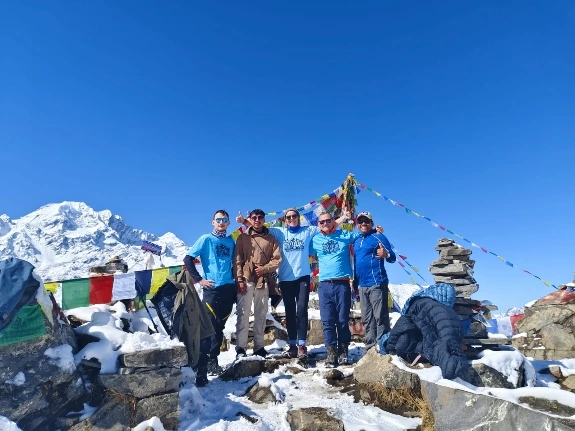
An adventure that is planned to be visitor-friendly in 2026 opens up sweeping scenery in the place and individual development. Get off to an excellent start in your trekking adventure with these short, breathtaking trails and have lifelong memories on the beautiful Himalayan trails of Nepal.

Mardi Himal Trek in November and December

The Mardi Himal Trek in November and December offers crisp mountain views, as the skies are usually clear after the autumn monsoon season.The Mardi Himal Trek is one of Nepal’s most scenic and less-traveled trails in the Annapurna range, renowned for its untouched trails, ever-changing landscapes, and close-up views of some of the world’s highest peaks. Often described as a “hidden gem,” this trek provides an intimate experience with the Himalayas without the crowds that flock to more popular routes like Annapurna Base Camp or Ghorepani Poon Hill.

From the green, subtropical foothills, the trail goes through drowsy villages, primeval rhododendron forests, and bare alpine ridges. Along the way, Machapuchare the sacred Fishtail Mountain rises on the horizon, its spectacular, twin-peaked summit often burning with gold at sunrise and sunset. At upper altitudes, the scenery shifts to harsh, snow-streaked slopes and panoramic mountain vistas near enough to touch. The highlight of the trek is the Mardi Himal Viewpoint at 4,500 meters, where you are very close to the giant Annapurna range, including Annapurna South, Hiunchuli, and Mardi Himal itself.

November and December treks offer a unique blend of beauty, comfort, and isolation. November is the post-monsoon season, with blue skies, green forests, and stable weather. The temperatures are pleasantly cool, perfect for hiking, and the nights, though cold, are manageable with warm attire. December marks the beginning of winter, with chillier nights, some snow at the upper elevations, and a less busy trail. The temperatures drop but the reward is a peaceful and almost ethereal landscape of snow-sprinkled ridges, crisp mountain air, and the quietness of the off-season.

This guide provides everything you need to prepare for the Mardi Himal Trek in late autumn and early winter, from comprehensive weather, day-by-day itinerary, packing, estimated budget, permits, and travel tips to allow you to have a safe and unforgettable experience.

Mardi Himal Trek 1

Weather Conditions in November and December

November Weather

November is widely considered one of the best months for trekking Mardi Himal. The monsoon season has ended, leaving the air fresh and the skies brilliantly clear. Humidity drops to around 30–35%, allowing uninterrupted mountain views from morning till evening. Rainfall is rare less than 5mm for the month.

Lower elevations (Pokhara/Kande): 12°C–20°C during the day, 5°C–10°C at night

High Camp: 5°C–10°C during the day, 0°C–5°C at night

November days are typically sunny, with about 7 hours of daylight. The forests remain green from the recent rains, and the light filtering through the trees creates a golden glow. Trails are dry and comfortable, and the weather is stable enough for a reliable trekking schedule.

December Weather

December brings the start of winter to the Annapurna region. Days remain clear, but the temperatures drop significantly, especially at night. Snow is possible particularly above Badal Danda and High Camp turning the upper sections into a quiet, white wonderland.

Lower elevations: 8°C–15°C during the day, 0°C–5°C at night

High Camp: -5°C to 5°C during the day, often below freezing at night

The mornings can be icy, especially in shaded areas, so extra caution is needed on the trail. Despite the cold, the crystal-clear skies and snowy peaks make December one of the most visually stunning months for the trek.

Mardi Himal Trek

What to Pack for Cold Weather

Clothing

  • Thermal base layers (2–3 sets)
  • Fleece jacket / light down jacket
  • Waterproof & windproof jacket
  • Insulated trekking pants + regular trekking pants
  • Warm down jacket (essential)
  • Inner gloves + insulated waterproof gloves
  • Warm woolen hat + sun cap
  • Neck gaiter / buff
  • Wool & trekking socks (4–5 pairs)

Footwear

  • Waterproof trekking boots (well broken-in)
  • Camp shoes/sandals for evenings
  • Gaiters (useful if snow on trail)

Gear & Essentials

  • Backpack (35–45L) + rain cover
  • Daypack (20–30L if porter carries main bag)
  • Sleeping bag (-10°C to -15°C rating)
  • Trekking poles
  • Headlamp with spare batteries
  • Water bottles (2 × 1L, insulated if possible)
  • Water purification tablets/drops/filter

Toiletries & Health

  • Sunscreen (SPF 30+)
  • Lip balm with SPF
  • Wet wipes & hand sanitizer
  • Basic first aid kit (painkillers, band-aids, Diamox, personal meds)
  • Cold/flu medicine

Other Useful Items

  • Sunglasses (UV protection, for snow glare)
  • Power bank (solar or high-capacity)
  • Snacks (energy bars, nuts, chocolates)
  • Camera/phone


High camo

Mardi Himal Trekking Itinerary (9 Days)

Day 1: Arrive in Kathmandu (1,300 m)

Day 2: Drive from Kathmandu to Pokhara (740 m) — 6–7 hours

Day 3: Drive to Kande, trek to Deurali (2,100 m) — 5 hours

Day 4: Trek to Forest Camp (2,500 m) — 5 hours

Day 5: Trek to Badal Danda via Low Camp (3,310 m) — 4–5 hours

Day 6: Trek to High Camp (3,620 m) — 3 hours

Day 7: Hike to Mardi Himal Viewpoint (4,500 m) and return to Low Camp — 6–7 hours

Day 8: Trek to Siding (1,280 m) and drive to Pokhara — 3 hours trek

Day 9: Drive or fly back to Kathmandu

Permits Required

  • Annapurna Conservation Area Permit (ACAP): NPR 3,000
  • Trekker’s Information Management System (TIMS) Card: NPR 2,000
  • Available in Kathmandu, Pokhara, or through trekking agencies.

Highlights of the Mardi Himal Trek

  • Close, uninterrupted views of Machapuchare, Annapurna South, and Mardi Himal.
  • The magical “sea of clouds” at Badal Danda.
  • Peaceful forest trails and authentic village stays.
  • Sunrise from Mardi Himal Viewpoint is among the most spectacular in Nepal.
  • A less-crowded alternative to popular Annapurna treks.
  • Travel Tips for November and December
  • Start early each day to maximize daylight hours.
  • November is busier book teahouses in advance. December is quieter but some lodges may be closed.
  • Wear layers and be prepared for rapid temperature changes.
  • Use trekking poles and microspikes in December for icy paths.
  • Carry enough cash and no ATMs on the route.
  • Stay hydrated and pace yourself to avoid fatigue or altitude issues.

Why Trek to Mardi Himal in December and January?

The Mardi Himal Trek in December is unique because of the lack of people on the trails. The rest of the year, these trails have a lot of trekkers and tourists. The low numbers in December allow an opportunity to appreciate nature and the culture of the locals. The trekking routes are pristinely clear, the beauty and balance of nature is quiet and undisturbed away from the rush of the Fritter style. December and January meteorology balance towards clear, ice cold skies that allow splendid visibility of Annapurna, Machhapuchhre and Hiunchulu.

The Mardi Himal Trek in December is unique because of the lack of people on the trails. The rest of the year, these trails have a lot of trekkers and tourists. The low number in December allow an opportunity to appreciate nature is quiet and undisturbed away form the rush of the fritter style.

The visibility during this time of the year is second to none and it can be considered special for the photographers and the mountain admirers.The Mardi Himal Trek in December is unique because of the lack of people on the trails. The rest of the year these trails have a lot of trekkers and tourists. The low numbers in December allow an opportunity to appreciate nature

The Mardi Himal winter scenery has an alluring appearance with ridges capped with snow, untouched forests, and delightful villages covered with snow. It seems like a Himalayan winter fairy tale to trek through this beautiful landscape.

Additionally, winter trekking provides an opportunity to observe the Kako Gurung people in the authentic Gurung culture in accordance with the season. With so little visiting this place, chances to mingle with the locals and appreciate their culture are more frequent. The genuine Gurung culture to warm this place is much easier to experience.

Mardi Himal Trek 1

Is Mardi Himal Safe in Winter?

Winter is the safest season for the Mardi Himal Trek because the highest peak only ascends to an altitude of 4,500 meters, which is quite high but still lower than many other famous treks in Nepal. Even though the risk of severe altitude sickness is reduced in this case, it is still important to acclimatize. Trekkers should take their time and maintain a slow and gradual pace in order to reduce the symptoms of mild AMS.

Winter is the safest season for the Mardi Himal Trek because the highest peak only ascends to an altitude of 4,500m which is quite high but still lower than many other famous treks in Nepal. Even though the risk of sereve altitude sickness is reduced in this case, it is still important to acclimatize . Trekkers should take their time and maintain a slow and gradual pace in order to reduce the symptoms of mild AMS.

In winter snow and ice can make the trails difficult especially the higher sections above low camp and also high camp. Icy ridges and slippery slopes

In winter, snow and ice can make the trails difficult, especially the higher sections above low camp and also high camp. Icy ridges and slippery slopes may require sturdy boots to maintain stability as well as trekking poles, crampons, microspikes, and sturdy boots. As trail conditions constantly change in winter, hiring a guide is strongly recommended as they are familiar with the trails and can make passage safer.

Although guides and porters are available in winter, their availability is dependent on the quietness of the trekking period. A porter will ease the trekking process by carrying gear and a guide will provide safety and support on snowy and icy trails.

The teahouses serving the Mardi Himal track remain open during the offseason; however, their services are limited.

Final Thoughts: Is the December-January Trek to Mardi Himal Worth it?

In December and January, hiking to Mardi Himal offers a tranquility unlike other times of the year along with stunning views of Annapurna , Macchapuchare and the other mountains in the area, where you often have the mountains all to yourself. Some of the winter challenges are colder trekking nights, shorter daylight hours, and fewer teahouses, as several close for the winter.

In December and January hiking to Mardi Himal a tranquility unlike other times of the year along with stunning views of Annapurna, Machhapuchre and other mountains in the area, where you often

This trek in the winter season is perfect for trekkers that appreciate the quiet, that can deal with the cooler temperatures, and that want to see the true Gurung culture in the mountain villages. Even if you are a bit inexperienced in trekking, Mardi Himal is accessible for a memorable adventure in the cooler months as long as you have basic trekking winter gear and are used to the cold weather.

This trek in the winter season is perfect for trekkers that appreciate the quiet that can deal with the cooler temperatures and that want to see the true gurung culture in the mountain village . Even if you are a bit inexperienced in trekking, Mardi Himal is accessible for a memorable adventure in the cooler months as long as you have basic trekking winter gear and are used to the cold weather.

For the adventurous type, Mardi Himal in the winter offers you a distinctly unique Himalayan adventure. The snow-covered forests alongside the ridgelines, the warm hospitality of the locals, and the deeply-etched sunrises over Annapurna will linger in your memory.