The Annapurna Circuit Trek in December and January is a wonderful choice for real adventurers who are looking for solitude, peace, and beautiful winter scenery. Trekking the Annapurna Circuit during these months is a bit more challenging compared to the main trekking seasons, but it offers a magical experience with fewer crowds and breathtaking landscapes.
You will find the trails much quieter, allowing you to truly connect with the Himalayas in a calm and peaceful way. However, it’s important to know that trekking during winter comes with some challenges like cold weather, icy trails, and shorter daylight hours. Crossing high passes like Thorong La (5,416m) can be especially tough due to snow, ice, and the risk of avalanches.
Even though it’s challenging, the rewards are unforgettable. Clear blue skies, sparkling snowy mountains, and a feeling of being completely immersed in the natural beauty of the Annapurna region make all the effort worthwhile. With the right gear, proper planning, and a flexible mindset, trekking the Annapurna Circuit in December and January can be an incredible adventure.
Almost all high mountain passes like Thorong La have their own highly challenging aspects because of avalanches or ice curtains. The trip offers its own hardships, but all that pain quickly disappears as the rewards come pouring in-beautiful blue skies above, breathtaking views of snow capped peaks, and the opportunity to truly immerse oneself in the stunning beauty of the Annapurna region at its most serene and softest state. Awareness and preparedness combined with the right gear and planning on how to tackle this circuit during the winter season are required for safe navigation.
It is really attracting to the real adventurer who wants to see complete solitude and be in awe of beautiful wintry landscapes. There are few tourists on the trek during these months, allowing one to more quietly and completely experience beauty in the environmental drainage of the Himalayas. The winter trek presents some very daunting conditions: cold temperatures, snow-covered trails, and short hours of sunshine. The high passes at altitude, for example, Thorong La, face nearly insurmountable challenges due to avalanches and icing. While the expedition has much difficulty, all the efforts are worth it when you have benefits coming in-for all the azure skies over you, fabulous views of snow capped peaks, and more space in which to enjoy the amazing beauty of the Annapurna region in its most peaceful and softest form. Awareness and preparedness, along with the right gear and planning on how to take on this circuit in the winter season, are essential for safe navigation.
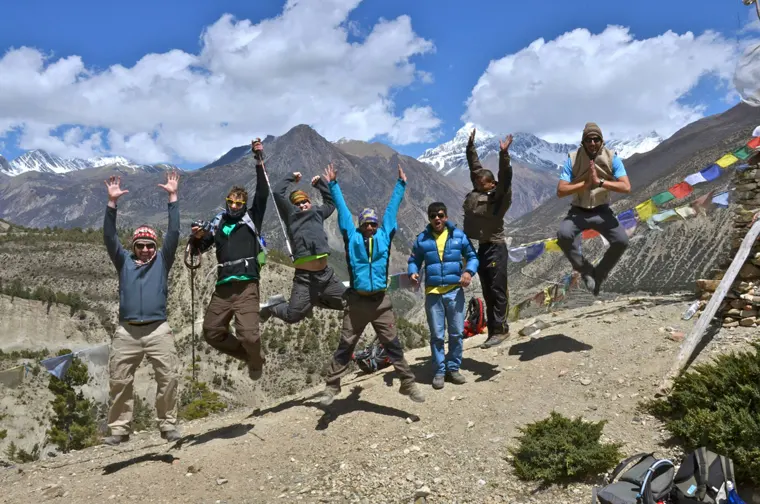
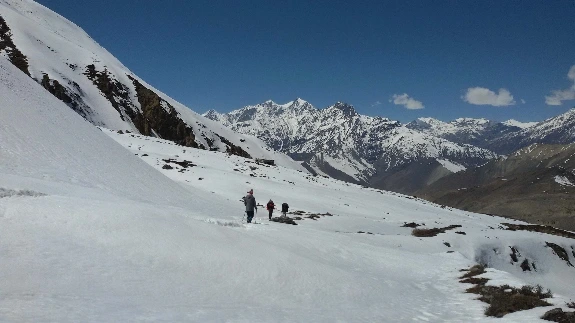
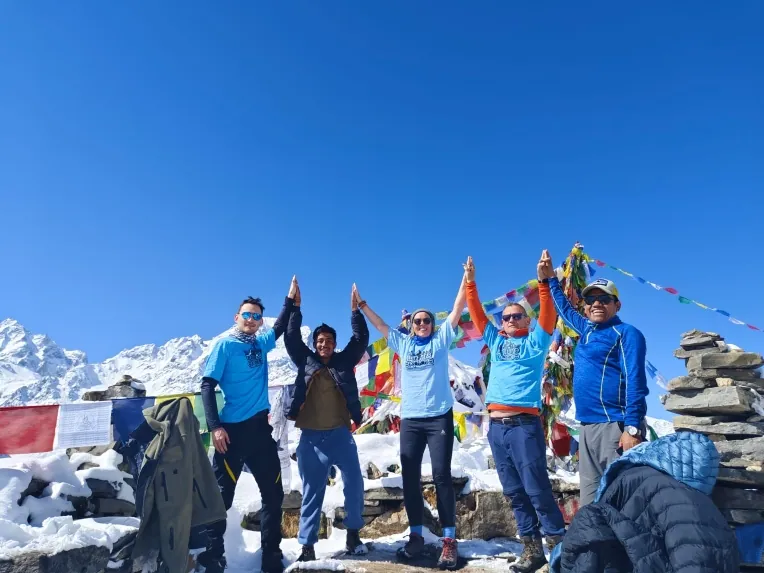
Congratulation Nature Explore Trek team for successfully reach on the top of the Thorong la pass
Winter trekking on the Annapurna Circuit
Winter trekking on the Annapurna Circuit comes with its unique gainful experiences, making it worthwhile and very memorable. The most overt benefit is fewer crowds. Being one of the most traversed trekking routes, not many trekkers head to Annapurna in December and January, allowing some peace and solitude to enjoy the mountains. The trails are quiet, tea houses sparsely populated, and long views of snowy peaks can be enjoyed without interruption.
Another benefit of trekking in winter is clear skies with gorgeous views. Winter in the Himalayas often brings in crispness, cold air, and little or no cloud cover, which ensures crystal clear views and stunning panorama views of the Annapurna and Dhaulagiri ranges. The snow-blanketed trees, frozen streams, and snow-draped villages add a picturesque charm to the winter landscape, which is a delight for the eyes.
Winter trekking can also be an opportunity to see a more genuine side of Nepal. Since winter involves festivals such as Tihar and New Year, you may also get a chance to witness some local celebrations in an atmosphere almost free of tourists. The locals living in the high-altitude regions often observe the celebrations with their own traditional rituals, and observing this can add to the cultural enrichment of your trek.
Challenges and Preparation
While winter trekking may be regarded as rewarding, the challenges along the way can be monumental and must be adhered to. Cold weather can be a severe threat, especially during the night when the temperature may drop to very low levels. The nighttime cold can be uncomfortable for sleeping, particularly if one is not properly outfitted in insulated gear and warm layers. You should have a proper sleeping bag rated for at least -15 to -20°C and layer up for warmth.
The snow and ice along the trail becomes a feast for the sight but perilous. Some of the harder portions of the trek, especially those up around Thorong La Pass, can prove challenging and dangerous because of heavy accumulations of snow. Ice patches are treacherous not only for trekking but also tend to increase the risk of injuries due to slipping and falling. Hence, microspikes and crampons would be a wise addition to your pack as they significantly enhance grip on icy surfaces.
Also shorter days during winter present another challenge. With limited daylight hours, it is advisable to be an early riser and to finish the day’s hike before nightfall. In the mountains, darkness comes quickly and it can be deadly to walk trails whose paths are unfamiliar in the dark, especially with snow and ice making navigating all the more difficult. You must have a functional headlamp in place and time your days accordingly to reach your destination during the daylight hours.
Altitude and Acclimatization
Trekking in high altitude is a true challenge on the Annapurna Circuit with altitude sickness being the major culprit, especially after crossing 3500 meters. The thinning air smoothens physical exertion and increases the tendency for altitude sickness. The chances get slimmer in winter because of freezing temperatures and heavy snow which take away your energy and spirit for trekking. Hence, acclimatization is of utmost importance. Taking frequent rest days, climbing slowly, and drinking adequate water can be handy. A good rule to follow is not to gain more than 300-500 meters of elevation per day after surpassing 3000 meters. Give altitude the respect it deserves; listen to your body and give it enough time to adjust this is major for having a safe and enjoyable trip.
Tea houses and Accommodation
Generally, many tea houses along the Annapurna Circuit stay open during winter; however, some of the distant or not-so-frequent places have their tea houses closed during that period of low activity. The tea houses that remain open are quite combed in delicious winter spoiling, with warm coziness to sleep within on hiking days in the freezing cold. But with trekking dwindling in number, websites available for room bookings may be fewer, hence early reservation of rooms would be wiser during the midwinter peak for trekkers. Basic accommodation must be expected since many tea houses will have quite simplified rooms with no to minimum heating, most would offer a warm meal and a relaxing stay by a stove.
Accommodation at the higher altitudes is relatively selective, with some tea houses being shut throughout the months, therefore adding with challenges to the trek. But trekking these months has its perks- fewer crowds, and fewer crowds- a sight of the mountains cloaked in snow imparts a pleasantly otherworldly view! However, the extremes might be quite harsh; these include, talking about winters, extreme cold and sudden occurrence of snowstorms, yet it is the pristine experience worth celebrating with joy by any well-prepared trekker on the Annapurna Circuit.
Guide and Porter Services
Independent trekking is possible along the Annapurna Circuit Trekbut trekking with a guide and porter during winter is strongly advised. The trail conditions will be able to tell the guide about the snow-covered sections of the trails and the activity done for your safety when trekking. Another advantage of having a guide is that he or she would be busy in keeping an eye on your health and acclimatization as they can easily identify the symptoms of altitude sickness and then make the itinerary change depending on the conditions. Having a porter makes the trek less burdensome because they will carry your big pack, focusing your energy on the trek itself. This becomes even more important in the winters as the cold weather gear and supplies add to the already heavy pack.
Flexibility and Prepare
Winter trekking requires a lot of flexibility. The weather in the mountains can change quite abruptly, and conditions like these can mean use of snowstorms or freezing rain with serious dislocations to plans. Passes such as Thorong La can be closed or even dangerous due to snow build-up, making a flexible itinerary imperative. If you’re trekking with a guide, they will be able to change up your schedule as needed, possibly avoiding high-risk areas or suggesting alternate routes. Contingency plans are also essential for emergencies or unintended delays.
Weather and Temperature
The Annapurna Circuit trek during December and January can offer an amazing experience with a few problems related mainly to weather and temperature. During this time, the area witnesses cold and dry weather and clear skies since it is the time for the dry season. Snow is also found at places of higher elevation, especially at Thorong La Pass, where nighttime temperatures might even fall to -20°C or even lower. The lower elevation places like Besisahar and Chame will have daytime temperatures between 5 and 18°C, while nighttime temperatures could fall much lower to maybe 3 or 8°C. Even while trekking in Manang and Thorong Phedi, a decrease in temperature will still be noticeable, with daytime highs averaging between -5°C and 0°C and nighttime temperatures dropping to anywhere from -10°C to lands of being colder at -20°C. The highest section, Thorong La Pass (5,416m), will be severely exposed to cold with temperatures dropping to -25°C and having chances of snowstorms too.
December generally assures clear skies and cold yet refreshing days; however, it may also be gainfully described as the cruellest month of January, which has still colder conditions and more likelihood of snowstorms at the higher reaches. Weather is unpredictable here; snow could fall at any time during the dry months, causing havoc with the trail.
This table summarizes the major locations on the Annapurna Circuit Trek, along with their elevations, average daytime and nighttime temperatures, and important trekking notes.
Location
Elevation
Avg. Day Temp (°C)
Avg. Night Temp (°C)
Notes
Besisahar
760m
10–18
3–8
Start of trek, pleasant
Chame
2,650m
5–10
-5 to -10
Cold mornings & evenings
Manang
3,540m
0–5
-10 to -15
Snow possible, crisp days
Thorong Phedi
4,540m
-5 to 0
-15 to -20
Harsh cold, acclimatization needed
Thorong La Pass
5,416m
-10 to -5
-20 to -25
Snowy, windy, very cold
Muktinath
3,800m
0–7
-10 to -15
Dry and windy
Jomsom
2,720m
5–12
-2 to -6
Windy afternoons
Outline Itinerary of the Trek
Day 01 Arrive in Kathmandu and transfer to your hotel. Day 02 Trek preparation day Day 03 Drive from Kathmandu to Besisahar – Dharapani (alt.1900m) 221 km Day 04 Trek from Dharapani to Chame , 2,710m ,5-6hrs Day 05 Trek from Chame to Upper Pisang, 3,300, 5-6 hrs Day 06 Trek from Pisang to Manang, 3,540m, 6-7hrs Day 07 Acclimatize in Manang (Hike to Chongkor viewpoint) Day 08 Trek from Manang to Yak Kharka, 4,110m, 3-4hrs Day 09 Trek from Yak Kharka to Thorong Phedi, 5,416m , 6-7 hrs Day 10 Trek to Muktinath through the Thorong La pass (alt.5416m), 5-6 hrs Day 11 Trek from Muktinath to Jomsom, 2,720m, 5-6hrs Day 12 Flight from Jomsom to Pokhara, 820m, 25 min Day 13 Drive back to Kathmandu by tourist bus,
Your arrival in Kathmandu paves the way for an entire day of preparation and exploring before this 13-day Annapurna Circuit trek. Thereon, on day three, you do a long scenic drive from Kathmandu to Dharapani via Besisahar. Thus, on day four, trek to Chame because trekking starts from Dharapani. The following two days will see you climbing Upper Pisang and Manang. Acclimatization is done at Manang, including a short hike to Chongkor viewpoint, before going along the trail to Yak Kharka, then Thorong Phedi. On the tenth day, the trek crosses the challenging yet beautiful Thorong La Pass (5,416m) down to Muktinath. For the next day, it will be a trek to Jomsom, from where a short flight will take you to Pokhara, after which you’ll be driven back to Kathmandu, the last stop in what will amount to be an unforgettable Himalayan adventure.
A day like
A winter day on the Annapurna Circuit starts with dead calm when the sun rises over the marble mountains, throwing its golden rays over the frost-covered landscape. A cold, sometimes even subzero morning, frozen tea houses, a quick hot tea and kleenex breakfast – and off into the trail that snakes through placid villages, several pine forests, and glacial way, all together crisp mountain air with brilliant clear blue skies above. The snow crunches underfoot as the sun brings some warmth to the day, though the cold lingers in shaded areas.
Around midday, a steaming plate of dal bhat or noodles offers comfort and energy..As the afternoon processes, the temperature drops again , and racing the next teahouse before dark becomes a priority. Evenings are spent huddling near the stove of the dining room, sharing stories with other trekkers while cooking and eating good food . Early tuck in under a warm sleeping bag, a sky full of stars above awaiting the next leg for a long journey through these quiet , magical winter mountains.
Annapurna Circuit Trek in December
Trekking the Annapurna Circuit Trek in December offers a unique and beautiful experience but it comes with certain challenges due to the winter season . At the lower elevation such as 1000m to the 2,500m temperature are mil rangug from the 5 degree to the 15 degree during the day though it can still drop to freezing or lower at night. As you ascend to higher altitudes temperature can get high especially around the Thorong La Pass(5,416m) where the daytime temperature goes around -5 degree to 5 degree and the night time temperature can drop well below – 10 degree. Snow is common in higher areas which can make the trail slippery and difficult particularly above 3,500m.
The shorter daylight hours in December mean that trekkers need to plan their hhikes carefully to avoid being on the trail after dark. While in winter means fewer trekkers , resulting in a more peaceful and serene experience, it also means some teahouse may be closed insulated jackets and trekking poles is essential for the cold and potentially icy conditions. Additionally , those trekking in winter must be cautious of the altitude sickness as acclimation can be more challenging in colder weather. Despite these challenges the reward of this trekking the Annapurna Circuit in December are clear breathtaking views of snow-capped peaks, fewer crowds, and serene , winter and that offers a truly memorable himalayan adventure.
Annapurna Circuit Trek in January
Walking the Annapurna Circuit in January is an adventure that only the adventurers can cherish, for it is one of the most beautiful and magical experiences. January coincides with peak winter in Nepal and ushers in serenity with beautiful snow-covered landscapes, creating real magic in the already beautiful Annapurna region. Oftentimes the skies would be very bright and clear, offering unhindered views of towering giants like Annapurna, Dhaulagiri, and Machapuchare.
Be prepared to feel extremely cold especially at high altitudes, with daily averages from about 5°C to 10°C, and the nights sometimes going well below freezing. Snow is a common occurrence above 3,000 meters with the major passes such as Thorong La (5,416 meters) having very thick snow, making the trek even more exciting. The best winter trekking gear, good planning, and occasionally a flexible itinerary are essential during January.
The best part about trekking at such times is that one gets a lot of peace and quiet along with scanty crowds. The trail is completely empty relative to its crowdedness during the very famous autumn and spring times. Most teahouses are operational, but those that are higher up may occasionally discourage guests or entertain them in bare hospitality.
The Annapurna Circuit in January is undoubtedly for trekkers who love solace, sceneries of dramatic white landscapes, and the pure thrill that comes with trekking in a very rough and wintry environment. It can be made into one unforgettable experience in the Himalayas with proper preparations and minds put into it.The Annapurna Circuit in January is undoubtedly for trekkers who love solace, sceneries of dramatic white landscapes and the pure thrill that comes with trekkering in a very rough and wintry environment. It can be made into one unforgettable experience in the himalaya with proper preparation and minds put into it
The Manaslu Circuit Trek in October is one of the most rewarding Himalayan treks in Nepal, offering an off-the-beaten-path trek through the isolated mountain villages, untouched forest, and spectacular high passes. The trek goes around the eighth-highest mountain in the world—Mount Manaslu (8,163m)—and offers the ideal combination of culture and nature.
Choosing the appropriate time of the year is crucial for a successful trek, and out of all the months, October is the optimum. Clear weather after monsoons presents breathtaking views of white-capped mountains, and the established climate gives amicable trekking conditions.
Trails are rich in flora and fauna, and local festivals like Dashain and Tihar add cultural richness to the trek. With cool air, flowering landscapes, and dry, sunny weather, the Manaslu Circuit Trek in October promises to be a memorable and visually impressive experience. For adventure and peace of mind, October is simply the best time to visit the Manaslu Circuit.
Overview of the Manaslu Circuit Trek:
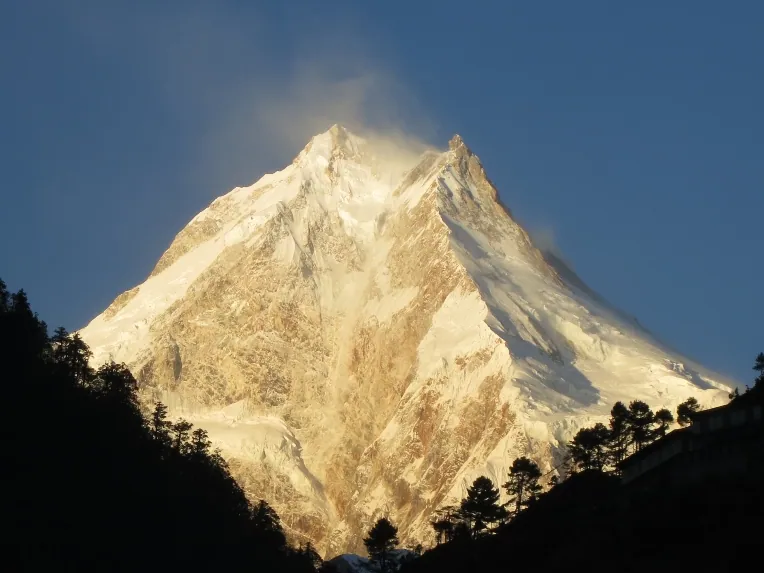
Mt. Manaslu (alt.8163m). Picture taken by our guide last year in October from Lho Gaun.
Month of October to do the Manaslu Circuit Trek gives you one of the most unexplored and diverse trekking trails in Nepal. Located in the Gorkha District of western Nepal, the Manaslu Trek encircles the world’s eighth highest peak of 8,163 meters, known as Mount Manaslu.
This remote trek was opened for the first time to outsiders around the early 1990s and is less touristy in comparison to its more popular contemporaries like the Everest and Annapurna treks. The region is deeply saturated with Tibetan culture, with old monasteries, prayer wheels, mani walls, and chortens strewn along the trail.
Through picturesque villages like Samagaon and Lho, where you will come across traditional lifestyles not touched by modern life, you will get to experience unparalleled nature ranging from hills and terraced farms to mountain highlands and the majestic Larke La Pass at 5,106 meters if you do the Manaslu Circuit Trek in October.
The trek usually lasts for 14–18 days, depending on the itinerary and acclimatization days. The trek is of moderate difficulty due to the height and challenging routes. Trekkers must purchase a series of permits: the Manaslu Restricted Area Permit (MRAP), the Manaslu Conservation Area Permit (MCAP), and the Annapurna Conservation Area Permit (ACAP). The Manaslu Circuit Trek in October promises the optimal experience with sunny skies and wonderful trekking conditions.
Temperature in October during the Manaslu Trek:
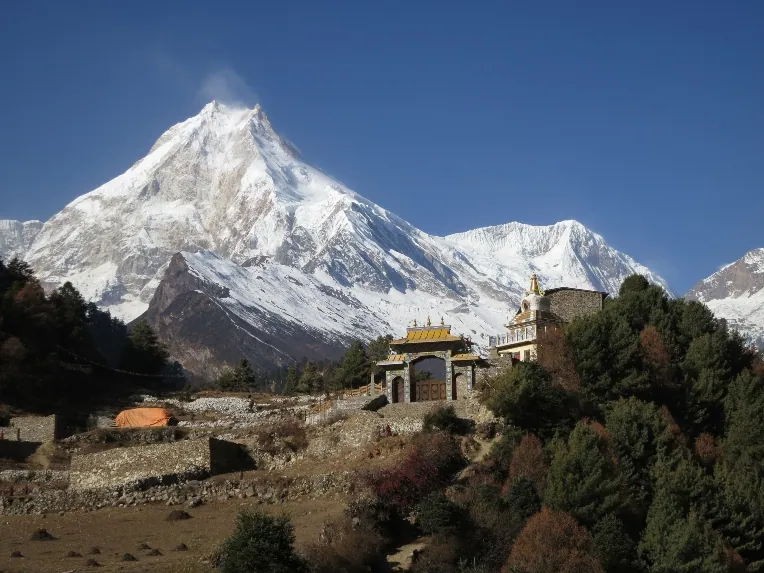
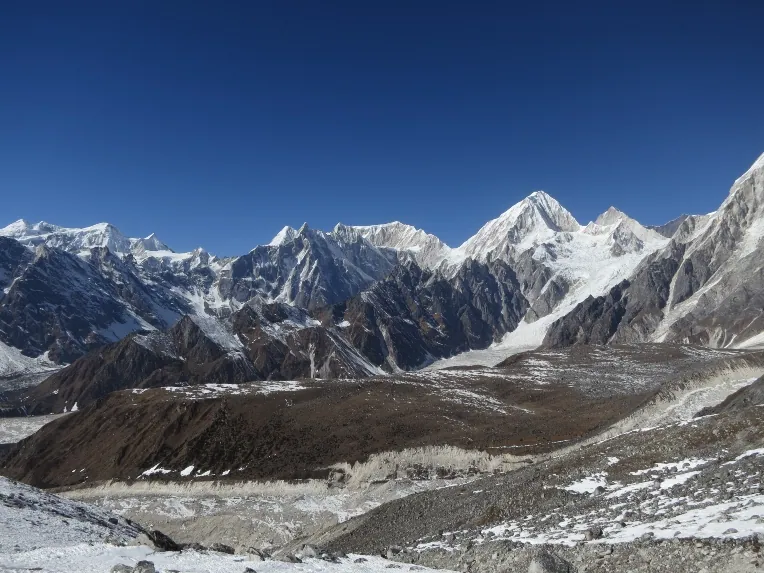
Mountain magic view of the Manaslu region with a beautiful sunny day.
The Manaslu Circuit Trek in October has the best temperature conditions for trekking in Nepal. At low altitudes, daytime temperatures are about 10°C to 15°C, and it is very pleasant trekking. Temperatures drop as you ascend to high altitudes.
At mid-altitudes like Samagaon (3,530m), you can expect daytime temperatures to be about 5°C to 10°C and nighttime temperatures to drop down to 5°C to -8°C. At higher elevations close to Larke La Pass (5,106m), the daytime temperatures are between -2°C and 5°C and can fall as low as -6°C or even lower at night.
In comparison with the other months, the October Manaslu Circuit Trek is much more pleasant. November is very cold, with the temperature dipping even lower, especially in the evenings.
September is also still within the monsoon season, with rainy trails and high humidity, so October is the preferred month if looking at temperature and consistency of weather. The ideal temperature in October offers a great and comfortable trekking experience.
Weather Conditions on the Manaslu Circuit Trek in October :
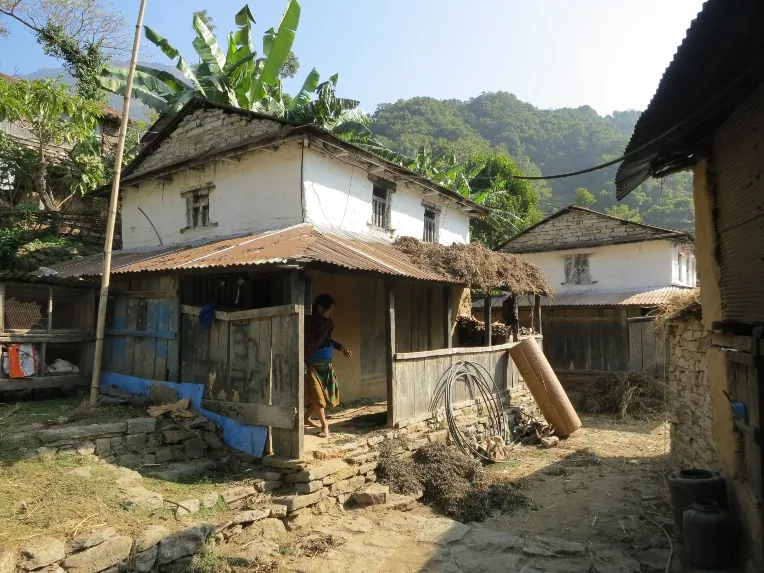
Along the way to the Manaslu Circuit Trek, we also meet one of the traditional Nepalese houses.
The October Manaslu Circuit Trek is renowned for having ideal weather conditions as the dry season begins. The month offers clear skies, no rain, and ideal trekking conditions, making it one of the ideal times to undertake the adventure.
The dry conditions ensure that the trails are maintained clean and the chances of the trekker encountering muddy or slippery trails are minimal, particularly when traversing higher altitudes.
October, while Manaslu Circuit Trekking, has the best clarity. Clear, fresh air with sunshine provides magnificent views of snowy mountains circling the trail, including Mount Manaslu, Himalchuli, and Ganesh Himal. The sun, 8-10 hours of sunshine per day, provides the ideal hour-long trekking period.
Trekkers should prepare themselves for snow at higher elevations, particularly around Larke La Pass (5,106m). Although it is not guaranteed to have snow, it cannot be avoided because of the elevation, and it makes the trek interesting and challenging.
The Manaslu Circuit Trek in October has stable weather conditions and is therefore an ideal time to have a trouble-free, smooth trek. With dry conditions, clear visibility, and stable weather, October is the ideal time to go on this Himalayan trek.
Why October Is the Best Month for the Manaslu Circuit Trek ?
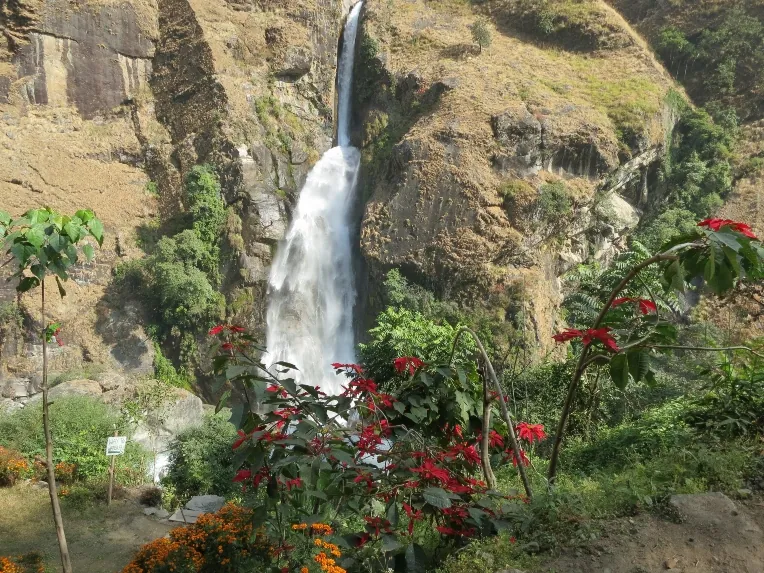
Waterfalls are always welcome to trekkers who are trekking the Manaslu circuit trek between Philim and Dyang village.
October is perhaps the best time to undertake the Manaslu Circuit Trek. The monsoon period comes to an end in October, and post-monsoon freshness begins on the trails. The forests along the way are green and dense, and the trails are neat and clean and devoid of any debris after the necessary repairs, making it a comfortable and safe trekking experience.
One of the top features of October’s Manaslu Circuit Trek is peak clarity. With a clear sky and minimal rain, the trekkers have the opportunity to take dramatically stunning panoramic images of the huge peaks, including Manaslu, Himalchuli, and Ganesh Himal. Visibility in October is unrivaled, with some of the best photo-shooting opportunities in the trek.
October weather is just perfect—not cold and not hot. The temperatures during the day are perfect for trekking, and nights at high altitudes are cold but tolerable. October is therefore an ideal month for trekkers who desire regular weather conditions without the extreme cold of later months like November.
October is culturally a very vibrant month due to the overlapping of Nepal’s Dashain and Tihar festivals. There are festivities held in the villages along the trek, giving the visitor an excellent opportunity to interact with the locals and understand their traditions. Overall, October offers the Manaslu Circuit Trek the best mix of weather, visibility, trail conditions, and cultural exposure and is therefore the optimal time to Everest base camp trek in Spring 2025/2026visit.
Advantages of Trekking the Manaslu in month of October
The Manaslu Circuit Trek in October has some advantages that make it an ideal choice for trekkers who want an offbeat Himalayan experience. Compared to the more popular trails such as the Everest Base Camp or Annapurna Circuit, the Manaslu region is comparatively less touristy, even during peak season.
This gives trekkers a serene, more genuine experience along remote mountain villages and serene landscapes.
October is also the perfect time for photography and movie-making. Blue skies, golden sunlight, and white summits of Manaslu (8,163m), Himalchuli, and Ganesh Himal provide wonderful settings. Whether shooting mountain vistas, fluttering prayer flags in the wind, or village cultural scenes, October’s Manaslu Circuit Trek is an eye feast.
Higher passes like Larke La Pass (5,106m) are more bearable in October, with settled weather and moderate snows. Temperatures that are not very cold reduce the chances of bad conditions halting the trek.
Another important advantage of trekking the Manaslu Circuit in October is the availability of teahouses. Due to the post-monsoon season being fully operational, most teahouses are open, well-stocked, and offer a greater variety of meals. This is an added facility for comfort and experience of travel.
Also, October falls at the time of grand Nepali celebrations such as Dashain and Tihar, when travelers can indulge in interaction with locals and watch celebrations in their traditional manner. The Manaslu Circuit Trek during October beautifully amalgamates adventure and culture and thus proves to be an experience in reality.
Scenery and Nature on the Manaslu Circuit Trek in October
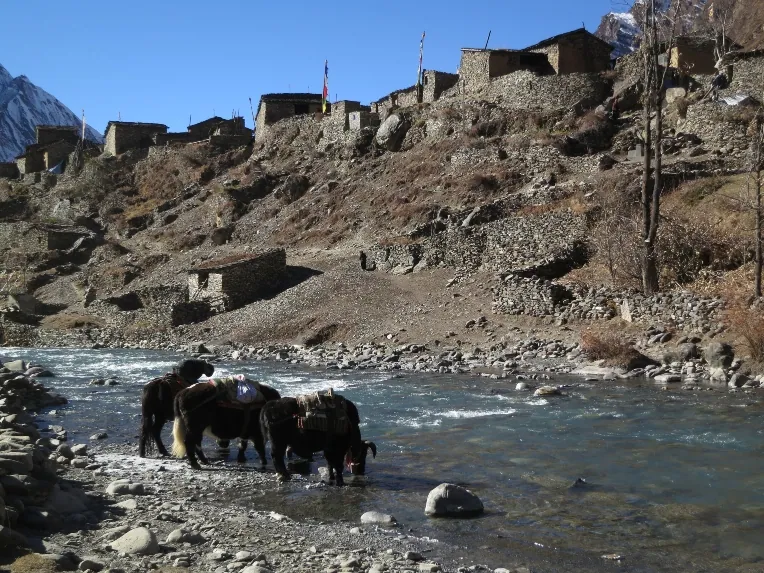
A thirsty yak drinking fresh water from a cold river.
The Manaslu Circuit Trek in October offers some of the most beautiful natural landscapes in Nepal. October is part of autumn, coloring the landscapes with lush autumn colors in red, orange, and gold. The lower slopes are tinted with blooming wildflowers, adding a splash of color to the already gorgeous trails.
Trekkers on the Manaslu Circuit Trek in October can expect to find crystal-clear rivers and waterfalls plunging with fresh energy after the monsoon. The paddy fields on terraces, heavy with mature crops, provide a glimpse of conventional Himalayan agriculture and rural Nepali life.
Hidden further up are the glorious snowy summits of Mt.Manaslu I (alt. 8163 m), Himalchuli (alt. 7893 m), and Ganesh Himal (alt. 7422m), Nike Peak (alt. 6211 m), Larke Peak (alt. 6219 m), and Samdo Peak (alt. 5177 m), lightly draped in an elegant dusting of fresh snow, in vivid contrast to brilliant blue October skies. Altogether, rainbow-colored valleys with white-topped summits make the trek along the Manaslu Circuit Trek in October a visual spectacle from start to finish.
Trek Challenges of Manaslu Circuit Trek in October
Larke La Pass is 5130 m above sea level.
Although the Manaslu Circuit Trek in October is one of the best treks in Nepal, there are some challenges that the trekkers must face and overcome themselves. The greatest issue is the cold nights at the higher altitudes like Samdo (3,875m) and Dharamsala (4,460m). The temperature dips below freezing, and thus proper equipment and warm clothes are required.
Another challenge on the Manaslu Circuit Trek in October is possible sudden weather change near Larke La Pass (5,106m). Although October generally offers stable weather, high-altitude weather is always unpredictable, and sometimes it can snow or become windy. One has to monitor the forecast and be ready to alter the itinerary.
As it is becoming more popular, moderate crowds can mean that teahouse space becomes limited along the trail. It is recommended to reserve accommodation in advance to obtain a comfortable place for the Manaslu Circuit Trek in October.
The Annapurna Base Camp Trek in November offers a rewarding experience for trekkers seeking the heart of the Himalayas. Situated in mid-Nepal, the Annapurna Base Camp (ABC) trek offers a delicate mix of natural beauty, diverse culture, and moderate difficulty, thus making it one of the most popular among novices as well as advanced trekkers.The trek takes you along scenic Gurung villages, rice terraces, rhododendron forest, and then to the base of the stunning Annapurna I — the world’s 10th highest peak.
Why the November Annapurna Base Camp trek is so well liked is that the tranquil weather and otherworldly clarity of the peaks at this time are beyond understanding. Rather than the hordes tramping into Nepal in October, November offers merely smaller hordes but all the same clarity of vistas for snow-capped peaks against blinding blue sky. The weather is cold and sharp, and the skies are consistent, presenting a near perfect window to climb safely yet at ease through views of sheer delight.
Whether you are looking for isolation in nature, scenery-perfect valleys, or a perfect climate for trekking, the Annapurna Base Camp trek in November is the perfect choice for an unforgettable Himalayan experience.
What Makes November the Best Month for the ABC Trek?
The Annapurna Base Camp trek in November is usually regarded as the sweet spot for Himalayan trekking. November is the time when the colorful autumn gives way to the onset of winter, providing a special combination of good weather and breathtaking scenery that draws nature enthusiasts and trekkers in equal measure.
One of the best advantages of trekking the Annapurna Base Camp during November is the stability of the weather. Monsoon rain has already dissipated, and the atmosphere is always clear, giving a transparent view of the awe-inspiring Annapurna and Machapuchare ranges. This makes the entire trekking experience all the more unique with every sunrise and sunset assuming the character of an awe-inspiring spectacle.
November also brings cool, crisp air—perfect for hiking. The afternoons are warm, and pleasant, especially at lower levels, while evenings grow cooler with altitude, adding a true Himalayan experience without the biting cold of December or January. Still better, however, is that the chance for rain or snowfall is small at this point, offering more secure and drier conditions along the trails.
Another attractive feature of the Annapurna Base Camp trekking adventure in November is the less crowd compared to the crowded month of October. While October is a rush of foreigners and locals, November provides a more peaceful and calm experience, and you get to engage with nature and the environment at a deeper level. Add that to golden-hued forests, film-setting mountain views, and photogenic landscapes, and it is quite clear to everyone why the trek to Annapurna Base Camp in November is ideal for both adventure-seekers and photography enthusiasts as well.
Weather at Annapurna Base Camp in November
Annapurna Base Camp weather in November is the most appropriate month’s climatic conditions for exploring the Himalayas out of any month’s treks. Weather is dry and stable during the month, giving trekkers a comfortable situation to trek under a warm climate.
Daytime temperatures at lower altitudes would typically run between 10°C to 17°C, which is appropriate for daytime walks in a comfortable warmth of the sun without expecting discomfort over high heat and moisture.The higher you go, particularly closer to Annapurna Base Camp, the temperature seriously drops at night. Nighttime temperatures at the base camp also drop as low as -5°C to -10°C. Though chilly, such cold nights are bearable with necessary gear and planning, and they contribute to the authentic Himalayan trekking experience.
One of the greatest advantages of trekking the Annapurna Base Camp in November is the dry trail. With the monsoon a thing of the past and winter snow yet to descend in all its fury, the trails are unobstructed and less slippery, a more secure and enjoyable trek. With warm sunny days and cold crisp nights, the balance is one that trekkers adore. This climatic condition not only contributes to comfort but also offers unobstructed mountain views along the entire trekking route, so the Annapurna Base Camp in November becomes a truly magical experience.
Annapurna Base Camp Temperature in November
Having knowledge of temperature variations is vital for anyone planning the Annapurna Base Camp trekking in November. November is a time of a major change in climate as you ascend through different altitudes, and hence layering becomes necessary for comfort and protection.
Starting from Pokhara, the trekking start point, daytime temperatures are about 20°C with pleasant evenings at 10°C. As you climb up to Ghorepani, it gets colder, falling to around 10°C by day and close to 0°C at night.Even higher at Machapuchare Base Camp, day temperatures are relatively colder with around 5°C during the day and night temperatures dipping down to around -5°C. And then finally at the Annapurna Base Camp itself, day temperatures should be quite similar to 5°C, while night temperatures fall as low as -10°C.
Due to these temperature variations, Annapurna Base Camp trekking during November requires wise layering. Wicking base layer, insulating fleece or down jacket, and waterproof outer shell are recommended. Thermal leggings, gloves, warm hat, and high-altitude sleeping bag must not be left behind. Trekking in November offers ideal weather, but proper gear is necessary to ensure it is a comfortable and secure experience. With the right planning, the Annapurna Base Camp trek during November is possible and worthwhile.
Advantages of Taking the Trek in November
The November Annapurna Base Camp trek boasts numerous special advantages that ensure it is one of the best months to visit the Himalayas. One of the biggest pluses is the crisp, open views of the Annapurna range, good weather, and minimal haze ensuring breathtaking panoramas throughout the entire trek. While the busy month of October sees a lot of tourists, November receives fewer visitors, meaning a quieter and more immersive experience on the trail.
Tea houses are less crowded, and it is easier to arrange accommodation and spend quiet evenings under the stars. The Annapurna Base Camp trek in November also offers ideal photography shoots with golden sunrise and sunset bathing the snow-clad mountains.Trekkers even get to witness the first snowfall at Base Camp, adding a whiff of magic to the trek. Furthermore, you can also cut costs with off-season reductions in porters, guides, and lodging—making November the perfect month to hike.
Trail Highlights in November
The Annapurna Base Camp trek in November is filled with unforgettable trail highlights that expose the Himalayas in all their glory. As you ascend further, you will trek through breathtaking rhododendron forests, where a few of the flowers may start to bloom prematurely, adding a dash of color to the crisp landscape.Scenic villages like Chhomrong and locations like Deurali and Machapuchare Base Camp offer panoramic views of the mountains and warm hospitality.
Arguably one of the most stunning experiences of the Annapurna Base Camp trek is arriving at the Annapurna Sanctuary, a huge natural amphitheater of colossal snow-white peaks.Blue skies and early snow in November create stark contrasts perfect for photography and sheer awe. Having been on the hike for a day, nothing feels more magical than to sit and enjoy a plate of steaming hot dal bhat or hot ginger tea ensconced in a warm coat, surrounded by the peace which is typical to the Annapurna Base Camp trek.
How to Prepare for the November Trek
Proper preparation is the secret to fully enjoying the Annapurna Base Camp trek in November, since the weather will be cold and the altitude challenging. Start with good equipment: a good layering system is essential. Bring a moisture-wicking base layer, an insulating mid layer (a fleece or down jacket), and a waterproof, windproof outer layer. Bring warm gloves, a woolen hat, thermal socks, and a four-season sleeping bag rated at -10°C or lower.
In physical conditioning, begin exercising at least a month before. Exercise with cardiovascular exercises like hiking, running, and cycling. Stair climbing and strength training, especially in the core and leg muscles, will assist you in overcoming the daily ups and downs easily.
Psychological preparation too needs to be done. November Annapurna Base Camp trek is prone to cold mornings, increased hours of walking, and altitude and therefore one must prepare oneself strong and cheerful so that one enjoys a successful and happy trip.
Accommodation and Lodging on the Trek
In November’s Annapurna Base Camp trek, teahouses along the trail provide good accommodation with simple facilities, which make for a warm stay after a long day of walking. November is less crowded than October, so getting a room is relatively easier, but advance booking still assists, especially in the more popular places such as Ghorepani or Chhomrong.
Teahouse food choices range from thick and authentic fare to fuel your hike. Food choices include dal bhat (rice with lentil soup), momo (steamed dumplings), and Tibetan bread, the perfect to fuel up after hiking a day. Ginger tea or hot drinks are also served and are one of the favorites since they counteract the piercing cold of the November winds. Although hot showers are a standard facility in most of the teahouses, in some of them they may be restricted or optional, especially at high altitudes. Wi-Fi exists only in some locations, but expect slow connections due to the remote area of the Annapurna Base Camp trekking in November.
Permits, Guides, and Porters
Two required permits for trekking the Annapurna Base Camp in November are the TIMS (Trekkers’ Information Management System)card and the ACAP (Annapurna Conservation Area Project) entrance permit. The permits are available for buy from Pokhara or Kathmandu and are required to be possessed by all trekking members. It is very much recommended to take a guide or porter for the Annapurna Base Camp trek in November. Guides will be around $20–$30 per day, and porters will be around $15–$20 per day. Their services are even more valuable during November due to low temperatures and uncertain weather.
Local guides are aware of the trail and can provide security, providing valuable information on how to deal with the typically unpredictable weather and altitude matters. They can improve your trekking experience by providing cultural information and making the trek more pleasant, while porters aid in lightening the load, allowing you to enjoy the stunning views of the Annapurna Base Camp trek in November.
Why is November the best?
The Annapurna Base Camp trek during November is among the best seasons to undertake this great adventure, and with due planning, it can be an experience simply unforgettable. November offers clear weather, settled climate, and stunning mountain vistas, which is the most favorable time of the year to go for the trek. The temperature is neither extremely hot nor extremely cold, and hence a pleasant trek is guaranteed with lesser possibilities of extreme weather. Additionally, the November Annapurna Base Camp trek has fewer crowds compared to its peak season month of October and offers plenty of space for serene living in the Himalayas. Trekkers are especially going to enjoy solitude and coexistence with nature. The new, cold air and the chance to see early snowfall at Base Camp make November an excellent time for photography, trekking, and general enjoyment of the Annapurna Base Camp trek in November.
Comparison between October and November for Annapurna Base Camp Trek
Over the years , November has become as more favorable month for Annapurna Base Camp Trek October. Although, October has always been a month of prime autumn. Lately, October has begun to stay cloudy, post-monsoon rain, and irregular environmental patterns.
Early to mid-October trekkers may be caught in sudden showers and have limited mountain view. November weather is also more stable and consistent. The sky is most often clear and visibility is quite excellent, with probably the lowest chance of rain.
It is safe and dry for hiking with bright, crisp air. In mornings and evenings, the cold may be swept off with proper gear, but becomes part of the charm, especially quiet trails and peaceful teahouses. November offers quiet, deep connection with the Himalayas. The scenery begins to change its subtle beauty into a winter quality, with its light snowfall over the higher sections and frost-tipped grass in the early mornings in the month of November. Those trekkers that appreciate peace, clarity, and mountain magic are in a winning key in November.
Traveling Tips for Trekkers in November
As you trek to the Annapurna Base Camp in November, be careful to prepare adequately for the weather. Start early on your day of trekking so that you reach your destination before evening, as November days are shorter. This will save you from trekking in the dark, especially at higher elevations where it gets extremely cold shortly after nightfall. Stay hydrated, even if it’s cold outside. Cold is just as dehydrating as heat, and you need to make sure you drink plenty of water on the trek. Use sunscreen and lip balm regularly to protect your skin from the strong sun rays, even in winter months when you reach high altitude.Finally, don’t forget that cold weather affects battery life, and hence, it’s a good idea to carry power banks to have your devices charged during the Annapurna Base Camp trek in November.
Conclusion
The Annapurna Base Camp trek during November is one of the most ideal times for trekking, with clear weather, stunning scenery of the mountains, and fewer crowds. The serenity of the trail in the pre-winter lull provides an experience that’s irreplaceable and perfect for adventure as well as contemplation.
Trekking with a trusted companion such as Nova Himalaya allows you to have a safe and comfortable journey. So, don’t let it get away—November is a hidden gem for the Annapurna Base Camp trek during November!
The Everest Base Camp Trek in November is one of the most rewarding times to explore the Himalayas.The Everest Base Camp Trek is one of the most famous and difficult treks in the world that leads travelers through the heart of the Himalayas to the base of Mount Everest (8,849). This 12 to 16-day journey starts with a thrilling flight from Kathmandu to Lukla (2,860m), followed by a scenic trek through Sherpa villages, lush forests, and high-altitude landscapes. So, it is important to choose the best time and season for the trek to EBC. The Everest base camp trek in November is the best time due to the fine weather. Trekking in November offers fewer trekkers than in October, which is the busiest month. Additionally, the Everest Base Camp trek in November offers safe and pleasurable routes due to mild weather conditions. The post-monsoon season guarantees the trekking routes are dry, and minimal rainfall reduces flight cancellations to Lukla. November is a great month for trekkers seeking a memorable experience since it offers the perfect blend of comfort, solitude, and stunning Himalayan views.
Usually, the trekking trails are busy during the spring, and the trekkers face difficulties during monsoon time due to slippery routes, and poor visibility. Winter (Dec-Feb) is also not the best time for trekking because the operators and some teahouses pause the services. Due to the cold environment in winter temperatures usually reach to freezing point which makes it difficult to trek.
The trek begins with the flight from Manthali/Mamechhap to Lukla involves a 5-6 hour drive from Kathmandu to reach Manthali. The hike starts and passes through terraced fields, Sherpa village, and a forest of Rhodendrons before reaching Namche. Everest Base Camp Trails passes through Dinboche, Lobuche, Gorakshep, and Kala Patthar. Throughout the journey to Kala Patthar, the trail passes through an elevation of 5,545 meters.
Weather and Temperature in November
When starting the Everest base camp trek in November different elevations ranging from Kathmandu (1,400m-3,000m) to Kala Patthar ( 5,545m) show varying temperatures which play a significant role during the trek. During November, the lower elevation recorded temperature is 15-20°C while in higher elevation day temperature may go up to 10°C, and night ranges from 10°C to -5°C. Also, there is a clear dominance of the sky, offering excellent visibility which allows 9-10 hours of sunshine daily. During November, hiking is comfortable during the daytime and teahouses are easier to reach due to fewer people than in October. The temperature of the Everest base camp dropped to -20°C during the evening, which necessitated the use of thermal equipment and sleeping bags. Light snowfall may occur in late November, which may cause the trails dangerous. Mani Rimdu festival at Tengboche Monastery enhances the cultural attraction during the journey.
Highlights of EBC Trekking in November
Beautiful views of iconic peaks like Everest, Lhotse, and Nuptse throughout the journey.
Capturing the majestic Himalayas and vibrant prayer flags against the blue sky.
Accommodations in the teahouses are easily available due to fewer trekkers compared to peak months.
Comfortable day temperature range of 5°C to 15°C with night temperature -5°C to -10°, manageable with proper gears.
Exploration of Sagarmatha National Park.
Visit Tengboche Monastery, the oldest monastery located in the Everest region.
Cultures and rituals of the Sherpa community.
Aerial views of the Himalayas
Spectacular sunrise view from Kala Patthar (5,545m).
Breathtaking view of Khumbu glacier during November.
Challenges of EBC Trek in November
1. Cold nights and early mornings
During the night time, the temperature drops significantly and reaches 20°C at higher altitudes such as GorakShep and Everest base camp. So, it is essential to bring thermal gear including down jackets, and sleeping bags to fight against the freezing cold. Trekking before sunrise is difficult due to cold mornings. Trekkers may also experience difficulties in sleeping and may necessitate additional effort to stay warm due to the cold weather conditions. In order to escape the cold trekkers should bring warm socks, hats, gloves, and insulated sleeping bags.
2. Possibility of early snowfall at higher elevations
Although skies are brighter in the Everest Base Camp trek in November, higher elevations like Lobuche and Everest Base Camp may be susceptible to unexpected snowfall. Paths covered with snow increase the risk of falling and slipping, especially on the glaciers. For icy routes, trekkers are allowed to bring crampons or footwear with high traction.
3. Need for proper gear and clothing
Clothing like down jackets, thermal layers, windproof pants, and gloves with fleece are required to battle freezing weather. Waterproof equipment is required in case of unexpected snowfall. For overnight stays at teahouses at higher elevations, insulated sleeping bags are necessary.
4. Shorter Daylight Hours
There are 6-7 hours of sunshine during the month of November. So, efficient planning should be done to complete the hike before sunset. Trekkers should start trekking in the early morning and utilize the daylight effectively.
5. Altitude sickness
At higher elevations, there are low oxygen levels in which the body fails to adapt. There is low air pressure in the Everest Base Camp which may cause nausea, shortness of breath, rapid heartbeat dizziness.
Packing List for November Trek
During the Everest base camp trek in November, it’s essential to pack correctly in order to guarantee comfort and safety in a cold environment. Here’s is the guide on what to pack, during the journey.
1. Warm Clothing and Layering Essentials
At night time in higher elevations, the temperature gradually drops during the month of November. It is necessary to remain warm in the fluctuating temperatures throughout the day and night time. The best way to keep warm is layering (base layering, mid-layering, and outer layering). Generally, in base layering synthetic materials and lamb wool are ideal which allow the sweat to evaporate. In mid layers, heavy fleece jackets are recommended while in the outer layer down jackets or water and windproof jackets protect against the snow and the chill wind. A pair of lightweight hiking pants in the daytime, thermal leggings or pants with fleece lining for the night, and a waterproof trouser is necessary for protection from the snow.
2. Trekking Boots and Gear for Cold Conditions
To stay warm it is crucial to wear the right trekking boots. Mild-weight boots with ankle support such as Salmon Quest 4D GTX which are waterproof are highly recommended for the Everest Base Camp trek in November. If you are planning to trek in late November snow boots can be required due to precipitation. Lightweight comfortable sneakers are also required during the evening at teahouses. Accessories such as trekking poles and gaiters are also recommended if you are planning to go trekking in late November.
3. Sleeping Bag Recommendations
At the Everest Base Camp trek in November, the night can be bitterly cold due to changes in temperature from -10°C to -20°C. Although teahouses provide blankets, it is safer to rely on your own sleeping bag. A 4-season down sleeping bag provides better insulation by trapping maximum heat.
4. Important Accessories
To ensure comfort during the walk against the chill weather, accessories are essential. Gloves: Light weight gloves for mild conditions and insulated wool for freezing temperatures are recommended. • Headwear: woolen hats that cover the ears are usually preferred. • Neck gaiters: To protect from the sunlight during the daytime and to stay warm during the night time. • Socks: 8-9 pairs of quick sweat-wicking socks during the daytime and 2-3 pairs of thermal socks are required during the nighttime. • Eyewear: Sunglasses with UV protection to prevent intense sunlight from reflecting off the snow.
Suggested Itinerary for Everest Base Camp Trek
Everest base camp trek in November is a rewarding trek in the world where the adventure takes place through the beautiful Himalayas, high altitude terrain and the Sherpa community. A thorough daily itinerary of the trek is provided below, including stops.
Day 1: Fly to lukla and hike to Phakding
The journey begins with a thrilling flight from Kathmandu or Ramechhap to Lukla (2,850m), one of the most adventurous airports in the world. After landing, trekkers start their hike to Phakding for three to four hours. On the way to Phaking, trekkers pass through the lusty woodland and traditional Sherpa communities. Trekking on the first day is relatively easy and helps the trekkers to adapt to the environment before more difficult days ahead.
Day 2: Phakding to Namche Bazaar
This hike takes about 6 hours to reach Namche Bazaar (3,440m) which is often more challenging than the first-day hike. The trails pass the Sagarmatha National Park and multiple suspension bridges including the famous Hillary Bridge. If the visibility is clear then you will able to see the beautiful first view of Mount Everest from the Namche Bazar. This Sherpa village is one of the major stops for stores, cafes, and internet before heading towards the Everest base camp.
Day 3: Namche Bazaar Acclimatization Day
To prevent altitude sickness, trekkers acclimate for a full day in Namche Bazaar. So, you can explore the local market, and Sherpa cultural museum or enjoy the panoramas of Everest, Lhotse, and AmaDablam. It is essential to take proper sleep and drink before continuing the journey.
Day 4: Namche Bazaar to Tengboche
After hiking 5- 6 hours from Namche you will reach Tenboche (3,855m), an area dominated by a stunning view of AmaDablam. The hike passes through the steep hills of rhododendrons. You will get a chance to visit the Tengoche monastery which is the largest monastery in the Khumbu region. Also, if you get lucky enough, you can witness monks chanting during prayer ceremonies.
Day 5: Tengboche to dingboche
After a 5-hour trek hiker will reach Dingboche (4,360m), a town encircled with stone walls. During the hike to Dingboche you can witness the breathtaking views of Lhotse and Nuptse.
Day 6: Dingboche acclimatization Day
Another acclimate day helps the body to adapt to the altitude. Here some trekkers take an optional hike to Nagarhun Hill (5,100m) for the beautiful view of Makalu and AmaDablam while others explore the teahouses. Hydration and slow movement are essential to prevent altitude-related diseases.
Day 7: Dingboche to Lobuche
After an approximate 5-hour walk from Dingboche, the trekker reaches to Lobuche witnessing the Khumbu glacier.
Day 8: Lobuche to GorakShep and Everest Base Camp
Hike from Lobuche (4,940m) to GorakShep (5,185m) takes roughly 3-4 hours through the ice paths. After rest trekkers continue to Everest base camp (5,364m) which will take a 3-4 hour walk where the majestic peak of Everest is the highlight of the journey. Trekkers return to GorakShep to stay overnight, one of the world’s highest settlements.
Day 9: Hike to Kala Patthar and descend to Pheriche
Trekkers climb Kala Patthar (5,545m) to observe the sunrise view over Everest, Nupse, and Khumbu glaciers. After soaking in the scenery, the trekker descends to GorakShep and then to Pheriche (4,250m) which takes 5-6 hours of walking.
Day 10-12: Return trek to Namche bazaar via Tengboche
On day 10 return trek from Pheriche offers steep trails with spectacular Himalayan views and aromatic Rhododendron trees. On day 11, you will walk through steep descents of the DudhKoshi River, suspension bridge, and finally reach Namche Bazaar. With bittersweet memories, you will hike to Lukla by crossing traditional Sherpa village and roaring waterfalls.
Day 13-14: Fly Back to Kathmandu
Trekkers can rest and tour the village after arriving in Lukla on day 13. On day 14, hikers can fly to Kathmandu early in the morning.
Accommodation and Food in November
Everest Base Camp trek in November offers clear sky and mild crowed which secure accommodations in popular stations like Namche Bazaar, Tengboche, and Gorekshep but booking in advance is necessary. A reservation could be made through the tour operators or teahouse guides. With increasing altitude, the food availability becomes simpler including dal bhat, noodles, and basic breakfast items. Trekkers can bring extra packed food to fulfill the dietary requirement. It is crucial to carry Nepalese rupees because the majority of teahouses only take cash on hand payment.
Permits and Guides for the Trek
While trekking the Everest base camp, you need two permits including a Sagarmatha National Park permit (NPR 3000) and a KhumbuPasangLhamhu rural Municipality permit (NPR 3000) which can be used for local development. For safety, navigation and to gain cultural knowledge employing a tourist guide and porters can be beneficial. Trekking guides offer organized routes and safety to individuals who are unfamiliar with the high altitude trekking.
Travel Tips for a Successful November Trek
Planning is essential for a successful Everest Base Camp trek in November
Airlines like Tara Air and Summit Air usually offer flights to Lukla from Kathmandu or Ramechhap during the busiest time of the season.
Early morning flights can be booked for better weather, and helicopter charters can also be a dependable substitute.
To prevent altitude sickness, acclimatization is essential to stay hydrated and less exhausted.
Avoid alcohol and caffeine in case if you have altitude sickness.
Drink plenty of fluids to combat dehydration, which can exacerbate AMS symptoms.
Be vigilant for symptoms like shortness of breath. If symptoms arise, rest and, if necessary, descend to a lower altitude
Altitude sickness and Prevantion
Mountain altitude sickness and best privation it, it’s the common questions for everybody those people who planning to Trekking , Climbing , tour to Nepal , Tibet and Bhutan including several mountain region of Nepal.
Altitude sickness is common sickness everybody can pick it up when you reach after 2500m from sea level, but you are well prepared and good train before the your adventure begin , you will not feel it.
If encase you picked the altitude sickens first you will have general symptoms like headache, vomiting, weakness, not appetite, digenesis etc. , please share to your guide or travel partner if you received those common symptoms , if you don’t tell to others , no one will knew it and it can be more worse in your health.
Avoiding the altitude, well prepared, flexibility itinerary and extra days for acclimatization, drinks more water, stay on to dehydrate, give up smoke, and not to drink alcohol, and eat healthy foods and drinks only.
Furthermore I try to share in the above video please do not hesitation to contact me or my team for further information and assist to make your holiday memorable in Nepal , Tibet and Bhutan.
Special thanks goes to Michelle from Brisbane, Australia, who is my best friends for many years and who organize the meeting and provide me this golden opportunity for me to share my past 22 years’ experience through the 30 minutes zoom meeting I hope my experience will help travelers to know more about altitude sickens in mountain.
Conclusion
The Everest base camp trek in November offers an incomparable journey through the heart of the Himalayas with a combination of rich cultural experiences. Clear skies, moderate daytime temperatures, and a less crowded route offer the best hiking experiences with the glory of the Khumbu region. Trails traveled through rich rhododendron forest and Sherpa community to gorgeous high Himalayan landscape. Key highlights of the journey include an acclimatization pause to vibrant Namche Bazaar, sunrise over the highest peak from Kala Patthar, and ancient monasteries. Also, November allowed the unrestricted views of Everest, Lhotse, and Nuptse to display their true entirety. Despite the physical difficulty, the journey provides rich cultural experiences including dining in teahouses, and exploring the Buddhist and Sherpa rituals. Due to the demanding journey, proper preparation is essential including physical conditioning, gear for cold nights, and acclimatization techniques. Everest Base Camp trek provides confidence and appreciation to many people which alter their perspective on life. Every element of the trip, from the vibrant prayer flags flapping in the mountain breeze to the kind grins of the Sherpa hosts, comes together to create an experience that will linger with you long after you have returned to lower elevations.
Affordable trekking in Nepal offers a great opportunity to explore the stunning landscapes of Nepal without spending a lot. For budget travelers, Nepal is the best place, offering different trekking trails easily accessible and affordable. You can either be a backpacker, friend, or family; economic trekking in Nepal offers a guarantee that you can enjoy the adventure of a lifetime without overspending.
The best time for affordable trekking in Nepal is during the spring season (March to May) and autumn season (September to November). The weather is enjoyable, the skies are clear, and trails are fewer tourists during these seasons. These seasons are ideal to witness the picturesque beauty of Nepal’s hills, valleys, and villages at an affordable price.
Affordable trekking in Nepal is renowned for having trails that provide excellent cultural immersion and breathtaking vistas at a much lower cost compared to more touristed treks. With budget-friendly accommodation options and locally available cuisine at minimal prices, tourists can enjoy the full trekking experience without feeling pinched financially. Whether a beginner trekker or a veteran trekker, Nepal cheap trekking provides a good means to experience the Himalayas at budget prices.
By opting for budget trekking in Nepal, you are able to have an unforgettable experience that enables you to become one with nature, enjoy Nepalese culture and explore hidden gems, all within your affordable budget.
Let’s explore the destinations for affordable trekking in Nepal:
short annapurna basecamp trek
Short Annapurna Base Camp Trek
The Short Annapurna Base Camp Trek is a great option for those looking for affordable trekking in Nepal. With its average cost being under $1000, the trek offers a great Himalayan experience on a shoestring budget. Reaching an altitude of 4,130 meters at Annapurna Base Camp, this trek is perfect for anyone who seeks an easy and rewarding experience amidst Nepal’s stunning mountains.
One of the primary benefits of Nepalese cheap trekking is that you can save a lot of money in the process. Throughout this trek, you’ll get to enjoy cheap tea houses and lodges that have simple but comfortable accommodations. Food is also cheap, especially when you decide to take local food, which makes it possible for you to stay on a tight budget. If you are looking to keep expenses even lower, traveling with a small group or with a group-shared guide and porter can be used to lower individual costs.
The trek is not as long as other treks, so you will save time, money, and energy. It is ideal for those with limited time but who do not want to miss seeing the grandeur of the Annapurna region. You can look forward to the breathtaking scenery of snow-white mountains, dense forests and charming villages, truly a representation of Nepal’s nature and culture.
The best times for affordable trekking in Nepal, especially for the Short Annapurna Base Camp Trek, are spring (March to May) and autumn (September to November). These are the best times because the weather is perfect for trekking and the trails are not crowded, so it is easy to relax and enjoy the scenery of the trail.
In short, the Short Annapurna Base Camp Trek is an unforgettable experience with great value—a great choice for affordable trekking in Nepal.
Everest view Hotel alt.3800m above.
Everest Panorama Trek
The Everest Panorama Trek is an excellent choice for budget-conscious trekking in Nepal but still having the ability to experience the majesty of the Everest region. At a cost average of under $1000, this trek is an affordable way to view some of the world’s most recognized peaks, including Mount Everest, without paying the higher rates of more challenging treks.
Reaching a height of 3,860 meters at the Tengboche Monastery, the Everest Panorama Trek is ideal for those with time and money to spare but not energy for more arduous travel. Fewer days and less strenuous than the more thorough journey, the cost is lower yet still accommodates a wide range of adventurers from beginners to advanced.
Along the way, you can save by taking low-end, simple tea houses and lodges where board and food are inexpensive as well. Local tea house food is inexpensive, especially if you can order Nepali-style food like dal bhat. You can even save money by doing group treks or by sharing a guide and porter, thus making the trek even more affordable.
On the trek, enjoy panoramic views of Mount Everest, Lhotse, and Ama Dablam and experience Sherpa culture by passing through villages such as Namche Bazaar and Tengboche. Spring (March-May) and autumn (September-November) seasons are the most suitable times to go on Affordable trekking in Nepal via this trail as the weather remains clear, and the trek conditions are best.
Everest Panorama Trek is a perfect option for those who are looking for affordable trekking in Nepal with the scenery and grandeur of the Everest region.
Helambu Trek
The Helambu Trek is a closely guarded secret among those looking for affordable trekking in Nepal. With panoramic views, rich culture, and a once-in-a-lifetime Himalayan experience, this trek is perfect for anyone in search of a low-budget adventure. With an average cost of under $1000, the Helambu Trek is great value without having to empty your wallet.
Dropping to a height of 3,640 meters at Tharepati, the trek is a manageable test for most trekkers. It is shorter and less difficult than some of Nepal’s more famous treks and is therefore a great choice for those who want to see the mountains without the cost. The lower elevation also means fewer concerns about altitude sickness, and it’s therefore a safer alternative for many.
It becomes easy to enjoy Affordable trekking in Nepal with the Helambu Trek as it has low-budget accommodations. Along the way, you can have access to simple tea houses that provide meals as well as accommodation at affordable costs. Mealtimes are cheap, especially if you stick to traditional Nepali meals, and you can cut down the cost even more if you go on a small group trek or share a porter and guide.
Expect breathtaking views of snow-capped peaks, lush forests, and charming Sherpa villages along the trek. You’ll also have the chance to experience local culture and traditions, adding even more value to your journey. The best time for affordable trekking in Nepal, especially for the Helambu Trek, is during spring (March to May) and autumn (September to November) when the weather is perfect for hiking.
The Helambu Trek is an excellent option for budget travelers who desire Affordable trekking in Nepal with stunning views and cultural experiences at an unbeatable price.
Khumai Danda Trek
The Khumai Danda Trek is an excellent option for affordable trekking in Nepal, offering a beautiful experience along the peaceful hills of the Kathmandu Valley. With an average cost of under $1000, this trek enables you to enjoy the beautiful landscapes and peaceful surroundings of Nepal without holding your finances hostage. From beginners to experienced hikers, Khumai Danda is an affordable yet unforgettable experience.
The trek reaches an altitude of about 2,300 meters at Khumai Danda, which is feasible for the majority of trekkers, including beginners. The relatively lower elevation reduces the risk of altitude sickness, making it safe and comfortable for affordable trekking in Nepal. It also reduces the time taken for costs of accommodation, food, and transport.
You can economize on Khumai Danda Trek by staying overnight at basic tea houses along the path, where you get both board and lodging cheap. Basic Nepali food like dal bhat is not just delicious but is also very reasonable. If you go in small numbers or hire a guide and porter to split between you and your companions, you can cut costs even more, and trekking becomes more economical.
On this trek, you can expect breathtaking views of the Annapurna massif, forest cover, and rural villages. You will also get to experience some local culture, friendly villages, and a glimpse of rural life in Nepal. The best time to experience affordable trekking in Nepal on the Khumai Danda Trek is spring (March to May) and autumn (September to November) when the weather is clear and perfect for trekking.
The Khumai Danda Trek is a great option for budget trekking in Nepal, offering stunning views and cultural experiences at an affordable cost.
Chisapani Nagarkot Dhulikhel Trek
The Chisapani Nagarkot Dhulikhel Trek is one of the best options for Affordable trekking in Nepal, offering the best mix of nature and culture without draining your purse. Priced at an average rate of less than $1000, this trek is ideal for those who want to trek Nepal’s mountains and hills on a tight budget but with no compromises on great scenery and village life.
The trek reaches an elevation of about 2,500 meters at Nagarkot, high enough to give one stunning panoramic view of the Himalayas, including mountains like Mount Everest and Langtang. The relatively moderate elevation allows the trek to be done by most people, even those who lack extensive trekking experience. Furthermore, the short duration of the trek allows the cost to remain low, a benefit to those with time and budgetary limitations.
Affordable trekking in Nepal with the Chisapani Nagarkot Dhulikhel Trek, as accommodations and food are affordable during the trek. You can stay in simple tea houses and lodges, whose rooms are comfortable but basic, and food quite inexpensive. Dining on dal bhat, the local cuisine, will be penny-pinching and is a true experience. Hiking in groups of a handfuls of people or sharing a guide and porter is another way of saving money.
During the trek, expect beautiful views of terraced fields, dense forests, and traditional villages. You’ll also get a chance to immerse yourself in local culture by visiting places like Dhulikhel and Chisapani. The best time for affordable trekking in Nepal on this route is during the spring (March to May) and autumn (September to November), when the weather is ideal for hiking.
Chisapani Nagarkot Dhulikhel Trek is a great choice for budget trekking in Nepal and offers a valuable and rewarding experience at a very reasonable cost.
Mardi Himal Trek
The Mardi Himal Trek is among the top choices for Affordable trekking in Nepal, providing a great opportunity to explore the Annapurna region without spending an arm and a leg. With an average price tag of less than $1000, this trek offers breathtaking Himalayan views, stunning forests, and the opportunity to become immersed in local culture—all at a fraction of the cost.
Rising to an altitude of 4,500 meters at Mardi Himal Base Camp, the trek is perfect for anyone seeking a moderately challenging adventure. The altitude is high enough to provide fantastic views of the Annapurna range without being so high that it becomes a serious risk for altitude sickness. This makes Mardi Himal Trek a perfect choice for anyone seeking Affordable trekking in Nepal with a touch of challenge.
You can also save on the Mardi Himal Trek by having meals and accommodations at basic tea houses, both of which are inexpensive and comfortable. Consuming traditional Nepali cuisine like dal bhat will be economical and give you a true experience of local culture. The trek is also shorter, which reduces the cost of hiring guides and porters. Remaining in a small group or sharing services will reduce your costs further.
On the trek, expect breathtaking views of snow-capped peaks, lush forests, and charming villages. You’ll also have the chance to experience local hospitality, making the trek even more special. The best time for affordable trekking in Nepal, especially for Mardi Himal, is during the spring (March to May) and autumn (September to November) when the weather is perfect for hiking.
Overall, the Mardi Himal Trek is a good option for Affordable trekking in Nepal with excellent natural views and an experience to remember for a reasonable price.
Conclusion
Therefore, affordable trekking in Nepal provides the opportunity to enjoy the country’s amazing landscapes without draining the bank. With the Annapurna region, Everest and more, treks like Mardi Himal, Everest Panorama and Helambu provide the best landscapes, culture and adventure of a lifetime at minimal expenses.
By staying in budget lodges, eating local fare and splitting porters or guides, trekkers can make the most of their trek without additional expenses. For beginner as well as experienced trekkers, affordable trekking in Nepal allows you to witness the Himalayan majesty without burning a hole in your pocket.
December in Nepal to travel has recently become one of the best months (time for all adventure lovers) as the weather is more pleasant, there are clear skies, sunshine on most of the days, more cooler, the air remains dry and rainfall is minimal. in the higher section of the mountains morning and evening can be feel chill with fresh winds that add to travelers beauty of the new experience of trekking in Decemberin Nepal. its time for amazing views in the distance of mountains,hills traditional Nepalese villages Charming local people, fascinating cultures, religions, and their dailly lifestyles.
You may wonder, “Is December too cold for trekking in Nepal “? yes, December marks the beginning of winter, bringing fresh snow to the mountains and colder temperatures. However, thanks to global climate change, December still offers one of the best times to visit Nepal. The weather remains crystal clear, providing excellent visibility of distant mountains. Trekking trails are less crowded, offering a peaceful and quiet experience. Surprisingly, even in the higher sections of the mountains, there is often little to no snow.
December is the beginning of the winter season in Nepal, which offers the stunning crystal, clear weather, and sunshine most of the time. Since 2003 till today we experienced about weather in december as a professional mountain guides and organizer of Tours , Trekking , and Expeditions, it has been best months to visit Nepal.
Month of December known as the ends of the year as well welcoming the festivals like Christmas and welcoming the new year ahead, in the festival moments its always wonderful time to explore the Nepalese traditionals villages , Temples , Monasteries , Hills , landscapes , Snowcapes , including above eight thousands meters high mountains. During this months you can still trekking to popular treks destinations such as Everest Base Camp ,Annapurna Basecamp , Annapurna Circuit , Gokyo lakes, Langtang valley trek, Helembu trek ,Ghorepani- PoonHill trek are the most popular treks which will rewarding with best experience of trekking in nepal in december includes numbers of easy to adventure treks and sightseeing inside the country.
Weather in December in Nepal:
Weather in December in Nepal has become more reliable, offering clearer views, on the day sunshine, and minimal cloud cover. Although December marks the beginning of winter in Nepal, global climate changes have made it a more pleasant month. With clear skies and breathtaking views of the Himalayas, it is a rewarding time for adventure lovers and travelers planning to visit Nepal.
Here are some tips regarding the weather and temperature conditions in December.
Region
Temperature During Day Time (°C)
Temperature During Night Time (°C)
Weather Conditions
Snowfall Possibility
Kathmandu
15°C – 18°C
12°C – 15°C
Sunshine on day, cold feel morning and evening.
No
Everest Region
8°C – 12°C
-2°C – 8°C
Sunshine on day, cold feel morning and evening.
No
Annapurna Region
10°C – 15°C
7°C – 10°C
Sunshine on day, cold feel morning and evening.
No
Langtang Region
11°C – 16°C
5°C – 9°C
Sunshine on day, cold feel in morning and evening.
No
Manaslu Region
13°C – 16°C
-3°C – 7°C
Sunshine on day, cold feel in morning and evening.
No
Kanchanjunga Region
10°C – 15°C
0°C – 6°C
Sunshine on day, cold feel in morning and evening.
No
High Passes Trek
9°C – 15°C
-5°C – 3°C
Sunshine on day, cold feel in morning and evening.
Fewer chances (only in the higher section of the route).
Pokhara
15°C – 20°C
12°C – 17°C
Sunshine on day, cold feel in morning and evening.
No
Lukla
10°C – 16°C
5°C – 7°C
Sunshine on day, cold feel in morning and evening.
No
The information above provides an average and tentative idea of the weather in Nepal during December. However, as weather is unpredictable, snowfall in the higher sections of the mountains or rain in the lower regions can cause changes in temperature and conditions. The table above is based on past years’ experiences with weather and temperatures in Nepal during December.
Recommended trekking routes in December in Nepal.
Everest Base Camp (EBC) Trek 14 days in December :
Everest base camp (EBC) trek is popular among adventure lovers. If you are one those travelers and have been on your bucket list for a while and are looking for the suitable time to trek to Everest base camp then it’s another suitable month to trek to EBC . if you have no time in other months of the years like October November , March , April and May and looking in another time then, December-January is a great opportunity for trekking to Everest Base camp) (EBC )
14 days everest base camp trek take you through the amazing landscapes of eartern part of nepal like lush forest to worldest highest mount . Everest magnificents views including the 100s of others beautiful twaring peaks , not only views you seeing , you may also fulfill your dream to put your legs at the Base Camp of world highest mount Everest alt. 5364 m -17593 ft from sea level. The journey starts after you arrival in Kathmandu, following days you will take a scenic mountain flights to Lukla, a getway of the everest base camp trek, basically you will starts to walk from here follwong villages like Namche – Everest view Hotel, Tenboche monasteries – Pangboche Dingboche sherpa villalages – Lobuche is the place where you stop overnight just a day before you heading to Everest basecamp for final stretches your legs at Everest base camp ( E.B.C) alt 5346m from sea level after 7 to 8 days trekking from Lukla including few days rest at Namche bazzar and Dingboche village. along the the trail you shall cross several tradistioanal sherpa villages, waterfall , suspensions bridges, Hills, snowcapes , mountains views , Charming people and their fascinating cultureslike monasteries, museums includes walking through the Sagarmatha national parks which give you another opportunity to encounters whildlife and flora and fauna of this region.On the way back to Kathmandu from Everest basecamp, takes a minimum of 4 – 5 days,includingthe Lukla flights, which bring ina total of 12 days trekking and departures in Kathmandu; it will be 14 days, but as Everest camp trek itinerary is available in customize,you can make it as per your timetable, but a minimum requirement of11 days to max 16 days.
Advantages of Everest base camp (EBC) in December Month.
No crowed : As the December starts ends of the autumnseason, most of the trekkers return the home and on the trail to Everest Base Camptrek, you will meet fewer people and not be crowded. It is well easy to arrange the accommodation during the trek which gives you the opportunity to enjoy more trekking and less stress during the trek.
Lukla flights : Since the heavy traffic in Kathmandu airport and the need to do many commercial flights a day in the pick season, most of the popular airlines, who have aflight schedule to fly Luklafor since 2016,instead of fly from kathmandu they choose fly from ramechhap airport, which is 4- 5 hrs drive from kathmandu. But in december as the less crowds , minimal trekkers visit in this months, you will have chances to get a direct flights to Lukla from kathmandu. Which saves your time and make more smooths trips in beginning of the journey to Everest Bas camp trek.
Well arrangements the trip: December is not crowded and it will easy to arrange the tro such as accommodations, Transportations, Flights, professional Guide , strong porters and all trip necessary arrangements.
Family Trip: As it is the less crowded , if you are dreaming to take your kids or familys holiday in nepal its the best time of year to take them here. The benefits are easy booking process, available all the places choices hotels and guesthouses , smooth mountains flights , Lukla flights, Pokhara flights , clear and crystale weather , strengthen views of mountains in distance.
Great opportunity for celebrate the Festival like christmas and new year with family and friends in mounain : If you plan to to trek in mid december to ends of the this month you can celebrate the christmas and new year in nepal, probably you may be will be in the mountains or some nice cities of Nepal, which can be totally different experiences then past years you celebrated at home.
If you are busy in scdeulle in October/ November and March , April and may and looking some other season which still offers the best views and this is december ends of the year.
December weather during the Everest Base camp Trek:
Note:Please this is not accurate calculation below in table, this is tentative idea from our past experience when we lead the trekking in december to Everest base camp trek.
Place Name
Temperature Day Time (°C)
Temperature Night Time (°C)
Weather Conditions
Rain or Snowfall Chances
Kathmandu
15°C – 17°C
10°C – 12°C
Day time Sunshine, and cooler in morning evening
No
Lukla
12°C – 15°C
5°C – 8°C
Day time Sunshine, and cooler in morning evening
No
Namche
10°C – 16°C
4°C – 8°C
Day time Sunshine, and cooler in morning evening
No
Tengboche Monastery
9°C – 13°C
-0°C – 2°C
Day time Sunshine, and cooler in morning evening
No
Dingboche
9°C – 12°C
2°C – 6°C
Day time Sunshine, and cooler in morning and evening
No
Lobuche
7°C – 10°C
-3°C – 5°C
Day time Sunshine, and cooler in morning and evening
No
Gorekshep
8°C – 12°C
-5°C – 8°C
Day time Sunshine, and cooler in morning and evening
No
Everest Basecamp
8°C – 12°C
-8°C – 12°C
Day time Sunshine, and cooler in morning and evening
No
Kalapather Viewpoint
-10°C – 15°C
-15°C – 20°C
Day time Sunshine, and cooler in morning and evening
No
Everest View Hotel
12°C – 16°C
5°C – 8°C
Day time Sunshine, and cooler in morning and evening
No
2. Annapurna Base Camp Trek in December – 8 nights 9 days
Annapurna Base camp trek is one of the most popular trekking trail lies an annapurna regions among adventures lovers. During the month of december this trek is doable as the weather is favourable like reliable temperature, sunshine on day , clear skies which offers the best views of annapurna mountains views in distance. Minimal rain or snowing in this months. Those who doesn’t have time to travel nepal in high pick months like October, November and march and april , december would be the another months give you the best weather window to explore the nepal including the Annapurna base camp trek.
Advantage of doing Annapurna Basecamp in december month.
fewer crowd : December is the ends of the peak season like autumn, during the trek an annapurna base camp on the trail it will be more quites , peace as a campare in Oct- Nov, and March – April every year. If you one of these travelers who looking for no crowed on the trek more peace and quite then december is the perfect time of year for those travelers who looking for it.
Easy trip arrangements : As the ends of the season, december is more easy to arrange the trip during the trek like book accommodations , transportation, trip documents , flights arrangements etc.
Good weather: Due to the climate changes the weather is better in december then in october and november in as we experience past 8-10 years. As the weather is clear views , sunshine on day , dry trekking paths , fresh air and reliable weather will reward your journey with nice trekking experience and enjoy more less stress as well good opportunity to capture the beautiful photographs, video clips during the trek .
Better accommodation and testy food : Since we meet less trekkers on the trail, it is already more easier to find the accommodation for comfortable stay overnights, but int he high pick season during the annapurna base camp trek you have to have pre- booking an advance , still you will shared the room with others trekkers because of the minimum capacity of teahouses, but in december you don’t have to share as in this time less people will trek.
Minimal rain, no snowing : We haven’t experienced heavy snow in december last 10 years in december or rain in the lower section of the trails , which will help you to make your smooth journey to ABC trek in december.
Customize itinerary and budget friendly months : As it is ends of the year or welcoming the new year , you may get this trek with good discount and high possibilities for costomize itinerary as per your timetable.
Meet Professinal guide and strong porter: Due to less work as the season is over , most of the senior , professional guides and porters are free in this month, you may have good opportunity to trek with them and which will help you to know more about trek.
December weather during the Annapurna Base camp Trek:
Note: Please this is not accurate calculation below in table, this is tentative idea from our past experience when we lead the trekking in december to Annapurna base camp trek.
Place Name
Temperature Day Time (°C)
Temperature Night Time (°C)
Weather Conditions
Rain or Snowfall Chances
Kathmandu
15°C – 17°C
10°C – 12°C
Day time Sunshine, and cooler in morning evening
No
Pokhara
18°C – 22°C
5°C – 8°C
Day time Sunshine, and feels warmer at nights
No
PoonHill
14°C – 17°C
10°C – 12°C
Day time Sunshine, and cooler in morning evening
No
Chhomrong Village
12°C – 18°C
10°C – 8°C
Day time Sunshine, and cooler in morning evening
No
Tadapani
10°C – 15°C
5°C – 4°C
Day time Sunshine, and cooler in morning and evening
No
Dovan
11°C – 15°C
-3°C – 5°C
Day time Sunshine, and cooler in morning and evening
No
MBC (Machapuchare Base Camp)
9°C – 14°C
-0°C – 5°C
Day time Sunshine, and cooler in morning and evening
No
Annapurna Basecamp
8°C – 12°C
-3°C – 5°C
Day time Sunshine, and cooler in morning and evening
No
Jhinu Dada
12°C – 18°C
10°C – 12°C
Day time Sunshine, and cooler in morning and evening
No
Ghandruk Village
10°C – 15°C
8°C – 9°C
Day time Sunshine, and cooler in morning and evening
No
Interested in this trek ? if yes for more details please click here.
3. Ghorepani PoonHill Trek – 4 nights 5 days:
Ghorepani -Poonill trek is known as short and easy trekking route that lies an annapurna mountain region, above the Pokhara city, western part of Nepal. as it is doable in short time it has been become most popular short treks route leads you close to the massive annapurna mountains range , which offers the incridiable views in distance, especially one of the best sunset and sunrise views from PoonHill viewpoints (alt.3210m) to over the Mt.Annapurna , Mt.DHaulagiri and Mt fishtrail . Those travel who doesn’t have many days in nepal , but still want to test of trekking in nepal , only looking for short trek like between 3-5 days only , this is the best trekking path takes you real nepalises mordern trekking area where you will be rewarding with the good views of mountains, and give you the some big opportunities to trek through the nepalese wonderful paddy rice fild , beutiful landscapes, Hilss, snowcapes , popular nepalises forest of rodhodendron , Blok oke trees, Babmoos to strenthen views of moutnains.
Ghorepani – poonHill trek is popular for a magnificent views of Annapurna southsalt. 7219m, Himal chuli, alt.6410m ,Mt. Fishtail (machhapuchhare) alt.6993m , Mt. Dhaulagiri alt. 8167m , Bhara shikhar , as well Mt. Manaslu in distance. Moreover, you will have a great time to meet local nepali people, beautiful landscapes, Hills, snowcapes, traditional villages , charming people , Fascinating cultures and religions , Domestics animals, Flora and Fauna , wildlife many more
Ghorepani PoonHill trek is also budget friendly trekking routes , and you can costomize the itinerary as per your time available from 2 days to 6 days trek itineray . Short two days itinerary will take you to only the popular PoonHill viewpoints and comeback same way to pokhara and same route if you plan to go for 5 or 6 days itinerary then it takes more further villages like Ghandruk , Tadapani , Hot spring at Jhinu dada etc.
Generally, the trek starts after scenic flights or drive from Kathmandu to Pokhara , following days you drive to NayaPool – Hille – and trekking to Ulleri – Ghorepani , early morning hike to PoonHill viewpoint (alt.3210m) for sunrise views and back to Ghorepani- Tadapani – Ghandruk – Jhinu dada (Hot spring ) and finally back to Pokhara by drive.where your trek is ends.
Advantage of Ghorepani PoonHill trek in December:
Less crowded: compared with october , November and march april and may , in december along the trek less people use to trek , which will give you the more enjoyable trek.
Get better accommodation and testy food ; As off season months and less trekkers trek here you can find the best accommodation and good food.
Meet professional guides and strong porter: In the main season most of the professional guides are busy in long trek, but in december as less work you will have highly chances to trek with professional guides, and you may have a good opportunity to learn more about nepal and trekking routes.
Trekking with family (kids and Seniors trekkers) As its not crowd month, the trail is quite as well as easy to find the best accommodation evey single places december months would be the best time to trek with your kids , family and seniors trekkers.
Short & easy trekking route : If you are beginners or due to tighten schedule no time for long trek but still want to do some trekking in nepal this is the ideal trekking routes reward the best mountain views and nepalese cultural experience.
Trek with yong kids : Yes, you can take your kinds on this trek as it is low elevation trek and no need to worry about high altitude and other mountain sickness, less worry but more benifits to learn about trekking in mountain.
Celebrate Christmas and New Year: Celebrating festival in mountain which another great experience.
Weather : In december the weather good , no rain nor snow, on the day mostly sunny and cooler in morning and evening which wil give you the best opportunity to take nice photography and enjoy on the trek
December weather during Ghorepani -PoonHill Trek:
Note: please this is not accurate calculation below in table, this is tentative idea from our past experience when we lead the trekking in december to Ghorepani – PoonHill trek.
Place Name
Temperature Day Time (°C)
Temperature Night Time (°C)
Weather Conditions
Rain or Snowfall Chances
Kathmandu
15°C – 17°C
10°C – 12°C
Day time Sunshine, and cooler in morning evening
No
Pokhara
18°C – 22°C
5°C – 8°C
Day time Sunshine, and feels warmer at nights
No
PoonHill
14°C – 17°C
10°C – 12°C
Day time Sunshine, and cooler in morning evening
No
Chhomrong Village
12°C – 18°C
10°C – 8°C
Day time Sunshine, and cooler in morning evening
No
Tadapani
10°C – 15°C
5°C – 4°C
Day time Sunshine, and cooler in morning and evening
No
Jhinu Dada
12°C – 18°C
10°C – 12°C
Day time Sunshine, and cooler in morning and evening
No
Interested in this trek ? if yes for more details please click here.
Ghorepani PoonHill – Mardi Himal trek is perfect combination trekking routes that you takes you the heart of the annapurna mountain. Both treks routes you can also do individually but combine both at same itinerary allow you great trekking experience as you will be surrounded by a magnificent views of mountains like Annapurna I to IV including the fishtail and Mt. Dhaulagiri range,mixed cultures and religions, cross several traditional villages, snowcapes, Hills, snowcapes, waterfall. Moreover, the trek begions from paddy rice field and day by day you shall rise up to the higher section of the trek close to the mountain viewpoints which is totally extraordinary experience in your life time.
Ghorepani – PoonHill trek and Mardi himal trek in december is one of the best decision to go as the weather is perfect like no cloudy and mostly sunny days and even on the higher section of the trek not snow, morning and evening it can be cooler but reminding will be warmer and reliable temperature , clear skies, which provided the best opportunity have a good views of mountains views in distance. The highlights of this trek is best views of the Mt. Annapurna range , Mt. Dhaulagiri range , Mt. Fishtail. South annapurna , Himal chuli , Manaslu range including 100s of beautiful surrender peaks. Additionally the nepalises cultures , religions ,traditional villages , local lifestyles, continueinly crossing everyday different landscapes and hills always makes you wonder and give best trekking experience in nepal.
Ghorepani PoonHill trek combine Mardi Himal trek starts from pokhara (alt.740m), beginning of the trek we will take you by drive to trekking starting points at Hille or Ulleri and then basically you will start to walk from here, continue Ghorepani – PoonHill viewpoint (alt.3210m) – Tadapani – Ghandruk – Landruk – Forestcamp where Mardi Himal routes meet , Lowcamp – Badal dada – High camp – Mardi Himal viewpoints – Mardi himal basecamp alt. (alt.4500m) and return to pokhara via the Siding or lwang villages. If you are looking for something 7-9 ays treks in nepal not hard nor easy like medium category trekking trail with best views for beginner this is perfect trek packages for you.
Why you choose Ghorepani combination Mardi Himal trek ?
The best sunrise /sunset views over the Annapurna and Dhaulagiri from poonHill viewpoint (alt.3210m)
Mardi himal viewpoint is hidden gim offers the stunning views of of Mt. fishtail, South Annapurna and Himchuli very close from you.
Diverse terrains – From rodhodendrone forest to high ridges of mountains and alpine meadows ,and great views views of mountains in the close distance.
Culture experience : Best advantages of doing this trek is you will have another great opportunity to meet the locals like gurung and Magar people and experience their traditional culture and explore old villages.
Real test of trekking in nepal : Within short time you will have a great experience of trekking in the nepalises mountains.
Why december is best for this trek?
Clear and stunning views- Yes, the weather is clear , crystal which provides you the best views of mountains.
Weather / temperature: As we have been experience december weather in nepal due to the climate changes in the world ,it has been amazingly nice . at morning and evening temperature can be drop down which can be bring coolers morning and evening ,but ont he day time its hot as the sunshine hot. Higher section of the trek sometime can be light snow ,but not real heavy snow past 10 years. So the december become a best trekking season in nepal.
Fewer crowed: No, crowded at all in december as the trekking season is over and most of the people think its winer and cold , thataway they don’t plan to go trek.
Get better accommodation and testy food: As the less people along the trek it will give the best options to choose the good accommodation and tasty food due to not busy teahouses. Also you can get best accommodation as available in the town.
Trekking with kids (family): Yes, this is the right time to take your beloved kids , family on this trek as fewer crowded and easy to find the best accommodations and foods.
Meet professional gudies and Strong Porter: Yes, this is the another opportunity to meet the best experience guide. As it is off season most of the guide are free and can guide you ,where you have a good time to learn and share the experience of trekking in nepal.
5. Gokyo Lake Trek in December -11 days
Gokyo Lake is suite in December as it is not an adventure and high-pass trekking route that you need to trek to get Gokyo Lake from Kathmandu. As the weather nice and clear skies, sunshine on days, and no rain or snow in this month, this is the best option to trek to Gokyo Lake in december. Moreover, in December the trail is quite , fewer crowds, and easy for manage the food and accommodation along the trek,easy to get the directly Lukla flights from kathmandu as the less trekkers go on the trek to Everest region in december. Itself Gokyo lake trek is more quite combine with Everest base camp trek even in the pick season, in december it will be more quite, peace trail and nice views of moutnains in distance. Choosing a trekking to gokyo lakes in december its best decision those travelers who dosen’t have time to trek in october or november and spring season march and april.
Gokyo lake is one of the best beautiful both culturally and naturally as the higher section of this trek paths is surrounding by beautiful mountains and gokyo lakes. Highlights of this trek is hike to gokyo ri viewpoints (alt.5353m) ,and enjoy the 360 degrees views of himalayas , gokyo lakes including mount everest. The route to gokyo lakes and Everest base camp is same trail until the Kyanjingma , from here the trail spelt for gokyo lake and everest base camp trek trail. Such as if you want to go gokyo lakes trek you have to go right and if you want to go everest base camp then you have to follow the classical trail left down to Phungi thanga. Gokyo lakes trek is the shorter and easier compared with the Everest base camp trek, trekkers trekking to everest basecamp for the sign and just to completed the bucketlist and gokyo lake is more scenic trek give you best experience of trekking in nepal.
Benefits of go in December gokyo lake Trek:
Fewer crowed : december is quite and peace compared October and Nov, in this months you shall enjoy on the trek . Get better accommodation and testy food : since less people trek , yes it is much more easy and you can find the best possible accommodation and good food besouce of the tea house are not busy. Lukla Flights : in December you can get directly flights from kathmandu instead of Ramechhap etc Good weather : due to the climate change the december is become a best months for trekking in nepal as clear skies, sunshine on day , reliable temperature and not snow in the mountain. Easy to find the professional gudies and strong porter: in the high pick season most of the guide and porter are busy, sometimes you can’t get good guide ,but in december you can trek with good guides and porter.
Weather – temperatures during the Gokyo lakes trek
Place Name
Temperature Day Time (°C)
Temperature Night Time (°C)
Weather Conditions
Rain or Snowfall Chances
Kathmandu
15°C – 17°C
10°C – 12°C
Day time Sunshine, and cooler in morning evening
No
Lukla
12°C – 15°C
5°C – 8°C
Day time Sunshine, and cooler in morning evening
No
Namche
10°C – 16°C
4°C – 8°C
Day time Sunshine, and cooler in morning evening
No
Tengboche Monastery
9°C – 13°C
-0°C – 2°C
Day time Sunshine, and cooler in morning evening
No
Dole
9°C – 12°C
2°C – 6°C
Day time Sunshine, and cooler in morning and evening
No
Machhermo
10°C – 13°C
-3°C – 5°C
Day time Sunshine, and cooler in morning and evening
No
Gokyo Lake
10°C – 15°C
-3°C – 7°C
Day time Sunshine, and cooler in morning and evening
No
Gokyo Ri Viewpoint
11°C – 12°C
-10°C – 15°C
Day time Sunshine, and cooler in morning and evening
No snow but winds
Kalapather Viewpoint
-10°C – 15°C
-15°C – 20°C
Day time Sunshine, and cooler in morning and evening
No
Everest View Hotel
12°C – 16°C
5°C – 8°C
Day time Sunshine, and cooler in morning and evening
No
Note: please this is not accurate calculation below in table, this is tentative idea from our past experience when we lead the trekking in december to Gokyo lake trek.
Interested in this trek ? if yes for more details please click here.
6. Everest cultural trek / Everest view trek -7 days.
Everyone has a dream to see mount everest by won eyes ,but no time to come nepal in october and november and spring season March -April as we know the best time to visit nepal. Beside the autumn and spring season still looking for some good weather months for trekking to everest region? Yes the answer is here for you, December /January the best time to trekking in nepal for upcoming season and next years 2025 or 2026/27. Due ot the climates changes nowadays the weather is clear skies , not sowing , sunshine on the day, coolers in morning and evening in december/ January every year. As we experience last 5-8 years many travelers used to visit in nepal in december and january those who dosn’t have time in autumn and spring season.
Everest view trek or known as the everest cultural trek shortest and easy trekking paths takes you to the closest views of hundreds of everest regions beautiful peaks including Mt.Everest views in distance. Moreover , you will be explore the sherap people culture , traditional, old monasteries, Museum along the trek. Everest views trek routes lies between Lukla to Tengboche monastery, as the short treks allow you to reach en elevation of 3900m from sea level, from where you will have a mesmerizs views of mountains, landscapes, hills, charming people , fascinating sherpa people culture , many more. With short itinerary trek you will enjou a lots as the trek paths leads to heart of the Khumbu regions. Everest basecamp or Everest view trek is same route up to Tengboche monastery, if you plan to do the everest base camp you will trek further up to base camp fewer days more and if you are just trek for everest view trek and then you will back from Tengboche. This short and easy trek in the everest region is suites for all age group travelers those who looking forward to see mount everest and have in bucketlist since you are child, but not fit and no enough time to trek all the way to basecamp, but still you will see the mount everest including the 1000s of peaks in distance.
Everest view trek or everest culture trek start from scenic flight from Kathmandu to Lukla, a getway of the everest base camp trek, following days you shall trek continue , phakding, Namche fewer nights including acclimatazation day, and onwards to Tengboche for closet up views of mt. everest ranges and you will back to same way to lukla and finally fly back to kathmandu.
Why everest view trek is good to go in december ?
clear / crystal weather : most of the day sunshine , no snowing , fresh and dry air, warm temperature during the day , clear views of mountain and snowcapes.
No Lukla flights disturb : as the good weather and sunshine there is no changes to dealy the flight to lukla.
Get better accommodation and testy food
Not many people, very quites and peace along the trail
Clear skies and sunshine day offers the best pictures and videos to keep in your camara for memorise or post in social media.
Smooth trip : as the less travel trek in december you will have no stress and less worry and more enjoy trek in december.
Meet the professional sherap guide and strong porter
Higher chances to get organic foods and drinks, as the fewer trekkers you may have good opportunity request to locals to cook delicious organics food.
Budget friendly trip- as it is short and easy trek you can costomize the itinerary and choose the any service you want to buy from us, as per your time we will arrange the trip.
December weather – Temperatures during the Everest view trek
Place Name
Temperature Day Time (°C)
Temperature Night Time (°C)
Weather Conditions
Rain or Snowfall Chances
Kathmandu
15°C – 17°C
10°C – 12°C
Day time Sunshine, and cooler in morning evening
No
Lukla
12°C – 15°C
5°C – 8°C
Day time Sunshine, and cooler in morning evening
No
Namche
10°C – 16°C
4°C – 8°C
Day time Sunshine, and cooler in morning evening
No
Tengboche Monastery
9°C – 13°C
-0°C – 2°C
Day time Sunshine, and cooler in morning evening
No
Everest View Hotel
12°C – 16°C
5°C – 8°C
Day time Sunshine, and cooler in morning and evening
No
Note: please this is not accurate calculation below in table, this is tentative idea from our past experience when we lead the trekking in december to Everest view trek.
Interested in this trek ? if yes for more details please click here.
7. Langtang valley trek in december – 8 days.
Langtang valley trek is another budget friendly trekking routes lies into the lanngtang national park , located 200 km drive north of kathmandu. Itself langtang valley trek is popular after everest base camp and annapurna base camp trek in nepal. As it is short and easy trek is doable in month of december /January every year.since worldwide climate changing , the weather has been similar like in autumn season in nepal in december months as well,the weathe will on the day sunshine , clear skies , reliable temperature, not snowing.we are predict this now as we have been past experience in december the weather is much more clear and very much invited for the travelers those who still want to visit nepal and want to explore the herritages sides and popula cities and trekking in verities routes including the langtang valley trek.
Langtang valley trek is roffers the strengthen views of mountains like Langtang lirung (alt.7210m,), Gangchhempu (alt.6400m), Yala peak (alt.5700m), nayakhang, (alt.5800m) including several beautiful peaks surroundings the trekking paths to last trekking distination to Kyanging gumpa. Moreover, you will trek through the one of the popular national park called langtang national park, where you may have great opportunity to encounter the wild animals , also this area is popular for find the different spices of birds , flora, founa , includes the mixed buddhist cultures and religioins.
Langtang valley trek- 8 days starts after scenic drive from kathmandu to Dunche – Sybrubesi, ( 167km – 6/7 hrs) , from here basically you shall starts to walk through the several sherpa and tamang people traditional villages like Sherpa gaun, Lama hotel , Langtang villages , thangshep villages , final legs stop at Kyanjing gumpa en elevation of 3700m from sea level. This trekking packages is suites for beginners , who haven’t been any trek before and not enough knowledges about trek, you can starts from this trek to know more about trekking adventure in your life as its provide you the best trekking experience of trekking in nepal.
Advantages of doing Langtang valley trek in December:
Budget friendly and costomize itinerary – december is ends of the season you may have good chance to get good discount on the trek package,thi trek is suites for those travel who looking for budget trek, and you can always costomize the itinerary as you wish to do this trek accordingly your timetable. Fewer crowed: december is ends of the season, not many people you will meet on the trek except the locals in villages. If you prefer to less crowed and more quite trek then this is the best time to do this trek. Less worries about weather : as the weather is much more clear in december , you will not regret doing this trek in december, which will allow you to enjoy your trek more with good picture and videos. Get better accommodation and testy food: since less people trek in december you do not need to worried to find the hotel / guesthouse and good meals on the trek as not so bussy months, but still you have to arrange an advance.
December, Weather – Temperatures during the Langtang valley trek
Note: please this is not accurate calculation below in table, this is tentative idea from our past experience when we lead the trekking in december langtang valley trek
Place Name
Temperature Day Time (°C)
Temperature Night Time (°C)
Weather Conditions
Rain or Snowfall Chances
Kathmandu
15°C – 17°C
10°C – 12°C
Day time Sunshine, and cooler in morning evening
No
Dunche
15°C – 20°C
10°C – 12°C
Day time Sunshine, and cooler in morning evening
No
Sybrubesi
17°C – 20°C
12°C – 14°C
Day time Sunshine, and cooler in morning evening
No
Lama Hotel
15°C – 17°C
10°C – 12°C
Day time Sunshine, and cooler in morning evening
No
Langtang Gaun
13°C – 16°C
8°C – 10°C
Day time Sunshine, and cooler in morning evening
No
Kyanjing Gumpa
11°C – 13°C
3°C – 5°C
Day time Sunshine, and cooler in morning and evening
No
Kyanging Ri Viewpoint
10°C – 12°C
-7°C – 8°C
Day time Sunshine, and cooler in morning and evening
No
Thanks for reading it. please click here to get more information of this packages in details.
8. Pikey peak Trek – 7 days
Pikey peak trek is located in the lower part of the khumbu region of Nepal. Its known as the short distance and nearest from kathmandu to watch Mt. everest views including several eights thogusands mountains.
December is the perfect month to trek to Pikey peak trek as the weather is very clear, crystal , no hage on the hills no fuggy nor cloudy, this means you have a great opportunity to see mt. Everest clearly even from far way. Pikey peak trek become a very popular short and easy trekking trail since 2014 as its offers the one of the best views over the Numbur Himal range , Gauri sankar Himal , Mera peak , Mt. Everest rannge , Mt. Kanchenjunga , Mt. Makalu in the eastern side of Nepal. Moreover from top of the picky peak viewpoint you sall see more views of western side such as Langtang range, Annapurna range , Dhaulagiri ranges in the far distance. This is one of the best viewpoint to watch biggest mountains ranges from one viewpoint.
Addstionally, you will meet several traditional sherpa villages , monastery, museum, , fascinating culture , charming people and their daily -basic life style , snowcapes, beautiful landscapes, Hills, black oke, rodhodendrone , bamboo , pine forests many more natural beauties are surrounding the walking paths.
Pikey peak trek starts after drive from kathmandu to Pattale hills – Dhap in (6-7 hrs -230km), basically you will walk from here inwards to Pattale – deurali , fhalate, Pikey peak base camp and finally you shall stretch your legs on top of the pikey peak viewpoints alt.4070m from sea level. Continue you will trek to Jumbesi , Thupchunchheli – phaplu – salary and drive or fly from phaplu to kathmandu, where your trek is ends in 6 nights 7 days trek.
For itinerary , cost details and for more travel information please do not hesitate to click here .
9. Helembu valley Trek – 5 days
Less crowed, peace and quite on the trail ,Moutnains views of Mt. Dorje lakpa, Langtang region, Mt.Games Himal range , Mt. Manaslu and in far distance Mt.Gaurisanker and Mt. Everest rangs, including the traditional sherpa villages,buddhist cultural and amazing helemu landacpes is always attractive the trekkers in this region. December is the prefect time to trek in Helembu valley because of in this regions not snowing , sunshine on the day , clear blue skies, always offer the best views of mountains. Trekking in december to helembu valley is one best choice among the those travelers who visiting first time nepal and don’t have long vacations to go big trek ,but still want to do some short trek.
Helembu valley trek is suites for group of familyes like kids, senior trekekers, as the trekking routes is very nice , comfortable, not long distance everyday that you have to talk nor high altitude location of this trek trail. Those travel looking for short treks in nepal and want to know more about easy trekking for beginners we recommend you to do helembu trek.
Helembu trek is starts from kathmandu, you will take a short drive to Sundarijal and continue trek to Chisapani – Kutumsag – Mangiggoth – Thadepati – Melemchigaun – Tarkegayang – Ama yangri viewpoint (alt.3771m) – Sermanthang villages and return to kathmandu, its the normal itinerary for this trek , but always you can costomize the itinerary as per available of your time.
10. Sightseeing tour to Kathmandu , Pokhara , Chitwan national park , Bardia national park, Bandipur , Lumbini.
During the month of december if you are not prepare to go trek but still want to do the tours in highlights tourist sides of nepal like three Kathmandu durbar squares( Kathmandu durbar square , Bhaktapur durbar square, Lalitpur durbar square) including 7 world heritage sites of Nepal , and Pokhara city tours, which is popular for annapurna mountain views and beautiful fewa leke, including the numbers of temples and stupa, etc, and Chitwan national park visit , Bardiya national park , Lord gautam buddha birth place lumbini, Tansen palpa,and Bandipur sunrise views are always amaze the travelers those who looking for not to trek but still want to do some activities during your stay in Nepal.
Suggested Equipment List for Trekking in Nepal in month of December
Clothings
2 x Beanies (one for daytime and one for night)
1 x waterproof/windproof jacket
1 x fleece mid-layer
1 x black cap
1 x fleece mid layer
1 x lightweight down jacket
1 x mid-layer moisture-wicking top
2 x wool t-shirts
3 x long sleeved thermal tops (two thin, one thick for night time)
3 x thermal pants (two thin, one thick for night time)
6 x wool hiking socks
1 x fleece track pants for night time
1 x micro-fiber towel
10 x underpants
2 x sports bra ( for females)
1 x inner gloves ) for warmth)
1x outer gloves (waterproof, insulated)
1 x thin buff for daytime trekking
1 x thick fleece buff for night time
1 x headband (for keeping warm or sunprotections)
Hiking Boots (waterproof and warm )
Sleeping bag
A pair of slides or hiking sandals
1 x polarized sunglasses
1 x trekking shorts
Eletcronics
Led lenser headlamp (with extra batteries)
Headphones
Phone charger
Camera
First Aid Kit
Antibiotics
Neurofen or Panadol
Diamox (for altitude sickness, if pescribed)
Strepsils (for sore throat)
A gastro kit (for stomach issues)
Compression bandages
Multiple band-aids
Deep heat ( for muscle soreness)
Toilet paper
Water purification tablets.
Toiletries
Insect repellent ( for lower altitudes)
Toothbrush and toothpaste
Wet wipes
Moisturizer (skin can get dry at high altitudes)
Sunscreen (high SPF for sun protection)
Multiple hair ties and bobby pins
Other Items
Waterproof bag cover (for keeping your bad dry)
Trekking poles (Highly recommended)
2 x 1L water bottles
Sleeping bag (-8 degree rated for cold December nights)
Probiotics and multi-vitamins (optional)
Gaiters (helpful for snow,mud or rain)
Optional Items
Crampons
Instant noodles, tea bags or instant coffee(for personal snacks )
Note:
December trekking in Nepal can be cold, especially at the higher altitudes so, Ensure you pack warm and waterproof gear.
Weather conditions can be unpredictable , so layering is key
Crampons and snow gear are only necessary if you’re trekking in areas with heavy snow or icy conditions.
Conclusion
December is an incredible month to explore the natural beauty, culture, tradition of Nepal. The clear skies, minimal crowds, magical mountain views make it the perfect time for trekking. Whether you’re seeking an easy hike or an adventurous trek, Nepal offers something for everyone during this time of the year.
If you’re planning to trek in December, Nature Explore Trek is a professional trekking agency with years of experience in organizing trekking and expedition experiences in Nepal. Since 2015, we have been helping many travelers or trekkers to explore the best of Nepal’s trekking routes, ensuring safe, enjoyable, well as rewarding experiences. If you haven’t had the chance to come during the autumn and spring season don’t worry based on our experience we can say that , December is also an excellent time to trek in Nepal with conditions that can even rival those peak season.Book your December trek now with Nature Explore Trek and embark on unforgettable adventure in the heart of the Himalayas.
At a height of 6476 meters, Mera Peak is one of the world’s most popular trekking peaks in Nepal. It has received attention from climbers from all countries in the world because it is considered moderate in comparison to the other Himalayan Peaks, but is still very challenging.
The effectiveness and safety of Climbing Mera Peak owes a lot to the presence of trained local guides and porters. Their local experts are key to the achievement, safety, and enjoyment of the entire climbing experience.
Mera Peak
In this blog, we are going to discuss the role of guides and porters in Mera Peak climbing, their significance and how best to engage them for a successful and unforgettable experience.
The Importance of Guides and Porters in Climbing Mera Peak
Guides: The Experts of the Trek
With Mera Peak being one of the climbing Everest peaks, guides are skilled professionals who understand the vicinity, the landscape, the weather, and other technical knowledge required to execute successful climbing. Usually, these people are Sherpas or other skilled local climbers who have completed specialization courses and understand the area.
A guide’s responsibility goes far beyond just hiking alongside you. They have to ensure the climbers are safe and fine throughout the whole excursion while assisting each individual when they face hardships.
Some of the key duties of a guide during Mera Peak Climbing include:
Route Planning and Navigation:
Guides possess knowledge of not only weather factors, but also altitude and terrain, and are aware of the trekking route that needs to be taken. Based on the present state of the weather and the current ability of the team, they will choose the route that promises maximum safety while ensuring everyone, efficiency-wise.
Monitoring and Reporting Safety Incidents:
The safety measures are the main concern of the guides and they are said to be able to deal with these monetary concerns within the group. They observe the climbers’ physical and emotional condition and look out for those suffering from altitude sickness, assuring adequate measures are taken. Emergency measures are also relieved by the guides together with medical conditions if treatment is needed.
Assistance and Consultation:
Although Mera Peak is regarded as a trekking peak with no advanced climbing skills needed, some degree of competence is essential. Guides train climbers in the use of crampons, ice axes, and ropes, among other equipment. They also help climbers in glacier travel and during the climbing and descending stages to ensure that safety measures are properly implemented.
Social Phenomena Interpretation:
The guides are very pertinent to the climbers because they help to provide adequate information on the various aspects of the cultures and traditions of the people. Among other activities, guides can serve as ambassadors to the trekkers with local people for better understanding and appreciation of the mountain people by the travelers.
Porters: The Unsung Heroes
Porters are a key component in any Mera Peak expedition. While the guides take care of navigation, safety, and other technical aspects, the porters take care of the strenuous work of carrying the necessary equipment and supplies for the climb.
They might be locals, as well, who are used to high altitudes and physically fit. They often comprise members within the group who will take along food, tents, sleeping bags, climbing gear, and other essentials.
While the work of a guide is more appreciated, he does not carry out the main work of an expedition and provides vital assistance so that the climbers can concentrate on the climbing.
For a porter, some of the key responsibilities are as follows:
Supply Transport:
For the voyage, porters carry the bulk of the equipment and provisions needed for the climb. This enables the climbers to conserve their energy for the ascent through a light pack. Porters are a necessity for any climber if they wish to excel because, with them, there is no longer elaborate gear and clothes to be worn.
Team Member’s Physical Care:
Porters are often in charge of supplies ensuring they are at the appropriate tea houses or campsites during the trip. The climbers aspire to arrive after a strenuous day of trekking and need food, water, and shelter.
Ensuring Comfortable Climbers:
Porters are fundamental in ensuring a comfortable journey since they prepare the necessary equipment and set up camps for the climbers’ arrival. In addition, they assist in camp setting, tent pitching, and other logistical activities that enhance the overall enjoyment of the expedition.
Acquaintance with the Surrounding Region:
Like the guides, porters also have significant experience regarding the surrounding area. They know the states of the trekking paths, and with their expertise, they can deal with adverse weather, as well as challenging and rough trails.
Why Guides and Porters Are Essential for Mera Peak Climbing?
Getting to the top of Mera Peak is no walk in the park; it is an expedition that is rather demanding and needs proper preparation and assistance along the way. Safety, navigation, and acclimatization are taken care of by expert guides, while skilled porters assist in carrying heavy equipment, alleviating physical fatigue.
Increased Security
In Nepal, standing among the world’s tallest mountains is Khumbu, which houses Mera Peak. The area is filled with glaciers and steep slopes, and the entire region is climate volatile which makes traveling through it treacherous.
Although Mera Peak is generally termed as ‘non-technical’, the altitude, treacherous terrain, and mercurial weather patterns impose great threats regardless. Guides can be hired to counter these risks as they are trained professionals. They monitor climbers for frostbite, exhaustion, and symptoms of altitude sickness.
They make sure that a certain speed is not exceeded within the group, as this would make gradual acclimatization impossible and the threat of rapid onset of acceleration may become real. Guides have first aid training and other emergency procedures to take care of the team in case of an emergency.
In case of an emergency, porters can carry supplies and help evacuate climbers. They also know the local terrain which can be useful in desperate situations.
Specialized Knowledge and Community Cultural Tourism
The expedition is well aided by guides who are the other members of the support staff. They master the mountain, all the different trails, and the challenges one will need to deal with at each segment ensuring that everyone is mentally and physically prepared.
They can inform you of the subtle nuances of the high-altitude climb, along with the steps that should be followed during the acclimatization procedures. Apart from this, many guides offer informative classes concerning the geography, medicine, and other local traditions of the region.
With the locals, climbers can appreciate Nepal beyond the superficial and understand it on a deeper level. Moreover, porters can provide a glimpse of the local ethnic culture. A lot of them come from Sherpa and other mountain folk and their narratives help bridge the gap of understanding so that one can appreciate the people and the mountains.
Enhancing the Experience
Porters also make it easier to level up your expedition by allowing you to always focus on the trek while they carry your gear. This also means that you will be able to conserve your energy to better immerse yourself in the breathtaking sceneries and bond with the rest of the climbers.
Guides also play a very important role in this endeavor, as they make sure that the trip functions seamlessly, from the booking of rooms to timing when meals and liquids ought to be provided. They play a huge role in providing leadership and assistance during some of the more difficult parts of the trek.
Social and Environmental Understanding
With scaling Mera Peak comes a new level of responsibility, as it allows you to appreciate the culture of the native Sherpas and various other communities. Porters and guides act as cultural ambassadors, walking you through the region in more respectful and considerate ways.
They can tell you about the traditions and various local customs to ensure that your impact on the community is as positive as your intention. Guides and porters have local knowledge, and as a result, can reduce the negative impact that your expedition may cause.
Their understanding of the pertinent practices such as waste minimization and reducing eye sores in the area enables the beauty of the region to be enjoyed even after generations.
Tips for Working with Guides and Porters
Guides and porters are important in every excursion in Nepal and any other region of the world that has mountains. Porters lessen the load for people trekking and are very helpful. With guides, people will be enlightened about their cultural background.
There is also a big chance of creating a very friendly and respectful relationship with them, which enhances your overall experience. Here are some simple ways that will guarantee satisfaction and improve collaboration with the guides and porters.
Choosing the Right Guide and Porter
The right guide and porter can dramatically improve the way your trekking journey goes. To reach positive outcomes, it is best to work with a reputable trekking company that has well-trained guides and porters. Remember to search for companies that have specific trained and bonded guides as well as those that have valid insurance.
This ensures that the guide knows the terrain, the safety measures you have in place, and what to do in case of emergencies so that while you travel, matters such as culture can be managed too. Moreover, for porters, personal protective equipment must be made available for their safety and comfort during the trek.
Ensure that the company follows strict policies regarding porters so that they are not overburdened by heavyweights because this can be dangerous and exhausting. Well-known organizations will support moral obligations and the guides and porters will be ensured adequate working conditions within the boundaries of the local stipulations.
Implementing Expectations
The relationship between you, the guide, and the porter plays a major role in achieving the aims of the trekking activity. Be honest about your fitness level, the looks you might have, and whether you have any special needs e.g. food, diet restrictions, medical needs, etc.
This enables your guide and porter to provide adequate support and facilitate the journey to your expectations. Good communication helps to build relationships guiding support, and caring in every trek easier.
Appreciation and Recognition
While it is true that guides and porters contribute to the success of the climb, do not forget that they are not just resources for your use. They are skilled practitioners, and you equally must respect and appreciate them. They too have put in significant efforts in their work and are critical to your venture’s success. Appreciate their efforts and show appreciation in an accessible way.
Mera Peak Climbing
The Final Verdict
These professionals are highly trained to provide aid when needed during Mera Peak Climbing trips. Their expertise, knowledge, and physical support are critical to the success and safety of this journey.
With regards to primal issues such as safety on the slopes, as well as more advanced issues like cultural education, these locals who are professionals make the trip much more enjoyable.
Always remember that your guide and porter are to serve as your most valuable assets in turning this exceptional journey into reality while you prepare for the Mera peak adventure.
Nepal Autumn Trekking festivals bring together the breathtaking mountain views, pleasant weather and vibrant cultural celebration making the trekking experience even more special as travelers walk through the scenic trails.
This is when autumn occasions happen in Nepal. From September to November, one gets into the best trekking season. During this time, heaven seems clear, temperature becomes pleasant, and the mountains look more splendid. But one more unparalleled aspect of trekking during this season is that it allows visitors to witness the grandest festivals across Hindu and Buddhist denominations in Nepal. From loud celebrations in cities to secret rituals in monasteries in secluded locations, autumn festivals in Nepal leave no visitor indifferent. For trekking enthusiasts, below are the major festivals that one may witness during an October trek in Nepal:
1. Dashain (September/October) – The Great Festival of Nepal
Dashain is celebrated for 15 long days it is the longest and most important festival in the country. It is celebrated by Nepali Hindus for their victory of Goddess Durga over Mahishasura, the demon, and thus represents a victory of good over evil. It is the time of visiting home villages, receiving blessings from elders, feasting, and flying kites.
Celebration:
Day 1: Ghatasthapana
Dashain begins with Ghatasthapana, the initiation of worshiping the goddess Durga. A Kalash, or sacred vessel, filled with holy water is put into a prayer room with barley seeds sown in sand for growing Jamara, or sacred barley grass. Devotees worship the Kalash daily, praying for prosperity and strength. It marks the beginning of the religious observances of Dashain.
Day 2-6: Rituals and Preparations
The house is cleaned, food prepared, and the purchase of fresh cloth covers done these days. They also visit the temples of Devi Durga to pay their homage. The happiness culminates on the eve of the festival when so many people, relatives and families wake, buy gifts, and decorate homes for Dashain. Daily prayers still continue, and the Jamara starts growing taller, signifying progress and renewal.
Day 7: Fulpati
On this day, holy flowers, leaves, and offerings are brought from the ancient town of Gorkha to Kathmandu in a huge procession. The royal family and government officials also attend the event. Family members also bring Fulpati to their houses and keep it in their prayer room. Excitement fills the air as the major events are approaching.
Day 8: Maha Ashtami
It is the day of the most intense worship for Goddess Durga: special prayers are offered, and animals’ heads are sacrificed to pursue the form of the deity as a ferocious goddess. Many families prepare meat feasts, thinking that eating meat during Dashain provides strength. It has a devout atmosphere because temples are crowded with worshippers.
Day 9: Maha Navami
Maha Navami is devoted to the veneration of Durga Bhawani, the aspect of the Goddess related to power. In addition, people worship their tools, weapons, and vehicles (Vishwakarma Puja) seeking blessings for safety and success. Military processions and official ceremonies are held in some places, reiterating the deep connection of Nepal with the goddess.
Day 10: Vijaya Dashami
Vijaya Dashami is the most important, significant, and happiest day in Dashain. It signifies the victory of the goddess Durga over the demon Mahishasura. Elders are putting Jamara and Tika on the foreheads of junior family members. It is for prosperity, good health, and happiness. Families unite with each other, give gifts, and enjoy large feasts. The day is full of love, laughter, and culture.
Day 11-14: Tika and Family Gatherings
Tika and blessings in gatherings from one to another relative and then respected elder continue. It is also a happy time when distant relatives can come together to enjoy the meal. Social celebrations and singing festive music add the feeling of comfortable unity to this atmosphere.
Day 15: Kojagrat Purnima
Dashain ends with Kojagrat Purnima, which is the full moon night. Goddess Laxmi, the goddess of wealth, is worshipped. They stay up and do all-night vigils because they believe Laxmi grants her blessings to those who keep awake. Houses are gaily hung with lights and candles, inviting prosperity. This concludes the fair ending of Dashain, with many fond memories and blessings for the year.
2. Tihar (October/ November) The festival of Lights
Tihar also known as Deepawali is the second most important Hindu Festivalls which lasts for five days. It celebrates the bond between the humans and animals and honors Goddess Laxmi , the goddess of wealth. Homes and streets are decorated with oil lamps, candles and colorful rangoli patterns
How it is Celebrated:
1. Kag Tihar (Day of Crows)- To Honor the Messengers of Death
The feast begins with the worship of crows, for they are between alive mortals and the dead. The day starts early, with women laying offerings of food on rooftops and in open spaces to please crows and get their shrieks to wake off bad luck and misfortunes that would befall them.
2. Kukur Tihar (Day of Dogs)
On this day, dogs are worshipped for their loyalty, protection, and importance in Hindu mythology. Dogs are marked on the forehead with sacred red tika, garlanded with flowers, and given tasty treats. An extra caring circus serves stray dogs food and love on this special day. In Hindu belief, dogs are associated with Bhairab, a ferocious aspect of Lord Shiva, and some also consider them as the gatekeepers of heaven.”
3. Gai Tihar & Laxmi Puja (Day of Cows & Goddess Laxmi)
The third day is one of the significant days in Tihar. Worshipping cows in the morning signifies motherhood and symbolizes prosperity and abundance. They are decorated with garlands, given special food, and sometimes even paint their hoofs with natural dyes.
In the evening, cleaning houses and decorations welcome Goddess Laxmi, the goddess of wealth and prosperity. People light diyas, make rangoli at the entrance, and offer Laxmi Puja to receive her blessings. After the puja, they visit homes singing the Deusi-Bhailo, a cultural tradition in which groups of people go home, sing and dance, and receive the offered with joy. The night filled with singing, happiness, and brightened lights.
4. Govardhan Puja & Mha Puja (Day of Oxen and Self-Worship)
This day flourishes with celebration upon celebration. Farmers worship oxen who work through the year in the fields with flower garlands, tika, and food.
For the Newars, the day is celebrated as Mha Puja, which means worship of the self. People purify themselves and invoke blessings on their own bodies and souls, thereby appreciating their inner strength and self-worth.
5. Bhai Tika (Day of Brothers & Sisters)
Bhai Tika marks the last day of Tihar and is dedicated to the celebration of the everlasting bond between brothers and sisters. Sisters put a saptarangi tika on their brothers’ foreheads for an uninterrupted long life and prosperous future while giving sweets and gifts. In return, the brothers shower gifts on their sisters and vow to be their protector and guide. This day is the stony-paved strengthening relationship between siblings, and the whole of this process is one of the best in Nepali culture.
More than just a festival, Tihar is indeed a festival of thanksgiving, to be together, and joy. It symbolizes the relationship among men, animals, and gods, as well as illuminating Nepal with lights, music, and cheerfulness.
3. Chhath Puja (October/November) The Sun Worship Festivals
Chhath Puja is one of the most important and ancient Hindu celebrations, in which offerings are made to the Sun God (Surya) and his consort Usha (the goddess of dawn). The festival is mainly celebrated in the various states of India, such as Bihar, Uttar Pradesh, and Jharkhand, and also in some parts of Nepal. The festival is celebrated in the months of October and November according to the lunar calendar and is observed for four days. It is known for its strict rituals and is one of the most significant festivals of the land.
Significance:
Chhath Puja is considered an offering to the Sun God, thanking him for sustaining life on earth and seeking his blessings for any well-being, prosperity, and longevity of family members. It is said that worship also brings health and happiness. The devotees strongly believe that by performing all the rituals properly, they are able to purify their minds and bodies.
Celebration:
Nahay Khay (Day 1):
The first day of the festival consists of ritual bathing in a river or pond. This bathing symbolizes cleansing of the devotee’s body and spirit. The devotee prepares some traditional offerings, which include rice, lentils, and vegetables. They partake of a simple meal and keep strict diet throughout the next few days.
Kharna (Day 2):
On this day, the devotees observe a fast throughout the day till the evening when it is broken after sunset. Breaking of the fast means preparation of a special sweet dish called “Kheer,” made from rice, milk, jaggery, and sugar. The Kheer is then offered to the Sun God and distributed among family and friends.
Sankalp and Evening Offerings (Day 3):
On the third day, the devotees fast without consuming any water. In the evening, they congregate on the riverbanks, ponds, or any nearby water bodies to offer their prayers to the setting Sun. The offering consists of fruits, sweets, and “Thekua” (a traditional sweet made of wheat flour, jaggery, and ghee), which they proffer to the Sun while standing in waist-deep water as a sense of gratitude and devotion.
Usha Arghya (Day 4):
On the last day of Chhath Puja, the devotees pray to the rising Sun, which is the main function, where the worshippers, especially women, stand in water and offer fruits and sweets. Arghya is offered to the Sun early at sunrise with the belief that Sun God will bless them with good health, prosperity, and removal of hurdles.
Other Traditions:
Puri and Chappal: The devotees also offer puris (deep-fried bread) and new clothes, preferably colored yellow or red, to symbolize purity. Chhath Vrat: Women, especially the ones who observe Chhath Puja, take an irrevocable vow (Vrat). Fasting is an important facet of this festival; hence, in observation, its owe it to the women to stay fasting without food or water for 36 hours. Community Gatherings: The whole community would gather together while groups sing devotional songs called “Chhath Geet” and pray together.Purely characterized by solemnity, purity, and devotion, Chhath Puja sees participants following strict codes of customs and rituals. It honors the Sun God and unites families and communities in celebration.
4.Indra Jatra (September )
Indra Jatra is one of the brightest events in the year-round festivals celebrated in Nepal, especially in Kathmandu, where it takes place usually in the month of September, indicating the end of the rainy season. It worships Indra, the king of the heavens and the god of rains, to bless and ensure the protection and well-being of the Kathmandu valley. He is most popularly remembered during this festival for the cultural and religious significance it holds for the people of Nepal, tying together different and interesting traditions with rituals and celebratory activities.
Importance:
The festival Indra Jatra is essentially a festival of thanksgiving and veneration towards Indra, who would shower rain and ensure agricultural prosperity in this region. Coupled with the harvest season, it is intended to give gratitude to deities for a fruitful year. As per Hindu mythology, Lord Indra came to Kathmandu to visit his mother on Earth, but people in the city rejected him thinking he was only a human. Angered, he ordered flood on the valley, but people realized their folly and offered him tribute before the disaster happened.
How It Is Celebrated:
Kumari Jatra:
One of the major attractions of Indra Jatra is the Kumari (living goddess) procession that includes the Kumari, a girl child believed to soul the image of goddess Taleju on earth, drawn on chariot through narrow streets of the Kathmandu. Various expressions of traditional music adorn the Kumari chariot procession with one of the most colourful and thrilling events of the festival.
Procession of Gods and Goddesses:
During the festival, a multitude of gods and goddesses from Hindu pantheon is exhibited through the city; The Gods will be honored inside the shrines during the festival and be escorted to and from their temples through the old seething streets of Kathmandu.
Linga Puja:
The first day of the festival sees all kathmanduites doing the Linga Puja-worship of Lord Shiva-to seek prosperity for all lands as well as for the inhabitants’ protection.
The Yosin and Yosin Dance:
The Yosin-the traditional dancers-perform during the festival with a very special performance for the honor of Lord Indra. Their existence contributes to this joy with their traditional costumes and masks, giving meaning to diverse characters from Nepali mythology.
Traditional Rituals and Offerings:
The devout will make their offerings of fruits, flowers, and incense to the gods during Indra Jatra. All over Kathmandu Valley, prayers and rituals are held in various temples to ask the gods for good harvests, well-being for the community, and protection against natural calamity.
Bhoto Jatra:
The last day of Indra Jatra involves Bhoto Jatra where a special ceremony will take place awarding kumari with a “ Bhoto” (traditional vest or ornament). This event is expected to mark the end of the festival and is an important tradition to the people of kathmandu,
Other Highlights:
Street Performances and Celebrations: As always, the festival comes to a people-inviting atmosphere and lively participation of tourists in the street activities. Traditional dances, music, and performances happen all across the city, beautifying it with a jubilant feel.
Wear Masks: Many of the mask dances, where the performer wears a mask that represents a different deity, demon, or mythical character, will be seen in this festival. Such masks add the mystic and dramatic element in the festivities.
Traditional Foods: Within the festival, the people prepare and share traditional food types such as sel roti (a ring-shaped sweet rice doughnut), momo (dumplings), and other local delicacies. Born Indra Jatra is a fabulous festival. It thrives in delight and joy. It speaks of the rich culture, religion, and community spirit of the people of Nepal.
5. Mani Rimdu (October/ November)- A Sherpa Buddhist Festival in Everest Region.
Mani Rimdu dates back centuries and is a much-celebrated and rather important Sherpa Buddhist festival held at the magnificent Tengboche Monastery in the Everest region in October or November. The festival commemorates the conquest of Buddhism over Bon, an ancient faith and an important celebration for the Sherpa community. It lasts for 19 days, but the main event runs over three days when monks, locals, and the trekking industry arrive at the monastery.
Ways of Celebrating Mani Rimdu
Preparations & Prayers – This is the time when monks chant prayers and meditate for several days as they prepare sand mandalas and sacred offerings for invoking blessings from Guru Rinpoche (Padmasambhava). Cham Masked Dances – Monks perform the Cham masked dances where they reinstate the triumph of Buddhism over evils with many rituals involved. The fun and entertainment of the dances lie in the dances from different regions, their colorful masks, and adornments. Fire Puja (Jinsak Ceremony) – Monks do trappings for cleansing the atmosphere of bad energy through fire-orientation, giving offerings to the fire that reflects their hope that whatever is thrown in will convert bad karma. Blessings Ceremony – Head Lama of the monastery blesses the devotees, monks, and visitors, whom he believes will receive protection, peace, and prosperity through their participation in Mani Rimdu. Sherpa Celebrations – The festival finally ends with music and dance and a traditional Sherpa feast, which nurtures even deeper feelings of community and togetherness. Mani Rimdu is much more than a festival for worship it is a meeting place, offering a rare insight into Sherpa Buddhism deep in the Himalayas.
6. Kartik Naach (October/ November) Ancient Dance Drama in Patan
Kartik Naach is a resplendent and holy traditional dance-drama performed, once every year, in the city of Patan, which is historic and is traditionally the heart of culture in Nepal. The festival held in October or November approximately coincides with the Hindu festival of Kartik Purnima, which is the full moon day of the month Kartik of the Hindu lunar calendar. This occasion is marked mainly by big cultural performances interlacing almost everything from Hindu mythology to sacred, very refined dance and drama.
The Celebration of Kartik Naach
The offshoot Kartik Naach comes from local communities from Hiranya Varna Mahavihar or normally called the Golden Temple of Patan. The performance came down through the traditions of the Newar community that is the autochthonous people of the Kathmandu Valley. This performance is one among the biggest religious shows in the area, demonstrating traditional masked dances and musical narrating.The offshoot Kartik Naachcomes from Local communities from Hiranya Varna Mahavihar or normally called the Golden Temple of Patan . The performance come down through the traditions of the Newar communities that is the auti chthonous people of the Kathamndu Valley. This performance is one among the biggest religious shows in the area demonstration traditional masked dances and the musical narrating
Usually, the event goes on for several days after Kartik Purnima and extends for a day or two thereafter. The festival, followed by a series of performances, also witnesses participation from thousands of local devotees and tourists, who come to bask in the glory of the performances.
How They Celebrate
The dance-drama is the highlight of this festival, where dancers elaborate costume and intricate masks. These masks represent gods / goddess , demons and mythological character drawn from Hindu stories like Ramayana and Mahabharata. The performers narrate the myths and legends to the audience using the expressive gestures , movements and the symbolic acts.
The dancers performs to traditional Newar music played in the nadal (drum), flute and other traditional instruments. In facts , it is the music that contributes to the spiritual setting and emotional evocative atmosphere of the events . The choreography is structured to tell a story that usually revolves around the moral values , the victory of the divine forces over evil and the triumph of the goods
Kartik Naach is not only a celebration of art but has relevance in spirituality. It is believed to render the performance as an offering to please the gods with particular emphasis on lord Vishnu, worshipped during Kartik Purnima. It is therefore also a way for the community to appeal for his blessings for prosperity, good health and peaceful coexistence.
Main Features of the Celebration
Masked Dances: One of the distinctive features of Kartik Naach is that it makes extensive use of masks representing divine and mythological beings. Theseare made with great care and artistry, often out of wood or metal, thus showcasing the ability of local artisans. Each mask has a certain symbolic value and depicts a very specific character in the story.
Traditional Newar Music: The performance are accompanies by music played on traditional instrumensy like medals (drums), sitar and flutes. The music helps create a divine atmosphereand enhances the drama of the performances.
Theatrical Performances: The performances are a blend of drama, dance, and music, where the performers act out scenes from Hindu mythology. The performances may include dramatic storytelling of deities and their divine battles, often performed in an open courtyard or temple space.
Religious Devotion: While the festival is a public celebration, it also holds deep religious significance. The performances are a way to honor the gods and seek blessings for the well-being of the community. It is common for local devotees to participate in rituals, offerings, and prayers during the event.
Community Gathering: The event brings together the community of Patan and those from surrounding areas. It’s a time for socializing, spiritual reflection, and cultural expression.
Significance
Kartik Naach is not only a festival showcasing the rich heritage of the region but also serves as a vehicle for the preservation and promotion of Newar traditions. The festival epitomizes the intertwined essence of religions, mythology, and art that are expressed so fervently in Nepalese culture. Through these performances, the stories of the gods and goddesses are passed on to the younger generations, ensuring the preservation of the ancient traditions.
Furthermore, Kartik Naach aids in fortifying the community spirit when the common religious recollection or community efforts for organizing the event brings the people together.
Popular Trekking Packages for Festival Celebrations in Autumn Season
Autumn (September to November ) is the most popular trekking season in Nepal, offering the clear skies , mild temperature and breathtaking mountain views. The monsoon rains leave the trails fresh and green while the cool air provides comfortable trekking conditions. This season is also enriched by the Nepal’s biggest festivals adding a unique features of cultural experience during the trek. Here are the best Autumn Treks in Nepal which are recommended
Visit Tamang villages and experience their culture.
Trek through beautiful terraced fields and lush forests.
Amazing view from the top of Langtang and Ganesh Himal range.
Indra Jatra in Kathmandu before or after starting the trek.
Conclusion:
Autumn trekking festivals in Nepal offer a perfect blend of adventure, culture, and breathtaking scenery. Vibrant celebrations and stunning views of the mountains give the signal for everyone to experience nature and tradition. Treks in the Himalayas and ancient cultural practices-this season presents the opportunity for a memorable experience.
To enrich your journey, you can choose Nature Explore Trek for a unique experience along different trekking trails of Nepal while enhancing it with the heritage of the country. Let this autumn be a season of adventures and cultural explorations.
Everest Base Camp Trek is one of the most beloved treks in the world. Every year, thousands of people appraise this formidable challenge to reach this iconic place. But a common question many trekkers have is : Do I need a guide for the Everest Base Camp? Here in this blog I hope you will find the answer to it.
Independent Trek vs. Hiring a Guide
1. Independent Trekking
Yes, EBC trek can be done on your own. In case you have experience trekking at high altitude , navigating competence using maps or GPS , and consider yourself fit to carry your own pack , you have an option for solo trekking.Nevertheless, one should prepare Nevertheless, one should prepare for sudden weather changes, altitude sickness, and the difficulty of finding lodges during the peak season. Going alone also implies the need for responsible management of your own itinerary, acquiring your permits, and arranging food and shelter for yourself along the way. Although the trail is very well marked, weather and landslide damage may render it temporarily unpassable, in which case some good navigation skills would help.
2. Hiring a guide
Hiring a guide can greatly enhance your trekking experience in terms of safety, cultural awareness, and logistical issues. This is not compulsory but may come in handy, especially if you are a beginner trekker or unfamiliar with the terrain.
One of the areas where a guide is beneficial is communication. Most local guides are fluent in English, which helps bridge the language gap between trekkers and locals. Therefore, asking for directions, ordering food, or haggling for accommodation becomes easier. They also provide opportunities for meaningful interactions between trekkers and villagers as trekkers learn a bit about their way of life, traditions, and customs. They can also assist you in monks and monasteries by explaining their religious and historical importance.
The guides will not stop at mere translation; they delve into the history, culture, and geography of the areas you visit. They will elevate the trek from a mere physical journey to a journey filled with folklore, festivals, and traditions. Knowledge of the hidden hills that provide scintillating views and the back lanes that are not often visited will put a fresh twist on your expedition.
When in tough times, a strong communication skill can be the deciding factor. Whether it is an emergency evacuation for a sick trekker or to seek aid with another trekker down with altitude sickness, a guide is able to communicate efficiently. For example, helicopter evacuations, medical assistance, accommodation issues, etc., can all be solved with proper communication skills; this goes a long way in ensuring your safety and comfort.
Should You Hire a Porter?
A porter carries your heavy backpack, allowing you to trek with just a light daypack. If you dont want to carry all your gear, hiring a porter can make your journey easier. Some guides double asporter and guide you while carrying their own light load. Porter are especially useful if you are unaccustomed to carrying heavy loads in high altitude.This can greatly minimize fatigue and enhance your trekking experience.
Cost of Hiring a Guide
The guide fee follows the same logic, varying according to trekking routes and seasons as well as depends on the guide’s experience. Hiring fees usually range between $25 to $40 per day. Should you hire a porter for carrying your luggage, it normally takes from $15 to $25 per day. While it may be an additional cost, trekkers consider it a worthwhile expense for the extra help, safety, comfort, and enhancement of experience.
A reputable trekking agency hiring a guide takes care that he is licensed, insured, and experienced, so you can be relaxed during the whole journey. The agency also takes care of your logistics; hence it is a hassle-free path. Some independent guides are sometimes cheaper by some bucks, but you need to ensure extensive research in order to make sure your guide is reliable, knowledgeable, and qualified.
You will need to factor in more than just the basic price of hiring a guide in your trek budgeting. Important considerations are the guide’s experience, language fluency, and familiarity with the area. Although high experience level may come with increased costs, a good guide will facilitate and ensure smoother logistics and emergencies. Tips are a common practice and are well appreciated, especially when good work has been done.
It can be said that the price of a guide and/or porter should form part of the entire trekking experience. A good guide offers safety, provides navigation, and lets you understand and appreciate the culture, history, and landscape, all of which will certainly enrich your trip.
Trekking without a guide:
Despite the fact that numerous trekkers have been completing the trek to Everest Base Camp (EBC) without hiring a guide, solo trekking demands meticulous planning, rehearsed experience, and self-sufficiency. Independent trekking offers freedom and flexibility but has a little twist in the tale with different dangerous situations and challenges.
Is It Safe?
Unfortunately, an individual trek to EBC is not possible because of certain dangerous elements. The paths have been marked out very clearly for trekkers as it is indeed well provided with teahouses along the route; thus, this is all well and indeed good for self-supported trekkers. However, and it does not take too much thought to imagine the possible hazards, such as altitude sickness, injuries, and navigation disasters, transforming this solitary adventure into a very dangerous situation.
Altitude sickness: The level of oxygen has almost depleted by 5,364 meters (17,598 ft) at EBC whereby increasing the risk of Acute Mountain Sickness (AMS), High Altitude Pumonary Edema (HAPE), and High Altitude Cerebral Edema (HACE). Without a guide to check symptoms, solo trekkers must recognize early warning signs and take the necessary precautions as per their own judgment
Injuries: Slippery paths, rocky terrains, and extreme weather conditions contribute to producing falls, sprains, or even a bone fracture. Medical attention will be challenging to reach without assistance from a guide in remote areas.
Getting Lost: The trajectory may be well defined, but bad visibility can occur due to fog, snowfall, or sudden changes in weather, therefore disorienting trekkers.To be safe, anyone trekking solo should have a detailed set of maps, GPS devices, emergency contacts, and a solid draft itinerary shared with friends or family.
For Experienced Trekkers only
This solo trek is fully recommended for those who have done high-altitude trekking before; if you have trekked above 4,000 meters (13,000 ft) before and can acclimatize to high altitudes, the chances for you to have an enjoyable and safe trek are higher.
You should be:
Comfortable reading maps, using GPS, and following trail markers
Capable of handling altitude sickness symptoms and knowing when to descend
Physically and mentally prepared for long days of hiking in varying weather conditions
Experienced in managing your own logistics, including finding accommodations and arranging meals
Key Challenges
Altitude:
Proper acclimatization is crucial-follow the rule of not ascending more than 500 meters per day above 3,000 meters and include rest days.Particularly for solo trekkers, pay attention to the symptoms in cases of AMS, such as headaches, dizziness, nausea, and difficulty in breathing.
Navigation:
The Everest Base Camp trail is quite busy, although finding the way may be tough due to bad weather, snows along the trail, or if the time is out of season.Bring a thorough trekking map, compass, or a GPS app like Maps.me or AllTrails.
Logistics:
Without a guide, you will need to work hard to find accommodation and supplies for the trek. During those peak seasons, the teahouses quickly fill up and solo trekkers may have trouble finding rooms in Namche Bazaar, Dingboche, and Gorak Shep, among others. You will have to bargain the prices, take food orders, carry first aid kits, the extra cloth, and travel snacks high in energy.
Necessary Permits
Depending on whether you trek on your own or with a guide, you need to secure certain permits prior to your journey. The two most significant permits you will need are :
Sagarmatha National Park Entry Permit-Required for an entrance to the Everest area.
Khumbu Pasang Lhamu Rural Municipality Permit-Mandatory for all trekkers arriving in the area.
These permits may be obtained in Kathmandu or Monjo, a small village along the route. If a guide is hired, they generally organize these permits on your behalf.
Best Time for Trekking
A glorious site for an Everest Base Camp trek during the months of spring would be facing favorable weather and conditions, bright sunny skies and gentle warmth. Day temperatures throughout the trek average between 5°C and 10°C, with nighttime minimums of -10°C to -5°C. With a lovely combination of green vegetation and blooms of rhododendrons contrasting against the white-eaved summit, this springtime offers fabulous views. The weather conditions are more or less dry, while views of the mountains are a feast to behold! Well, it is a peak season, so do expect a decent number of other trekkers on the Everest trail.
Autumn (September to November)
This period is characterized by crystal-clear skies, dry weather, and lovely mountain sights; thus, the second-best time for an Everest Base Camp trek. The daytime average temperature is pleasant (10°C to 15°C), and it could really turn cold during the nights, especially at higher altitudes where the temperature could dip to -10°C or -5°C. Firm trails make views unto the neighboring peaks unabstr-ucted, with some of the best views ever of Everest and adjoining peaks. This relatively quiet time of trekking with fewer trekkers makes it all worth the while compared to the hustle and bustle of spring trekking.
Winter (December to February)
Very cold conditions prevail at Everest Base Camp in winter, with nighttime temperatures often plunging to -15 degree celsius or – 20 degree celsius . Crisp and clear days are beautiful for views but severe cold and probable heavy snowfall hamper any trekking experience . The higher up the mountains, the tougher these months turn out to be on the few brave trekkers daring during this season. So the winter can be for those few of you who consider yourself backcountry warriors and can handle the challenges of trekking in solitude. Planning ahead with the warmest gear is essential as well so make sure to pack the clothes accordingly.
Monsoon (June to August)
June to August are the monsoon months during which heavy rains make the trails extremely slippery and muddy and increase the chances of falls and injuries. Landslides happen frequently, blocking the paths and rendering the trip treacherous. Rivers and streams fill up quickly, thereby making the crossing tougher and riskier. Humid air tires the trekkers, thus compounding the trouble. Another big issue is leeches, which love the wet environment, often cling to the skin, and put a dampener on the whole trekking experience. However, an upside to monsoon trekking is that the scenery is at its most beautiful: with lush greenery and foggy hills, the views are breathtaking. Waterfalls overflow, adding beauty to the entire trip. The fewer the trekkers, the more peaceful and quiet the experience will be, with accommodations being easy to come by—sometimes even at discounted rates.
Spring (March-May)
Spring, which is another favored time for an Everest Base Camp trek, is characterized by mild temperatures, stable atmospheric conditions, and glorious mountain scenery. Daytime temperatures are ideal with ranges of 10-20°C, making for pleasant trekking, although nighttime at higher altitude can drop down to -5°C or -10°C. The trails are more or less hardened and dry with best available panoramic visibility of Everest and adjoining peaks.
One of the splendors during trekking in spring is the magnificent blossoms of rhododendron, which turn the lower hillsides red, pink, and white. The greenery of the forest and wildflowers burst open, beautifying the entire journey. It is the season for peak mountaineering expeditions, so many climbers are attempting to reach the summit of Everest, enriching the atmosphere with excitement and energy.
Though spring attracts a lot of trekkers, and though the trails have a load of trekkers they really aren’t heavy at all, the weather in early spring is normally fair with little risk of heavy snowfall and landslides. Spring offers a fine mix of gentle temperatures, clear skies, and spectacular scenery, making it the perfect time to visit the Everest region.
Conclusion
Whether you will go with a guide for your Everest Base Camp trek or not depends on how experienced and confident you are and what your trekking style is. Independent trekking may give you all the freedom, but it comes with the disadvantage of likely getting high altitude sickness, getting lost, or having trouble with logistics. Hiring a guide, on the other hand, guarantees a greater safety and comfort aspect: cultural immersion and making the journey itself smoother and more enjoyable.
If you want to trek without the stress and have everything well organized, with put-your-mind-at-ease expertise, Nature Explore Trek is the one. Established in 2015 by a very experienced guide born in the Everest region himself, this trekking company ensures first-hand, authentic, knowledgeable, and high-quality services for the clients. Their team knows the mountains inside and out and is thus able to have you experience the Himalayas with confidence and ease. Nature Explore Trek will ensure that whether you travel solo or in a group, your adventure to Everest Base Camp is unforgettable and safe.