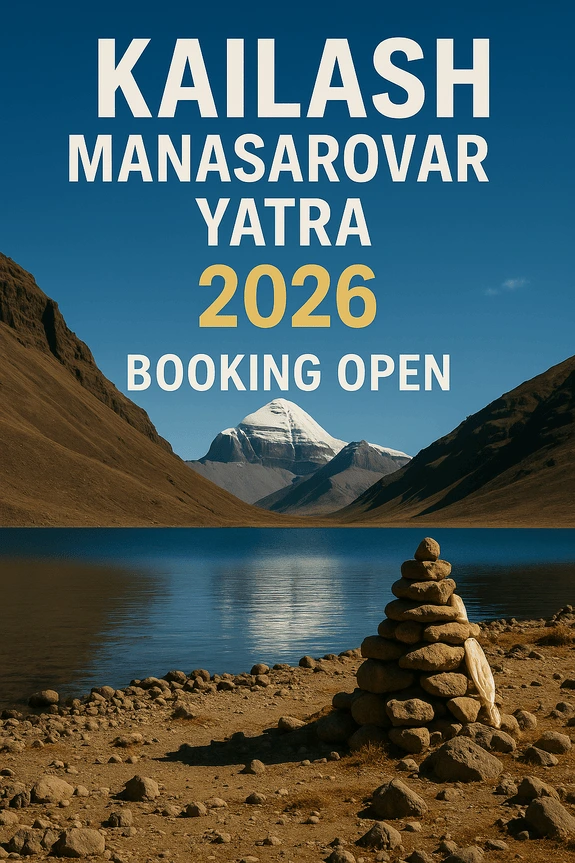
Kailash Manasarovar Yatra 2026-Bookings Now Open


20250519 1225 Kailash Yatra 2026 remix 01jvkm80hwf70r8z6r0qvkd68z 2


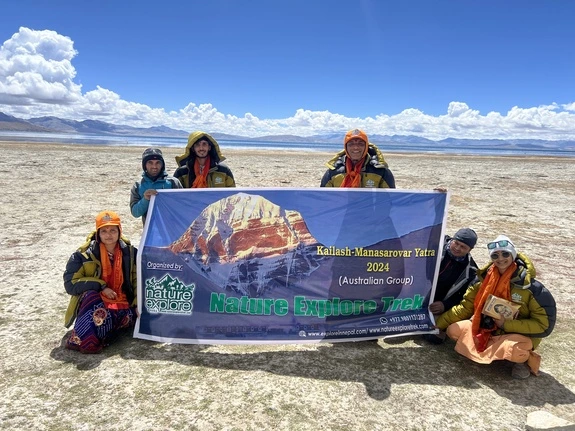
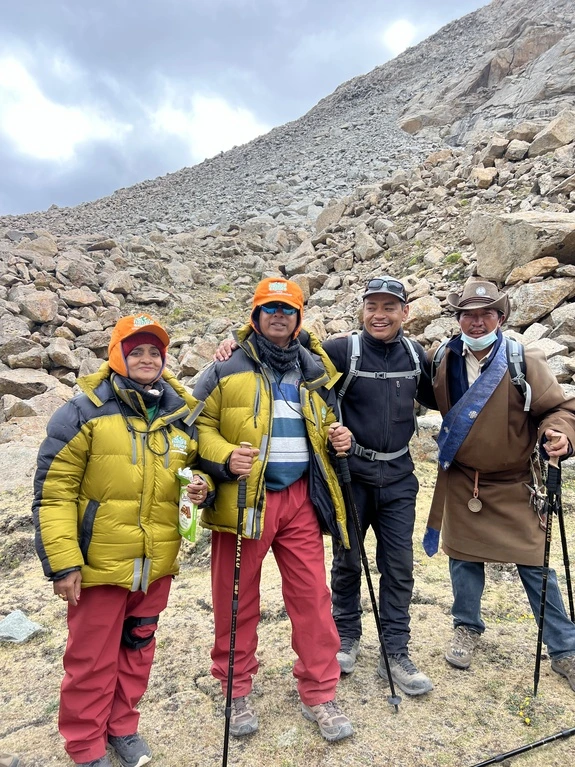
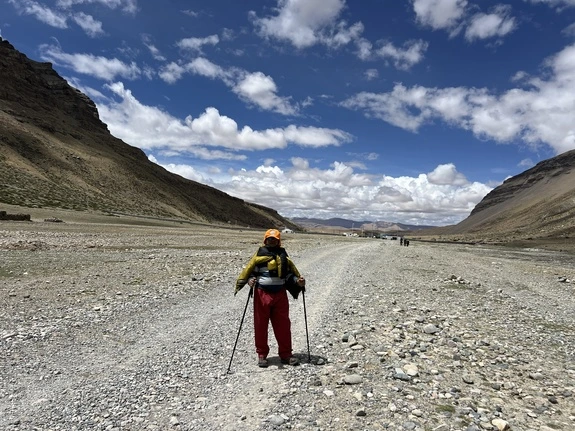
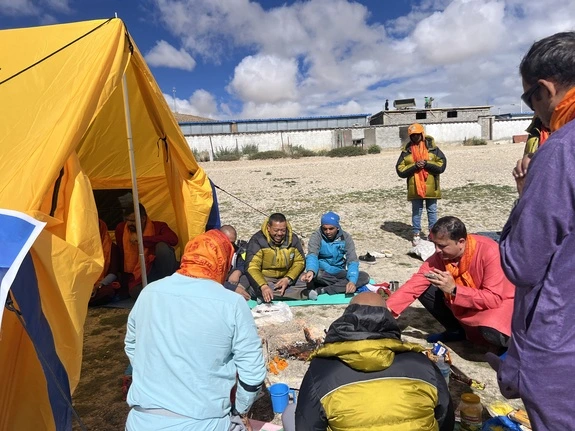
Kailash Manasarovar Yatra 2026 – Bookings Now Open. Embark on a sacred journey to the holy Mount Kailash and Lake Manasarovar in 2026. There are great joys in announcing that the bookings for Kailash Manasarovar Yatra 2026 are now officially open. This sacred journey has, over the years, left a very deep imprint on the lives of a large number of pilgrims. Due to our past yatris’ continued love and esteem and constant recommendations, most of the departures available for this year have already been booked out.

However, last-minute seats do still exist for some 2025 departures.Last-minute So, if you feel called to undertake this life-altering journey and the timing fits into your schedule, then we recommend that you make it the basis of your forthcoming departure:

  • 27 July 2025
  • 1 August 2025
  • 8 September 2025

These are the last chances to experience the Mount Kailash Yatra for the year 2025.

Why the Year 2026 Is Extra Special

Being a Year-of-Now-Horse in the Tibetan lunar calendar, 2026 is exceptionally auspicious. Tibetan Buddhists believe that any pilgrimage conducted in a Horse Year multiplies the spiritual merits by a factor of 100,000. It is said that Guru Rinpoche (Padmasambhava) himself did the sacred Kora (circumambulation) of Mount Kailash in a Horse Year, thus marking it as the most auspicious time for the journey.

Further, Saga Dawa and the season for the Yatra will collide in 2026. Saga Dawa is the most pious festival in Tibetan Buddhism, commemorating the birth, enlightenment, and parinirvana of Lord Buddha. It reaches its zenith on the full moon in May or June, during which time thousands of pilgrims…

Celebrating the birth, enlightenment, and parinirvana of Lord Buddha, Saga Dawa reaches its pinnacle from the full moon day in May to the full moon of June. From that time onward, thousands of pilgrims from all over the Himalayan world come to Mount Kailash to witness the Tarboch Flagpole Ceremony: the erection of a gigantic prayer flag pole on the bone-dry plains of Kailash charged with chanting, devotion, and an intensity of emotion; it is a moment of being described by many as truly life-transforming.

IMG 6316

Best Time to Travel

The Kailash Manasarovar Yatra is best undertaken during May to September when weather conditions in Western Tibet remain fairly pleasant and stable and are appropriate for high-altitude travel and trekking. May and June are quite special, characterized by clear skies, fresh mountain air, and the sacred Saga Dawa festival, creating a strongly spiritual and visually immaculate ambiance. July and August bring slight increases in temperature and occasional light showers. The monsoon does affect the Tibetan Plateau only mildly, so the journeys broadly remain smooth. These months also paint glamorous greenery with vibrant vistas.

September draws fewer travelers and gives one a more peaceful and reflective experience, especially for those who seek serene solitude and silent meditation. Out with this schedule, from October to April, helter-skelter winters sally forward, with temperatures frequently below -15°C, making not only the traveling but also the trekking quite a challenge and somewhat dangerous as snow could block the routes and would hinder accessibility.

Kerung Overland Route (15 Days)

Kerung Overland Route is liked by many traveler types favoring an adventurous road trip. Starting in Kathmandu, the route proceeds down to the border of Kerung and enters Tibet’s Gyirong Valley. Slow ascent is perfect for gradual acclimatization, and one will see stunning vistas stretching endlessly onward, tranquil Tibetan high-altitude plains, and aged Tibetan stupas on the way.

From Saga, the route takes you to the sacred Manasarovar Lake, and after that comes the major matter — the three-day Kailash Kora, the Grand circle around sacred Mount Kailash, which is physically challenging yet spiritually inspiring.

  • Approximate total length: 1,917 km (combined driving and trekking)
  • Terrain environment: mountain passes, glacier-fed rivers, and rocky valleys

Lhasa Fly In Route (18 Days)

Conjoined with the Tibetan culture and history, the Lhasa Route provides a deeper and more enriching experience. Commencing with a flight from Kathmandu to Lhasa, Tibet’s spiritual-political heart, you will have enough time to visit the great Potala Palace, Jokhang Temple, and Barkhor Street, all the while acclimatizing the altitude.

From Lhasa, overland stop at Gyantse and Shigatse and Saga before arriving at Lake Manasarovar and Mount Kailash. The last highlight is the sacred Kora trek, which guarantees spiritual renewal and scenic Himalayan vistas.From Lhasa overland stop at Gyantse and Shigatse and Saga arriving at Lake Manasarovar and Mount Kailash . The last highlight is the sacred kora trek which guarantees spiritual renewal and scenic Himalayan vistas.

Highlights: Tibetan architecture, cultural depth, and scenic overland adventure

IMG 6399

Mount Kailash Yatra Weather Overview (Tibet)

MonthDay TemperatureNight TemperatureWeather ConditionsNotes
May5°C – 12°C-5°C – -2°CMostly clear skies, dry & coolCrisp air, great views, Saga Dawa festival starts
June7°C – 14°C-3°C – 1°CSunny with light wind, occasional rainVery scenic, spiritual buzz from Saga Dawa
July8°C – 16°C0°C – 4°CSlightly warmer, chance of rainLush high-altitude summer, some cloud cover
August7°C – 15°C0°C – 3°CMild, with possible light showersGreen landscape, fewer crowds after early Aug
September4°C – 13°C-3°C – 1°CClearer skies, cooler tempsLess crowded, beautiful crisp weather

Tip: Weather is cold and dry at high altitudes. Nights can be freezing, especially at Dolma La Pass (5,630m). Layered clothing and warm sleeping gear are essential.

Departure Date for Kailash Manasarovar Yatra 2026

S.NKathmandu ArrivalVisa ApplyFinal DepartureRemarks
13rd May 20264th May 202617th May 2026Full Moon
218th May 202619th May 20261st June 2026
331st May 20261st June 202616th June 2026Full Moon
419th June 202620th June 20264th July 2026
529th June 202630th June 202614th July 2026
65th July 20266th July 202619th July 2026
728th July 202629th July 202611th August 2026Full Moon
83rd August 20264th August 202617th August 2026
926th August 202627th August 202610th September 2026Full Moon
1013th September 202614th September 202628th September 2026
1120th September 202621st September 20265th October 2026Full Moon

Note: This is a fixed departure group. However, if you have your own group, we can customize the dates according to your preference.

day 1

Outline Itinerary via Kerung , 2026

Day 01: Arrive in Kathmandu and Transport to your Hotel. (Alt.1300m)
Day 02: Visiting the famous Pashupatinath Temple followed by a Puja
Day 03: Visiting Narayanthan, Swayambhunath and Trip preparation
Day 04: Drive to Timure via Sybrubesi (130km) , 1800m, 7-8 hrs
Day 05: Crossing the border and drive to Kyirug village, 50km , 2,800m, 3-4 hrs.
Day 06: Drive to Saga (270km.), (alt.4400m), 4 – 5 Hours
Day 07: Drive from Saga to Lake Manasarovar, (alt. 4485m), (500km, 7-8 hrs).
Day 08: Morning puja at Manasarovar and afternoon drive to Darchen. 35 km, 4,664m, 2-3 hrs.
Day 09: First day of Parikrama , 20 km, 4700m, 6-7hrs
Day 10: Exploring the North Side of Mt. Kailash Inner Kora.
Day 11: Trek over Dolma La via Zutulpuk, 22km 5,630m( Dolma La Pass), 9-10 hrs
Day 12: Trek from Zutulpuk to Darchen to Saga and concluding the Parikrama. 30 km, 4,600m, 7-8 hrs
Day 13: Drive back to Kathmandu through Saga and Kyirong, 630 km, 1,300m, 8-9 hrs
Day 14: Reserve day, 1300m
Day 15: Farewell’s departure to your own destination.

Outline Itinerary via Lhasa for 2026

Day 01: Arrive in Kathmandu and Transport to your Hotel. (Alt.1300m)
Day 02: Visiting the famous Pashupatinath Temple followed by a Puja
Day 03: Visit the Famous temple in Kathmandu
Day 04: Trip preparation day
Day 05: Fly to Lhasa. (alt.3650m) 2-hour flight from Kathmandu to Lhasa.
Day 06: Exploration Lhasa (Alt 3650m.)
Day 07: Drive from Lhasa to Xigatse (370km, approx. 7-8 hours)
Day 08: Drive to Saga (460km.) 6-7 Hours
Day 09: Drive from Saga to Lake Manasarovar (500km, 7-8hrs).
Day 10: Puja and Drive to Darchen (4664 m.) 40km
Day 11: Drive from Darchen to Yamadawar (5km) and Trek to Dirapuk (14km), 5- 6 hours.
Day 12: Exploring the North Side of Mt.Kailash Inner Kora
Day 13: Dirapuk to ZhutulPuk over Dolma-La Pass (Alt 5630 m) Total 22km, generally 11-12 hours
Day 14: Drive From Zhutulpuk to Darchen and Drive back to Saga (10 to 11 hrs)
Day 15: Drive to Xigatse (520km) 6-7 Hours
Day 16: Drive back to Lhasa, 300 km 5 -6 hrs.
Day 17: Fly to Kathmandu from Lhasa (2 hours)
Day 18: Departure to your own destination

IMG 6270

Packing List for Mount Kailash Yatra 2026

Clothing (Layered for All Weather Conditions)

  • Lightweight down (feather) jacket
  • Windbreaker jacket (with hood, rain/wind protection)
  • Thermal innerwear (top & bottom – 3–4 sets, light microfiber preferred)
  • Woolen/thermal long underwear (especially for Parikrama)
  • Fleece or warm hoodie tops
  • Long sleeve shirts or tops
  • T-shirts or polo shirts (lightweight, quick-dry)
  • Track pants / trekking pants / slacks (2–3 pairs)
  • Jeans or ski-type pants (optional)
  • Woolen socks (4–6 pairs)
  • Undergarments (easy-dry, washable – 4–5 pairs)
  • Warm cotton gloves + waterproof outer gloves
  • Sun hat / beanie / warm cap
  • Neck scarf or muffler
  • Raincoat or poncho (lightweight and foldable)
  • Casual nightwear
  • Salwar kameez or modest attire for ladies (especially for Parikrama)
  • Comfortable slippers or casual shoes for lodge use
  • Walking/trekking shoes (well broken-in, comfortable, lightweight)
  • Optional: Walking stick/trekking pole (telescopic, spiked tip recommended)

Travel & Trekking Gear

  • Lockable lightweight suitcase
  • Duffle bag (provided by organizers in Nepal)
  • Lightweight waterproof backpack (with multiple compartments)
  • Inner luggage organizer or satchel
  • Water bottles (2x aluminum or BPA-free, 1–2 L
  • Thermos flask (for hot water or tea)
  • LED mini torch or headlamp (with spare batteries)
  • Folding umbrella (optional)
  • Microfiber towel (quick-dry)
  • Zip bags (for organizing clothes, snacks, toiletries, etc.)
  • Sleeping bag (lightweight, zip-style).
  • Pillow cover and personal bedsheet (for remote lodges)

Health & First Aid

  • Personal prescription medication (carry enough for the whole trip)
  • General first aid kit (band-aids, antiseptic, etc.)
  • Painkillers (Paracetamol, Tylenol, etc.)
  • Cough drops, cold/flu tablets
  • Lozenges
  • Vicks or inhalant rub
  • Lip balm
  • Eye drops
  • Motion sickness tablets (e.g., Diamox for altitude)
  • Diarrhea tablets
  • Blister care cream
  • Antiseptic ointment
  • Muscle pain balm (e.g., Deep Heat)
  • Multi-vitamins
  • Sunscreen (high SPF)
  • Mosquito repellent spray
  • Hand sanitizer
  • Wet wipes and tissues

Personal Hygiene (Travel Size Recommended)

  • Toothbrush & toothpaste
  • Shampoo & soap
  • Deodorant
  • Face wash
  • Comb or hairbrush
  • Small mirror (optional)
  • Feminine hygiene products (as needed)
  • Shaving kit (if required)
  • Electronics & Power
  • Mobile phone
  • Camera/video (lightweight)
  • Extra memory card & batteries
  • Power bank (portable charger)
  • Multi-socket power strip with USB ports
  • Charging cables
  • Universal plug adapter (Nepal/China compatible)
  • China SIM card (can be bought in Nepal) or global roaming SIM (e.g., Vodafone Intl.)
  • Binoculars (optional)

Snacks & Travel Fuel

  • Energy bars & protein snacks
  • Assorted nuts (in small zip pouches)
  • Chocolates, dry fruits, candies
  • Powdered juice mix or electrolyte sachets
  • Biscuits or Indian snacks (Haldiram-type)

Spiritual & Miscellaneous Items

  • Small offering items for Pooja at Lake Manasarovar
  • Travel-size prayer items or idols (optional)
  • Notebook & pen
  • Favorite book for reading
  • Waterproof plastic wallet or pouch (for passport & permits)
  • Small padlocks (x2 for duffel and suitcase)
  • Quick Checklist Summary
  • Clothing for layering (thermal, waterproof, warm)
  • Trekking shoes & walking gear
  • Personal hygiene & toiletries
  • First aid & altitude medication
  • Snacks & hot drinks setup
  • Electronics & power supplies
  • Travel documents & money pouch
  • Sleeping gear & weather protection

Note: This is just a brief packing checklist to help you review your own list. You don’t need to bring everything mentioned, and many items can ba shared by others.

Final Say

There comes a moment in life when your heart whispers that it’s time for something greater something beyond the ordinary. For many, that moment leads to one of the most sacred journeys on Earth: the Kailash Manasarovar Yatra.

It is not just a physical trek but a spiritual awakening: a meeting of a lifetime with one’s innermost self, a sensing of the divine energy of Mount Kailash, and an embrace of the serene grace of Lake Manasarovar.

Many put this yatra on their bucket list and think, “Someday I will go.” Why wait?
If not now, when?

2026 being a very auspicious year, it is just the right time to respond to that inner call. We are offering Full Moon departure dates, known to maximize the spiritual benefits of the yatra. Group departures can be customized as well if preferred.

Since 2015, Nature Explore Treks has been escorting the pilgrims along this sacred path with careful, heartfelt, and professional consideration. Getting on towards almost a decade of experience, we have now been able to assist thousands in accomplishing this awe-inspiring journey with success. The knowledge and expert guidance provided by our team really encapsulate the meaning of the yatra not just physically but spiritually as well.

Each year, we feel honored and humbled to be part of this journey, for we are more than your mere guides to Kailash we become fellow seekers who walk beside you. Guiding all pilgrims on this yatra is a blessing and we regard it that way.

If you’re still unsure, we invite you to:

Watch our YouTube videos to see real journeys and real experiences.

Read our reviews on TripAdvisor and hear directly from the people who have walked this path with us.

Join us for the Kailash Manasarovar Yatra 2026, and take the step your soul has been waiting for.
The mountains are calling. The sacred lake is waiting. Let’s walk this path together.

Is October the Best Time to Hike in Nepal I Here’s What You Need to Know

Introduction

Is October the Best Time to Hike in Nepal ? Nepal has become a world-class trekking destination, as it is located in the heart of the Himalayas and attracts trekkers from around the world. Trekkers can find stunning views around every corner because of its diverse topography and dramatic landscapes that range from snow-capped peaks to lush valleys and pristine lakes. Trekkers can choose from popular trekking routes, such as the Everest Base Camp trek, the Annapurna Circuit trek, and the Langtang Valley trek. These walking paths offer hikers an exciting adventure as well as a window into the rich native culture. Interactions with locals and experiencing their traditions are still the highlights of the trek.
When planning to trek in Nepal, it is important to select the appropriate time for you to undertake this Himalayan adventure. Nepal has a complex climate that keeps changing monthly, requiring trekkers to understand what to expect each month. The trails get muddy and the view of the Mountain gets obstructed during the trek in monsoon seasons. While trekking in winter at high elevations has cold weather that can hinder your trekking experiences, high-altitude trails may become inaccessible due to snow and high winds. Selecting the right time of year to trek in Nepal is important to ensure safety and comfort.

Is October the Best Time to Hike in Nepal
With William Autumn’s yogi group, return to Pokhara after ending the ABC trek .


Trekking in October in Nepal is the best time for a good reason. October is in the middle of Nepal’s autumn season and is considered a prime time for trekking. The weather is stable, with day temperatures ranging from 15 to 20°C, making it a great time for both high-altitude and lower-elevation treks. The monsoon has ended, leaving clear skies and great visibility, ideal for mountain views and photographs. Trails are bustling with excellent festivals like Dashain and Tihar, perfect for trekkers interested in immersing themselves in Nepal’s vibrant cultural celebrations.
October is the optimal time to trek in Nepal and the reasons extend far beyond the blue skies and comfortable temperatures. Besides those advantages, trekkers benefit from longer daytime and a low risk of altitude sickness while accomplishing their treks in comfort, capturing all the wonders of nature and culture that Nepal has to offer. Whether you are a seasoned mountaineer or a first-time visitor to Nepal, hiking in Nepal in October promises not just stunning scenery but intimacy with the land and its people.

Weather in October: Clear Skies and Perfect Temperatures

October in Nepal is the beginning of the post-monsoon clean state, which makes the country a trekker’s dream. After months of oppressive summertime rains, the air is fresh and clean and the dust and pollution are washed away, revealing Nepal’s natural beauty in the least sense. The hillsides are lush green with wildflowers blooming everywhere on the trails, and the rivers are running clear and full. This renewal of the environment makes you feel like you are also reflecting a new vitality and freshness by being in the region.
October also has the perfect temperature for trekking. In the daytime, trekkers will experience pleasantly mild temperatures, typically between 15°C and 20°C for popular areas such as the Annapurna and Everest regions. At higher elevations, it will be slightly cooler than in the valleys, but trekking is generally comfortable in frequently chilly weather. At nighttime, you may experience temperatures below freezing. However, in any teahouse or tent, a decent sleeping bag and a few warm clothes will provide a comfortable night’s sleep.

Is October the Best Time to Hike in Nepal

Another good thing about October weather in Nepal is the visibility. The monsoon clouds are gone and the skies are clear, offering stunning views of the snowy mountains. Trekkers can expect views of the high peaks and snow-covered ridges during the day, from sunrise to sunset. This is the time of year when trekkers can see huge peaks such as Everest, Annapurna, and Machapuchare, and many more along the southern slopes of the Himalayan range. Also, this is an excellent time of year for photographers and those who appreciate the beauty of nature. When the air is cool and the golden sunshine of autumn is falling onto the mountain landscapes, photographs are great.

Trail Conditions and Scenery

October provides the best trail conditions of the year for trekking in Nepal. The trails have dried out, leaving firm, stable hiking paths instead of the slippery, muddy, and difficult sections revelatory of trekking during the rains. Trekkers will find obvious, hiked-in trails whether they are trekking the rocky ascents of the Annapurna Circuit or the twists and turns of the Everest Base Camp trek. Dry trail conditions improve safety and enable you to cover more distance each day in relative comfort.

Is October the Best Time to Hike in Nepal
Pikey peak trek

The scenery in October is gorgeous. The hillsides and valleys are painted golden with rice ripening in the fields for harvesting, creating a pattern of color against the dark green forests. The rhododendron and oak trees remain vibrant with birdsongs and wildlife noise. Above the tree line, it is remarkable to see just how dramatically different the golden fields below are from the freshly snowcapped peaks of the Himalayas. The landscape feels almost magical. Each bend in the trail yields another grand view, from terraced farms to stunning mountains.
On top of this, the rivers and waterfalls were still flowing strong after the recent monsoon runoff. The streams and waterfalls along the trail are at their most spectacular, glimmering in the autumn sun. The flowing streams provided not only additional beauty but also places of respite along the trail with their sounds and refreshing spots to rest. The dry trails, vivid views, and water led to a full and rich hiking experience in Nepal in October.

Best Treks to Do in October

Everest Base Camp Trek

The Everest Base Camp trek has the best weather of the year in October. After the monsoon season ends, the weather clears up, which allows hikers to enjoy sunny days with little precipitation. Daytime temperatures in the lower Everest region typically range from 12°C to 16°C, while nights can be cold, dropping to about -10°C at higher altitudes near Base Camp. In addition to reliable trekking sections, trekkers will enjoy fantastic visibility with stunning views of Everest, Lhotse, Nuptse, and Ama Dablam against bright blue skies along the way.

On the way to EBC

October is the prime trekking season for the EBC route, meaning that the trails are alive but still quite manageable. After the freshness of the post-monsoon season, the vegetation along the path is vibrant too, and cool and breezy winds are refreshing. Being the busy season, teahouses and flights to Lukla can fill up quickly, so early planning is important. With mild daytime temperature ranges, clear skies, and views of some of the world’s tallest mountainous regions, October offers keen trekkers the best trekking experience at Everest Base Camp.

Annapurna Circuit Trek

The Annapurna Circuit is one of Nepal’s most popular trekking routes to experience in October. The trails are dry and firm, with diverse landscapes between the subtropical forests and high alpine environments covering the trek. October daytime temperatures are pleasantly mild at lower elevations, with an average temperature range of 15°C to 20°C, while night temperatures can become cool but manageable with the right gear. Additionally, October is a fantastic month for unhindered views of Machapuchare and the Annapurna Range.

Annapurna Circuit Trek in december and Januwary
Congratulation Nature Explore Trek team for successfully reach on the top of the Thorong la pass

The trek offers all the great colors of autumn, especially the gold and green shades of the rice areas and forests, contrasting against the snowcapped Himalayan backdrops. Also, rivers and waterfalls will still be active with the larger flows of the monsoon runoff creating beautiful backdrops on the trek. All the excellent weather, stunning scenery, great people, and well-maintained paths all contribute to why October is an ideal time to trek the Annapurna Circuit.

 Langtang Valley Trek

October is a fantastic time to hike in the Langtang Valley. The lower valley is usually around 15° to 18° C during the day, but the temperature decreases as you trek higher. At higher elevations, it can be cold at night, but not too cold to interfere with sleep and acclimatization. The beauty associated with post-monsoon clarity cannot be overstated. It will provide spectacular views of Langtang Lirung and the surrounding peaks, which could be frequently obscured during other seasons.

IMG 2252
October in the Langtang Valley will also be especially colorful, with golden fields, blooming rhododendrons, and green forest layers supplying a rich assortment of colors. Waterfalls and rivers flow strongly from the previous monsoon activity, contributing to the overall beauty of the trek. A combination of weather conditions, trail conditions, and beauty will make October one of the best months to hike in the Langtang Valley.

 Manaslu Circuit Trek

The Manaslu Circuit trek is not only remote but also culturally rich. Completing the trek during October allows for dry, stable trails, as well as the clearest skies, giving trekkers some of the best mountain views in all of Nepal. The daytime trek temperatures at lower elevations typically range between 12° C and 18° C, but nighttime is cold at higher altitudes. October’s good weather assures reduced incidents of landslides and trail damage that often occur during the main monsoon months in the Manaslu Circuit Trek.

short-manaslu-circuit-trek-10-days/
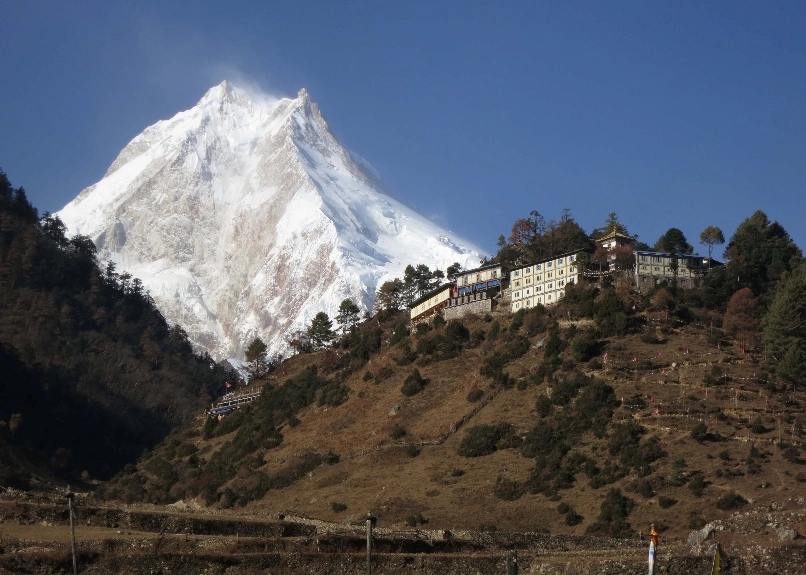
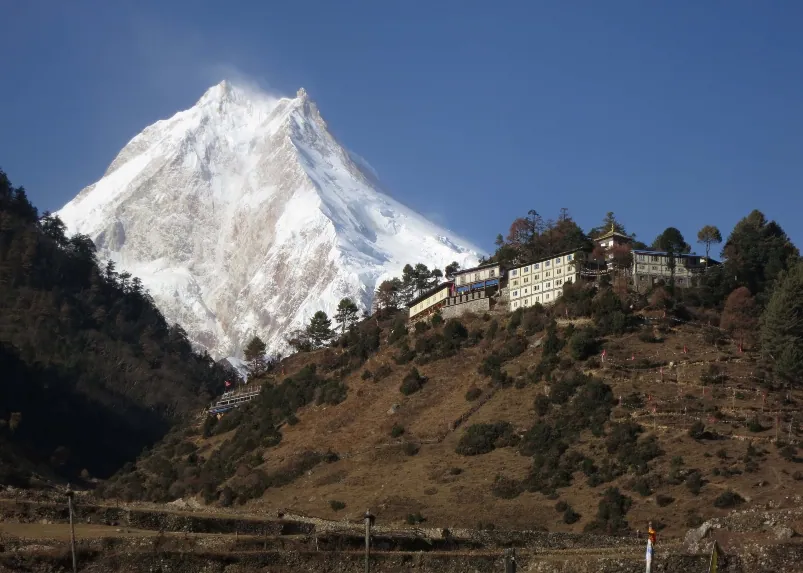
Mt. Manaslu view from Lho gaun

When the skies are clear, it is also easier to admire the colossal peaks of Manaslu. Trails of Manaslu have a rich landscape with golden terraced fields, thick forests, and flowing rivers from the recent monsoon runoff. Additionally, October provides a good opportunity to enjoy the Tibetan-influenced culture of Manaslu without the crowds. If you are looking for an amazing Himalayan trek with fewer crowds, October offers you all the sights and experiences you are looking for with the Manaslu Circuit trek in Nepal.

Festivals That Add to the Experience

Trekking in Nepal during October is a distinctive experience, with vibrant cultural festivals. Dashain, also known as Bijaya Dashami, is a 15-day Hindu festival that celebrates the victory of good over evil and occurs from late September to mid-October. During Dashain, families gather together and receive tika, jamara, and blessings from elders. So, the month has a lively atmosphere that spills into towns and villages along trekking trails where trekkers can observe amazing traditional ceremonies, kite flying, and bustling markets swarming with local food, crafts, and products.
After Dashain, Tihar is another festival that takes place in late October to early November, often coinciding with peak trekking season. Homes and streets are lit up with oil lamps and decorated in colorful styles during the Tihar festival. Along popular trekking routes, western trekkers will see locals decorating their homes and celebrating with joy and abundance.

holi in kathmandu

Trekking in October offers an open invitation for trekkers to join in and engage with a variety of ethnic communities in their cultural celebrations. Festivals like Tihar and Dashain give trekkers chances for rare encounters with cultures and deepen learning about Nepal, culture, and hospitality. Enjoying Dashain and Tihar while trekking not only enhances the experience but leaves trekkers with inevitable memories of Nepal’s cultural vibrance.

Pros and Cons of Trekking in October
Pros

 October boasts the best weather with clear skies, pleasant temperatures, and little or no precipitation.
 After the monsoon rains, everything is fresh, dry, and stable – making excellent hiking conditions.
 Trekkers can experience spectacular mountain views and beautiful fall foliage on the way.
 Many rich cultural festivals occur at this time of year including Dashain and Tihar, which enhance the trekking experience.
 The peak month creates a vibrant atmosphere when hiking with fellow trekkers and staying at well-established hotels and teahouses.
Cons
 High traffic levels on popular trekking routes.
 The cost of accommodations and flights tends to increase during popular tourist times.
 You need to book teahouses, flights, and trekking permits well in advance to reserve your place.
 Increased flow creates a feeling of being less isolated, which may detract from some trekkers’ preferences for solidarity.
 Increased flow in busy, narrow areas of the trail will ultimately create occasional delays for trekker groups.

Tips for a Successful October Trek

Secure your flights, teahouses, and guides as soon as possible, since October is peak trekking season with probably higher demand than usual.
 Layer your clothing for warm, sunny days and cold nights including a warm jacket, hat, gloves, moisture-wicking base layers, etc.
 Waterproof trekking boots and comfortable socks are important to keep your feet dry and protected during varied weather conditions.
 Hydration is important throughout the trek for acclimatization, energy level, and general health.
 Take your time on acclimatization with rest days and slowly ascending at higher altitudes when possible to prevent altitude sickness.
 Bring trekking elements like a sleeping bag, rain cover, sleeping mat, trekking poles, sunscreen, lip balm, and headlamps to stay safe throughout the trek.
 Physical training including cardio and strength exercise is important before the trek to build stamina and endurance for long days of hiking.
 Hike early each day to avoid windy afternoons and unpredictable weather that may arise in the October trek.

Conclusion

October is a golden window for trekking in Nepal, providing a unique balance of favorable weather, lively culture, and beautiful scenery. The freshness of the post-monsoon clears the way for crystal clear skies and often unobstructed views of the world’s highest peaks, an opportunity few other months can give you. Daytime temperatures tend to be comfortably mild with cool breezy nights that help with good sleep, making the month suitable for all levels of trekkers. The balance of weather and beautiful scenery leads to October being the busiest month of trekking in Nepal.

October provides a perfect time for trekking in Nepal and coincides with major festivals such as Dashain and Tihar. Trekkers walking along the designated trails will have chances to experience the local traditions, see the decorations, and meet the locals who are fully embroiled in the festival festivities. The cultural experience mixes well with trekkers exploring the local culture and traditions on their travels to meet and greet with the Kathmandu lifestyle. Because October is the peak month, sharing your experience with fellow trekkers is highly likely because trekkers from all around the world will be there, often fostering an encouraging and supportive trekking environment in Nepal.

Lastly, as the main trekking season, the popularity of October can present some challenges. Popular trekking routes and teahouses will be busier, the price for hotels and flights may be higher, and you have to plan early to secure the best accommodation. However, the benefits of hiking in October: are unbeatable weather, amazing views, and rich cultural aspects of the experience. If you are planning to trek in the Himalayas, October is still the best time to trek in Nepal which provides you with an unforgettable experience in one of the most beautiful parts of the world.


Annapurna Circuit Trek in September I What to Expect


Introduction

The Annapurna Circuit Trek in September  is recognized as one of the best trekking routes in Nepal, consisting of great scenery, cultural variety, and challenges. The total length of the trek is about 160 to 230km and the length varies depending on where the trek starts and finishes. The Annapurna Circuit goes around the Annapurna Massif and crosses subtropical forests, terraced farmland, and dry high mountain terrain. The Annapurna Circuit trek offers trekkers to experience varied Hindu and Buddhist villages, waterfalls, and views of mountains, including Annapurna, Dhaulagiri, Machhapuchhre, and Manaslu.

Annapurna circuit trek in september
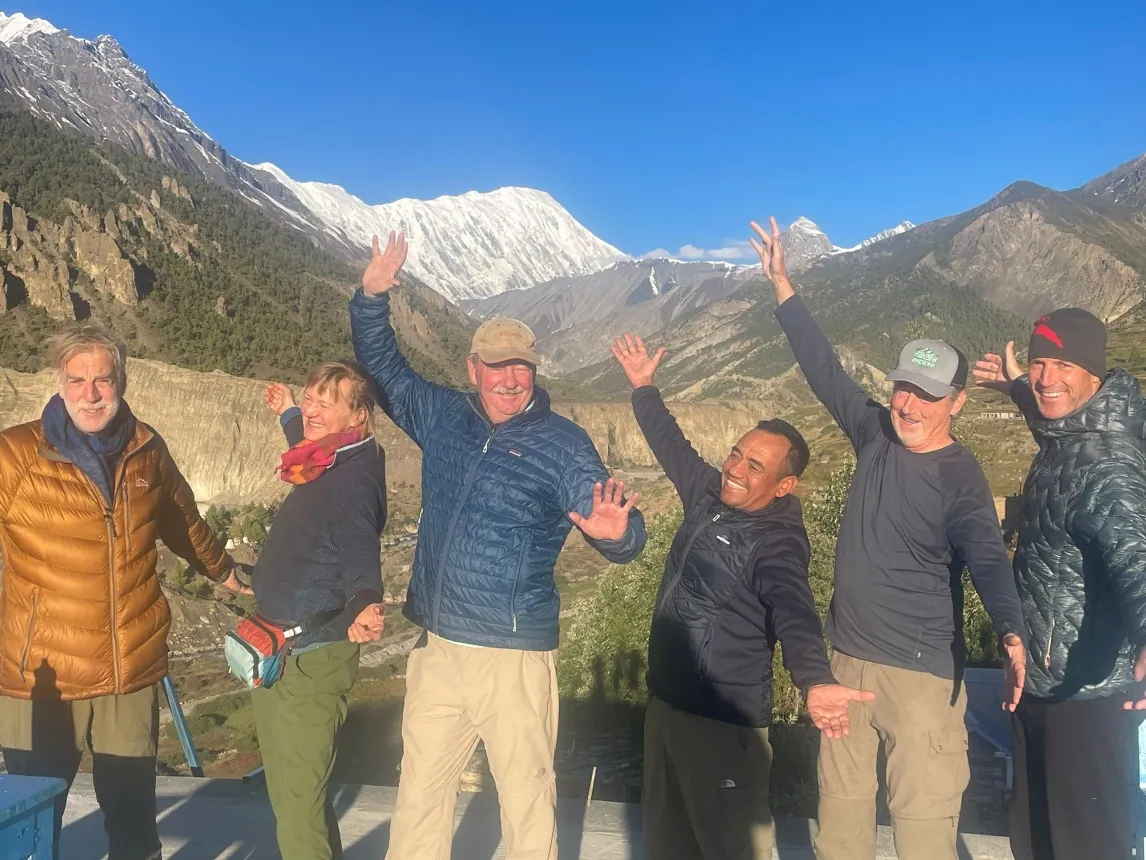
Group of Trekkers from Montana , USA having a wonderful time at Manang village during the month of september,2024

The Annapurna Circuit Trek is best to start in September because the monsoon rains will have passed and autumn trekking has begun on the Annapurna Circuit. At the beginning of the month, you are more likely to experience some rain, especially at lower elevations, because the weather will still be trying to clear after monsoon season. The rains will bring life to the lush landscape, terraced fields, and forests, creating a great freshness for trekkers to experience.

As the month progresses, the weather becomes more settled with clear skies, particularly during the second half of the month, which allows trekkers to appreciate the beauty of the snow-capped Himalayas and the valleys below. During September, the daytime temperatures at lower altitudes are usually between 15°C and 22°C, but cooler at higher altitudes, between -4°C and 5°C. Nighttime is cold, especially at altitude, but generally isn’t as severe as a trekker would expect in the winter months. The mild temperatures and decrease in humidity offer an easier time during long days of trekking, but trekkers should always be aware of changing conditions, particularly in the mountains.

Similarly to the crowds of peak October, crowds are less of an issue in September. The natural environment is in all of its glory and the clarity post-monsoon provides arguably the best views of the year in the mountains. September provides solitude for the early trekkers, but they will most likely mix in with some people toward the end of the month. Mountains and weather change quickly, and it is important to stay flexible at higher altitudes.

Weather in September during the Annapurna Circuit trek.

September is a transitional month on the Annapurna Circuit, where the weather shifts from the end of the monsoon to the clear and stable weather of autumn. Early September still bears the residual rain from the monsoon, especially at lower elevations. Trekkers can expect occasional rain, cloudiness, and high humidity, which may make a wet and slippery path. Since the conditions are damp, the surroundings are lush and green with a flowing waterfall and rice terraces in vivid green bloom. Trekkers will encounter fewer people on the trails and the trail is noticeably quieter overall.

Annapurna Circuit Trek in September
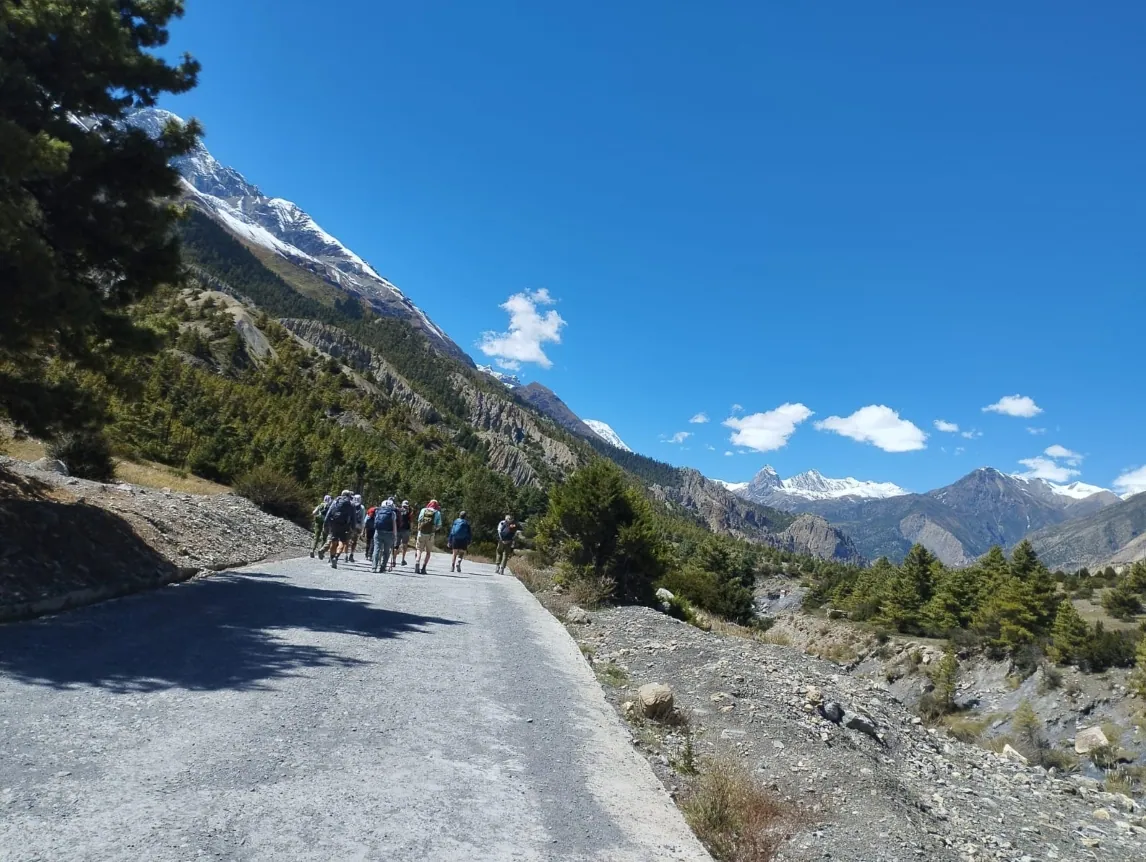
Clear skies during the month of september , along the way to Manang from Chame

As the month progresses, the rainfall will decline, and the weather will begin to improve with more consistent dry days. By mid- to late September, trekkers will see progressively less rain and thoroughly clearing skies. The change in weather provides crisp, clean air and beautiful views of the Annapurna region’s famous snow-capped mountains. As the rain subsides, river crossings will usually become less challenging and the trails will dry, making more pleasurable trekking conditions. The transition from wet to dry can be quite stark as the scenery shifts from mysterious and misty to bright and panoramic within a few days.

The temperature in September can vary widely depending on altitude. At lower elevations at 2,500 meters, the daytime temperatures may range from 15°C to 22°C; nights will get cooler to approximately 10°C. When trekkers reach a mid-altitude of 2,500 to 4,000 meters, daytime temperatures will drop between 8°C and 12°C and nighttime temperatures could be as low as 2°C to 6°C. The air gets cooler and drier as the trekker moves up in altitude—noticeably cooler in the morning or evening, requiring layering to stay comfortable.

At the trek’s highest elevations, like Thorong La Pass (5,416 meters), the weather can be considerably cooler and more erratic. The daytime temperatures at these altitudes may range between -4°C and 5°C, with nights usually dropping below freezing. The days of Late September will be generally clear and pleasant but trekkers will still have to consider changing weather, including winds and early-season snowfall at the higher elevations. Therefore, having the right equipment, such as insulated clothing and a warm sleeping bag, is essential to a safe and enjoyable trek around the Annapurna Circuit in September.

Trail Conditions

September on the Annapurna Circuit provides the greater experience of natural beauty shaped by the rains from the monsoon season. The landscape is green and lush during this month. Terraced fields, forests, and meadows are full of life. The plants are at their peak, with wildflowers lining the trail, adding bright colors to the greenery. The significant amount of vegetation makes a refreshing and beautiful setting for trekking that is an extreme contrast to the dusty and dry conditions later in autumn.

Early September still has traces of monsoon rain, which will affect the trail conditions. In particular, many trails can be muddy and slippery, especially in the lower  and mid-altitude areas where the rain has more time to saturate the ground. Despite that, trekkers should get ready for muddy and slippery trails that will require good trekking shoes. Also, trekkers need to use poles to balance their bodies while walking on slippery and uneven surfaces. The mud on the trail creates a challenging trek, but they will also create vigorous vegetative growth and healthy water sources along the route.

Annapurna Circuit Trek in September
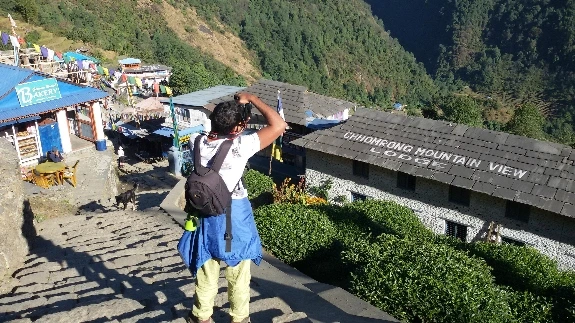
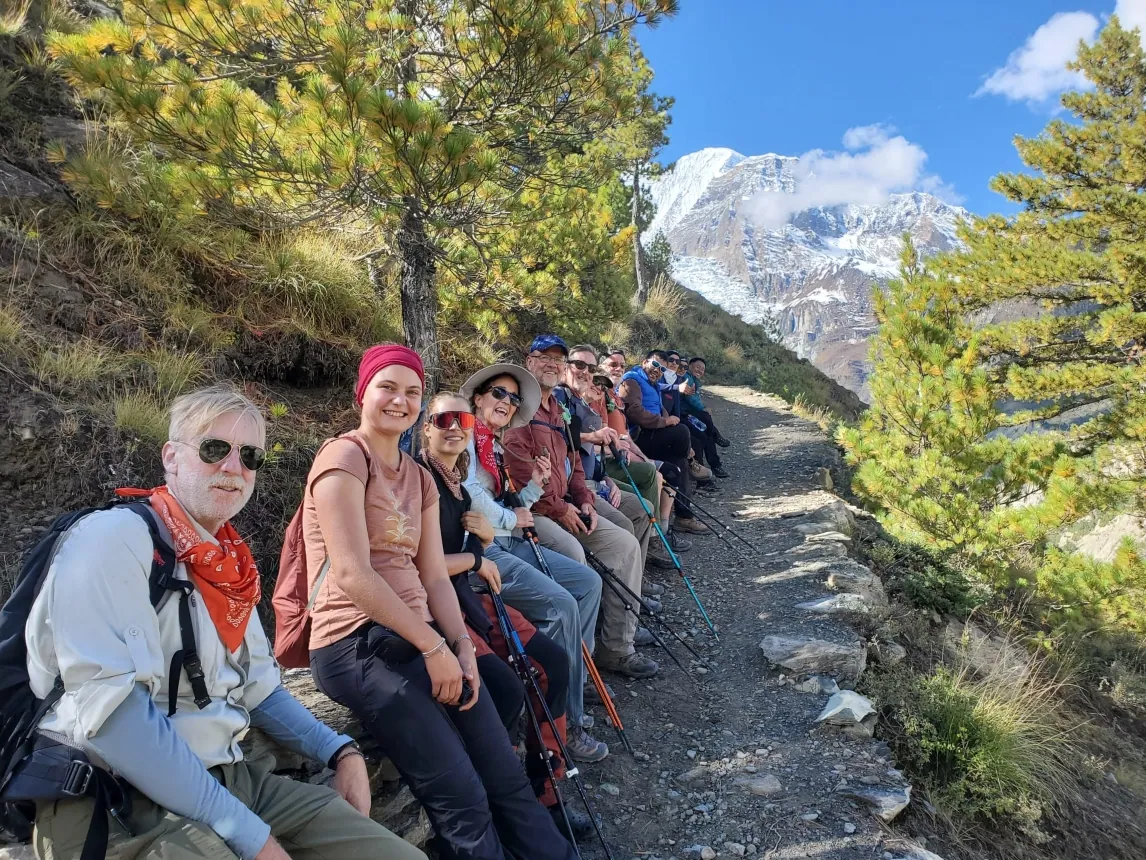
Trekkers heading  up to Chhongkhor viewpoint on the rest day of an annapurna circut trek.

Of all the experiences of trekking in September, one of the most notable is the volume of water flowing in rivers and streams. Rivers are swelled by monsoon rains, while waterfalls are full providing stunning views throughout the trails of the circuit. Crossing a river can be exhilarating for the trekkers, especially earlier in the month when the water levels and flows are higher. Generally, bridges on the circuit are well-made and maintained, but trekkers have to be aware of these conditions. It is always advisable to avoid a crossing if it’s raining or has rained recently.

As the month progresses, the trail conditions improve significantly. The drying weather reduces mud and slippery conditions, which facilitates travel and reduces danger along the way. Similarly, as the rivers and waterfalls lose their heights, they remain beautiful and lively. September is a time of abundance, and it is exemplified by the combination of vibrant landscapes, blooming flora, and flowing water features. These conditions make the trek memorable and engaging by adding vibrancy to the surroundings.

Pros of Trekking in September

  • As the monsoon rains have finished, the landscape is vibrant and lush with beautiful natural scenery.
  • Wildflowers line the trail, adding bright colors to the green grass, making for picturesque views of nature.
  • The amazing views can be enjoyed away from the crowds often found during the busy October peak season, making this trek truly enjoyable.
  • Accommodation and meal prices tend to be cheaper at the beginning of the month, giving a more budget-friendly trek.
  • When trekking at the end of the month is fresh and clean air, enhancing mountain views and photography opportunities.
  • The trails are quiet and relatively unbroken from the dry season dust clouds.

Cons of Trekking in September

  • The likelihood of wet rain, particularly during early September, can make trails muddy and slippery.
  • The temperate and tropical forest of lower altitudes has leeches due to the moist environment left after the monsoon.
  • Rivers will be swollen, creating difficult and riskier stream crossings.
  • Transport may be delayed due to unpredictable weather effects up to several days after the rains have ceased.
  • Some teahouses and lodges may be closed and under service during the early part of the month.
  • The weather will be unpredictable, with some quickly changing situations requiring trekkers to be prepared for rain and cold on all treks at this time of the year.

Tips for a Successful Trek

  • September is a great time to hike the Annapurna Circuit, particularly in mid- to late September after the monsoon rains have cleared, leaving clear skies.
  • If you are traveling early in September, pack some important rain gear, including waterproof jackets, pants, and a rain cover for your backpack in case of sudden rain showers.
  • Leeches are common in the moist forests of lower altitudes, so it is a good idea to pack some leech socks or repellent to keep them away.
  • Hire a local guide who knows the trails well and is used to working under wet and slippery trail conditions. This will not only keep you safer, it will also enhance your overall trekking experience.
  • Having layered clothing will also be important, as you will experience a range of temperatures throughout the day, including warmer days with colder nights, especially at higher altitudes.
  • Bring cash on the trek because many teahouses along the trail do not accept credit cards.
  • Make sure to have enough time for acclimatization to prevent altitude sickness.
  • Sturdy waterproof trekking boots with good grip and soles are recommended for handling muddy and slippery pathways early in September.
  • Stay hydrated and fuel yourself with balanced meals to help maintain energy levels during your trek.

Permit and Booking Info

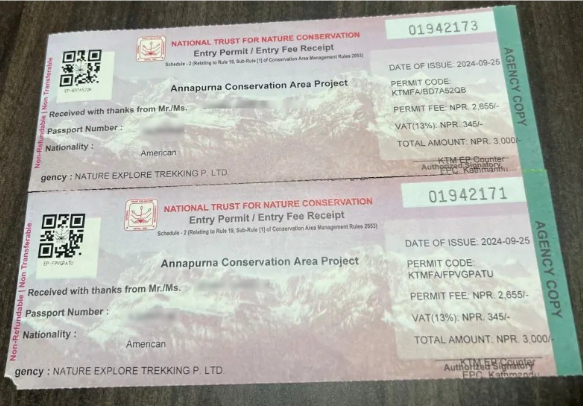
The Annapurna Circuit trek requires an Annapurna Conservation Area Permit (ACAP) and the Trekkers’ Information Management System (TIMS) card. This permission fosters local community development, sustainable tourism, and conservation. The TIMS card is a safety and management tool created by the Nepal Tourism Board and Trekking Agencies Association of Nepal to manage trekkers and help rescue them in emergencies. These two permits are compulsory for all foreign trekkers and you can obtain them in Kathmandu or Pokhara along with identification and passport-sized stickers.
For non-SAARC nationals, the ACAP permit costs about USD 25, whereas for SAARC nationals, it costs about NPR 1,000. For single hikers, the TIMS card costs around USD 18; for group hikers, it costs around USD 9. You should carry these permits in person throughout the trip as checkpoints will regularly check your permits along the trek. In case of not being able to present the permits, results in fines or not being able to continue into the park.
When it comes to accommodation, trekkers may reserve teahouses ahead of the trek. Early September is less busy so you should have no problem getting a room in the teahouses. However, as the trekking season gears up heading into September, the teahouses get busier. To guarantee a room, it is therefore advised to make reservations in advance. Booking ahead can also allow trekkers to more effectively gauge their daily distance with proper sleep after a long day on the trail.

Annapurna Circuit Trek in September
Annapurna conservation trek permits

For independent trekkers, arranging permits is an important part of the planning process, while for trekkers with a guide, the permits can be arranged by their agencies. However, it is a good idea to keep copies of the two permits ACAP and TIMS as these permits are checked several times along the trek. Understanding permit requirements and accommodation options helps to facilitate a smooth, legal, and safe Annapurna Circuit trek and makes a positive contribution to conservation and sustainable development.

Conclusion

September is a wonderful and rewarding time to trek the Annapurna Circuit.  The transition out of monsoon is explosive; the landscape turns thick with vegetation, flowers bloom, and nature is iconic. Early September may bring additional showers and slick trails, extra crispness, active streams, and stimulating visuals to create a new trekking experience different from the dryer and dustier months.

One great part about trekking in September is that, there may be fewer trekkers. Fewer trekkers mean a nice escape into the gorgeous Himalayas and great interaction in local villages. Also, early September finds food, and accommodations are afforded. As September goes on, there will be more days of clearer skies and summer out days stuffed with crisper mountain views that may have been hidden during the rainy season.

Generally, the weather is moderate and the areas are less crowded than prime trekking months, providing an opportunity to explore the Annapurna Circuit comfortably and safely. Overall, September is a combination of natural beauty, cultural wealth, and quietness with an unforgettable and fulfilling experience in the Himalayas.

Prepare yourself for an amazing adventure this September !

Is October a good time for Everest Base Camp Trek?

Yes, October is one of the best months for the Everest Base Camp Trek. Post-monsoon weather means clear skies, stable conditions, and breathtaking views of the Himalayas .Everest Base Camp is one of the world’s most iconic treks which drawn people from all over the world who dream of standing under the shadow of the world’s highest peak. When it comes to timing the journey, questions are often raised is October really the best time to go? October, roughly in the middle of Nepal’s autumn travel season, is typically considered the optimal time for this iconic trek. It is important to decide the right time of year for an incredible adventure because of the unpredictable weather in the Himalayas and the demands of the trek.
For good reason, October is considered the best time of year to trek Everest Base Camp. The summer monsoon rain has finished, leaving clear skies, fresh air, and blossoming nature behind and hasn’t yet stabilized into the bitterly cold winter temperatures. The weather is usually dry and stable, this provides trekkers with some of the most incredible mountain views of the year with daytime temperatures at lower camps ranging from 10°C to 20°C and cold but manageable at night. Due to this great climate, many trekkers will flock to the trails from all over the world.

This guide attempts to give you all the information you require for your trek to Everest Base Camp in October. You will discover detailed information on weather patterns, temperature ranges through elevations, and what to expect regarding visibility and track conditions. We lay out the pros and cons for you from spectacular mountain views and ambiance to an abundance of teahouse guests and higher costs during peak season.

Whether you consider yourself a trekker or beginner, we have provided you with handy hints to make your trek as smooth as possible – including tips on packing and maximizing your best chance of a decent bed and avoiding the madness of the trails. After reading this, you will have a solid understanding of what you can expect through October, which can ultimately assist you in determining whether or not now is the ideal moment to hike to Everest Base Camp.

On the way to EBC

Why October is Considered the Best Month for EBC Trek

October is considered the best month for the Everest Base Camp (EBC) trek mainly because it is immediately after the monsoon season, which means it’s dry. The intense summer rains have cleared the dust and pollution from summer, resulting in stable and dry air which greatly reduces flight delays to Lukla. Since there is little rain and consistent sunshine, trekkers can expect great trekking conditions and less slippery trails as there is less precipitation.

One of the appealing attributes of October is the clear mountain views that trekkers should expect. The skies are typically a deep blue and visibility is at its best so trekkers can enjoy stunning panoramas of Everest and the other giants of the Himalayas. Trekkers can enjoy the area’s snow-capped peaks, verdant valleys, and crystal-clear vistas because of less clouds and fogs.

October has a moderate temperature with a true balance of warm and cold. Generally, days are warm at lower elevations because temperatures sit around 10°C to 16°C, whereas at higher elevations nights may be between -5°C to 2°C. This comfortable temperature range in particular after the blazing heat of summer, but before the severe cold of winter. As a result, it will be easier for trekkers to layer up, or down and enjoy the journey.

Additionally, October offers a lively atmosphere in the Everest region. It is peak season, and the trails have their fair share of fellow trekkers from around the globe. Teahouses and lodges are open, and the villages and communities are alive with buzzing energy due to the festive environment. This creates a spirit of community and international sharing that seems to enhance the experience for those trekking in October.

On the way to Khumjung

Weather Conditions in October

October is often considered the best month to trek to Everest Base Camp from a weather perspective, and thus many people go trek during this month. During the daytime, a comfortable temperature range at the lower elevations is from 10ºC to 15ºC. While this is mild, and it can be quite comfortable to hike without bearing the extreme summer temperatures, as you go higher into the mountains, it will become colder.
At night the temperatures can sometimes drop considerably, particularly at the higher camps close to Everest Base Camp, where it is possible to expect nights that drop below freezing. It is important to be prepared with enough layering as it becomes much colder overnight. Because of freezing nights, it is important to have a good quality sleeping bag and warm clothes. Trekkers should bring enough warm layers to get a good night’s sleep and energy for the next day’s trek.

One of the highlights of trekking in October is that it rarely rains or snows. The monsoon historically ends in September, resulting in mostly clear skies. Also, the month of October has predominantly dry weather which means safer trails due to minimal slipperiness and fewer obstacles to navigate around on the trek. Dry days are much more predictable as a trekker, making the trekking experience much better.
October is the best month due to its visibility for trekkers having an interest in photography and nature. Trekkers can witness the highest peak of Everest and the Himalayas in all its magical splendor because of the crisp and clean Himalayan air. The combination of clear blue skies, sunshine, and minimal haze leads to ideal conditions for capturing photos. The weather in October offers a special setting for appreciating and reliving these moments indefinitely, from the breathtaking morning scenery to the limitless valleys below.

Namache Bazaar

Crowd Levels: The Peak of Trekking Season

October is the peak of trekking season on the Everest Base Camp trail, which leads to high foot traffic, especially in popular villages such as Namche Bazaar and Tengboche. At this time of year, as many as 500 trekkers on the trail each day, and crowds appear on the busier main routes. The trail is buzzing in the popular section of walk where you will often find yourself surrounded by other trekkers from all around the world.

Due to a large number of trekkers, teahouses, and lodges quickly fill up, especially at key stops.The trails have high traffic, so trekkers have to make advance reservations on teahouses and lodges. In addition, Prices will also depend on the availability of meals and accommodations, although the increased demand for basic amenities may result in higher costs and a more competitive environment.

Although the realities of the crowds may make some feel uncomfortable, many see the atmosphere as a desired characteristic of trekking in October. The social aspect of trekking is undeniable-shared meals, and stories are common leading to easy connections and friendships. With the trails busy, and lodges filled, there is often a festive mood with trekkers celebrating their progress and enjoying the rich culture of the area.

Even though October is a popular month, it is not the ideal time of year for those seeking solitude. For those looking for solitude, the expression of many people delighting in the trails, you may find that the constant flow of people and noise detracts from your quiet and introspective nature of the adventure. The sense of wilderness may feel diminished, especially in the most trafficked parts, but, for many the energy and camaraderie from the activity with a group of people will outweigh the negatives in terms of spectators.

Flight and Permit Considerations in October

October has the highest volume of trekkers to Everest Base Camp, hence it is important to plan your flights and permits carefully. Flights into Lukla, the gateway to the Everest region are heavily booked during this time. So, make sure to plan your flight in advance, especially considering last-minute tickets tend to be unavailable and are more expensive. October is a very busy season, and flight availability each day can be limited because of expected demand. If the weather conditions change, you will likely see delays or cancellations at the last minute.

Permit requirements are stationary within the Everest region; there will be no seasonal changes regarding regulations and fees for permits. However, it is highly advised to apply for permits before the trek, especially in October as there is a last-minute rush. Trekkers should get both the Sagarmatha National Park Permit and the Khumbu Pasang Lhamu Rural Municipality Permit before the trek. Applying for these permits in advance of your journey can guarantee a more smooth entry into the Everest region.

During October, the Lukla flight is packed especially for the Everest region. So, consider booking your entire package-including flights and permits-through a reliable trekking agency. Trekking agencies often have better access to flight bookings and assistance with managing flight schedules in case of sudden changes. If you are booking independently, closely watch flight schedules based on your flexible travel dates. It is also a good idea to have a couple of days in Kathmandu before your Lukla flight to have a buffer in case you are delayed by the weather.

Khumjung

Accommodation and Food Availability

Accommodation and food availability on the Everest Base Camp trek is greatest in October, with almost all teahouses open and stocked. These family-run teahouses have simple but comfortable spaces, usually twin-sharing with common dining rooms, where people hang out. The food availability in October is more diverse than in the off-season due to sufficient supply and demand. Menus are predominantly Nepali staples, such as dal bhat, but may also have pasta, noodles, soups, and a handful of Western meals like pancakes and omelets.

In October, the peak season for trekking, prices for hotel rooms and meals can be higher than in off-season months. Most travelers can experience an increase in prices at certain stops or altitudes above 4,500m. Higher altitude meal prices can run anywhere from $5 to 15 per meal, with additional charges for extras like Wi-Fi, hot showers, and charging devices. The costs may seem unreasonable – but the food quality and variety are better during peak trekking months than in the off-season.

As October is a popular month for trekking, it is strongly advised to pre-book your teahouse rooms, especially in smaller villages or higher altitude stops when possible. This precaution avoids the last-minute frenzy to secure accommodation in your teahouse. If you pre-book your tea house you may also find yourself enjoying lodges with better resources and locations, which facilitates a better Everest Base Camp experience in this hard-working trekking month.

Festivals and Cultural Highlights in October

October is a culturally rich month for trekking as it offers trekkers to experience two main festivals in Nepal; Dashain and Tihar. Dashain frequently takes place in early or mid-October, when families unite, houses are decorated, temples are packed with devotees, and the festive spirit permeates the whole country.

After Dashain, Tihar (Festival of Lights) takes place, trails are draped with oil lamps and brightly colored decorations, giving the crisp autumn evenings a magical feel. Both Dashain and Tihar present a tremendous opportunity for trekkers to experience Nepalese hospitality, taste festival foods and observe sacred traditions and rituals that are cannot seen outside of these two months. The trails feel more alive than normal with locals and fellow trekkers embracing their joyous sentiments.

One true highlight of October is the Mani Rimdu festival, held at Tengboche Monastery in the Everest region. This Buddhist festival is celebrated in late October or early November and is the most significant event on the calendar for the Sherpa people living in the Everest region. Mani Rimdu is a three-day celebration of masked dance, rituals, and prayers carried out by the monks. Attending Mani Rimdu not only adds a more spiritual dimension to your trek but also allows you a rare opportunity to take a peek at the living traditions in the region.

Attending these festivals in October provides an amazing experience that adds a real cultural element. More than just a physical challenge, the Everest Base Camp journey is an adventure filled with vibrant festivities, religious rites, and community gatherings. Everest Base Camp trek in November provides first-hand experience to connect to land and locals, and memories that just go beyond the mountains.

Cows on the trail to EBC

Packing Tips for October Trek

  • Pack clothing in layers: base layers for moisture control, insulated mid-layers, and an outer layer to deal with the warm day and cold night.
  • A lightweight, waterproof rain jacket is perfect for the occasional rainfall and wind protection.
  • Protect yourself against strong sun exposure by bringing high SPF Sunscreen, a brim hat, and UV protection sunglasses, as higher altitude has a high level of UV exposure.
  • A sleeping bag rated to freezing temperatures can be required for nights up at higher camps.
  • A comfortable sturdy pair of trekking boots, warm gloves, and a down jacket for cold evenings and mornings are also essential.
  • Bring a head torch with spare batteries, and a reusable water bottle to stay hydrated.
  • Bring camping items, gear, pre-pack consumables like snacks, and a first aid kit for comfort and safety.

Pros and Cons of Trekking in October

✅ Pros:

  • October has moderate, dry, and mild temperatures to trek in.
  • October has crystal clear day and night with a constant view of the mountains on the trek.
  •  The trekking trails in October are full of adventure-loving trekkers from all over the globe.
  • Most trekkers will have the opportunity to witness major Nepali festivals including Dashain, Tihar, and the Tengboche Mani Rimdu festival.
  • Almost all teahouses and lodges are open with inventories to guarantee good food and accommodations.

❌ Cons:

  • Trails and teahouses can become busy during October in villages like Namche Bazaar and Tengboche.
  • Flights and accommodations in teahouses fill up quickly, so booking must be done in advance.
  • Accommodations, food, and services prices in October can be more expensive due to the busy peak trekking season.
  • Most people are seeking the adventure of trekking experience in the mountains, the hustling environment may not suit those people who enjoy peace and quiet.
  • Although October is generally good weather for trekking, there can be delayed flights to Lukla caused by varying weather in the mountains.

Conclusion

October is arguably the best month for EBC — with a combination of fantastic weather, visibility, and a charm of liveliness on the trails. Trekkers will experience the most stunning views of Mt Everest and the surrounding mountains due to stable temperatures, little precipitation, and mostly clear skies. The active trekkers on the trail, busy teahouses, and the opportunity to see Nepali festivals such as Dashain, Tihar, and Mani Rimdu all add to the trip, making the month of October more memorable.

For first-time trekkers, the hike experience is everything you could want including the well-defined trail, opened teahouses, and a joyful environment. Additionally, the hiking route is full of trekkers all around the world, creating opportunities to meet new friends and trade stories.

Ready to trek Everest Base Camp this October? Now, it’s your turn to start planningto secure Lukla flights, permits, and accommodation during this peak season. With the right planning and preparation, you will have an unforgettable experience on top of the world.

Everest Base Camp Trek in September I Which month is good to go EBC

Overview of Everest Base Camp Trek in September: 

Everest Base Camp Trek in September, In Nepal, September marks the start of the fall season, which lasts from September to November. The monsoon season ends, and the fall season, which includes September, October, and November, begins. The ideal season to trek and climb in Nepal is in the fall. The best views of the mountains are provided by the favorable weather, consistent temperature, and clearest visibility. Travelers are drawn to Nepal in September, October, and November because of the country’s sunny days, clear, crystal skies, and low levels of rain and clouds.  

Everest Base Camp trek in September
beautiful views over the mt. Everest range from Namche

Planning a trek to Everest Base Camp in September is the best option because you will see more green scenery and hills because the monsoon season is almost over, the trail is less crowded because September marks the start of Nepal’s autumn season, and you will have clear visibility. Since there are fewer passengers traveling to Lukla and September is a less crowded month, you can also find direct flights from Kathmandu to Lukla during that time instead of making the five-hour drive to Ramechhap airport. All airlines operate flights from Kathmandu. 

You will not encounter as many hikers as you would in October or November while trekking to Everest Base Camp. This month, it is much simpler to order the preferred foods and locate the best teahouse.  For those who are looking for fewer crowds and more solitude on the trail and do not have the time to visit in October, November, April, or May, we strongly suggest trekking to Everest Base Camp in September.

Going to Everest Base Camp in September has seven benefits.      

  1. Clear visibility: Due to the pleasant weather in September, hikers completing the Everest Base Camp trek will have ample opportunity to take in the breathtaking mountain views. Since September marks the start of Nepal’s autumn season, you will have plenty of opportunities to take in the country’s hills, greenery, landscapes, paddy fields, farmers, and more. 
  2. Reduced crowds: The hike will be more tranquil because there will not be as many people on the trail because September marks the beginning of the season. If you are among the tourists who favor the less-traveled trekking route, September is the ideal month to go on the Everest Base Camp Trek.
  3. Direct flights from Kathmandu to Lukla are less congested and carry fewer passengers than those traveling from Kathmandu to Lukla for the Everest base camp trek. During the busiest seasons of the year, which are October, November, and the spring months of March and April, all Lukla flights take off from Ramechhap Airport. It takes five hours to drive from Kathmandu. You have the ability to plan your trek to Everest Base Camp more easily and save time and hassle when you have a direct flight from Kathmandu to Lukla. 
  4. Fresh and green landscapes: Month of september Welcome to the autumn season in Nepal. Nice weather offers clear views of mountain ranges. The majority of the places are green and have fresh air because the monsoon has just ended.
  5. Cultural experience: The well-known Nepalese holidays of Teej and Dashain take place all around it in September. Women celebrate Teej, a festival that lasts for a week, in hopes of giving their husbands long life and good health. Married women and single women pray for a good husband in the future.  The largest celebration in Nepal, Dashain, lasts for 15 days. People will have a holiday to celebrate this festival, and all government offices will be closed when it begins. The majority of the family gets together to celebrate the festival in particular. We have a lot of fun celebrating this festival, including dancing, playing card games, swinging, eating delicious food, and sacrificing the goat in each house.
  6. Miller Temperature: In the lower portion of the trek, September temperatures are warmer than those in October and November. You become more at ease and worry less about the cold as a result. As September begins after Nepal’s monsoon season ends, you will experience a cooler climate upon reaching the higher elevation of the trek, along with unobstructed views of the mountains and cool breezes.
  7. Fewer chances of altitude sickness: September is a month that is less likely to cause altitude sickness because of the valley’s lush vegetation and clean air. Oxygen will be sufficient for you. In contrast to the spring months of March, April, and May, altitude sickness is less of a concern in September.

 Disadvantages of Going to Everest Base Camp in September:

  1. Unpredictable weather : The month of September is just starting right after the end of the monsoon in Nepal. So early September can still have heavy rains and clouds may affect the good views, as we see in October and  November. Sometimes it can be  still the poor visibility and cloudy skies that disturb the best views of mountain ranges.
  2. Damages to trail conditions: As it is still raining in the valley, you may face damaged trails like landslides and flooding. Crossing the rivers can add more challenges in the lower section of the trail during the  Everest Base Camp trek.
  3. Cancellation of Lukla flights : As the unpredictable weather and sometimes rain can delay and cancel  the Lukla flights , I highly recommend keeping extra days if you are planning to go on the Everest Base Camp trek in September.
  4. Mosquito and leech problems: September is the beginning of autumn after the monsoon ends. You may still meet the muddy trail and pick up leeches and mosquitoes in Kathmandu. So you better prepare well before you plan to trek this month. 
  5. Limited views of the mountainAs the weather is unpredictable, if it is raining and cloudy in the beginning of September, you may miss the clear views you are supposed to see every day during the Everest Base Camp trek. You will have to wait until you reach the higher section of this trek, such places like Kala panther viewpoint, Gokyo, and Nagkarzing viewpoint 

Weather and temperature in September.

During the month of September, the weather and temperature will be reasonable, like not really the best and not too bad for trekking in Nepal during the month. As September starts after the rainy season ends in Nepal, there might still be chances of rain in the lower section of the trek and the possibility of clouds, which affect the views of the mountains. But the mountain weather is always unpredictable, and as we have experienced over the last 5 years, September has had the best weather, such as clear skies, sunny days, and clear visibility , which offers beautiful views of mountains, hills, and snowcaps. 

Due to the climate changes worldwide, the weather has been unpredictable; no one can predict the weather, but from our experience, we can guess based on past experience as described by the mountain guide for many years. September is always welcome to those travelers who are looking for a peaceful and quiet trail, fewer people ont he trek and the best accommodation possible in that area .

 Everest base camp trek in September
Evening sunset views of Mt. Everest from Tengboche Monastery.

During the month of September, the temperature is still hotter than in October or November. As the sept comes after the monsoon ends. While you are in Kathmandu and the lower section of the trek, you will feel hotter, which will make you comfortable and less worried about the cold for many nights during the trek. During the daytime between 2700m and 3500 m in the lower section of the trek, you will feel 10 degrees Celsius  to 15 degrees Celsius, and at nighttime the normal temperature falls to 8 degrees Celsius to 5. And the higher section of the trek between 4000m and 5000 m during the daytime is 8 degrees Celsius to 10 degrees Celsius, and nighttime falls to 0 degrees Celsius  to -5  degrees Celsius. 

The temperature depends on the weather conditions; if it is rainy and snowy and there is no sunshine during the daytime, you may feel colder than the above suggested list. The date was based on past experience. 

Accommodation and Food during the September during the Everest base camp trek 

September is the least crowded month for going on the Everest Base Camp trek. For the Everest Base Camp trek, September is just as crowded as October and November; the busiest time of year begins after mid-October and ends at the end of November. Because the teahouse is not crowded, you can enjoy a cozy setting along with a selection of hot beverages and food. Since there are fewer tourists in each town along the route, there are empty tea houses, less crowded trails, and kitchen crews waiting to provide you with the best hospitality possible. You can order any food that is offered at their restaurants and listed on the menu card, and you can also get a cozy place to stay the night. To prepare delectable meals for you, the locals are delighted. 

You might not have as many facilities as in September if you are doing the Everest Base Camp Trek in October, November, early December, and spring (March, April, and early May). This is because the other months are very busy because so many tourists used to go there, and all the teahouses and restaurants are packed and crowded. You might also have fewer options for lodging and food during the peak season when you are trekking to the Everest Base Camp Trek. 

September itinerary for the Everest base camp trek: 

The itinerary for the Everest Base Camp Trek in September is the same as it is in other seasons, but because of the erratic weather, we advise adding a few extra days to account for unforeseen delays such as Lukla flights. For the trek to Everest Base Camp in 2026 and 2027, this is the recommended itinerary. The itinerary can be customized at any time.

 Everest base camp trek in September.
Mt. Ama dablam the background.

Day 1: Fly to Lukla and trek to Phakding , 3 hrs alt. 2610m.

Day 2: Trek to Namche Bazaar from Phakding, 5–7 hrs (alt. 3500 m)

Day 3: Acclimatization day. 

Day 4: Trek from Namche to Tengboche monastery , 6 hrss (alt. 3880 m)

Day 5: Trek from Tengboche to Dingboche (alt. 4410 m) 

Day 6 : Second rest day. 

Day 7: Dingboche to Lobuche, alt. 4900 m 

Day 8: Trek to Everest Base Camp (alt.  5364 m) and return to Gorekshep, 7-8 hrs. 

Day  9: Early hike to Kalapather viewpoint (alt. 5550 m). And return back to Pheriche , 7/8, uh                              

Day 10:   trek back  to Namche Bazaar. 6-7 hrs. alt. 4300 mm 

Day 11: Trek back to Lukla (6-7 hrs alt. 2780 m) 

Day 12: Fly back to Kathmandu. (30 minutes) alt. 1300m. 

It’s the general itinerary, but we highly recommend that those travelers who plan to trek to Everest Base Camp in the month of September please keep extra days in case the Lukla flights are cancelled or any unpredictable situation comes up during the trip.

Other options for the September  of Everest base camp trek

Numerous alternatives exist, including the Everest Base Camp trek in September. We recommend the trekking packages listed below, all of which are appropriate for September.

  1. Annapurna Circuit trek  (10 days)

In September, the best substitute for the Everest Base Camp Trek would be the 10-day Annapurna Circuit Trek. The Annapurna   is lies in the heart of the Mt. Annapurna ranges; it’s known as one of the best hiking trails in the world that leads you around the Mt. Annapurna mountain ranges. The trek took more than three weeks before the drive road was built, but now the car road is connected to the higher section of the trek up to Manang villages. We advise you to begin your trek at a lower elevation, such as 2000 m, because the mountain is situated at a higher elevation. Beginning the journey straight from a higher elevation than a lower one is affected by altitude sickness. So I suggest planning your trek below 2000m near Dharapani or Tal villages. When you start the trek around 2000 m, you will have enough time to acclimatize before reaching the higher part of this trek.

Annapurna Circuit Trek in december and Januwary
Congratulation Nature Explore Trek team for successfully reach on the top of the Thorong la pass

Due to the car road’s connection, this trek, which begins at Dhapani (altitude 1900m) and ends at Muktinath or Jomsom (altitude 3800m), can be completed in 10 to 12 days. through the Thorong La Pass (alt. 5416m), and you can come back by driving or flying from Jomsom to Pokhara, where the trek ends. The Annapurna Circuit trek in September is a perfect holiday trekking package among the potential travelers, especially in a rainy and cloudy month. You will have less to worry about, as you will go by drive to where you are supposed to meet Muddy, leeches to the Dharapani, which is already at an elevation of nearly 2000m from sea level. After a few days of hiking, you will reach above 3500 m, where there is less rain and clouds will be below you. You will stand above the clouds. 

During the month of September, there is a higher chance to see the clear, strengthened  views of the Annapurna Mountains and walk with the fresh  air and enjoy the  green hills and landscape.  In addition, traditional villages are surrounded by verdant fields that are completely covered with harvest, creating a stunning backdrop for the Annapurna Mountains.  

What makes the September Annapurna Circuit Trek so special?

Trekking the Annapurna Circuit In September, when there is more greenery and fresh air everywhere and the breathtaking Annapurna mountain ranges in the distance, the trail takes on a more vibrant hue. The trek offers the most breathtaking views of the Annapurna mountains, traditional villages, locals, and their rich culture. Most appealing to trekkers are intriguing cultures and the chance to observe their uncomplicated way of life.

 The crossing of the 5416-meter-high Thorong La Pass is one of the trek’s highlights. To do this, you must climb over 5000 meters. We are crossing the pass at a higher elevation, which adds to the difficulty and challenges. 

But your reward will be the magnificent view of the Annapurna and Dhaulagiri mountain ranges.  Once you cross the Thorong La Pass and reach the Muktinath area, which is on the other side of the Annapurna Mountains, you will be enthralled by the breathtaking views of the Mt. Dhaulagiri ranges, Nilgiri South, Dhampush Peak, Tukuche Peak, and the Upper Mustang region’s dry lands. 

Kangbeni Mustang Nepal

The Annapurna Circuit trek is a joyful experience that offers both natural beauty and culture from start to finish. Along the way, you will not only see the Annapurna mountains and surrounding landscape, but you will also learn about the local way of life and visit monasteries that date back centuries, calm muktinath temples, and mani walls before finishing the trek in Pokhara. 

Since the routes are higher up, bordering the Tibetan plateau, and there are fewer forests and more arid areas, the Annapurna region experiences less rain and clouds in September than the Everest region. 

You will travel by jeep to the starting point of the trek at the start of the journey. There is no concern that the program will be delayed due to delayed flights. Because the Annapurna Circuit trek is accessible even in unpredictable weather, it is therefore more weather-reliable, less stressful, and more enjoyable. Anyone searching for alternatives to the April Everest base camp trek should definitely check it out. 

2. The Upper Mustang Trek lasts 12 days in September.

The hidden kingdom of Upper Mustang is located in the far west of Nepal, which shares borders with Tibet, China, and the well-known Annapurna Circuit trek. The Kaligandaki Valley’s Upper Mustang is referred to as Nepal’s “no-rain” region, even during the monsoon season. The Upper Mustang trek trail remains dry and is encircled by hills, serene monasteries, traditional Tibetan villages, and other stunning scenery. If you are searching for monsoon trekking routes in Nepal, the Upper Mustang route is a great option not only in September but also in other months because it is clear and rain-free. 

upper Mustang trek in september
Mesmerizing views on the Upper Mustang trek in September.

Since the trekking route is situated in the lower elevation range of 1100m to 4000m maximum, the weather during the Upper Mustang trek remains dry and warmer. Due to its gradual ascents and descents in certain places, the trail is rated as medium in difficulty. From the magnificent mountain views, one can see the Mt. Dhaulagiri range, Nilgiri peak, Thorong La peak, and numerous other magnificent peaks.  Upper Mustang, sometimes known as the popular Buddhist kingdom, is a great place to learn about Buddhism because it has hundreds of serene old monasteries, caves, and traditional villages, in addition to the Mane wall, Tserten, and many more.

We strongly advise travelers to take the Upper Mustang Trek in September as an alternative to the Everest Base Camp Trek if they are concerned about weather-related delays to Lukla flights and mountain views in the Everest region. 

It is less stressful to travel to Upper Mustang in September because there are a number of alternative ways to start the journey, including driving if the plane is canceled. Jeep rides are another way to explore the Upper Mustang Trek because the roads are already connected. 

Since there is no rain and the trail remains dry and visible, Upper Mustang is the best option for an alternative to the Everest Base Camp Trek in September.

3. Upper Dolpa trek 

Upper Dolpa is another option in September. Where are the crowds and rain levels lower? The Upper Dolpa Trek is best suited for those with extended vacations and good trekking and hiking skills because the trail is challenging, far from the city, and feels isolated. Most of the sites are extremely isolated and undiscovered gems of Nepal, where visitors can witness tranquil monasteries, Buddhist culture, and their way of life, along with expansive views of the mountains.  

The Upper Dlopa, which stretches westward from Nepal along the Tibetan border, is one of the most remote and long routes. The landscapes, culture, and basic way of life are similar to those of Tibet. Since the walking route is located in a remote and distant region of Nepal, you will need to cross multiple high passes, hills, and rivers to get to the other side of the valley.

 In the past, people would go on this trek to learn more about Tibetan Buddhism and culture in addition to discovering the distinctive culture and landscape. Similar hills and landscapes to those in Dolpa are hard to find. With restored infrastructure and a traditional culture and way of life that has not changed in a century, you can still see the real Nepal. 

Less worrying about flights and transportation even in the month of September, as in this area there is less rain most of the time. This trek can be completed in ten to twenty-five days. Since there are numerous opportunities to explore different parts of Dolpa, it depends on which side of Upper Dolpa you wish to visit.  If you are interested in this trek package, feel free to reach out to our team; we are very happy to help you.

Packing list for the trek to Everest Base Camp in September: 

Clothing

  • 2-3 thermal tops
  • 2 thermal bottoms
  • 1 fleece jacket or pullover
  • 1 lightweight down jacket
  • 1 waterproof and windproof shell jacket
  • 1 pair waterproof trekking pants
  • 2 pairs warm trekking trousers
  • 2 long-sleeve trekking shirts
  • 2 short-sleeve quick-dry T-shirts
  • 1 set of light thermals or fleece for sleeping
  • 4-5 pairs moisture-wicking underwear
  • 2 sports bras (for women)
  • Down pants

Handwear

  • Light inner liner gloves
  • Medium-weight outer gloves (insulated, optional waterproof)
  • Warm beanie or fleece hat (for early mornings/evenings)
  • Sun hat or cap (strong UV at altitude)
  • Buff or neck gaiter

Footwear

  • Waterproof trekking boots (well broken-in)
  • Camp shoes or sandals
  • 3-4 pairs of thick wool or trekking socks
  • Sock liners (optional)

Sleeping Gear

  • Sleeping bag (comfort rated to -5°C to -10°C)
  • Sleeping bag liner (adds warmth and keeps bag clean)

Bags

  • 30–40L backpack (for day use)
  • Duffel or larger backpack for porter or storage use (if applicable)

Essentials

  • 2 x 1L water bottles or hydration bladder
  • Water purification tablets/drops
  • Trekking poles
  • Sunglasses with UV protection
  • Headlamp (extra batteries)


Toiletries

  • Toothbrush & toothpaste
  • Biodegradable soap/shampoo
  • Wet wipes
  • Sunscreen (SPF 50+)
  • Lip balm (SPF included)
  • Moisturizer
  • Hand sanitizer
  • Quick-dry towel
  • Toilet paper

First Aid & Health

  • Personal medications
  • Basic first aid kit (plasters, antiseptic, blister care)
  • Diamox (if going over 3,500m)
  • Painkillers (ibuprofen/paracetamol)
  • Cough drops, throat lozenges

Extras

  • Power bank
  • Books/cards/games
  • Passport, permits, ID copies
  • Energy bars/snacks/nuts
  • Small dry bag for electronics/documents
  • September Tips
  • Expect warm days and cool nights.
  • Rain is unlikely but bring your waterproofs  and raincoats just in case.
  • Trail conditions are typically dry, but boots should still be waterproof.
  • UV can be intense; always wear sun protection.

Final say 

Trekking to Everest Base Camp in September is one of the best choices you can make. After the summer monsoon, the weather becomes clear and fresh. The skies are mostly blue, the air is clean and the mountains stand tall and bright. The trails are not too crowded and you can enjoy the peaceful beauty of nature all around you.

September is a great choice to see the colorful landscapes, blooming wildflowers, and traditional village life along the way. You will walk through the green valley, cross the suspension bridge and visit beautiful Sherpa villages like Namche Bazar and Tenboche, etc. Each day brings a new view to admire, a new experience to gain and a step closer to reaching the base camp of the world’s highest mountain.

Nature Explore Trek is a trusted trekking company in Nepal, running since 2015. It is founded by a team of professional guides who have many years of trekking experience. We believe in giving honest service. What we say, we deliver. Our team takes care of you from the moment you take your foot out of Tribhuvan International Airport till you again return. We offer personal care, flexible itineraries, and experienced local guides who make you feel like family. Join us for your Everest Base Camp trek this September and discover the magic of the Himalayas with a team who truly cares.


Manaslu Circuit Trek in November and December I Complete Guide for Late-Season Trekkers

Introduction

The Manaslu Circuit Trek in November and December is a good choice for those seeking adventure, solitude, and the rugged beauty of the Himalayas. As the autumn high-season crowds end, late-season trekkers can enjoy the experience in the rugged wilderness of this remote trek—pristine landscapes, clear skies, and invigorating crisp mountain air. The Manaslu Circuit trek in November is at the end of Nepal’s well-known trekking season, brings dry weather, and is known for the clearest conditions for observing Mount Manaslu and peaks to the west and the east, while December offers the tranquility and beauty of early winter-studded villages, frozen waterfalls, and wilderness.
To fully experience the Himalayas in their most pristine condition, November and December promise a journey with less foot traffic and an immersion in nature.

Manaslu Circuit Trek in November and December
Mt. Manaslu  (ALT.8163M)

This all-in-one guide will prepare you for late-season trekkers seeking a Manaslu Circuit experience. This guide will cover the weather of November, representing the clarity of post-monsoon conditions and December, representing the temperature drops associated with drier, colder temperatures.
This guide also contains information on fluctuating weather with daytime warmth of around 10-15 °C and nighttime cold at high altitudes. It also covers the trek difficulty, with specific issues for the snow and ice on Larkya La Pass, and provides practical tips on how to acclimatize and prepare the route to avoid trouble and enjoy your adventure.
The drop in tourists is one of the factors contributing to the Manaslu Circuit Trek in November and December. November and December provide an opportunity to experience the authentic Himalayan wilderness without putting up with large groups and busy tea houses. To overcome logistical problems, this guide provides great packing advice and essential lists to keep travelers warm, safe, and comfortable.
Whether you’re an experienced trekker looking for a new challenge or a natural lover drawn to the peaceful solitude of the off-season, the Manaslu Circuit in November and December reveals the adventure of an unforgettable experience. With proper preparation, November and December of the year are emerging as one of the best times to see the wild heart of Nepal.

Why Trek Manaslu Circuit in November and December

Trekking the Manaslu Circuit in November and December provides the greatest mountain views, with stunning and unobstructed vistas. The air washed after the monsoon is free of dust and haze, providing enormous vistas of Mt. Manaslu, as well as its neighboring peaks. The view is infinitely better in the post-monsoon season with clear conditions and contrast, so the bright white snowcapped peaks pop against deep blue skies, creating a special condition for trekking and photographs.

Manaslu Circuit Trek in November and December.
Crossing the suspension bridges along the way to Dharapani from Bhimthang.

Also, late autumn and early winter provide spectacular golden light that enhances contrast and lush auburn fields of millet and buckwheat in the valleys below. The busiest month for trekking is October, when there are many teahouses and crowded routes. Whereas November and December will have fewer trekkers on the trails, giving a better experience of the tranquility of the Manaslu region. Through the peaceful trails, one can enjoy the remote mountain environment without being rushed and crowded.
Additionally, there is less competition for accommodation and space, so it improves safety as well as comfort. The calm at the end of the trekking season makes the teahouse experience more real and enjoyable. The local hosts are much more relaxed without the hustle and bustle of many tourists, giving them more time to spend with trekkers and share their culture and stories. The slow pace of village life in November and December provides an opportunity to immerse yourself in the culture of the Manaslu region.

Weather Overview: November vs. December

A. November (Late Autumn)

Manaslu Circuit Trek in November is characterized by mild and sunny daytime temperatures between 5°C to 15°C, depending on altitude. November is still regarded as the ideal month for trekking in Nepal because of the decreased moisture levels and the absence of the summer monsoon months’ oppressive temperatures. There may be some rain with less prevalent daytime thunderstorms. The sky is usually clear all day, with the positional changes in the monsoon weather creating impressive views of surrounding peaks and valleys.
The night temperature may drop significantly, so it is important to stay comfortable at camps and lodges with warm sleeping gear and clothing for nighttime. November provides accessible conditions for trekking the highest point on the Manaslu Circuit, the Larke La Pass at 5,160 meters. Although November has clear trails free from heavy snow, there may be the possibility of having light snow and icy trails. Still, November is a favorite among many hikers due to its generally acceptable trail conditions and pleasant mix of unpredictable weather.

Manaslu Circuit Trek in November and December.
Porter shelter at Dharamsha la before crossing the Larke la pass.

B. December (Early Winter)

The Manaslu Circuit trek in December provides colder daytime temperatures of 0°C to 10°C. Daytime remains mostly clear and sunny, with colder temperatures, especially at higher elevations. Trekkers need to wear layers and be ready for the cold. The crisp air with clear skies provides good visibility along with beautiful views of the mountains. Cold air usually results in bright, sharp photographs with great contrast and vibrant colors.

During the Manaslu Circuit Trek in December, the temperature drops to -10°C and even lower at high elevations. This expected temperature range requires a sleeping bag rated for low-degree temperatures, insulated clothing, and insulation from sub-zero temperatures to prevent hypothermia and frostbite.

Furthermore, snow on Larke La Pass begins to accumulate in December, and pathways begin to be constructed. January and February are the most challenging trekking seasons; trekkers can anticipate some of these conditions in December too. The entire trail might be covered in snow, and it is snowing a lot, so crampons, trekking knowledge, and skills are required.

Manaslu Circuit Trek Difficulty in Late Season:

The Manaslu Circuit Trek is challenging in November and December due to the cold weather. At higher elevations, it is much colder during the day and much colder at night. At high altitudes, nighttime temperatures during the December Manaslu Circuit trek can fall to -10°C or below. The cold temperatures may cause problems like hypothermia or frostbite.

Manaslu Circuit Trek in November and December.
On the top of the Larke la pass 5130 m from sea level.

In the late season, snow and icy paths leading to the Larke Pass—the trek’s highest pass—present another difficulty on the Manaslu Circuit. Snow accumulation on the trail can obstruct it and cause areas to become slippery, making the path impassable, depending on the weather patterns. Finding a safe route is therefore challenging and may call for careful preparation, tools like crampons, and the flexibility to alter plans in the event that conditions become difficult.
Finally, because November and December have less daylight, there is less time for hiking during the day and longer nights. The trekkers might be able to carefully manage their time and alter their itinerary as a result. Trekkers with sufficient preparation, previous high-altitude trekking experience, and the capacity to adjust to harsh and uncertain conditions would, however, be best suited for the Manaslu Circuit trek in December and November.

Crowd Levels: Quiet Trails Await

The crowd levels in November and December are different, which changes the overall experience of the trek.  In early November, the trails have fewer trekkers because it is still the peak trekking season in Nepal. But in comparison to other popular routes like Everest or Annapurna, the Manaslu area will still feel less crowded. The trails will be quieter and less crowded as winter approaches because there will not be as many hikers.

Manaslu Circuit Trek in November and December.
Magic mountain views in the distance.

In December, the Manaslu Trek is a place of almost complete solitude. The colder weather and risk of snow limit the number of trekkers.  As a result, the trails are almost deserted, giving you a closer look at the scenery as you traverse silent forests and snow-covered villages.  The peace of December allows genuine wilderness adventure far away from the franticness of the busier months.

A significant advantage of trekking during these times is interacting with people along the way. With fewer trekkers passing through, teahouse owners and village people have the opportunity to connect with you to understand their culture and way of life. As a guest, trekkers may have an authentic and compelling cultural experience.

Ultimately, these seasons enhance the magical beauty and tranquility of the Manaslu Circuit. The trails are beautiful whether walking through golden fields in late November or snowy landscapes in late December; the stillness of the peaceful trails provides a meditative trekking experience. For trekkers who want to interact with locals, avoid busy crowds, and enjoy the breathtaking views, the late-season Manaslu trek is an excellent opportunity.

What to Pack: Essential Gear for November and December

  • Bring a down jacket, thermal base layers, and fleece for insulation in cold conditions.
  • A sleeping bag rated at least -15°C to keep warm on cold nights is also essential.
  • Microspikes or light crampons provide traction in icy and snowy sections of the trail, especially near Larke Pass.
  • Insulated gloves, neck gaiter, and thick socks that are moisture-wicking to avoid frostbite on extremities.
  • Sunscreen with a high SPF and UV-protective sunglasses to protect against strong UV rays up high.
  • A good, durable insulated water bottle or thermos to prevent water from freezing when it’s cold during the days and nights.
  • Trekking poles with snow baskets to provide stability on slimy or uneven trails.
  • A headlamp with additional batteries, as shorter daylight hours, may push you into low-light trekking at times.
  • A portable power bank and spare batteries, since battery life in cold conditions can be cut quickly.
  • Waterproof and windproof clothing, including jackets and pants, to help protect from sudden snow or wind chill.

Teahouse and Accommodation Tips

During Manaslu Circuit in November, teahouses are open with basic but comfortable sleeping accommodations. Many teahouses have heated dining areas for relaxing after a long day walk. At the end of the month, some teahouses at higher elevations (4,200 meters) near Larke La Pass may start to close. So it may be worthwhile to book ahead or check recent updates on availability.

By December, major accommodation options are even more limited and teahouses begin to close in higher elevations due to extreme cold weather. Food at teahouses is basic but substantial, as it not only sustains trekkers but also provides energy to combat cold temperatures. The main staple food is dal bhat, which consists of rice and lentil dishes. Teahouses also offer noodles and soups. As you trek higher, food options and variety will become limited. But thermal meals and tea are always available to generate energy and warmth for trekkers.

Although the majority of teahouses provide warm accommodation, a drop in temperature at night may necessitate sleeping bags and thermal clothing to stay warm at night as the warm clothing from teahouses will not be enough. If possible, use hot water bottles and spend evenings in a heated dining area prior to going to sleep. Don’t sleep with damp clothing, and try to keep electronics and empty water bottles in the warmth of your sleeping bag to prevent them from freezing.

Permits and Guide Requirements

Manaslu Circuit trek in November and December requires a Special Restricted Area Permit. This permit is required for the section between Jagat and Dharapani, as this is a restricted area since it is close to the border with Tibet. Seasonally, the cost of the Special Restricted Area Permit varies: from September to November, it costs $100 for the first seven days and $15 for each extra day; from December to August, it costs $75 for the first week and $10 for each extra day.

Manaslu Circuit Trek in November and December.
Buddhist mane wall along the way to Larke la pass.

In addition to a Restricted Area Permit, trekkers require both an Annapurna Conservation Area Permit (ACAP) and a Manaslu Conservation Area Permit (MCAP). These are required to enter and exit the areas of the conservation that the Manaslu Circuit goes through. The MCAP and ACAP are about USD 30 per person each and can be obtained through registered trekking agencies, or the Nepal Tourism Board office in Kathmandu.

The Manaslu Circuit requires every trekker to hire a licensed guide because independent treks are not allowed in this restricted area. Travel agencies are the only organizations that can obtain the necessary permits for their trekkers and guides are mandated to accompany every group. The guide’s knowledge and experience are especially beneficial toward the end of the season for the affected terrain.

It’s good to keep in mind that permit offices in Kathmandu and Pokhara may have reduced working hours during the winter season, especially around national holidays. Therefore, to avoid delays, trekker should plan accordingly, allow for processing time for their permits, and discuss all planned itinerary details with the agency to avoid delays.

Larke Pass Crossing: What to Expect

The Manaslu Circuit trek’s Larke Pass crossing is challenging physically and mentally, located at 5160 meters. The trail in the Passage is steep, rugged with large rocks, and even icy, making it the most challenging part of the whole trek. The key to having a safe crossing at this high altitude is acclimatization along with walking at a steady pace.

The potential for snow increases significantly in December. When it snows, it often covers the path with ice and layers of snow which creates difficulty and hazardous conditions in the trekking. Therefore, it is advised to begin the walk early because the possibility of higher temperatures and winds will make the climb into the Larke Pass even frigid and riskier.

The use of microspikes or light crampons on snow or ice trails will improve traction on the icy probed while trekking poles will assist stability on the uneven ground as you navigate the rocky terrain. Additionally, it is beneficial to add extra days to your travel plan as there may be any delay on the trek due to unpredictable weather and the possibility of snow build-up on the trails.

Expert Tips for Late-Season Trekkers

  • Early-day hiking is important to take advantage of the limited daylight hours in November and December.
  • Cold weather usually suppresses the thirst which increases the risk of dehydration, stay hydrated throughout the trek.
  • Allow your body to acclimatize to the altitude by moving gradually and resting between ascents to minimize the risk of altitude sickness.
  • Keep your energy levels steady by taking your time, especially when you’re getting close to high passes like the Larke La.
  • Be flexible with your schedule and add extra days to deal with snow or weather delays.
  • Regularly check with your guide about trail conditions and the weather to keep you informed about what is happening and how you can adjust your plans for the day.
  • Wear and pack appropriate warm clothing in layers to adjust to the changing temperatures during a single day.
  • Bring trekking poles and microspikes or crampons to increase stability on icy and snowy areas of the trail.

Conclusion

Trekking crews
Trekking guide team

Manaslu circuit trek in November and December provides a remote and raw Himalayan experience, coupled with extraordinary mountain views and a sense of solitude. The post-monsoon clarity of November along with the crisp atmosphere and onset of winter in December with snow-covered landscapes offers an opportunity to interact with nature and local culture.

Everest Base Camp Trek in April I Spring season in Everest B.C.

The Everest Base Camp trek in April ( spring season) is the best time of year to go to the world’s highest Mount Everest base camp. The month of April is another busy and popular trekking season in Nepal after the autumn season (October–November), as the weather has been favorable among adventure lovers. During the month of April, the weather is reliable for hiking in the mountains, it will be mostly sunshine and clear blue skies, warmer temperatures combined with the autumn and winter season, minimal rain, and snow in the mountains. Therefore, April is the best month to plan to go to Everest Base Camp Trek.

Everest base camp trek in April
Everest expeditions groups tent at base camp during the Month of April. 

The Everest Base Camp trek in April is a medium-category trekking trail that lies in the Khumbu region of Nepal, where Mount Everest is located. This fourteen-day Everest Base Camp trek is one of the most popular , adventurous, and challenging trekking routes in Nepal and offers strengthen views of the Everest region mountain ranges, including the traditional Sherpa people’s lifestyle in Nepal in that area for many hundreds of years.

The Everest Base Camp trek in April starts after a scenic flight to Lukla from Kathmandu. Lukla is the gateway to the Everest Base Camp trek. At lukla airport known as the busy small domestic airport located in Lukla. During the peak season of trekking in Nepal, more than five hundred travelers used to take a flight a day to Lukla for a journey to the Everest Base Camp. After landing in Lukla, you will basically start to trek from here. Before you reach the Everest base camp, at an elevation of 5364m from sea level, you will pass numbers traditional Sherpa villages, waterfalls, suspension bridges, snowscapes, hills, mountain views in the distance, charming Sherpa people and their fascinating culture, and visit several many-year-old Buddhist monasteries in Sagarmatha National Park, including ascending and descending through the beautiful landscapes.

The popular mountain that you will see more often is Mt. Everest, alt. 88884.86 m. Mt. Lhotse (alt. 8516 m), Mt. Nuptse (alt. 7900 m), Mt. Ama Dablam (alt. 6812 m), Mt. Thamserku (alt. 6600 m), Mt. Kusumkangaru (alt. 6650 m), Mt. Island Peak (alt. 6176 m), Mt. (alt. 6400 m), Mt. Tsolaste , Mt. Pumari (7100 m), Mt. Khumbila, and Mt. Lolang, including hundreds of beautiful mountains, surround the Everest Base Camp Trek trail.

While you are trekking to EBC after the Namche Bazar (alt. 3410 m), you will start to see the mountain views, including Mt. Everest. the everest view Hotel Viewpoint is the early viewpoint that gives you the opportunity to see Mt. Everest in the distance. Following days of the trek, you will continue your journey to Mount Everest base camp through the Tengboche old monastery and the popular Pangboche and Dingboche (alt. 4410 m) Sherpa villages where you will make another acclimatization day before reaching above 4500m higher elevation , and after one more night spent at Lobuche, finally you will stretch your legs at the base camp of Mount Everest at an elevation of 5364m from sea level. Reaching the base camp in the month of April, you will also meet numbers of Everest expedition groups and their camp at base camp. You may meet climbing participants who are preparing to summit Mt. Everest. After fulfilling your dream to be at Everest Base Camp and take good photos and videos the same day, you will return back to Gorekshep for an overnight stay, and Gorekshep is the last teahouse during the Everest Base Camp trek.

The second highlight section of the Everest base camp trek in April is that you will have spectacular sunrise and sunset views of Mount Everest at a very close distance from the Kalapatther viewpoint at 5550 m above sea level. Kala Patthar viewpoint is located 400m ascends from Gorekshep and its steep ascent reaches 5550m, but you shall be rewarded with the amazing views of the Mount Everest range, including many peaks around it. After enjoy this majestic mountain views, you will trek 3-4 days trek back to Lukla and the next step of this trek is you will take a short flight back to Kathmandu, which brings to an end a nice trekking experience of doing the Everest Base Camp trek in April.

At EBC

Top 8 Advantages of doing Everest Base Camp trek in April 2026/2027

Reliable temperature : During the month of April, the temperature is very reliably hot, with minimal chances to face the freezing cold in the higher section of the trek.
Good views of the mountain: The month of April is a good time of year, as the weather is favorable, like sunshine, clear skies , and temperature.
Meet the Everest expedition group at the Everest base camp: as April is the popular season to climb big mountains like Everest, you will meet many expedition groups at the base camp and you may have a chance to share some experiences together.
Long hours of the day: As the spring season in Nepal offers long hours of the day, which will give you more space to see mountains and walk slowly to reach the camp day.
Less cold: if you are not familiar with more cold, then go to Everest Base Camp in April or May, as the weather is warmer and less cold except in the morning and evening.
Smooth flight to Lukla: since the weather is clear, the Lukla flight has fewer chances to be delayed or canceled.
Blooms of different types of flowers include the Nepalese national flower called rhododendron, which you can see along the trek to Everest base camp.
No worry about leeches, mosquitoes, and mud on the trail

Highlights of the Everest Base Camp trek in April 2026/2027.

  • Scenic flight to Lukla through the beautiful mountain ranges.
  • Visit popular local Market at Namche Bazaar at 3410m
  • Spectacular views of Mount Everest from Everest View Hotel and Kala Patthar viewpoint.
  • Explore the traditional sherpa villages and their culture and religions
  • Cross the numbers of suspensions bridges
  • Mountain mystic views in sunset and sunrise over the Mt. Everest range, including many other mountains.
  • Reach at the world’s highest mount Everest base camp at 5364m
  • Crossing several serene monasteries, temples, and Mane walls.
  • Visit the famous sagarmatha national park museum
  • Visit the popular Sherpa people’s town, which includes Khumjung villages.
  • Meet with the local Sherpa people and explore their basic lifestyle.


Weather conditions in April during the Everest Base Camp Trek

During the month of April, going to the Everest Base Camp trek, the weather is perfect, with mostly sunny days, clear blue skies, and minimal rain or snow in the mountains. In the lower section of this trek, there can be less visibility and haze sometimes, but when you reach the higher section of this trek, you will have good visibility and clear weather, which offer great views of mountains in the distance. Spring season or the month of April, is also known as the favorable month for changing the color of trees as they grow the new leaves and grow new seeds, blooming the rhododendron flowers, which add more amazing views in front of the white mountain with red flowers around the forest.

Everest Base Camp Trek in April
Sara from Portugal enjoys her trek en route to Everest Base Camp.

As the new season starts and new plants grow, most of the day, from late afternoon, it can be bring drizzling and thunderstorms lower parts of the trek , and snow in the mountains, but it quickly melts because the temperature is hot in April, and it helps to melt quickly. Normally evening rain will bring the clear blue skies the next morning as the dust goes down with the rain, which is an advantage to travelers as they have good visibility with minimal haze and pollution in the valley.

The difference between the best seasons for trekking in Nepal, like autumn (October and November), which is colder, and spring (April and May), is that it is warmer and hotter as the temperature is increasing day by day as the monsoon season starts soon. While you are walking during the day, the temperature is hot , and it can be sweaty. Lots of mornings and evenings might be chill, especially after you reach the higher section of the trek, but when you have good preparation and packed necessary equipment, you don’t feel it, as you can add more warm clothes. Every single big expedition that included Mt. Everest happened in the spring season, from April to May, as the weather is favorable, with warm temperatures, sunshine , and blue skies most of the day. During the month of April, there is a minimal chance of the flight to Lukla being canceled, as the weather is clear and there are fewer chances of having clouds and fog in the valley.

Overall, the weather in April is clear and the best choice for trekking in Nepal, including the Mt. Everest base camp trek. April is the second-best season of the year, as the weather is stable with warmer temperatures and sunny days, minimal rain, and no snow in the mountains, which will give you the best opportunity to have clear views of Mt. Everest and make your lifetime experience and good memories of trekking in Nepal in April.

Temperature feels during the Everest base camp trek in April:

Everest base camp trek in April
Mountain yak.

The temperature depends on the place you are reaching, like the elevation, section of the everest base camp trek , and weather conditions during the daytime. As the weather is unpredictable, in case it is snowing in the higher section of the trek, then the temperature can fall, and if the weather is stable and not snowing or raining in the lower section of the trek in the spring month of April, it will be hotter.
Here is the tentative date of each place that you trek to everet base camp trek in the general itinerary based.

Place NameAltitudeDaytime Temp (°C)Nighttime Temp (°C)
Lukla2760m10–15°C4 to 0°C
Namche Bazaar3410m8–12°C0 to -4°C
Tengboche3900m8–10°C-3 to -7°C
Dingboche4410m5–10°C-2 to -5°C
Lobuche4900m4–8°C-5 to -8°C
Everest Base Camp5364m3–7°C-10 to -15°C
Kala Patthar5555m-8–10°C-15 to -20°C
Everest View Hotel (Namche)3800m6–10°C-2 to -6°C

This temperature is average; actual conditions of temperature are based on the same day’s weather conditions. In the lower section of the trek, the temperature is relatively mild but can drop at nighttime, and in the higher section of the trek, the temperature can drop slowly—slowly.

Everest Base Camp Trek itinerary for april 2026/2027

Here is the outline itinerary for the Everest Base Camp trek in April 2026 and 2027:

Day 1: Fly to Lukla (alt. 2760 m) and trek to Phakding , 3-4 hrs., alt. 2610m.
Day 2: Trek to Namche Bazaar from Phakding , 6 hrs., alt. 3410m.
Day 3: Acclimatization day – hike to Everest View Hotel , (alt. 3800 m)
Day 4: Trek to Tengboche , alt. 3780 m, 5 hrs
Day 5: Trek to Dingboche alt. 4410m , 5 hrs
Day 6: another acclimatization day – Hike to Nagkarjung hill (alt. 4900 m)
Day 7: Trek to Lobuche , 5 hrs., alt. 4900 m
Day 8: Trek to Everest Base Camp (alt. 5364) and return to Gorekshep (alt.5100m) for stay. – 8-10 hrs.
Day 9: Early morning hike to Kala Patthar viewpoint (alt. 5550 m) for sunrise views and trek back to Pheriche (4100 m) 7-8 hrs
Day 10: Trek back to Namche Bazaar, 6 hrs., alt. 3410 m
Day 11: Trek back to Lukla, alt. 2760 m, 7 hrs.
Day 12: Fly back to Kathmandu (30 minutes). Your trek ends here.

It is a general itinerary followed by most of the trekkers , but the Everest Base Camp trek itinerary is always possible to customize as per your timetable if you want to add a few days more or make it shorter than the above suggestion.

5 Disadvantages of doing Everest Base Camp Trek in April

Doing the Everest Base Camp trek in April has some disadvantages also involved during this month.

Crowded trail: If you are not familiar with the crowded trail and are looking for a peaceful and quiet trail, then April may not be the right month for you to trek to Everest Base Camp, as April is the high peak season and most of the people choose this month to trek in Nepal. Also in this season a lot of big expedition groups are going, so it will be a very busy trail. For fewer crowds and peace and quiet, you can do it in May or from the end of November to early January every year.

Visibility: March to early April has a higher chance of having a lot of haze and fog in the valley since there is a lot of burning of old grass and fire in the jungle, which brings a lot of pollution and haze, so it may not offer the best views as the autumn season, like November and December. As well, spring is known as the rough weather season, as mountain weather converts quickly to rain , cloudiness, and snow in the mountains.

Lukla flight Delay and flight from Ramechhap instead of direct flight from Kathmandu: in the peak season, like autumn (October and November) and spring (March to April), all the flights fly from Ramechhap Airport instead of directly from Kathmandu. Ramechhap Airport is a 5-hour drive from Kathmandu.

And lukla flights also can be delayed due to the haze and fog. There is some chance to delay the Lulka flight and you may have to wait another day. If you are looking for smooth flights and want to fly to Lukla directly from Kathmandu in the ends of and December or May and June, you can go from Kathmandu.
Snow and thunderstorms: In months like March , April, and May, which are in the spring season, it can be snowing in the mountains, and there can be thunderstorms in the lower section of the trek. But it is less worry as the snow melt quickly and evening rain or thunderstorms bring next-day clear views of mountains.
Fewer chances to get comfortable lodges and food: As April is the high peak season, many tourists trek to Everest Base Camp in this month, so it brings busy teahouses to most of the places during the Everest Base Camp trek.

At the top of EBC

Similar Alternative trekking routes during the months of April
Everest base camp trek with Gokyo lake trek

Everest Base Camp with Gokyo Lake is another popular trekking trail that connects the two major highlights places like Everest Base Camp and Gokyo Lake, in the Everest region. The Everest with Gokyo Lake trek is a few days longer than the Everest Base Camp trek itinerary, as you will do more exploration, see more mountain views, and cross one of the popular high passes, Chola Pass (alt. 5420m), among the 3 high passes in the Everest region. Everest Base Camp with Gokyo gives you the opportunity to explore the beautiful Gokyo Lakes.

Everest base camp trek in April
Walking through the Gokyo Lake feels surreal

Additionally, cross the biggest Nangzungma glacier, which is close to Mt. Choyou (alt. 8210 m); moreover, you will be rewarded with the best ever 360-degree views from Gokyo ri (alt. 5360m) over the Mthttps://www.exploreinnepal.com/everest-base-camp-with-gokyo-lake-trek/. Everest ranges, Mt. Aam Dablam, Mt. Choyou , Mt. Cholaste , Mt. Twache , Mt. Makalu, and Mt. Mera Peak, including the hundreds of beautiful peaks surrounding them. Adding 3-4 more days to the Everest Base Camp trek itinerary, you will have another great opportunity to see the other side of the Khumbu Valley.

The Everest Base Camp and Gokyo Lake itinerary and route are very similar to the Everest Base Camp and return to Lobuche. After here, the Gokyo Lake trails separate to the right to Dzungla (alt. 4800m), and in the following days you will cross the Chola Pass (alt. 5420m) and trek to Gokyo Lake Valley and hike to Gokyo Ri viewpoint (alt. 5360m)—return to Namche via the Dole. Namche is the joining place of both the Everest Base Camp and Gokyo Lake treks, and then travelers will go back to Lukla and fly back to Kathmandu.

Gokyo lake with Renjo la pass Trek

Gokyo with the Renjola Pass trek is the alternative option to the Everest Base Camp trek. If you are looking something similar to everest base camp like experience, mountain views , similar altitude of Everest base camp, and good views of Mt Everest range without going everest base camp, Gokyo lake and Gokyo ri viewpoints would be the best options for every single traveler.

everest base camp trek in april
Mt. Everest standing in front of beautiful Gokyo Lakes.

Moreover , if you are not familiar with crowded trails and are looking for a more comfortable teahouse and want to skip the crowd, then the Gokyo Lake with Renjola Pass would be the best choice for you. This trek route is best scenic trail that offer you the best views of Mt. Everest range, Mt. Cho Oyu, beautiful Gokyo lakes , Ngzungma glaciers, including the hike to Gokyo ri viewpoints and cross the Renjola pass (alt. 5361 m)

Gokyo Lake and Renjo La Pass Trek are located close to the Everest Base Camp (EBC). The EBC and Gokyo Lake trek itineraries are similar till the Kyangjungma, and the Gokyo Lake trek itinerary leads the trekkers to the left side of valley and the Everest Base Camp classical trail goes right down to the Phungi Thanga in the direction of the Tenboche Monastery. You will trek through Dole, and Machhermo a few days before reaching Gokyo Lake (alt. 4700m). Following days you can ascend to Gokyo ri viewpoint for to strengthen both sunrise and and sunset views over the mountain top before cross the Renjola pass (alt. 5361 m)
Renjola Pass (alt.5361m) is a beautiful high pass among the three highest passes on the Everest region trek. From the top of the viewpoint, you can see the best views of the Mt. Everest range and have a great experience crossing the high pass above 5000m from sea level. Along the way you will also reach the Thame village, which is one of the oldest Sherpa villages, where most of the Everest climber Sherpas were born, including Appa Sherpa and Ang Kami Sherpa, who put the most ascending person on the top of the world, Mt. Everest. The Gokyo Lake trek trail connects in Namche Bazaar, and then you will continue trekking back to Lukla and fly back to Kathmandu.

Everest Three High pass trek

If you are looking for more adventure and challenging the Everest base camp trek at the same time, including the Everest base camp trek, then the Everest three high pass trek would be the best choice for adventure trekkers. The three high passes, called Khongma La (alt. 5530 m), Chola Pass (alt. 5420 m), and Renjo La Pass (alt. 5361 m), are located close to Everest Base Camp and Gokyo Lake Valley.

The Everest Three High Passes Trek is a harder and more challenging trekking trail. This trek is recommend for those trekkers who already have experience trekking and hiking in the higher elevation with strong physical and mental stamina, as the trek route lies mostly in the remote part of the mountain and the terrain is more rugged and rocky, include the higher elevation pass.

Top of the Khong ma laa pass alt. 5555m
Ram, guide Jiri, Ivan and Purna standing on the top of the Khongmala pass.

The Everest Three High Passes Trek is rewarding with majestic mountain views in the close distance and a great experience of trekking above 5000m from sea level. You will not miss on this trek any highlight views that you need to see during the Everest region trek, as it includes all highlighted places like all three high passes of the Everest region, Everest Base Camp, Gokyo Valley, Gokyo Ri, and Kala Patthar viewpoint, including many more .

Everest three high passes trek routes is similar to Everest Base Camp Trek until the Dingboche villages and after Dingboche Three High Passes Trek Route leads through the Chhukung valley for the 1st pass called Khongma la pass (alt. 5520m) and again connects to Lobuche and you will follow the same routes to Everest base camp trek and Kala Patthar viewpoint, and trekkers will heading up to the northwest of Everest Base Camp for the 2nd high pass called Chola pass (5420 m) and connects to the Gokyo valley , where you will spend a fewer days for the explore and hike to Gokyo ri viewpoint (alt. 5360 m) before going to cross the last pass among the three high passes called Renjo la pass (alt. 530m), and you will trekking to Namche bazzar through the popular Thame villages. Before you end your three high pass trek, you will spend a night at Lukla, and the next morning you will catch a scenic flight back to where your trek ends.

Everest base camp trek Packing list during the Month of April

As the weather is hotter and the temperature is increasing, you don’t need more warm clothes like in the autumn season in Nepal. But I highly recommend carrying the rain gear with this unpredictable weather.

Clothing

  • 2 thermal tops (light merino wool or synthetic)
  • 2 thermal bottoms (lightweight leggings)
  • 1 fleece jacket or pullover
  • Medium-weight down jacket (packable)
  • Waterproof and windproof jacket (Gore-Tex or similar)
  • Waterproof trekking pants (1 pair)
  • 2–3 warm trekking trousers
  • 2 long-sleeve trekking shirts (quick-dry)
  • 2 short-sleeve quick-dry T-shirts
  • 1 warm fleece or thermal set for sleeping
  • 4–5 pairs moisture-wicking underwear
  • 2 sports bras (for women)

Handwear

  • Lightweight liner gloves
  • Insulated outer gloves (weather-dependent, optional at lower altitudes)

Headwear

  • Warm beanie or wool hat (for mornings/nights)
  • Sun hat or cap (essential for sunny days)
  • Buff or neck gaiter (for dust/sun)

Footwear

  • Waterproof trekking boots (well broken-in)
  • Camp shoes or sandals
  • 4–5 pairs of medium to thick trekking socks (wool or synthetic)
  • Sock liners (optional)

Sleeping Gear

  • Sleeping bag (comfort rating around -10°C to -15°C)
  • Sleeping bag liner (optional for added warmth/hygiene)

Bags

  • 30–40L daypack (for daily use)
  • Duffel bag or larger backpack (carried by porter we provide it’s refundable)

Essentials

  • 2 x 1L water bottles or hydration bladder
  • Water purification tablets, drops, or UV filter (like SteriPEN)

Toiletries

  • Toothbrush and toothpaste
  • Biodegradable soap/shampoo
  • Wet wipes or quick-dry towel
  • Sunscreen (SPF 50+)
  • Lip balm with SPF
  • Moisturizer
  • Hand sanitizer
  • Toilet paper (stored in ziplock)

First Aid & Health

  • Personal medications
  • Basic first aid kit (band-aids, antiseptic, blister care)
  • Diamox
  • Ibuprofen or paracetamol
  • Throat lozenges or cough drops

Extras

  • Headlamp (with spare batteries)
  • Power bank
  • Trekking poles
  • Sunglasses (UV protection)
  • Light snacks (nuts, energy bars, chocolate)
  • Entertainment: book, cards, journal
  • Passport & necessary permits (plus photocopies)

April-Specific Tips

  • Be ready for sun, light rain, or snow — layers are key
  • Start early: snow can melt and trail conditions worsen by afternoon
  • Weather can shift quickly — always carry rain gear
  • Keep electronics dry: bring a few ziplocks or a dry bag
  • Bring insect repellent if lower elevation trekking is involved

Final say:

The Everest Base Camp trek going in April is the best choice since the weather is reliable and offers the best views of the mountain. April is the month of the spring season in Nepal, where the temperature is usually hotter compared to the autumn or winter seasons in Nepal. You may face some fog and haze in the lower part of the trek but when you reach the higher section of the trek above 3500m , the visibility shall be better with clear skies and sunshine days.

Afternoons can be lightning, thunderstorms, snowy, and sometimes rainy in the lower section of the trek, but mornings always have clear views and good visibility to see the mountain views in the distance. We highly recommend to all adventure lovers and those travelers who are looking to go trekking to Everest Base Camp in season to please go in April, which is the best month of the spring season, as you will have a great opportunity to see clear mountain views and minimal rain and snow. April is the best time of year for going to Everest Base Camp Trek after autumn season months like October, November, and December.

We are happy to organize your holiday in Nepal in April. Please do not hesitate to ask any questions that you need information to start planning the trek. Nature Explore Trek is a team of professional guides who have been providing quality service to travelers for more than two decades. We will give our best to make your holiday memorable and full of knowledge about the Everest Base Camp trek. Our dedicated guide team are also natives of everest region and we love to share our experience with travelers.

Please leave us a message reminding us we will arrange whatever you need to succeed in your trek in a safe way and at a reasonable cost, customize your itinerary, and deliver quality service in the mountains. For example, “What we promise on the computer is exactly what we deliver in the mountains.In the market, many others talk a lot online but fail to deliver the same quality in the mountains.”

If you’re looking for a reliable travel agency that provides excellent service, choose Nature Explore Trek — a trusted company with many years of experience organizing treks, tours, and expeditions.

Best Treks in Nepal in October : Top Routes for Clear Skies & Epic Views

Introduction

Best Treks in Nepal in October is a trekking paradise that draws everyone from seasoned to experienced hikers to its adventurous landscapes, beautiful Himalayan Mountains, and distinct cultures from all across the globe. Nepal offers one of the most exciting experiences as it is situated between the world’s tallest mountains and the hills.  Nepal offers different trekking experiences from the most famous Everest Base Camp trek to the beautiful Langtang trek, to the least populated Upper Mustang trek are the best treks in October. The diverse geography of Nepal also allows trekkers to experience the trek from subtropical forests to alpine meadows to barren, high-altitude deserts all in one journey. But careful planning should be done about time while traveling.

Among trekking months, October is the best time to trek in Nepal. It is the heart of the autumn season which has the most stable weather with clear sky offers excellent visibility. Also, October arrives after the heavy rainy season, presenting a pristine carpet of newness to the trekkers. Trekkers can get the opportunity to observe clear big mountains covered with snow. These impressive panoramas of snowcapped peaks will be at their most photogenic state. The lush green forests and hillside look vibrant as they recently washed from summer rain.

Temperature-wise, October strikes the perfect balance as the day temperature of the most common trekking area below 3000 meters is around 20° C enabling the trekkers to enjoy the walk. While evening and morning can be a little cooler, particularly at higher altitudes. The stable weather pattern in October generally means there is a low risk of rain and snow that prevents travel plans from being enacted.

October not only has a clear atmosphere and ideal temperature, Best Treks in Nepal in October but it is the peak trekking season in Nepal. This is the busy time of the year as most of the international trekkers join Nepalese travelers to have mountaineering experiences. During this month, teahouses and lodges along the main trails are often filled with heavy traffic. Additionally, October has a festive environment as Nepal’s main festivals Dashain and Tihar occur this month. For travelers, this month provides a chance to experience local festivals that can make the journey even more remarkable.

Why Trek in Nepal in October?

Clear skies and stable weather

Due to the end of the monsoon, October brings dust-free air and an opportunity to observe clear and unhindered views of the Himalayas and surrounding landscapes. Octobers have bright sunny days, providing the best light to observe the dramatic peaks and verdant valleys. Trekkers can enjoy the stunning Himalayan vistas on their journey to Everest, Annapurna, and other Himalayan treks with a unique photographic opportunity, available only a couple of times a year.

Moderate daytime temperatures

October provides appealing climates, day temperatures range from  20°C to 26°C with evening around 8°C in the hills and colder at higher altitudes. This enables trekkers to have restful nights, making the best treks in October.

Lush landscapes

October has a vivid environment as this month is the start of the autumn season. Hills are green and lush, rivers are clear, and wildflowers bloom along the trekking routes during the month. This freshness and vibrancy added memorable experiences as the trekkers passed through shady forests, terraced fields, and alpine meadows bursting with life.

Festive atmosphere

October is marked as the celebration of the two largest festivals in Nepal including Dashain and Tihar. This festive month brings a joyful and welcoming environment to the country as these festivals include family gatherings and communal celebrations. The cultural celebrations are a special opportunity to witness for many trekkers.

High trail availability

As October month is the peak trekking month, major trekking routes continue to be open and teahouses along the trails are also fully operational which ensures comfortable accommodation. Trekkers across the world added social elements in the teahouses recounting their stories and experiences. These infrastructure and social elements make the best treks in October.

Top Treks in Nepal for October

Everest Base Camp (EBC) Trek

Everest Base Camp Trek is the most iconic trek to the base of the world’s highest peak. Everest Base Camp Trek is a journey through the Khumbu region of Nepal and the Sherpa community sculpted by the beautiful Himalayas, glaciers, and valleys. This trek passes through a landscape filled with natural beauty and cultural significance, following a trail that passes through beautiful villages, ancient monasteries, and the UNESCO World Heritage Site of Sagarmatha National Park, where unique species and ecosystems can be found.

Everest Basecamp trek

Highlights:

  • This trek in Nepal includes beautiful views of famous mountains including Everest, Annapurna, and Manaslu from lush lowland valleys to dry, high-altitude deserts.
  • Trails pass through villages like Namche which have cultural contact with the Sherpa, Gurung, Magar, and Tamang cultures.
  • Ancient monasteries including Tenboche monastery and sacred pilgrimage sites, as well as glaciers, deep gorges, and alpine lakes.
  • Kala Patthar offers beautiful views of sunrise and sunset.

October is recognized as the best month to do the Everest Base Camp Trek due to steady weather, clear skies, and visibility of the mountains. The post-monsoon offers trekkers to witness the best views of the Himalayas. The trails will be in good condition, and the weather will be neither muddy nor icy with comfortable trekking days and cool refreshing nights. Despite being the peak trekking season and everything on the trails including teahouses are busy and bustled, the festive nature of Nepal adds a cultural richness to the trek.

Annapurna Circuit Trek

Annapurna Circuit Trek is the best trek in October due to its distinct diversity in landscape, culture, and altitude. Trekkers will travel through thick forests, terraced farmland, and traditional villages of Gurung, Thakali, and Magar people with their unique customs and architecture. As trekkers gain altitude, the scenery soon shifts drastically from the subtropics to alpine meadows, and dry plateaus, with the views of Annapurna and Dhaulagiri mountains. October has stable weather and temperature with clear skies, providing the best possible views of the Himalayas.

group joining trekking in Nepal

One of the distinguishing aspects of the Annapurna Circuit is the crossing of the famed Thorong La Pass at 5,416 meters, which is considered one of the highest trekking passes in the world. The trek to Thorong La is a struggle for many, but the views of Annapurna, Dhaulagiri, Manaslu, and Tilicho Peak, are incredible rewards. Upon descending from Thorong La, trekkers arrive at the holy site of Muktinath, a sacred place of pilgrimage for Hindus and Buddhists alike. After reaching Thorong La, the diversity of natural beauty and cultural experiences found on the Annapurna Circuit makes the journey even more rewarding.

October also brings the vibrant colors of autumn to the lower valleys, a feast for the eyes on your trek. The countryside will be lush and vibrant this time of year due to the monsoon season, and the crisp, fresh air allows for beautiful views of the mountains in the distance. Trekkers can admire enchanting waterfalls, rivers, and traditional villages in the rolling hills. However, Annapurna Circuit Trek has an ideal combination of natural beauty, cultural experience, and pleasant temperature with available teahouses during October.

Annapurna Base Camp (ABC) Trek

The Annapurna Base Camp (ABC) Trek is one of Nepal’s easiest trekking experiences for people looking for a reasonable challenge without extreme heights. This trek typically takes 6 to 12 days to complete and has a maximum altitude of 4,130 meters which drastically lowers the potential for altitude sickness, making it very compatible with mid-level trekkers who are reasonably fit. The trail has numerous teahouses to support trekkers in the ABC.

Annapurna circuit trek

ABC trek provides an opportunity to observe the beautiful views of the world’s most famous peaks close-up, including Annapurna I (8,091m) and Machhapuchhre. The trek passes through lush rhododendron forests, terraced rice fields, Gurung and Magar villages, and high alpine pastures before arriving at the amphitheater of the Annapurna Sanctuary. Trekkers are rewarded with panoramic views of snowcapped mountains rising and colors at sunrise and sunset gleaming on the peaks offer photographic opportunities.

ABC trek is ideal for mid-level trekkers because the daily distances are manageable emboldened by awe-inspiring scenery and rich cultural experiences. Trekkers can connect with local communities, enjoy authentic Nepali hospitality, and soak in natural hot springs at Jhinu Danda after reaching the base camp. The trek encompasses accessibility, mountain views, and cultural experiences. Hence, The Annapurna Base Camp Trek is for those seeking to experience the best of Nepal’s trekking potential in a shorter time frame and with moderate effort.

Manaslu Circuit Trek

The Manaslu Circuit Trek is the best trek in October for trekkers who want the beautiful wilderness of the Himalayas. Because it’s considered a restricted area fewer trekkers visit the places with a special permit. The trek takes 13 to 18 days circumnavigating Mount Manaslu through incredible landscapes, hilly terrain, and remote areas of the Himalayas.

Manaslu circuit trek in october

A major distinguishing factor of the Manaslu Circuit is its unspoiled wilderness and the classic Tibetan-style villages. Trekkers pass through settlements such as Samagaon and Lho Wandering from the lush, sub-tropical foothills, through striking deep gorges, tranquil pine forests, and alpine meadows. The villages have striking monasteries and stone houses reminding visitors that Tibetan Buddhism is at the heart of this land’s rich culture. In addition to the impressive landscapes, trekkers will travel through cascading waterfalls, countless suspension bridges, and diverse wildlife with a view of snow-capped peaks.

As the Manaslu Circuit Trek is a restricted area, Trekkers must have a special permit with a local guide. Manaslu trek has been rated as difficult due to the long daily ascents and descents. If you seek a remote trek, with rich culture and stunning views, the Manaslu Circuit Trek is an exceptional choice.

Langtang Valley Trek

The Langtang Valley Trek is a quieter alternative to Nepal’s popular routes, located near Kathmandu is the perfect trek for people with less time. Generally, this trek completed in 7 to 10 days, provides a great short adventure in the Himalayan region without necessitating acclimatization in high altitudes. The trail passes through forests, alpine meadows, and jaw-dropping mountain panoramas, as trekkers travel through Langtang Lirung and Ganesh Himal range.

Best Treks in Nepal in October: Top Routes for Clear Skies & Epic Views

One of the great things about the Langtang Valley Trek is the culture found throughout the trek. Wherever the trek takes you, you will have an opportunity to experience the Tamang culture influenced by Tibetan culture. The Valley has several traditional villages where trekkers will experience genuine Tamang hospitality, the vibrant daily life of locals that remained unchanged for centuries, and sacred monasteries like Kyanjin Gompa. Additionally, Cultural experiences including close interaction with locals and the mountains add a layer to the trek.

The Langtang Valley trek is relatively close to the Kathmandu Valley and yet, it can remain untouched with less crowded in comparison to other trails in Nepal. The trek allows an exploration of a wonderful part of Nepal that has a supposed simplicity and tranquility. The trek is rated as moderate in difficulty and is appropriate for beginners, families, and those who want a gentle introduction to trekking in the Himalayas. Langtang trek is a great trek for those seeking a short, cultural, non-crowded trek in Nepal while experiencing adventure and beauty.

Upper Mustang Trek

The Upper Mustang Trek in October is a unique experience in the Himalayas, characterized by desert-like landscapes and a rich culture. Upper Mustang is located on the north side of Annapurna and Dhaulagiri, where it remains dry in October. It’s a great time to visit Upper Mustang as this tie has a reasonable number of visitors. The weather is usually clear with daytime temperatures range 16 to 20°C with colder nights. In October, the dry terrain is covered with vibrant green flora that trekkers will find along the Annapurna and Dhaulagiri ranges.

One of the most unique aspects of the Upper Mustang trek is Tibetan-influenced culture. Upper Mustang, often referred to as the Forbidden Kingdom requires a special permit. The area also has ancient monasteries, mani walls with intricate carvings, and local festivals at this specific time of the year. The geographical isolation has sealed historic customs and ways of life that have changed little for generations of local people.

Despite remoteness, Upper Mustang is often packed with travelers even in the peak seasons like October. For trekkers looking for great adventures and cultural experiences, Upper Mustang in October is a memorable experience.

What to Expect on the Trails in October

The trekking trails in Nepal are full of travelers during October. The trails of Everest Base Camp, Annapurna Circuit, and Langtang Valley welcome more hikers in October than in any other month. It is necessary to book the trekking permits, flights, and teahouses in advance to not miss the chance for a trek due to the high popularity. Also, the trek allows the traveler to engage with fellow trekkers, enhancing the trekking journey.

October is colder in higher elevations, so it is essential to dress in layers for comfortable hiking in the mountains. However, daytime temperatures are between 15° and 20° at altitudes between 2000-3500 meters.  For hiking at higher elevations in October, it’s recommended to pack thermal clothes, a warm hat, gloves, and a sleeping bag.

Additionally, one of the best things about trekking in October is that all of the teahouses and lodges will be running at full capacity along all of the major trekking routes. The teahouses are stocked full of food and supplies and are ready to welcome the trekker crowds of peak season with hot meals, clean beds, and good energy after a long day on the trail. There is a celebratory atmosphere in all the villages with Nepal’s biggest holidays, Dashain and Tihar, giving trekkers the unique opportunity to experience local culture at its most colorful. In summary, expect a very social mix of international adventurers, friendly hospitality, and perfect trekking conditions with clean air,  green trails, and some of the world’s best striking mountain views during this time of the year.

October Trekking Tips

  • To avoid altitude sickness prepare for acclimatization.
  • To stay warm in the cold morning and warm day bring layers of clothing.
  • Bring sunscreen and sunglasses to protect from strong sun’s rays at high altitudes.
  • Trekking poles and boots are necessary for stability and comfort over changing terrain.
  • Hiring a guide will be beneficial for safety, easy trail navigation, and understanding of the local culture.
  • Drink enough water during the trek to stay hydrated for acclimatization and energy.
  • Book permits, accommodation, and transportation in advance to secure your place in October as it is the busiest month.
  • For emergency medication remember to bring a basic first aid kit, including altitude sickness medication, blister care items, and a pain reliever.

Conclusion

Nepal is a hiker’s heaven in October – with crisp blue skies, valleys cleansed by autumn rains, and mountains glistening in the midday sun. Whether you’re headed to the iconic trek to Everest Base Camp, the stunning loops of the Annapurna Circuit, the family- friendly journey through Langtang Valley, or the remote desolation of Upper Mustang, October’s steady climate and brilliant colors ensure you’ll have a memorable experience. Along every trail, you’ll encounter lively, happy, cozy teahouses filled with other travelers; enjoy the hospitality of Sherpa and Tamang; and witness the fun-filled festivals of Dashain and Tihar all around you.

As you look ahead, keep in mind that October’s many events will likely fill all permits, accommodation, and internal flights very quickly, so plan ahead. Consider wearing warm clothes for the cold mornings and warm afternoons. Use lots of sunscreen and sunglasses to protect yourself from sunburns at high altitudes. Have trekking poles to assist with walking (though you may not need to use them!), and have a basic first aid kit handy. Above all, allow plenty of time to acclimatize to the air so that you can truly enjoy the adventure, not just the top of the peaks.

From lush rhododendron forests and terraced fields to windswept high-altitude deserts, Nepal’s trails in October offer a front-row seat to the Himalayas at their most spectacular. Ready your pack, lace up your boots, and immerse yourself in the epic vistas, rich cultures, and festive spirit that make this month—and this country—truly extraordinary. Book your October trek now and set foot on the adventure of a lifetime!

Everest Base Camp Trek in December

The Everest Base Camp Trek in December is the best choice for those travelers who are looking for fewer crowds and peace environment while trekking. As well as those people who have no time to come to and trek to Everest Base Camp in October or November. The Everest Base Camp trek in December has been popular among the travelers due to the excellent weather, clear views, and no snowing, as we have been experiencing for the last 10/12 years.

December is suppose to be starting a winter season in Nepal, and it starts with snowy mountains and cold weather, but due to the climate changes in the month of December, the weather is becoming more reliable, like sunshine , clear views of mountains, and minimal rain or snow in the mountains, in comparison to months like september, October, and the spring season in Nepal. Based on guiding groups on different routes in Nepal for the last 25 years, our team has experienced climate change in November, December, and early January. It is still a good time to trek to the world’s highest mountain, Mount Everest base camp, at an altitude of 5364 m (17500 ft) from sea level.

The Everest Base Camp trek is no doubt a popular trekking route among the travelers and the routes lies in the heart of the Khumbu region of Nepal, where Mt. Everest is also located, surrounded by thousands of beautiful mountain peaks. The Everest Base Camp trek is scenic from the beginning of the trek to the end of the trek, as it’s rewarding with spectacular mountain views, including the Mt. Everest range in the distance. Explore the rich traditional Sherpa culture, landscapes, hills, snowscapes, charming people and their daily basic lifestyles, and much more. As the weather is crystal clear—no haze or fog in December—you will have a great opportunity to capture beautiful pictures and nice video clips. You meet fewer people on the trail as trekking season is already over. The trail seems quieter and less crowded, and it’s much easier to reserve the comfortable lodges and get fresh meals every day. There is more opportunity in December.

Mount Everest in winter season

Weather and Temperature in December during the Everest Base Camp Trek:

The weather during the Everest base camp trek has been excellent compared to other months like the autumn season of September and October and the spring season of March, April, and May every year. As a local guide based here since 2003, we have experienced the weather in December as being pleasant, like sunshine crystal-clear views, and blue skies, with minimal chance of rain and snow in the higher section of the trek. If you are looking for less crowded trails, peace and quiet, comfortable lodges, and Good food.

We highly recommend going to Everest Base a month in december. You may be worried about the temperature being colder with chill winds going to Everest Base Camp Trek in December, but due to the climate changes, you don’t feel that much cold. During the day, mostly it will be sunshine. When you walk, you feel warm as your body starts to get hot after movement, and in the morning and evening, the temperature can change, and you can feel a chill before sunrise or after sun go behind the mountain, but when you have warm and enough cloths for these conditions, you won’t feel cold.

Temperature can be very different during the Everest base camp trek, as the trek starts at 2800m in Lukla , and the last destination of this trek is 5364 m, Everest Camp, from sea level. At the beginning of the trek during the daytime, it can be 13°C to 16°C, and at nighttime it falls to 5°C to 8°C. But in the middle section of the trek, between Namche Bazaar and Dingboche village, the temperature can be 8 to 13°C during the daytime and 5 to 8°C in the final section of the Everest Base Camp trek in Lobbuche and Gorekshep. Everest Base Camp will be 7-10°C during the day and at nighttime it will fall below zero, like -7 to -10°C. As the weather is unpredictable, in case there is no sunshine and it starts to snow sometime in the mountains, then the temperature can be different.

One the way to Eversest base camp

Advantage of going to the Everest Base Camp Trek in December:

Less crowded – as the busy season is over in December, it will be quieter, and you will meet fewer trekkers during the trek. Most of people used to go in month of october or november so december will be less people and peace and quite

Clear weather—December has been offering the best clear , crystal , and blue skies with the clear panoramic mountains views and sunshine most days. As we have experienced over many years, it has been the best month compared to the other trekking seasons in Nepal.

Minimal chances of rain and snow—due to the climate changes in the world, in December there are very few chances of rain in the lower part of the trek and no snow in the higher section of the trek.
Lukla flights – as fewer groups or fewer people travel to the Everest region in this month, you can take a direct flight from Kathmandu to Lukla; no need to go to Ramechhap. Due to the good weather and no fog, there is minimal chance to delay the flight or cancel it. So December would be the ideal time to take a scenic flight to Lukla directly from Kathmandu.

Available comfortable accommodation and delicious food—as in December, fewer people plan to trek to Everest Camp Trek; you can book the choices of comfortable lodges and can order the delicious meals. The lodges will be less busy and they can cook any food item you want to eat.

Budget-friendly trek: As it is off-season time, you can get a good deal for this trek package. Normally the Everest Base Camp trek cost starts from USD 1400 in high peak season in group but if you plan to do this trek in December, you will get 10% off. This is the group cost and if you plan to go on a private solo trek, the cost will be slightly higher than in a group, as the trek cost has to be covered.

Meet a professional guide and strong porter-As it is off-season or a less busy month, most of the professional guides and experienced porters are free, and they might be your guide and porter, but if you are going in high peak season, most of the professional team are scheduled already with other groups, and you may not meet the best professional guide and porter.

Smoothly, the Everest Base Camp trek ends. As fewer trekkers or groups trek in this month, you will have a smooth day, as there is no rush to get early accommodation or food. As well, the Lukla flight situation is such that, due to fewer passengers at this time, you can get an early flight with good mountain window seats.

Family Trek: As the trail is less crowded, available good accommodation and food, clear weather, and good views of the mountain. I highly recommend taking your kids or family to Everest Base Camp Trek if you are looking for it.

Celebrate the festive like Christmas and New Year: December is the month of festivals like Christmas and New Year, so if you are planning to celebrate the festival with some popular treks in the world, like in everest base camp and celebrate your New Year in the mountains, this might be the best option for you to create a beautiful memory of trekking in Nepal and celebrating the festival in the mountains.

Top of Kala patther

Everest Camp Trek itinerary for December

Everest Camp trek in December itinerary depends on your holiday schedule and your physical and mental preparation. As the Everest Base Camp trek is doable in 10-16 days. For example, if you are planning to visit Nepal for a short time and looking to go to Everest Base Camp on an express trekking itinerary, then it is possible to do it in 10 to 11 days, but you have to be experienced trekkers who have past trekking experience and have already been at a high altitude above 4500m from sea level. For beginners and senior trekkers, the short , express 10- to 11-day itinerary is not ideal, as the Everest Base Camp trek lies in a remote area of the mountain.

Those who travel and have more than 2 weeks of time and are planning to go to Everest Base Camp Trek, then I highly recommend taking a flexible and comfortable plan like a 12- to 14-day itinerary, which is the most common itinerary for Everest Base Camp Trek, and if you are senior trekkers looking for trekking to Everest Base Camp Trek, we recommend preparing well and making at least a 14- to 16-day itinerary for a successful trek. When you have enough time with some extra days during the trek, you will have flexibility , less stress , no rush, and fewer hours of walking per day, which will allow you to minimize the risk of altitude and Everest Base Camp trek difficulties as well.

Overall, the Everest Base Camp trek itinerary you can customize as per your timetable and experience you have in the past. If you are a beginner and planning to trek to Everest Base Camp for the first time, I highly recommend making at least 12 to 14 days with some extra days in the itinerary to successfully complete the Everest Base Camp trek. If you are an experienced trekker who has done some high-altitude treks and you are tight with your holiday, you can still do it within 10 to 11 days in express ways, such as walking more hours a day.

Suggesting a general itinerary

Day 1: Fly to Lukla (alt. 2880m), and trek to Phakding (3 hrs, 5-6km walk).
Day 2: Trek to Namche Bazaar, (alt. 3410 m), 5–6 hrs, 8 to 9 km.
Day 3: Acclimatization day in Namche Bazar. Hike 3-4 hours to the Everest View Hotel to explore the magic Everest views.
Day 4: Trek to Tengboche Monastery Hill (alt. 3880m), 7 km, 4-5 hrs walk.
Day 5: Trek to Dingboche village (alt. 4410 m), 5-6hrs. 6.5km
Day 6: 2nd acclimatization (hike to Nagkarjung Hill, alt. 4900m), 4 hrs.
Day 7: Trek to Lobuche (alt. 4900 m), 5 hrs , 6km
Day 8: Trek to Everest Base Camp (alt. 5364 m) and return to Gorekshep for overnight stay (alt. 5120m), 8-9 hrs. 7.5km
Day 9: Early morning hike to Kalapatther viewpoint (alt. 5550 m)—3 hrs. and return to Pheriche village (alt. 4200m) 7-8 hrs. 10km
Day 10: Trek Back to Namche Bazaar (alt. 3410 m) 6-7 hrs
Day 11: Trek back to Lukla in 6-7 hrs (alt. 2880m) 10km
Day 12 : Fly back to Kathmandu (30 minutes). Your trek ends here.

You can always customize the itinerary as per your interest and time frame.

mount everest view from Dinbuche nepal

Budget-friendly Everest Base Camp trek cost in December:

Budget-friendly Everest Base Camp trek in December—as the busy trekking season is over and December is known as the off-season, you may get some discount on full packages. Basically, the Everest Base Camp trek costs start from USD 1200 to USD 1400 in full-board packages. Cost depends on providing services. Full board packages include three meals a day , hot drinks, accommodation, round-trip airfare to Lukla , transportation, a professional guide , a strong porter, necessary trekking permits, etc. But if you are going to Everest Base Camp Trek in other months, the cost can be slightly higher than the suggested cost above. As it’s the off-season, you will always get a better deal with quality service during the everest base camp trek.
If you do want to buy a full board package and only need a guide, yes, you can hire a guide and porter. Most of the trip expenses you can pay yourself; it’s possible. Per day, guide wages start from USD 30 to 34 and porter cost per day is $25, including their food and accommodation. Moreover, the cost depends on the service you want to buy from travel agencies.

Everest Base Camp Trek December scenery

The Everest Base Camp Trek route itself is surrounded by scenic landscapes, hills , snowcaps, and strengthening mountain views of the Mt. Everest range, including thousands of beautiful peaks, charming people, and the fascinating traditional culture and religions of the Sherpa people. From the beginning to the end of the trek, every day you will walk through the different landscapes and hills and cross several traditional Sherpa villages and exploring the Sherpa people’s basic lifestyle, walking through numbers of beautiful waterfalls and suspension bridges over the Dudhkosi River before you reach the higher section of this trek close to the Tengboche monastery at an elevation of 3880m from sea level.

Moreover, when you reach the higher section of this trek after Namche Bazaar at an elevation of 3410 m, you will be surrounded by the magic mountain views in the distance, including Mount Everest (alt. 8884.86 m), Mount Ama Dablam (alt. 6812 m), Mount Lotshe (alt. 8516 m), Mount Nuptse (alt. 7950 m), and Mount Thamserku (alt. 6600 m). Mt. Kusum Kanguru (alt. above 6000 m), Mt. Tawache, Mt. Cholaste, and many more. Reaching the world’s highest mountain camp is every single adventure lover’s dream.
Once you stretch your leg at Everest Base Camp at 5364 m (17500 ft) above sea level , you will clean up your one bucket list item of life. Kalapathar viewpoints allow you the best-ever 360 degree mountain views in the distance of the Mount Everest range, including the hundreds of beautiful peaks surrounding it at sunset and sunrise moments.
Before you reach the higher part of this trek, you also explore the several old villages of the Sherpa people, the Seren Monastery, the museum, the temple, the Mane wall, and the tsorten. The Everest Base Camp Trek not only offer you scenic mountain views, including Mt.Everest, but you will also have a great opportunity to explore the rare Sherpa culture and religions and the lifestyle of those people who used to live in this area forever.

Dinbuche Nepal

Everest Camp Trekking in Month of December

Everest Camp Trekking in Month of December perfect choice As the weather in the month of December is clear, during the Everest Base Camp trek, the scenery is better than in the other months, like September or October, as we have past experience with the weather. changes due to the global warming. December is offering the clear crystal skies , sunshine days, and minimal rain and snow in the mountains. Moreover, there is no haze or fog in the valley and we can’t see at all this time compared with the last 10 years. When the weather is clear and there are no clouds or fog in the valley, you will have amazing views of mountains in the distance, including Mount Everest.

While you are walking during the day, you feel warm due to sunny days and do not feel cold and less wind. Morning and evening might change the temperature, especially in the higher section of the trek when the sun goes behind the mountains in the evening and in the morning before sunrise; you can feel a chill if you go outside of the guesthouse for a photograph. At this moment you can use your warm clothes, which you prepared for this climate.

Weather and Temperature in December during the Everest Base Camp Trek:

As we have been experiencing for a long time regarding weather in December, the weather has been clear/crystal and sunny. The visibility of mountain is clear, with no fog or haze, and there is minimal rain and snow. The weather is unpredictable and December is the beginning of the winter season when it’s snowy and rain-cloudy, but due to the global warming in the world, November and December have become the best times of year for trekking in Nepal.

The temperature is still stay reliable and you won’t feel cold, as it’s sunny during the day and in the morning and evening you may feel bit chilly as the temperature falls, but you will be provided the warm hall where they make a fire and the room winds are isolated and beds are comfortable with heavy mattresses and warm blankets , which you can use on top of the sleeping bag.

Here is the tentative past experience temperature list for December during the Everest Base Camp Trek, based on past experience.

S.NPlace NameTemperature (Daytime)Temperature (Nighttime)
1Kathmandu13°C to 15°C8°C to 10°C
2Lukla9°C to 12°C4°C to 7°C
3Namche8°C to 10°C2°C to 5°C
4Everest View Hotel7°C to 9°C-2°C to 4°C
5Tengboche Monastery Hill7°C to 9°C-2°C to 4°C
6Dingboche7°C to 9°C0°C to -5°C
7Lobuche5°C to 8°C-5°C to -8°C
8Everest Base Camp4°C to -5°C-10°C to -20°C
9Kalapathar Viewpoint-8°C to -10°C-20°C to -30°C

Note : The above list is based on our last 5-8 years of experience with weather and temperature during the Everest Base Camp Trek. As the weather is unpredictable, in case it rains or snows in the higher section of the route, it can be different.

Everest Base Camp Trek Challenges During the Month of December:

Everest base camp trek challenges During the month of December, as it is the beginning of the winter season in Nepal, you have to be mentally and physically prepared. Highly recommended. As the weather is unpredictable, sometimes unexpected things can happen, like snowing in the mountains and especially Lukla flights when there is not good visibility, and cancellation of the flights to Lukla or return to Kathmandu. To cover this type of situation, we always recommend you keep some extra days in your itinerary.

When you reach the higher section of the trek , even if it is a sunny day, sometimes there can be chilly winds and the sun can be covered by clouds, which makes you feel cold so I highly recommend to those travelers who plan to go in December or January to the Everest Base Camp trek: please prepare well and pack enough clothes. Take comfortable walking boots that cover your ankles, especially for the higher section of the trek. Sometimes it can be snowing or you may meet icy glaciers near the Everest base camp. When you have a good one, you don’t have to worry about it.

When the season is over, most of the guesthouse owners and local people go back to the lower part of the trek or Kathmandu to hide from the winter snow in the mountains, so make sure there are still people at the teahouse or not. Before you order food, ask them if they still have it available or not. As it’s the off-season, they may run out of food items for the store, but during the Everest Base Camp trek, no need to worry, as it’s a classical and popular trekking route, many trekkers still trek, and most of the teahouses are open.

gearlist

Packing list for Everest Base Camp trek in December:

Packing list for December: To go to the Everest Base Camp Trek, you have to pack properly, as it’s winter season in Nepal. Comparison with the autumn or spring season to going on the Everest Base Camp trek in December is a bit of a challenge, as it requires more warm equipment. Here is a packing list for december everest base camp trek.

Clothing:

  • 2-3 thermal tops (merino wool or synthetic)
  • 2-3 thermal bottoms (leggings)
  • 2 fleece jackets or pullovers
  • Heavy down jacket
  • Waterproof and windproof jacket
  • Waterproof and windproof trekking pants
  • 2-3 pairs of warm trekking trousers
  • 2-3 long-sleeve trekking shirts
  • 1-2 short-sleeve quick-dry T-shirts
  • Down pants (optional for evenings at higher altitudes)
  • 4-5 pairs moisture-wicking underwear
  • 2-3 sports bras (for women)
  • Warm thermals or fleece set for sleeping

Handwear:

  • Inner liner gloves
  • Outer insulated gloves/mittens (waterproof)

Headwear:

  • Warm beanie or wool hat
  • Sun hat or cap
  • Buff or neck gaiter

Footwear:

  • High-quality waterproof trekking boots
  • Camp shoes or sandals
  • 4-5 pairs of thick wool socks
  • Sock liners (optional)

Sleeping Gear:

  • Sleeping bag (-15°C to -20°C comfort rating)
  • Sleeping bag liner (optional)

Bags:

  • 30–40L backpack (for daily use)

Essentials:

  • 2 x 1L water bottles (or hydration bladder)
  • Water purification tablets/drops

Toiletries:

  • Toothbrush and toothpaste
  • Biodegradable soap/shampoo
  • Wet wipes
  • Sunscreen (SPF 50+)
  • Lip balm (with SPF)
  • Moisturizer
  • Hand sanitizer
  • Toilet paper and small fast-dry towel

First Aid & Health:

  • Personal medications
  • Basic first aid kit (band-aids, antiseptic, blister plasters)
  • Diamox (for altitude sickness)
  • Painkillers (ibuprofen)
  • Throat lozenges
  • Cough drops

Extras:

  • Headlamp (with extra batteries)
  • Power bank (solar recommended)
  • Trekking poles
  • Sunglasses (UV protection)
  • Snacks (energy bars, chocolates, nuts)
  • Books, cards, or games
  • Passport and trekking permits (with copies)

Special Tips for December:

  • Pack extra layers for warmth
  • Keep batteries and phone close to your body
  • Start trekking early; it gets cold and dark quickly
  • Bring chemical heat packs for hands/feet

Conclusion

Going in December for an Everest base camp trek is a great idea for mountain-view lovers, tranquility seekers, and solitude lovers. December is the start of winter in Nepal, but over the last 10–12 years, it has been due to climate change: sunny, dry, and clear, which, along with lesser numbers of trekkers around this time, seemed to be the best time to do the trek. Closer views of Mt. Everest, picturesque backdrop, and experiencing Sherpa culture without being swept away in the backside tourist tide of the peak season would be a joy.

Nature Explore Trek, founded in 2015, has been proudly guiding travelers in Nepal for many years. With more than 25 years of trekking experience, our team is very well aware of the Everest region. We are the experts in making your trip safe, enjoyable, and unforgettable. If you are going that way in December, we will be happy to organize everything for you!