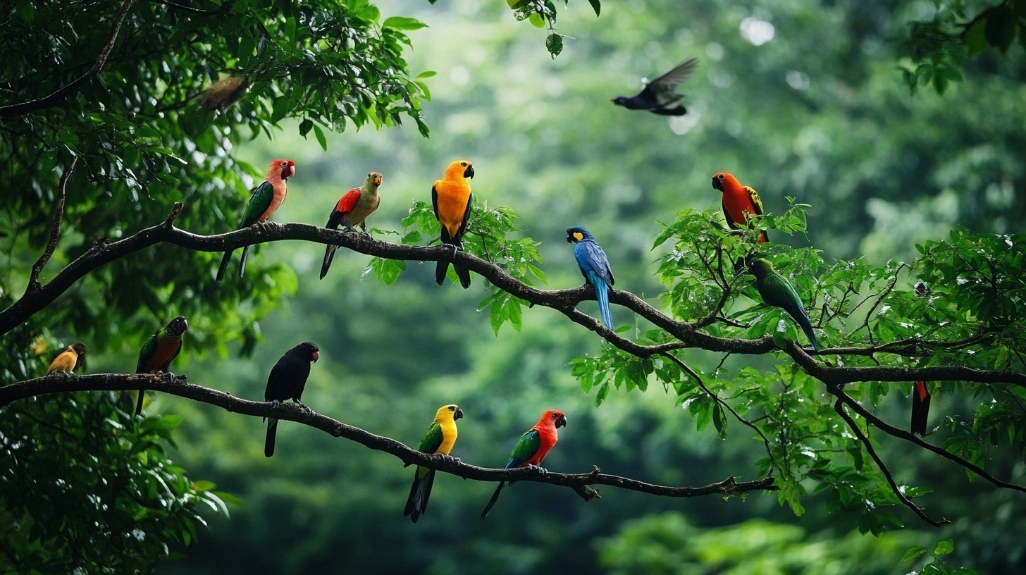
Top 5 birds watching destination in Nepal showcase the country’s rich biodiversity , as Nepal is a paradise for bird lovers .With over 900 bird species inhabiting here, from subtropical plains to the snow cloud himalayas, Nepal offers the unique opportunity for birdwatching enthusiasts.
Nepal is not only famous for majestic mountains and vibrant culture but also for its rich biodiversity. The country’s varied geography from the lowland tropical forests to the high alpine zones , created an ideal habitat for the wide variety of the birds. It is the home to the resident species as well as migratory birds that fly in from Siberia and the other parts of the world.
Now , let’s explore the Top 5 bird watching destination in Nepal:
1. Chitwan National Park
Location : Chitwan District, Central Terai Best Time To Visit : October to March
Chitwan National Park is one of the most famous wildlife reserves in Nepal and a UNESCO World Heritage Site. The park is home to over 500 species of birds , making it a bird watcher’s paradise. The park offers a mix of grasslands ,forests and wetlands , creating an ideal environment for the bird species.
Chitwan is also known for its thriving population of wildlife like Bengal Tigers, one-horned rhinoceroses and elephants . However , for birdwatchers, the park’s dense dorset and peaceful riverside environment creates the perfect opportunity to observe the different species of birds.
The serene Rapti river that flows through the park attracts numerous water birds such as cattle egrets, ruddy shelducks and Asian Openbill. Meanwhile, Parks’ thick Sal forests are the ideal habitat for large birds like Great Hornbill and Crested Serpent Eagle. With walking safaris,canoe trips and jeep safaris , birdwatchers have multiple ways to explore this bird watching paradise
Key species:
Bengal Florican
Great Hornbill
Cattle Egret
Indian Peafowl
Common Kingfisher
Little Egret
Ruddy Shelduck
Crested Serpent Eagle
Asian Openbill
Black-shouldered Kite
2. Bird Conservation Nepal (BCN) and Koshi Tappu Wildlife Reserve
Location : Easter Nepal, Terai Region. Best Time To Visit : November to February
Koshi Tappu Wildlife Reserve , located in eastern Nepal along the Koshi River, is renowned for its vast wetlands and grassland covering an area of 175 sq.kilometers . Koshi Tappu is one of the best birdwatching destinations in Nepal , particularly during the winter season when migratory flocks flock to this region.
The reserve’s extensive marshes, floodplains and lagoons provide an ideal condition for both resident and migratory birds. Koshi Tappu is famous for hosting numerous migratory species , with many birds arriving from as far away as Siberia and Tibet. Birdwatchers are likely to spot species such as Spoon-billed Sandpiper, Indian Roller, Pied Avocet and the Lesser Adjutant.The wetlands also host many ducks, herons and waders including Marsh Sandpiper and Purple Heron.
This area is not just a haven for the birdwatchers but also offers the unique landscapes. The Koshi River , the largest river in Nepal dominates the landscapes of the region with the backdrop of the eastern Himalayan ranges, providing the stunning setting for birdwatching.
Key species
Spoon-billed Sandpiper
Indian Roller
Black-shouldered Kite
Common Sandpiper
Brahminy Duck
Marsh Sandpiper
Purple Heron
Paddyfield Pipit
Pied Avocet
Lesser Adjutant
3. Rara National Park
Location : Mugu and Jumla Districts, Northwestern Nepal Best Time to visit : April to June and September to November
Rara National Park, situated in the far northwestern region of Nepal, is centered around the stunning Rara lake, the largest freshwater lake in Nepal. The park covers an area of 106 sq.kilometers and is one of the most remote and pristine areas in the country, offering spectacular alpine landscapes.
Rara National Park is located at an elevation of 2,990 m above sea level and supports a unique array of high-altitude bird species that are rare and cannot be found elsewhere in Nepal. The crystal clear waters of Rara Lake, surrounded by pine, spruce and juniper forests provide an ideal habitat fro many waterfowl and migratory birds. Birdwatchers visiting this park are often treated with the view of species like Red-billed Chough , Himalayan Monal, Yellow-billed Chough and the Lammergeier.
The alpine meadows and the rugged terrain are also home to a variety of raptors, including the Himalayan Vulture and Golden Eagle. In addition to its avian population, the park’s fauna includes some of the rare species like Himalayan Black bear, red panda and snow leopards.
Key Species
Red-billed Chough
Himalayan Monal
Yellow-billed Chough
Snow Pigeon
Lammergeier
Himalayan Vulture
Common Rosefinch
White-throated Dipper
Black-throated Tit
Eurasian Nuthatch
4. Suklaphanta Wildlife Reserve
Location : Far-western Nepal, Kanchanpur District Best Time To Visit: October to April
Suklaphanta Wildlife Reserve , located in the Far-western Terai region of Nepal, spans over 305 sq.kilometers. It is one of the least visited national parks in Nepal, making it an off-the beaten-path destination for birdwatchers seeking serenity and the diverse birdlife. The reserve features one of the largest grasslands in the country along with extensive sal forests, rivers and lakes.
Suklaphanta is particularly attractive to large birds like Black-necked Stork, Lesser Adjutant and Open billed Stork. Additionally , birdwatchers can spot flamboyant Indian Peafowl known for its vibrant colors and display.The park is home to the Barn Owl and other predatory birds like Black-shouldered Kite.The reserves grasslandss are also home to Nepal’s largest herd swamp deer which further enhences your wildlife experience.
Key species
Indian Peafowl
Black-necked Stork
Lesser Adjutant
Open-billed Stork
White-browed Wagtail
Red-vented Bulbul
Jungle Babbler
Fulvous Whistling Duck
Common Moorhen
Barn Owl
5. Annapurna Conservation Area
Location : Central Nepal Best Time To visit : March to May and September to November
The Annapurna Conservation Area (ACA) is the largest protected area in Nepal, covering an area of 7,629 sq.kilometers . It spans a variety of altitudes from the subtropical lowlands to the high-altitude peaks of the Annapurna and Dhaulagiri mountain ranges. Famous for its trekking routes like Annapurna Circuit and Annapurna Base Camp, the area is also an exceptional destination for birdwatching , particularly for those who are interested for high altitude species.
Birdwatching in Annapurna Conservation Area offers the chance to spot unique species such as Snow Partridge , Golden Eagle , Himalayan Black-lored Tit and the arre fire-tailed Myzornis. The lower forest are home to colorful species such as Spotted Forktail and the Pale-billed Floerpecker.
Nepal is a land of outstanding geography and rich cultural heritage. Be it the towering Himalayas with snow-capped peaks or ancient cities steeped in history, Nepal is indeed a treasure chest for every traveler, trekker, and tourist. There is a special appeal, with each flavor offered in a different 4 seasons in Nepal, making it a year-round destination.
Whether you trudge through the verdant rhododendron forests in spring, make your way through the lush green paddy fields of summer, move through the bustling cities of autumn, or stay in the quiet quietness of winter landscapes, Nepal promises an experience to leave you with life-long memories. To make the most of your visit, it becomes critical to understand what each season In the 4 seasons in Nepal will bring in terms of weather, trekking conditions, cultural events, and activities.
The 4 seasons in Nepal, which include spring, summer/monsoon, autumn, and winter, are discussed fully, including their meanings, context, and value for trekking, cultural exploration, and wonders of nature.
Spring (March to May): Best Time for Nature Treks and Cultural Exploration
Spring in Nepal is the season of rebirth when the hills and mountains burst forth with blooms, especially rhododendrons, which are renowned throughout the world. In spring, the rhododendrons display a myriad of colors and are best trekked between March and May, including the Annapurna and Everest Base Camp routes.
The climate is sunny and warm in the mornings and mildly hot with clear blue skies, so spring has long been regarded as the best season for trekking and nature walks among the 4 seasons in Nepal. It’s even better to visit Nepal’s cultural heritage because the climate has become most favorable for visiting old cities or attending colorful festivals that brighten up these cool pleasant seasons.
Spring is a trekker and nature lover’s paradise. The weather is relatively mild and perfect for a long day’s hike without the hotness of summer or the chill of winter. Most of the treks in Nepal are at the peak this time of the year, namely by marked trails, blooming flora, and wonderful views of surrounding mountains.
The temperature in the hills is between 10-20°C during the day, so it is perfect weather to hike. At higher elevations, it may be cold, but the good thing is that the climate is stable. This might be perfect for some while harsh for others.
Flora and Fauna
On one side, the sun-kissed valleys are decorated with flowering rhododendrons. The trail is studded with langur monkeys, and there are various bird sightings. The high level of wildlife activity enhances the fun of the trek.
Scenery
From a sunny morning perspective, much of the scenery is superb. On walking days, views of snow mountains are such that, until now, they have never disappointed, even when cloudy. Afternoons may bring haze, and, from lower altitudes, visibility could be obscured.
• Spring Cultural Tourism: Bustling Cities and Festivals
Besides trekking, this is also a great time to explore Nepal’s rich cultural heritage. The climate is ideal to visit Kathmandu, Bhaktapur, and Patan with their numerous UNESCO World Heritage Sites. The visitor can explore the ancient temples, palaces, and streets full of history.
Festivals
Springtime is a time of celebration in Nepal. Holi, the colorful festival of colors of Hindus, is celebrated with great enthusiasm all over the country. The Nepali New Year falls in mid-April and is followed by traditional music, dances, and gatherings.
Cultural Highlights
Exploring the old city squares of Kathmandu Durbar Square, Bhaktapur Durbar Square, and Patan Durbar Square will take you through the royal history and architecture of Nepal. It is very easy to stroll around these historical sites and cultural spots in spring without being troubled by discomfort.
Summer/Monsoon (June to August): Green Landscapes and the Rain Shadow Trek
While the summer rains make the country a lush, green paradise, it is almost impossible to venture into most areas where the rainfall is heavy and the trails are slippery and not well-visible. Summer can still be an excellent time to visit Nepal’s cultural attractions and to go trekking in places that fall in the rain shadow of the Himalayas, namely, Upper Mustang and Dolpo.
• Summer Trekking: Into the Rain Shadow
While trekking is very challenging in most areas of Nepal during monsoon rains, many excellent trekking opportunities remain in areas that are sheltered from the rain. Because of this, such areas are known as the rain shadow regions, where even when the monsoons prevail, the places remain dry and accessible.
Popular Treks
The best of all options is the Upper Mustang Trek and Dolpo Trek for those interested in exploring the Himalayas during monsoons. Few areas on this northern side of the Himalayas see any form of rainfall making it the haven for trekkers to experience barren vistas, ancient cave sights, and Tibetan culture.
Weather Conditions
During monsoon season it rains in the lower regions of Nepal, between 20-30°C (68-86°F); it often pours heavily. The rain shadow areas are otherwise dry and warm, allowing for trekking.
Difficulty
During the rainy seasons, outside of the rain shadow area treks are difficult as the trails are muddy and leech-infested, and visibility is lessened. Some other risks involve landslides in certain areas.
Summer Cultural Tourism and Wildlife Safaris
Summer vacation time in Nepal is full of delight for cultural tourists who want to visit old towns and monuments of Nepal. The national parks also rejuvenate with monsoon rains, thus making summer an ideal period for wildlife safaris.
Cultural Tours
When to go in Summer: Kathmandu, Bhaktapur, and Patan cities of Kathmandu valley are the best places to visit during the summer. The old cities have temples, palaces, and squares dating back centuries. They give visitors an insight into Nepal’s history and religion. Quicker and quieter streets make it easier to explore at a more relaxed pace.
Wildlife Safaris
The setting of the monsoon season transforms the forests of Chitwan National Park and Bardia National Park into a perfect habitat for sport wildlife safaris. It would make tourists capable of spotting rhinos, elephants, tigers, and several birds. Thus, during the summer season among 4 seasons in Nepal, these parks are ideal for being visited.
Festivals
Summer is also a festival season in Nepal. The Rato Machindranath Jatra is one of the foremost festivals celebrated by Hindus and Buddhists alike, and it happens in summer, as does Janai Purnima, a sacred ritual festival.
Autumn (September to November): The Peak of Trekking and Tourism
Autumn is the best trekking and tourism season in Nepal. Once the monsoon clouds have dissipated, then, as a result, the clear blue sky, fresh air, and views of the Himalayas are spectacular. During this season, many important cultural festivals also take place, so it’s a very colorful time to be in Nepal.
Clear Skies and Crowded Trails: Autumn Trekking
Nepal experiences a major chunk of trekking from September to November during the post-monsoon months. This falls when thousands of trekkers from around the world visit this place where the weather is just perfect and its mountainous beauty is highly inviting to visit during this season.
Popular Treks
Popular treks undertaken during autumn include the Everest Base Camp Trek, the Annapurna Circuit trek, the Langtang Valley Trek, and the Manaslu Circuit Trek. However, these trails are so crowded that booking of accommodation and permits becomes a must.
Weather Conditions
Weather conditions are serene with temperatures of 10-20°C (50-68°F) at lower elevations. The skies are mostly clear, offering some of the best view-panoramas ever of the snow-capped Himalayas. Rainfall is also minimal with freshness in the air thus becoming an excellent trekking weather.
Challenges
Autumn presents a challenge in that too many trekkers meander through the popular routes. This makes trails and teahouses crowded.
Autumn Cultural Tourism: Festivals and Celebrations
Besides trekking, the people should enjoy this country of great cultural heritage during the autumn season. Among the 4 seasons in Nepal, this season is quite appropriate for travel and excursion and for sightseeing, the most important festivals of the country fall during this period.
Festivals
While the two main festivals in Nepal are celebrated during autumn, Dashain is the longest and most important Hindu festival celebrated in Nepal. And, Tihar is the festival of light to celebrate the goddess of money, Laxmi. These are festivities full of colors in which families assemble around one’s own family and great public merriment, providing a real-life feeling of Nepali culture.
Cultural discovery
The temples, monasteries, and ancient cities of the Kathmandu Valley are perfect at the time of autumn. Colorful festival processions, traditional music, and dance fill the streets of the cities. This is what will give meaning to your cultural exploration.
Winter: December to February, Quiet Treks
Winter is from December to February when you have solitude and snowy-capped landscapes on trails like Poon Hill in order, but this needs great preparation for cold. Winter is cold, especially at the higher elevations, but it might be a good reason to avoid peak seasons if you want silence and some quiet time for yourself on Nepal’s trails.
While trekking at high altitudes gets challenging with snow and ice, low-altitude treks will not pose any challenge, and winter should provide better photography possibilities.
While snow and ice make high-altitude treks like Everest Base Camp Trek and the Annapurna Circuit quite impossible to undertake in winter, many low-altitude treks can be done even during this season.
• Popular Treks
The Ghorepani Poon Hill Trek, the Ghandruk Trek, and the lower sections of the Annapurna Circuit are routes that can be undertaken in winter. These routes offer beautiful views of the Himalayas without extreme cold at higher elevations.
Weather Conditions
The daytime temperature at lower elevations ranges from 10 to 15°C (50-59°F). In such weather, it is pleasant to trek with clear skies at night and a cool breeze, making winters the perfect season for photography.
Challenges
Winter conditions pose a problem at high altitudes because of snow and ice. Sub-freezing temperatures also make it challenging in the winter. As a result, trekkers must prepare well before attempting a winter trek with all necessary gear and clothing.
Winter Cultural Tourism Quiet Exploration and Wildlife
Winter is, in fact, the ideal time for cultural explorations and wildlife watching. Fewer crowds of tourists make it feasible to experience Nepal’s cities and national parks much more intimately.
Cultural Tours
The cities of Kathmandu, Bhaktapur, and Patan are relatively quiet in winter, which makes it easier to visit temples, monasteries, and historical landmarks. Walking through these cities is even more convenient due to the cooling climate.
Wildlife Safari
Both Chitwan and Bardia National Parks during the winter months are less crowded and the entire cool environment makes for a rather pleasant wildlife safari. One can also look out for migratory birds entering Nepal’s national parks during winter.
Fiestas
Aside from the big fiestas, Maghe Sankranti is Nepal’s winter solstice festival, but much quieter and marked by a lot of traditional food and rituals. Being neither a period of great fiestas nor the growing season, one will find local cultural activities in full swing, and experience the everyday life of Nepali communities during their visit.
Nepal, all year destination
Nepal is a trekker’s paradise in all 4 seasons in Nepal. Nepal is the destination throughout the year, but each 4 seasons in Nepal has something different to offer for visitors, trekkers, and those interested in culture. Whether it is spring’s colorful blooms, summer’s lush greenery, autumn’s clear blue sky, or the gentle calm of winter, Nepal’s varied geography and rich culture ensure that every visit is unforgettable.
The best time for a trekker is spring and autumn when the weather has been warm and clear mountain sceneries. However, those interested in the cultural heritage of Nepal find the summer and winter months best, when the ancient cities, temples, and national parks are quiet and intimate.
This would therefore be determined by the experience one seeks. Whether it is high-altitude trekking, festival fun, or a quiet winter landscape, there is something to experience it all in the best of 4 seasons in Nepal. Cultural tours to the temples in Kathmandu or Lumbini, Buddha’s birthplace, also can be done at any time of the year, supplementing the adventure with Nepal’s rich heritage and wonderful scenery.
It is compulsory to hire a guide for Langtang valley trek, and if you are looking to hire a professional guide for your popular trekking to the Langtang valley trek, Gosaikunda lake, Tamang heritage trail trek then we have a team of experienced guides who have been working for more than two decade already. Some of our guides are native from the Langtang region who can speak the local language and explain about cultural monasteries, buddhist religions, wildlife, flora and fauna as Langtang valley trek is in the Langtang national park.
Langtang mountain range seen from Lauribina.
We are a team of mountain guides who have spent over 20 years in this field,and our guide team was born and grew up in the mountain regions such as Langtang region, Annapurna region Everest region and Manaslu region. Our guides are very honest, loyal and responsible in their duties. They know how to take care their clients in the mountain. For more buildup the skills and education every offseason when is no trek we provide them the basic training such as first aid, fluntly english speaking course, wildlife and nature ,cultural training, regarding sustainable tourism many more.
Moreover, before the trip departure we organize the trip briefing meeting with guide and costomer and guide will explain to you shortly about the trek itinerary which will help you to know him or her at the first time how professional a guide he is. You can find the many guides in the markets but it is always hard to find the professional guide who have been trekking in langtang with groups and if you also considering to find the guide no doubt book with us we will arrange your trip very well with the reasonable cost.
Our professional guide for Langtang valley region trek are Chhabin Kc many years of experience, Deepak karki – 25 years of experience , Bharat Kc mountain guide who has 22 years of experience, and Nigma Lama native from Langang , Lobsang Tanang native from langtang , Raju gurung native from Langang. If you want to trek with one of our professional guides contact us any time.
For direct booking a guide for langtang valley trek you can WhatsApp at +977-9851131287 or email at [email protected]. We are more than happy to assist you to make your trip memorable for lifetime experience of trekking in nepal.
Langtang valley is another popular trekking destination in Nepal for breathtaking views, after Everest base camp and annapurna base camp trek. It is located north of Kathmandu and lies in the Langtang national park, is a remarkable journey to one of the most nepalese himalayan scenery in this region. During this trek you will be offered the most breathtaking views of wonderful mountains, lush forest, beautiful landscapes, Hills, charming local people and their fascinating culture as well as their basic lifestyles.
The trek begins after a day scenic drive from kathmandu to Syabrubesi – 147 km and 6 to 7 hours drive to a small town of Tamang and Gurung people. After spent an overnight here, basically you will start to trek gradually ascending through the numbers villages such as Lama hotel, Langtang gaun and final stretch out in Kyanjin gompa. You will have extra days to explore and hike to Kyangining ri viewpoint to enjoy the glory of the himalayas of this region.
Kyanjin Gompa village.
From top of the viewpoint you will see Yala peak,(alt.5700m) Gangchhempu (6400m) , Ganjala pass,(5130m) Langtang Lirung Himal (alt. 7134m) including severalls beautiful peaks. After spending a day in this nice place you will descend to Syabrubesi in a few days and drive back to kathmandu.
Moreover, Langtang valley trek is an easy/ medium category trekking route in nepal. Those people who are beginners and have only a short holiday in Nepal then the langtang valley trek is the suitable trekking route. Langtang valley trek is more about the culture and religions of Tamang and Tibetan people. During this trek you will cross many old villages, cultural monasteries, Tshorten, Mane wall, Gumpa and beautiful trains of this region.
At the beginning of the trek the trail is surrounded by lush forest of Rhododendron, Bamboo, Black oke, and after Langtang village (alt.3400m) trekkers will leave the green forest behind and rise close to the mountains. Langtang valley trek is popular for flora, fauna and wildlife as this trek lies into the one of the most popular national parks of nepal. You may always have a big chance to see wildlife such as monkeys, deer, snow leopard, Red panda and different species of brides.
Langtang village was destroyed by the earthquake on April 25, 2015 and the whole village was cleanswipe to the river as big ice broke from mountains and caused big landslides. More than 400 locals and foreigners lost their lives within 20 minutes. It was a sad tragedy as many local families were separated, and those trekkers who were here at the meantime lost their lives in this accident. It took more than 5 years to come back to normal life and already stallment new villages and rebuild tea houses. Still you can see some of the broken old houses and old monasteries, schools, and mane walls manymore.
Itinerary
Day 1: Drive from Kathmandu to Syabrubesi – 147 km , 5 to 6 hours. (alt. 1400 m.)
After a warm breakfast at the Hotel we will drive to Syabrubesi from Kathmandu today. Drive from Kathmandu to Syabrubesi is very interesting and enjoyable through the scenic mountain views, Hills, old villages ,and snowscapes. One way you can stop for lunch break , toilet break.once you reach in Syabrubesi after refreshing you can walk around the town for warmup as seating many hours in car /jeeps or bus.
Day 2: Trek from Syabrubesi to Lama Hotel, 4 to 5 hours. (alt. 2400 m.)
After breakfast, you will trek to Lama hotel in 4 to 5 hours today. Traversing through the several old Sherap , Tamang villages gradually ascend to Pahiro, where you can take short commercials and continue trekking to Bamboo for lunch another one more hour. After lunch, I continued trekking to Lama hotel, gradually ascending through the lush forests and langtang Khola.
Day 3: Trek from Lama Hotel to Langtang gaun , 4- 5 hours , (alt.3410 m )
After a warm breakfast, you will gradually ascend to Langtang gaun through the langtang national park, where you have the golden opportunity to see wildlife, flora, fauna and different species of birds. At Ghodatabela we will stop for lunch. After 2 hours of trekking from Ghodatabela you will reach the famous Langtang gaun for overnight stay. Langtang village is one of the oldest villages located at an elevation of 3400m above sea level inhabited by Tibetains and Tamang ethnic groups, where you can visit the cultural old monasteries. As tourism is the main source of back support for economics, they love to give the best hospitality and share their interesting culture and religions with tourists who want more.
Day 4: Trek from Langtang guan to Kyanjing Gumpa – 3 hours, (at 3700 m.)
Today is your short day trek as you will only trek 3-4 hours to Kyanjin gompa. The trail gradually ascends and before you reach Kyanjin you will cross a few wooden suspension bridges and be mesmerized by beautiful views of Gang Cheppu Himal, Langtang Lirung Himal and Nyakhang peak including many beautiful peaks around. Afternoon you have free time so you can visit the old cultural monastery, Yak cheese factories as it is one of the rare and famous in Kyanjin gompa and enjoy the great views of mountains from close distance.
Day 5: Exploration Day:
Today we hike to Kyangingri viewpoint at 4,700 m above ,3 to 4 hours for a magnificent view of Langtang region’s mountains and beautiful landscapes, Hills and snowscapes from close distance. After exploring the great views and reaching an elevation above 4500m from sea level with great memories of scenery you will go back to the teahouse for lunch and take a rest after a long up and down hike.
Day 6: Trek back to Lama Hotel, 6 to 7 hours, (alt. 2400 m )
After breakfast, you will descend to Lama Hotel as you are already familiar with the trail and you don’t feel hard like you were trekking up before. You will cross several villages ,and enjoy watching the mountain views crossing forests, domestic animals, Yaks and many more.
Day 7: Trek back to Syabrubesi , 4 – 5 hours (alt.1400 m)
After breakfast you will trek to Syabrubesi, you will descend mostly through the forest as well cross a few local towns before it ends.
Day 8: Drive back to Kathmandu – 147 km , 4 – 5 hours. (alt. 1300 m.)
Safety- security : while you are trekking in the remote area of mountains safety and security is very important. When you are trekking, a professional guide provides a lot of support such as navigating the trail in remote mountains, avoiding the potential risk, and handling in the emergency situation. Local knowledge : our guides are familiar with region and they know about trail , terrain and the best scenic spot for overnight stay and hidden gems that you can missed if you are not with the guide.
Explanation about culture of Gurung and Tamang people : when you are trekking with a guide he will explain to you many years tradistional culture, histry beautiful nature, mountains names and their heights, wildlife, and religions. This is a great opportunity for you to know about rare tamang people’s basic lifestyle and their traditional culture. Language Barrier : guide can speak the local language and he can translate which will helps for commiunication ,interaction, which can be much easier for you to know about them specially in the remorse area of Nepal.
A buddhist Chorten on the way to Tatopani.
Langtang valley permits and trip necessary documents: when you are with the guide, we will arrange your all trip necessary permits and documents which makes for your hassle free and less stress before the trek begins. Also along the trail in the check post guide will go for check permits and make it easier for you. Route Navigation, flexibility : begging with a professional guide in unpredictable weather can suggest a flexible itinerary and advise you of alternative options and always ensure your pace and health.
Health and altitude sickness : experienced train guides are very knowledgeable about high altitude sickness and if you receive altitude symptoms you have to tell your guide and he will suggest the best way to avoid it and get back to normal. Also a professional guide will have first aid kit bags with them and he can provide some emergency medicine including high altitude medicine.
Support the local economy : as Nepal is more dependent on tourism you provide someone with a job who has to look after his family which is a big oppertunity. Hiring a guide supports the local economy and makes it easier to leave. Stress Reduction : guide can help logistical documents, permits are handled by the guide so you will have time to focus more on scenery and making a good trip and enjoying beautiful mountain views.
Group coordination : when you trekking in the groups guide can manage group dynamics, ensuring everyone stays together and follows the itinerary.
Best season for trekking in Langtang region:
The best season to trekking in the langtang region is every years autumn season from september, October, November and december, and spring season starting from March, April and May is the best time as the weather stay clear and most of the time sunshine days and you can see clear views of mountains, easier for navigation the trail as no raining and higher sections of the trek not snowing.
Autumn season in Nepal : autumn season start in nepal after monsoon ends so beginning of the autumn it might be still light raining and muds on the trail, but from mid of the October, November and late december is the best season for trekking to langtang region as the weather is stable and cleat, crystal weather and most of the day will be sunshine and good visibility for see the mountains and you will not missed the any views of mountains. In this season the temperature will be reliable not hot nor cold and no raning and not snowing in upper section of trek so most of the travelers love to travel in nepal in autumn seasom
Spring season In Nepal : Spring season starts in Nepal right after the end of winter season. Beginning of the season it is still chilly in the upper section of the trek and snowing, ice especially in the high pass trek, but from mid March the best weather starts with clear day, sunshine, good views of mountains with clear weather. Also the spring season is best time for blooms the flowers in himalayas including the nepal’s national flower called rhododendron.
Which will helps you to more nice scenery of combine white mountains and red, yellow, green, pinks flowers trees blooms in the side. As the temperature gets warmer in the spring season, most of the big expeditions organize in this season including Mt. Everest.
Combine autumn and spring in Nepal, autumn is a longer and more clear view season with stable weather conditions. Also the autumn season is festive season in nepal where you can see severalls festival activities and and you may also have a chance to get involved with locals for celabration. Spring season has shorter and more rough weather as it changes quickly and chances of snowing and rains and not perfect blend views as autumn. So, most of the potential travelers love to come to Nepal in the autumn season rather than the spring season.
Langtang valley trek Difficulty:
Langtang valley trek is a medium / easy category trekking route in nepal. Trekking starts at an elevation of 1400 m, and the highest point of this trek is at 4,700 m above. The trekking trails rise gradually ascending to Kyanjin gompa and on the exploration day you will steep ascending to the viewpoint from alt. 3700 m to 4700m above. After successfully reaching the last section of this trek you will return backgradual to Syabrubesi and take a bus, jeep drive back to kathmandu. However, you have to walk everyday for 5 to 6 hours and climb steep stairs and descend.
So, Physical fitness is highly recommended, from your trip starting date minimum you have to do the 3 -4 month basic exercise like running, hikes, yoga, breathing training, and do the short hike and high altitude to check your walking abilities and altitude. Which can help you to feel difficult on this trip.
If you planning to do the Langtang valley trek it might be make difficult as you have to arrange everything by yourself. For hassle free once in a lifetime trekking for advance booking accommodation and navigating trail, prepare the trip necessary permits etc. We highly recommend the guide which will help you to make the trip more comfortable and enjoyable and avoid the difficulty of this trek.
Altitude sickness in langtang valley trek:
Acute mountain sickness (AMS) Normally starts after 2500 m above, and if you have received altitude sickness before you feel altitude you will receive the symptoms. If you follow the precaution of avoiding altitude sickness normally you don’t get altitude sickness . Here are some suggestions for avoiding altitude sickness.
Physically and Mentally preparation: when you prepared both physically and mentally from 3-4 months from your date as your buddy use to become a more stronger and tight the muscle and getting feet and fine you don’t feel harder for walk ups and down so it will be helps you to avoid it. Walk slowly, enjoy more with scenery : From the beginning of the trek, walk slowly, not being exciting, get easier, make a more comfortable walk especially in the higher section of this trek helps you to avoid altitude sickness.
Drink more water : drinking 3 to 4 liters of water a day can help to avoid the altitude.
Not to drinks alcohal and smoke: Highly recommend you don’t drink alcohol and not smoke, especially going up. Coming down or at the end of the trip with your team you can celebrate littlebit drinks. Hygiene food: Food is a major subject to avoid altitude sickness. Don’t eat oily, fats and meat items as they store for many months and in the mountains no refresher for keeping fresh food. So eat organic, fresh vegetables and healthy food instead of having oily and cheese foods.
Listen to your guide : as the guide is local and experienced, if you feel the altitude your guide will suggest to you the best way to avoid the altitude or alternative options if needed. You have to share with your guide if you start to receive any altitude symptoms.
Hike higher and sleep in lower : When you reach a higher section of the trek at hike a few hundred higher than spend overnight. Which will help you to feel more comfortable as you reach higher and sleep lower altitude. Proper itinerary : when you are planning to go trekking we always suggest you make a comfortable itinerary with some extra time. When you have extra time you can use it when needed.
Langtang Valley Trek insurance
When planning your Langtang Valley trek, obtaining proper insurance is essential to ensure a safe and worry-free journey.Ensure your insurance policy covers trekking at high altitudes. The langtang Valley trek reaches elevation of up to 4,700m so your policy cover activities above this altitude. Your insurance should coverage for emergency evacuation by helicopter. This is crucial in case of some unexpected health issues or injury. Before purchasing any insurance policy, read the terms and conditions carefully to ensure it meets all your needs for the Langtang Valley trek. This preparation will help you enjoy your trekking adventure with peace of mind, knowing you are protected against situations.
Accommodation and Transportation for Langtang Valley Trek
Accommodation for the Langtang Valley Trek begins in Kathmandu,where trekkers can choose from a wide range of options, including budget guesthouses and luxury hotels, paarticularly in the Thamel. On the trek itself, teahouse are the primary form of lodging. These simple lodges, run by local families, offer basic facilities such as beds, meals and shared bathroom facilities. Most teahouses provide basic rooms with twin beds and common dining area where trekkers can enjoy local while interacting with fellow trekkers.
For transportation, the journey from Kathmandu to Syabrubesi, the starting point of the trek, can be undertaken by private jeep or public bus which takes about 7-8 hrs. Duringthe trek, For trek walking will be the mode of travel hiring a porter for carrying your heavy loads can make your trek more manageable.
Final Say: If you’re planning to trek the Langtang Valley, hiring a professional guide is highly recommended to ensure a safe, enriching and hassle-free experience. Our team, with over 20 years of experience, includes native guide who are deeply familiar with local culture, monasteries, wildlife and flora of Langtang National Park. Guides provides a critical support in navigation trails, ensuring safety, handling permits and offering insights into the region’s unique traditions. For memorable trekking experience remember us for expert guidance, local knowledge and comprehensive support. Our experienced team will ensure your journey is safe, enjoyable allowing you to fully immerse yourself in the breathtaking beauty and rich culture of the Langtang valley.
October is the ideal month for trekking in Nepal, offering clear skies , mild temperature, stunning views of iconic peaks and vibrant local festivals making it the perfect time to explore diverse trails like Annapurna Circuit and Tsum valley.
October is often called the golden month for trekking in Nepal and it’s for a good reason. If you’ve ever dreamed of walking through the majestic mountains while breathing the crisp mountain air and immersing yourself in the vibrant tradition then this season is perfect for you. Nepal offers an unparalleled trekking experience, and October is the ideal time to explore it all.
During this month, the monsoon rain will be cleared , leaving behind the bright blue skies and the vibrant landscapes. As the cooler temperature makes long days of the trekking much more comfortable , while still offering the warm embrace of the sun. It’s the time when trekkers can enjoy perfect weather without extreme cold like winter and rainy like monsoon season.
Beyond the stunning views , October is also rich in cultural aspects as Nepal’s main festival Dashain and Tihar falls in this season so through the trail you will feel that festive vibe. This unique blend of the natural beauty and the cultural experience will surely touch your heart and the soul.
Whether you’re planning a classic trek to Everest Base Camp or hidden gems like Manaslu Circuit , this blog will guide you through everything you need to know to make your October trek an unforgettable one. Here we’ll cover the best trekking routes , weather conditions, essential packing tips and highlight some lesser-known treasures for those seeking adventure off the beaten paths.
Why October is the best time for Trekking in Nepal
October is the peak trekking season in Nepal, and its for a good reason. Here’s why this month stands out the most:
Optimal Weather conditions:
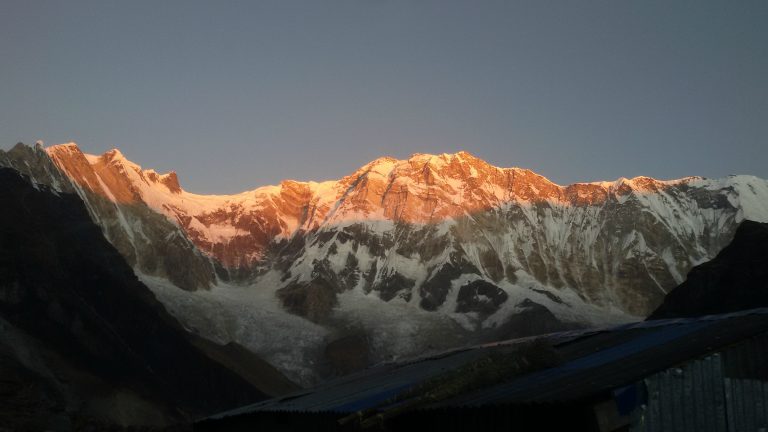
October brings out the stable, dry weather after the summer monsoon. As the monsoon season ends in September , the Skies clear up, leaving behind the crips air, bright blue horizons and the stunning views of the snow-capped himalayan peaks. One of the main highlights of trekking in the October is the crystal-clear skies. The heavy monsoon rains wash away the dust and haze, making the atmosphere incredibly clean which results in breathtaking views of panoramic mountains like Everest, Annapurna and Dhaulagiri. Early morning in particular brings out the stunning sunrise views where the golden light hits the snowy peaks, offering the unforgettable moments.
During the day, temperatures in October are mild and comfortable,typically ranging from 10 degree to 20 degree celsius at the lower elevations (up to 3,000 meters). In above 4000m daytime temperature remains cool and bearable , generally ranging from 5 degree celsius to 10 degree celsius. While in the night time October can get chilly especially at the higher elevation. All of these conditions make the trekking experience in October more enjoyable and allows the perfect visibility of the stunning himalayan peaks.
Stunning Scenery:
October offers trekkers some of the most breathtaking scenery that Nepal has to offer. The combination of pristine weather and a diverse range of landscapes from the lush valley and terraced fields to towering snow-capped peaks. Thanks to the monsoon rains that have just ended in September , Nepal’s valley and terraced hillsides are lush and vibrant in October. The once dry, brown landscapes are now bursting with life, fields of rice and millet sway in the breeze and the green terraces that climb the hillsides add a soft , pastoral beauty to the rugged surrounding. As you walk through the valley , especially in the region like the Annapurna and Langtang valley you’ll encounter picturesque mountain villages with green slopes, with traditional houses and farms dotting the landscapes. It is also the time to harvest so you can see local people working on the fields and preparing for the festivals.
Manu of Nepal’s trekking routes takes you along rivers, streams and even pristine mountain lakes, all of which are at their most beautiful in October. The monsoon-fed rivers like the Dudh koshi in the Everest region or the Marsyangdi in the Annapurna Circuit flow strong and clear cutting through the deep valley and the gorges.The monsoon- feds rivers like the Dudh Koshi in the Everest region or the Marsyangdi in the Annapurna Circuit, flow strong and clear, cutting through the deep valley and gorges . These rushing rivers are often crossed by thrilling suspension bridges, adding an extra layer of the excitement to your trek.
Some treks, like Gokyo Lakes Trek, take you to the stunning alpine lakes. In October, these lakes are at their clearest with the Gokyo Lakes.Beyond the natural scenery, October also offers a rich cultural landscape. As you trek through mountain villages and rural communities, especially during the Dashain and Tihar festivals, you’ll encounter vibrant decorations , prayer flags and traditional rituals. The terraced fields, stone-built homes and colorful prayer wheels spinning in the wind adds a different Nepali charm to the visual. During festivals , the villages come alive with the celebration, music and the dances adding even more color to your journey.
Festive Spirit :
In October, the festive spirit in Nepal transform the trekking experience into something truly special. This month is marked by vibrant cultural celebrations, with Dashain and Tihar being the major highlights.
Dashain , a 15 day festival is a time of joyous reunions , elaborate rituals and grand feasts. The entire country comes alive with traditional ceremonies, kite flying and family gathering . Homes and villages are adorned with colorful decorations creating a lively and welcoming atmosphere. Following Dashain, Tihar brings even more festivity with its five day celebration of light. Streets and homes are illuminated with lamps and candles and colorful rangoli designs decorate the floors. The air is filled with music , laughter and the aroma of traditional dishes.The festive atmosphere is infectious and the warmth of the local communities adds a special touch to your journey. You’ll be able to enjoy the sights and sound of the Nepal’s cultural richness as you pass through the decorated villages , all while taking in the magnificent mountain scenery.
Popular Trekking routes in October
Nepal’s diverse trekking routes provides a unique experience for all of the adventures. Whether you seek iconic high-altitude challenges or scenic culturally rich trails, October is the best tie to explore these paths. Here are some of the most popular trekking routes in Nepal during October.
1. Everest Base Camp (EBC) Trek
Duration: 12-14 days
Max Elevation: 5,364 meters (Everest Base Camp), 5,545 meters (Kala Patthar)
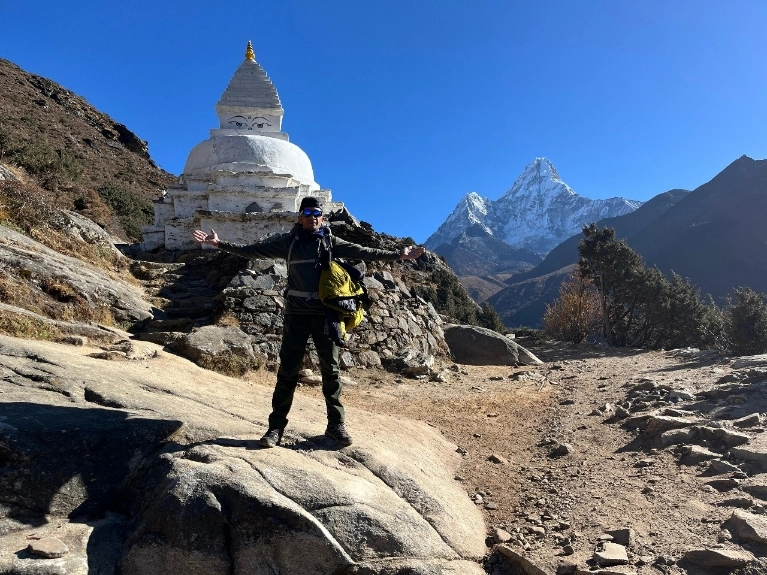
The Everest Base Camp Trek is the crown jewel of trekking in Nepal and october is the perfect time to take on this world-famous route. Clear skies provides the magnificent views of Mount Everest and surrounding peaks like Lhotse, Nuptse and Ama Dablam. Trekkers enjoy walking through Sherpa village like Namche Bazaar experiencing their warm hospitality, and visiting iconic sites like Tengboche Monastery.
In October, temperatures are moderate during the day but drop at night as you gain elevation. The trail is well-marked , and while it can get busy due to the high season, the natural beauty and the thrill of reaching Everest base are well worth it.
2. Annapurna Circuit Trek
Duration: 15-20 days
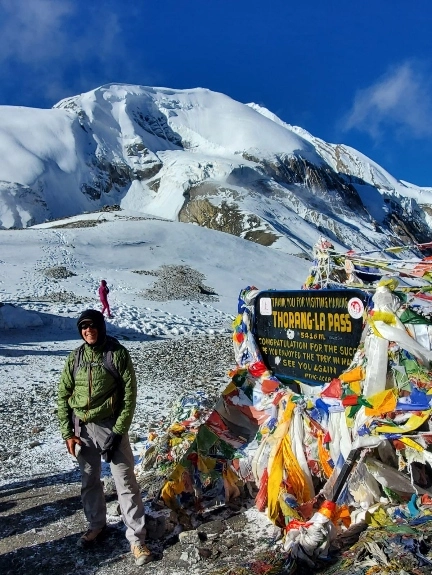
Max Elevation: 5,416 meters (Thorong La Pass)
The Annapurna Circuit Trek is one of the most diverse trek in the world, taking you through the varying landscapes from the tropical forest and terraced farmlands to high alpine desserts. October is the ideal time for this trek as the weather is clear allowng the stunning views of the Annapurna and Dhaulagiri ranges. The monsoon rains from the previous months leaves the valley lush and green while the higher elevations offers the striking views of the snow-capped peaks. The main highlight of this trek is crossing the Thorong La Pass, the highest point of the circuit. Octobers stable weather reduces the risk of the heavy snowfall making this a safer and more enjoyable experience.
3. Annapurna Base Camp (ABC) Trek
Duration: 7-12 days
Max Elevation: 4,130 meters (Annapurna Base Camp)
A shorter yet equally rewarding trek compared to the Annapurna Circuit, the Annapurna Base Camp Trek (ABC) is ideal for those looking for a moderate trek with stunning alpine views. October brings the pleasant weather with mild temperatures ans clear skies, offering the spectacular views of Annapurna I, Machapuchare(Fishtail) and Hiunchuli. This trek takes you through a variety of landscapes , including subtropical forests , terraced fields and bamboo groves.The trails is dotted with traditional gurung and Magar villages, where you can experience the local culture and hospitality.
4. Langtang Valley Trek
Duration: 7-10 days
Max Elevation: 4,984 meters (Tserko Ri)
For those seeking a less crowded alternative to the Everest and Annapurna regionnnns, the langtang valley trek is hidden gem. October is an excellent time for this trek, as the post-monsoon weather brings clear skies ad vibrant landscapes. THe trek takes you through the beautiful langtang valley, filled with lush villages forest and glacial moraine, with the view of Langtang lirung , Dorje Lakpa and Gangchempo.The trek passes through tamang and sherpa villages, where trekkers can experience rich tibetan-influences culture. The route is less commercialized making it perfect for those looking for solitude and more intimate experience with nature.
5. Manaslu Circuit Trek
Duration: 14-18 days
Max Elevation: 5,135 meters (Larkya La Pass)
If you want a remote adventure without the crowds, the Manaslu Circuit Trek is one of the best-kept secrets of Nepal. This trek encircles Mount Manaslu, the eighth-highest peak in the world, and takes you through some of Nepal’s most untouched landscapes. October is the prime time for this trek, as the weather is stable and the skies are clear , offering spectacular views of the Manaslu range. Crossing The Larkya La Pass is the ultimate challenge on this trek, and October’s weather makes the crossing safer and more accessible. The trek also offer rich cultural experiences , as you pass through the villages influenced by Tibetan Buddhism , complete with prayer flags, mani walls and monasteries.
6. Gokyo Lakes Trek
Duration: 12-15 days
Max Elevation: 5,357 meters (Gokyo Ri)
For those looking to avoid the busier Everest Base Camp route but still crave a view of Mount Everest , the Gokyo Lakes Trek is great alternative. This trek leads you to the Gokyo Valley, known for its stunning glacial lakes. The view from Gokyo Ri , a viewpoint above the lakes , offers one of the best panoramic views of Everest, Cho Oyu, Lhotse and Makalu. In October , the lakes are at their clearest, reflecting the surrounding mountains in vibrant shades of blue. This trek also takes you through Sherpa villages and across thrilling suspension bridges over roaring rivers.
7. Upper Mustang Trek
Duration: 10-14 days
Max Elevation: 3,800 meters (Lo Manthang)
October is the ideal month for the Upper Mustang Trek , as the weather is cool but not cold, and the region remains dry. This trek offers a journey into Nepal’s ancient himalayan kingdom of Mustang, a remote and isolated region with the landscapes resembling the Tibetian plateau. The trek leads to Lo Manthang , the former capital of Mustang , where trekkers can explore ancient monasteries, caves and palaces. The unique arid landscapes, combined with the vibrant Buddhist culture, makes this trek a fascinating cultural journey as well as an adventurous one.
8. Helambu Trek
Duration: 5-7 days
Max Elevation: 3,640 meters (Tharepati)
The Helambu Trek is one of the shorter and easier treks in Nepal, making it ideal for trekkers with limited time. It’s located close to Kathmandu , yet offers stunning views of Langatng , Dorje Lakpa, and Gaurishankar. October brings cool, clear weather , allowing for pleasant trekking conditions and excellent visibility. This trek takes you through lush rhododendron and bamboo forests , past waterfalls and into traditional Sherpa and Tamang villages. The lower altitudes and relatively easy terrain make it accessible for beginners or those looking for a more relaxed trekking experience.
9. Mardi Himal Trek
Duration: 5-7 days
Max Elevation: 4,500 meters (Mardi Himal Base Camp)
For trekkers seeking a less crowded route in the Annapurna region, the Mardi Himal Trek is an excellent option. October offers clear skies and comfortable trekking temperatures, with stunning views of Annapurna South , Machapuchare and Hiunchuli . The trek is short but steep, leading through dense forests, alpine meadows and rocky terrain before reaching Mardi Himal Base Camp.
These trekking routes provide something for everyone, from seasoned adventures to beginners and October is the best time to experience them all. With clear skies, pleasant temperatures and the festive spirit of Dashain and Tihar in the air, trekking in Nepal during this month is a truly unforgettable experience.
Essential Packing Tips for October
Trekking in Nepal in October offers some of the best weather conditions of the year, but the diverse terrains and varying altitudes mean you need to pack carefully. Here’s the comprehensive list of essential items and tips to help ensure you’re well-prepared for your adventure.
1. Clothing Layers
Base Layer: Moisture-wicking (merino wool/synthetic) Mid Layer: Insulated fleece or down jacket Outer Layer: Waterproof and windproof jacket Trekking Pants: Lightweight, quick-drying, with thermal leggings Warm Hat & Gloves: Insulated for colder temperatures.
2. Footwear
Trekking Boots: Sturdy, waterproof, ankle support Trekking Socks: Moisture-wicking, merino wool/synthetic Gaiters (Optional): Protect from mud, snow, or dust Camp Shoes: Lightweight sandals or slip-ons.
3. Sleeping Gear
Sleeping Bag: 3-season, rated for -10°C to -15°C Sleeping Bag Liner (Optional): Adds warmth and cleanliness
4. Trekking Essentials
Trekking Poles: For stability on rough terrain Daypack (20-30L): Carry essentials; with hip belt and chest strap Duffel Bag/Backpack (50-70L): For porter to carry gear Rain Cover: Protect your pack from rain.
5. Hydration and Nutrition
Water Bottles/Hydration Bladder: 2 liters capacity Water Purification: Tablets, drops. Snacks: Energy bars, nuts, dried fruits
6. Sun Protection and Health Supplies
Sunscreen (SPF 50+) Lip Balm with SPF Sunglasses (UV protection) Hat/Cap First Aid Kit: Bandages, blister pads, altitude medication, painkillers Hand Sanitizer and Wet Wipes
7. Miscellaneous Essentials
Headlamp: With extra batteries Power Bank: For charging devices Camera or Smartphone Travel Towel: Quick-drying Toiletries: Travel-size essentials Toilet Paper Money: Enough cash in Nepalese rupees
Final Tips:
Pack Light: Limit to 25 kg for 2 people. Leave No Trace: Carry out your trash
Hidden Gems for Off-the Beaten-Path Adventure in October season
If you’re looking to avoid the crowded trails and explore the more remote lesser-known regions of Nepal, these hidden gems offer a unique , quieter trekking experience.
Manaslu Circuit Trek
Tsum Valley Trek
Dolpo Region ( Upper Dolpo Trek)
Kanchenjunga Base Camp Trek
Makalu Base Camp Trek
Nar Phu Valley Trek
Pikey Peak Trek
Bimthang Trek (Manaslu’s Hidden Gem)
Khopra Ridge Trek
Dhaulagiri Circuit Trek
In conclusion , October stands out as the perfect month for trekking in Nepal, offering an exceptional combination of favorable weather, breathtaking scenery and rich cultural experiences. With clear skies and mild temperature, trekkers can fully appreciate the stunning views of the iconic peaks and immerse themselves in the vibrant festivals of local festivals like Dashain and Tihar. Whether you choose the renowned Annapurna Circuit or the hidden gems like Tsum Valley . You can embrace this prime trekking season to create unforgettable memories and experience the unparalleled beauty and warmth of Nepal’s landscapes and cultures.
Annapurna Mountain Range , There are many beautiful and world-renowned mountains in Nepal, such as Mt. Everest, Mt. Kanchenjunga, Mt. Makalu,Mt. Dhaulagiri, and many more, but the popularity of the Annapurna mountain range exceeds many others. Annapurna I, II, III, IV, and Annapurna South are all part of the Annapurna mountain range.
It takes at least 3 weeks to explore the entire Annapurna mountain range. The Annapurna circuit via Thorong La pass (5416m.) ending at the Annapurna base camp is the best way to explore the entire Annapurna mountain range. Annapurna II, which is just 40 meters shorter than 8000 m, is the first mountain visible from just before Chame. If, as scientists say, the Indian plate and Tibetan plate continue to collide and gradually increase the elevation of the Himalaya Mountains, then Annapurna II will be the second mountain in the Annapurna range over 8000 meters.
Annapurna IV and III are seen west of Annapurna II. Gangapurna and Tilicho peaks are other popular mountains in the Annapurna range. Pisang and Braka Manang are 1000-year old villages whose people migrated from Tibet long ago. During this 3 week-long tour, the world’s highest lake, Tilicho Lake (4940m.) is another sight that cannot be missed. After seeing Annapurna II, III, IV, and others, then you must cross the world’s longest pass, Thorong La, to see Annapurna I. Many people cross this pass nearly all year-long (depending on weather conditions), but it is busiest in the autumn and spring.
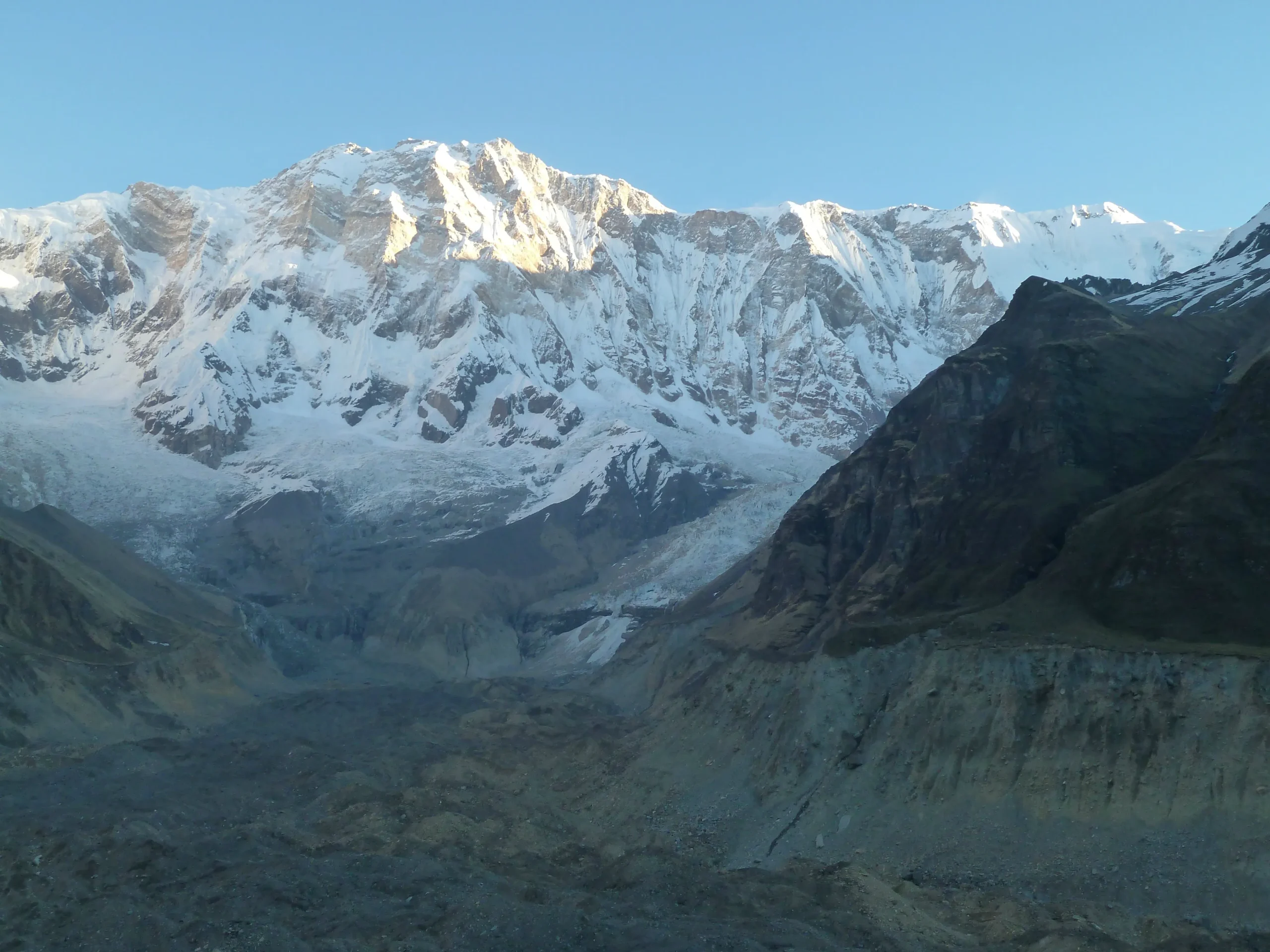
Annapurna I alt. 8091m.view from Annapurna base camp.
The tallest mountain in the Annapurna range, Annapurna I (8091 m), has an interesting story. Before declaring Mt. Everest as the tallest mountain, Annapurna I was declared the highest mountain for some years when British surveyors reached Annapurna and measured an elevation over 8000 m. They called this mountain the top of the world, but later on, when they went further east and found higher peaks, Mt Everest then became the highest known mountain.
However, Annapurna I took this crown for some years. There are many technically difficult mountains to climb, and Annapurna I am among them. Exploring the beautiful Kaligandagi Gorge (the world’s deepest gorge), between the Annapurna range and Dhaulagiri, is an exciting experience. The holiest mountain Mt. Fishtail is another attraction of this trek. Just over 6000 meters high, this mountain looks like the Burgee Khalifa tower.
The beginning of the Annapurna Circuit is easy and slowly increases in difficulty after a week. After crossing Thorong La (alt. 5416m), the trail becomes a bit easier again, until arriving at Tatopani. After Tatopani, the trail is a bit difficult until reaching Annapurna base camp. It is highly recommended that you take a guide and porter to help make your Annapurna experience memorable and comfortable.
Culture
The trek begins in an area of the Annapurna conservation area called Lamjung, where the majority of people belong to the Gurung, Chhatri, and Bharman ethnics group, a people known for their friendliness and hospitality. Gurungs have their own Buddhist calendar, language, festivals, and beautiful songs, although some are also part of the Hindu religion.
Around day 5, when you will reach the Manang District, which is typically called the heart of Annapurna, you will experience a more interesting culture. The people of Manang migrated from Tibet thousands of years ago and believe in Buddhism. When one of Nepal’s kings witnessed their difficult living conditions in 1800 AD, one member of each family was given the opportunity to work in Hong Kong under full government sponsorship. Today, as a result of this policy and the influx of money from tourism, the Manang has become Nepal’s wealthiest ethnic group.
Accommodation.
Nice and clean guest houses are available from the beginning to the end of the trek. In some places, like Manang, Jomsom, Ghorepani, and Ghandruk, you can get a room with an attached bathroom. Other places may not have an attached bathroom but are still nice and clean.
Food
Delicious food in the mountain,)Most guesthouses have their own restaurant, where they provide locally grown organic Nepali food. The Annapurna Conservation Project trains local people to cook.
Apples
A famous apple Garden village in the mountain. (Marpha alt. 2660m)
Nepal’s best apple farms are located in an area of Lower Mustang called Marpha. Many farmers sell apples commercially to major cities like Pokhara and Kathmandu. Marpha is also famous for apple brandy.
September, October, and November (autumn), and March, April, and May (spring) best time to visit the Annapurna region for trekking in Nepal. Both seasons are the perfect time to complete the trekking and climbing an Annapurna region of Nepal.
Autumn: (September, October, and November)
From mid-September to the end of the November is good weather in mountains including an Annapurna region of Nepal, autumn season start after the monsoon season ends here, in autumn the weather will be perfect for Trekking, and Climbing here, most of the days it will be sunshine, clear and blue sky, very less chance to rain and snow in the mountains, the cold wind and cloudy will be still not descending to the lower part of mountains.
From mid-November in the higher parts of the trek or near big mountains area, the cold winds and the temperature can be slowly changed and increasing day by day into the cold, and it can befall fresh snow around the mountains, but not for a long time just for fewer hours and the following morning you will have a great mountains view with fresh snow, it happens only sometimes. November fresh snow will be not frozen like in winter in Himalaya so it will be no problems for a walk on the trail during your trek.
So we would highly recommend, please trek an Annapurna in autumn season is the best time for good and clear mountains view and in this season in Nepal celebrate several festivals, like Dhashaen, Tihar, Chhat, and Loshar more…
Spring (March, April, and May.)
Trekking in the Annapurna region in the spring seasonSpring season,from mid – March to the end of May is the best month for trekking in Nepal including the Annapurna region. Spring season is always beautiful moments for growing new plants, new seeds, and blooming various types of flowers around the Himalayas, spring start after winter ended in Nepal, As my experience, the early march would be still snowing and cold in mountains, because of winter is just ends but from the end of March, the temperature will be move-in hot and day by day it will be changed in very hot especially when you walk through the mountains landscapes.
Slowly cold winds will be a move to higher parts of the mountains most of the day it will be sunshine and it comes after very clear and crystal mountains view as well the landscapes will be changed from dry to green and many trees will be blooms flowers around of mountains, so spring is the new season of this year. Sometimes an afternoon it might be some fresh snow that comes around you and make feel colder with cold winds, but the following morning you will have a clear mountains view with fresh snow. So I would highly recommend you all spring is the second good trekking season in Nepal after the autumn season.
Winter season: from mid- December to February is the winter in Nepal,
This month into the mountains it will be lots of snowing and cold, so winter is a not perfect time for a long trek or higher passes treks in Nepal, but small. And short days trek still you can do nearly by the Pokhara, Kathmandu.
Monsoon season: from June, July august to mid- September.)
The monsoon season here, it will be a lots rain and cloudy, so it’s not a good idea to make a plan to visit Nepal for trekking in higher parts of the mountain, but still, you can visit in Nepal for short treks, and sightseeing around the Kathmandu, Chitwan, Lumbini, and Pokhara, and still you can also trek in less rain area of Nepal likely Upper mustang trek, Dolpa region trek, Humla, Jumla, Rara lake trek, Limi valley trek. Many more
An Annapurna region, Annapurna circuit trek is the old and famous trekking route since trek routes were open by governments. Annapurna circuit trek means to complete the walk around Annapurna mountains ranges, after car road building close to the mountain, off- course trekking trail was destroyed and now, the new trekking route starts from Darapani or Bagarchhap after a long drive from Kathmandu.
The old route was started from Beshishar when driving rode is opened then you can hide several days trek in lower parts of the Annapurna circuit trek, I don’t suggest you always don’t go directly lower altitude to higher altitude even car rode go more further ahead, If you go directly long drive near mountain it can be dangerous from high altitude and your trek can’t be successful, because of the high altitude can badly affect your trek. So as my long experience start your trek from a lower altitude and go slowly to a higher part of the trek.
Annapurna circuit trek location is in between the Manaslu and Annapurna mountains ranges in the northeast and far west of Upper mustang valley and Mount Dhaulagiri rages. An Annapurna circuit trek you will see three above eight thousand over mountains such as Mount Annapurna I (8091m), Manaslu (8167m), and Mount Dhaulagiri (8186m) including hundreds of Annapurna mountains peaks, and rare culture, religions, beautiful landscapes, different types of ethnic groups, Muktinath temples, old monastery’s and Chhorten many more. Read more..
Ghandruk trek via poon hill viewpoint is one of the most popular trekking routes in the Annapurna region, this short and sweet trek gives many opportunities to explore a panoramic Annapurna mountain ranges from a close distance. if you don’t have many days in Nepal but still want to get a trekking experience before return to home then this route is perfect for you and also those who are learning about trekking in mountains before going adventure treks in other parts of the Himalayas it would be a good idea to go Ghorepani – Poon Hill trek first. From Poon Hill viewpoint (alt 3210m), you will have a magnificent Annapurna, and Dhaulagiri mountains view including many Himalayas peaks. Read more..
(3) Annapurna Base Camp Trek:
Annapurna base camp trek is a very famous and beautiful trekking route an Annapurna region. Annapurna base camp means you will trek in the base camp of Annapurna I mountain. This 7 days short trek will take you through beautiful landscapes to very close to Mt. Annapurna I (8091m), Mt. South Annapurna, (7210) Mt. Himal Chuli (alt. 6419m) and Mt. Fishtail (alt.6893m), and the biggest and longest glacier an Annapurna region, Along the way you will cross several suspension bridges, Hills, waterfall, habitation, and fertile lands, domestic’s animals, wildlife’s, many more. Read more..
(4) Mardi Himal Trek:
Mardi Himal Trekis located in the south range of Mt. fishtail and just right above hills from Annapurna base camp. Mardi Himal trek begins from Kade after one hour drive from Pokhara, beginning of the trek you will walk through the pristine forest of Bamboo, Oke pine, rhododendron trees, wildlife, different spices of birds until the high camp of Mardi Himal trek, when you reach on top of Mardi Himal viewpoint (alt. 4600m) you will have a magic mountain’s view of whole Annapurna and fishtail (Machapuchre) mountains from a very close distance.
Mardi Himal base camp or Mardi Himal viewpoint is the best mountain views in an Annapurna region. From the top of the viewpoint you will be able to catch on one picture many mountains and landscapes, so this is the short and sweet trekking route in Nepal. After exploring the Annapurna Range Mountains you will return back to Pokhara via lawng villages, in these pristine and beautiful villages you will be welcome by delicious food and great cultural dance by local people before your trek end.Read more..
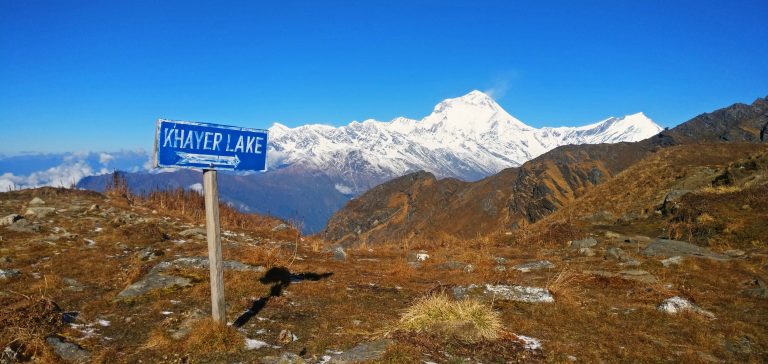
(5) Khaire lake Trek / Annapurna Dhaulagiri Trek
Khaire Lake Trek is the holy lake in an Annapurna region. Khaire Lake located beneath of south Annapurna Mountain (alt. 7210m.) behind the Ghorepani – Poon hill viewpoint (alt. 3210m), and bordering with mount Dhaulagiri and Annapurna I (8091m).
Khaire lake trek has another name given by trekkers, call Annapurna – Dhaulagiri trek, because of you will reach a very close distance of both mountain fits of rage during this trek, and Khaire Lake Trek is also a newly open trekking route an Annapurna region, this route is not as crowded like an Annapurna base camp or Annapurna circuit trek. Annapurna Dhaulagiri trek is a much quiet and cool environment trekking trail in this region.
Khaire lake /Annapurna –Dhaulagiri trekking route begins after a few hours’ drive from Pokhara to Naya pool and basically you will walk from here, earlier of this trek you will trek through beautiful landscapes, waterfall, rivers, suspensions bridges, local people habitation, fertile paddy lands, many more. From begging of this trek to the end of the trek you would have panoramic mountains view of the whole Annapurna range, Machhapuchre,(fishtail) and Dhaulagiri mountains view from a close distance.
Khaire lake (alt. 4600m) is the last destination of this trek, from Khobra dada, (alt. 3800m) you will go a day hike to Khire lake (7 to 8 hours walk), it’s the holy lake of this region, to reach this lake means almost you are touching to mount south Annapurna and mount Bhara Shikhar. This secret lake is protecting by local governments, and every year in the full moon in august many local pilgrims use to visit here. Read more
(6) Nar -Phu valley and Kangla pass (alt. 5320m) Trek:
Nar- Phu village, a very old Tibetan village in the Manag district of Nepal
Nar – Phu valley trekking is located northeast from Manag villages and bordering with Tibetan, China. This is the newly open trekking route an Annapurna region, and it’s open for tourists from 2003. this hidden valley trekking route is giving a big opportunity of unexplored vicinity and reach into the massive Annapurna, and Dhaulagiri ranges, including a great chance to visit six to seven hundred years old Tibetan culture in Nar and Phu gaun.
Nar – Phu again are remote, close to the mountain, and behind the Annapurna Mountains range old Tibetan village in the upper part of the Manag district of Nepal. More than 5 to 600 years go people from Tibet immigrate to this hidden valley of Nepal. Nar- Phu and Tibet is close bordering each other, it’s just bordering with few mountains and snowcaps, and easy to excess those who live in this area for local trade, like yaks wool, and meet, ship meet, food, clothes, etc…!
Monsoon season is the best time to live here and suitable temperature for farming and spend daily basic life, they can go to Tibet in one day and come back the same day for local trade, monsoon season (May, June, and July) is the good life in this area because of less rain and temperature will be perfect neither hot nor cold. In winter most of the people descend to down in warm places like in Pokhara and Kathmandu because in winter it will be lots snowing here.
Kang-La pass (alt 5320m) is another adventure and famous high passes an Annapurna region. after explore these old villages you shall cross the Kang-la pass (5320m) from top of the pass you will see a magnificent view of Annapurna massive and Dhaulagiri ranges including several popular mountain peaks of Annapurna and Dhaulagiri mount range.
Kang-la pass link with an old and classical trail call Annapurna circuit trek from Nawal villages, after cross this high and adventure pass you will be trek northwest of Annapurna mountain via Manag – Yak Kharkha – Phedi or high camp and cross Thorong – La pass (5416m) and trek back to Muktinath – Jomsom and finally fly to Pokhara from Jomsom and drive or fly to Kathmandu next day. Read more..
(7) Tilicho Lake Trek:
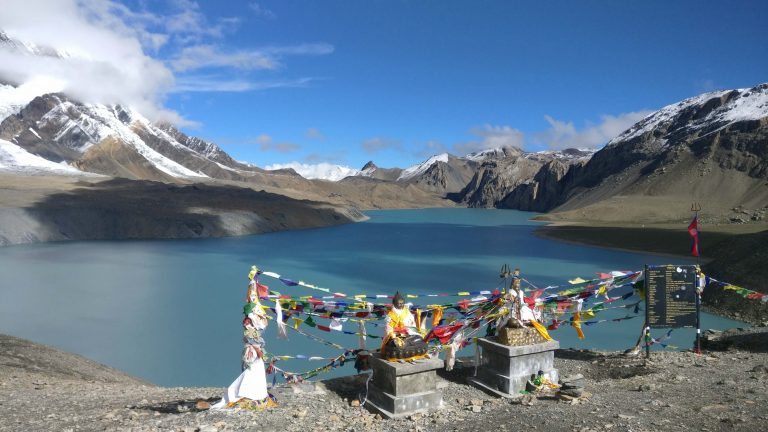
Tilicho Lake (alt.4900m) is located west from Manag villages and lying down beneath of Tilicho peak (alt. 7134m,) Tilicho Lake is one of the highest lakes in the Annapurna region of Nepal. this popular and beautiful lake is one of the most attractive tourist destinations in an Annapurna region now, so many domestic and international trekkers use to visit this lake every year In good weather time. Once you reach the lake you will have a panoramic view of the Annapurna Mountains and you will be very close to the lake and, this is the best spot for the photographer and spends your quality time.
Tilicho lake trek is a part of the Annapurna circuit trek, you can go a side trip for fewer days from Manag village, and meet the trail in yak Kharka via Shiri Kharkha. This is the route link with the Annapurna circuit trek.
We highly suggest for trekkers, those who want to visit this beautiful lake please hire a professional guide to get there, because of Tilicho lake trail is more adventure and difficult trail, fewer places you have to cross long landslide route, quit often a big rock are falling from the above hill and the trail is very narrow and especially when heavy snowing here it’s very difficult for fine the right trail, so many individual trekkers lost. Read More..
Thank you
Mount Annapurna region is offered several Trekking and Climbing routes. The trek routes start from easy to hard an Annapurna region, such as Ghorepani Poon Hill, Ghanduruk village trek , Annapurna base camp, Khaire lake trek countimg in short treks in an Annapurna, and Annapurna circuit, Nar-Phu valley trek with Kang-la pass, Tilicho lake, with Meso Kanta pass are adventure and hardest treks routes in an Annapurna region. and if you planing for climbing above 6000m peaks in an Annapurna those peaks are popular likely – Chulu west peak climbing – Pisang peak climbing – Chulu far east peak climbing and Thorong peak climbing many more…
Before you planning trekking in an Annapurna, minimum to advance buddy fitness and mentally, physically you have to be ready. Does it depend on which trek you want to do? if you go adventure treks in then you have to be well prepare and if you just planning for a short and easy trek in an Annapurna then minimum exercise is good enough.
We Nature Explore Trekking team are the best local experts as a local trekking and climbing agency in Nepal, we organize all types of outdoor and indoor activities since 2015. We have a great team who work with us full time and they are native from the mountains region of Nepal.
Our guides know how to take care of and support our clients in the mountains. our main focus is your safety and security in the mountains, whatever we talk about here the same things we deliver in the mountain too. So if you are planning for trekking to Kanchenjunga or Everest region, Annapurna region, Langtang region, Manaslu circuit trek, and peak climbing in Nepal then Contact us anytime we are happy to be your help in Nepal as a local guide always.
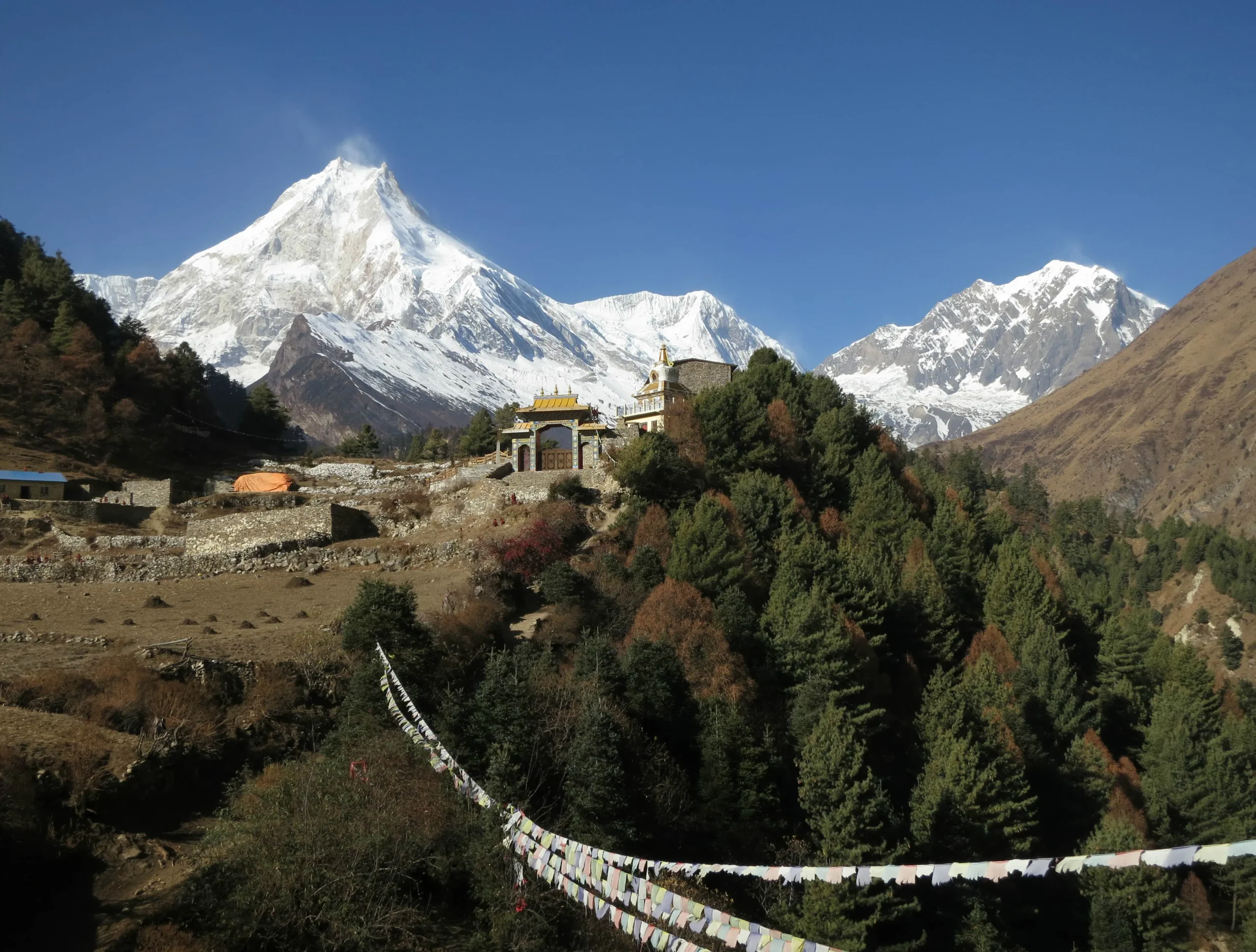
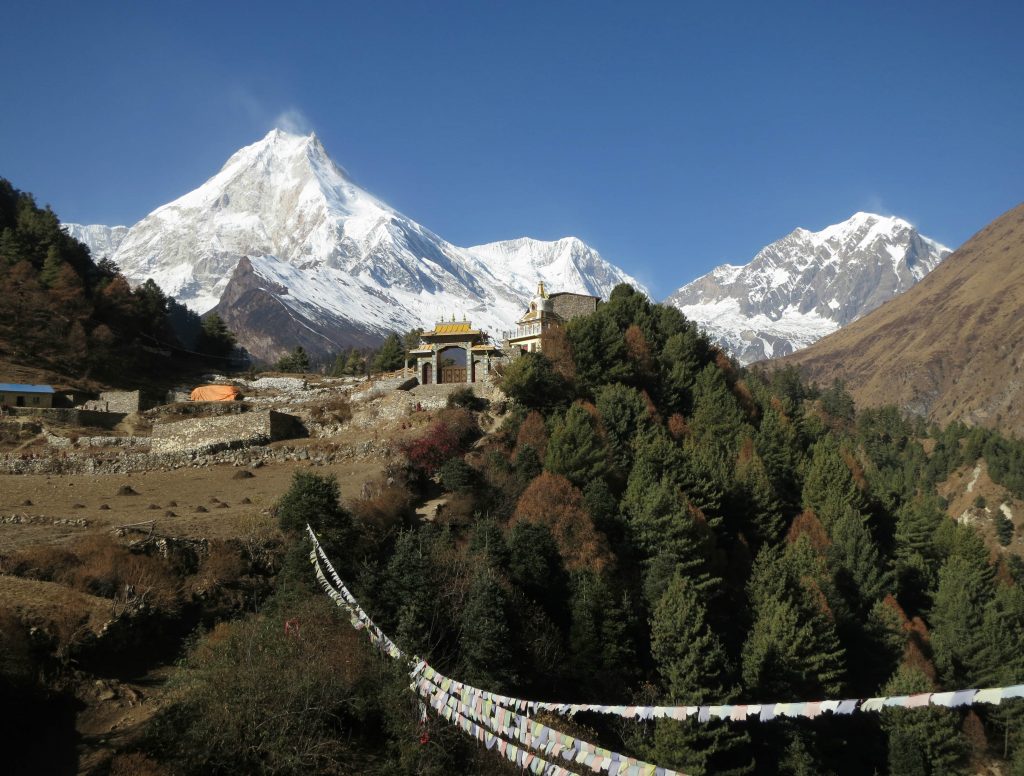
Manaslu circuit Trek in October, November (autumn), and mid-March, April, and May (spring) is the best time of year. In this fall the weather will be perfect and sunshine most of the time. The Autumn season starts in Nepal from third week of September to third week of December. During the season, most of days will be sunshine and cleara you will have chance to encounter crystal view of mountains and hills from a close distance, and the temperature will be reliable in these months. Autumn is the best time of the year for all Nepalese too, because of the in this time we celebrate many biggest festivals like Dhasaen, Tihar, Chhat, and Lhoshar. Spring season trekking to Manaslu is another great time. From mid-March to the end of May is the best time after Autumn. Spring starts after winter, winter here is lots of snowing in the mountains region, winter is short months that we feel and spring again starts with warm temperatures, and a new season for all flowers and sides, when the temperature rises then cold wind goes to higher in mountains, and most of the time you will have clear mountains view, sunshine day, warm temperature, fewer winds, so spring, and autumn are the best time to trek to Manaslu.
Manaslu circuit trekkingroute is very popular trekking route in Nepal, Manaslu circuit trekking route is located in North -West from Kathmandu, and northeast of Ghorkha districted of Nepal, Manaslu trek is more closely located in beneath of Mount Manaslu (alt 8167m) which is the world 8th highest mountains ranked and bordering with a massive Annapurna mountains range and northeast of the Manaslu trek is close to Tibet, China.
Manaslu circuit trekking means walking around the corner of mount Manaslu which is standing an elevation of 8167m from sea level. This massive mountain offers such a beautiful trekking route around, and from begging to ends of the Manaslu circuit trekking you will have a great chance to explore the beauty of Nature, close view of mount Manaslu (alt.8167m) including several mountains peaks, fascinating culture, religions, and charming people and pristine Tibetan villages, and their daily lifestyle.
Our clients also ask when is the Manaslu circuit trek route open for trekkers?
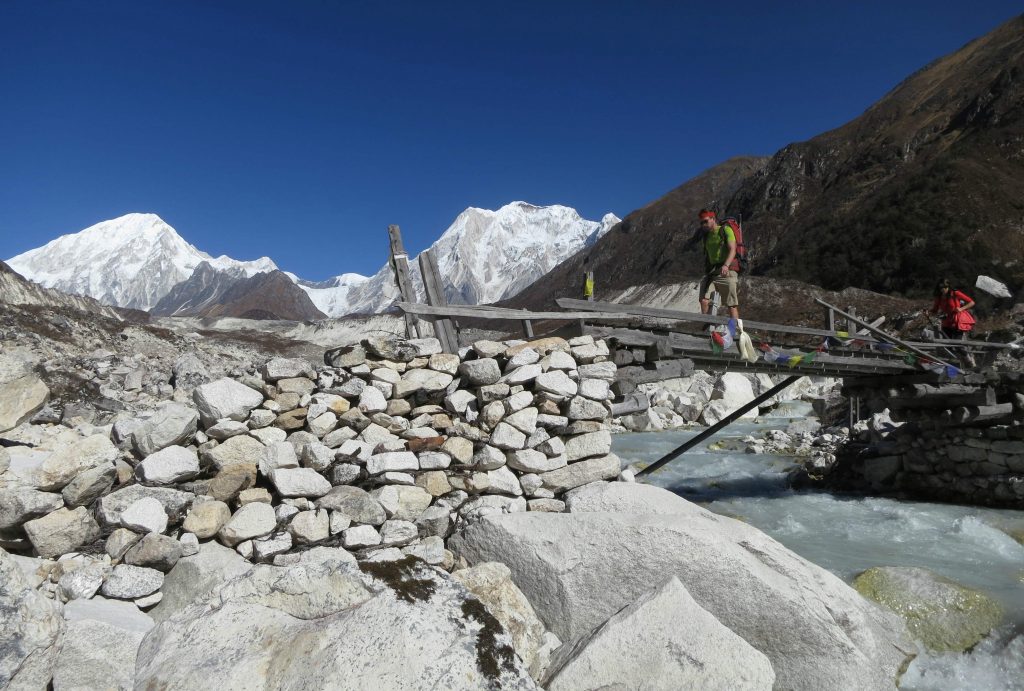
For the first time Manaslu trekking route open from 1992, and Manaslu circuit trek route is newly open trekking route to compare with mount Everest region trekking route and Annapurna region trekking in Nepal, earlier when it was open at that time this route is not famous as Everest and Annapurna or Langtang valley trekking, because of lack of good enough information from Nepal governments, after several years latter this route is becoming very popular trekking in Nepal, because of amazing mountains view from close distance likely Mt. Manaslu (alt. 8167m), Ganesh himla (alt 7425m) Himal chuli (alt. 7894), Nike peak alt. 7854m), Larke peak (alt.6223m), including a pristine forest, Waterfalls, Suspension Bridge over the Budhi Gandaki river, snowcaps, a panoramic view of Manaslu range, charming people and their warm welcome to gust, fascinating culture, and religions from a long time, a magic landscapes local people habitations are the main attraction to the trekkers.
Another most popular highlights of this trek are cross the Larke- la pass (alt.5130) it’s the best viewpoint to watch mount Manaslu and several others mountains, this pass is the hardest pass of this trek, after cross larker-la pass you will come back to another side mountains near an Annapurna mountains ranges. Some people also call for Manaslu circuit trek, larke la pass trek, but both names are the same and trekking route, the itinerary is the same.
Manaslu circuit trek begins after 7 to 8 hours drive from Kathmandu to Soti Khola by bus, but here is another option go by privet jeep or car then for hide a local bus and crowded inside but then ,by privet jeep or car it will be take a less hours then in by public bus, basically you will walk from Sotikhola , almost for one week you will trek in between two big hills through the Budhi Gandaki River till the Namrung villages, you will see first view of mount manaslu from close distance from Lho gaun (alt 3100m), Lho gau Sama gaun old and typical people live here , where you can still see traditional villages , pristine monasteries and chhorten and beautiful painted house , and Lho, Sama gaun , samdu villages are very close Tibet border, where you can see old monasteries , Chhorten, pry flag, and many monks, religiously people who live here they more respect and pry for Buddha, and they are Buddhist, while you trek though this beautiful landscapes and region , you will have a free time to visit in morning or an evening. After the visit, this nice part of this trail you will continually trek towards to Samagaun – Samdu – Dharmasala, and cross the challenging Larke – la pass alt 5130m.
Crossing Larke la pass is a quite challenging day of Manaslu circuit trek, you will start your day very early in the morning to get on top of Larke la pass before wind start, from top of the pass you will see strengthen the view of Manaslu and Annapurna mountains range from a close distance, then you will trek another side of Manaslu Mountain and meet to the classical trek route of Annapurna circuit trek. if you have more time, and still you want to extend trek then you can trek continue to Annapurna circuit, or if you have limited time only for Manaslu circuit trek then you can take a jeep from Dharapani and drive back to Kathmandu via Beshishar.
Attraction part of Manaslu circuit trek:
Trek around 8000m high mountains (Mt.Manaslu)
Cross popular Larke la pass (alt. 5130m)
Visit local people habitation, culture, and religions
Visit old monastery in low gaun and Sama gaun.
Hike to Mahendra Tal or Manaslu base camp from Sama gaun.
Trek through the Budhi Gandaki River and take a hot shower in natural hot spring.
Explore the beautiful landscapes, and visit old and traditional Tibetan villages.
Enjoy watching a magnificent Manaslu mountain view from a close distance.
A taste of Nepali organic food and drinks with warm hospitality.
Visit in old heritage sites in Kathmandu before and after the trek.
(In between Bhimthang and Tilche after cross Larke pass (alt 5130m)
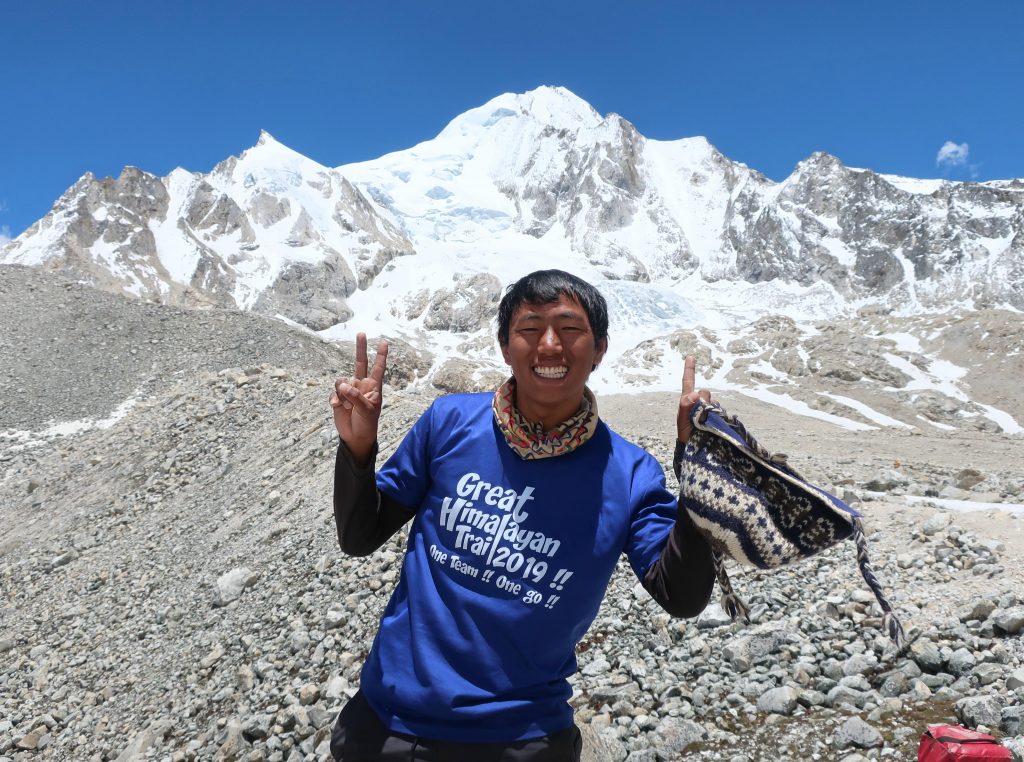
Manaslu Circuit Trekking Itinerary
Arrive in Kathmandu and transfer to your Hotel. (Alt. 1300m)
Preparation Day.
Drive to Soti Khola from Kathmandu (alt. 740m.),8 to 9 hours
Trek from Soti Khola to Machhhi Khola (alt. 920m),5 to 6 hours
Machhi Khola to Jagat, 6 to 7 hours, (alt. 1440m.)
Jagat to Dang, 7 to 8 hours,(alt. 1886m)
Dayng to Nyak or Ghap, 6 to 7, hours (alt. 2150m.)
Nayak or Ghap to Lho gaun 5 to 6 hours, (alt.3100m)
Lho to Sama gaun , 4 hours, (alt 3520m)
Sama gaun rest day, ( Hike to Manaslu base camp)
Samagaun to Samdu, 3 hours, (alt. 3900m)
Sandu to Dharma Sala (Larke la pass base camp), 3 hours (alt 4200m)
Dharmasala to Larke – la passes (alt. 5130m) and trek to Bhimthang alt 3700m), 10 to 11 hours.
Bhim thang to Dhara pani 7 to 8 hours ( alt1900m)
Drive back to Kathmandu via Beshishar, 9 to 10 hours. (Alt 1300m)
Note: above given itinerary is only my suggest itinerary and generally, most trekkers use to follow this itinerary, but if you want to do this trek with a different itinerary like little longer or a bit shorter then our suggested itinerary, then you can extend your trek itinerary with us; we are flexible to make an itinerary anytime. You can customize your trek accordingly your interest and timetable.
Manaslu circuit trekking guide Hire and Daily wages:
Manaslu circuit trek required a government license holder guide, because of the Manaslu region is a restricted area of Nepal, every restricted area of Nepal if you plan for a trek then you should hire a guide, without a guide it’s not possible and you can’t go. And when you go for cheek your entrée permits to police cheek post or in Manaslu conservation office they always ask you about the guide, if you don’t have a guide then they will return back you the same way down. The guide is always helpful in a difficult situation such as if encase snowing in mountains, landslides, avalanches, loss the trail, high altitude sickens, so guide is necessary to have in Manaslu circuit trek, so hire a professional guide, who have been there with groups many times, and most professional guide know about culture, nature, and landscape of the region, while you trek through the valley guide will explain about following programs, and all information.
Professional guide cost per day $ 35 to 38 including guide food, accommodation, and insurance encase for emergency only. In the market, if you search you can also get in cheap wages guide, but they might not well enough experience and idea how to work in mountains with groups. We suggest you pay a bit more and get more information and knowledge about the Manaslu region trek which makes your trip lifetime remember with great trekking experience for you.
Manaslu circuit trek restricted area permits:
While you trek to Manaslu circuit you need to arrange restricted permits, and two conservation permits of Manaslu and Annapurna, which you can make in Kathmandu in the immigration office, you can’t make it individually, you have to go through the trekking agency and guide, before making your restricted and conservation permits they required many documents which will prepare by the trekking agency.
Manaslu restricted area permits costfor week September to November $100 per person and if you stay longer than one week then you have to pay per day $15 per and December to August for one week $75 per person and if you stay longer than one week then per day $ 10 per head. Minimum you need to have two people for making restricted permits.
Manaslu conservation and Annapurna conservation entrée fee is per person $30 for each conservation, and permits are valid for a month.
(One of the most beautiful waterfalls along the way to Manaslu circuit trek.)
Manaslu circuit trek difficulty:
Trekking to Manaslu circuit is not easy trekking routes in Nepal, it’s a moderate /difficult, and high adventure trekking routes in Nepal, for making a successful trek you need to have well prepared mentally and physically including a certain type of fitness level is always required for this types of the trek, Manaslu circuit trekking is difficulty route so before you planning Manaslu circuit trek minimum you need to do basic train for 3 to 4 months likely physical exercise, running, walking, Hiking, cycling many more. This will be helping you especially when it comes to the high altitude. Similar to the Manaslu circuit, another trekking route like Makalu base camp trek, Kanchenjunga base camp trek, Everest base camp trek are also very popular and you need to have a basic fitness level for all this types treks.
Manaslu Circuit Trek Distance
From begging of the trek to end of this trek, basically each day you will walk 8 to 9 km, in hours (6 to 7 hours) each day in promptly the total duration of this trek is 12 full walking days and 2 days is driving before trek start, and after the trek. Reach on top Larke – la pass (alt. 5130m) accordingly my suggestion itinerary it takes 10 days, that means until the Larke la pass it will be 90 km to 95 km and rest of the trek will be 70 to 75 km before trek end in Beshishare, in total it will be 180km without two driving days.
Basically each day you will walk 6 to 7 hours a day, along the way you will have a lunch break, about one and a half house after lunch you will trek continue to your destination, but fewer days of this trek you need to talk very long and someday very shorter than you aspect so in promptly you will trek each day 6 to 7 hours each day.
(Near the top of the Larke pass alt. 5130m.)
Manaslu Circuit trek Weather and Temperature
Temperature:
begging of Manaslu circuit trek it will be very hot temperature, because of your trek start below 3000m, and when you go above 3000m then the temperature will slimly change itself and change into a bit colder compare to begging when you reach close to Manaslu mountain likely Sama gaun, Samdu, and Larke pass it will colder than in lower parts of this trek, during the day you won’t feel colder when you walk, but in the early morning, and evening it will be a bit colder when you go outside for photographer and walk, you will stay at the local tea house which is more insulated, and warm dining hall, Larke pass alt.5130m will be the hardest and cold parts of this trek, promptly temperature will be in between – 10 to 12) in the morning and evening
Generally, most of the trekkers use to go very early morning before suns embark to cross the Larke or any other passes in the mountains, in the afternoon it will be windy and cold. I always suggest you same go very early morning on the high pass day. The important note is the weather is not predictable; please prepared well mentally and physically and bring warm clothes and good trekking boots.
Weather:
Autumn and spring are the best time to visit in Manaslu circuit trek, in this fall, the weather will be very clear and crystal, fewer winds, more sunshine, and no rain. October to end of the November is the best time for trekking to Manaslu, in these months; you would have great chance to see clear mountains view, the cold wind is not descending to the lower valley of this trek, very few chances for rain, most of the day it will be a sunshine day so I would highly recommend you if you are planning for Manaslu trekking then October and November are then the best time of the year.
Another season mid-march to end of May (spring) is a great season for trekking to Manaslu, yes these months are very good and clear weather, hot temperature, less rain, but it might be bit snowing and winds in the afternoon sometime, and you might feel a little cold, but in another hand, next morning the day starts with clear and sunshine, and you will have a great view of mountains with fresh snow and green trees with clear crystal weather. March, April, and May is the famous season for growing new seeds of flowers and trees, while you trek through the valley you will see many different types of flowers and spices of birds and animals. Spring season is always a good time to trek in mountains after an autumn season in Nepal.
High altitude sickness in Manaslu Circuit Trek:
Manaslu circuit trekking start from lower elevation like (alt.740m) Soti Khola to the higher altitude of this trek is (alt.5130m Larke pass) and day by day you will rising up 300 to 400m higher, as you gradually ascending to higher altitude sickness also encasing slowly, once you reach at above 2500m above generally you will feel the high altitude, and the lake of oxygen in your buddy, acute mountain sickness (A.M .S) early systems are headache, vomiting, no appetite, light fever, extreme fatigue, breathing problem. High altitude is one of the most dangerous and harmful dieses in the mountain. You must think and make a quick decision about the prevention of this before it goes into the serious condition in the mountain.
High altitude systems:
Vomiting
Less appetite
Tiredness
Badly headache inside and mostly backside of the head.
Light fever
Shortness of breath etc…
Early Prevention of High altitude sickness:
Drink warm water
Garlic soup
400 to 500 descending from the current location
Wear warm clothes and drink hot
Try to eat slowly
Stay communicates with your guide or friends.
For hiding, this altitude sickness hikes 200 to 300m ascends and descends from your tea house every day.
Take altitude medicine (Diamox) 125gm in 6 hours different) or if you have your own medicine with you accordingly your doctor advise
If in case your health is going into the poor condition then do not let immediately call evacuation. Your health is more important than everything.)
How to hide an altitude sickness in Manaslu circuit trek
Drink more water.
Climb higher and sleep low.
Do not go a directly higher place, 400 to 600 would the limited to go in one day, and Make acclimatization day (Rest day) in between the trail.
Go with a professional guide and team who have a good enough knowledge about this.
Do not drink alcohol above 3000m until the complete your trek.
Manaslu circuit trekking Packing list
Day back
Water bottle 2 pair
Trekking boots.
Flip-flops
Sunglass
Woolen hat
Headlight.
Extra camera battery
Gloves thick & thin
Inner shit
Sleeping bag.
Full t-shirt 3 pair
Half t-shirt 4 pair
13Long trousers 2 pair
Inner trousers 2 pairs.
Shocks full 3 pair
Shocks half 3 pairs.
down jacket
Sweater
Raincoat
Walking poles
Sun cream
Half jacket.
Food and accommodation in Manaslu Circuit trek:
Food:
On this trek, you will have great hospitality, and delicious food from local tea house and home stay, don’t aspects like your hometown or western types of food, but still, you can eat basic food like Nepali dal bhat , breads, soups, noodles, potatoes, including lots of organic foods and drinks. And we suggest you please eat local organic food and support them, your money will go directly to them, Manaslu circuit trek is like Annapurna or Everest region, you can choose from the menu board and order at the restaurant every day.
Accommodation:
From the beginning of the trek to end of the trek you will sleep in basic sharing base Tea house and lodges, Manaslu circuit trekking trail becomes a very popular trekking route in Nepal so many local people are building many nice tea houses along the route accept in Dharmasala or (the night before you pass Larke ) because in this place governments still not authorized to build a nice tea house
Final Say
on the top of Larke pass (alt 5130m)
Manaslu Circuit treks are one of the most beautiful trekking routes in Nepal, where you can see, world 8th highest mountain including many beautiful mountains peaks. trekking to Manaslu is not an easy for beginners trekkers, compared to Everest base camp and Annapurna region, Manaslu and around trek including Larke pass trek is more adventure and count in hard treks in Nepal, so basically you have to be well prepared well with good enough fitness level.
We Nature Explore Trekking team are the best local experts as a local trekking and climbing agency in Nepal, we organize all types of outdoor and indoor activities since 2015. We have a great team who work with us full time and they are native from mountains region of Nepal. Our guides know how to take care of and support our clients in the mountains. Our main focus is your safety and security in the mountains, whatever we talk about here the same things we deliver in the mountain too. So if you are planning for trekking to Manaslu or Everest region, Annapurna region, Langtang region,Kanchenjunga base camp trek, and peak climbing in Nepal then Contact us anytime we are happy to be your help in Nepal as a local guide.
The Everest region, also known as the Khumbu region, is one of the iconic trekking destinations in the world. Nestled in the north eastern part of Nepal, it offers trekkers breathtaking views of himalayas, rich culture. The region is dominated by some of the highest peaks on Earth, including the majestic Mount Everest (Sagarmatha ) which stands at 8848 m (29,031 ft) and is the tallest mountain the whole world.
The Everest region is part of the Sagarmatha National Park , a UNESCO World heritage site that covers an area of 1,148sq.km. The region’s topography is shaped by ancient glaciers, resulting in dramatic formations such as moraines, cirques and glacial lakes. The area is also home to the Dudh Koshi river,through the Khumbu valley.
Namche Bazaar, the largest town in the Khumbu region, serves as the cultural and economic hub.It is vibrant town that offers trekkers a chance to acclimatize and explore the Sherpa way of life. The Tengboche Monastery, the largest gompa (monastery) . Sagarmatha National Park is home to several rare and endangered species. The elusive snow leopard, Himalayan Tahr, musk deer and red panda are some of the wildlife that inhabits this region. Bird watchers can also spot a variety of birds, including the Himalayan monal ( the national bird of Nepal), blood pheasant, and various species of eagles and vulture.
The Everest region experiences four different seasons which are Summer, Winter, Autumn and Spring. Spring (March to May) is one of the most popular times to trek in the Everest region. The weather is relatively stable, with clear skies and moderate temperatures. The rhododendron forests are in full bloom, adding vibrant colors to the landscapes. Autumn ( September to November ) is considered as the best time to visit the Everest region. The weather is cool and stable, with clear skies offering breathtaking views of the mountains.
Winter season (December to February) the region experiences cold temperatures, especially at higher altitudes. However, the skies are clear, the trails are less crowded. This season is suitable for those who are prepared for cold weather and wish to avoid the crowds. Monsoon (June to August ) season brings heavy rainfall to the region, making trails slippery and increasing the risk of landscapes. So, we don’t recommend you to trek in this season.
The Everest region offers some of the most breathtaking mountain scenery in the world with iconic peaks such as Everest, Lhotse, Nuptse, Ama Dablam, Makalu, Cho Oyu, and many more. The Everest region offers a variety of trekking and mountaineering opportunity, ranging from the moderate treks to Strenuous high-altitude expeditions. The most famous trek is the Everest Base Camp which takes you to the base camp of Everest. Other popular treks includes the Gokyo Lake Trek, The three High Passes Trek, and the Ama Dablam Base Camp Trek. Below are some of the best trekking trails in the Everest region:
1)Everest Base Camp Trek:
Everest Base Camp (EBC) Trek is one of the most iconic trekking routes in the world, offering the adventurers the chance to walk in the footsteps of the legendary mountaineers while experiencing the breathtaking beauty of the Himalayas. The trek typically takes around 12-15 days, depending on your pace and acclimatization schedule. Everest Base Camp Trekking starts from Lukla. It is like 30 minute flight from Kathmandu to Lukla Airport .
Once you land your trek starts officially to reach Phakding which is the resting point for day one. For the next day to the Namche bazar there will be an easy trek as we’ll walk only for like 5 hrs. Different mountains like Thamserku, Ama Dablam, and others are seen from the Namche Bazar. For the next following days the trek goes through different villages like Tengboche, Syangboche, Pangboche, Dingbuche, Lobuche, Gorak Shep and finally to the Everest Base Camp 5364 m. Trekkers Will also get the chance to visit the Khumbu Glacier and the famous viewpoint of Kala Patthar for panoramic sunrise views over Everest.
Facts of the Everest Base Camp Trek
Duration : 14 days Best Months : Sep-June Trek difficulties : Moderate. Maximum Elevation : 5550m ( Kala Patthar) Starting point : Lukla Ending Point : Lukla Permits : TIMS card, Everest National Park entry permit, Pasang Lhamu municipality permits. Major Attraction: Mt. Everest 8848 m, Lhotse Cho Yu, Makalu, Kala Patthar, Museum, Sherpa culture, Monasteries and Gompa. Accommodation : Hotel in Kathmandu and Guesthouse and Lodges during the trek.
Outline Itinerary
Day 01: Arrival in Kathmandu and transfer to your hotel (Alt.1300m). Day 02: Trip preparation and Kathmandu Valley Sightseeing. Day 03: Fly to Lukla and trek to Phakding. Day 04: Trek from Phakding to Namche Bazaar. Day 05: Rest day at Namche Bazaar. Day 06: Trek from Namche Bazaar to Tengboche. Day 07: Trek from Tengboche to Dingboche.
Day 08: Rest in Dingboche and hike to Nangkartshang hill. Day 09: Trek from Dingboche to Lobuche. Day 10: Trek from Lobuche to Everest Base Camp and back to Gorak Shep. Day 11: Early morning hike to Kala Patthar viewpoint and back to Gorakshep, trek to Pheriche. Day 12: Trek back to Namche Bazaar. Day 13: Trek back to Lukla. Day 14: Fly back to Kathmandu.
2) Everest View Trek:
Everest view trek is ideal for those who want to experience the Everest region without the full challenge of the Base Camp Trek, this shorter trek offers the stunning panoramic views of the Everest and its neighboring peaks. It includes a visit to the charming village of Namche Bazaar and Tengboche and the opportunity to explore the local culture and customs.
Starting from the vibrant city of Kathmandu, the journey takes you on a scenic flight to Lukla, the gateway to the Everest region. From there, a moderate trek leads you through the heart of the Sherpa homeland, where you’ll experience traditional village life and stunning landscapes.
The highlight of this trek is reaching the iconic viewpoint at Tengboche. Here at an altitude of 3,860m (12,660ft) you’ll be treated to an unparalleled view of Mt. Everest (8848 m), Lhotse And Ama Dablam. Along the way , you’ll pass through the charming villages like Namche Bazar, a bustling hub where you can acclimatize and soak with the local culture. The trek is adorned with the ancient monasteries, vibrant prayer flags and warm Sherpa Hospitality. The trek Everest view is not just about the view but its all about the experience . You’ll traverse through the lush forest, cross the different traditional sherpa villages, suspension bridges and explore the rich heritage of the Everest region.
Trek Facts:
Duration : 8 days. Best Months: Sep- Nov, Mar- May. Trekking Difficulties : Easy. Maximum Elevation : 3,800m. Starting point : Kathmandu. Ending Point : Kathmandu. Permits : TIMS card and Sagarmatha National Park entry permits. Major Attraction : View of Everest, Lhotse, Ama Dablam , Traditional Sherpa villages, Tengboche Monastery Accommodation : Guesthouse/ Lodge.
Outline Itinerary
Day 01: Arrive in Kathmandu (1,300m). Day 02: Fly to Lukla (2,800m) and hike to Phakding (2,610m), 4 hours. Day 03: Trek from Phakding (2,610m) to Namche Bazaar (3,410m), 5-6 hours. Day 04: Acclimatization day in Namche Bazaar (3,410m). Day 05: Trek from Namche Bazaar (3,410m) to Tengboche (3,800m), 4-5 hours.
3) Three high Pass Trek
Three high Pass Trek is suitable for those tekkers who seek a challenging adventure , the trek offers the opportunity to cross the three high mountain passes- Kongma La, Cho La and Renjo – La, where each pass provides unique perspectives of the Everest region. The trek includes the visit to Everest Base Camp, Gokyo Lake. Cho La Pass (5420m), Kongma La Pass (5335m) and Renjo La Pass (4790m). Here is the description of these three high passes.
Kongma La Pass
Kongma La is the highest of the three passes and is considered as one of the most challenging due to its steep and rocky terrain. The pass offers stunning views of the Khumbu glacier, Nuptse, Lhotse and Makalu. Trekkers crossingKongma La must navigate through the rocky paths and may also encounter snow, making it a demanding experience. However the panoramic view at the top makes all the effort worthwhile. Elevation : 5,535m (18,159 ft) Location : Between Chhukhung and Lobuche
Cho La Pass
Cho La Pass is also known for its icy and snow-covered trails, making it a technical and challenging pass to cross. The pass connects the Gokyo Valley with the Everest Base Camp region. Trekkers must be cautious while crossing Cho La , especially in the winter when paths can be slippery and hazardous. The pass offers the breathtaking views of the surrounding peaks, including Ama Dablam and Cholatse and leads to the beautiful Gokyo Lakes. Elevation : 5,420m Location : Between Dzongla and Gokyo
Renjo La Pass
Renjo La Pass is the westernmost of the three passes and provides some of the most spectacular views in the Everest region. From the top of RenjoLa, trekkers can see a stunning panorama that includes Everest, Lhotse, Makalu and the entire GokyoValley with its turquoise lakes. The descent from the Renjo La to the village of Thame is steep but offers a rewarding experience with some beauty of the region. Elevation : 5,360m Location : Between Gokyo and Thame
Trek Facts
Duration : 20 days. Best Season : Sep- Nov, Mar- May. Trek Difficulties : Challenging. Maximum Elevation : 5,545m ( Kala Patthar ). Starting point : Kathmandu. Ending point : Kathmandu. Permits : TIMS card , Sagarmatha National Park entry permits, PasangLhamu municipality permits. Major Attration : Renjo La , Cho La , Kongma La pass, Everest Base Camp, Gokyo Lakes, Kala Patthar, Tengboche Monastery Accommodation : Guesthouse and lodges.
Outline itinerary
Day 01: Arrive at Kathmandu (1,400m). Day 02: Trip Preparation Day. Day 03: Fly to Lukla (2,800m), then trek to Phakding (2,610m), 3-4 hours. Day 04: Trek from Phakding (2,610m) to Namche Bazaar (3,440m), 5-6 hours. Day 05: Rest at Namche Bazaar (3,440m). Day 06: Trek from Namche Bazaar (3,440m) to Debuche (3,820m), 5-6 hours. Day 07: Trek from Debuche (3,820m) to Dingboche village (4,410m), 5-6 hours. Day 08: Rest in Dingboche (4,410m), morning short hike to Nagarjun Hill (5,100m), and free time. Day 09: Trek from Dingboche (4,410m) to Chhukung (4,730m), 4-5 hours. Day 10: Trek from Chhukung (4,730m) to Kongma-La pass (5,535m), then trek to Lobuche (4,940m), 8-9 hours.
Day 11: Trek from Lobuche (4,940m) to Gorakshep (5,164m), visit Everest Base Camp (5,364m), then return to Gorak Shep (5,164m), 8-9 hours. Day 12: Trek from Gorak Shep (5,164m) to Kala Patthar (5,550m), then trek to Dzongla (4,830m), 8-9 hours. Day 13: Trek to Thagnak (4,700m) via Cho La pass (5,420m), 7-8 hours. Day 14: Trek to Gokyo Lakes (4,790m), 4-5 hours.
Day 15: Early morning climb to Gokyo Ri (5,357m) and back to Gokyo Lake (4,790m), 5-6 hours. Day 16: Trek from Gokyo Lake (4,790m) to Lungden (4,380m) via Renjo La pass (5,340m), 7-8 hours. Day 17: Trek from Lungden (4,380m) to Thame (3,820m), 5-6 hours. Day 18: Trek from Thame (3,820m) to Namche Bazaar (3,440m), 5-6 hours. Day 19: Trek from Namche (3,440m) to Lukla (2,800m), 6-7 hours. Day 20: Fly back to Kathmandu (1,400m), 30-35 minutes.
4) Everest Base Camp via Cho La Pass
Everest Base Camp Trek via Cho La Pass is the full adventure and challenging trai;l in the Everest region. This long Trek lasts for almost 19 days. Trek to EBC via Cho La Pass is quite difficult compared to the other trek in this region. You will be trekking all the way up to the Kala Patthar 5550mand then to Cho La Pass 5420m. You’ll be trekking through the different beautiful villages like Lukla, Phakding, Namche Bazar, Tengboche, Dingboche, Lobuche , Gorak Shep, Zong La . You’ll also witness the Khumbu glacier, the largest glacier of this region. Mt. Everest, Lobuche, Ama Dablam, Thamserku and Pumori can be seen during this trek from different angles.
Crossing this pass is one of the major obstacles during the trek. To cross these passes, we have to start our trek early in the morning to get the beautiful view. Due to the difficulty level, only few trekkers can do this trek. Everest, Lhotse, Nuptse, Amadablam , Tha,serku and Pumoru and other mountain ranges can be seen during this Everest Three Pass Trek
The Everest base camp via Cho La pass is truly magical throughout the trek. You will experience numerous.types of culture and traditions. Everest Base Camp Trek via Cho La Pass is the full adventure and challenging trail in the Everest region. This long Trek lasts for almost 19 days. Trek to EBC via Cho La Pass is quite difficult compared to other treks in the region.
Trek Facts:
Duration : 16 days. Best Months : Sep-Nov, Mar- May. Trek Difficulties : Challenging. Maximum Elevation : 5,550m( Kala Patthar). Starting point : Lukla. Ending point : Lukla. Permits : TIMS card, Sagarmatha National Park entry permit, Pasang Lhamu municipality permits. Major Attraction : Everest Base Camp , Cho La Pass, Gokyo Lakes, Kala Patthar, views of Everest, Lhotse and Makau. Accommodation : Guesthouses and lodges.
Outline Itinerary
Day 1:Arrive in Kathmandu (1400m). Day 2:Flight from Kathmandu (1400m) to Lukla (2840m) then Trek to Phakding (2610m). Day 3:Trek from Phakding (2610m) to Namche Bazaar (3440m). Day 4:Acclimatization Day in Namche Bazaar (3440m). Day 5:Trek from Namche Bazaar (3440m) to Tengboche (3860m). Day 6:Trek from Tengboche (3860m) to Dingboche (4410m). Day 7:Acclimatization Day in Dingboche (4410m). Day 8:Trek from Dingboche (4410m) to Lobuche (4910m).
Day 9:Trek from Lobuche (4910m) to Gorakshep (5140m) then to Everest Base Camp (5364m), back to Gorakshep. Day 10:Trek from Gorakshep (5140m) to Kalapatthar (5555m) then Dzongla (4830m). Day 11:Trek from Dzongla (4830m) to Thagnak (4750m) via Cho La Pass (5367m). Day 12:Trek from Thagnak (4700m) to Gokyo (4750m). Day 13:Trek from Gokyo (4750m) to Dhole (4200m). Day 14:Trek from Dhole (4200m) to Namche Bazaar (3440m). Day 15:Trek from Namche Bazaar (3440m) to Phakding (2610m) and then to Lukla (2840m). Day 16:Flight from Lukla (2840m) to Kathmandu (1400m).
5) Gokyo Lakes and Gokyo Ri Trek
For trekkers who are seeking extraordinary in the Everest region, the Gokyo Lakes and Gokyo Ri trek offers an unforgettable adventure filled with the pristine turquoise lakes, mountain view and the peaceful atmosphere The Gokyo lake is the series of the six glacial lakes, and is one of the highest freshwater lake systems in the world, sitting at an altitude of around 4,700m . These lakes are not only breathtakingly beautiful but also hold spiritual significance for the local people .
Starting in Lukla, the trek follows the Dudh Koshi river, leading you through the Sherpa villages like Namche Bazar and Dole. As you ascend , the landscapes transform from the dense forest to the alpine meadows , eventually giving way to the rocky terrain of the high himalayas. The trail to Gokyo is less crowded than the traditional Everest Base Camp.
Upon reaching the Gokyo Valley , you’re greeted by the stunning sight of the Gokyo Lakes, their waters shimmering in the shades against the backdrop of towering snow-capped peaks. The village of Gokyo , nestled on the shores of the third lake, serves as the perfect base for exploring the area.
The main highlight of the trek is the climb to Gokyo Ri , a nearby peak standing at 5,357m (17,575). The ascent is challenging but rewards the incredible view.from the summit you’ll witness the spectacular views of Mt. Everest, Lhotse, Makalu and Cho Oyu. The sight of the sun rising or setting over these giant mountains , reflected in the crystal clear water of the lake below, is a moment that will remain with you forever. Throughout the trek you’ll encounter the warm hospitality of the Sherpa people and visit the ancient monasteries that will add the cultural aspects . The region is also home to diverse wildlife including Himalayan Tahrs, Snow leopards and variety of the bird species.
Trek Facts
Duration:12 days Best Months: Sep-Nov, Mar-May Trek Difficulties: Moderate to challenging Maximum Elevation: 5,357m (Gokyo Ri) Starting Point: Lukla Ending Point: Lukla Permits: TIMS card, Sagarmatha National Park entry permit Major Attraction: Gokyo Lakes, Gokyo Ri, views of Everest, Lhotse, Makalu, Cho Oyu, Ngozumpa Glacier Accommodation: Guesthouses and Lodges.
Outline Itinerary
Day 01: Arrival in Kathmandu (1,400m) Day 02: Trip preparation day in Kathmandu Day 03: Morning flight to Lukla (2,800m), trek to Phakding (2,610m), 3-4 hours Day 04: Trek to Namche Bazaar (3,440m), 5-6 hours Day 05: Acclimatization day in Namche Bazaar, optional hikes to higher altitudes Day 06: Trek to Dole (4,038m), 5-6 hours Day 07: Trek to Machhermo (4,470m), 4-5 hours Day 08: Trek to Gokyo Lake (4,790m) and hike to Gokyo Ri viewpoint (5,357m), 5-6 hours Day 09: Trek back to Dole (4,038m), 4-5 hours Day 10: Trek back to Namche Bazaar (3,440m), 5-6 hours Day 11: Trek back to Lukla (2,800m), 6-7 hours Day 12: Fly to Kathmandu (1,400m), 30-35 minutes.
6)Pikey Peak Trek
Pikey Peak is renowned for its breathtaking sunrise and sunset views. It is the hidden gem waiting to be discovered. Located in the lower Everest region, from the summit , you can see an incredible panorama that stretches from Dhaulagiri in the west to Kanchenjunga in the east, with the mighty Mount Everest taking the center stage. Sir, Edmund Hillary himself claimed that Pikey peak offered the best view of the Everest he had ever seen.
The trek begins in the small village of Dhap which is easily accessible by road from Kathmandu making this one of the more convenient treks in the Everest region. As you ascend , the trails take you through the lush rhododendron forests, charming Sherpa villages and sacred monasteries, offering a rich blend of natural beauty and the cultural heritages.
One of the highlights of the pikey peak Trek is the opportunity to experience the authentic Sherpa lifestyle in a less commercialized setting. The villages you pass through such as Jhapre and Junbesu are less frequented by trekkers. You’ll have the chance to visit ancient monasteries, participate in the local rituals and enjoy the warm hospitality in traditional teahouses.
Reaching the summit of Pikey Peak at 4,065m (13,336 ft) brings out the rewarding challenge. The view from the top ,with the sun casting a golden glow over the snow-capped peaks is an experience you’ll never forget . Lastly Pikey Peak is perfect for those seeking a short yet spectacular trek with unparalleled mountain views and a deep dive into the rich cultural tapestry of the Everest region.
Trek Facts
Duration: 9 days Best Months: Sep-Nov, Mar-May Trek Difficulties: Moderate Maximum Elevation: 4,065m (Pikey Peak) Starting Point: Kathmandu Ending Point: Kathmandu Permits: TIMS card, Gaurishankar Conservation Area entry permit Major Attraction: Pikey Peak summit, panoramic views of Everest, Kanchenjunga, and Makalu, monasteries, Sherpa culture Accommodation: Guesthouses and Lodges.
Outline itinerary
Day 01: Arrival in Kathmandu and transfer to your hotel (1,300m) Day 02: Trip preparation day Day 03: Drive to Dhap from Kathmandu (3,200m), 6-7 hours Day 04: Trek from Dhap to Jhapre (3,250m), 4-5 hours Day 05: Trek from Jhapre to Pikey Peak Basecamp (3,670m), 6-7 hours Day 06: Trek from Pikey Peak Basecamp (3,670m) to Pikey Peak Summit (4,065m), then trek back to Jase Bhanjyang (3,300m), 4-5 hours Day 07: Trek from Jase Bhanjyang (3,300m) to Jumbesi (2,300m), 4-5 hours Day 08: Trek from Jumbesi (2,300m) to Phaplu (2,500m), 4-5 hours Day 09: Drive or fly back to Kathmandu (1,300m), Drive: 7-8 hours, Fly: 30 minutes.
7 ) Ama Dablam Base Camp Trek
Ama Dablam, often referred to as the “ Matterhorn of the Himalayas” is one of the most beautiful and recognizable peaks in the world. The trek to its base camp provides breathtaking views of tis towering mountain , along with a close encounter with the culture and lifestyle of the Sherpa people.
Starting in Lukla, the gateway to the Everest region, the Ama Dablam trek takes you through lush forest , quaint villages, and across suspension bridges.The path winds its way up to the famous town of Namche Bazaar, where trekkers can acclimatize while enjoying the stunning views of the Everest and its neighboring mountain. As you continue on, the trial becomes quieter, leading you to the remote village of Pangboche. This is where you’ll get your first close-up view of Ama Dablam, standing tall and majestic against the deep blue sky. The trek culminates at Ama Dablam Base Camp, nestled at the foot of the mountain. Here , you’re surrounded by towering peaks, including Everest, Lhotse and Makalu.
Along the way you’ll pass through ancient monasteries , meet friendly locals and immerse yourself in the rich traditions of the Sherpa culture. The trek is challenging but rewarding , making it perfect for those who want a more peaceful himalayan experience without the heavy crowd of the Everest Base Camp route.
Trek Facts
Duration: 10 days Best Months: Sep-Nov, Mar-May Trek Difficulties: Moderate Maximum Elevation: 4,570m (Ama Dablam Base Camp) Starting Point: Lukla Ending Point: Lukla Permits: TIMS card, Sagarmatha National Park entry permit, Pasang Lhamu municipality permits Major Attraction: Ama Dablam Base Camp, views of Ama Dablam, Everest, Lhotse, Tengboche Monastery, Sherpa culture Accommodation: Guesthouses and Lodges.
Outline Itinerary
Day 01: Arrive in Kathmandu (1,300m) Day 02: Fly to Lukla (2,800m), 30 minutes, then trek to Phakding (2,610m), 3-4 hours Day 03: Trek to Namche Bazaar (3,440m), 5-6 hours Day 04: Acclimatization day Day 05: Trek to Phortse (3,840m), 5 hours Day 06: Trek to Pangboche (3,900m), 3-4 hours Day 07: Trek to Ama Dablam Base Camp (4,580m) and return to Pangboche (3,900m), 7-8 hours Day 08: Trek back to Namche Bazaar (3,440m) via Tengboche Monastery (3,800m), 6 hours Day 09: Trek back to Lukla (2,800m), 6-7 hours Day 10: Fly back to Kathmandu (1,300m), 30 minutes, and transfer to your hotel.
Nepal is a trekker’s paradise and home to some of the world’s best trekking destinations. Nepal offers diverse landscapes, rich culture, and breathtaking mountain views. We lead adventures through traditional villages with a mix of Himalayan views, lush forests, cultural encounters, serene beauty, stunning glaciers, and many more. Each trek in Nepal is an immersive journey into its natural beauty and rich cultural heritage.
We have made list of the best trekking destinations in Nepal based on trek grade (easy, moderate,or hard), mountains views, landscapes, and cultures. The lists include:
Everest Region-
Many of us know about Mount Everest’s range and Khumbu. It is a very popular destination for trekking and climbing in the Everest region. In the Khumbu region many opportunities to see high mountains, beautiful Gokyo Lakes, deep glaciers, wildlife, and rivers, high and long suspension bridges as well visit local Sherpa villages, old monasteries, Museum, and many more. In this Himalaya range you can see the views from very close distance including five mountains that are above 8000 meters such as (Mount Everest alt.8848m/29,028ft), (Mount Lhotse alt. 8616m28,267ft), (Mount Cho-Oyu alt 8210m/26,935ft), (Mount Kanchenjunga alt. 8586m28,169ft),(Mount Makalu alt. 8485m/27,837ft) including hundreds of beautiful mountains.
We will have a great chance to meet the Sherpa people and their daily life. In Everest national park you shall encounter the different types of wildlife animals and different species of birds, and flora and fauna. To get to this region, either you should take a short 30 minute scenic flight from Kathmandu to Lukla airport, or a long drive to Surke and start your trek from there. During the flight you will see many mountain ranges and landscapes and fly into the mountain’s narrow route. During the drive you will encounter a lot of farming fields, traditionals villages, some valleys, and beautiful landscapes.
The view of Mt. Ama Dablam seen from near Pangboche village, on the way to Everest Base Camp.
Trip overview
Region: Everest Starting point: Kathmandu
Duration: 14 days Ending point: Kathmandu
Max. Altitude: 5,554 meters Trek Grade: Moderate
Overnight Stay: Local Lodges/Teahouses.
Highlights:
Trek to Namche, a busy mountain hub surrounded by mountain views.
We trek through Tengboche and visit the beautiful, high altitude monastery.
When we reach Base Camp (5364m), we have plenty of time for pictures and to explore this iconic place.
Early morning climb of Kala Pattar (5550m), to watch the sunrise over Mount Everest.
We allow for several acclimatization days to ensure your trek is as comfortable as possible.
We stay in teahouses along the route and you can experience Nepalese food and culture first hand.
Everest Base Camp trek is a must for adventure seekers, taking you through stunning landscapes, Sherpa villages, and up-close views of the world’s highest peak, Mount Everest and many other mountains nearby. Introduction with local Sherpa people, exploring their villages and Monasteries, encountering some wildlife in the Sagarmatha national park are some of the exciting parts of the trek. The trek begins from Kathmandu to Lukla by short flight or Kathmandu to Surke by long drive. Then, basically you will start walking to Everest base camp for 8 to 9 days including acclimatization day, and return to Lukla for 3 to 4 days, then, take a flight back to Kathmandu the next morning. Read more..
Trek to Namche, a busy mountain hub surrounded by mountain views.
We trek through Tengboche and visit the beautiful, high altitude monastery.
When we reach Base Camp (5364m), we have plenty of time for pictures and to explore this iconic place.
Early morning climb of Kala Pattar (5550m), to watch the sunrise over Mount Everest.
Explore the Gokyo lake valley and climb to Gokyo- ri viewpoint for watching a great mountain views.
Cross challenging Cho- la pass alt.5360m and Ngozumpa glacier.
Great experience of walk-in high altitude with nice trekking memories from the Everest region.
We allow for several acclimatization days to ensure your trek is as safe and comfortable as possible.
We stay in teahouses along the route and you can experience local Nepalese food and culture.
The Everest Base Camp with Gokyo Lakes trek is a remarkable journey that combines the iconic Everest Base Camp route with the breathtaking beauty of the Gokyo Lakes. We will trek to EBC (alt 5364m.) first, then continue trek to Gokyo valley via Chola pass (alt. 5361m). This 17 days trek offers trekkers a chance to explore the best of the Everest region. The hike begins from Lukla and end back in Lukla.
Along the way, you’ll pass through traditional Sherpa villages, monasteries, walk amidst towering peaks like Ama Dablam and Lhotse, and cross the challenging Cho La Pass and Ngozumpa glacier. The trek also includes a climb to Gokyo Ri, providing panoramic views of Everest, Makalu, Cho-Oyu, Nuptse, Cholatse, Tabuche, Thamserkhu, Ama dablam, and more. This route offers a memorable adventure, culture, and beauty of Himalayas, making it a real lifetime experience. Read more..
Early morning climb to Kala Pattar (5550m) to watch the sunrise over Mount Everest.
Cross the Kong Ma La Pass (5535m) for amazing views of AmaDablam, Lhotse, and Makalu.
Cross the Cho La Pass (5360m).
Climb Gokyo Ri for more mountain views and visit the beautiful Gokyo Lakes.
Cross the Renjo La Pass (5368m) for 360-degree mountain views — the most beautiful pass!
We allow for several acclimatization days to ensure your trek is as comfortable as possible.
We stay in teahouses along the route and you can experience Nepalese food and Sherpa culture.
One of the most adventurous and challenging treks in Khumbu region, Three High Passes Trek is ideal for experienced trekkers and adventure lovers. This trek takes you over the three breathtaking passes- Kongma-La (5,535m), Cho-La (5,420m), and Renjo-La (5,360m) via Everest Base Camp. The stunning panoramic views of the giant mountains like Everest, Lotse, and Makalu is seen from the top of 2 passes and a nice valley with panoramic mountain views is seen from on top of Cho-La. You can also encounter Khumbu glacier, Ngozumpa glacier, and beautiful Gokyo lakes. This trek is a thrilling journey through rugged terrain, remote villages, and awe-inspiring landscapes.
The trek starts from Lukla after taking short flight and also ends in Lukla through Namche bazaar. Read More..
Annapurna Region
The Annapurna region in Nepal is indeed a remarkable area, home to the stunning Annapurna mountain range, which includes Annapurna I (8,091 meters) and numerous 7,000 and 6,000-meter peaks. This region is framed by the Kaligandaki Gorge and the Marsyangdi River. While local residents often highlight its agricultural richness and self-sufficiency, it is also known for its breathtaking beauty, encompassing the majestic Himalayas, serene rivers, diverse landscapes, and a rich blend of cultures and religions.
The Annapurna Conservation Area (7,629 square kilometers), offers some of the world’s most famous trekking routes. These include the Annapurna Circuit, Ghorepani-Poon Hill Trek, Annapurna Base Camp Trek, Mardi Himal Trek, and Annapurna-Dhaulagiri Trek, among others.
With the recent expansion of dirt roads, the traditional three-week Annapurna Circuit has been shortened, allowing it to be completed in about 11 to 13 days. While these roads may make the trek more accessible, the natural beauty, culture, and landscapes of the region remain largely unchanged.
For those seeking an unforgettable adventure in the Himalayas, we highly recommend trekking in the Annapurna region as an unforgettable lifetime experience.
Overnight: Local Lodge/teahouse Type of Trek: Local lode and Homestay.
Highlights:
Cross the longest pass in the world Thoron-la pass alt 5416m.
Visit Manag and Pisang old Tibetan villages.
Visit Tilicho lake which is the highest lake in Nepal.
Enjoy watching a magnificent Annapurna and Dhaulagiri mountains view from a close distance.
Visit old monasteries, temples, museum and local people daily life, and their culture and religions.
A Scenic drive from Kathmandu to the trekking starting point, and Great trekking experience in your lifetime.
Enjoy delicious food and stay at their local tea houses.
Annapurna circuit trek is very old and beautiful trekking routes in the Annapurna region, and the route is mainly lying in Manag and Mustang district of Nepal. Annapurna circuit trek offers you a magnificent mountain view including Annapurna I (8,091m) and several above 7,000m higher mountains like Annapurna II (7,978m) Annapurna III (7,539m.) Annapurna IV (7,525M.), and Tilicho peak (6,885m) including many other peaks, and you will also see different types of culture, nature, and religions in the region.
The trekking route is becoming a bit shorter than before, because the dirt road is reached untill Manag. If you want to make your trek shorter you can drive until Bagarchhap or Dhanaque, and start the trek from here. These places are the suitable place to start Annapurna circuit trek. We suggest to you, don’t drive futher up to Pisang or Manag to avoid the high altitude sickness. Your body can’t adjust the high altitude within the short time, so take a bit time and star the trek from lower elevation. Read more..
Enjoying watching a magnificent Annapurna and Dhaulagiri mountains view from close distance.
Visit old temples, museum and local people daily life, and their culture and religions.
A Scenic drive from Kathmandu to the trekking starting point, and Great trekking experience in your lifetime,
Enjoy delicious food and stay at their local tea houses.
A magnificent Annapurna and Dhaulagiri sunrise view from Poonhill viewpoint 3210m.
Visit the biggest glacier in Annapurna base camp with sunset and sunrise views of the mountains.
Take a natural hot bath in Jhinu dada before ending the trek.
Annapurna Base Camp trek is one of the most popular trekking destinations in the Annapurna region for trekking enthusiasts. The impressive panoramic views of the mountain from Annapurna Base Camp is one of the most popular attration during the trek. The scenic high peaks such as the Mt. Himchuli, Annapurna South, Annapurna Fang, Annapurna I, Ganagapurna, Annapurna III, and Machhapuchhare stand just infront of you when you get to the base camp.
This region is also home of various communities like Magars, Gurungs, Chhetris, and many others that follow both Hindu and Buddhist religions. The locals here are hard-working and friendly. The major celebrated festivals are Deepawali, Lhosar, Teej, and Dashiain. This is a culturally vibrant region is thus a treat to tourists who wants to explore other aspects of the region other than just trekking. The lodges and tea houses found in this area reflect the artistic inclinations through there colorfully paintings and decorations and offer good hospitality services round the clock. Read more..
The stunning mountain views during Mardi himal trek
Trip Overview
Region: Annapurna Duration: 9 days
Starting point: Kathmandu Ending point: Pokhara
Max. Alt: 4,600m Trek grade: Moderate
Overnight Stay: Teahouses/Homestay/Lodges
Highlights:
One of the best views of the whole Annapurna mountains ranges from close distance.
A great chance to meet with local people and know their culture.
Enjoy watching a magnificent view of over 8,000m mountains Mt. Annapurna and Dhaulagiri.
Visit old temples, traditional villages, local people’s daily life styles, and their culture and religions.
Enjoy delicious food and stay at their local tea houses and Homestays.
The great view of Pokhara city.
Mardi Himal, the name of the long rising ridge on the southwest slope of Macchapuchare mountain. Machhapuchre also commonly known as Fishtail Mountain, because of its twin peaks that mirrors the image of a fishtail is the very beautiful and sacred mountain of Nepal. The ridge here leads to a High camp, located at 3,620m (13,550 Ft.), where a second consecutive afternoon is spent acclimatizing with the views of Annapurna South and Machhapuchare. Read more..
One of the best views of the whole Annapurna and Dhaulagiri mountains ranges from a close distance.
A great chance to meet with local people and culture.
Intract with local people’s daily activities, and their culture and religions.
A Scenic drive from Kathmandu to the trekking starting point, and Great trekking experience in your lifetime.
Visit the holiest pilgrimage Khare lake.
Enjoy with delicious food and stay their local tea houses and Homestays
The Annapurna-Dhaulagiri trek, which includes the Khaire Lake route, offers a stunning and less-traveled path in the Annapurna region of Nepal. Starting from the opposite side of the Ghorepani Poonhill trek. It takes you through the same itinerary and destinations, but trekkers refer to it by two different names. Khaire Lake, a sacred pilgrimage site nestled beneath Mount Annapurna South and Himchuli Mountain, which adds spiritual significance to the journey.
This route promises stunning views of the Annapurna and Dhaulagiri mountain ranges. Along with the picturesque landscapes of Magdi and Kaski districts. As you trek through these regions, there’s a high chance of encountering diverse wildlife, flora, fauna, and bird species, all against the backdrop of magnificent mountains.
At the end of the trek, which lasts 10 nights and 11 days, trekkers can enjoy a final view of the mountains from the famous Poonhill viewpoint before returning to Pokhara. This newly opened trail offers a more peaceful trekking experience, away from the crowds, while still showcasing the natural beauty of the Annapurna and Dhaulagiri ranges. Read more..
Langtang Region
The Langtang region is located about 60 km northwest of Kathmandu. The Langtang National Park shares a border with Tibet, China. Over 4,000 people reside in the area primarily from the Tamang and Sherpa communities. The national park covers about 30% of the region, with lush forests of oak, maple, rhododendron, bamboo, and pine, remaining green throughout the year. Wildlife such as Himalayan black bears, leopards, and red pandas can also be spotted here.
One of the spiritual highlights of the Langtang region is the holy lake of Gosaikunda. A significant pilgrimage site for both Hindus and Buddhists, and especially during Janae Purnima in August when hundreds of pilgrims visit here every year.
Langtang also offers diverse trekking routes with stunning views of mountain peaks such as Langtang Lirung, Gang Cheppu Himal, Yala Peak, Shishapangma, Dorje Lakpa, and more, with scenic spots like Tserko Ri viewpoint and Langtang Ri.
Beautiful Tamang village located in Langtang Valley.
Trip Overview
Region: Langtang Duration: 10 days
Starting point: Kathmandu Ending point: Kathmandu
Max. Alt: 4,960m Trek grade: Easy/ Moderate
Overnight: Teahouses/Lodges
Highlights:
A scenic drive from Kathmandu to the trekking start point.
Visit hundreds of years old Tibetan villages and see their daily life.
Panoramic views of the Langtang mountains range .
Good chance to taste real yak cheese and visit a cheese factory.
Hike to Kaynging Ri, and Tserko Ri viewpoints.
Experience delicious food and authentic Nepali food with warm welcome by locals in their homestays and Tea houses.
The Langtang Valley Trek is located north of Kathmandu in Langtang National Park. The Langtang valley offers a scenic and culturally rich trekking experience. This trek can typically be completed in 7-10 days. The trek takes you through lush forests, meadows, and alpine landscapes with panoramic views of Himalayan peaks such as Langtang Lirung (7,227 m), Ganesh Himal, and Dorje Lakpa.
The trek starts from Syabrubesi, Syabrubesi is a small town accessible by road from Kathmandu. The trail reaches its highest point at Tserko Ri (4,984 m) and includes culturally significant stops like Kyanjin Gompa (3,870 m). The region is home to Tamang and Sherpa communities. We can explore a glimpse into their Tibetan-influenced culture, along with wildlife such as the red panda and Himalayan black bear. This moderately difficult trek does not require technical skills but involves gradual ascents at higher altitudes. It’s an ideal trek for those seeking a less crowded, culturally immersive, and beautiful Himalayan experience. Read more..
The Langtang rabge mountains view from Lauribina pass (4,610m).
Trip Overview
Region: Langtang Duration: 14 days
Starting point: Kathmandu Ending point: Kathmandu
Max. Altitude: 4,960m Trek grade: Easy/ Moderate
Overnight Stay: Teahouses/Homestays
Highlights:
A scenic drive from Kathmandu to Syabrubesi.
Visit hundreds of years old Tibet villages and see their daily life activities.
Great view from a close distance from all Himalayas of the region.
Good chance to taste real yak cheese and visit a cheese factory.
Hike to kaynging- ri and Tserko-Ri viewpoint.
Lauribina Pass.
Visit Holy Lake of Gosaikunda and hike to Surya peak for a great view of the Annapurna region, Manaslu region, and Langtang region.
Experience the delicious and athuntic Nepali food with warm welcome by locals in their homestays and Tea houses.
The Lantang and Gosaikunda lake trek is located north of Kathmandu. This region is known for its natural beauty and wide and varied trekking opportunities passing through the lush Rhododendrons forest, filled with conifers and oaks. You will have plenty of opportunities to immerse yourself in the natural surroundings and wildlife. We will pass and meet many cattle along the way. Monkeys’ and a wide variety of birds are always within region. From Langtang valley, we take the trail up to the sacred site called Goisaikunda Lake.
Gosainkunda Lake is believed to have created by Lord Shiva when he thrust his Trishul (trident) into the mountain to extract water so that he could cool his burning throat after swallowing poison. At the lake, you will also have spectacular views of the Ganesh Himal range and Manaslu range. After crossing Lauribina pass (4600m), we trek back via another route in this region. This route takes us back to Kathmandu via Kutumsang , Chisapani and finally Kathmandu. Read more..
A magnificent view of Manaslu I alt 8167m. including many other 7000m and 6000m. peaks.
Visit old Tibetan villages, monasteries, and museums.
Hike up to Manaslu base camp or Mahendra Lake from Sama gaun.
Trekking through the Budhigandaki river valley and take a natural hot bath.
Experience of delicious and authentic Nepali food and with welcome by locals in their homestays and Tea houses.
Manaslu trek is a breathtaking journey through the remote and rugged landscapes of the Manaslu region in Nepal. The trek offers trekkers an unforgettable experience of rich culture, as you pass through traditional villages inhabited by Tibetain and Gurung communities as well as natural beauty. The trail circles Mount Manaslu, the eighth-highest peak in the world, and provides stunning views of snow-capped mountains, lush valleys, and traditional Tibetan-style villages. As you ascend, the trek also crosses the Larkya La Pass (5,160m) one of the highest passes in Nepal. Manaslu trekking combines adventure, natural beauty, and cultural richness, making it a perfect choice for trekkers seeking a less-crowded alternative to the more popular routes in the Himalayas. Read more..
Most of the trekking destinations in Nepal offer a range of itineraries, some are short and fast-paced for people who want a challenging trek or simply have less time while some are lengthy routes that take you to a bunch of places for an extensive exploration. The Everest Base Camp Trek Duration is one such variable that can be shortened or extended as per your restrictions and preferences.
The standard Everest Base Camp Trek duration is 14 days long, starting from and ending at Kathmandu. There are many alternatives that you can choose from if this standard itinerary does not fit your preferences. Let’s take a look at all the different options starting from the standard itinerary.
Standard Everest Base Camp Trek Duration
Everest-Basecamp-trek
Day 01: Arrival in Kathmandu and transfer to your hotel (1300m)
Day 02: Trip preparation and Kathmandu Valley Sightseeing
Day 03: Fly to Lukla and trek to Phakding
Day 04: Trek from Phakding to Namche Bazaar
Day 05: Rest day at Namche Bazaar
Day 06: Trek from Namche Bazaar to Tengboche
Day 07: Trek from Tengboche to Dingboche
Day 08: Rest in Dingboche and hike to Nangkartshang hill
Day 09: Trek from Dingboche to Lobuche
Day 10: Trek from Lobuche to Everest Base Camp and back to Gorakshep
Day 11: Early morning hike to Kala Patthar viewpoint and back to Gorakshep, trek to Pheriche
Day 12: Trek back to Namche Bazaar
Day 13: Trek back to Phakding
Day 14: Trek to Lukla
Day 15: Fly back to Kathmandu
This is the most-followed itinerary for the Everest Base Camp Trek. Spanning 2 weeks, this itinerary is the best option for most people as it follows the recommended elevation gain per day, effectively minimizing the chances of altitude sickness. The acclimatization days not only save you from altitude sickness but also offer you much-needed rest and a chance to explore the Himalayan villages.
This is the perfect itinerary for most people who do not want anything fancy to go with their EBC trek.
Short Everest Base Camp Trek
best view from namche
Day 01: Arrive in Kathmandu and transfer to your Hotel. (1300m)
Day 02: Drive to the airport and Fly to Lukla (2780m) and trek to Phakding (2610m) for 3 – 4 hours.
Day 03: Trek from Phakding to Namche Bazaar (3410m),5 -6 hours
Day 04: Rest and acclimatization day at Namche (3410m)
Day 05: Trek from Namche Bazaar to Tengboche Monastery, 5- 6 hours, (3860m)
Day 06: Trek from Tengboche to Dingboche, 5 – 6 hours, (4410m)
Day 07: Trek from Dingboche to Lobuche , 4 – 5 hours , (4900m)
Day 08: Trek from Lobuche to Gorak Shep (5120m), Trek to Everest Base Camp (5364m) and Return to the Gorekshep, 7-8 hours minimum.
Day 09: Early Morning Hike from Gorek Shep to Kalapatther viewpoint (5550m), 3 hours and Return to Pheriche (4371m), 7 – 8 hours.
Day 10: Trek from Pheriche to Namche Bazaar, 6 -7 hours, (3410m) through the Tengboche monastery.
Day 11: Trek Back from Namche to Lukla through Phakding, 6-7 hours, (2870m)
Day 12: Fly Back to Kathmandu (30 minutes) and transfer to your Hotel. (1300m
Day 13: Fly back to your wonderful next destination.
Compared to the standard itinerary, this short Everest Base Camp Trek is 2 days shorter. This itinerary skips a preparation day at Kathmandu and a rest day at Dingboche which drastically shortens the length of the journey. However, since this is somewhat rushed, beginner trekkers with limited trekking experience might feel physical setbacks such as not making it to the destination on time and having a hard time adjusting to the highland atmosphere.
In addition to that, this rushed itinerary skips the recommended accommodation which calls for altitude sickness if your body is not able to handle the sudden change in altitude. This is why ample trekking experience is needed for short Everest Base Camp Trek.
This short EBC trek is the perfect option for people with less time to spare but having keen interest on reaching the Everest Base Camp.
Everest Base Camp Trek with Helicopter Return
This is one of the shortest Everest Base Camp Trek duration. You follow the same standard trek itinerary, with a flight to Lukla and, a trek to Phakding, Tengboche, Dingboche, and Lobuche. Following that, on the 6th day of the trek, you will reach the Everest Base Camp and get back to Gorakshep. From there, you will get on a helicopter ride to Lukla instead of trekking down to Pheriche. Here’s the itinerary:
Day 1: Flight from Kathmandu to Lukla and Trek to Phakding
Day 2: Trek from Phakding to Namche
Day 3: Trek from Namche to Tengboche
Day 4: Trek from Tengboche to Dingboche
Day 5: Trek from Dingboche to Lobuche
Day 6: Trek to Gorakshep (visit the EBC) | Helicopter ride to Lukla
Day 7: Lukla to Kathmandu
The helicopter ride is the main attraction of this itinerary along with the visit to Everest Base Camp. The flight lasts for only 20 minutes but it is something that you will not forget easily.
Alternatively, you can also opt for a helicopter ride on the way up. For this you will first have to arrive at the Tenzing Hillary Airport in Lukla, then you will get on a helicopter that takes you to Gorakshep. Following your trek to the Everest Base Camp, you will have an hour or so to explore the base camp before heading back to Gorakshep for a helicopter ride back to Lukla. This is the shortest Everest Base Camp Trek duration.
Extended Everest Base Camp Trek Duration
The Khumbu region of Nepal offers a couple more trekking destinations that are often overshadowed by the internationally famous EBC trek. The Gokyo Lake Trek and Three Passes Trek are the ones that are not as popular as the EBC trek but they are equally thrilling or maybe even more so. Fun fact, you can combine these treks with the standard EBC itinerary to form an extended Everest Base Camp Trek duration.
Everest Gokyo Lake Trek
Gokyo Lakes are absolutely heavenly water bodies located at an elevation of 4745 meter above sea level. These lakes are brightly stunning, to say the least; we are sure that you will spend a healthy amount of time capturing photos. This 17-day trek is one of the most scenic and extended Everest Base Camp Trek duration; here’s the itinerary:
Day 01: Arrival in Kathmandu
Day 02: Trip preparation day
Day 03: Fly to Lukla, and then trek to Phakding
Day 04: from Phakding to Namche Bazaar
Day 05: Rest day at Namche Bazaar
Day 06: Trek from Namche Bazaar to Tengboche
Day 07: Trek from Tengboche to Dingboche
Day 08: Rest at Dingboche
Day 09: Trek from Dingboche to Lobuche
Day 10: Lobuche to Everest base camp then back to Gorakshep
Day 11: Early morning hike to Kala Pattar then trek to Dzongla
Day 12: Trek over Cho-la Pass and down to Thangnag
Day 13: Trek to Gokyo Lakes
Day 14: Trek from Gokyo Lake to Dole
Day 15: Trek from Dole to Namche Bazaar
Day 16: Trek back to Lukla
Day 17: Fly back to Kathmandu
Everest Three Passes with Three Peaks Trek
Bharat, Vesh, and team from USA Enjoying the amazing view from top of the Gokyo ri (alt.5360m)
As the name suggests, Everest Three Passes trek takes you through three different mountain passes, namely the Kongma La Pass, Cho La Pass, and Renjo La Pass. These mountains passes are not a walk in the park, making the trek a challenging one; definitely not for beginners. If you are someone who wants a challenging highland trekking experience and has enough time to spend in the mountains of Nepal, this is the perfect match for you.
This trek starts with a fight to Lukla and follows the standard EBC trail but with a couple of detours to mountain passes and mountain climbing activities. You will climb the Island Peak, Pokalde Peak, and the Lobuche Peak all in a span of 10 days. Having to cross three mountain passes and climb three peaks, takes a lot of physical preparation prior to setting off for the trek.
Day 01 : Arrival in Kathmandu Pick up / transfer to Hotel
Day 02 : Kathmandu to Lukla flight and trek Phakding
Day 03 : Trek to Namche Bazaar
Day 04 : Acclimatization hike to Hotel Everest view
Day 05 : Trek to Phortse
Day 06 : Trek to Dingboche
Day 07 : Acclimatization Hike to Nagarjung Viewpoint
Day 08 : Trek to Chhukung
Day 09 : Trek to Imja Peak Base camp
Day 10 : Climb to island peak (imja)
Day 11 : Trek to Chhukung
Day 12 : Trek return to Chhukung
Day 13 : Climb Pokalde Peak and return trek to Lobuche
Day 14 : Trek to Pokalde Base camp
Day 15 : Trek to Gorakshep / Everest Base Camp and return to Gorakshep
Day 16 : Early morning Hike To Kalapather and Trek To Lobuche
Day 17 : Trek to High camp
Day 18 : Climb to Lobuche Peak and return to Zongla
Day 19 : Trek To Gokyo Lake Via Chola Pass
Day 20 : Trek To Lungden Village via Renjo-La Pass
Day 21 : Trek To Namche Bazar
Day 22 : Namche Bazaar to Lukla
Day 23 : Flight from Lukla to Kathmandu
As you can tell, this is the longest Everest Base Camp Trek Duration lasting for than 3 weeks. It incorporates three mountain passes, three lakes, and a visit to the stunning Gokyo Lakes, which makes it a complete package.
How To Choose The Right Option?
We have outlined a bunch of itineraries for you to choose from. The one you should choose is the one that suits you the best after considering your physical fitness level, your time constraint, and your general preference.
For example, you may want to trek the Everest Three Passes with Three Peaks Trek but if you are not physically capable or do not have sufficient prior trekking and mountaineering experience, its for the best that you do not attempt this trek. Another case could be when you are physically capable of trekking the toughest trek but do not prefer the long ones.
When choosing the right one, consider these variables but in general, choose the one that you would really like to experience.
What to Pack For Your EBC Trek during Winter
Winter is not the optimal time for EBC Trek but some adventurous trekkers prefer the extra challenges the snow offers. Here are the essentials that you should pack for your EBC Trek during winter:
Trekking T-shirts: For the standard Everest Base Camp Trek Duration, you should pack at least 3 moisture-soaking T-shirts. We know, that 3 T-shirts for 10 days of continuous trekking seems like insufficient but remember that everything you bring along with you is accounted for. The weight of your luggage is an important factor that you should be wary of.
Thermal Vests: Thermal vests are your lifesaver in the mountains, they keep the heat of your body from escaping easily. Without thermal vests, you will definitely feel the cold much more than your fellow trekkers. You might even have to cancel the trek if it gets too cold and you do not have thermal vests to keep warm.
Trekking Trousers: Wearing lightweight flexible trousers is not a need but a requirement for trekking in the highlands of Nepal.
Thermal Leggings: Thick moisture-soaking thermal trousers will save you from the extreme cold brought by the winter season.
Long-sleeve mid-layer wear: Over your thermal inner, you should wear a long-sleeved mid-layer to keep in the warmth of your body.
Waterproof outer coat: Waterproof jackets are not only made to save you from rain but also heavy snowfall.
Waterproof trousers and boots: Waterproof trekking pants and boots are a must as the weather conditions can not be accurately predicted in the Himalayas.