Trekking In Nepal October and November 2025/2026

Trekking in Nepal, October, and November are the best months, October and November is autumn in Nepal, in this season you can see very clear mountain views most of the days, and in the mountains, the temperature is neither hot nor cold, less cloudy, and not rain. While you are trekking to mountains, you will encounter the paddy lands, and many beautiful and colorful local people’s habitation, and their culture and religions.

We have many years of experience with good weather in October and November. In pleasurable weather,  you will have majestic mountains views with clear blue sky, and beautiful landscapes are surrounded by lush green farmlands, including you will have a great chance to see many Hindu and Buddhist festival events,  like Dashaee, Tihar, Losar, Chhat many more. Which happens at this season, and we have a long experience about the weather in this season most of the timeless windy, less raining, not much cold from begging of September to till the end of the November. The cold wind is not properly descending to the lower valley of Himalaya, and most of the days will be sunshine and might make your holiday, good memories and life experience to travel in Nepal in October and November.

Nepal very reach in nature and culture diversities always as old, this nature makes you very excited to be here. Beautiful nature always offers you many different types of indoor and outdoor activities like Tour, Trekking, Hiking,  climbing, and many more other activities.

Why October and November is the best time for trekking in Nepal?
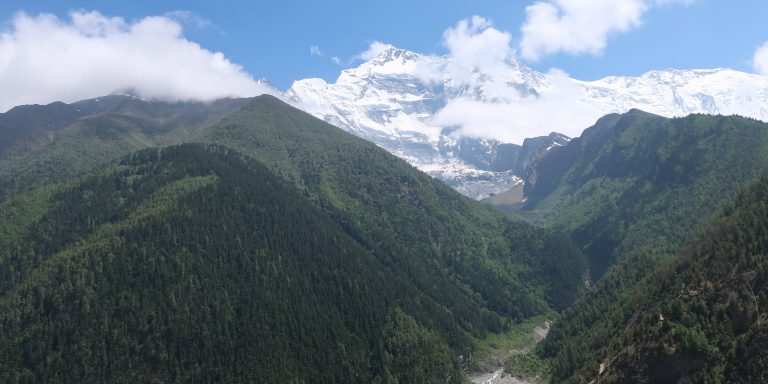
 

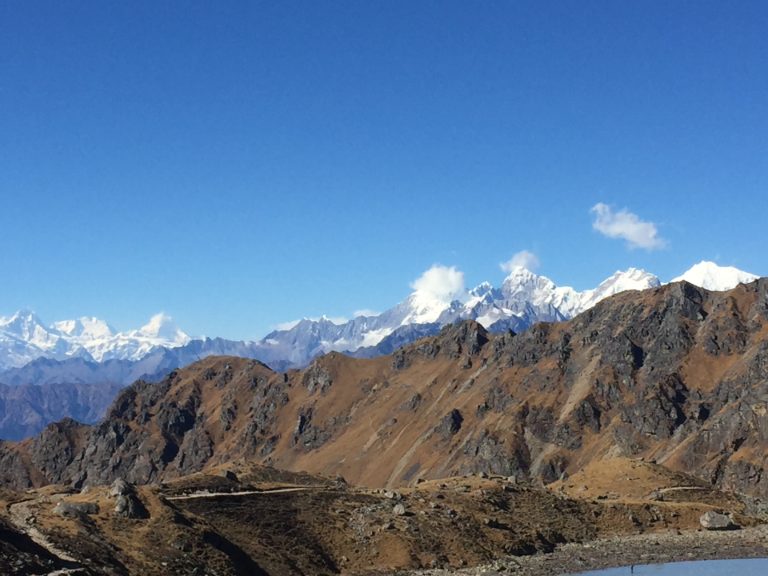
Mount annapurna (III) from Humde airport.
Mount annapurna (III) from Humde airport. On the way to Thorong La pass trek.

(1) Clear mountains view:

In October and November, the weather is preferable, in the mountains, you will have a clear crystal, crispy blue Sky, very little chance to have cloudy, and rain and mostly sunshine day, which means you, can see strengthen Himalayas view most of the time. In these months, the temperature will be very suitable, neither hot nor cold. Still, cold winds won’t descend below 5000m until mid of November.

(2) Perfect weather and Temperature :

October and November are the perfect weather with middle temperature and the monsoon has just ended and leaves so much  lush greenery with beautiful landscapes, and most of the days will be sunshine. But when you go out for photographer or hike in the early morning and evening, it might be little bit colder but you won’t feel much cold.  At night you will stay in the tea house with insulated window and warm dining hall and they also provided extra blankets which you can use on top of your sleeping bag incase if you need.

In this season your holidays will be safe, more fun, comfortable with good climate, and 99.9%  you will have great trekking experience with deep memories from Nepal treks. But the mountains weather could be change anytime, nobody can guaranty so you should be well prepared before you travel to Nepal for trekking or climbing.

(3) Nepalese major Festival events :

 After monsoon end from early autumn, Nepali festival is starting with more happiness and fun, Dashain and Tihar are the biggest and longest festivals in Nepal.

We celebrate festivals such as Dashain, Tihar, Chhat, and Loshar together. So do not miss the great chance to celebrate the Nepali festival with us, everywhere in Nepal. All Nepali people are happy to welcome you with them to celebrate the festivals.


 Is Autumn season crowded for trekking in Nepal?
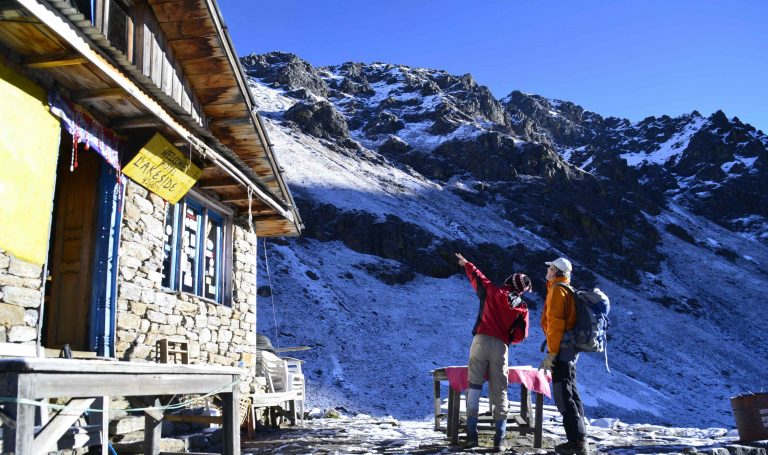
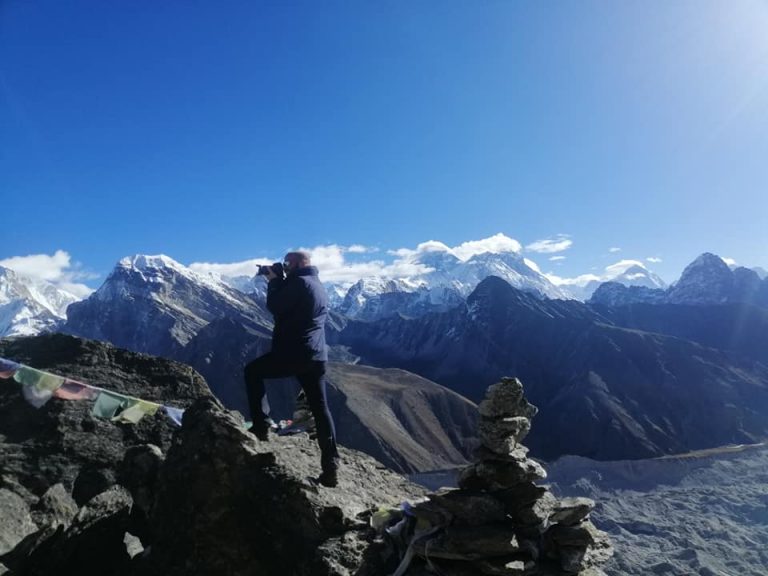
Pointing the mountains view in Gosaikunda lake in Langtang.
Pointing the mountains view in Gosaikunda lake in Langtang. Gosaikunda lake is one of the most popular trekking routes in the Langtang region.

Yes, autumn is crowded than another trekking season in Nepal, and all adventure trekking and climbing lovers plan to visit in Nepal in Oct/Nov. Because of in these months the weather is very clear, and you can see mountains view anytime from any different angles while you are into the Himalayas. Less chance to rain, neither cold nor hot, not much windy in mountains, sunny days. All the travels companies, organizers, Airlines, Hotels, local lodges are very busy for booking an advance for ensuring their capacity. So, we would highly advise to all of you, please book your holiday for Oct/Nov in advance. Your Nepal organizer will have enough time to arrange all the things in advance as well as your holiday will be without any problems even in high pick season and in mountains or any places.


Where to go, and what to do In Nepal in October and November?

In Nepal, there are so many different types of indoor and outdoor activities are available such as

Trekking:  If you are planning for trekking in Nepal Oct/Nov than the beautiful nature offers you so many different types of trekking routes in a different region of Himalaya like Everest region, Annapurna region, Langtang region, Manaslu region, Makalu base camp, Kanchenjunga base camp, and many more trekking routes are available.

Peak climbing, Nepal is not only for trekking, and hiking, here are so many opportunities to climb below 7000m mountains. If you are dreaming about climbing higher mountains in the world  in future then, you need start climb from small peak, and build up your climbing career from basic knowledge to advanced. Anyone from around the world planning for climb small peak and do some trek as well for few weeks in Nepal? If yes, than we suggest you several trekking and peak for climbing such as  Mera peak alt. 6,461m/21,197ft, Island peak alt. 6,176m/20,262ft, Lobuche East peak alt. 6,178m/20,269ft, Chulu west alt. 6,469m/21,223ft, and chulu far east alt. 6,069m/19,911ft, Thorong peak alt 6,140m/20,144ft,  Yala peak alt. 5,760m/18,897ft, Pisang peak alt 5,880m/19,291ft, and Mt. Ama Dablam alt 6,893m/22,614ft.

Tours: If you are not well fit for trekking and climbing, but still love to visit Nepal. If you are not sure what to do in Kathmandu during your stay, than these will be the best option for you.  Sightseeing in Kathmandu,  Pokhara full city sightseeing, Chitwan jungle safari,  Lumbini lord Buddha birthplace , and many more .

Mountain Flight: You can fulfill your dream to see the big mountain from close distance by flight, which is a short and scenic flight through the mountains in the early morning before sun rises, during the flight you will able to see the several mountains view, and this short flight would be your life memorable with the great experience of fly above the Himalaya.

Day activities in Kathmandu: If you are in Nepal for short time and still want to get some short  outdoor experience, here are many activities options like  Shivapuri hike, Nagarkot hike, Trisuli river rafting, Shivapuri  cycling tour, White  Gumpa hike, Namo Buddha hike, half-day cycling, full-day rafting in Trisuli river.

 Motorbike tour: If you looking for a motorbike ride in Nepal or Tibet. We organize in both countries through the different types of routes. We have been organizing many trips already, here we suggest you some popular riding routes: 3 days Kathmandu valley ride, 7 days Kathmandu – Chitwan- Lumbini- Palpa – Pokhara, 10 days Kathmandu – Lumbini – Chitwan- Pokhara- Muktinath – Pokhara tour many more routes are available.

Tibet Motorbike tour: In Tibet also we organize the tour suggested routes like. Lhasa – North Everest base camp, and return Kathmandu by road 10 days tour, 11 days Kathmandu- west Tibet Kailash tour, 7 days Lhasa- EBC, and Lhasa tour.

(1) Everest base camp trek:

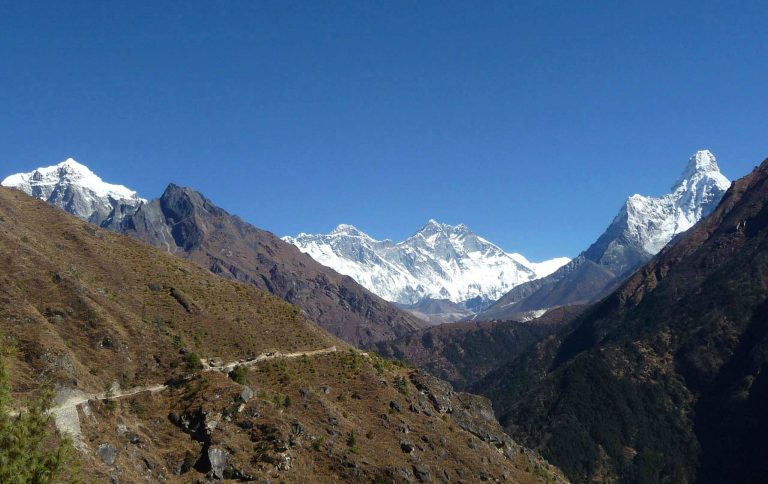
a panaramic view of mt. everest range view from Namche.
The stunning mountain views from Namche. Mount Everest (in the middle) and Mount Ama Dablam (Right).

E.B.C TREK Trip 

  1. Trek to Namche, a busy mountain hub surrounded by mountain views.
  2. We trek through Tengboche and visit the beautiful, high altitude monastery.
  3. When we reach Base Camp (5364m), we have plenty of time for pictures and to explore this iconic setting.
  4. Early morning climb of Kala Pattar (5550m), to watch the sunrise over Mount Everest
  5. We allow for several acclimatization days to ensure your trek is as comfortable as possible.
  6. We stay in teahouses along the route and you can experience Nepalese food and culture first hand

 Trekking to Everest base camp in October and November is the best option to choose for all adventure lovers, in these months the weather will be perfect, sunshine day, and not cloudy, less cold than in winter, no rain, as well you might have a good opportunity to celebrate the Nepalese’s biggest festival in this time. Winter is very cold here and showing in the mountain, and monsoon is rain and cloudy so theses two seasons we don’t suggest you to go Everest base camp trek. But autumn, and spring are best time for a trek in Nepal. If you have plan to go to Everest base camp trek so we would highly recommend you October and November are the best time of the year to hike up to world tellest mountain’s base camp with clear sky, and comfortable temperature.

Everest region offers several trekking routes in to the valley and among them, Everest base camp trek is more popular trekking routes. Everest base camp trek starts from Lukla after a scenic short (20 minutes) flight from Ramechhap. Basically, you will start to walk from Lukla, after a couple of days trek you will be reached in Namche bazaar.  Namche bazaar is the biggest local market in the Khumbu valley where you can buy all types of trekking equipment, bakery,  delicious food, and comfortable accommodation.  Generally, you should stop one extra night in Namche for high altitude acclimatization. On that day you can go  to short hike to Everest view Hotel alt. 3800m, to strengthen mountain view including mt. Everest, and other mountains ranges. You will also visit the old monastery, Sagarmatha national park museum. From next day continuously trekking to Everest base camp about four to five days through the Tenbuche – Dingbuche – Lobuche, and finally you will be reached in Everest base camp at 5364m/17,598ft. After exploring the base camp and kalapather viewpoint you will trek back to Lukla for another 3 to 4 days and fly back to Ramechhap and drive back to Kathmandu on the same day.

(1) Everest view trek:
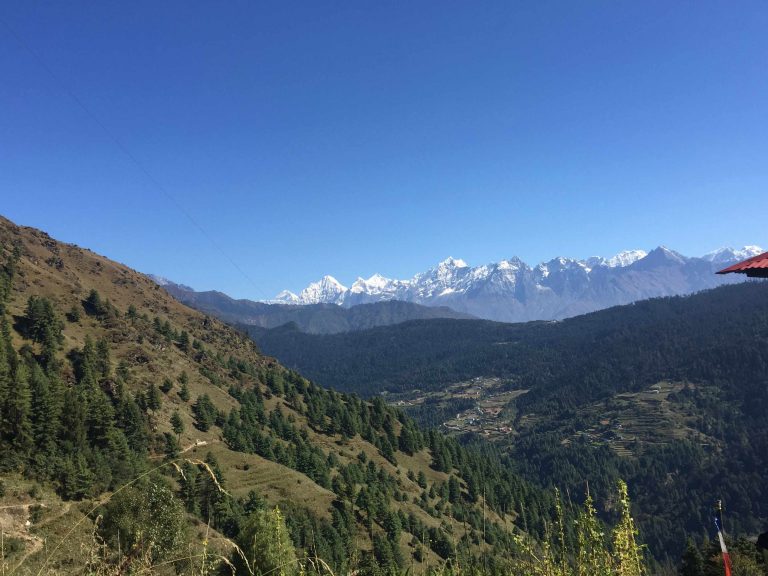
mount Everest range view from Jumbsi
Everest range mountains view with lush green valley.


 trip- Highlights

  1. Trek to Namche, a busy mountain hub surrounded by mountain views.
  2. We trek through Tengboche and visit the beautiful, high altitude monastery.
  3. Hike up to Everest view hotel for a panoramic mountain view.
  4. Visit the biggest Sherpa villages in Khumjung and Khunde.
  5. Fly over mountains Kathmandu-Lukla- Kathmandu
  6. We stay in teahouses along the route and you can experience Nepalese food and culture first hand


Trekking to Everest view trek in October and November is the perfect choice for those who have a short time in Nepal and not enough time to reach Everest base camp. But still want to see world big mountains ranges from close distance in sunrise and sunset moment. Everest view trek route end at Tenbuche monastery alt. 3780m. You will be enjoying with a week trek in Khumbu valley with a magnificent view of mt. Everest, mt. Ama Dablam, Thamserku, Khonge peak, khumbila peak, khantega including several mountains.  The trek start after 30 minutes fly to Lukla from Kathmandu. The next few days you will trek through the Dudhkosi river until Namche bazzar alt 3400m. Following days you will be hiking to Everest view point hotel alt. 3800m for a fantastic panoramic view of mt. Everest (alt. 8848m), mt. Ama Dablam (alt.6893m), mt.Lohse (alt. 8516m), Nuptse, (alt7965m) Thamserku alt 6654m including many more Himalayas peaks. Continue you will trek to Khumjung, Khunde, Sherpa villages which are the biggest Sherpa habitation in this valley and encounter some monastries. Where you can see real sherpa culture and religions, and daily activities, and last final day of Everest view trek you will return back to Lukla and fly back to Kathmandu from Lukla.

(3) Everest base camp with Gokyo lake trek :
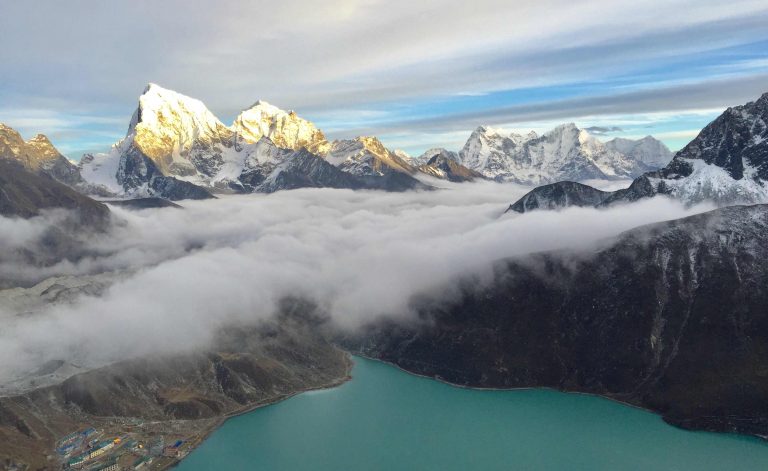
Amazing sunrise mountains view from Gokyo ri alt.5360m
Beautiful views of the mountains and the Gokyo lake seen from Gokyo Ri.

Trip-highlights

  1. Trek to Namche, a busy mountain hub surrounded by mountain views.
  2. We trek through Tengboche and visit the beautiful, high altitude monastery.
  3. Hike up to Everest view hotel for a panoramic mountain view.
  4. When we reach Base Camp (5364m), we have plenty of time for pictures and to explore this iconic setting.
  5. Cross highest Cho-la pass alt. 5361m. Among three high passes in the Everest region.
  6. Visit beautiful Gokyo valley and hike up to Gokyo- Ri viewpoint alt.5360m.
  7. Great hospitality and warm welcome by local Sherpa people and provided verities food and drinks in a tea house.

 In October and November, Everest base camp with Gokyo lake trek is a perfect time to visit with beautiful weather, in Everest region, Everest base camp with Gokyo lake trek is one of the most popular routes and this route is more adventure than Everest base camp trek.  The routes are surrounded by incredible big mountains, landscape, Along the way you will be crossing strengthen mountains view, sherpa habitations, old monastery, and many more.  Firstly, you will  trek to  Everest base camp (alt. 5363m), and kalapather ( 5550m) then after, return to Gokyo valley via Chola pass (alt 5360m). During this trek you have three big highlights day like first reaching world highest mountain’s base camp EBC and fulfill your dream. Following morning hike to Kala Patthar viewpoint for a magic panoramic view of whole Khumbu valley including Mt. Everest and other mountain ranges. The second highlights of this treks is cross Chola pass alt 5360m via Dzong-la. From the top of Chola pass you have another amazing view of Mt. Everest and Ama Dablam. You will have great experience of walking through the ice and rocky trail, and steeply descend of another side of Chola pass. The third highlights of this trek is exploring naturally beauti of Gokyo lake valley. After complete EBC and Chola pass, Gokyo valley is the most beautiful place in the Everest region. You can see beautiful lakes,  glacier, and Cho-Oyu mountain ,  Cho-Oyu is above 8000m among 14 above  8000m above high mountains in the world.  Following morning, you can hike up to Gokyo –RI viewpoint alt. 5360m  for another a magnificent mountains view and beautiful view of Gokyo lakes. Last part of this trek you will be trekking back to Namche – Lukla in a few days, and where your trek ends than you will fly back to Kathmandu.

(4) Gokyo valley with Renjo – la pass trek:
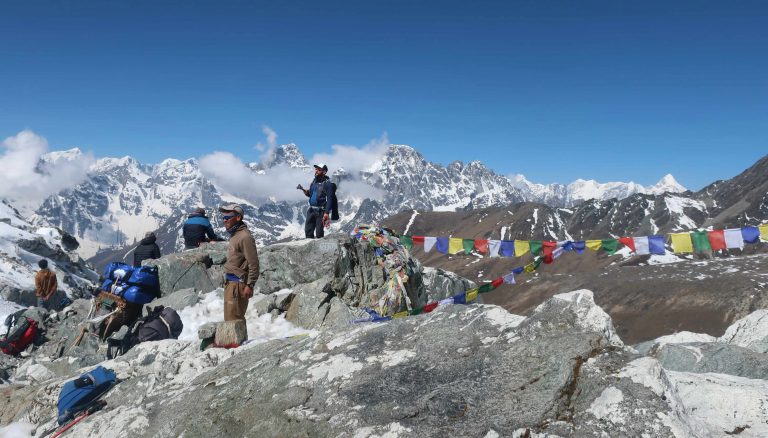
 

One the top of Renjola top.alt 5360m.
Porters are taking a short rest on top of the Renjola pass.

Trip Highlights:

  1. Trek to Namche, a busy mountain hub surrounded by mountain views.
  2. Visit the beautiful, Sherpa villages and monasteries in high altitude
  3. Hike up to Everest view hotel for a panoramic mountain view.
  4. When we reach Gokyo (4700m), we have plenty of time for pictures and to explore this iconic setting.
  5. Cross highest Renjo- la pass (alt 5391m) and enjoy watching amazing mountains view from a close distance.
  6. Visit beautiful Gokyo valley and hike up to Gokyo- RI viewpoint alt.5360m.
  7. Visit old villages where most of the Sherpa were born to climb high mountains in the world.
  8. Great hospitality and warm welcome by local Sherpa people and provided verities of foods and drinks in the tea house.

October and November is the best time of year to visit in Gokyo valley with Renjo- la pass. If you want to avoid crowed and want to see Mount Everest ranges in peace environments then Gokyo with renjo- la pass (alt 5360m) trek  might suitable for you. And Gokyo valley and Renjo- la pass trek route is another exciting trekking trail in the Everest region.

After Everest base camp trek, Gokyo valley is another popular trekking trail in the Everest region. The trek begins after 30 minutes fly from Kathmandu or 20 min fly from Ramechhap to Lukla. Then basically you will start to walk from here, fewer days you will trek through the Dudhkosi river until Namche bazaar. Namche bazaar(alt. 3400m)  is famous local market in  Everest region. Where you can spend your quality time with nice hot coffee, bakery, and delicious food, accommodation. Generally, most of the trekkers stay here for two night for high altitude acclimatazation. During rest day you will hike up to Everest view Hotel (alt. 3800m) for a panoramic view of mount Everest range (8848m), and Ama Dablam (6893m) including many others peaks are surrounded by. After the viewpoint, in the afternoon you have a free time to visit the local market.

Following days you will trek continue to Gokyo valley via Kyanjuma – Mong-la dada (alt. 3800m) – Phorte Thanga (alt 3500m) –Dole alt 4200m and Machhermo (alt.4500m). Before reaching in Gokyo (alt.4700M) you will be passing two lakes and finally, you will reach in the third lake where all the tea house is located.  You will spend a night here and visit these beautiful lakes, glaciers, and mountains. In between Namche and Gokyo valley the trails are surrounded by mountains, which is inside of Sagarmatha national park. Gokyo valley, and Renjo- la pass trek doesn’t only offer the mountains views, you can see different types of wildlife, (leopard, black beer, dare, the forest got, etc.), flora, fauna and different types of birds like, Dafe, Monal, wood picker, and more.

Renjo- la pass (alt 5391m) is one of the popular and moderate high passes among three high passes in Everest region, this pass is located at the left above from Gokyo Lake or just opposite side of Gokyo –RI viewpoint. The trail Is more rocky and steep up till the top of Renjo La pass from Gokyo lake. Most attraction from top of renjo la is a magic view of whole Everest regions mountains including Four above 8000m high mountains like Everest(8848m) Choyu (8150m) ,Lotshe shar(8516m), and Makalu( 8485m). From the top, you will be descending to another side of renjo la pass to Lungden – Thame, and next few days trek back to Lukla via Namche Bazaar where your trek ends with best trekking experience in good time.

(5) Annapurna circuit trek :
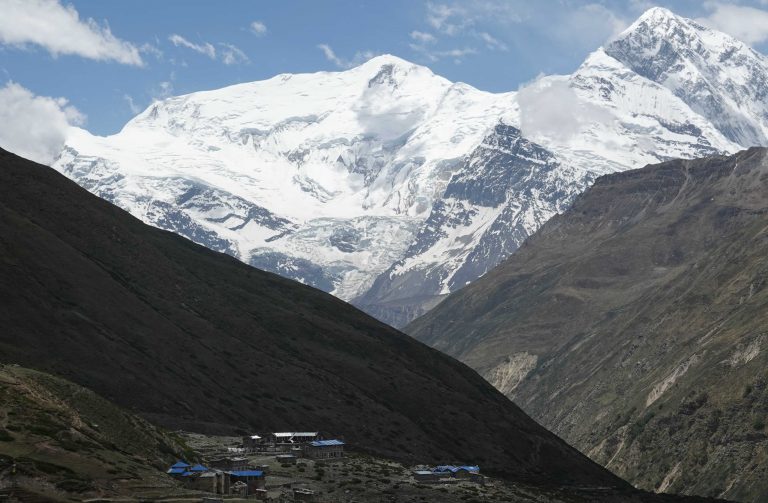
Annapurna III view from Pisang
Annapurna circuit trek is one of the popular trekking route in Nepal, where we can see several mountains from a close distance.

Trip -Highlights

  1. Cross the highest pass in the Anapurna region Thoron-la pass (alt 5416m.)
  2. Explore the two above 8000m high mounts mt. Annapurna I (alt 8091m) and mt. Dhaulagiri alt.8167m)
  3. Visit Manag and Pisang old Tibetan villages and monastery.
  4. Visit Tilicho Lake which is the highest Lake in Nepal.
  5. Enjoying watching a magnificent Annapurna and Dhaulagiri mountains view from a close distance.
  6. Visit old monasteries, temples, museum and local people daily activities, and their culture and religions.
  7. A Scenic drive from Kathmandu to the trekking starting point, and Great trekking experience in your lifetime,
  8. Enjoy delicious food and stay at their local tea house.

Trekking to Annapurna circuit in October and November is the best choice for all trekking and hiking in Nepal. In the perfect weather, you will have a great time on Annapurna circuit trek. Oct/Nov is always the best time of year for visiting Nepal for any other outdoor activities. From the beginning of the trek to the end of the trek you will have full time of enjoying with nature, culture, and landscapes in the Annapurna region.

In the begging of Annapurna circuit trek, you will encounter full of paddy farmlands in autumn, and day by day you will ascending 400 to 500m higher in every different places. Once you reach above 3000m high from Pisang villages, you will start to see Annapurna ranges mountains like Annapurna II, (alt 7939m), Annapurna III (alt.7535m), Annapurna IV (alt 7525m), Gangapurna (7436m), and including many mountains peaks. Along the way to Annapurna circuit trek, you will be crossing several local habitations, fertile lands, waterfall, beautiful landscapes, culture, nature, and regions of the region.

In Manag villages (alt. 3500m) most of the trekkers stop one extra day for high altitude acclimatization, because of the further you need to go higher and you have to cross world long and high pass Thorong- la pass (alt 5416m) before reaching Muktinath Temple another side of Annapurna mountains.

Annapurna circuit trek becomes a shorter then before because of the road reaches in Manag (alt 3500m), so you can skip some trek part in begging of the trek if you have short time in Nepal.  Start your trek from bit higher place like Dharapani (alt 2400m) or Chame villages (alt 2600m). We don’t advice to trekkers to go higher altitude directly until the dirt road. If you go direct higher elevation from a lower elevation it can be dangers from high altitude sickness, so better start from lower part the route and go higher slowly and complete trek comfortably.

(6) Mardi Himal Trek:
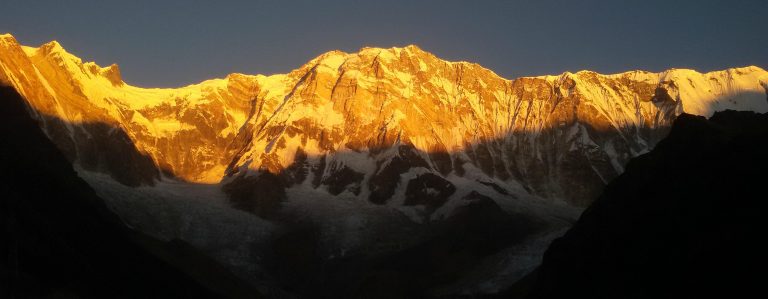
Sunrise view on Mt. Annapurna I from Mardihimala viewpoint.
Sunrise view on (Mt. Annapurna I (8091m)from Mardi Himal viewpoint

Trip – Highlights

  1. The views of the whole Annapurna mountains ranges from a close distance.
  2. A great chance to meet with local people and their culture.
  3. Enjoying watching a magnificent Annapurna and Dhaulagiri mountains view from a close distance.
  4. Visit old monasteries, temples, museum and local people daily activities, and their culture and religions.
  5. A Scenic drive from Kathmandu to the trekking starting point, and Great trekking experience in your lifetime.
  6. Enjoy delicious food and stay at their local tea house and Homestay.

If you are looking for a short trek in Nepal in Oct/Nov then Mardi Himal trek is a perfect route in the Annapurna region. Mardi Himal trek is popular for a magnificent mountain view of Annapurna,  and Fishtail (Machhapuchre) range including beautiful Landscapes, culture, nature, and religions. Mardi Himal trek is quite easy and higher trekking route in Annapurna region. Beautiful Mardi himla trail offers from begging of a trek to end of the trek, a panoramic view of the Annapurna and Fishtail mounts from a close distance, mix culture, and religionas well. On this trek you will not only watching mountains view you will encounter the fertile filed which is full of paddy, waterfall, suspension bridge, local people habitation and much more.

6 days Mardi Himal trek begins after one hour drive from Pokhara to Phedi or Kade. Beginning of the trek, the trail goes through the local villages and continue few days trek into the forest until  high camp of Mardi Himal. Once you reach in Mardi Himal viewpoint (Alt 4500m) you will see strengthen the view of south Annapurna alt 7210m,  Himal chuli alt. 6430m., fishtail  alt.6993m. , Gangapurna alt. 7435m., Annapurna III alt 7535m, including one above 8000m high mountains Annapurna I alt. 8091m. After exploring all the above panoramic mountains view we will trek back to Pokhara before we back to Pokhara you will spend some nights in local Homestay with a warm welcome and delicious food. Read More.

(7) Annapurna base camp trek via Poonhill :
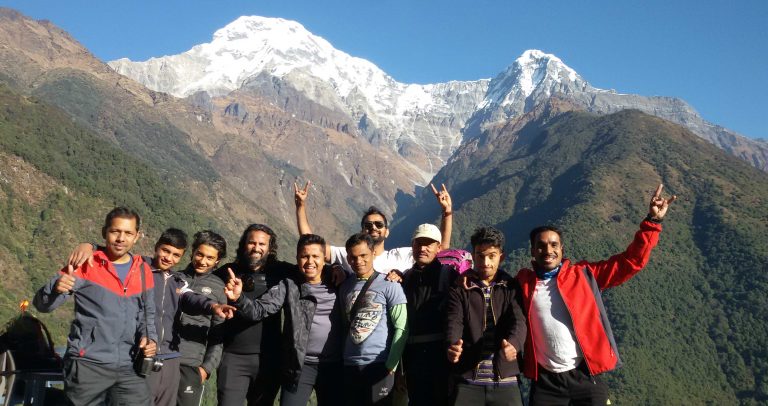
 

Chhumrung villages and behaind mountain view is Annapurna south (alt.7210m)
A group of people enjoying the view of Annapurna South (left) and Himchuli (right).

Trip- Highlights:

  1. Enjoying watching a magnificent Annapurna and Dhaulagiri mountains view from a close distance.
  2. Visit old monasteries, temples, museum and local people daily activities, and their culture and religions.
  3. A Scenic drive from Kathmandu to the trekking starting point, and Great trekking experience in your lifetime,
  4. Enjoy delicious food and stay at their local tea houses.
  5. A magnificent Annapurna and Dhaulagiri sunrise view from Poonhill viewpoint 3210m.
  6. Visit the biggest glacier in Annapurna base camp with sunset and sunrise view.
  7. Take a natural hot bath in Jhinu dada before end of the trek, and many more.

 The Annapurna Region is the most popular area for trekking.  This region is very cultural with many different ethnic group of people in this area (Magar, Gurung, Chhetri, Sherpa, and many more).  The people in this region are hard-working, happy and very friendly.  The lodges and tea houses are colorfully painted and decorated.  The people in this region are Hindus and Buddhists and celebrate many festivals including Deepawali, Lhosar, Teej, and New Years, and while celebrating they want tourists to be included.

It’s a deep glacier-covered amphitheater surrounded by a ring of impressive high peaks including Himchuli, Annapurna South, Annapurna Fang, Annapurna I, Ganagapurna, Annapurna III and Machhapuchhe. read more

(8) Manaslu circuit trek :
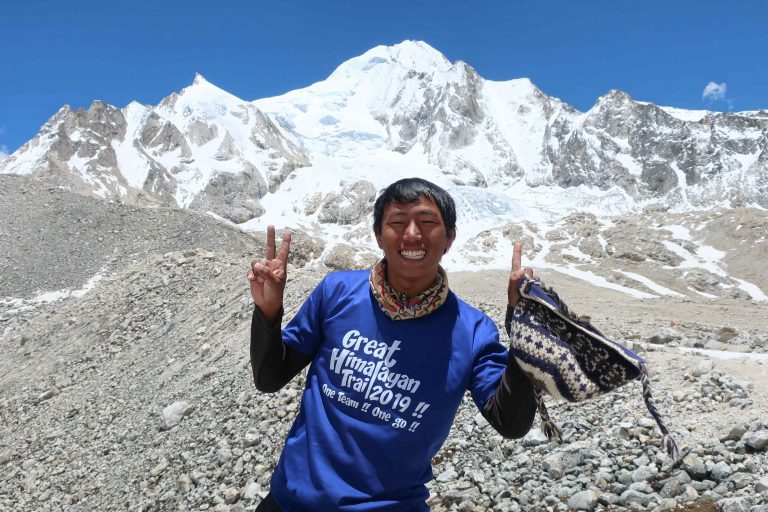
One the top of Larke-la pass (alt.5130m)
The nice weather and happy guy, on the way to Manaslu circuit trek.

Trip Highlights.

(1) Cross Larke-la pass alt.5130m.

(2) Great experience of walkthrough Budhigandaki River for several days.

(3) A magnificent view of Manaslu I (alt 8167m), including many 7000m and 6000m. High mountains.

(4) Visit old Tibetan villages and monasteries, and museums.

(5) Hike up to Manaslu base camp or Mahendra Lake from Sama gaun.

(6) Trekking through the Budhigandaki river valley and take a natural hot bath.

(7) Experience of delicious food and real Test of authentic Nepali food and warm welcome by locals in their homestay and Tea house.

Mt. Manasalu is the seventh-highest mountains in the world (alt. 8167m). Manaslu mountain region offers beautiful trekking and climbing route among of them Manaslu circuit is one of the favorite trekking routes for all adventure lovers. Trekking in Manaslu in October/ November is the best idea to make a plan for a clear panoramic view of Manaslu and Himal Chuli, also you will be visiting six – seven hundred years old Tibetan village, and old monastery, and Chhorten along the way. Larke la pass cross (alt. 5130m) is another highlight part of Manaslu circuit trek,

Manaslu circuit trek is located at west from Kathmandu in Gorkha district, in between Annapurna Mountains  and the border with Tibet, China.

The trek begins after 6 to 7 hours drive from Kathmandu to Aru Ghat or Soti Khola by local bus or privet Jeep (approx 180km). Beginning of the trek you will trek through the  Budhi Gandaki river banks until the Low gaun (alt.3500m)  for 4 to 5 days. Once you reach in Low gaun, then after you will see the first and perfect view of mount Manaslu from close distance. You will continually trekking to Sama gaun(alt.3900m).  Sama gaun is the capital village of the Manaslu region, where you are going to stay one extra night here for high altitude acclimatization. On this  day you can hike up to Mahendra lake or Manasalu base camp after breakfast. Following days you  will continue trek to Samdu- Dharmasa –la, and finally you will cross the highest pass of the region called Larke –La (alt 5130m), and trek back to another side of Manaslu in Bhimthang. The next day continue descending to Darapani where Annapurna circuit trek trail is connected. You will drive back to Kathmandu via Beshishar from Dharapani. Read more

(9) Makalu base camp :
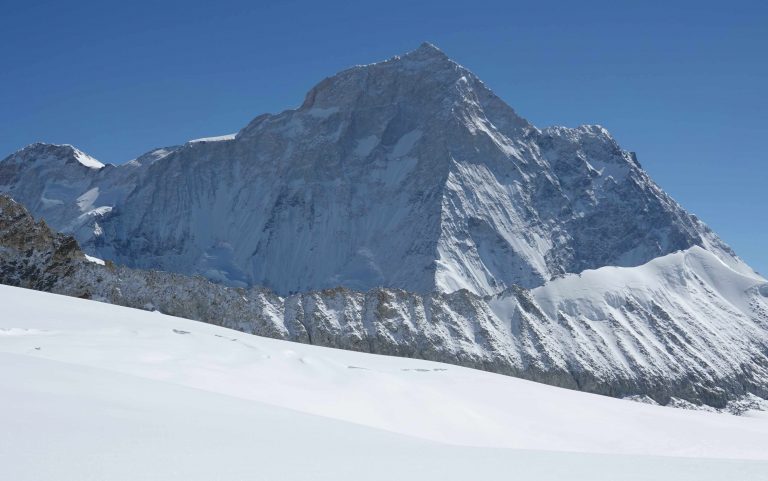
Mt. Makalu (alt.8416m)
Mt. Makalu (8,485m/27,838ft) world’s fifth highest mountain. 

Makalu Base Camp trek is an absolutely amazing, still  not very crowed area in the northwestern corner of Sankhuwasabha district. To the west, it is bordered by the Everest region, to the north by Tibet, to the east by the Arun River and to the south by the Sabha River. It just so happens that this very pristine area was turned into a national park and conservation area in the early 1990s. The park is still at its beginning stages. Though struggling to make its mark, it has done fairly well. Unlike the Annapurna Conservation Area Project (ACAP), the Makalu Barun Conservation Project (MBCP) is set up differently. Makalu-Barun National Park, a virtually uninhabited 1500-km2 area of Eastern Nepal, is very close to virgin wilderness. This remote terrain stretches east from Sagarmatha (Mt. Everest) National Park. Between the high plateau of Tibet and the deep subtropical gorge carved by the Arun River. There are spectacular views of rugged Himalayan peaks, including Mt. Makalu (8463m), fifth highest in the world, Mt. Chamlang (7319 m) and Mt. Baruntse (7129m). Within 40 km, these high peaks descend to the Arun River at 670m. The Makalu-Barun Valley provides stunning contrasts, where high waterfalls cascade into deep gorges, craggy rocks rise from lush green forests, and colorful flowers bloom beneath white snow peaks. read more

(10) Kanchenjunga Base camp trek:
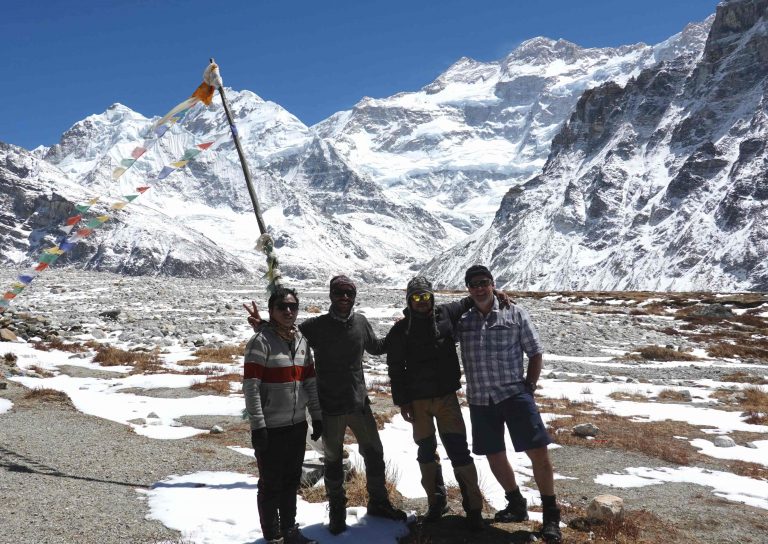
_Mt. Kanchenjunga (alt.85 86m.)
Kanchenjanga North Base Camp (5,143m/16,873ft) with amazing view of Mt. Kanchenjanga behind.

Kanchenjunga (8598m) is the world’s third-highest mountain. The Kanchenjanga range with many other popular mountains, Jannu (Kumbhakarna), ChhangHimal, and many more snowy peaks. At the start of this adventure, you will encounter Limbu and Rai ethnic group with their culture, which is Kirat and also part of the Hindus culture.  In October they have a festival to celebrate Uvauli.  This festival is the celebration of harvesting the crops from the fields and bringing to their homes.  They also celebrate in May sowing of the crops which is called Udhauli.  This area is also where the Ghurkkas are recruited. Wildlife is in abundance in this area, for example, Blue Sheep, masked deer, and the snow leopard.  There are also many Yaks are in this area. After a week we encounter the area where the Sherpas culture exists.  From Pangpema we will see the north face of Kanchenjunga.  Traversing the remote and rarely visited northeastern corner of Nepal. Our route leads through picturesque farmland, green alpine valleys, rhododendron and bamboo forests, and across High Mountain passes. Beyond the attractive Tibetan settlement of Ghunsa, with its sturdy wooden houses, numerous prayer flags, and smiling villagers, we skirt the incredible northern flank of Jannu (7710m).  From Pang Pema (5140m) base camp, we enjoy the breath-taking view of the formidable north face of Kanchenjunga.  With this trek being medium-difficult you will have an amazing adventure. read more

(11) Langtang valley with Gosaikunda lake trek :
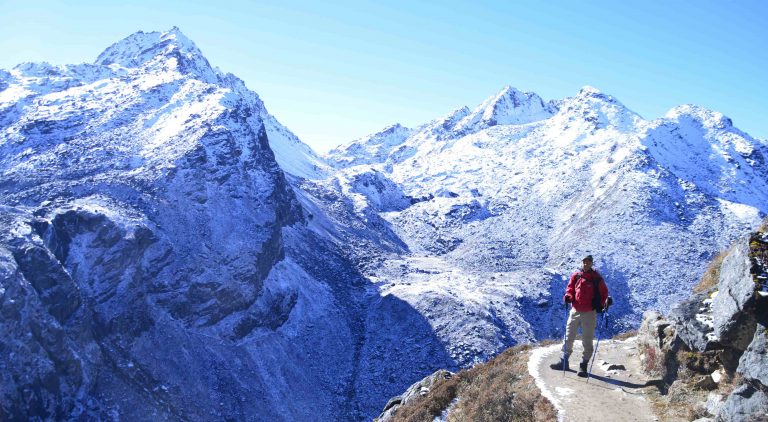
Langtang mountains ranges. view from Gosaikunda lake
The perfect view of the mountains at Langtang valley and Gosaikunda lake during the trek.

Trip- Highlights

  1. A scenic drive from Kathmandu to the trekking start point.
  2. Visit 600 to 700 years old Tibet villages and see their daily life activities.
  3. Great view from a close distance to all Himalayas of the region.
  4. Good chance to taste real yak cheese and visit a cheese factory.
  5. Hike to Kyanging -ri viewpoint to see whole Langtang valleys mountains and Langtang lirung glacier from a close distance.
  6. Visit Holy Lake of Gosaikunda and hike to Surya peak for a great view of the Annapurna region, Manaslu region, and Langtang region.
  7. Experience of delicious food and real Test of authentic Nepali food and warm welcome by locals in their homestay and Tea house.

The Lantang and Gosaikunda lake regions are located north of Kathmandu. This region is known for its natural beauty and wide and varied trekking opportunities passing through the lush Rhododendrons forest, filled with conifers and oaks. You will have plenty of opportunities to immerse yourself in the natural surroundings and wildlife. We will pass and meet many cattle along the way. Monkeys’ and a wide variety of birds are always within sight. From Langtang valley, we take the trail up to the sacred site called Goisaikunda Lake. Gosainkunda Lake is believed to have  created by Lord Shiva when he thrust his Trishul (trident) into the mountain to extract water so that he could cool his burning throat after swallowing poison. At the lake, you will also have spectacular views of the Ganesh Himal range and Manaslu range. After crossing the Laurebinae pass (4600m), we trek back via another route in this region. This route takes us back to Kathmandu via Kutumsang, Chisapani, and finally Kathmandu. Read More

(12) Langtang valley trek :
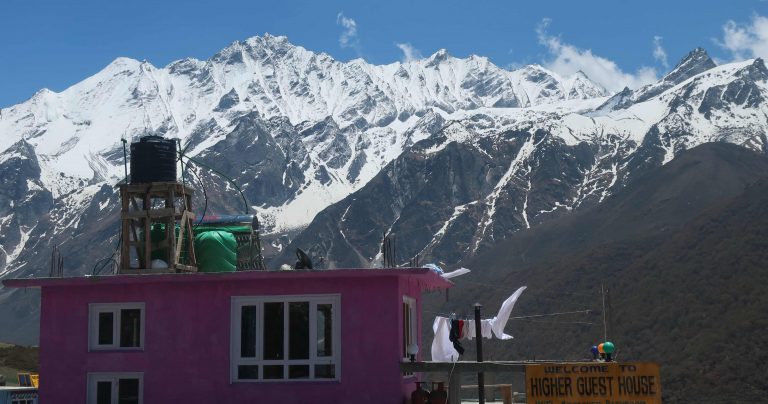
langtang valley trek
The view seen from Lantang village during Langtang region trek.

Trip- Highlights:

  1. A scenic drive from Kathmandu to the trekking start point.
  2. Visit 600 to 700 years old Tibet villages and see their daily life activities.
  3. Great view from a close distance from all Himalayas of the region.
  4. Good chance to taste real yak cheese and visit a cheese factory.
  5. Hike to kaynging- ri viewpoint to see whole Langtang valleys mountains and Langtang Lirung glacier from a close distance.
  6. Experience of delicious food and real Test of authentic Nepali food and warm welcome by locals in their homestay and Tea house.

The Lantang valley trek located north of Kathmandu. This region is known for its natural beauty and wide and varied trekking opportunities.

We start from Kathmandu, where we transfer by bus or private jeep to Dhunche or Sybrubesi. Sybrubesi is a small town from where we start the trek. The trail leads us gently and slowly up through the many different villages inhabited by Tibetans, Tamangs, and Sherpa people.

The route provides us with stunning mountain views of Lantang Lirung, Yala peak,  Ganchhepu Himal range, Nyakhang peak. This trek allows you to witness the changing landscape as we ascend above 3000m. when the landscape loses its vibrant green forest in favor of higher altitude backdrops. Read more

October and November  trekking suggested packing list:

  1. 1 hiking boots
  2. 1 Medium size backpack
  3. 1 Day pack
  4. 1 Sleeping bag (- 20C)
  5. 1 Down Jacket/Gore tax Jacket
  6. 1 Light wind & waterproof jacket
  7. 1 Inner sleeping sheet
  8. 2 Long-sleeve T-shirts
  9. 1 Water bottle
  10. 1 Pair gaiters/over trousers
  11. 1 Pair sports shoes or sandal
  12. 2 Pairs of lightweight trousers
  13. 1 Pair shorts
  14. 1 Fleece / warm sweater
  15. 2 T-shirts
  16. 2 Pair’ light socks
  17. 3 Pairs of heavy wool socks
  18. 1 Sweatshirts/light sweater
  19. 1 Torch & spear batteries
  20. 1 Swimming costume/bathing suits (not for Everest region)
  21. 1 Medium size towel
  22. 1 Washing kit including washing powder, small clothesline, and pegs, insect repellents, etc. & personal toiletries
  23. Moleskin for blister
  24. Toilet paper, biodegradable soap/shampoo(toilet paper you can buy every place in Nepal)
  25. Personal medication. (if you are taking rebury otherwise for high altitude we provide)
  26. Underwear (including thermals)
  27. Warm hat/ gloves
  28. Sunglasses, sun hat, and sun cream
  29. Spear plastic bags for wrapping clothes

What is the temperature in Oct /Nov in Nepal?

October and November, the temperature is perfect for travel to visit Nepal; we highly suggest you please make your holiday plane in these months.  On the side of the mountain, the temperature will be 10 to 20 digree celsius during the day and at night 5 to 16 digree celsius  in October. But in November the temperature will fall in the mountainside 5 to 13 digree celsius during the day and night time -5 to 10 digree celsius. Also, it depends on the place you are going for trekking or climbing?. If you are in higher place like Everest region, Annapurna region,  Manaslu region,  Kanchenjunga region, Makalu region then it could be colder than in lower place of the trek, as much as you go higher the temperature will be also colder, but lower parts of Nepal or in city areas such as Kathmandu, Pokhara, Chitwan, and Bardia place are hotter like still summer, you won’t feel colder.

So about the temperature in Nepal it depends on which place you go, if you go adventure trek, peak climbing, high passes trek then of course, it will be colder. So the weather is never predictable, we highly suggest you please prepare well and bring warm and nice clothes for trekking or climbing in Nepal.
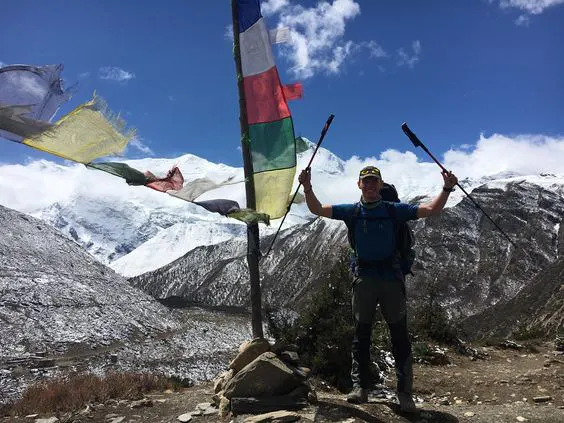
 

Best time for trekking in Nepal

The Best time for trekking in Nepal

The best time for trekking in Nepal is October and November, December in the fall and spring seasons March – April and May are the best time of  the year.

GHT. 2019 4396
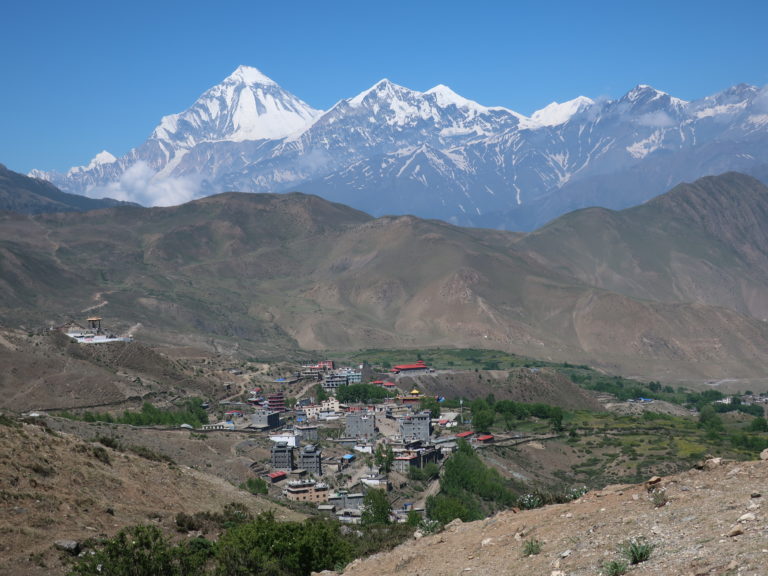
Muktinath village and Dhaulagiri mountain range.


IMG 3659
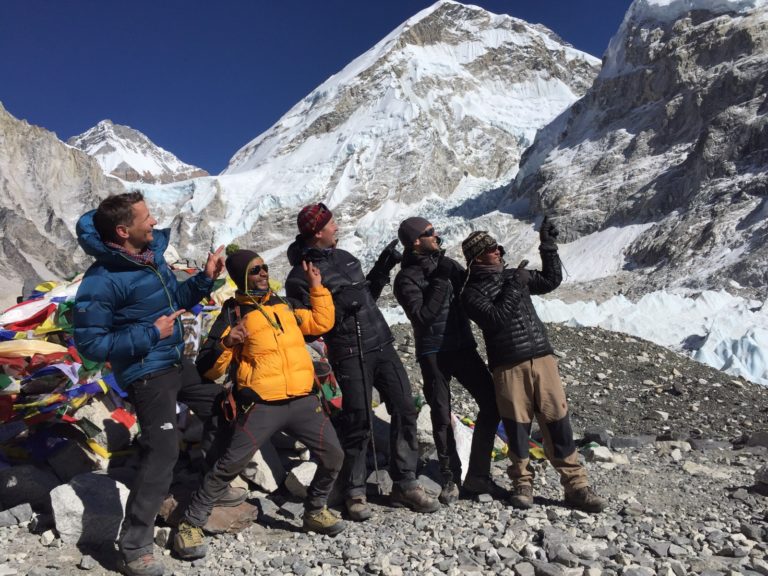
Everest base camp 5,360m


Autumn season:

(from mid September, October , November & Mid December)

The autumn season starts from Mid September to mid-December every year.  In this season the weather will be favorable and mostly sunshine days, in this season less rain mainly sunshine in the mountains, the clouds will move and clear blue sky will come up.  The temperature will be not high and not low, appromx 18 to 23 during the day and at night 10 to 13 degree, you won’t feel colder much.  We suggest for all outdoor adventure lovers take worm types of equipment and hiking boots.

In autumn season Nepal trekking will be more fun and enjoyable in clear weather, we have a long experience about weather in this time so we suggest you welcome to Nepal for trekking and peak climbing in the autumn season. In this season several Nepalese festivals are going on so it will add in your travel more fun and nice experience to celebrate with locals. Between mid-September to end December is the best time for trekking in Nepal every year, no drought about the weather, we Nature explore trek team highly recommend in this season  for all of you who love to visit Nepal for adventure trekking, tour and peak climbing many more.

76710895 10218500492402048 2603120901478154240 n

Spring season :

MARCH – APRIL – MAY  Spring season is another biggest trekking and climbing season in Nepal, spring season start from March to end of the may, in these months the colder is move to higher in mountains and temperature will rising up slowly day by day, mostly will sunshine day, will so many flowers will blooming including our national flower rhododendron, in mountains region different types of flowers and green forest  will add more beauty for mountains, the spring season is another good trekking and peak climbing time.

You won’t regard weather in spring, from mid-April the temperature will rising up in between 20 to 25 during the day, but in morning and evening it will come down 10 – 12. After spring monsoon is going to start soon so the temperature will increase and it might be little rain in the afternoon sometime. Spring is the time to grow up all plant new seeds becoming a green new plan on earth. You shall be enjoying with beautiful nature,  landscape and mountains in the Himalayas. We suggest welcome to Nepal for trekking and peak climbing in the spring season.

  1. Everest base camp trek (11 nights 12 days.)
  2. Gokyo valley and Renjola pass trek ( 12 nights 13 days)
  3. Three high passes in Everest region ( 16 nights 17 days)
  4. Annapurna circuit (11 nights 12 days.)
  5. Annapurna base camp ( 8 nights 9 days)
  6. Khire lake trek (9 nights 10 days.)
  7. Poonhill trek (4 nights 5 days.)
  8. Mardi himal trek (5 nights 6 days.)
  9.  Langtang valley trek   (6 nights 7 days.)
  10. Langtang valley and Gosaikunda Lake (9 nights 10 days.
  11. Manaslu circuit trek 12 nights 13 days.
  12. Tsum valley trek 10 nights 11 days.
  13. Kanchunjunga base camp (14 nights 15 days.)
  14. Makalu base camp (12 nights 13 days)
  15. Pikey peak trek (6 nights 7 days.)
  16. Everest short trek (9 nights 10 days.)
  17. Kathmandu – Chitwan – Lumbini – Pokhara tour
  18. Muktinath temple tour
  19. A day Manakaman temple tour.
  20. A day Chandragiri cable car tours many more.


Suggested peak climbing in Autumn & Spring season:

  1. Mara peal Alt. 6461 m.
  2. Island peak combine EBC ( alt.6173m. 
  3. Lobuche east Alt 6178m. Combine EBC 
  4. Chulu west peak Alt. 6422m.
  5. Yala peak Alt. 5700m.


annapurna circuit fb posting 01


IMG 2161
Langtang mountains range views from Goshainkunda Lake.

Winter season :

(MID DECEMBER – JANUWARY – FEBURWARY – EARLY MARCH:

Winter season is not a favorable weather in mountains like in autumn and spring season.  The temperature will go very down, it will be snowing in mountains region, it can be more fuggy and cloudy, snow will be frozen and make a very smoother on the trail. We don’t suggest you to go higher adventure trekking and peak climbing in winter. When it’s snowing above 2500m higher then no safe, can’t guarantee about weather condition, in the winter season the weather condition can be change anytime; it will be very colder in mountains. We nature explore trek suggest not plan long and high adventure treks in Nepal in winter

But No holiday in  Autumn and spring and you are prepare for less trekkers, not a crowed  on  the trail then  still you can do some short treks  like Everest base camp – Gokyo valley trek an Everest region  – Langtang valley trek ,  Ghorepani poonhill trek – Mardi himal trek , Kathmandu valley trek, and several a day hikes and sightseeing, tour  around Kathmandu and Pokhara.

Suggested short treks routes are very popular trekking trail here, its very easy to accesses from big town like Pokhara and Kathmandu, and not far from big city, it will be quite and peace on the trek less tourist not crowed in winter.


Five Days Trek In Nepal

Five Days Trek In Nepal offers a wonderful opportunity to experience the country’s stunning landscapes , vibrant culture and rich biodiversity. When it comes to Himalayan adventure Nepal gives out the best location in the world from the lush forests to himalayan pastures and moraines.

These treks are designed for those who have limited time but still wish to experience the thrill of trekking in one of the most beautiful landscapes in the world. The shorter duration makes these treks accessible to a wide range of the adventures, from the novice hikes to seasoned trekkers.

Traveling through the lush forests, terraced fields and beautiful villages. Enjoy panoramic views of snow-capped peaks, including some of the world’s highest mountains. Encountering the diverse flora and fauna along the trails, including rhododendron forests, bamboo groves and various bird species.

1.Ghorepani Poon Hill Trek

Poonhill trek

The Ghorepani Poon Hill Trek is one of the most popular short Trek in Nepal. It offers the stunning views of the Annapurna and Dhaulagiri mountain ranges and is suitable for trekkers of all levels. The trek takes you to the elevation of 3210m and offers the stunning views of the mountains like Annapurna and Dhaulagiri . This trek provides a delightful blend of natural beauty and cultural experiences , making it one of the most popular short treks in Annapurna region.

Highlights

  • Sunrise view from Poonhill (3,210m) with stunning views of Annapurna and Dhaulagiri ranges.
  • Trek through the lush rhododendron forests and terraced fields.
  • Explore traditional Gurung and Magar villages.
  • Staying in Charming teahouses and experience the local hospitality.
  • Enjoy the panoramic views of peaks like Annapurna South, Hiunchuli, Machapuchare(fishtail) and Dhaulagiri.

Itinerary

Day 1 : Pokhara to Nayapul , Trek to Tikhedhunga (1,570m)

The trek begins with a scenic drive from Pokhara to Nayapul, where the actual walking starts. The trail then follows the Burundi River, passing through the charming villages and the terraced fields. You’ll cross the suspension bridges and then trek through the lush forests, reaching Tikhedhunga for your first overnight stay .

Day 2: Tikhedhunga to Ghorepani (2,850m)

This day involves a steep ascent to Ulleri, a large magar village, climbing over 3,000 stone steps. The trials continue through rhododendron and oak forests, offering glimpses of the Annapurna and Dhaulagiri ranges. Upon reaching Ghorepani, you’ll be rewarded with panoramic mountain views.

Day 3 : Ghorepani to Poon Hill (3,210m) and Tadapani (2,610m)

Waking up early in the morning for a pre-dawn hike to Poon hill , one of the trek’s main highlights. Enjoying breathtaking sunrise views over the Annapurna and Dhaulagiri ranges, with the views extending to Machapuchare (Fishtail MOuntain ) and beyond. After enjoying the view we will return back to Ghorepani for breakfast before continuing our trek to Tadapani through the forest and ridges.

Day 4: Tadapani to Ghandruk (1,940m)

The trail descends steeply through dense forests of rhododendron, oak and bamboo. You’ll encounter the various bird species and might spot various wild animals . The trek to Ghandruk offers the beautiful views of the mountains and the opportunity to explore one of the largest Gurung villages in the Annapurna region, known for its rich culture and traditions.

Day 5 : Ghandruk to Nayapul , Drive to Pokhara

The final day involves a descent to Nayapul through terraced fields and traditional villages. Enjoy the serene landscapes and interact with local villages. Once you reach Nayapul you’ll then drive back to Pokhara where your trek concludes.

2.Mardi Himal Trek

Mardi himal trek

The Mardi Himal Trek is the hidden gem, offering a quieter route that takes you through the pristine forests, along the ridges, and up to high-altitude viewpoints offering spectacular views of the Annapurna range, including the iconic Machapuchare (6,993m,22943ft) (Fishtail) Mountain . The trek is perfect for those seeking a quieter and more adventurous adventure in the Himalayas.The trek which will take you to the elevation of 4500m(14,763ft) . The treks will provide you the overwhelming experienced once you complete it by offering the spectacular view, diverse flora and fauna.

Highlights

  • Enjoy the incredible view of the Annapurna, Machapuchare(fishtail) and Dhaulagiri ranges.
  • Trek through the lush forests, terraced fields, and charming villages.
  • Exploring the spots like Australian Base Camp, Pothana, Badal Danda viewpoint and Mardi Himal Base Camp for the stunning views.
  • Enjoying the tranquility of less-traveled paths and serene high altitude landscapes.

Itinerary :

Day 1 : Pokhara to Kande , and trek to Deurali ( alt.2100m) , 5hrs

We will drive to kande and then our trek starts as we start our walk . After gradual ascending formlike 1.5 hrs we will reach Australian Camp ( alt, 2,065 m). Descending for an about half an hour we will then reach to Pothana where we will have our lunch and continuing for like another hour of hike we’ll reach to our destination which is deurali- a beautiful village covered with hills and if the weather is clear then we might see the view of different mountain like Annapurna, Machapuchare, Dhualagiri , Manaslu and Lamjung.

Day 2 : Trek from Forest Camp to Low Camp (3,035m)

The trails continue through the dense forests, gradually ascending and offering the stunning views of Machapuchare and Mardi Himal. The lush vegetation and the forest that will make the trekking experience more exciting/ Low Camp offers the closer views of Machapuchare and the surrounding peaks.

Day 3 : Low Camp to High Camp (3,590m)

The trek from low camp to High Camp involves a steep ascent through the rhododendron forest and alpine meadows. As you gain altitude , the scenery will change . High Camp offers the spectacular views of the Annapurna south, Hiunchulu and Machapuchare and is the perfect place for stargazing at night.

Day 4 : High Camp to Mardi Himal Base Camp (4,500m) and then return to High Camp

This day involves the trek to Mardi Himal Base Camp, which will be the highest point for the trek and can be quite challenging than other days. We will wake early in the morning and set out for our journey. Enjoying the close-up views of the Mardi Himal , Annapurna I, Machapuchare and taking a few moments to appreciate the view we will then return back to the High Camp.

Day 5 : High Camp to Siding Village (1,700m) , drive to Pokhara.

The final day of the trek involves the descents through the forested trails to the Siding village , passing through the traditional village and terraced fields . Siding is a charming village offering insights into the local culture and lifestyle. From Siding , a drive will take us back to Pokhara, where the trek concludes

The Mardi Himal Trek provides an enriching and less traveled route, combining the natural splendor of the Himalayas with cultural immersion making it an ideal choice for those who are seeking a peaceful trekking experience in Nepal.

3.Langtang Valley Trek

Langtang Valley Trek

Short Langtang Valley Trek is one of the shortest yet most beautiful trekking experiences in Nepal, offering an adventurous adventure. This 5 day itinerary allows trekkers for a soulful escape into the Langtang region without missing out the major highlight of the trek. Being just 51 km from Kathmandu, it is a popular route for those seeking for a short yet fulfilling trek.The Langtang Valley is called the valley of glaciers. All along the route , you can admire the spectacular views of the Ganesh Himal , Langtang Lirung , Dorje Lakpa , Gangchempo, Porong Ri and Yala peak.

Highlights

  • Explore Langtang National Park, Nepal’s first himalayan national park.
  • Discover the historic Langtang Valley, once a significant trade route between Nepal and Tibet.
  • Visit kyanjin Gompa at 3,830m.
  • Climb Kyanjin Ri (4,300 meter).
  • Enjoying the close-up views of majestic himalayan peaks, including Langtang lirung, Ganesh Himal and Yala peak.
  • Visit yak cheese factory.
  • Trek through scenic natural and historical trails, within 5 days.

Itinerary

Day 1 : Drive from Kathmandu to Syabrubesi and Trek to Rimche(2,400m)7-8 hrs

Starting your day with an early morning drive from Kathmandu to Syabrubesi. Enjoying the scenic cross-valley drive with the view of lush green hills, rivers and mountain peaks like Mt. Annapurna and Mt. Manaslu. Upon arriving in Syabrubesi you will have lunch and then start your trek. Cross the Bhote Koshi river, pass old syabrubesi, and trek through the dense pine and rhododendron forests to reach Rimche for the night

Day 2 : Trek from Rimche to Langtang Village.(2,840m), 5-6hrs

Beginning your day trekking through the forests alongside the Langtang Khola. Passing through the small settlements like Ghodatabela and enjoying the gradual ascent with beautiful views of the Langtang ranges , You’ll reach the Langtang village, where you’ll rest for the night and explore the local culture.

Day 3 : Trek from Langtang Village to kyanjin Gompa. (3,830m), 3-4 hrs

Continue your trek through yak pastures and small villages, enjoying the open valley views. We’ll reach Kyanjin Gompa by midday, where you can explore the monastery and the famous yak factory .

Day 4 : Early morning hike to kyanjin Ri , Return to Kyanjin Gompa and Trek down to Rimche.(4,773m) 6-7 hrs

Start early to hike up kyanjin Ri for panoramic views of the Langtang peaks. After that return back to Kyanjin Gompa for the breakfast, then return back down to the valley , enjoying the descent we will eventually reach to Rimche

Day 5 : Trek from Rimche to Syabrubesi and Drive back to kathmandu(1,400m), 6-7 hrs

On the final day, trek back to Syabrubesi through lush green landscapes. Enjoy the easier descent and the increase in oxygen levels. Once in Syabrubesi, take land transportation back to kathmandu.

4.Everest View Trek

Lobuche views

The Everest View Trek is an excellent short trek which provides the stunning views of Mount Everest, Lhotse, Ama Dablam and other peaks. This trek also gives you an opportunity to explore the Sherpa culture and visit the renowned Tengboche Monastery.The trek starts with the scenic flight from kathmandu to Lukla, offering  the stunning aerial views of the himalayas range.The trek involves visiting different famous landmark like Namche Bazar, Tengboche Monastery etc.This trek is perfect for those with  limited time but want to see Mt. Everest and experience the himalayas.

Highlights

  • Scenic flight to and from Lukla.
  • Stunning views of Everest , Lhotse, Nuptse , Ama Dablam and more.
  • Explore Namche Bazaar, the gateway to the Everest region.
  • Visit Tengboche Monastery , the largest in the Khumbu region.

Itinerary

Day 1 : Fly from kathmandu to lukla and trek to phakding (2,840m)30-40min flight and 3-4 hrs trek

Early in the morning, take a scenic flight from Kathmandu to Lukla , where you will start your trek. The brazil descends towards the Dudh Koshi River and follows the river northwards to Phakding. Pass through Sherpa villages, and enjoy views of kusum Kanguru.

Day 2 : Trek from Phakding to Namche Bazar (3,440m) 5-6hrs

Continuing our trek along Dudh Koshi river, crossing suspension bridges covered with prayer flags. Enter the Sagarmatha National Park at Monjo, where your permits will be checked. The trails then ascends steeply to Namche Bazaar, the largest Sherpa settlement in the region.

Day 3 : Acclimatization Day in Namche Bazar with hike to Everest view Hotel. (3,880m),3-4 hrs hike

Today we will have a acclimatizing day in Namche Bazar so, we will take a short hike to the Everest view hotel which offers the spectacular view of Mount Everest, Lhotse, Ama Dablam, and other peaks.If you want to explore more then we can also visit Sherpa Culture Museum and the Everest Photo Gallery on the way back.

Day 4 : Trek from Namche Bazaar to Tengboche and Return Back to Namche Bazar.(3,860m),5-6hrs

Trek to Tengboche Monastery , the spiritual; center of the khumbu region, which offers the stunning views of Everest and other peaks. After exploring the Tengboche and visiting the monastery we will then return back to Namche Bazaar for the night.

Day 5 : Trek from Namche Bazaar to Lukla and fly back to Kathmandu.(2,840m),6-7 hrs

We will trek back to Lukla , enjoying the descent and the changing scenery and once we reach Lukla we’ll take a flight back to Kathmandu and our trek stops here.

Conclusion

A five day trek in Nepal offers a fantastic way to experience the Nepal’s culture,diverse wildlife and breathtaking landscapes. From the popular Ghorepani Poon Hill Trek with its stunning sunrise views to the quieter Mardi Himal Trek offering the close-up views of Annapurna and Machapuchare.Langtang Valley Trek known for its majestic peaks and the local culture. The Everest view Trek provides a opportunity to witness the Mt. Everest in shorter period of time.

Nature Explore Trek ensures you receive the Top-notch service throughout your journey. With expert guides, comfortab;e accommodation and a focus on making your trekking experience unforgettable, you can fully enjoy the beauty and adventure of Nepal with us.

Best way to spend a day in Kathmandu

a day in kathmandu 1

A day in Kathmandu, the vibrant capital city of Nepal, is a place where ancient history and moderlife are blend seamlessly. Kathmandu has been the center of Nepal’s history, art, culture and economy for centuries. The city is home to seven UNESCO World Heritage Sites, which includes Kathmandu Durbar Square, Swayambhunath(Monkey temple), Pashupatinath Temple and, Boudhanath Stupa among other. These landmarks are not only just tourist attraction, they are living representation of city’s deep-rooted spirituality and legacy. Walking through the street of kathmandu, mainly in Thamel, the tourist district is like a maze of narrow alleys filled with shops selling everything from trekking gear to the traditional handicrafts. Hinduism and Buddhism are dominant religion in this area and this is reflected as you can encounter temple in every corner of the street. Newar are the indigenous people of the Kathmandu valley and they have influence on the city’s culture and cuisine. Kathmandu is embracing modernity as no of cafes, restaurants and shopping centers has open. Once Thamel was known for its budget accommodation now boasts boutique hotels trendy bars and upscale dining option. Kathmandu is a gate way to Nepal’s majestic himalayas.

Early Morning : Sunrise and Swayambhunath

6:00 AM – Wake up and freshen up

Start your day early and freshen up and get ready for an adventure and spiritual filled day.

7:00 AM – Visit Swayambhunath (Monkey Temple)

Head to Swayambhunath , also known as the Monkey Temple , located atop a hill. This ancient stupa offers panoramic views of the Kathmandu valley and is a religious site for Buddhists. As you climb the steps, you’ll encounter a playful monkeys and beautifully crafted wheels. The stupas’s white dome and golden spire are surrounded by numerous shrines and temples where white dome represents the earth and 13-tieered spire symbolizes the 13 stages of enlightenment.Pilgrims and visitors walk around the stupa in a clockwise direction for 3 times, spinning the prayers wheels that line its base. Lighting butter lamps at the temples is a common practice, symbolizing the dispelling of darkness and ignorances.

9:00 AM – Breakfast

Enjoy a hearty breakfastat a local cafe or restaurant. As you are in Swambhunath area you can try authentic Tibetian or Nepali breakfast enjoying the view of Swayambhynath .

10:00 AM – Pashupatinath Temple ( Optional )

If you prefer then visit Pashupatinath Temple, one of the holiest hindu temples dedicated to Lord Shiva. Located on the banks of the Bagmati River, this UNESCO World Heritage Site is known for its stunning architecture and spiritual significance. The main temple is buit in pagoda style, feature intricate wood carving and gilded roof. The site includes numerous smaller temples, ashrams and ghats.

We also recommend you to go Pashupatinath in evening for aarti, ritual of worship with fire. it is a significant event held on the bank of the Bagmati river and many devotees gather to witness and participate the chanting, singing and lighting. You can also see the cremation site known as Arya Ghay as hindu believe that being cremated at Pashupatinath and having their ashes scattered in Bagmati river ensures Moksha (Liberation from the cycle of birth and death).

At Pashupatinath, a cycle of life and death is profoundly visible. While one part of the temple sees worshippers engaged in prayers and rituals and another part is dedicated to the cremation of the dead.

11: 30 AM – Narayanhiti Durbar Museum

Next stop is Narayanhiti Durbar Museum, the former royal palace of the Nepalese monarch. Thos museum offers a glimpse into the royal history of Nepal. The palace name combines “ Narayana “ a form of the hindu god Vishnu and “Hiti” meaning a traditional water spout, referring a historic water fountain on the palace grounds. The current structure was built in 1963 by King Mahendra which is designed bu American architect Benjamin Polk. The palace architecture is blend of traditional Nepali style and modern influences, featuring grand halls, intricate woodwork. The main attraction is Throne Room, Banquet Hall, and Private Chambers.

The museum displays a mass collection of royal artifacts including ceremonial costumes, jewelry, medal and gifts received from foreign dignitaries. A significant part of the museum is dedicated to the 2001 royal massacre. The exact location where the tragedy occured is marked, and exhibits to prvide the information about the event and its impacts on Nepal’s history.

It is located in the heart of Kathmandu near Thamel and the museum is typically open from Tuesday to Sunday with specific hours varying so it is advisable to check ahead.

Afternoon

1:00 PM – Lunch

For lunch try one of the Nepali’s favourite dish-momos. These delicious dumpling are filled with meat or vegetables and is served with a tomato and peanut dipping sauce . They come with different option from veg to non veg and you can find a great momos at many local restaurant and street vendors.

2:00 PM – Basantapur Durbar Square

Head to Basantapur Durbar square, a historic place in the heart of Kathmandu. You can see the living goddess Kumari at the Kumari Ghar. This ancient palace is home to the young newari girl revered as the living goddess. The square is also filled with the stunning temple, courtyards and intricate wooden carving.

3:30 PM – Explore Local Markets and Try Authentic foods

Wander through the bustling streets and markets around Basantapur. Try authentic newari cuisine such as yomari ( sweet steamed dumpling ), chatamari ( Nepali pizza ) and bara (lentil patties ). Most importantly don’t forget to try a refreshing glass of lassi , traditional yogurt-based drink.

Evening

5:30 PM – Souvenir Shopping and Pottery

From Basantapur make your way to Thamel, the vibrant tourist hub of Kathmandu. Explore the numerous shops selling souvenirs, handicrafts and pottery. You can also do shopping of your gear which you might need while trekking into the mountains and Thamel offers a different option for gears which you can buy or rent.

7:00 – Dinner – Thakali cuisine

For dinner, enjoy Thakali cuisine which is renowned for its rich flavors and unique blend of spices. A typical Thakali meal includes dal Bhat ( Lentil soup with rice ), seasoned vegetables , pickles and variety of meat dishes often featuring mutton and chicken. The balanced and wholesome nature of Thakali Food provides a delightful end to your culinary exploration in Kathmandu.

8:30 PM – Explore Thamel’s Nightlife

After dinner, experince Thamel’s lively nightlife. The area is filled with bars, live music venues and cafes. It’s a great place to relax and soak in the vibrant atmosphere of Kathmandu.

Night

10:00 PM – Head back to your Hotel

After a fulfilling day of exploring, head back to your hotel for a good night’s rest and reflect on the rich cultural experiences and memories you’ve made in a day in Kathmandu.

Kathmandu is a city that offers a unique blend of spirituality, history and vibrant culture. From the holy landmarks of Swayambhunath and Pashupatinath to the historical Narayanhiti Durbar and Basantapur, each moment in Kathmandu is filled with discovery and delight. Try local cuisine, explore bustling markets and immerse yourself in the city’s lively nightlife for an unforgettable day in Nepal’s capital.

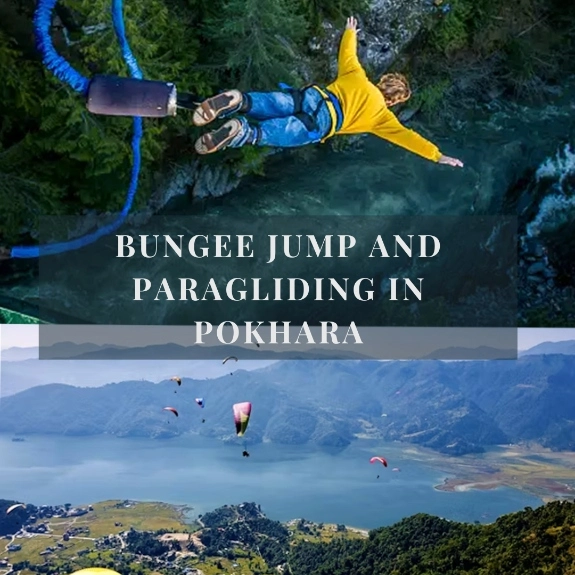
If you need any assistants during your stay in Nepal, we Nature Explore Treks always happy to assist you. We offer any kind of travel activities such as Trekking, Climbing, Pilgrimage tour, Yoga, Bungee jump,  Jungle Safari, Rafting and many more adventures in Nepal, Tibet, and Bhutan.

How to choose the perfect trekking destination in Nepal

Nepal is a beautiful country which offers incredible experience with its stunning landscapes , rich culture and majestic mountains. With so many amazing places to Trek , choosing the perfect trekking destination can be quite challenging. To help you with deciding , in this blog there are some essential factors which you need to consider before embarking to your dream destination.

1. Determine your fitness and Experience level:

trekking

Beginners Trek

If you’re new to trekking , Nepal has some fantastic option to offer which are perfect to the beginners. These trek are shorter ,less challenging and most importantly offers the stunning scenery without experience or high level of fitness.

Ghorepani Poon Hill Trek

Ghorepani Poon Hill trek is an ideal trek for those who are beginners and have very short time ,the trek usually takes 4-5 days , making it short trek. It involves gentle ascents and descents which are comfortable for mst of the people, including families and those who are moderately fit.

Starting from the lakeside from Pokhara , the journey begins with a scenic drive to the Nayapool where the trekking path unfolds the diverse landscapes, villages and terraced fields . As you ascend climbing up stone steps and passing through the forest with colourful flowers. You’ll spend the cozy night in villages like tikhedhunga and ghorpanin where you will be amazed with the mountain view . One of the main attractions of the trek is the sunrise from the poon hill 3210m . You can witness the breathtaking view of Annapurna and Dhaulagiri bathed in golden lights. It’s a magical sight that you’ll remember forever .

After enjoying the sunrise, you’ll trek through the forest to Tadapani and then Ghandruk, a village known for Gurung people where you will experience the culture and hospitality before heading back to Pokhara.

  • Location : Annapurna region
  • Duration: 4-5 days.
  • Difficulty : Moderate , suitable for beginners with basic fitness.
  • Max altitude : 3210 m( 10,531 ft)


Langtang Valley Trek

Langtang Valley Trek , located in the northern part of Nepal is a perfect choice for beginners who want to trek in Nepal. This trek usually takes 7-8 days. However you can customized it according to your time ., starting from Syabrubesi , which is accessible by bus or jeep from Kathmandu. The trails are well-marked and generally manageable . though it can be rocky and steep in some sections. The highest point of the trek is Kyanjin Gompa at 3,870m (12,697 ft) offering the stunning views of Langtang Lirung , Langshisha Ri and Gangchempo. Along the way , trekkers will pass through the lush forest , meadows and trekkers will also have the chance to see the red panda, monkey and various types of birds.
The best season for the trek is spring (March to May) and autumn (September to November) when the weather is mild and the skies are clear.Highlights of the trek include exploring Kyanjin Gompa , sampling local cheese and optional day hikes to Kyanjin Ri and Tserko Ri for even higher views.

  • Location : Langtang region
  • Duration : 7-8 days
  • Difficulty : Moderate , suitable for beginners
  • Maximum altitude : 3,870m (12,697 ft)

Helambu Trek

The trek which is close to the Kathmandu valley is also another perfect beginner trek . The trek spans for like 5-6 days,starting from Sundarijal where the trail is well-maintained making it accessible for those with basic fitness level. The highest point on the trek is Tharepati  3,650M (11,975 Ft) , offering stunning views of the Langtang and Ganesh Himal ranges The terrain varies from Lush green forest and terraced fields to very beautiful sherpa and tamang village ..

As per best season like every other trek Spring and Autumn are considered as the best whereas the trek is accessible for the whole year . Spring ( March to May ) and Autumn ( September to November) , when the weather is mild and the skies are clear allowing for the beat mountain views . Winter ( December to February ) , perfect for those who can handle the closer temperature and want to avoid the crowds. Monsoon season ( June to August ) brings heavy rain and slippery trails so we don’t recommend this season. Highlight of the trek include a scenic village of Tarkeghyang , visiting ancient monasteries and interacting with local Sherpa and Tamang communities.

  • Duration : 5-6 days
  • Highest point : 3,650 m (11,975 ft)
  • Difficulty : Moderate
  • Starting point : Sundarijal

Moderate Treks:

Nepal, known for its stunning landscapes and majestic mountains , offers the trekking routes with various levels of difficulty . Moderate treks are perfect for those who have some trekking experience and wish to explore the country’s beauty undergoing extreme physical challenges .
Moderate treks in Nepal balance adventure and comfort , allowing trekkers to enjoy the journey and the destination.

Annapurna Base Camp Trek

The Annapurna Base Camp ( ABC ) trek is one of the most popular moderate treks in Nepal, offering a blend of both cultural and natural experiences. The trek takes you to the foot of Annapurna , one of the world’s highest peaks . The trek usually takes 7-12 days , depending upon your customized itinerary and pace. The highest point is Annapurna Base Camp which is situated at an altitude of 4,130m(13,550 ft) which provides the stunning views of Annapurna and Dhaulagiri ranges , including peaks like Machhapuchhre (fishtail ) , Hiunchuli and Annapurna South.

When you arrive at Jhinu Danda , you can relax in natural hot springs. Like every other, the best season for this trek is also the Spring and Autumn season. The trek usually begins with the drive from Pokhara to Nayapul . The trail then goes through the Modi Khola involving steep ascent, especially the stone steps to Ulleri. Then reaching Poon Hill offers a breathtaking sunrise view . The trek then continues to Tadapani and Chomrong filled mixed ascents and descents through lush forest and suspension bridge to Dovan/ Bamboo and then to Deurali and then you will reach to Annapurna Base Camp passing through the Machhapuchhre Base Camp witnessing a stunning views of towering peaks.

  • Duration : 11-12 days
  • Maximum Altitudes : 4,130 m ( 13,550 ft)
  • Best season : spring and autumn
  • Starting point : Pokhara

Makalu Base Camp Trek

Makalu Base Camp trek is a journey that will take you to the Makalu, the fifth highest peak in the world at 8,485 m (27,838 ft) . The trek known for its stunning natural beauty , diverse landscapes , remote ,less traveled paths typically takes 15-20 days to complete . The trek requires a good level of fitness and some prior trekking experiences due to its length and high altitude. The journey begins with the city of Tumlingtar which is accessible via domestic flight from Kathmandu .

The trek begins with a beautiful setting of scenery and progresses through the varied terrains including Lush subtropical forests , alpine meadows and high altitude deserts . Trekkers will be rewarded with the stunning views of Makalu , L horse along with the barun glaciers . As the route passes through the Makalu- Barun National Park where you can find the different species as well as rare wildlife such as red panda and snow leopard. The best time to undertake the trek are during the spring and Autumn season for stable weather and clear skies.

Overall, the Makalu Base CampTrek offers an off beaten path combining the spectacular natural view as well as rich culture

Gosaikunda Lake Trek

The Gosaikunda Lake Trek is a captivating journey through the Lantang National Park offering the perfect blend of cultural and natural aspects. This moderate trek , typically last for 7-9 days , starting from Dhunche or Syabrubesi , which is accessible by a scenic drive from Kathmandu . Trekkers will traverse through the diverse terrain from lush forest and terraced fields to rocky highlands, ultimately reaching to the sacred alpine lake, Gosaikunda at 4,380 m which is believes to have been created by lord Shiva and attracts many pilgrims especially during the Janai Purnima.

Along the way trekker can expect to see the panoramic view of Langtang Himalayan range and also have the chance to spot the different wildlife , including the elusive red panda . Key highlights of the trek includes exploring cheese factory and Sing Gompa monastery in Chandabari

It’s best to undertake this trek in spring (March to May) and Autumn (September to November ) season as the weather is stable and the sky is clear offering the best views of Langtang Himalayan range . During these times, the temperatures are moderate making the trek more comfortable and enjoyable . The terrain varies from well-trodden paths and steep ascents to rugged and rocky sections .

  • Duration : 7-9 days
  • Best Season : March to May , September to November
  • Starting point : Dhunche or Syabrubesi (both accessible by road from Kathmandu )

Challenging Treks :

Nepal offers some of the most challenging and rewarding trekking experiences in the world. These treks are suitable for experienced trekkers with high level of fitness andpassion for adventure. Here are some of the most challenging treks in Nepal:

Everest Three High Pass Trek

The Everest Three High Passes Trek is one of the most challenging and rewarding trek in Nepal. It takes you through three high passes in the Everest region: Kongma La, Cho La and Renjo La . You’ll get the stunning views of the world’s highest peaks including Mt. Everest , Lhotse , Makalu and Cho Oyu .The trek offers diverse landscapes from the lush forest and alpine meadows to rugged mountain terrain and glacial valley .

You’ll walk through the picturesque villages , cross the high mountain passes and also get to experience the turquoise glacial lakes like Gokyo Lake . The trek not only offers the breathtaking mountain views but also a chance to experience the rich Sherpa culture and Hospitality . Trekkers will pass through the famous Sherpa village such as Namche Bazar and visit the monasteries like Tengboche

  • Duration : 18-21 days
  • Maximum altitude : Kongma La Pass (5,535m/18,159 ft )
  • Best season : March to May , September to November

Lower Dolpo Trek

Lower Dolpo Trek is another captivating adventurous journey that will take trekkers to the remote and unspoiled region of Nepal. Located in the far west of Nepal, the trek takes you through the Dolpo region , known for its rugged landscapes, pristine beauty and Tibetian- influenced culture. Trek typically takes 14-18 days depending upon your customized itinerary and pace , starting with a scenic flight to Juphal via Nepalgunj.
This Trek offers a challenging yet rewarding experienced , with diverse terrains ranging from dense forests and alpine meadows to highlands and deep river gorges . The trail passes through Shey Phoksundo National Park and is home to the stunning Shey Phoksundo Lake , Nepal’s deepest and second largest lake renowned for its turquoise water . The trek also includes high passes such as Numa La Pass (5,190m ) and Baga La Pass (5,070m) . The trek is classified as challenging due to its remote location , high altitudes and rugged terrains, requiring good physical fitness .

Culturally the lower Dolpo region is rich and diverse with strong Tibetan influence. Trekkers will encounter ancient Buddhist monasteries , traditional villages and the warm hospitality of the locals. Key highlights of the term includes the visit ti the centuries old-Shey Gompa monastery , interacting with yak herders, and witnessing the traditional salt trading caravans.

  • Duration : 15-18 days
  • Maximum altitude : Numa La Pass (5, 190 m/ 17,028 ft)
  • Best season : Spring and Autumn
  • Difficulty level : challenging

Kanchenjunga Circuit Trek

  • Duration : 20-25 days
  • Maximum altitude : Lapsang La Pass (5,160m/16,929 ft)
  • Best season : April to May , October to November

Manaslu Circuit Trek

  • Duration : 14-18 dyas
  • Maximum altitude : Larkya La Pass (5,160 meter/16,929 ft)
  • Best season : March to May , September to November

Dhaulagiri Circuit Trek

  • Duration : 18-21 days
  • Maximum altitude : French Pass (5,360m / 17,585 ft )
  • Best season : April to May , September to November

Upper Dolpo Trek

  • Duration: 24-30 days
  • Maximum altitude : Kang La Pass (5,240 m/ 17,191 ft)
  • Best season : May to October

Ganja La Pass Trek

  • Duration : 14-16 days
  • Maximum altitude : Ganja La Pass (5,122 m/ 16,800 ft )
  • Best season : April to May , October to November

2.Consider the duration of the Trek

Hey here we are at Dingboche 3

Short Treks(3-7 days)

Ghorepani Poon Hill 

  • Trek Duration : 5 days
  • Difficulty : Easy
  • Maximum Elevation : 3,210m(Poonhill)
  • Best season : Spring and Autumn 
  • Starting point : Pokhara
  • Permits : TIMS (Trekkers’ Information Management System) Card and ACAP (Annapurna Conservation Area Permit )
  • Major Attractions: Poon Hill sunrise, Ghorepani, Pokhara, Ghandruk.
  • Mountains that are seen during the Trek : Annapurna I (8091m), Annapurna II (7973 m), Annapurna III (7555m), Annapurna South (7219 m), Dhauligiri I(8167m), Machapuchare (6993m), Nilgiri (7061m), Himalchuli (7893m).

Langtang Valley Trek 

  • Trek duration : 6 days 
  • Difficulty : Moderate 
  • Maximum Elevation : 3,850m( Kyanjin Gompa)
  • Best season : Spring and Autumn 
  • Starting point : Syabrubesi
  • Permits : Langtang National Park and TIMS 
  • Major Attractions: Kyanjin Gompa, Langtang Village , Kyanjin Ri.
  • Mountains that are seen during the Trek:Langatng Lirung (7246 m) , Langtang II (6575 m ), Langtang III (6547 m), Gang Chhenpo (6388 m ), Dorje Lakpa (6966 m), Shishapangma (8013m).

Panch Pokhari Trek

  • Trek Duration : 5 days
  • Difficulty : Moderate 
  • Maximum Elevation : 4,300m (Panch Pokhari Viewpoint).
  • Best season : Spring and Autumn
  • Major Attractions: Panch Pokhari (Five Lakes ) Chimti villages 
  • Mountains that are seen during the Trek: Jugal Himal, Dorje Lakpa (6966 m ), Madiya (6650m), Langtang Lirung (7246m).

Everest View Trek

  • Trek Duration : 6 days
  • Difficulty : Moderate 
  • Maximum Elevation : 3,864m (Hote; Everest View)
  • Permits : Sagarmatha National Park and Khumbu Pasang Lhamu Rural Municipality 
  • Best Season: Spring and Autumn 
  • Major Attractions : Namche Bazar , Hotel Everest View, Mount Everest and Lukla Airport 
  • Mountains that are seen during the Trek: Mount Everest (8848 m), Lhotse (8516 m), Nuptse (7861m), Ama Dablam (6812m), Thamserku (6623m), Kantega (6783m), Pumori (7161m).

Helambu Trek 

  • Trek Duration : 6 days
  • Difficulty : Easy
  • Maximum Elevation : 3,650m(Thadepati)
  • Permits : Langtang National Park and Shivapuri National Park 
  • Best Season : Spring and Autumn
  • Major Attraction: Thadepati Pass, Monasteries, Langtang National park , Shivapuri National Park.
  • Mountains that are seen during the Trek: Langtang Lirung (7246m), Dorje Lakpa (6966m), Gang Chhenpo (6388 m ), Jugal Himal (7319m), Shishapangma (8013m), Gaurishankar(7145m).

Medium- Length Trek (8-14 days )

Annapurna Base Camp 

  •  Trek Duration : 13 days 
  • Difficulty: Moderate
  • Maximum Elevation : 4,130m
  • Permits : TIMS Card and ACAP
  • Best season : Spring and Autumn 
  • Major Attraction : Machapuchre Base Camp, Jhinu Danda Hot Spring,Ghandruk Village 
  • Mountains that are seen during the Trek: Annapurna I (8091m), Annapurna South (7219m), Hiunchuli (6441m), Machapuchare (6993m) , Gangapurna (7455m), Annapurna III (7555m), Dhaulagiri (8167m), Tukuche Peak(6920), Barahi Shikhar (7647m) 

Mardi Himal Trek

  • Trek Duration : 9 days
  • Difficulty: Moderate
  • Maximum Elevation : 4500m
  • Permits : TIMS Card and ACAP 
  • Best season : Spring and Autumn
  • Major Attraction : Siding , Pitam Deurali , Mardi Himal Viewpoint, Annapurna Range
  • Mountains that are seen during the Trek : Mardi Himal (5553m), Machapuchare(6993m), Annapurna I (8091m), Annapurna South (7219m), Annapurna III (7555m), Dhaulagiri (8167m), Hiunchuli (6441m), Tukuche Peak (6920m)

Jomsom- Muktinath Trek

  • Trek Duration : 10 days
  • Difficulty: Moderate
  • Maximum Elevation: 3710m
  • Permits :TIMS and ACAP
  • Best season : Spring and Autumn
  • Major Attraction: Muktinath Temple, Jomsom, Kagbeni Village, Marpha Village, Kali Gandaki Gorge,Thorong La Pass view.
  • Mountains that are seen during the Trek :Dhaulagiri (8167m), Annapurna I (8091m), Nilgiri(7061m), Tukuche Peak (6920m), Machapuchare(6993m).

Everest Base Camp Trek

  • Trek Duration: 14 Days
  • Difficulty : Moderate
  • Maximum Elevation : 5364m (Everest Base Camp)
  • Permits: TIMS and Sagarmatha Nationa Park
  • Best Season: Spring and Autumn
  • Major Attractions: Everest Base Camp,Kala Patthar, Namche Bazar, Tengboche Monastery, Lukla , Phakding and Dingboche.
  • Mountains That Are seen during the Trek : Mountain Everest (8848m), Lhotse(8516m), Nuptse (7861m), Ama Dablam (6812m), Makalu (8485m).

Gosaikunda Trek

  • Trek Duration : 8 days.
  • Difficulty : Moderate.
  • Maximum Elevation: Gosaikunda (4380m).
  • Permits : TIMS and Langtang National Park .
  • Best Season : Spring and Autumn.
  • Major Attraction : Gosaikunda Lake, Helambu region, Laurebina Pass, Langatang Valley Views, Cultural Experiences.
  • Mountains That are seen during the Trek: Langtang Lirung (7246m), Dorje lakpa(6966m), Ganesh Himal(7406m), Gaurishankar (7145m)

Long Trek (15-20 days)

Makalu Base Camp Trek 

  • Duration : 15 to 20 days
  • Difficulty: Challenging
  • Maximum Elevation : Makalu  Base Camp (4870m)
  • Permits : TIMS and Makalu Barun National Park
  • Best Season : Spring and Autumn
  • Major Attraction : Makalu Base Camp , Barun Valley and High altitude passes
  • Mountains That are seen During the Trek: Makalu (8845m), Chamalang (7319m), Baruntse(7129m), Lhotse(8516m)

Kanchenjunga Base Camp Trek

  • Trek Duration : 20 days
  • Difficulty : Challenging
  • Maximum Elevation : 5140m (Kanchenjunga Base Camp)
  • Permits: TIMS and Kanchenjunga Conservation Area Permit (ACAP)
  • Best season: Spring and Autumn
  • Major Attractions: Kanchenjunga Base Camp,
  • Mountains that are seen during the trek : Kanchenjunga (8586m), Makalu (8485m), Kumbhakarna(7710m), Pangpema Peak(6650m) .

Dolpo Trek

  • Trek Duration : 18 days
  • Difficulty : Challenging
  • Maximum Elevation : Shey Phoksundo Lake (3611m)
  • Permits : TIMS and Dolpo Restricted Area Permit
  • Best Season : Spring and Autumn
  • Major Attractions: Shey Phoksundo Lake, Traditional Tibetan Culture , Remote Wildreness
  • Mountains that are seen during the trek : Kanjiroba (6883m), Dhaulagiri(8167m), Nilgiri (7061m)

Manaslu Circuit Trek

  • Trek Duration : 16 days
  • Difficulty : Challenging 
  • Maximum Elevation: 5106 m (Larkya La Pass)
  • Permits : TIMS , Manaslu Conservation Area Permit (MCAP), Annapurna Conservation Area Permit (ACAP).
  • Best Season : Spring and Autumn
  • Major Attractions: Manaslu Base Camp , Larkya La Pass, Traditional village
  • Mountains that are seen during the trek : Manaslu (8163m ) , Himalchuli (7893m), Ganesh Himal (7406m) , Shringi Himal (7187m) and many more.

3.Evaluate the Scenery and Terrain

Scenery

When choosing the trek in Nepal or anywhere it’s crucial to consider the scenery and terrain to ensure that matches perfectly with your preferences and physical abilities. Nepal offer the wide variety of landscapes from the lush forests and terraced fields to high alpine deserts and glacial peaks.Here is the list of the trek focusing on their scenery and terrain to help you choose the perfect destination:

Everest Base Camp 

Scenery : The trek offers the iconic views of the highest peaks in the world including Mount Everest, Lhotse, Nuptse and Ama Dablam. Trekkers can expect to pass through the dense forest, glacial rivers and traditional Sherpa villages which are adorned with the colorful prayers flags.

Terrain: The terrain might be quite challenging with steep ascents and descents, rockypaths and areas with snow and ice especially as you get closer to the base camp . The altitude and thin air add to the difficulty.

Best for: Adventure seekers looking for challenging trek with stunning mountain views.

 Annapurna Circuit Trek

Scenery : This trek is known for its diverse landscapes from subtropical forest ,terraced rice paddies to the high-altitude deserts.Trekkers will see the majestic peaks ranges like Annapurna and Dhaulagiri as well as the world deepest gorge, kali gandaki.

Terrain: The terrain varies from lush lowland villages to high altitude passes. The highlight of the trek is crossing the Thorong La Pass which is physically demanding due to its height.

Best for : Trekkers seeking for a variety of landscapes and cultural experiences and those looking for a longer amd more diverse trekking route.

 Manaslu Circuit Trek

Scenery : The Manaslu trek offers the remote and untouched scenery with the view of the Manaslu ranges, deep  valley ,high mountain passes and lush forests. The trek also passes through the Tibetian and Gurung villages.

Terrain : The terrain is rugged and remote with challenging high passes like Larkya La Pass. It involves steep ascents and descents and can be physically demanding.

Best for : Experienced trekkers looking for solitude , unspoiled nature and a challenging trekking route.

Gokyo Lakes Trek

Scenery : The trek features stunning lake , vast glaciers and panoramic views of peaks like Everest, Cho Oyu, and Makalu. The Gokyo Ri viewpoint offers one of the best view in the Everest region.

Terrain : The terrain includes steep climbs , moraine trails and high passes like Cho La. It can  be physically demanding due to the altitude and rugged paths.

Best For : Trekkers seeking spectacular lake and mountain vistas and those looking for an alternative to the traditional Everest Base Camp.

Makalu Base Camp Trek

Scenery : The trek offers pristine and remote valley, diverse ecosystems and views of towering peaks like Makalu and Everest . The scenery includes the dense forests , high alpine meadows and glacial valley.

Terrain : The terrain is challenging with high passes, dense forests and rugged trails. The remoteness of the area addsto its difficulty.

Best for : Trekkers seeking a remote and challenging adventure with unspoiled natural beauty.

Kanchenjunga Base Camp Trek

Scenery : The trek features remote villages, dense forests and expansive views of Kanchenjunga range. The area is known for its biodiversity and pristine landscapes.

Terrain : Long and strenuous with high passes and remote , rugged paths . The trek involves significant altitude gain and physical endurance.

Best for : Experienced trekkers seeking isolation, dramatic mountain scenery and physically demanding trek.

4.Consider the Altitude 

climbing 1

When planning a trek in Nepal, altitude is a key factor that influences both the difficulty and overall experience. Different altitude levels require varying degree of preparation and accilimatization . Here’s a detailed at trekking in Nepal based on altitude:

Lower to Moderate Altitude Treks : 

Elevation : Up to 3000 meters(9,842 ft)

Examples 

  • Ghorepani Poon Hil Trek : Reaching a maximum height of about 3,210m(10,531 ft) this trek offers stunning sunrise views over Annapurna and Dhaulagiri ranges.
  • Langtang Valley Trek : With an elevation up to 3,800 m(12,467ft)  , this trek is ideal for experiencing the cultural and natural beauty of the Langtang region.
  • Helambu Trek : Generally staying below 3,600m (11,811 ft) this trek provides a mix of Tamang and Sherpa culture along with stunning landscapes.

Characteristics : 

  • More accessible and suitable for beginners and those with moderate trekking experience.
  • Reduces the risk of altitude sickness compared to higher altitude treks although acclimatization is still beneficial.
  • Rich cultural interaction with local communities and easier access to teahous and accommodations.

High Altitude Treks

Elevation : Above 3000m(9,842ft)

  • Everest Base Camp Trek : Reaching an elevation of 5,364m (17,598 ft), this iconic trek provides breathtaking views of Mount Everest and surrounding peaks.
  • Annapurna Circuit Trek: At its highest point, Thorong La Pass , the trek reaches 5,416 m(17,769 ft)offering 
  • Diverse landscapes and cultural experiences.
  • Manaslu Circuit Trek : With a maximum elevation of 5,135 m (16,847 ft), this trek is known for its remote beauty and challenging trails.
  • Makalu Base Camp Trek : Reaching 5,000m (16,404 ft), this trek is less crowded and offers the stunning trekking experience.

Characteristics : 

  • Significantly more challenging due to thinner air and lower oxygen levels at higher altitudes.
  • Higher risk of altitude sickness proper acclimatix=zation is very essential.
  • Terrain varies from forests and meadows at lower altitudes to rugged, snow-covered landscapes at higher elevation.

5. Choose the right season

Poon hill

Spring (March to May ) : Ideal for almost every trek, with moderate temperature, blooming rhododendron and clear view

Autumn(September to November) : Another perfect season for every trek offers clear skies and excellent visibility perfect temperature.

Winter (December to February) : Suitable for lower altitude treks. Higher altitude treks can be challenging due to snow and cold temperatures.

Monsoon(June to August): Best to avoid high altitude treks due to heavy rainfall and slippery trails . Suitable for rain shadow areas like upper mustang and Dolpo.

Conclusion 

Choosing the perfect trekking destination in Nepal involves considering your fitness level, the trek’s duration , the type of scenery you prefer, altitude , season and necessary permits. By taking these factors into account , you can select a trek that matches your interests and abilities.

Ensuring an unforgettable adventure in the Himalayas.At Nature Explore Trek , we understand that each trekker has unique preferences and requirements. That’s why we provide customized itinerary considering your preferences . Our team of experienced professionals is flexible and dedicated to ensuring you have a safe , enjoyable and unforgettable trekking experince in Nepal.

Paragliding and Bungee Jump In Pokhara

Paragliding and bungee jump in Pokhara is one of the famous exciting activities. Pokhara, often called the “ Gateway to the Himalayas” not only is renowned for its stunning landscapes and the beautiful lakes but also offers some of the most thrilling adventure sports that you can do in Nepal. Among these, paragliding and bungee jumping stands out as the must try experiences for those thrill-seekers.
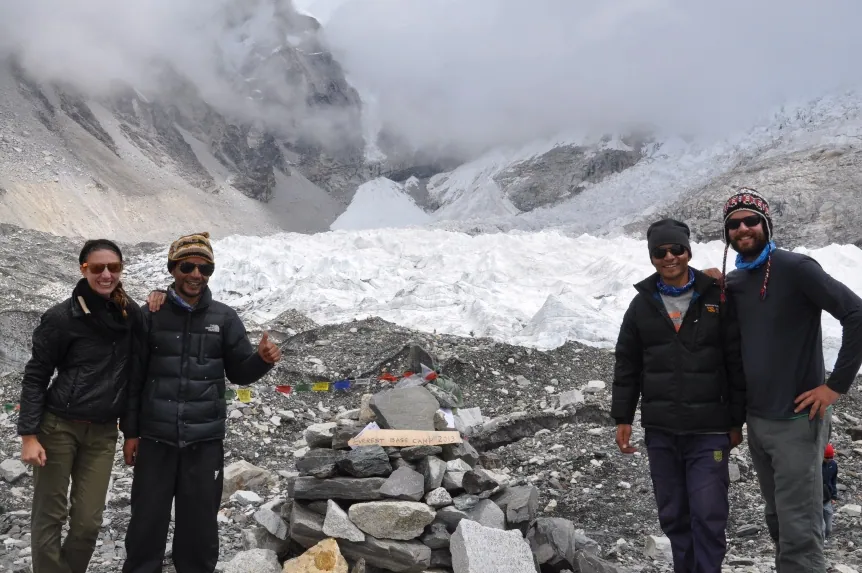
Paragliding in Pokhara

Paragliding in Pokhara is a magical experience. As you soar through the sky, you’ll get a bird’s eye view of all those Annapurna mountain ranges, lush green valley and also the beautiful Phewa Lake. The city has become one of the top paragliding destinations globally due to its stable thermals, convenient take-offs, Landing zone and stunning views.

Best Time to Go:

Autumn and Spring : Ideal season with stable weather conditions and clear skies.
Winter : Suitable but can be quite cold
Monsoon : Possible but not recommended due to the safety concerns because of wet conditions.

Location :

The primary take-off point for paragliding in Pokhara , Sarangkot is situated at ana elevation of approximately 1,592m(5,223 ft) above sea level. It takes about 30 minutes drive from the Lakeside area of Pokhara.

Costs :

The cost of paragliding in Pokhara generally ranges from $70 to $120 USD. Some packages may include additional services like photos and your flight for an extra fees.

Safety Tips:

  • Book your flight with a certified and experienced paragliding company.
  • Pay close attention to the pilot’s instructions during the briefing and flight.
  • Ensure the weather conditions are suitable for flying on the day of your booking.
  • Dress comfortably and in layers, as it can get chilly at higher altitudes.

What To Expect :

Registration and Briefing : Upon arrival at the paragliding office, you’ll need to register and attend a briefing session. This includes safety instruction and an overview of what to expect during the flight.

Safety Gear : You’ll be equipped with a harness, helmet and other necessary safety equipment.Certified pilots perform thorough safety checks to ensure everything is in place.

The Flight : Accompanied by your professional pilot, you’ll take off from Sarangkot and glide through the air. The flight typically lasts around 20-30 minutes, depending on the weather conditions.

Landing : The flight concludes with a smooth landing near Phewa Lake, where you can relax and have some time to process the experience.

Bungee Jump In Pokhara

Bungee jumping in Pokhara is a thrilling experience. When you jump from a high platform, you’ll feel a rush of adrenaline and see the amazing views of the Annapurna Mountains, green valley and beautiful Phewa Lake. Pokhara is a top spot for bungee jumping because of its stable conditions,easy takeoffs and landing zones.

The Bungee jumping site in Pokhara is situated near the Hemja village, about 20 minutes drive from the Lakeside area of Pokhara. Jumpers can experience a free fall of about 70 meters (230 ft) from a platform that extends over the picturesque gorge of Bhote Koshi River. The Jump is operated by experienced professionals who adopt the safety standards, ensuring a secure and thrilling experience for participants.
Once you ‘ve taken the leap, you’ll feel a mix of achievement and pride. Overcoming your fears and enjoying this amazing adventure in amazing place.

Best Time to go :

October to May : Ideal due to dry weather, ensuring clear skies and good visibility for breathtaking views of Himalayas.
Avoid Monsoon Season (June to September ): Heavy rains can affect visibility and safety conditions, making it less suitable for bungee jumping adventures.

Jump Location :

Hemja: The primary site for bungee jumping in Pokhara is located in Hemja about 20 minutes drive from Lakeside. The jump is from about 70 m high toward a river george.

Duration and Cost : Typically 1-2 hrs total including briefing and gearing up. Costs range from $70 to $ 100 USD per person.

Safety Tips :

  • Choose a trusted operator who follows strict safety standards.
  • Before Jumping, carefully check all the equipment.
  • Listen carefully to the instructors and follow their directions closely.
  • Inform the staff of any medical conditions.
  • Avoid heavy meals and alcohol before the jump.

What to Expect:

Registration and Briefing : Upon arrival, you’ll need to register for your jump. Following registration, you’ll receive a detailed briefing that includes safety instructions and what to expect during the jump.
Safety Gear : You’ll be provided with a harness and other necessary safety equipment. Trained staff will ensure everything fits properly and securely before you proceed.
The Jump : Once your equipment is checked and secured, you’ll stand on the platform, overlooking the stunning landscapes. After a final safety check and any last- minute instructions from the crew, you’ll take the thrilling leap into the open air.

Conclusion 

Paragliding and Bungee jumping in Pokhara are must-try adventures for those thrillseekers visiting Nepal. With stunning views of Annapurna Mountain ranges, lush valley and beautiful Phewa Lake, these activities offer unique and thrilling experiences. Both activities are best enjoyed in the spring season.

For the most reliable and enjoyable experience, choose Nature Explore Trek. Our company is renowned for its exceptional service, experienced guides. We ensure that every aspect of your adventures is taken care of, allowing you to focus on the thrill and beauty of the experience. Come with us and create unforgettable memories in the stunning landscapes of Pokhara.

Mount Kailash Tour Difficulty and Complete Preparation Guide

Mount Kailash is a holy mountain of Tibet, worshipped by many religions. It rises at 6,638 meters (21,778 feet) and it attracts individuals who wish to fulfill themselves both physically and spiritually as pilgrims. In this blog we’ll discuss about the Mount Kailash Tour Difficulty and Complete Preparation Guide.

During the journey, the pilgrims together perform Kora which consists of walking around the mountain where they face such challenges as high altitude, unpredictable weather patterns, and rough trails.

The challenges include low oxygen leading to altitude sickness; and extreme cold with wind and steep slopes one must hike through. Start getting ready for this trip by focusing on your fitness level through activities such as walking or hiking.

Similarly, remember to pack cold weather clothes for climbing; robust shoes or boots; sleeping bags, and also a first aid kit. Understanding and respecting local traditions will help one minimize waste while arranging for permits and accommodations early enough.

Therefore, you need to prepare yourself mentally as well as physically for this incredible pilgrimage journey as both adventures and spiritual quests are waiting ahead of you on Mount Kailash.


A Brief Introduction to Mount Kailash!

Mount Kailash with an altitude of 6,638 meters (21,778 feet) is situated in a rural corner of southwest Tibet in China. Hindus believe that Lord Shiva resides there but Buddhists relate it to Buddha Demchok (Chakrasamvara) and the center of the world.

Every year many people make a pilgrimage around Mount Kailash which they call the Kora or Parikrama. The journey involves walking around the base of the mountain covering approximately fifty-two kilometers (thirty-two miles) of rugged and tough terrain.

Pilgrims undertake this difficult trek to demonstrate their faithfulness and seek moral purification with hopes of blessings and wisdom along the holy path. Mount Kailash has beautiful surroundings as well as strong ancient roots. It is an emblematic manifestation of unshakeable faith and also our planet’s astonishing natural splendor.

Mount Kailash Tour Difficulty and Complete Preparation Guide


Mount Kailash Tour Difficulty – Few Considerable Factors!

This is Mount Kailash, the great mountain of China’s distant Tibet, worshiped by Hindus, Buddhists, Jains, and Bonpos alike as a holy sanctuary. And every year thousands journey around its foot called Kora which holds deep significance to the believers of different faiths as it signifies a rebirth and spiritual enlightenment.

Nevertheless, behind this spiritual pull are many challenges that would-be visitors should be ready for. The first one of them is the high altitude above 6,600 meters (21,700 feet) of Mount Kailash. At such heights, breathing becomes an uphill task since thin air increases the risk of Acute Mountain Sickness which may result in headaches, nausea, and fatigue.

In addition, this area has severe weather that is changeable at very short notice. Even in summer months, temperatures can drop significantly with sudden snowstorms splashing rain showers accompanied by strong winds. Pilgrims must be dressed well enough to handle such weather conditions during their walk through extreme climates on Mount Kailash.

Still, pilgrims who embark on this journey experience an opportunity to transform themselves by enduring both physically and spiritually through the immense beauty of Mount Kailash.

1. High Altitude

Reaching over 6,600 meters (21,700 feet), Mount Kailash penetrates the clouds where oxygen is scarce. The high altitude risks include effects such as headaches and fatigue which are detrimental to respiration and activity capacities.

2. Unpredictable Weather:

The weather surrounding Mount Kailash can be harsh. It could be freezing with sudden snowstorms, showers of rain, or endless gusts even during summer days. One needs layers of clothes and strong gear to cope with these climatic extremities.

3. Physical Demands

The Kora circuit is about 52 kilometers (32 miles) long but has rugged terrain all through it. The journey includes steep uphill climbs, treacherous rocky paths, and difficult descents that necessitate adequate physical fitness, stamina, and mental strength among the pilgrims.

4. Cultural Reverence

Significantly religiously important among mountains around the world, Mt. Kailash represents a sanctuary for spiritual devotions and a place of worship. International visitors must respect cultural norms like avoiding touching prayer flags or interfering with pilgrim rituals carried out in public places by other pilgrims of diverse faiths.

5. Remote Wilderness:

Being situated distant from urban centers, Mount Kailash’s location is remote providing logistical obstacles. It highlights the need for enough essential medications, an extensive first aid kit, and sufficient provisions for food during the entire journey.

6. Environmental Conservation:

Conserving the pure environment of Mount Kailash is vital. Pilgrims are urged to be responsible tourists by minimizing waste generation by leaving no trace behind so that they can uphold the natural beauty and ecological equilibrium in this area.

7. Spiritual Reflection:

The journey to Mount Kailash is not just a physical one but also deeply spiritual. Many pilgrims engage in meditation, prayer, and reflection as they seek inner peace and spiritual enlightenment amidst calm and holy environments.

8. Community and Camaraderie:

The pilgrimage to Mount Kailash creates a sense of community among travelers coming from different backgrounds or faiths. Sharing their experiences with others who might be going through similar challenges on their way up creates relationships that go beyond cultural barriers.

9. History and Cultural Education

A lot of history and culture is associated with Mount Kailash. The mountain can teach pilgrims about the customs, mythology, and folktales that are connected to it thereby deepening their knowledge of its spiritual significance.

10. Personal Development:

Personal growth can be realized through hardships during this pilgrimage on Mount Kailash that can alter one’s life; thus as one overcomes physical barriers along the spiritual path he/she may attain a deeper self-knowledge and understand his or her place in the world.

But despite the difficulties one goes through before getting to Mt Kailash, no other trip could furnish so much spirituality alongside physical endurance as this pilgrimage for personal enrichment.

Consequently, by being meticulous in preparation and showing how deeply he values the cultural heritage of Mount Kailash, a pilgrim can embrace all challenges that come along this journey thus immersing himself into the unfathomable holiness of Mount Kailash characterized by natural grandness.

Mount Kailash Tour Difficulty and Complete Preparation Guide
mount kailash north face side and indonasian group

Preparing for Your Mount Kailash Tour: A Comprehensive Guide

When you get ready for a trip to Mount Kailash in Tibet, you set out on a profound journey of spiritual importance and natural beauty. This sacred mountain is revered by Hindus, Buddhists, Jains, and Bonpos as a guiding light of spiritual enlightenment and rebirth.

Every year, the arduous trek around its base called the Kora attracts thousands who seek blessings and inner calm amidst its grandeur. To embark on this transformative journey with confidence and respect, thorough preparation is essential.

Offered here is practical advice in simple terms that will help you navigate through the difficulties of physical stamina, cultural sensitivities, and logistical hurdles likely to be encountered when going on a pilgrimage to Mount Kailash.

From understanding what high altitude does and unpredictable weather to packing necessary items to respecting local culture, this guide provides all the necessary information you need.

Whether you’re an experienced hiker or about to take your first pilgrimage, preparing well ensures that one fully immerses oneself into the religious as well as natural wonders of Mount Kailash thus making it a deeply meaningful experience that will forever stay in your memory.

1. Physical Fitness:

A journey around Mount Kailash covers 52 kilometers of rugged terrain and demands excellent stamina. Regular exercise like walking, or hiking helps to build up endurance needed for the tough roads and steep climbs ahead.

Moreover, add strengthening exercises into your routine to enhance muscle endurance, which is necessary for carrying a backpack on your back and moving on rocky grounds.

2. Altitude Acclimatization:

At 6,638 meters above sea level, visitors may suffer from altitude sickness because of low oxygen levels in the air. It allows one to acclimatize gradually by arriving early. Another way to avoid many problems associated with high altitudes is drinking enough water; avoiding alcohol as well as getting enough rest.

Before heading straight to the base camp of Mount Kailash, it may be advisable to spend a day or two at lower altitudes nearby.

3. Packing Essentials:

Pack clothing layers that cater to changing temperatures. You will also need some essentials such as a strong bag pack with comfy straps, trekking poles for stability along rough trails, and a sleeping bag suitable for cold weather conditions.

Additionally, there are other important items like sunscreen, personal medications, and a basic first aid kit that should not be left behind. Also, carry along a headlamp/flashlight in case you want to navigate in the darkness of the night.

4. Cultural Sensitivity:

Hindus, Buddhists, Jains, and Bonpos consider Mount Kailash as a religious symbol or center. Mind local customs, for instance, no noise in prayer grounds. Mind local guides on how to move without hurting the sanctity of this place. While at Kailash, you should not take pictures without asking permission from pilgrims. Folks are requested to ask first if they can be part of it.

5. Travel Documentation:

Get all necessary permits long before visiting the Holy Mountain and arrange transportation to this remote location in Tibet. Select lodgings near areas with limited access to show that you understand the terrain. Finally, go through all your papers and traveling documents ahead of leaving so that no last-minute problems occur.

6. Medical Preparation:

There is a well-thought-out list of drugs one could carry along for such conditions as altitude sickness or stomach problems. In case there is any medication prescribed by your doctor that may be needed during the trek, it’s better to have enough medicines with you.

Additionally, pack blister care kits and insect repellents among other medicines given by health care professionals who attend to patients headed to high altitudes.

7. Environmental Responsibility:

Minimize your garbage and dispose of it properly when trekking the pristine environment all around Mount Kailash. During the pilgrimage, use refillable water bottles and avoid disposable plastics to decrease the size of one’s ecological footprint.

All wastes including those made from biodegradable materials should be carried away and respect for designated areas provided for disposing of them is expected.

8. Weather Preparedness:

The weather on Mount Kailash could change unexpectedly, with cold temperatures and sudden storms. Cold-weather gear that is both windproof and waterproof should be packed so that you can enjoy your journey irrespective of any changes in weather conditions. Comply with weather updates at regular intervals to ensure safety and comfort; adjust plans accordingly.

9. Food and Hydration:

Even if not thirsty still keep drinking enough water throughout the trek. When going for long walks or climbing steep slopes, carry nutritious snacks like nuts, dry fruits, granola bars as well as chocolate that would help you maintain your energy levels.

It may be worth considering carrying electrolyte tablets which help replace lost essential body salts due to sweating in high altitude areas.

10. Mental Readiness:

Prepare your mind for the challenges that lie ahead and the spiritual intensity of the pilgrimage to Mount Kailash. Embrace the sacredness of this place and allow time for reflection in yourself, as you contemplate deep within amidst beautiful Tibetan landscapes.

To enjoy a completely transformative journey, practice mindfulness and show gratitude towards Mount Kailash’s cultural heritage.

The preparation before touring Mount Kailash requires planning. To begin this unforgettable trip with a full sense of inner realization about its spiritual significance and physical beauty, consider being physically fit, respecting other people’s culture, and behaving environmentally friendly.

Have a safe journey as well as an enjoyable experience which is expected to transform you at Mount Kailash!


Frequently Asked Questions

1. What is the importance of Mount Kailash?

Mount Kailash holds supreme religious importance for adherents of these religions: Hinduism, Buddhism, and Jainism; Bonpos are also believers of Tibet’s indigenous religion.

Hindus regard it as Lord Shiva’s abode while Buddhists connect it with Buddha Demchok (Chakrasamvara) or consider it the center of the universe in some traditions. It is a holy ground for pilgrims and those who want illumination from divine power.

2. What is the difficulty of trekking around Mount Kailash?

Mount Kailash, also called Kora or Parikrama, is a 52 km (32 miles) difficult terrain circle. It involves steep up-and-down climbs on stony trails. Due to reduced oxygen levels, the high altitude beyond 6,600m (21700 feet) has made it even more challenging which requires good physical fitness as well as acclimatization.

3. What do I need for my trip to Mt. Kailash?

Therefore, you need layered clothes appropriate for different weather conditions including warm clothing and waterproof gear; strong shoes for walking on footpaths; sleeping bags in case of low temperatures; sunscreen, medicines (especially against altitude sickness), first aid items, and so on. Travel slowly and keep all possible essentials within your reach during the journey.

4. How do I prepare for the high altitude of Mount Kailash?

When you are hiking at higher elevations, you must arrive a few days before the climb starts so that your body can get used to the altitude. Another thing that you need to do when you first arrive at an elevated location is to drink plenty of water and avoid exercises of great force.

Listen to your body; if you are feeling uneasy or have trouble breathing, then it may be a sign of altitude sickness. Additionally, acetazolamide medications could be utilized for both prevention and relief purposes.

5. What culture should I know about?

Mount Kailash is an extremely revered place; through their customs, we should respect them by not walking over prayer flags or stones as well as participating in rituals with sacredness. Moreover, during your journey, you need to be sensitive about religious issues encompassing pilgrims who belong to different religions and have good behavior throughout.

mount kailash North face from Dirapuk
mount kailash in sun set from north face side.


The Final Wrap Up

Undertaking a journey to Mount Kailash requires careful preparation, both in the physical and psychological sense. The place has spiritual importance, which is coupled with its tough nature; this makes it the greatest of all pilgrimages.

Thus, people undertaking the sacred journey should be aware of its associated challenges hence well equipped to go through them. Mount Kailash is like that; it’s not just about climbing up but it’s a deep spiritual experience.

With adequate preparations and an understanding of the cultural weight of this journey, this path will be an experience that will change your life.

Summiting Island Peak: Your Ultimate Adventure Guide

Island Peak climbing day 2

Picture yourself standing at the top of 6,189m/20,305 ft,surrounded by the breathtaking views of the snow-capped mountain stretching as far as your eyes can .Now, also imagine that this dream-worthy adventure is within your reach,even if you’re a novice-climber.Welcome to the world of Island peak,where the thrill of mountaineering meets the accessibility of a beginner-friendly.

About Island Peak

Island Peak, also known as Imja Tse, was first climbed in 1953 by a British expedition led by Eric Shipton.The name Island peak comes from its shape ,like an island surrounded by the ice when viewed from the nearby village Dingboche.Island Peak stands tall at an elevation of 6,189m(20,305 ft ) above seas level in Khumbu region.The peak’s shape is like a tall triangle with really steep sides which looks strong and cool which looks like it’s calling the climber from far away.On the clear day,climbers are treated with the clear views of iconic peaks such as,Lhotse,Nuptse and Ama Dablam etc.Like every other himalayan peaks , climbing Island peaks also poses difficulty as the steep snow and ice slopes,rocky ridges and glaciers test the skills and endurance of even the most seasoned mountaineers.Weather conditions can shift rapidly ,with snow storms,high winds and extreme temperatures posing additional challenges to climbers.

Yet for those who dare to take on the challenge,the rewards are unparalleled as the sense of achievement you get after climbing the summit and the views it offers from the top is undescribeable.Island peak is a mix of climbing plus trekking trekkers can trek up to Everest Base Camp and do some side hike to Kalapathar alt.5,644m so that your climbing to Island would be easier and it will be like acclimatization trek .Throughout the journey we will apply the technique “climb high, sleep low “ and on the final day of the summit we have to start our day in the very early morning at 1 am and we will reach the top at like 8 to 9 am ,it depends upon your pace .At the first part of the trek we will trek through the steep rocky terrain and crevasse-where you might find a ladder placed by the experience guide to help you safely navigate these challenging sections.


Why Climb Island Peak?

Island Peak is accessible to climbers with moderate experience compared to other high-altitude peaks in Nepal and is a great entry point for those who want to test their skills in a high-altitude environment without the extreme technical challenges of higher peaks.Standing at an elevation of 6,189m(20,305 ft) provides breathtaking views of iconic peaks like,Lhotse,Nuptse ,Thamserku ,Makalu and Ama Dablam.As the peak is near to Everest Base Camp trek route making it more popular among the climbers and trekkers.

One thing that makes Island Peak climbing special is the combination of its stunning natural beauty and diverse climbing route it offers.The ascent involves navigating a mix of snow,ice and rocky terrain The climb is not just a physical test but also mental one,requiring strength,endurance and proper acclimatization and pushing one’s personal limit.

With experienced climber guide by your side leading the way ensures climbers safety and essential guidance making it a journey full of rewarding and challenging.Climbers leave with the lasting memories and the sense of accomplishment after completing the ascent of Island Peak

why climb

What to Expect on the climb?

Embarking on Island Peak promises a thrilling adventure as you prepare for this journey,expect a perfect blend of physical challenge ,breathtaking scenery and cultural immersion.

Preparation and Acclimatization

Before you set off to climb Island peak,it’s important to spend some time acclimatizing to the altitude.You can trek to Everest Base camp alt.5364 m and Kala patthar viewpoint alt 5550m. or any other high-altitude area in order to prepare your body .Physical fitness is most as you climb there will be more demand of your strength,endurance and stamina so,make sure your body is prepared for it

Island peak Climbing route

The journey begins with a trek from Lukla,passing through the Sherpa villages and dense forests,gradually gaining altitude.As the climbers approach the Island base camp at around 5000m(16,404 ft) the landscape transforms into the rugged terrain with morines and glaciers.From the base camp,the climbing route ascends steeply towards High Cmap,where the climbers rest.Your climbing guide will give you basic training land it will also considered as the day for acclimatization

The summit of Island peak involves a diverse ranges of exciting climbing routes.The route includes steep section and crevasses which requires the use of ropes,crampons and ice axes.The challenging part of the trek is the final push to the summit as it involves climbing headwall and narrow ridge,which is physically demanding but will take you to the top of Island peak.

Through the journey ,experience Sherpa guides will provide you the support,ensuring you the safety and also offering the expert guidance while navigating the challenging terrain.After reaching to the summit of Island Peak at 6,189m(20,305 ft) rewards the climbers with that stunning views of,Lhotse 8,516m (27,940 ft) ,AmaDablam 6,812m(22,349 ft) and other surrounding mountains.While descending back to the base camp it allows climbers to have that sense of achievements and lifetime memory.

on the way to Island peak climbing

Guidance and Support

Throughout your journey to climb Island peak you’ll be accompanied by the experienced Sherpa guide .Their expertise and knowledge of the mountain is invaluable,ensuring the safety and providing the essential guidance on the technical aspects during the ascents,Guide have the crucial part as our professional guide will also assist with setting up climb,managing gear and navigating the trail .

From the initial stage to the High camp ,Sherpa plays a crucial role in selecting a route, negotiating steep ascents,traversing crevasses and navigating icy slopes.They assist in setting up necessary safety equipment like ropes and anchor points.During the final summit ,professional guide leads the way,they navigate challenging sections including the steep headwall and narrow ridges,ensuring that climbers uses the techniques and equipments to safely reach the peak.Throughout the climb ,Sherpa guides will constantly asses the weather conditions and monitor the health and well-being of the climbers.They also share the knowledge about the local traditions ,flora and fauna.

Cook s cooking in Island Peak base camp

Breathtaking Scenery

As climbers ascend Island Peak,they are treated to some of the most breathtaking scenery the Himalayan have to offer,The journey begins with the lush green forests gradually transforming into rugged terrain as altitude increases.Along the way,views of snow-capped peaks such as Everest 8848 m (29,029 ft),Lhotse 8,516m (27,940 ft) Ama Dablam 6,812m(22,349 ft),Makalu 8,485m(27,838 ft), Cho Oyu 8,188m(26,864 ft),Pumori 7,161m(23,494 ft),Nuptse 7,861m(25,791 ft). As you move towards the High Camp,climbers will witness the dramatic play of light and shadow on the surrounding peaks during the sunrise and sunset.

Ama Dablam

Tips for success

Island peak climbing is considered as perfect for those who want to trek as well as test their climbing .Before conquering Mt.Everest climbers tend to climb Island peak in order to have that practical experience before going for Mt.Everest.The success rate of conquering Island peak is high if you have trek for couple of time and have that basic knowledge also.Our professional guide will also give you some basic training like familiarizing yourself with use of crampons,ice axes and ropes ,practice using fixed ropes,learning how to navigate crevasses etc before climbing the peak.There are various factors that are needed to take consideration of before embarking on the journey of conquering the Island peak.

Preparation

Before Embarking on Island peak climbing climber have to be both Physically and Mentally fit .We recommend you to do some cardiovascular exercise like : Running,squats,cycling and focus on building the strength in your legs,core and upper body.Also don’t forget to maintain flexibility ,For mental preparation read article or magazine about the island peak climbing or blogs to familiarize yourself with the challenges and experience of other climbrers.This will help you build your mental resilience and prepare for your journey.

preparation

Permits

Before climbing Island peak there are different permit which climbers need to purchase ,which are necessary to ensure the safety and regulation of trekkers and climbers in the region.Here’s a detailed breakdown of the permits you will need:

1)NMA(Nepal Mountaineering Association)

Spring (March to May): USD 250 per person
Autumn (September to November) : USD 125 per person.
Winter (December to February): USD 70 per person.
Summer (June to August):USD 70 per person.

2) Sagarmatha National Park Entry Permit:

Cost : NPR 3000 (approximately $ 30 USD ) per person.
This permit is required for entering the Sagarmatha National Park

3)Khumbu Pasang Lhamu Rural Municipality Entry Permit:

Cost:NPR 2000( approximately $20 USD) per person.
This local permit is required for trekking in the Khumbu region and can be obtained in Lukla or Monjo.

Professional Climbing guide:

Climbing Island peak is an exciting adventure,but it’s also a challenging one which requires a proper preparation and support.Having a professional climbing guide is essential for your safety as well as successful journey.These guides are experts in navigating the terrain ,understand the best routes and identifying potential hazards.Their knowledge of the mountain ensures that you make the safest and most efficient path to the summit ,while being prepared for any sudden changes in weather condition.

Safety is a top priority when climbing Island Peak and professional guides are trained in all the necessary technical skills.THey know how to use ropes,crampons and ice axes and can help you navigate tricky sections like crevasses and steep icy slopes.In case of emergencies such as accident or altitude sickness guides are equipped to provide first aid and coordinate rescue efforts if needed
Having a guide also makes the logistical aspects of your trip much easier.They handle all the necessary permits and paperwork.Additionally,guides manage your climbing equipment so you don’t have to worry about the carrying and setting up gear.Thier local knowledge and insights into the culture and environment enrich your experience ,making your climb not only about reaching the summit but also about appreciating the beauty and traditions of the regions.

Acclimatization for Island Peak Climbing

Acclimatization is a critical aspect of preparing for and successfully climbing Island Peak.Proper acclimatization helps your body adjust to the lower oxygen levels at high altitudes,reducing the risk of altitude sickness and increasing your chances of reaching the summit safely.The key to have that effective acclimatization is to ascend gradually.The trek to Island Peak usually starts with a trek to Everest Base Camp or other high-altitude destination like Dingboche.This slow ascent allows your body to adapt to the decreasing oxygen level .Follow the principle of “climb high,sleep low” as it is important for your body.This also means you can ascend to higher altitudes during the day but descend to sleep at lower altitude.

Make sure you include the acclimatization days in itinerary .During these day you can stay at the same altitude to allow your body t adapt before climbing higher.For example ,spending extra days at Namche Bazar or Dingboche ,where you can take days to hike to higher elevation and return to sleep can help your body acclimate better high altitudes.Drink plenty of water and Staying well-hydrated is crucial at high altitudes.Drink plenty of water and avoid drinking alcohol.Eat a balanced diet with enough carbohydrates to provide the energy needed for trekking and climbing.

Effective acclimatization is very essential for a successful and safe climb of Island Peak. By having acclimatization day ,paying attention to your body and drinking plenty of water will help Your body adjust to the high altitude,reduce the risk of altitude sickness and improve your climbing experience.

acclimatization

Experience organizer

Climbing Island Peak is thrilling and challenging adventure that requires thorough preparation,expert guidance and careful planning.An experienced organizer can make all the difference in ensuring your climb is both successful as well as safe.An experienced organizer has in-depth knowledge about the mountain terrain,weather patterns and optional climbing routes.This expertise ensured that every part of your climbing journey is planned properly whether it;s for the itinerary ,acclimatization or permits they make sure that you have a successful journey while fully being safe and enjoying the climb.Safety always comes firt whale climbing high altitudes and the Experience organizer prioritizes this by providing trained guides and support staff who are well-versed in the high altitude.

Before fully trusting organizers make sure they are government registered companies and read their reviews so that you can ensure their reliability .Checking for proper registration and positive feedback from the past clients helps you to avoid the potential sca,s and guarantee safety.

Nature Explore Trek is government registered company ,we have been organizing successful climbs and trek sice 2015.Our team of experienced guides,born and raised i the mountain,brings out the local knowledge and expertise to every expedition.We are committed to providing a safe ,enjoyable and unforgettable adventure for all our clients.With our trustworthy and dedicated service,your embark on your Island Peak climb with confidence,knowing you are in capable hands .

Gear and equipments

  • Crampons
  • Ice Axe
  • Base Layer -Thermal tops and bottoms
  • Fleece jacket or down jacket
  • Insulated pants
  • Waterproof and windproof jacket
  • Waterproof pants
  • Warm hats or beanie
  • Sun hat or cap
  • Buff or neck gaiter
  • Lightweight glives
  • Insulated,waterproof gloves or mittens
  • Trekking boots
  • Multiple airs of thermal socks
  • Liner socks to prevent blisters
  • Harness
  • Carabiners
  • Jumar
  • Belay Device
  • Helmet
  • Sleeping Bag
  • Sleeping pad
  • Tent
  • Large Backpack
  • Daypack
  • Trekking poles
  • Head lamp
  • Sunglasses
  • Water bottles
  • Water purification
  • First aid kit
  • Personal items-Toiletries,sunscreen,lip balm
  • Snacks-energy bar
  • Rope
  • Fixed Ropes
  • Map and Compass
  • GPS device
  • Satellite Phone
  • Camera
  • Power banks

Insurance

When planning to climb Island Peak,having comprehensive insurance is crucial for safety and peace of mind. Your insurance policy should cover a minimum of $6000 .This insurance should cover high-altitude trekking and climbing including medical expenses,emergency evacuation by helicopter,trip cancellation and lost or stolen gear.As the climbing presents significant risks such as altitude sickness and accident having medical coverage and evacuation is essential.Having proper insurance by your side also makes you focus in the yur adventure without worrying about the financial burden incase of emergency.

When to Climb Island Peak?

Island peak can be attempted throughout the year,however monsoon season and winter are quite not suitable as in winter the cold can be challenging ,particularly for novice mountaineers.The mountain is not technically difficult but comfort with extreme winter conditions is essential.The ideal times to climb Island Peak are during the spring (March-May) ans autumn (September to November). Spring season is peak season so,you’ll likely encounter numerous expedition teams heading to Everest as this season offers milder temperature and beautiful blooming rhododendron which will foreshore enhance your trekking experience.

Autumn is another season which is popular to climb due to its clear weather and excellent climbing conditions.This period is also the peak tourist season in Nepal,While the trails can be bit crowded ,you are almost guaranteed favorable weather and optimal climbing conditions.
While winter ascents are possible,the extreme cold can be challenging ,especially for less experienced climbers .If your schedule doesn’t fit the traditional climbing seasons,an offseason climb can also provide a unique and rewarding experience.No matter when you choose to climb,Island Peak promises an unforgettable adventure.

Altitude sickness while climbing Island Peak

Climbing Island Peak (6,189m/20,305 ft) presents a significant challenges,not only due to its technical aspects but also because of the high altitude.Altitude sickness also known as Acute Mountain Sickness(AMS) is a common concern for climbers and trekkers at such elevation.Understanding and recognizing the symptoms ,prevention strategies and treatments is crucial for a safe and successful climb.
Altitude sickness occurs when your body cannot acclimatize quickly enough to the decreased oxygen levels at higher altitudes.Symptoms can be headache,Nausea or vomiting,Dizziness or lightheadedness,fatigue,Shortness of breath,loss of appetite and difficulty in sleeping.
Prevention of altitude sickness can involve various factors like making itinerary that is aligned with your body need.Don’t force yourself to trek/climb more thinking you can handle it or you push through it.Have that 3 to 4 days into your itinerary for the proper acclimatization .This will give your body the time it needs to adjust to the altitude reducing the risk of developing symptoms .Additionally,listen to your body take frequent breaks ,stay hydrated and avoid over walking/climbing.If you feel any symptoms then make sure you tell your guide about your condition.

Environment Responsibility

When climbing Island Peak,it’s important to take care of the environment .Follow the leave no Trace principles pack out all your trash and stick to marked trail Use eco friendly products and support local conservation efforts.By being mindful and respectful we can help to keep the himalayas beautiful and clean,preserving them for the future generation to enjoy.

Timing your adventure – the complete guide to choosing the best time for everest base camp trekking

Introduction to Everest Base Camp Trek

Everest Base Camp Trek is the finest and most satisfying trekking trail that lies in the Everest Region of Nepal. It is also a trekking sensation in Nepal for travel enthusiasts and adventurer spirits. The region is also known as the ‘Khumbu’  Region by travelers. Also popularly known as EBC in short, is diversely filled with natural beauty and advent geography and very home to the highest peak all around the world Mt. Everest. It holds the key to the exploring nature. However, the Best Time for Everest Base Camp Trek includes Spring, Autumn and Winter / Mid-Winter seasons.

The Region is a diverse place to explore itself with various trekking options among them the Everest Base Camp Trek carries more flavor and offers the opportunity to embrace trekking to nature and challenge their ability inside themselves. The region is ultimately known for carrying the unspoiled and untouched beauty of the Himalayas and Everest Base Camp Trek offers It with the most paths to see it, also attracting lots of visitors and tourists every year.

best time for everest base camp trekking
Everest Base Camp and It’s Beauty

Everest Base Camp Trek consists of an outstanding combination of adventure, nature walks, rare wildlife, remote routes, and very unique culture to witness. It also holds the breathtaking landscapes of the Khumbu Region. It is also home to a unique ecosystem of flora and fauna. It is a circle of majestic landscapes, stunning ranges, traditional living styles of ethnic people of the Himalayas, and mountain wildlife.

The trail is drawn over the geography of the Himalayas with properly marked routes and trails it covers all the subjects that you should find in a mountain trekking. It also a bit changing with the season as the beauty and features change a bit according to the season.

So, ultimately, we will provide you or inform you with some insights into the best time for Everest Base Camp Trek with the advantages and disadvantages you can have during your trekking journey according to the season. It is all listed according to the features and pros as well as cons you will have during the journey. We provide these all hoping to help you in your journey to make it easier. So, have a look at this and stick for a while with the best time for the Everest Base Camp Trek.

Best Time For Everest Base Camp Trek

best time for everest base camp trek
Namche is biggest market place for shops and good place for food and drinks

Spring Season( February to Mid-April)

It is the season with a more flowering theme and with more visibility all over the trekking trail. It is also one of the best times considered for trekking or the best time for Everest Base Camp Trek. As in Spring, the monsoon that comes before it washes most of the dust and clears visibility, providing clear distance views. Season of Spring in Nepal comes between February to mid-April or until the arrival of May.

This season fills the Himalayan region with warm temperatures, lush and wild greenery, much longer days, clear skies, and very colorful flowers making landscapes very eye-catching. The weather which is more unstable in the region also gets way better and favours your journey as it does not change rapidly. You also get longer days to spend more time walking as the days become longer than other good seasons.

The spring season is also a good time to witness the blossoming beauty of the Himalayas with different flowering plants and lush greenery in the alpine forest adding more flavor to It. With all these features to have during your adventure of trekking Spring season is one of the best times for Everest Base Camp Trek.

Pros / Advantages in Spring Season

  • Spring becomes the best time to witness and see the blossoming landscapes with a diverse range of flowering plants. With the clear weather and better visibility, the trials get beautiful flowering plants and new lush greenery. So, it is also the very best time for Everest Base Camp Trek to witness the scenery and the view of very flowering landscapes. It is a great experience to witness and enjoy the flowering landscapes and trails beneath the highest mountain peaks making it one of the best times for Everest Base Camp Trek.
  • Days get longer in spring from which trekkers and visitors get an opportunity to spend much time exploring the trail and geography.
  • Weather also gets very stable which favours the journey more. You will be free from the worry of unpredictable weather as it becomes less chance of getting such weather.
  • Clear skies and better visibility are another advantage that lets you see the landscapes properly. It is also the best time to witness and experience the odor of the Himalayas after the Monsoon.

Cons / Disadvantages in Spring Season

  • With such beauty and lots of features, Spring becomes one of the peak seasons as the best time for Everest Base Camp Trek. And because of the arrival of tourists in huge numbers, it makes the Everest Region and its trail filled with unusual crowds. It automatically makes the routes with several trekkers and if you hate such crowds or are willing to have a peaceful walk then It could ruin your experience. It is the pointed disadvantage during the best time for Everest Base Camp Trek.
  • The huge number of tourists brings problems with accommodation. It is hard to tackle such a crowd with limited resources and limited guesthouses and teahouses. You should tackle the problem with sleeping essentials and lack of bedrooms and have to share rooms with other trekkers even if it is already packed.
  • At the time of Spring, you will also see a hike in the rise of pricing accommodation, lodges, and food considering the peak season. As people of the Himalayan region harness the opportunity to earn a good amount because there are very less chances and limited opportunities to earn for themselves in the Region. The price also gets more expensive in plane tickets and packages.
best time for everest base camp trek
Everest basecamp with Gokyo lake trek

Autumn Season(September to November)

Autumn is considered the best time for Everest Base Camp Trek. It is also the most colorful time of the year as it holds the changing phase of plants and trees. The best thing that makes it colorful is the warm hue of the environment as well as in leaves of plants and forests. The huge backdrop of clear sky and clouds adds more flavor to the beauty of the landscapes making it the most picturesque time of the year. The stable weather also gives favor to the journey as Autumn is the time of most stable weather even more than in Spring.

The mesmerizing scenery all over the landscapes beneath the highest peaks and mountains makes it more breathtaking which gives a scenic walk for your journey. The visibility also gets its peak time with its prime clear sky and the views of distant hills and landscapes. The most photographic trek and most scenic trek carry the potential to give you a very refreshing journey which leaves you with no doubt that is the best time for Everest Base Camp Trek. It falls under September to November.

Pros / Advantages in Autumn Season

  • It becomes the ultimate chance and opportunity to witness the colourful scenery and the autumn saturation with a warm hue which makes the journey more scenic than any time of the year.
  • It is also the best time to have clear skies and clear visibility. Trekkers get the most scenic time to view stunning scenery and very clear visibility to witness the beauty of the Himalayas.
  • The weather of the Autumn season is a big advantage as it gets the most stable weather of the year. The change of weather or rainfall is very less.
  • As you get the lush greenery with blossoming landscapes in the spring, you will get to witness the most colorful and scenic landscapes. So, it is a great chance to have the most picturesque journey of your life.

Cons / Disadvantages in Autumn Season

  • It is the peak time for trekking in the Everest Region which is obvious as the trails get more beautiful and with stunning views with the breathtaking scent of the Himalayas. And it attracts tourists in huge numbers even more than in Spring, so you can guess your journey is going to be more crowded.
  • With more scenic views and more stable weather, mild temperature, and humidity It brings lots of Trekkers walking alongside with you.
  • Like in Spring, the arrival of huge crowds makes the routes as well as guesthouses and teahouses packed. Which leaves you with the same problem with accommodation. It is very hard even in Spring to manage to get a sleeping space for you.
  • To witness the beautiful Khumbu Region, an unpredictable number of tourists arrive and most of them choose the option of guesthouses and teahouses for their accommodation and stays which itself creates that cycle of problem to manage a good sleeping place and for your night stay. It also gets very hard to find a proper spot if you are planning camping as it also gets packed unusually with a large number of trekkers.
  • The same problem of a rise in pricing as in Spring also sticks with you until your journey finishes. The price of packages also becomes more expensive than at any other time of year. The price of flight tickets also rises as well and it is hard to get your flight as your scheduled plans which also creates another problem for you to tackle. But still, it is the best time for Everest Base Camp Trek considering the features you could get.
best time for everest base camp trek
Everest base camp trek

Winter or Mid-Winter

Most experienced trekkers and travel enthusiasts prefer to trek in Midwinter if they want to make their journey more memorable and a lifetime journey. It becomes one of the best times for Everest Base Camp Trek with the features of Spring and Autumn and the great advantages in accommodation, stays, and a much less crowded time than any other time of the year. It is mostly preferred for the adventure seeker and real travel enthusiast as it also comes with challenges and troubles which is the best for the person with a traveling spirit.

The extreme cold of the mountain breeze is waiting for you at the Midwinter which is the best point to experience advent souls and enthusiasts. It adds an extra dose of adventure and the features that a trek should have offering you empty paths and trails, frozen lakes, crystal clear sky, good weather, and proper time to interact with locals to learn as very less tourist arrives in this season with provides with the enough time to interact with the people.

So, you can have extra fun and a great time to explore their culture and traditions. Besides the extreme weather, most of the mid-winter trekkers preferred or explained it as a lifetime experience.

And also a great opportunity to witness the living style of native people in such cold. And best thing about trekking in winter is the budget-friendly environment making it one of the best time for Everest Base Camp Trek.

Pros / Advantages in Winter Season

  • Empty routes are a great advantage as you will have your walk with very less people or less number of trekkers. Which also offers enough time to enjoy the views and the resting spots.
  • You will get the chance to experience the mountain cold and unique freezing breeze of the Himalayas.
  • Winter becomes a great time to get several discount offers on food, accommodation, and stay due to the very low arrivals of tourists and trekkers in comparison to their capacity so, they all try to attract you with their best options available.
  • You also get rid of the problems you have to tackle with accommodation facilities which you have to in peak seasons. It becomes very easy to find a lodge and manage food during the time of winter and you also get proper services.
  • It is the most budget-friendly trekking time of the year. So if you are a budget traveler then it is the best time to follow in the footsteps of the geography of the Khumbu Region. The prices are all in a descending graph in this season like air tickets, food and stays.
  • It allows you to have enough time to spend in several spots of your interest and enjoy the scenery and views making it the best time for Everest Base Camp Trek.

Cons / Disadvantages in Winter Season

  • No doubt, winter in the Khumbu Region means an extreme level of cold and freezing environment. The altitude of Everest Base Camp Trek goes up to the elevation of 5,643m from sea level which is near to be called a mountain and is even found to be cold in summer, So you can have your guess how much extreme cold weather you should tackle. If you hate the cold then winter is a big con for you.
  • Even though less arrival of tourists and trekkers your accommodation plan is easier than in peak seasons. You still find the guesthouses and teahouses that provide the services of the lodges at higher altitudes are being closed due to the extreme weather. And it mostly occurs in cases when you go higher in altitude as the people there flee to another place.
  • The routes generally get more difficult because of the paths and trails covered with snow and ice which already are extreme and remote. So, it is a challenge to do trekking in winter within the best time for Everest Base Camp Trek.

Which is Best in Overall?

There is no specific answer for this as it hugely depends upon personal interest and what you are willing to do. The different seasons offer equal opportunities to do different things as of their features. The particular way in which you love to have or want to do.

If you want your lifetime journey to be mesmerizing and filled with the freshening odor of the Himalayas then spring is a better option. And if you want to experience the most colorful and mesmerizing scenic walk to have picturesque moments than there is no better option than Autumn. Besides the beauties, if you are an adventure seeker and want budget traveling then Midwinter is the best time for Everest Base Camp Trek.


FAQ’s for Everest Base Camp Trek

Is Everest Base Camp Trek suitable for beginners?

Yes, it is suitable for beginners as the difficulty level is considered to be moderate. But if you are an absolute beginner then It is going to be very stannous hard trekking for you. So there are better options than Everest Base Camp Trek like Everest View Trek, Poon Hill Trek, Annapurna Base Camp Trek, etc which are a little lighter than this.

What is the difficulty level of Everest Base Camp Trek?

It is considered to be a moderate trek. But it also differs according to personal ability and experience.

Is the Everest Base Camp Trek done within the budget of traveling?

Yes, of course as the area is filled with a number of teahouses and typical guesthouses which are more cheaper and affordable than the average hotels in Kathmandu or Pokhara. So, if you are a budget traveler or planning to do it in budget then there is no worry about it. As mentioned above winter is the best time for Everest Base Camp Trek on budget.

Can I do a solo trek in Everest Base Camp Trek?

No, as there are very few remaining trekking trails you can do without a guide or your trekking member. It has been banned since the year 2023 to do solo trekking in the Khumbu Region considering the safety of the trekker and to gain some economic prosperity in the tourism industry of Nepal.

Do I need a guide?

Yes, it is not only a mandatory rule but also a great chance to learn about the Everest Region and the culture and lifestyle of the Himalayan people. So, get a licensed guide with you for a better and good experience in your lifetime journey.

Conclusion

So, until here we talked about the best time for Everest Base Camp Trek with some pros and cons. We also give you some insights into them to get a proper idea about the best time to choose for your journey. Everest Region is already a diverse course of adventure, travel, and exploring the aspects of the Himalayan region. But the thing is it also depends upon the personal want and ability to handle the features of the season you will have to tackle, so it is within you to choose the best and best time for Everest Base Camp Trek.

So, you cannot find one until you give yourself a try. So, make yourself a way up there and give yourself a good time to explore yourself. Get yourself out give it a try and make it a lifetime experience.