
 English
 Dutch
Dutch Japanese
 Hindi
Hindi Italian
 Spanish
 French
 German
 Chinese
 Korean
 Arabic
 Hebrew
 Russian
 Portuguese
 Danish
 Czech
Czech Polish
 Swedish
Introduction
The Annapurna Circuit Trek in September is recognized as one of the best trekking routes in Nepal, consisting of great scenery, cultural variety, and challenges. The total length of the trek is about 160 to 230km and the length varies depending on where the trek starts and finishes. The Annapurna Circuit goes around the Annapurna Massif and crosses subtropical forests, terraced farmland, and dry high mountain terrain. The Annapurna Circuit trek offers trekkers to experience varied Hindu and Buddhist villages, waterfalls, and views of mountains, including Annapurna, Dhaulagiri, Machhapuchhre, and Manaslu.
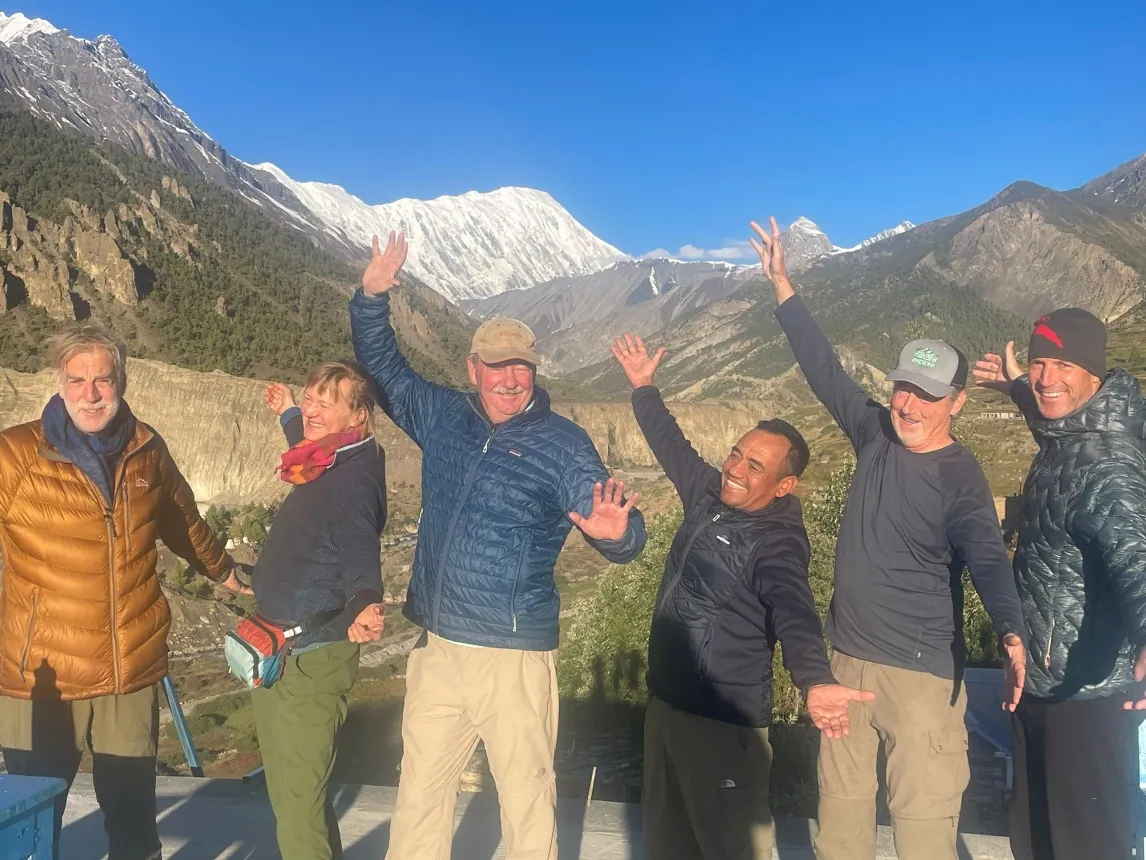
The Annapurna Circuit Trek is best to start in September because the monsoon rains will have passed and autumn trekking has begun on the Annapurna Circuit. At the beginning of the month, you are more likely to experience some rain, especially at lower elevations, because the weather will still be trying to clear after monsoon season. The rains will bring life to the lush landscape, terraced fields, and forests, creating a great freshness for trekkers to experience.
As the month progresses, the weather becomes more settled with clear skies, particularly during the second half of the month, which allows trekkers to appreciate the beauty of the snow-capped Himalayas and the valleys below. During September, the daytime temperatures at lower altitudes are usually between 15°C and 22°C, but cooler at higher altitudes, between -4°C and 5°C. Nighttime is cold, especially at altitude, but generally isn’t as severe as a trekker would expect in the winter months. The mild temperatures and decrease in humidity offer an easier time during long days of trekking, but trekkers should always be aware of changing conditions, particularly in the mountains.
Similarly to the crowds of peak October, crowds are less of an issue in September. The natural environment is in all of its glory and the clarity post-monsoon provides arguably the best views of the year in the mountains. September provides solitude for the early trekkers, but they will most likely mix in with some people toward the end of the month. Mountains and weather change quickly, and it is important to stay flexible at higher altitudes.
Weather in September during the Annapurna Circuit trek.
September is a transitional month on the Annapurna Circuit, where the weather shifts from the end of the monsoon to the clear and stable weather of autumn. Early September still bears the residual rain from the monsoon, especially at lower elevations. Trekkers can expect occasional rain, cloudiness, and high humidity, which may make a wet and slippery path. Since the conditions are damp, the surroundings are lush and green with a flowing waterfall and rice terraces in vivid green bloom. Trekkers will encounter fewer people on the trails and the trail is noticeably quieter overall.
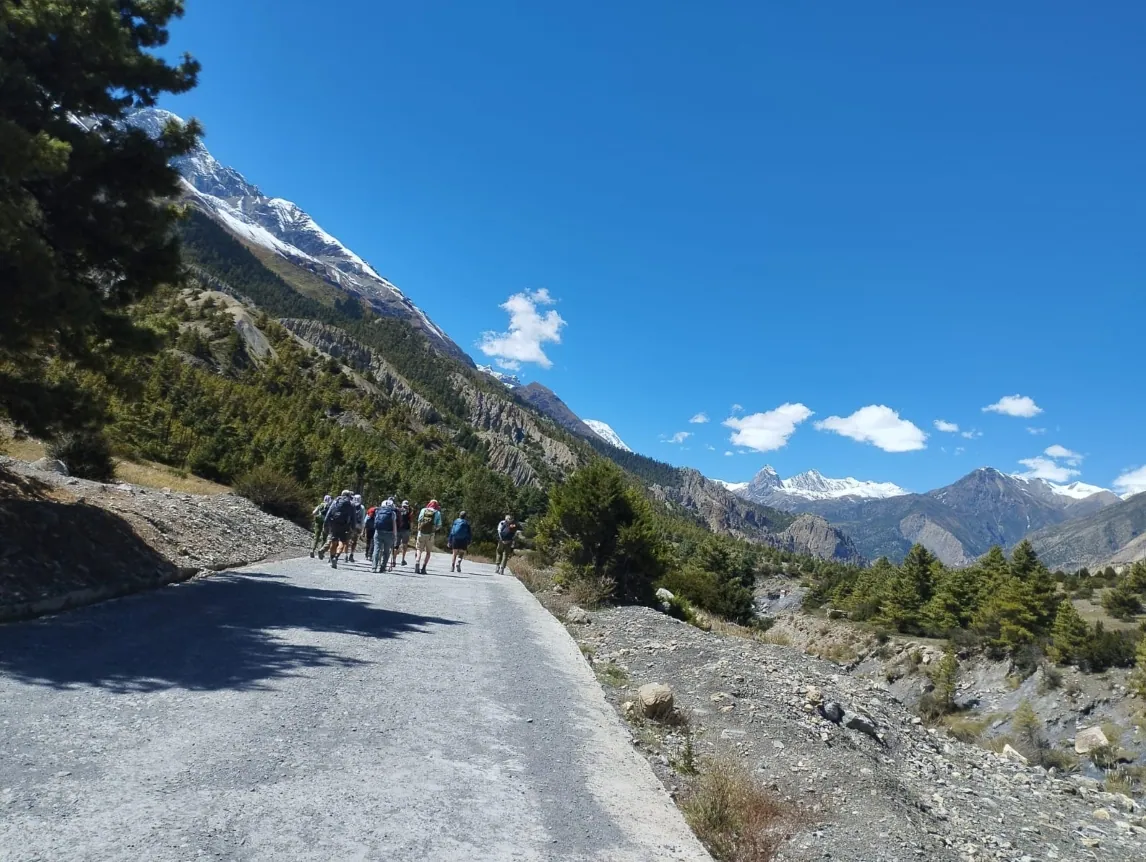
As the month progresses, the rainfall will decline, and the weather will begin to improve with more consistent dry days. By mid- to late September, trekkers will see progressively less rain and thoroughly clearing skies. The change in weather provides crisp, clean air and beautiful views of the Annapurna region’s famous snow-capped mountains. As the rain subsides, river crossings will usually become less challenging and the trails will dry, making more pleasurable trekking conditions. The transition from wet to dry can be quite stark as the scenery shifts from mysterious and misty to bright and panoramic within a few days.
The temperature in September can vary widely depending on altitude. At lower elevations at 2,500 meters, the daytime temperatures may range from 15°C to 22°C; nights will get cooler to approximately 10°C. When trekkers reach a mid-altitude of 2,500 to 4,000 meters, daytime temperatures will drop between 8°C and 12°C and nighttime temperatures could be as low as 2°C to 6°C. The air gets cooler and drier as the trekker moves up in altitude—noticeably cooler in the morning or evening, requiring layering to stay comfortable.
At the trek’s highest elevations, like Thorong La Pass (5,416 meters), the weather can be considerably cooler and more erratic. The daytime temperatures at these altitudes may range between -4°C and 5°C, with nights usually dropping below freezing. The days of Late September will be generally clear and pleasant but trekkers will still have to consider changing weather, including winds and early-season snowfall at the higher elevations. Therefore, having the right equipment, such as insulated clothing and a warm sleeping bag, is essential to a safe and enjoyable trek around the Annapurna Circuit in September.
Trail Conditions
September on the Annapurna Circuit provides the greater experience of natural beauty shaped by the rains from the monsoon season. The landscape is green and lush during this month. Terraced fields, forests, and meadows are full of life. The plants are at their peak, with wildflowers lining the trail, adding bright colors to the greenery. The significant amount of vegetation makes a refreshing and beautiful setting for trekking that is an extreme contrast to the dusty and dry conditions later in autumn.
Early September still has traces of monsoon rain, which will affect the trail conditions. In particular, many trails can be muddy and slippery, especially in the lower and mid-altitude areas where the rain has more time to saturate the ground. Despite that, trekkers should get ready for muddy and slippery trails that will require good trekking shoes. Also, trekkers need to use poles to balance their bodies while walking on slippery and uneven surfaces. The mud on the trail creates a challenging trek, but they will also create vigorous vegetative growth and healthy water sources along the route.
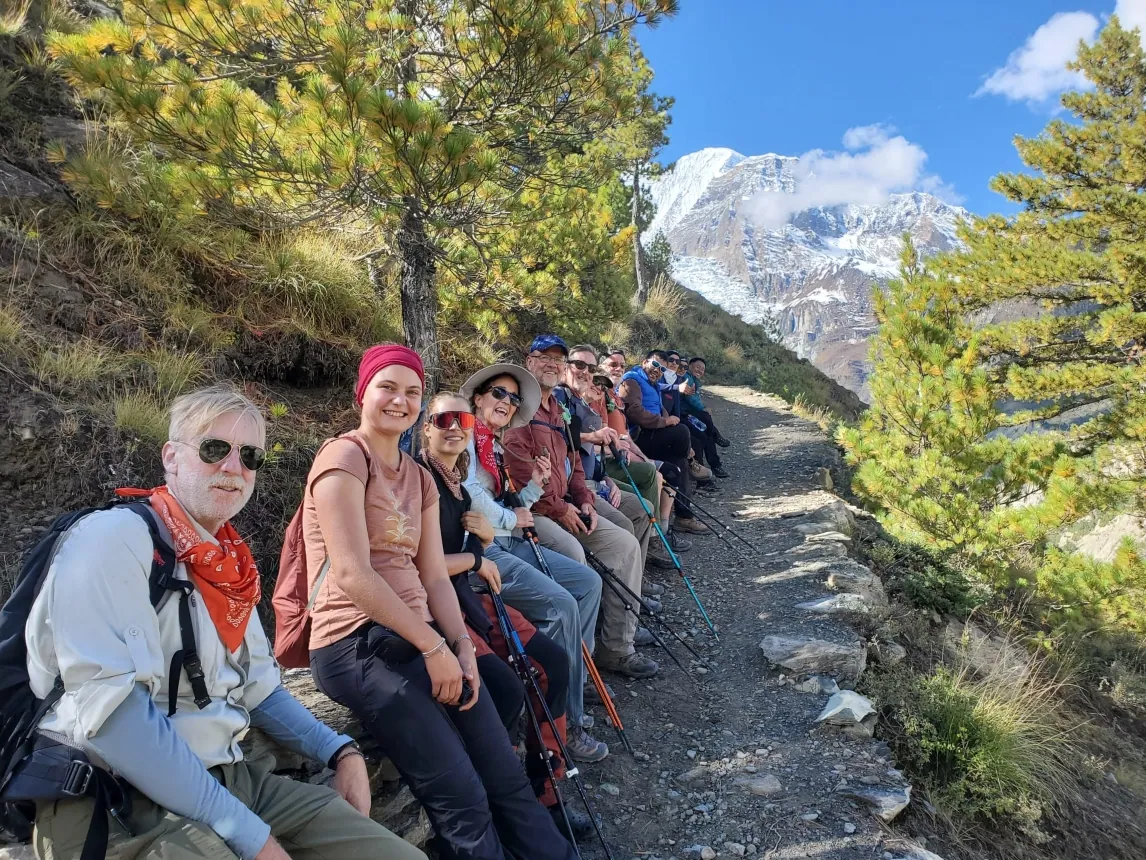
Of all the experiences of trekking in September, one of the most notable is the volume of water flowing in rivers and streams. Rivers are swelled by monsoon rains, while waterfalls are full providing stunning views throughout the trails of the circuit. Crossing a river can be exhilarating for the trekkers, especially earlier in the month when the water levels and flows are higher. Generally, bridges on the circuit are well-made and maintained, but trekkers have to be aware of these conditions. It is always advisable to avoid a crossing if it’s raining or has rained recently.
As the month progresses, the trail conditions improve significantly. The drying weather reduces mud and slippery conditions, which facilitates travel and reduces danger along the way. Similarly, as the rivers and waterfalls lose their heights, they remain beautiful and lively. September is a time of abundance, and it is exemplified by the combination of vibrant landscapes, blooming flora, and flowing water features. These conditions make the trek memorable and engaging by adding vibrancy to the surroundings.
Pros of Trekking in September
- As the monsoon rains have finished, the landscape is vibrant and lush with beautiful natural scenery.
- Wildflowers line the trail, adding bright colors to the green grass, making for picturesque views of nature.
- The amazing views can be enjoyed away from the crowds often found during the busy October peak season, making this trek truly enjoyable.
- Accommodation and meal prices tend to be cheaper at the beginning of the month, giving a more budget-friendly trek.
- When trekking at the end of the month is fresh and clean air, enhancing mountain views and photography opportunities.
- The trails are quiet and relatively unbroken from the dry season dust clouds.
Cons of Trekking in September
- The likelihood of wet rain, particularly during early September, can make trails muddy and slippery.
- The temperate and tropical forest of lower altitudes has leeches due to the moist environment left after the monsoon.
- Rivers will be swollen, creating difficult and riskier stream crossings.
- Transport may be delayed due to unpredictable weather effects up to several days after the rains have ceased.
- Some teahouses and lodges may be closed and under service during the early part of the month.
- The weather will be unpredictable, with some quickly changing situations requiring trekkers to be prepared for rain and cold on all treks at this time of the year.
Tips for a Successful Trek
- September is a great time to hike the Annapurna Circuit, particularly in mid- to late September after the monsoon rains have cleared, leaving clear skies.
- If you are traveling early in September, pack some important rain gear, including waterproof jackets, pants, and a rain cover for your backpack in case of sudden rain showers.
- Leeches are common in the moist forests of lower altitudes, so it is a good idea to pack some leech socks or repellent to keep them away.
- Hire a local guide who knows the trails well and is used to working under wet and slippery trail conditions. This will not only keep you safer, it will also enhance your overall trekking experience.
- Having layered clothing will also be important, as you will experience a range of temperatures throughout the day, including warmer days with colder nights, especially at higher altitudes.
- Bring cash on the trek because many teahouses along the trail do not accept credit cards.
- Make sure to have enough time for acclimatization to prevent altitude sickness.
- Sturdy waterproof trekking boots with good grip and soles are recommended for handling muddy and slippery pathways early in September.
- Stay hydrated and fuel yourself with balanced meals to help maintain energy levels during your trek.
Permit and Booking Info
The Annapurna Circuit trek requires an Annapurna Conservation Area Permit (ACAP) and the Trekkers’ Information Management System (TIMS) card. This permission fosters local community development, sustainable tourism, and conservation. The TIMS card is a safety and management tool created by the Nepal Tourism Board and Trekking Agencies Association of Nepal to manage trekkers and help rescue them in emergencies. These two permits are compulsory for all foreign trekkers and you can obtain them in Kathmandu or Pokhara along with identification and passport-sized stickers.
For non-SAARC nationals, the ACAP permit costs about USD 25, whereas for SAARC nationals, it costs about NPR 1,000. For single hikers, the TIMS card costs around USD 18; for group hikers, it costs around USD 9. You should carry these permits in person throughout the trip as checkpoints will regularly check your permits along the trek. In case of not being able to present the permits, results in fines or not being able to continue into the park.
When it comes to accommodation, trekkers may reserve teahouses ahead of the trek. Early September is less busy so you should have no problem getting a room in the teahouses. However, as the trekking season gears up heading into September, the teahouses get busier. To guarantee a room, it is therefore advised to make reservations in advance. Booking ahead can also allow trekkers to more effectively gauge their daily distance with proper sleep after a long day on the trail.
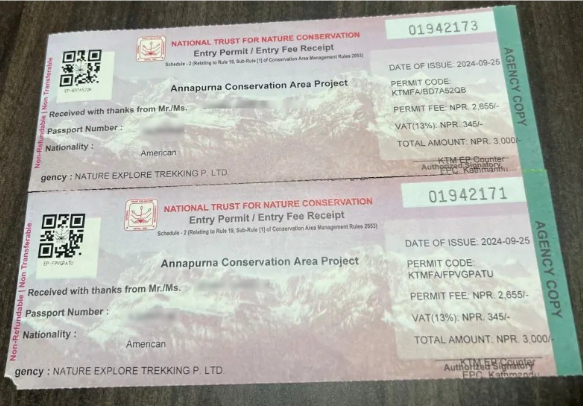
For independent trekkers, arranging permits is an important part of the planning process, while for trekkers with a guide, the permits can be arranged by their agencies. However, it is a good idea to keep copies of the two permits ACAP and TIMS as these permits are checked several times along the trek. Understanding permit requirements and accommodation options helps to facilitate a smooth, legal, and safe Annapurna Circuit trek and makes a positive contribution to conservation and sustainable development.
Conclusion
September is a wonderful and rewarding time to trek the Annapurna Circuit. The transition out of monsoon is explosive; the landscape turns thick with vegetation, flowers bloom, and nature is iconic. Early September may bring additional showers and slick trails, extra crispness, active streams, and stimulating visuals to create a new trekking experience different from the dryer and dustier months.
One great part about trekking in September is that, there may be fewer trekkers. Fewer trekkers mean a nice escape into the gorgeous Himalayas and great interaction in local villages. Also, early September finds food, and accommodations are afforded. As September goes on, there will be more days of clearer skies and summer out days stuffed with crisper mountain views that may have been hidden during the rainy season.
Generally, the weather is moderate and the areas are less crowded than prime trekking months, providing an opportunity to explore the Annapurna Circuit comfortably and safely. Overall, September is a combination of natural beauty, cultural wealth, and quietness with an unforgettable and fulfilling experience in the Himalayas.
Prepare yourself for an amazing adventure this September !