
 English
 Dutch
Dutch Japanese
 Hindi
Hindi Italian
 Spanish
 French
 German
 Chinese
 Korean
 Arabic
 Hebrew
 Russian
 Portuguese
 Danish
 Czech
Czech Polish
 Swedish
Overview
Mera Peak Climbing Itineraries vary depending on your time constraints.There are several ways to reach the summit of Mera, which is 6476 meters above sea level, according to the Mera Peak Expedition. Mera is one of Nepal’s most exciting and daring peak climbs. If you have already completed some adventure treks and have aspirations of climbing a mountain in the Nepalese mountain ranges that is over 6000 meters high, are you interested in going on another small expedition in Nepal?

The best option for you is Mera Peak, which is 6476 meters above sea level, less crowded, non-technical, and challenging to reach. The views from the summit are breathtaking because it is situated in the middle of several large mountains, including Mt. Everest, Kanchenjunga, Makalu, Choyuo, and Lhotse, as well as a number of other stunning peaks. Additionally, you are looking above 6000 meters, not lower or higher.
To reach this beautiful mera peak summit you have to trek at least one week but it depends on which routes you choose to base camp of Mera peak before starting the real climb or expedition section. There are three routes that are more popular and reasonable for you based on our past clients feedback and our experience as well.
Please go through the details for routes for those travelers who are looking forward to finding the best mera peak expedition itinerary for your upcoming 2025/2026/2027 or 028 mera peak expedition.
Mera peak itinerary via the Upper Trail—13-14 days
The Mera peak upper trail is one of the scenic and short ways to reach mera peak summit. The Mera peak upper trail starts after scenic flights from kathmandu ro Lukla. Lukla is the gateway to the Everest base camp trek as well. And the mera peak is located south of Lukla. You will essentially begin walking through the Chuthanga, passing Zawtrala Pass at an elevation of 4600 meters, Kharki dyang, Kothe, Thangnak, and finally you will reach Khare at an elevation above 5000m. Basically after the khare mera peak climbing is begins through the Mera la camp , highcamp and summit mera peak. Along the way back, you will follow the same trails as you went up.

The Mera peak upper trail is suitable for those travelers who have a limited time frame, want to skip the long drive but still want to climb mera peak. This route is more suitable for experienced hikers who have completed high-altitude treks and hikes because of its remote location, high passes like Zetrawla Pass (slt. 4600m) above Lukla, and numerous ups and downs. Mera peak upper trails routes are suggested for 13 to 14 days, including a minimum of three days summit duration. But you can customize the itinerary as per your timetable and flexibility.
Here is the mera peak 13 days upper trail suggested itinerary and route.
Day 1: Fly to Lukla from Kathmandu in 30 minutes and trek to Chhuthanga (4 hrs trek (alt. 3560m)).
Early morning drive to the domestic terminal from your hotel and catch a flight to Lukla. It takes 30 minutes, where you will meet your supporting staff (porter) after organize all basically you will starts your first day of mera peak expedition. The routes today lead to gradual ascents to Chhuthanga in 3 to 4 hours slowly. Rewarding is the fact that It is surrounded by lush forest and beautiful mountains. You will pass numbers of sherpa people traditional villages, mountains, snowscapes, Hills, charming people and their fascinating culture, and many more.
Take note that if you are planning to do this expedition in Autumn – October, November and spring (March and April), the Lukla flight will fly both way from Ramechhap airport. From Ramechhap, which is a three- to four-hour ‘drive from Kathmandu, all airlines operate flights.
Day 2: Trek from Chhutanga to Kharki Dyang (4200m) via the Zatrawala pass (alt. 4600 m), 6/7 hrs, 12 km
After breakfast, you will start your day. You will ascend to Zawtrala pass about 3 hours. There is a teahouse in the center of the hill where we will pause for lunch before continuing on. You can look back all the way from Lukla, where you spent the last 1.5 days trekking, and enjoy breathtaking views of the mountains once you reach the summit of Zatrawla Pass, which is 4600 meters above sea level, its finest vantage point. Following that, we will continue our trek for three more hours to Kharki Dyang. The route consists of two hours of gradual ascent and a final hour of descent to the teahouse, where we will spend the night.
Day 3: Trek from Kharki dyang to Kothe (alt. 3500m), 6/7 hours. 8.5 km
Trekking from Kharki dayng to Kothe takes five to six hours. The route begins with a gradual climb of about one hour, and you will descend to taktor another two hours for lunch. Continue descending and climbing for three more hours after lunch to reach Kothe where we will spend the night. The trail today is mostly surrounded by forest and hills. In the morning, if the weather permits us, you will have first views of Mera peak in the distance. When compared to previous days of trekking or trekking further, Koteh is a more comfortable place to stay because it has good lodging and delicious food. Koteh is a charming little Sherpa town where a few hundred people used to live.
Day 4: Trek from Kothe to Thaknak, 4-hour trek (alt. 4300m). 8-9 km
After breakfast, we will trek today from kothe to thaknak in 3 to 4 hours. Since you will only be walking for three to four hours before lunch, today’s trek is brief and easy. Since the trek is only a short day, we will eat lunch at the same location in Thaknak. If you would like, you can then hike a short acclimatization hike a few hundred meters up from your hotel after lunch. Because you will be higher than where you are sleeping overnight, this will help you get a good night’s sleep.
Today the trail leads primarily in a gradual ascent toward the Hinkhu River, passing both the tranquil Lungsungba monastery and alpine meadows before arriving at the Thanknak valley.
Day 5: Trek from Thaknak to Khare camp—3 hrs. (alt. 5045 m), 4 km.
After breakfast, we will start our day 5 of mera peak expedition. It is another short day of this trek. You will trek today for 3 to 4 hours slowly, slowly. We’ll have lunch when we get to Khare, and then you’ll have some free time. Alternatively, you could take the quick hike from yesterday, which would take you higher than where you were sleeping. Which will allow you good acclimatization. You will have breathtaking views of Mera Peak and numerous other stunning peaks on your journey to Khare today. It is also known as the Mera peak base camp, as after the khare we will not meet any teahouses. We will stay here one extra day for final Mera peak summit preparation and good acclimatization before we head to the high camp.
Day 6: Acclimatization day:
Today is your rest and free day of mera peak expedition, but in the morning before lunch we will go for 3 – 4 hours hiking to khare la viewpoint about 3 to 4 hundreds metters higher nearly 5500m then the khare camp
(alt. 5045m). Today hikes will allow you good acclimatization before we head to camp at about 5800m. This hike is more than just a walk to get over 5,500m. you will have a spectacular views of Mera peak rangesin distance, ama dablam , includes many beautiful peaks surrounded.
Following our return to Khare for lunch and some downtime, our climbing guide will give you a few hours of basic climbing instruction, which will include rope climbing and descending as well as many other skills required for the climb routes that will lead to the summit of Mera Peak in the coming days. Overnight at khare.
Day 7: Khare to high camp (alt. 5800 m), 6-7 hrs via the Mera la camp (alt. 5400 m) 6-7km
After an early breakfast today, we will trek to camp today via the mera la camp . It is a 6- to 7-hour adventure trek to reach camp, as the today walking path involves more ice, glacier and ascending all the way from khare (alt. 5045) to camp. alt. 5800 m. You will receive a packed lunch, and our kitchen staff will prepare hot beverages, soups, and freshly prepared meals once we arrive at HighAMP.
It’s undoubtedly a long and difficult day because of the high-altitude trails and the walking through the glacier and ice. After two hours of walking from Khare, we will arrive at the crampon point, where we will don crampons to enable us to walk over the snow and ice. Until we return to the same location, you will continue to use crampons to reach the summit tomorrow. Along the route you will also meet the crevasses, slippery ice, etc., but our climbing guide will lead the trail carefully and we will just follow his footprints all the way up to camp.
Once you reach the mera la camp to the camp section of the walk is amazing, with stunning views of the mountain in the distance. From high camp, you will be able to see the Mt. Everest range, Makalu, Baruntse, Kanchenjunga, Ama Dablam, and many other places.
Since we have to start very early tomorrow morning, you will eat dinner early today and go to bed early.
Day 8: Summit day of Mera Peak, elevation 6476m, and return to Khare in 10/11 hours.
Today is one of the longest, biggest and demanding day of this expedition. The day starts with early wakeup at around one in the morning, and following hot beverages and a light breakfast, we will begin our last ascent of the Mera Peak (altitude: 6476 meters) with head touch lights. Your guide will help you you to Considering the extreme cold, you might not be able to complete the task on your own without the climbing equipment, boots, and crampons. For this reason, our guides are always pleased to assist. We will begin the day once everyone is ready. You must follow your guide as he leads the trail. Although there are some steep ascents and gradual ascents along the trail, there isn’t a technical climb unless you’re 30 to 40 meters below the actual summits of Mera Peak. The final 30 to 40 meters of the summit are a true vertical climb, but there is a guide already there who will fix the rope; all you need to do is follow him.
Once you reach at the summit of Mera peak you will have mesmerizing views of eastern parts of nepalese himalayas ranges in the distance including five above eight thousand meters in height, namely Mt. Everest, Mt. Lhotse, Mt. Kanchenjunga, Mt Makalu, Mt. Cho yuo , Mt. Ama dablam , island peak, Lobuche peak includes hundreds of beautiful peaks and amazing landscapes to the eastern side of nepal. It’s the real heaven where you can see stunning views of mountains and memorize views of nepalese landscapes.
Although the beginning of the climb is not particularly difficult or technical, the Mera Peak route typically leads after the camp on the northeast side of the peak. However, because it is a mountain that is over 6400 meters high, you will most likely be climbing. With the high camp at 5800m and the Mera Peak summit at 6476m, you will have climbed over six hundred meters. The final ascent requires technical climbing skills and is a little challenging.
After taking in the views from the summit, you will descend to the high camp in a few hours. Still, we have to be careful coming down, as it is more slippery and not stable from tiredness and feel less energy. So we will walk back slowly, taking care of every steep descent, as we can also meet several crevasses. Once we reach high camp, you will be served hot beverages and warm food. In the afternoon, you will gradually return to Khare Camp after spending a few hours sleeping at High Camp.
Day 9: Reserve Day
Day 9 is your reserve day of the expedition. In the event of weather-related delays that prevent you from starting in the morning or other unforeseen circumstances, we will use this buffer day to ascend Mera Peak. After the summit of Mera Peak, if all goes according regular plan, we will spend this day somewhere pleasant to rest. It’s optional to return to early Kathmandu and rest.
Day 10: Trek back to Kothe, 5 hrs (alt. 3500m)
After breakfast, at around nine or ten in the morning, you can begin your hike back. You will return to Kothe today, and the trail is familiar because you went up the same way and it mostly descends in a gradual manner. After reaching the 6476-meter summit of Mera Peak, it will be easier and more comfortable to walk back because you will have already acclimated well.
Day 11: Return trek to Kharki Dayng, elevation 4200m, 6/7 hrs
We will begin our eleven-day trek back to Kharki Dyeing from Kothe after breakfast. The walk takes 6 to 7 hours. There are mixed sections in the trail, such as gradual descents at the beginning and mostly ascents towards the end of the hike. The route is well-known since we followed it, but it can be a little difficult to return and hike the same trail up today because there are more ascents.
Day 12: Trek back to Lukla, alt. 2860m , 6 hrs
We will conclude our trek in Lukla today before returning to Kathmandu by plane, so this is your last day of the expedition. You will climb from 4200m to 4600m to reach Zawtrala Pass three hours in the morning. It takes an additional three to four hours, including lunch, to return from the top to Lukla. In either Kathmandu or Ramechhap, we will wait for our flight back. Overnight at Lukla
Day 13: Fly back to Kathmandu or Ramechhap—30 minutes
After an early breakfast, as per our flight scheduling time, we will take a flight back from lukla to kathmandu. Its 30 minutes flight duration and once you land in kathmandu we will pick you up and transfer you back to your hotel. Your trek/expedition comes to an end here. Tonight we will have a celebration dinner together, which will be invited by us in typical ethnic cultural nepalese resturants with some cultural dance shows.
The arrival day in Kathmandu and the departure day following the trek or expedition are not included in the itinerary. Please include fewer days in your itinerary for both your arrival in Kathmandu and your departure from Kathmandu.
Route number 2: Middle route to Mera peak expedition via the Lukla, Piya—15 days.
One of the greatest options for travelers who are new to or inexperienced with high altitude but have flexible schedules is the middle route to the Mera Peak Expedition. Since you won’t be walking directly on the higher portion of the route, the middle route offers a more comfortable hike, adequate acclimatization, and a lower risk of altitude sickness. On many days, you will be walking at elevations below 3000m. You will have the best chance to adjust to the high altitude in this way.
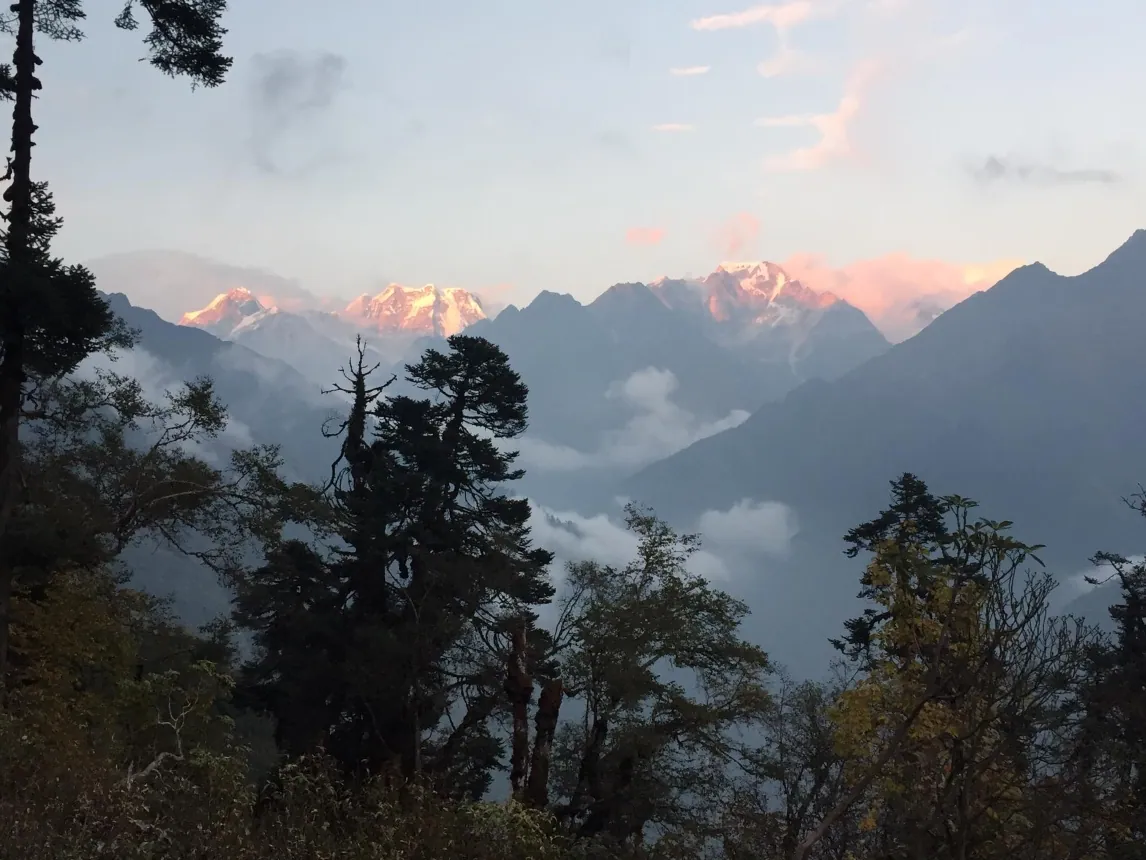
Following a picturesque flight from Kathmandu to Lukla, the middle routes continue on to Surke, Piya-Pangompa, Sibuche, Ramailo Dada, Chhatrala Khola, and finally Kothe, where all the trek routes converge, before continuing on to Mera Peak Summit.
Let’s discover the day-by-day itinerary of the middle route of mera peak expedition.
Day 1: Fly from kathmandu to Lukla and trek to Piya via the Surke and chheubash villages. Alt. 2700m, 6 hrs, 8 km walk
To catch your flight to Lukla, you will have to drive to the domestic airport early in the morning. After we get through customs, you will fly to Lukla via the breathtaking views if the weather is nice and there are no problems in Kathmandu or Lukla. It will take you thirty minutes to fly from Kathmandu to Lukla. The members of our support staff will greet you when you arrive in Lukla. We are preparing everyone for the trek, which will begin today and take five to six hours from Lukla to Piya via the Surke.
The trail descends 500–600 meters from Lukla to surke and then climbs to Chheubash. We’ll pause here for lunch. Following lunch, you will make the easy, gradual trek to Piya for a few hours, spending the night at Piya.
Day 2: Trek from Piya to Panggomba, 5-6 hours (alt. 2850 m)—10 to 11km.
Second day of mera expeditions, you will be gradually ascending and descending to Pangom today. Along the way you will stop for lunch at khali kharka after a 2.5 hours walk from Piya. after lunch you will walk another 3 hours to reach Pangom for an overnight stay. You will primarily be walking through the hills and forest today. If the weather holds out until noon, you will have fantastic views of Mera Peak, which is home to many traditional Sherpa villages and their simple way of life. In the lower Khumbu region of Nepal, Pangom is situated above the well-known Kharikhola villages.
Day 3: Pangom to Ningso or Ramailo dada: 5-7 hrs walk (alt. Ningso, 2500m and Ramailo dada alt. 3000m), 8km walk.
Easy trekking day today. You can start late in the morning. Beginning of the hike, you will gradually ascend to Sibuche pass and descend to sibuche sherpa villages. Continue, and you will trek to Ningso, which is another one-hour duration before the lunch break. Here we can take a lunch before climbing the big hill to Ramilo dada. Some travelers used to stay in Ningso and some climb ramailo dada, but now, after the new teahouse was built at ramailo dada most of the people used to be on this hill, as it offers the best views of mera peak and landscapes of the lookback of the valley. Also, it will be easier for the next day. So the suitable and recommended camp is Ramilo dada.
Optional: if you couldn’t climb to ramailo dada and then you can still stay overnight at Ningso. Very few people stay in this place, as there are less views and it will be a longer day for the next day from Nigso to Chhatra la khola.
Day 4: Trek from Ramilo dada to Chhatra la Khola camp—5 hrs., alt. 2900m , 6km
Since the trail is new, it is not wide and comfortable in comparison to the upper trail or the beginning of the trek. As it is narrow, with steep ascents, cliffs, ups and downs, hills, and narrow walking surfaces covered in grass and some hard mud. This makes today one of the more difficult and challenging hike days. However, in order to get to camp, we will walk cautiously up each steep hill and keep a close eye on things. Since there are no teahouses along the route for a lunch break, we are heading straight to lunch camp today.
A rewarding walk today that offers stunning views of hills, forests, rivers, waterfalls, and snowcaps and the sounds of various birds and wild animals.
Day 5: Trek from Chhatra khola to Kothe via the Thaktor teashops. 5 hrs., alt. 3500m – 6-7 km.
After breakfast today, we will begin our fifth day, which will take five to six hours, including lunch, to get from Chhatra Khola to Kothe. At the intersection of the upper and lower trails, you will pause for lunch at the Taktor teashop. Following lunch, you will continue your journey for a few more hours with short descents and ascents through the lush forests of bamboo and black oak pine trees and final hour, you will trek through the Hinkhu river.
Kothe is a pleasant spot for food and beverages, and it is encircled by lush, natural forests with pine trees, rhododendron, bamboo, and the soothing sounds of the Hinkhu River.
Day 6: Trek from Kothe to Thaknak, alt. 4300m, hrs., 6.5 km.
Day six of your mera peak expedition via the middle route to reach to the mera peak base camp or khare before purchase to the summit. The gradual ascent to thanknak will be followed by the Hinkhu river. Along the way you will cross several local shops, an old monastery, a stone chorten, a Mani wall, and buddhist pry flags. Rewarding by stunning views of mera central includes a number of beautiful peaks.
today is your short day trek. Basically it takes 4 to 5 hours to reach the camp. You will continue your journey to Thaknak without stopping for lunch because it is a short day’s walk. You can have lunch when you get to Thaknak, and then we’ll hike the short distance—at least a few hundred meters—up from your teahouse. You will sleep better because you will be higher than you were tonight. Overnight at thaknak.
Day 7: Trek from Thaknak to Khare—4 hrs. Walk (alt. 5045m) 4.5 to 5 km.
Easy ascending to khare from Thanak. Along the way you will be surprise by memarizing views of mera peak range including numbers beautiful peaks. The trail leads graudla ascending the khare. Along the way you can also have hot tea, as there are many new teashops open. Because of the high altitude, which makes our buddy feel less oxygenated, and the steep slope ascents of the trail, the last hour is particularly difficult. However, you will proceed cautiously. You will have plenty of time because the trek isn’t long. Similar to yesterday, if you’re still feeling energetic, we’ll take you on the short hike of about a few hundred meters up from the teahouse, which will help you sleep well. overnight at khare
Day 8: Acclimatization and climbing preparation day.
After breakfast, you will go on a short hike of about 400-500 m, ascending from khare.this will help you in the following days in the mera peak climbing section. After we return to the teahouse for lunch, we will have time to rest, and our climbing guide will teach you basic climbing skills, which are very useful while we are climb mera peak in the following days.
We will also have time to check the climbing equipment one last time, and if anything was left behind or not brought from Kathmandu, you can still rent it here for the last climb. Checking your essential climbing equipment at the last minute is crucial, and being prepared is one of the most important factors in reaching the summit without any problems. overnight at khare.
Day 9: Trek from Khare to mera peak highcamp – 6-7 hrs – (alt. 5800m), 6-7km.
One of the biggest days of this expedition. As we will be ascends direct from alt. 5045m to alt.5800m total alt.750m ascending to reach at highcamp is quite challenging hike between khare to highcamp via the mera la camp. the route involves ice, rocky loose rocks, stone steeps and crevasses, including the high altitude gain.
After an early breakfast, you will start your day. The trail starts off with steep, rocky climbs that lead to the crampon point, where we will place the crampons because we will be walking over a slippery, icy trail later on. The trail will be led by your climbing guide, and you will stay together and get closer to them. Our speed is lower than in the lower portion of the route due to the high altitude. We will walk at a leisurely pace, taking deep breaths as we go. The packed lunch will be provided by you today, and we will sample hot beverages, soups, and hot foods when we get to camp.
High Camp is located 5800 meters above sea level. With breathtaking views of mountains like Mount Everest, it’s also rewarding. There are several stunning peaks in Lhotse, Nuptse, Ama Dablam, Mount Kanchenjunga, Makalu, and Baruntse. Spend the night in the tent.
Some people stop in mera la and go another day to High Camp, making two short days instead of going directly in one day, but some people prefer to do it in one day as they do not want to spend many days at the high altitude. Based on our clients’ prior experiences, we advise traveling straight from Khare to High Camp without stopping at Mera La Camp (altitude 5500 m). We have observed that individuals who travel directly to High Camp succeed, whereas those who travel more slowly and make two stops between Mera La Camp and High Camp fail. The majority of people used to go straight from Khare to High Camp and then plan for the summit the following day because it is more difficult to spend two nights at high altitude due to the remoteness, the inability to eat prepared foods, and the difficulty of sleeping at high altitude.
Day 10: Mera peak Summit day: High Camp to Mera peak summit (alt. 6476m, 21240 ft. from sea level). and back to Khare (alt.5045m) via the high camp). 10-12 hrs. 10 to 11km.
Today is your highlight day of this expedition. As you ascend the summit of this beautiful peak early in the morning, at 1:00 am or 1:30 am, your climbing guide will wake you up. After setting up all our gear and eating breakfast, we will embark on an adventure climbing journey to mera peak summit with a headlight, as it is very early in the morning. Your guide will also help you to put on gear and tight shoes, crampons, etc., as it’s very cold early in the morning, and you may not have the energy to tighten all the gear properly.
The easy ascent of the Mera Peak climbing route, which is situated northeast of the peak, still requires technical attention because it is a mountain with an elevation of over 6000 meters. Basically, after highcamp, the Mera Peak Route begins with a few hours of gradual ascent before encountering steep ascents in certain mountainous areas. Our professional guide will lead the path carefully and slowly because Mera Peak is not a technical climb; you will simply walk and follow the guide’s footsteps. However, you must exercise extreme caution because there are many dangerous crevasses. The technical climb requires about 30 to 40 meters before the summit. In this section of the climb guide, the rope will be fixed, and we will proceed cautiously while using the rope, ice ax, and other equipment.
Once you reach on the top of the mera peak alt. 6476m from sea level you will celebrate that your dream come treu to reach above 6400m higer mountain to climb in nepal. Mera peak is not only climbed for making a record to reach above 6000m. However, you will have one of the best views of the Himalayan ranges from the top of Mera Peak, which includes several well-known mountains that are over 8,000 meters high, including Everest, Lhotse, Kanchenjunga, Choyuo, and Makalu. It’s true 360-degree views provide breathtaking views of Nepal’s Himalayas and the far-off eastern region of the country.
When compared to other peaks such as Island Peak, Lobuche Peak, and the Annapurna region’s Chulu East and West or Thorong La Peak, Mera Peak Summit offers the best views.
We will spend some time at the top taking some beautiful photos and videos and setting a new record of reaching an elevation of 6476 meters. Since it is much easier to descend than to ascend, we will gradually descend to High Camp in a few hours. You will return to Khare for an overnight stay after taking a rest in the afternoon.
Day 11: Reserve day incase of bad weather.
Day 11 of mera peak expedition is when we keep anemergency backup day, especially with the unpredictable weather conditions or any natural disaster happening along the trek. if the summit day the weather is not good or cloudy or there is no visibility, we will use this buffer day. If the plan goes on as planned, we will use somewhere in a nice place along the way to lukla before we take flight back to kathmandu.
Day 12: Trek back from Khare to Kothe, 4 hrs., alt. 3500m – 11km.
Day 12 of your mera peak expedition if the plan goes as planned, today we will start back down to kothe via the thaknak in 3 to 4 hours. Going down is much easier and not difficult for breathing and the trail is an easy descent day, you can start late in the morning, as it is a short day trek, and we can reach at kothe in the afternoon with an easy walk back.
Day 13: Trek from Kothe to Thuli kharka ( alt. 4200m,) 6-7 hrs., 8 km.
It takes six to seven hours to trek from Kothe to Thuli Kharka. The hike today is a little difficult because it requires a gradual descent and a mostly ascent of the hill, with the last hour being an easy, gradual ascent to Thulu Kharka. This hike will provide you with a little reminding challenge before the expedition ends at Lukla. You will stop for lunch along the way, and the trails are covered with lush forests and surrounded by snow peaks and hills.
Day 14: Trek from Thuli kharka to Lukla (alt. 2860m), 6-7 hrs. via the zatraw la pass (alt. 4600m)
Last day of the trek, after breakfast, we will start our mera peak last day hike. Today you will trek from thuli kharka to lukla in 6 to 7 hrs via the zatra la pass en elevation of 4600m from sea level. You will ascend from thuli kharka to zatra la pass in 3 hours, and from the top of zatraw la pass you will have stunning views of snowy peaks, including Lumber himal , Kusum kangaru himal includes the Lukla Bazaar. Then you will descend to lukla in 3 to 4 hours via the Chhuthnaga. Along the way you will stop for lunch at chhutanga before the end of the last day of mera peak expedition hike.
Today is the last day with your Nepalese crews, those who supported you during this expedition so you will celebrate last night together with them before you fly back to kathmandu.
Day 15: Fly back to Kathmandu from Lukla (alt. 1300m) 30 minutes flight duration.
If there is clear weather in both Lukla and Andu early in the morning, you will take a 30-minute flight from Lukla to Kathmandu, after which we will return you to your hotel. We will invite you to a traditional ethnic Nepalese restaurant for dinner and a cultural dance performance at the end of your Mera Peak expedition.
Note: if you planning to do this expedition in high peak season like autumn (October and November) or spring (March and April lukla flights fly from ramechhap instead of direct flights from kathmandu. But if your expedition is not in high season, then they still fly from kathmandu.
Note 2: We have not included your arrival and departure days in Kathmandu in the suggested itinerary. Take into account the arrival and departure dates as per the above-mentioned itinerary when making plans to climb Mera Peak.
3. Optional 3 itinerary: 16 days. Kathmandu to Kathmandu.
The Mera peak climbing itinerary goes by drive and comes back by flight from Lukla.
Option 3 or lower trail to Mera peak expedition. After short-out permits and all logistics for the expedition, you will drive from kathmandu to Phaplu/Salary in 7-8 hours via the BiPI highway by jeep, and still you can go further up to kharikhola the next day by driving, which takes another 4-5 hours via the basa village. Basically, you will start your trek from Kharikhola at an elevation of 2300m from sea level. Trekking continues to Pangam, Sibuche, Ramaito Dada, Chhatrow Khola, Kothe, Thaknak, and Khare. After Khare, the climbing portion begins after High Camp, Mera Peak Summit, and returns to Khare, Kothe, Khaki Dyang, Chhuthanga, and Lukla before returning to Kathmandu by plane.
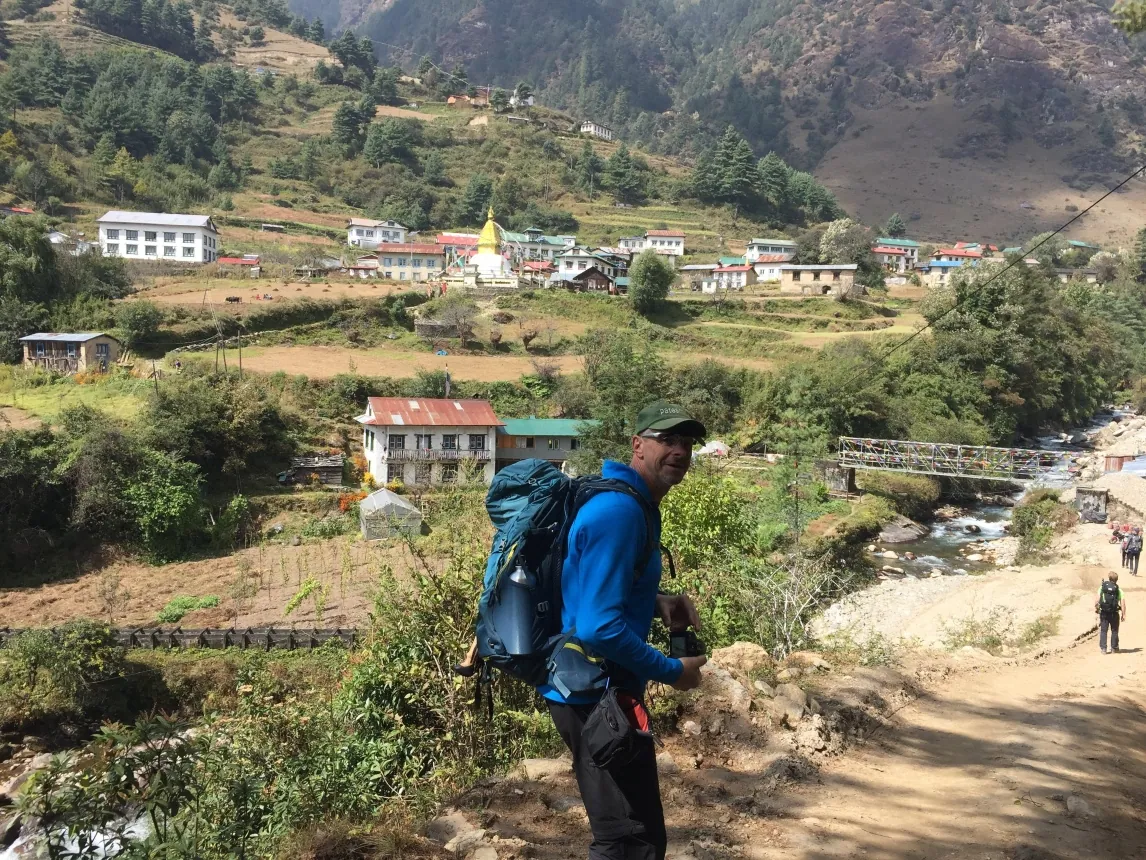
The lower Mera Peak expedition route is recommended for those who are not experienced hikers, have not been at higher elevations for an extended period of time, are flexible with their schedule, and want to experience more of Nepalese traditional villages, culture, everyday life, etc. The lower trail is more convenient for you. You will be adequately acclimated because the route passes through the lower mountains and involves numerous ascents and descents. You will have a good amount of acclimatization before you reach the trek’s higher elevation.
For those who wish to conceal Lukla flights—such as those that are canceled, delayed, or frightening at the most dangerous airport in the world—the lower route is also a good option. Because the Lukla flight is more costly than the jeep drive in sharing base, taking the drive also saves money. I would therefore strongly advise following this itinerary if you are among the travelers searching for a similar concept itinerary.
This is the daily schedule using the lower route:
Day 1: Travel 7-8 hours, at an elevation of 2300 meters, from Kathmandu to Phaplu or Sallery.
Early in the morning you will drive from Kathmandu to Salleri via the prithivi highway in 6 to 7 hours. It’s a scenic drive; we pass several local villages, hills, snowscapes, and mountains. Additionally, you will pause for lunch at Ghurmi. Following lunch, you will continue driving to Salleri via the Pattale viewpoints. You will get your first look at the Mt. Everest range, the Lumber Himal range, and the early Mera Peak view in the distance if the weather is clear. Overnight at salleri.
Day 2: Drive from Salleri to Kharikhola via the Basa villages (alt. 2020 m). 5 hrs
Second day of driving on this trip. After breakfast at Salleri, you will continue driving to khari khola via the basa villages in 5 hours. Sometimes it can also take a little longer or shorter if, in case, unpredictable things happen. Once you reach Khari khola you will check in at the guesthouse and take some rest. In the afternoon, you can visit around the villages. Khari khola is one of the most rewarded villages where mixed ethnic groups like sherpa, Magar, Tamang and Rai people used to live for hundreds of years , there is a beautiful monastery, temples and a traditional sherpa people village we can explore and good to know about their basic lifestyle. Overnight at the guesthouse.
Note that it takes two extra days to get to Kharikhol via the Nunthala if you would prefer to walk to Khari Khola rather than drive there on the second day.
Day 3: 4-hour trek at an elevation of 2875 meters from Khari Khola to Pangam.
Today is a quick and simple trek from Khari Khola to Pangom. It takes 3 to 4 hours only. The trail leads steeply up through the lush forest and nepalese mountain farmlands. Along the way you will also cross the numbers of cattle house , domestic animal many more. The views are always captivating, such as when you look back at the villages of Khari Khola and the snowscapes, mountains, and hills. The fascinating culture and nature never cease to amaze you.
At an elevation of 2840 meters above sea level, Pangom is a charming little Sherpa village where we can observe the old traditional monastery, potato farmlands, exquisitely decorated teahouses, and more. You are going to spend the night at Panggom today.
Day 4: Trek from Pangom to Ramailo dada, 5 hrs., alt. 3000 m.
Another day 4 beautiful journey starts with panoramic views of mountains, landscapes, and hills. After breakfast, we will head to ramailo dada. Beginning of the day, you will steadily ascend to Pangom la pass an elevation of above 3000m. And continue gradual descents to Sibuche villages, where you can stop for the hot tea with the beautiful scenery. And you will continue trekking to Ningsow for another two hours for lunch. Following lunch, you will climb 500 meters from Ningsow to Ramailo Dada. You can enjoy stunning views of Nepal’s lush hills, Sherpa, Rai,and Magar people villages, snow camps, and distant mountains from Ramailo Dada, one of the rewarded viewpoints. Spend the night at the Teahouse.
Day 5: Trek from Ramailo dada to Chhatra Khola (alt. 3000m), 4 hrs
The hike is a day of gradual ascents and descents. We will walk cautiously and slowly because the trail is fairly narrow and some parts of the trek are difficult because it is a recently opened trek route. Since the hike is only a day long, we arrive at our destination for the night at lunchtime. You will have some free time after lunch; you will have some free time. Overnight at Guesthouse.
Day 6: Trek from Chhatra Khola to Kothe—6 hrs, alt. 3500m
Day 6 of mera peak expedition via the lower route. You will trek from Chhatra khola to Kothe via the Taktok teahouse. Kothe is the meeting point for all routes of Mera peak expeditions. Continue on Kothe to Mera Summit and then take the same routes back to Lukla.
The Chhatra Khola to Kothe hike is more shadowed, surrounded by lush forests, and features a variety of hill climbs and descents. After lunch at Taktok, we will continue our journey to Kothe, which will involve three more hours of climbing and descending. It takes about an hour to get to Kothe villages. Its quaint villages offer organic food, comfortable dining halls, and beautiful lodges, making them an excellent place to stay the night.
Day 7: Trek from Kothe to Thaknak—4 hrs (alt. 4300m)
Day 7 of the Mera Peak Climb: Due to the shorter day trek, you will begin your day late in the morning because it is an easy day. Following breakfast, you will hike through the Hinkhu valley today, making a gradual ascent from Kothe to Takhnak in three to four hours. You will pass several local teahouses, historic monasteries, a cave, and breathtaking views of Mera Peak, which is surrounded by mountains.
Since the trek is short today, you will arrive at Thaknak Camp for lunch. Following lunch, I would advise all prospective travelers to complete the short ascent from your teahouse, which is only a few hundred meters up. Reaching a higher altitude will help you get a better night’s sleep than if you were sleeping at an elevation. Sleep in Thaknak.
Day 8: Trek from Thaknak to Khare—3 hrs. (alt. 5045m)
Another short day as we only trek from thaknak to khare in 3 to 4 hours slowly. And the trail is a gradual ascent through the Hinkhu valley. Along the way you will have a amazing views of mera peak range includes many beautiful peaks. Just like on day 7, you will reach at khare at lunch camp. After lunch you can do the short hike, which is advantageous for you for good night sleep. Overnight at khare
Day 9: Acclimatization day and preparation for the push to mera summit.
After breakfast, you will do the short hike to khare viewpoint at least 400 to 500m higher than your lodge. As this will help you to go further, ascend to mera high camp and continue to the summit. We will be back for lunch and after lunch your climbing guide will teach you basic climbing skills training and check your climbing gear for the final preparation to summit beautiful mera peak. Overnight at khare.
Day 10: Trek from khare to highcamp – 6-7hrs alt.5800m
The detailed itinerary is similar to the upper or middle route above; please follow the same information.
Overnight at tent in camp
Day 11: Mera highcamp to summit (alt. 6476m) and back to Khare (alt. 5800 m), 10-12 hrs.
One of the highlights of this expedition. As we are attempting this amazing peak at an elevation of 6476m. Start very early every morning and reach the summit about 7-8 am and return to khare in the late afternoon.
generally , from highcamp to the summit takes 5-6 hours, and reuters back o highcamp two hours, and high camp to khare is three hours. For more information, please read another itinerary, as it has similar information.
Day 12: Reserve day.
This is a reserve day in case of weather changes or an unpredictable situation. If it comes, then we will summit today. If the plan goes on as planned, we will use this buffer day somewhere in a nice place for a good rest.
Day 13: Trek back to Kothe from Khare—4-5 hrs., alt. 3500m.
Easy descending day. It’s a 4- to 5-hour walk back to kothe from khare. The path is familiar and gradually descends.
Day 14: Trek from Kothe to Thuli Kharka, alt. 4200m—7 hrs.
Long day, mostly ascends and some sections of the walk will be gradual descents too. Mostly walk through the forests and it’s a new route for you, as you were gone on the lower route but now we take upper trail to reach Lukla.
Day 15: Trek from Thulu kharka to Lukla—7-8 hrs., alt. 2860m
Trek back to lukla. It’s quite a tough day, as it involves a high-altitude route , highpass like 4600m zawtrala and a descent to Lukla from 4600m to 2860m. Rewarded with snowcaps, mountains, Hills and beautiful landscapes inlcuds lukla bazzar
Day 16: Fly back to Kathmandu. Alt. 1300m (30 minutes)
You will fly back to kathmandu today and your trip will end. tonight we will invite you to a farewell dinner at a typical, cultural nepalese restaurants with a cultural dance show. For further information on the day, if you want to know more, please read our other route itinerary briefing, as it has the same day activities and same location.
How do i know which itinerary is suitable for me among the three of them?
It’s good to know which itinerary suits you. First of all, we would encourage any travelers to please go through the itineraries above. It may help you to know more or less about it. If you are new to climbing or have never done the long hikes in Nepal or anywhere else in the world, I would advise you to follow the lower trail if you are concerned about altitude, have a lot of free time, and want to see more of Nepal’s traditional sites. Lower routes are another great opportunity to learn about nepalese traditional culture and beautiful landscapes. Driving through the scenic roads from kathmandu to trekking places is a great experience for you, as the scenic views, Hills, Mountains , snowscapes, charming people and their fascinating cultures. Before summit mera peak you will have a good experience walking in the lower section of nepal and building the confidence to go to higher elevations.

Choosing Middle route is another great idea, as you still explore the traditional Sherpa villages, snowscapes, Mountains , Hills, Forest and also this route offers the good opportunity for good enough acclimatization before you reach the higher elevation. I would strongly advise taking a middle route to the Mera Peak Expedition if you are uncomfortable with the long drive but are searching for something that offers both options, such as a hidden long drive and good acclimatization.
Higher or upper trail to Mera peak expeditions route suites for those adventure lovers who have already done many trips and have good experience of walking and hikes in the past. Moreover, these routes are recommend for who have short leave from work but still possess a strong sense of adventure and patience, then this is all right for you. You can climb mountains in Nepal.
The upper trails are shorter, more suitable, and more rewarding because they lead from higher mountain regions. After a few days of walking, you must cross Zawtra La Pass, a 4600-meter high elevation pass. and a number of lengthy ascents and descents, as this is a faster route to the top of Mera Peak.
Final say:
If time is short but you do want a real Himalayan mountaineering experience, then Mera Peak Upper Trail (13–14 days) would be ideal for you. It’s picturesque, not too touristy, and has a real high-altitude feel to it perfect for experienced trekkers who wish to move into mountaineering.
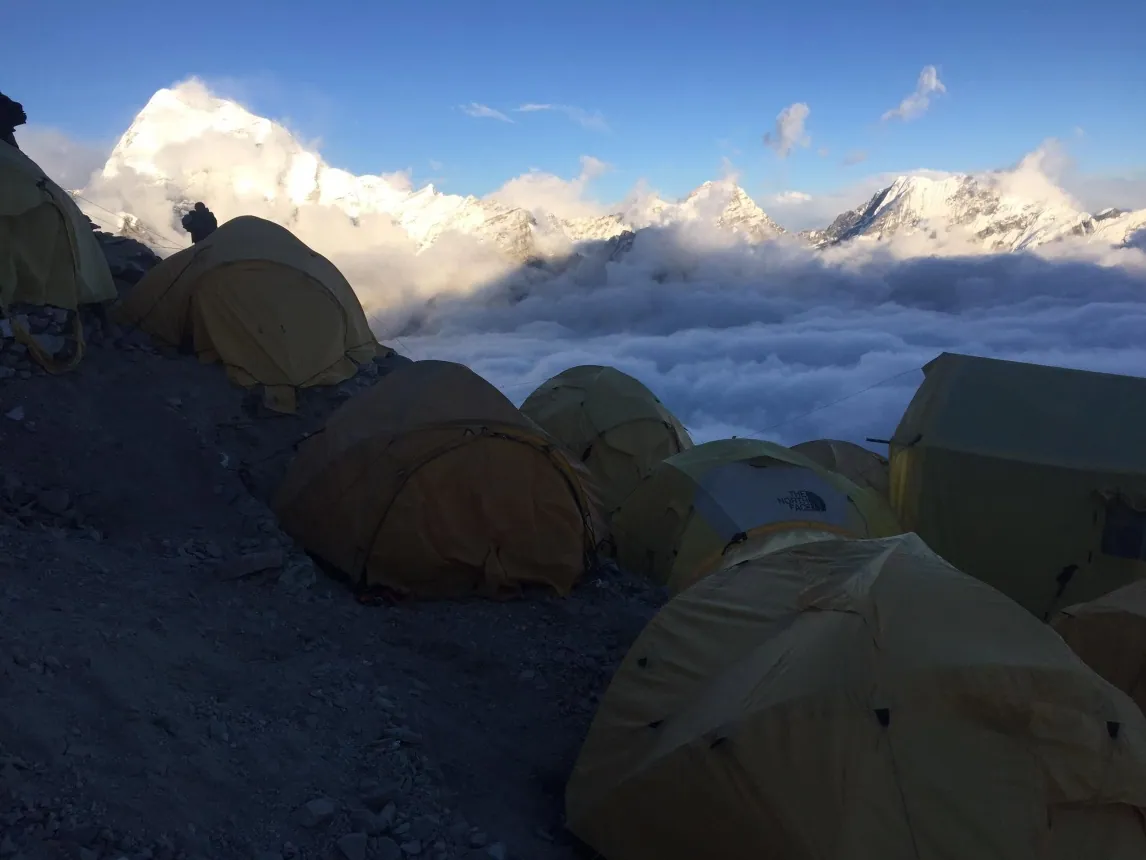
We at Nature Explore Trek have been operating trekking and climbing expeditions since 2015. Our team is made up of experienced field staff the exact people who actually guide, carry, and support your way on the trail. That’s why we always say:
“We do what we promise.”
This itinerary comes straight from the ground built by the people that work there, not from offices. We know what works, and we guarantee your experience is safe, memorable, and exactly what you’re after.