
 English
 Dutch
Dutch Japanese
 Hindi
Hindi Italian
 Spanish
 French
 German
 Chinese
 Korean
 Arabic
 Hebrew
 Russian
 Portuguese
 Danish
 Czech
Czech Polish
 Swedish
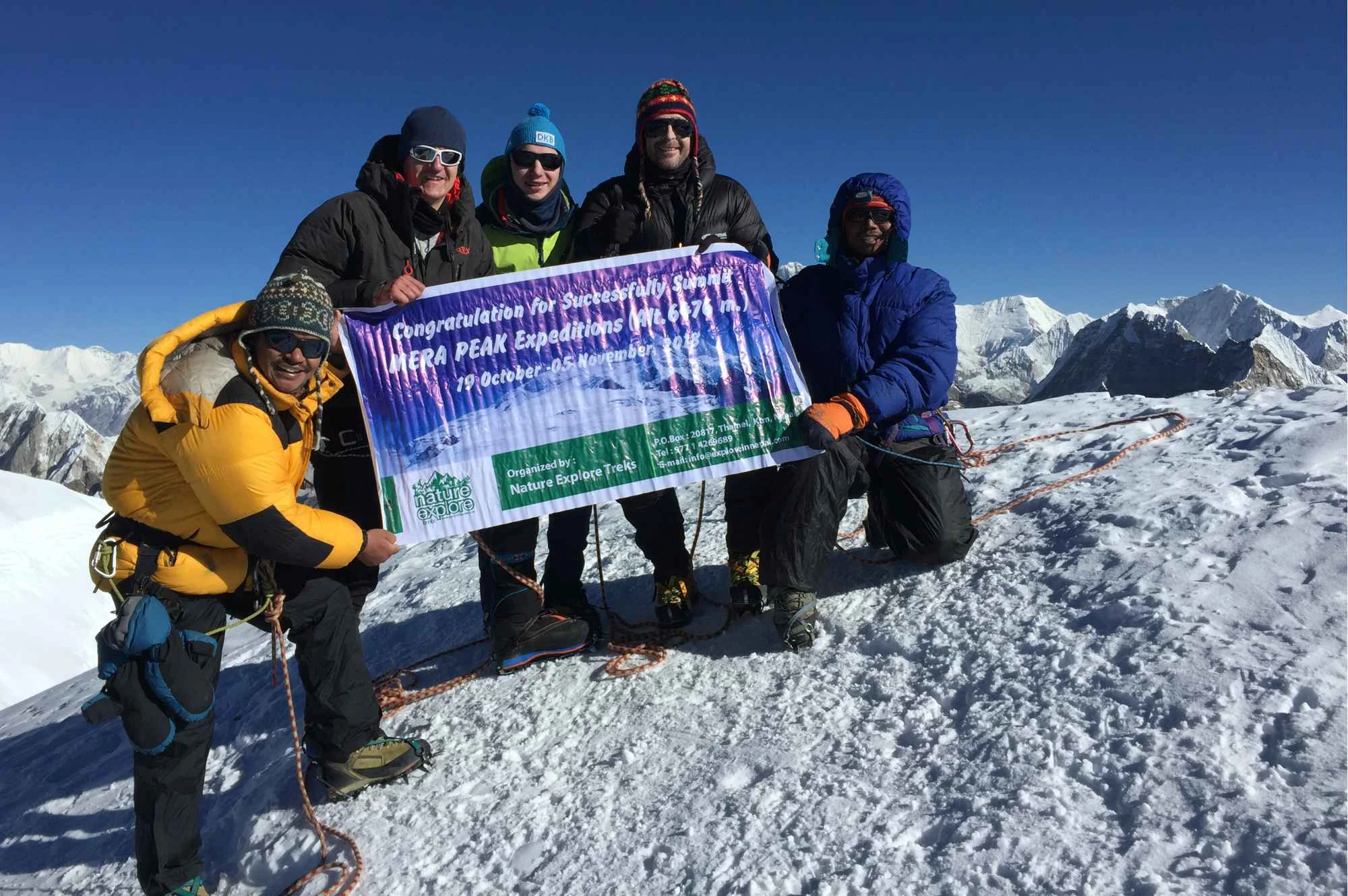
5 Best 6000m Peaks in Nepal for Beginners and Intermediate Climbers offer thrilling Himalayan adventures with stunning views, perfect for aspiring climbers.Nepal is a paradise for the mountaineers , offers some of the world’s most spectacular himalayan peaks. While the 8000m giants often steal the most of the spotlight the country is also home to hundreds of the stunning mountains above the 6000m that provides equally thrilling climbing adventures.
These high peaks are perfect for those climbers who want a challenging yet achievable himalayan experience without stepping into the extreme expedition territory . In this blog we will highlight the top 5 peaks above 6000m in Nepal which are known for their beauty , accessibility and unforgettable summit views. Whether you are preparing for your first himalayan climb or looking to add a new peak to your journey, these mountains offers the perfect blend of adventure, skill and breathtaking scenery.
Among the most popular 6000- meter peaks are Mera peak known for its accessible yet rewarding climb Island Peak a favorite for the first time climbers seeking a true mountaineering experience and Lobuche East and West which combines the technical ice and rock sections with spectacular Everest region views . Chulu East and west which stands proudly in the Annapurna regions are the perfect for those climbers who are seeking a mix of adventure and serenity. Meanwhile larkya peak located in the remote Nar-Phu valley offers an off-the beaten path himalayan experience with the pristine landscapes and panoramic summit vistas.
These peaks not only provide you the unforgettable climbs but also will let adventurers experience the natural beauty , rich culture and awe-inspiring mountain panoramas that Nepal is famous for .
Mera Peak (6,476m)
Mera peak is one of the Nepal’s most iconic trekking peaks which is rising high above the remote Hinku valley in the eastern part of the himalayas. It is known as the highest trekking peak in nepal, it offers an unmatched combination of both accessiviluty and altitude making it a dream summit for beginners and intermediate climbers. The journey to the Mera peak takes you far form the busier Everest base campp trails into the quieter pristine forests, yak pastures, frozen lakes world which has untouched mountain landscapes. As the trek ascend the scenery shifts dramatically form the lush rhododendron and bamboo forest to wide open aline terrain and finally into the glacier zone where the peak stands proudly against the sky.
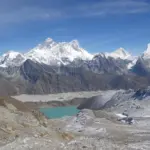
What makes Mera Peak truly special is its extraordinary 360 degree summit panorama which is often described as the most spectacular view from any trekking peak in Nepal. From the summit climbers will witness the world’s five highest mountains i.e Everest, Lhotse, Makalu , Cho Oyu and Kanchenjunga forming a giants of horizon.Trail is although long and demanding its actually peaceful , scenic and rewarding.
Difficulty level of Mera Peak
Mera peak is technically considered as the moderate. While the altitude makes it challenging but the actual climbing involves mostly gentle glacier slopes . There are not that much extremely steep ice walls or complicated rock section. You will need to walk with crampons , ue an ice axe and tackle a short fixed rope section near the summit so conclusion is that if you are beginner level climber then this peak will be suitable for you. The only difficulty will lies in copying with the thin air above 6000m maintaining the stamina for a long day and staying warm in high winds and freezing temperatures.
What you will see from the Top of Mera Peak
The visual you will see form the top of the Mera peak is unforgettable. As you trek higher the world opens up into enormous white landscapes and crystal clear horizons . Snowy ridges will stretch endlessly and deep valley will fall away beneath you. The true magic will begins at the summit where you will witness view five 8000m mountains at one sweeping arc you will see Mount Everest, Lhotse, Makalu , Cho Oyu and Kanchenjunga and this is what makes the Mera-Peak world Famous.The glacier shines from the early morning light and the sky truns pink and orange and the mountain appear so close it feels unreal.
Route and Climbing Style
Like every other trek or peak climbing in Eastern part of Nepal it begins with a scenic flight to Lukla which is followed by a quiet trek into the Hinku Valley. The journey passes through the Paiya, Panggom, Ningsow, Chhetra Khola, Kothe, Thangnak and eventually Khare which is the main base for acclimatization and the training.
From Khare climbers will ascend into the long Mera Glacier where you will practice crampon walking and rope technique . The route is wide open and mostly straightforward offering a slow but steady climb towards the Mera High Camp which will perched dramatically on a rocky ridge above the snowline . Nights here are very cold but the view is incredibly beautiful with stars filling the sky.
Summit day begins very early usually around 2 or 3 Am. Climbers move in a rope team across the glacier following a gently rising snow slope for the several hours. The final section to the true summit is steeper and often is fixed with ropes for the safety . Once this final ush is completed the summit ridges appears and the panoramic himalayan world unfolds around you very beautifully.
Outline Itinerary
Day 01: Arrive at Kathmandu, 1300 m
Day 02: Sightseeing in Kathmandu
Day 03: Fly to Lukla, trek to Chhuthanga, 3500 m, 4-5 hours
Day 04: Trek to Thuli Kharka via Zwatra La Pass, 4050 m (pass 4600 m), 6-7 hours
Day 05: Trek to Kothe, 3500 m, 5-6 hours
Day 06: Kothe to Thagnag, 4300 m, 4 hours
Day 07: Thagnag to Khare, 4900 m, 3 hours
Day 08: Acclimatization day in Khare, 4900 m
Day 09: Khare to Mera High Camp, 5500 m, 6-7 hours
Day 10: Mera High Camp to Summit and back to Khare, 6461 m / 5100 m, 9-10 hours
Day 11: Reserve day in case of bad weather, 4900 m
Day 12: Khare to Kothe, 3500 m
Day 13: Kothe to Thuli Kharka, 4050 m, 5-6 hours
Day 14: Thuli Kharka to Lukla, 2840 m, 5-6 hours
Day 15: Fly to Kathmandu, 1300 m
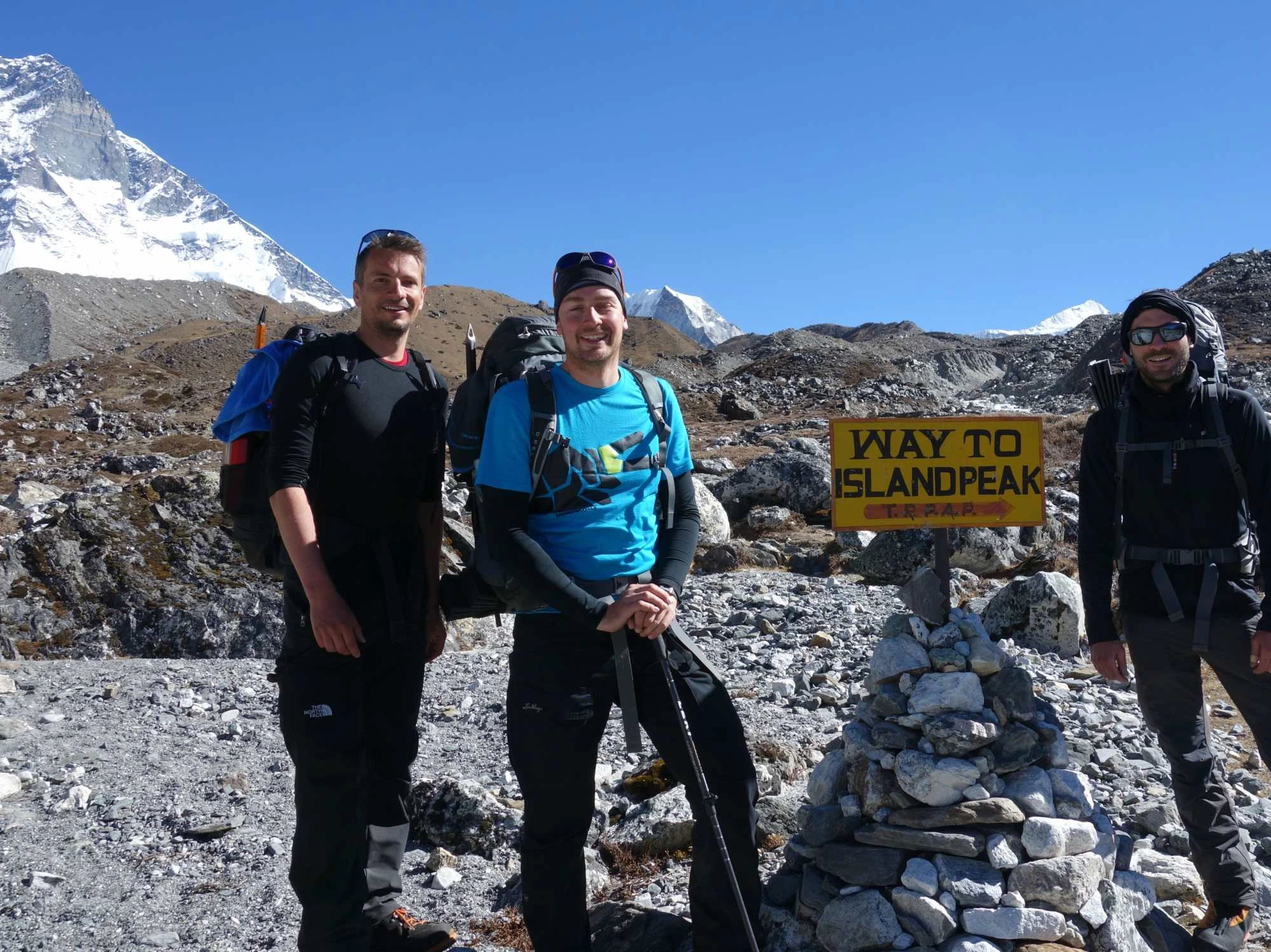
Island Peak (6,189m)
Island peak also known as Imja Tse is one of the Nepal’s most iconic and popular peaks. It stands beautifully in the middle of the Imja valley appears like an island of ice rising from a sea of snow hence the name was given because of its features from the early explorers. For many beginner climbers who want to experience the technical himalayan mountaineering Island peak is the perfect taste for them.
What makes Island peak more incredibly appealing is it is perfect blend of adventure, accessibility and technical challenge. The climb involve s glacier travel , crossing the crevasses with ladder and tackling a steep hedwall near the summit area . Climbers choose this peak as this peak closely resemble the real techniques used on the 8000m giants. Yet with the proper acclimatization and guidance it remains within the reach of motivated beginners and intermediate climbers.
Difficulty level of Island Peak
Island peak is considered more technical than Mera Peak and it demands a solid understanding of basic mountaineering skills. Although it is still achievable for the beginners with the proper training climbers must be prepared for its steeper slopes , exposed ridgelines and the glacier travel. The ascent to the Island peak requires the use of fixed ropes, jumar ascenders, crampons and an ice axe giving climbers a true taste of the technical himalayan climbing . You may also encounter aluminum ladders placed across the deep crevasses a technique which is some what similar to what climbers experience on Everest which adds an exciting challenge.
The most difficult or we can say demanding section of the climb is the final 250-300m headwall a steep snow and ice slope that leads directly to the summit ridge. This portion required steady footwork, good stamina and confident in using the fixed lines. Once you reach the summit ridges the exposure on the both side can make you feel intimidating but it also provides some of the most breathtaking views in the entire Khumbu region.
While the mountain is not extremely difficult the combination of altitude cold winds, thins air and technical terrain will make this a serious adventure. With proper acclimatization, strong physical fitness and mental determination your accent to Island peak willbe successful .
What you will see from the Top of Island Peak
The summit views from Island peak is nothing short of awe-inspiring views. You can expect 360 degree panorama of some of the highest mountain in Earth from the snow ridges to glaciers there will be no sort of view which will fail to mesmerized your eyes. To the north and northeast the towering giants of Lhotse, Makalu and Baruntse dominates the skyline their snow clad peaks sparkling in the sunlight. To the west there is graceful peak Ama Dablam which rises like a sharp spire often describe as one of the most beautiful mountain in the world. Below the expansive there is Imja Glaciers which stretches like a frozen river winding through the valley in the sendless shades of white and blue.
Sunrise view from the summit looks exactly like a painter’s canvas which is filled with mountain glow of gold shadows that stretch across the valley and the icy glaciers that reflects the soft morning light. As the sun rises higher surrounding peaks gradually reveal their dramatic ridges and deep crevasses. The feeling that you get once you stand on the top of Island peak will be mixed physically you will be drained but mentally you have that sense of achievement and peace and also feel the connection with the mountain.
Outline Itinerary
Day 01 : Arrive at Kathmandu alt 1300m
Day 02 : Fly to Lukla and then trek to Phakding alt.2610m
Day 03 Trek from Phakding to Namche Bazaar alt.3410m
Day 04 Rest day at Namche Bazaar alt.3400m
Day 05 Trek to Tengboche alt.3800m
Day 06 Trek to Dingboche alt.4410m
Day 07 Rest day in Dingboche alt.4410m
Day 08 Trek to Lobuche alt.4900m
Day 09 Trek to Everest Base Camp (alt.6261m)-Gorak sherap 5100m
Day 10 Hike to Kala Pattar (alt.5550m) Trek back to Dinboche – 4410m
Day 11 Trek to Chhukung – 2 hours – 4700m
Day 12 Trek to Island Peak Base Camp.alt.5000m
Day 13 Climb to Island Peak summit (alt.6176m)from base camp then back to base camp
Day 14 Reserve day
Day 15 Trek Back to Pangboche -alt. 3900m – 4 to 5 hours
Day 16 Trek Back to Namche Bazzar – 6 hrs – alt. 3400m
Day 17 Trek back to Lukla,alt.2780m
Day 18 Fly back to Kathmandu,alt.1300m
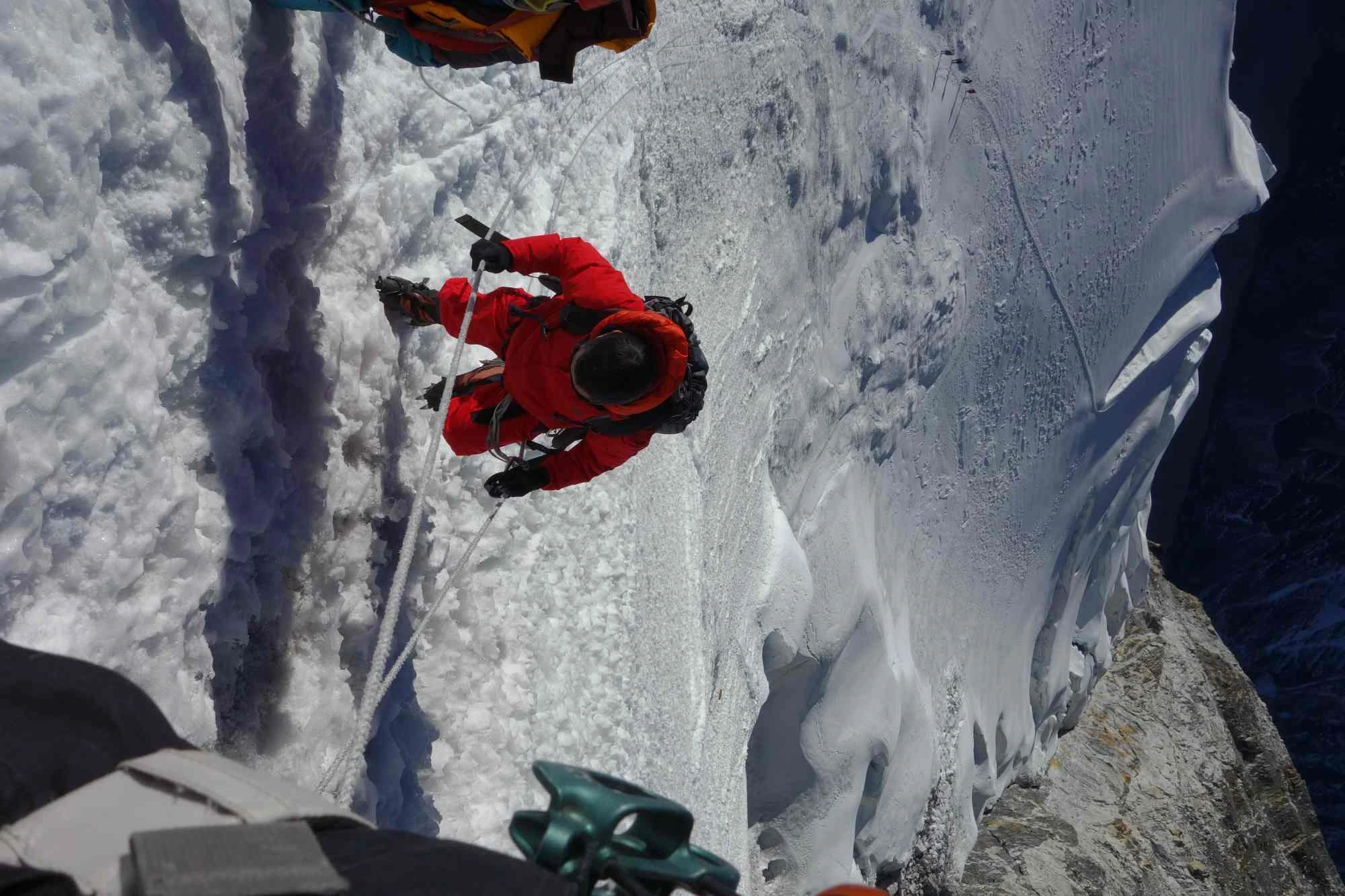
Lobuche East (6,119m)
Lobuche East is one of the most popular trekking peaks in the Everest region . It rises beautifully adobe the khumbu glacier and provides the climbers with an exciting combination of adventure , moderate technical climbing and breathtaking himalayan scenery. For many climbers lobuche East is the natureal next step after Island peak as it offers a slightly more technical experience without being extreme difficult.
The trail to the lobuche east passses through the famous EverestBase Camp route which means you will get to experience the Sherpa culture , mountain villages and the dramatic landscapes of the khumbu valley .
What Makes Lobuche East more attractive is its combination of challenging terrain, stunning views and accessibility. The climb includes rocky sections, snowy slopes and ridge climbing giving climbers a true taste of real himalayan mountaineering . Unlike other peaks, lobuche East offers a more exposed route and the sharper ridges which is why climbers choose it after gaining some experience on other peaks like Island and Mera Peak
Difficulty level of Lobuche East
Lobuche East is considered more technical and demanding compared to other popular trekking peaks in Nepal and it requires a good understanding of basic mountaineering techniques. While it is achievable for the beginners with proper preparation the climb itself is not easy and is often known for its steeper slopes , exposed ridgelines and mixed rock-ice terrain . Climbers need to be physically strong , mentally prepared and comfortable using the climbing equipment.
From high camp the route immediately becomes more challenging. The first section involves steep rocky scrambling in the dark , often with loose stones, requiring the careful footwork and balance. After reaching the glaciers climbers need to put on crampons and harness and rope up for the icy section. The glacier crossing including vaigating the crevasses , hard ice patches and uneven patches and uneven terrain which can be tiring at the high altitude.
As you move higher the slope gradually becomes steeper. The ascent requires the use of fixed ropes and jumar and climber must climb steadily while maintaining the smooth rhythm. The higher you go the more you will feel the effects of thin air , cold winds and physical exhaustion.
The most difficult part of lobuche East is the final push to the summit ridge. This section is a narrow exposed snow ridge with steep drop-offs on both sides. Climbers need to stay focused control their breathing and move confidently while being attached to the fixed rope . The ridge may feel intimidating because of the exposure especially if its windy but it also provides the most dramatic views.
What makes Lobuche East truly challenging is the combination of altitude (above 6000m) , cold temperatures , early morning start, steep ascents and technical terrain. The climb tests your endurance, mental determinations and ability to stay calm while using the technical gear. However with the proper acclimatizations a strong fitness base and guidance form the experienced climbing sherpas reaching the summit is very achievable for motivated beginners and intermediate climbers.
What you will see form the Top of Lobuche East
From the summit of Lobuche East the views are absolutely breathtaking . Climbers will enjoy the 360 degree panorama of some of the most iconic mountains in the Everest region. To the east you will see the massive walls of Everest , Lhotse and Nuptse while to the south the beautiful Ama Dablma stands tall with its perfect pyramid shape. To the noth and west peaks like Pumori, Changtse and the long stretch of the Khumbu Glacier appear in unbelievable clarity.
The sunrise view from the summit id unforgettable . As the first light hits the snowy peaks the mountains glow n golden and orange shaded and glacier below looks like a frozen river shining under the morning sun. Standing on top of lobuche East gives climbers a deep sense of achievement and a peaceful connection with the himalayas making it one of the most rewarding experiences in the region.
Outline Itinerary
Day 01: Arrive at Kathmandu,alt.1300m
Day 02: Visting around Kathmandu and trek preparation
Day 03: Fly to Lukla-Phaking(alt.2780m lukla ,2610m phakding)
Day 04: Phakding to Namche Bazar,alt.3400m
Day 05: Acclimatization at Namche Bazar,alt.3400m
Day 06: Namche to Tengboche,alt.3800m
Day 07: Tengboche to Dingboche,alt.4410m
Day 08: Acclimatization at Dingboche,alt.4410m
Day 09: Trek from Dingboche to Lobuche,alt.4900m
Day 10: Lobuche to Everest base camp(alt.5364m)-Gorak shep alt.5120m
Day 11: Trek from Gorak shep to Kala Patthar viewpoint (5550m, 18304 Ft.) and back to Lobuche,alt.4900m
Day 12: Trek from Lobuche to High Camp,alt.4940m
Day 13: High camp-summit-high camp,alt.4940m to summit alt.6120m)
Day 14: Reserve day encase for bad weather or any issues during the Expedition
Day 15: Lobuche high camp to Pangboche,alt.3900m
Day 16: Pangboche to Namche,alt.3400m
Day 17: Namche Bazar to Lukla,alt.2780m
Day 18: Fly to kathmandu,alt.1300m
Chulu East (6,584m)
Chulu East is considered one of the most beautiful and admired peaks to climb in the Annapurna region, proudly rising above the Manang Valley. The peak stands as a giant, snow-covered pyramid surrounded by dramatic, steep rock walls, glaciers, and towering Himalayan peaks. Often referred to as the “sister peak” to Chulu West, Chulu East is less technical but provides an exciting and genuine mountaineering experience.
Chulu East is the perfect choice for many climbers looking to get a real taste of Himalayan alpine climbing. The route includes rocky ridges, steep snowy slopes, glacier crossings, and breathtaking high-altitude scenery. It is an ideal peak for those wanting an adventurous climb that tests body and mind without being overwhelmingly technical.
What really makes Chulu East special however, is its stunning location in the Annapurna range. Climbers love combining adventure and culture crossing the high passes, trekking through Manang’s traditional villages, and seeing the locals’ Tibetan-influenced lifestyle firsthand. All this leads to a very exciting summit push from high camp under the silent star-filled Himalayan sky.
Difficulty Level of Chulu East
Chulu East is a moderately technical peak that requires good fitness, strong determination, and basic mountaineering skills. While it is more accessible than Chulu West, the climb still includes steep rocky sections, glacier crossings, and high-altitude challenges that make it a serious adventure. The ascent from high camp begins with rocky slopes that can feel tough, especially in the dark, requiring careful footwork and balance.
Once you reach the glacier, you will rope up, walk with crampons, and navigate icy surfaces and crevasses, which demands focus and proper technique. Higher up, the snow slopes become steeper, and climbers use fixed ropes and a jumar to ascend steadily. The final summit ridge is narrow and exposed, with sharp drops on both sides, and is often accompanied by cold winds adding to the difficulty. Thin air above 6,000 meters, long hours of climbing, freezing temperatures, and technical parts make Chulu East a demanding but extremely rewarding climb. With proper acclimatization and guided by experienced climbing Sherpas, this peak is very achievable for motivated beginners and intermediate climbers.
What You Will See from the Top of Chulu East
The summit of Chulu East is one of the most breathtaking views in the whole Annapurna region. From the top, you are surrounded by a dramatic 360-degree panorama of towering Himalayan peaks and endless glaciers. Right in front of you rise the magnificent Annapurna II, III, and IV, their massive snow faces glowing under the morning sun. To the west, the sharp and striking Tilicho Peak stands proudly above one of the world’s highest alpine lakes. Beneath your feet, the vast Manang Valley spreads out like a deep, rugged canyon dotted with tiny villages and ancient trails. Far in the distance, you can see the rolling snowfields stretching toward the Tibetan plateau. As the sun rises, the mountains turn golden, the glaciers sparkle, and the entire landscape looks unreal-like standing on a frozen rooftop of the world. The peaceful silence, the wide open spaces, and the incredible beauty make the summit moment unforgettable, filling you with a deep sense of achievement and connection with the Himalayas.
Outline Itinerary
Day 1: Kathmandu Arrival , alt. 1300m
Day 2: Trip preparation day
Day 3 : Drive to Dharapani or Bagarchapp via Beshishar Alt 2000m
Day 4: Trek to Chame ( 4 to 5 hours) 2600m
Day 5: Trek to Upper Pisang Alt. 3300m
Day 6: Trek to Nagwal Alt 3650m
Day 7: Rest and acclimatization day
Day 8: Trek to Chulu East base camp Alt 4400m
Day 9: Base camp to high camp Alt 5330m
Day 10: Summit day (Chulu East Alt. 6,429m.) return to base camp
Day 11: Trek back to Humde alt. 3200m
Day 12: Trek back to Chame alt. 2600m.
Day 13: Drive to Kathmandu via Beshishar alt. 1300m.
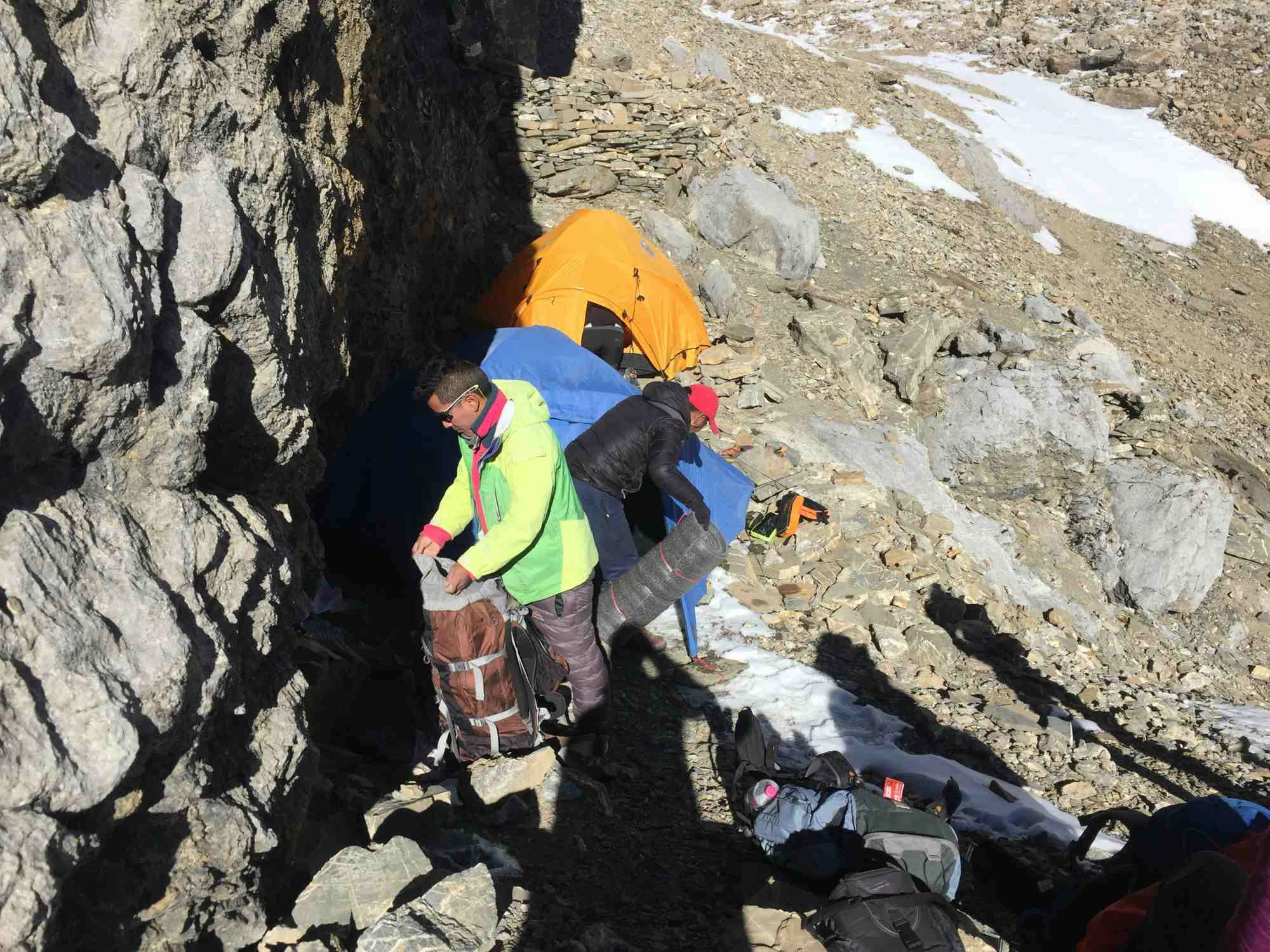
Chulu West (6,419m)
Chulu West is one of the most challenging and rewarding peaks in the Annapurna region. Rising proudly above the Manang Valley, it offers climbers a true Himalayan adventure: technical climbing, steep snow slopes, and exposed ridges all combined into one. Unlike Chulu East, this peak is more demanding, making it ideal for climbers who want to put their skills and endurance to the test in a high-altitude environment.
What makes Chulu West particularly exciting is its raw wilderness and remote location. The climb starts from the high valleys near the Annapurna Circuit, passing through virgin alpine landscapes, yak pastures, and traditional Manangi villages. As one ascends, the scenery gets more dramatic with sharp ridges, glaciers, and deep valleys stretching below. For climbers seeking a serious mountaineering challenge, Chulu West offers adventure and an unrivaled sense of isolation in the high Himalayas.
Difficulty of Chulu west
Chulu West is one of the most technical peaks in the Annapurna region, offering a true Himalayan expedition experience. The climb starts with long approaches through high valleys in Manang, passing yak pastures, alpine meadows, and rugged rocky terrain, which slowly acclimatizes the body to high altitude. From high camp onward, climbers will encounter steep snow slopes and glacier sections, where careful navigation employing crampons and ice axes takes center stage.
Fixed ropes are often used for icy and exposed ridges, particularly on the final summit push, which also is a narrow knife-edged ridge with steep drop-offs on both sides. High altitude and the thin air above 6,000 meters, combined with cold winds and long summit days, make the climb physically exhausting and mentally demanding. Climbers must maintain concentration, steady breathing, and endurance while commanding exposure and technical sections. With proper acclimatization, fitness, and guidance from experienced Sherpas, Chulu West is a highly rewarding climb that tests both skill and perseverance, giving a true sense of accomplishment to those who reach the top.
What You Will See from the Top
The summit of Chulu West offers a truly panoramic view that is well worth every ounce of effort expended on the climb. From its summit, climbers can see the breathtakingly beautiful Annapurna peaks-Annapurna II, III, IV, and Gangapurna-above them, while the long, serpent-like glaciers wind their ways down below like frozen rivers through the valleys.
To the west, Tilicho Peak-one of the most eye-catching mountains anywhere in the area-rears up, its icy faces sparkling in the sunlight. Far below them, the Manang Valley presses, with its dotted tiny villages, meandering trails, and deep glacial basins, while surrounding ridges form dramatic, rugged silhouettes against the sky. During sunrise, the mountains glow golden and orange; the glaciers are reflected in soft light, with the entire scene appearing almost surreal. The quiet and remoteness of Chulu West heighten the sense of isolation and grandeur, further making the summit an unforgettable, humbling experience in the Himalayas.
Outline Itinerary
Day 01: Arrive in Kathmandu alt.1300m
Day 02: Drive to Bhulbule alt.800m
Day 03: Trek from Bhulbhule to Jagat alt.1300m
Day 04: Trek from Jagat to Bagachhap alt.2000m
Day 05: Trek to Chame,alt.2600m
Day 06: Trek Chame to Pisang,alt.3100m
Day 07: Trek fromPisangto Manang,alt.3500m
Day 08: Manang acclimatization day.
Day 09: Trek from Manang to Yak Kharka,alt.4050m
Day 10: Trek from Yak Kharka to Chulu west base camp,alt.4900m
Day 11: Trek to Chulu high camp,alt.5500m
Day 12: Climb to Chulu west Summit (alt.6420m),and trek back to base camp,alt.5000m
Day 13: Reserved day for unfavorable weather condition.
Day 14: West Base Camp to Thorung Phedi,alt.4500m
Day 15: Trek from Thorung Phedi to Muktinath alt.3800m
Day 16: Trek to Jomsom alt.2700m
Day 17: Fly/Drive back to Pokhara ,alt.740m
Larkya Peak (6,249m)
Larkya Peak is a hidden gem near the famous Larkya La Pass on the Manaslu Circuit. It is one of the least frequented peaks in Nepal, making it ideal for adventurers who would love a quiet, off-the-beaten-path Himalayan climb. The peak rises above the high-altitude landscapes of the Manaslu region, offering sweeping views of glaciers, deep valleys, and rugged mountain ridges.
What makes Larkya Peak so unique is the element of remoteness along with its natural beauty. The climb takes you through pristine alpine valleys, across high passes, and near ancient monasteries reflecting the Tibetan-influenced culture of the region. This peak differs from other popular peaks in that it offers climbers a chance to experience relatively solitary travelling in the Himalayas, yet still remaining a proper mountaineering challenge. With proper acclimatization and preparation, it is achievable for motivated beginners and intermediate climbers seeking a rewarding high-altitude adventure.
Difficulty Level of larkya peak
Larkya Peak, near the famous Larkya La Pass on the Manaslu Circuit, is a moderately technical peak that combines accessibility with a true high-altitude Himalayan adventure. The climb begins with trekking through pristine alpine valleys, passing high passes, rivers, and remote Tibetan-influenced villages. As the ascent progresses, climbers encounter glaciers, moraine ridges, and snow-covered slopes that require crampons, ice axes, and sometimes fixed ropes for safety.
The upper slopes, particularly around the summit ridge, are exposed and can be windy, placing demands for careful foot placement, focus, and steady balance. Long summit days, thin air above 6,000 meters, and low temperatures add to the challenge, requiring both physical endurance and mental resilience. While not as technically difficult as Chulu West or Island Peak, Larkya Peak still provides a serious Himalayan climb that tests stamina, high-altitude experience, and determination, making the summit feel like a hard-earned and incredibly rewarding achievement.
What You Will See from the Top of Larkya Peak.
From the summit of Larkya Peak, one of the most spectacular and tranquil high-altitude panoramas in Nepal unfolds before the climbers. The gigantic Manaslu, 8,163 meters above sea level, crowns the skyline, framed by Himlung Himal, Cheo Himal, and many other peaks that are less well-known but strikingly beautiful in their own right. Below them, snowfields and glaciers stretch down endlessly, forming frozen rivers that cut deep valleys into the alpine landscape.
Larkya La Pass can be seen in the distance, connecting the high Manaslu valleys to the west and carrying an aspect of remoteness few other peaks have. Sunrise watches the first golden and pink shades bathing these mountains, while the glaciers shimmer in silver under the early light. The huge scope and silence of this landscape overpower every mind with peace and a sense of awe. It gives an exhilarating feeling of the attainment of one’s objective while standing on its summit and conveys a deep connection with raw, pristine beauty in the Himlayas having this stunning view of the Himalaysn
The huge scope and the silence of this landscape overpower every mind with peace and a sense of an awe. It gives an exhilarating feeling of the attainments of one’s objective while standing on its summit and conveys a deep connection with raw. The huge scope and the silence of this landscape overpower every mind with the peace and a sense of a n awe. It gives an exhilarating feeling of the attainments of one’s objective while standing on its summit and will coneevery a deep connection with raw.
Outline Itinerary
Day 01: Arrival in Kathmandu (1350 m / 4429 ft)
Day 02: Free day in Kathmandu and sightseeing (1350 m / 4429 ft)
Day 03: Scenic drive to Soti Khola (700 m / 2297 ft) – 7-8 hours
Day 04: Trek to Machha Khola (870 m / 2854 ft) – 7-8 hours
Day 05: Trek to Jagat (1410 m / 4625 ft) – 6-7 hours
Day 06: Trek to Deng (1860 m / 6102 ft) – 6 hours
Day 07: Trek to Namrung (2660 m / 8727 ft) – 6-7 hours
Day 08: Trek to Sama (3530 m / 11,581 ft) – 6-7 hours
Day 09: Acclimatization day – Hike to Manaslu Base Camp (3530 m / 11,581 ft)
Day 10: Trek to Samdo (3860 m / 12,664 ft) – 3-4 hours
Day 11: Acclimatization at Samdo (3860 m / 12,664 ft)
Day 12: Trek to Larkya Phedi (4494 m / 14,740 ft) – 3-4 hours
Day 13: Trek to Larkya Peak Base Camp (5170 m / 16,961 ft)
Day 14: Trek to Larkya Peak High Camp (5650 m / 18,536 ft) – 4-5 hours
Day 15: Summit Larkya Peak (6249 m / 20,501 ft) and trek to Bimthang (3720 m / 12,204 ft) via Larke La Pass (5160 m / 16,929 ft) – 8-9 hours
Day 16: Trek to Tilje (1860 m / 6102 ft) – 7 hours
Day 17: Trek to Dharapani and scenic drive to Kathmandu – 2 hours walk + 8 hours drive
Conclusion
Nepal’s 6000-meter peaks are the very definition of challenge, beauty, and accessibility combined which eliminats the need for climbers to be in extreme expedition style to enjoy the high Himalayas. The lavish views from Mera Peak, the technical excitement of Island Peak and Lobuche East, the culturally rich adventures of Chulu East, Chulu West, and the isolated peace of Larkya Peak are a few of the unique and unforgettable experience offered by every mountain.
This kind of climbing not only challenges your body and mountaineering prowess but also allows you to completely absorb the beauty of the landscape, the richness of the culture, and the tranquility of the wilderness that you associate with Nepal. No matter what your level of experience is, these 6000-meter peaks will definitely provide you with a memorable Himalayan experience that will linger with you even after you are back from the mountains.