
 English
 Dutch
Dutch Japanese
 Hindi
Hindi Italian
 Spanish
 French
 German
 Chinese
 Korean
 Arabic
 Hebrew
 Russian
 Portuguese
 Danish
 Czech
Czech Polish
 Swedish
Everest Three High Passes Trek 2026/2027 crosses Kongma, Cho, and Renjo La with Everest Base Camp and Gokyo Lakes, including costs and group dates. This adventure crosses three spectacular Himalayan passes like Kongma La (5,535 m), Cho La (5,420 m), and Renjo La (5,360 m). While also visiting Everest Base Camp and the stunning Gokyo Lakes, this trek offers a complete Everest experience beyond the standard route, combining breathtaking mountain panoramas, authentic Sherpa culture, and thrilling alpine terrain.
In this epic journey, you will find everything you need to plan your 2026/2027 adventure, including detailed itinerary options, updated trek costs, permit information, the best seasons for travel, fitness requirements, and confirmed group departure dates. Whether you are an experienced trekker looking for a high-pass challenge or planning your first major Himalayan expedition, this guide will help you prepare for one of the most spectacular trekking routes in the world.
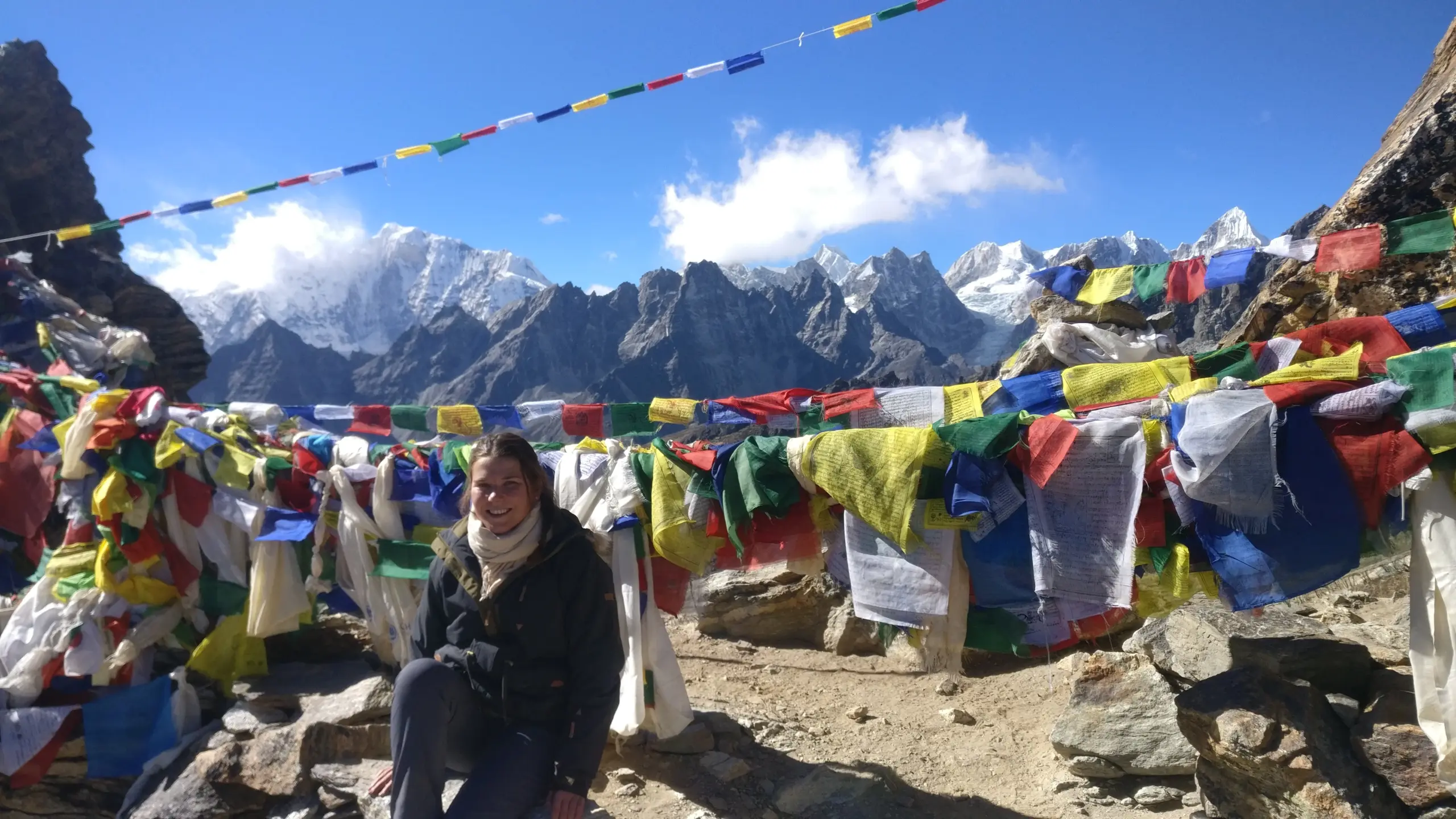
Major Highlights of Everest’s Three High Passes
The Everest Three High Passes Trek is the most complete trekking adventure in the Everest region. It combines extreme altitude, dramatic landscapes, iconic landmarks, and a full Himalayan circuit into one of the unforgettable journey. Below are the key highlights that make this trek truly extraordinary.
Exploring Everest Base Camp
Everest Base Camp (5,364 m) is standing at the foot of Mount Everest. Reaching Everest Base Camp (EBC) is one of the most iconic achievements in the trekking world. You are surrounded by towering Himalayan giants, massive glaciers, and expedition camps during the climbing season. The trails to Everest Base Camp pass through rugged terrain, moraines, and glacial landscapes, offering a real sense of high-altitude adventure. During spring, colorful tents of international mountaineering teams create a vibrant atmosphere at base camp.
Kala Patthar Viewpoint
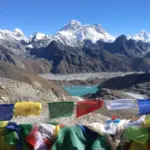
The hike to Kala Patthar viewpoint (5,545 m) is often considered the visual highlight of the entire trek. As the first rays of sunlight hit Everest, the mountain glows golden against the deep blue Himalayan sky. From this viewpoint, you get the closest and clearest panoramic view of Everest, along with Lhotse, Nuptse, and Pumori. Because Everest Base Camp itself does not provide a full summit view, Kala Patthar is the best vantage point for photography and unforgettable mountain scenery.
Gokyo Lake Exploration
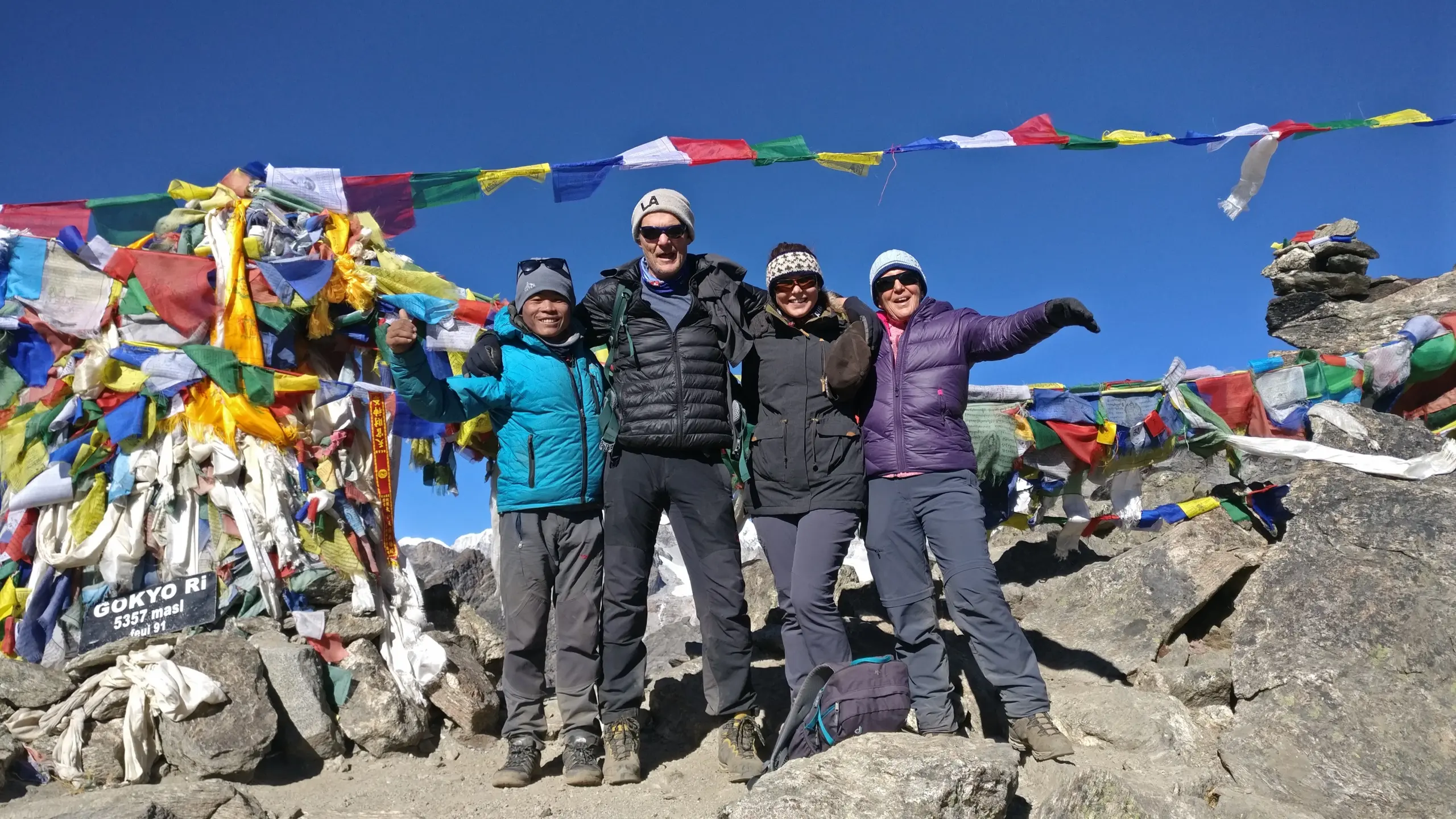
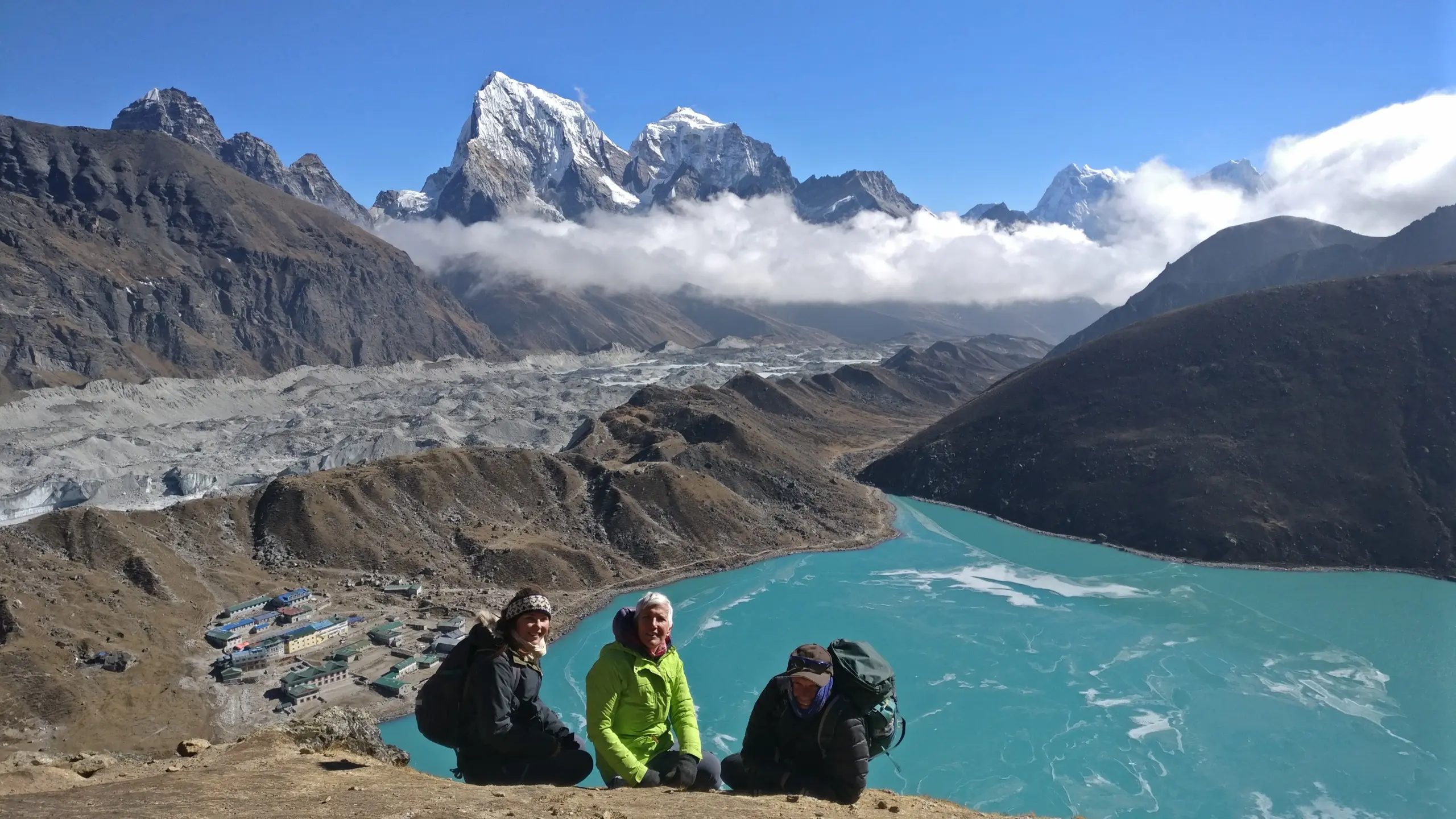
The turquoise Gokyo Lakes are among the most beautiful high-altitude lakes in Nepal. Located in the remote Gokyo Valley, these glacial lakes reflect the surrounding snow-covered peaks, creating a breathtaking landscape. Trekkers also climb Gokyo Ri for a 360-degree panorama of Everest, Cho Oyu, Makalu, and other Himalayan giants. Compared to the busy Everest Base Camp trail, the Gokyo region feels quieter and more peaceful, offering a deeper connection with nature. The lakes, glaciers, and vast open valley make this section one of the most photogenic parts of the trek.
Altitude Sickness & Safety
The Everest Three High Passes Trek reaches elevations above 5,500 meters, where oxygen levels are significantly lower than at sea level. Because of the extreme altitude, understanding altitude sickness and following proper safety measures is essential. As trekkers cross high mountain passes such as Kongma La, Cho La, and Renjo La, the body must gradually adapt to thinner air. Without proper acclimatization, there is a risk of developing Acute Mountain Sickness (AMS).
Altitude sickness occurs when the body cannot adjust quickly enough to reduced oxygen levels at higher altitudes. Early symptoms always include headache, nausea, dizziness, fatigue, shortness of breath, and difficulty sleeping. These symptoms are common above 3,000 meters but can worsen at higher elevations if you ignore the symptoms. Proper acclimatization is the most effective way to prevent altitude sickness. The Everest Three High Passes itinerary includes rest days in key locations to help the body adjust gradually.
Safety on this trek also depends on preparation and responsible decision-making. Trekking with an experienced guide ensures proper altitude management and route management and route awareness, especially when crossing high passes and glacier sections. Weather in the Everest region can change rapidly, so starting early in the morning and being prepared for cold temperatures and strong winds is essential. Travel insurance that covers high-altitude evacuation is strongly recommended, as helicopter evacuation is sometimes necessary in emergencies.
Accommodation & Food
During the Everest Three Passes Trek, accommodation is similarly in local treehouses or lodges, which are scattered along the trekking route in the Khumbu region. These lodges offer basic but comfortable rooms, usually with twin-sharing beds. Facilities differ with altitude; in lower elevations, rooms often have attached bathrooms, while at higher elevations, shared bathrooms are more common. Heating is generally provided in common areas, but private rooms may be cold, so carrying a warm sleeping bag is recommended.
Food on the trek is simple, nutritious, and filling, designed to keep trekkers energized for long days of walking. Popular meals include Dal Bhat, noodles, soups, pasta, and Tibetan bread. Hot drinks like tea and coffee are available throughout the day, helping trekkers stay warm in cold weather. Prices for food and drinks increase gradually as the altitude rises, so it’s a good idea to carry some energy snacks for long trekking days.
Is the Everest Three Passes Trek Worth It?
Yes, the Everest Three High Passes Trek is absolutely worth it if you’re looking for a challenging and truly immersive Himalayan adventure. The route takes you beyond the classic Everest Base Camp trail, crossing high passes like Kongma La, Cho La, and Renjo La, while offering breathtaking views of Mount Everest and surrounding giants. You also visit highlights like Everest Base Camp and the stunning Gokyo Lakes, making it one of the most complete treks in the Khumbu region.
It’s physically demanding and requires good preparation, but the sense of achievement is unmatched. With fewer crowds, uncertain sections, rich Sherpa culture, and dramatic alpine landscapes, the Three Passes Trek delivers both adventure and authenticity. For trekkers seeking more than just a base camp visit, it’s one of Nepal’s most rewarding high-altitude experiences.
Physical Fitness & Preparation
Proper physical fitness is essential for a safe and enjoyable trekking experience, especially for high-altitude trails in Nepal. Trekking the Everest Three High Pass route is a challenging high-altitude adventure that requires good physical fitness and endurance. Trekkers should be able to walk 6-8 hours per day on steep, rocky, and uneven trails while carrying a daypack. Pre-trek training should focus on cardiovascular exercises like brisk walking, jogging, cycling, and stair climbing, along with strength exercises such as squats, lunges, and step-ups to build leg and core muscles. Practicing long hikes with a weighted backpack will help simulate real trekking conditions and improve stamina for crossing high passes like Kongma La, Cho La, and Renjo La.
Trek duration
20 days
Maximum Altitude
5,545 m at kala patthar
Average Cost (2026/2027)
USD 1,750 – 2,500 per person (depending on group size and services)
Cost includes:
- Airport Pickup and drop-off (Car/ Jeep/ Bus as a group size).
- Hotel in Kathmandu, including breakfast as per the itinerary.
- Three Times Meals a day during the trek (Breakfast,Lunch and Dinner).
- 1 cup of Hot Drinks (Tea or coffee) after each meal.
- Seasonal fresh fruits
- Flights from Kathmandu to Lukla and back (Note: Flight will be from Ramechhap Airport during the autumn season (October–November) and spring season (March–April). The round trip includes a 4-hour drive from Kathmandu to Ramechhap.
- Through Ramechhap, a public shared bus/van/jeep is included; if you want to go through a private vehicle, an additional USD 90–120 will be charged after educting the public transport cost.
- Accommodation throughout the trek in normal twin-sharing basic room
- Professional English Speaking guide
- All the necessary airport pick up and drop
- Porter (Each 2 people have 1 porter and the max weight limit is 25 kg.) If you don’t want a porter, then the price will decrease.
- Sagarmatha National Park Entrance Fee
- Khumbu-Pasang Lhamu village municipality fee
- TIMS card
- Basic Medical kit bag
- Treat drinking water.
- All necessary trip arrangements
- Last night dinner after the trek.
Itinerary
Day 01: Arrive at Kathmandu
Day 02: Trip Preparation Day
Day 03: Fly to Lukla (2,840 m) and trek to Phakding (2,610 m, 4-5 hrs).
Day 04: Trek from Phakding to Namche Bazaar (3,440 m, 5-6 hrs).
Day 05: Acclimatization day at Namche Bazaar (3,440 m).
Day 06: Trek from Namche Bazaar to Debuche (3,820 m, 5-6 hrs).
Day 07: Trek from Debuche to Dingboche (4,410 m, 5-6 hrs).
Day 08: Rest day in Dingboche (4,410 m) with a short hike to Nagarjun Hill (5,100 m, 3 hrs).
Day 09: Trek from Dingboche to Chhukung alt. 4,730 m, 4 hrs.
Day 10: Trek from Chhukung to Lobuche (4,910 m) via Kongma-La Pass alt 5,535 m, 7-8 hrs.
Day 11: Trek from Lobuche to Gorak Shep (5,164 m) and Everest Base Camp (5,364 m) and back to Gorak Shep (7-8 hrs).
Day 12: Trek from Gorak Shep to Kala Patthar (5,545 m) and then to Dzongla (4,830 m, 7-8 hrs).
Day 13: Trek to Thagnak (4,700 m) via Cho-La Pass (5,420 m, 6-7 hrs).
Day 14: Trek to Gokyo lakes
Day 15: Early morning climb to Gokyo-Ri (5,357 m) and return to Gokyo Lake (3-4 hrs).
Day 16: Trek from Gokyo Lake to Lungden (4,380 m) via Renjo-La Pass (5,360 m, 7-8 hrs).
Day 17: Trek from Lungden to Thame (3,800 m, 4-5 hrs).
Day 18: Trek from Thame to Namche Bazaar (3,440 m, 5 hrs).
Day 19: Trek from Namche Bazaar to Lukla (2,840 m, 6-7 hrs).
Day 20: Fly back to Kathmandu (1,350 m).
Who Can Join ?
Experienced Trekkers
This trek is suited for those trekkers who have prior high-altitude trekking experience (above 4,000 meters). The long walking days, steep ascents, and high mountain passes require strong physical endurance and mental resilience. If you have completed challenging treks before, this route will be your next big achievement.
Adventure Photographer
This trek is best for the Adventure photographers seeking rare Himalayan perspectives beyond the classic Everest Base camp trail. With dramatic views of Mount Everest, turquoise Gokyo lakes, glacial landscapes, and and panoramic viewpoints like Kala Patthar.
High-Altitude enthusiasts
This adventure offers the ultimate altitude experience, if you are passionate about trekking above 5,000 meters and want to test your endurance across multiple himalayan passes. You will be crossing Kongma La, Cho La, and Renjo La makes it one of the Nepal’s most demanding trekking circuits.
Mountaineering preparation climbers
The Everest three high passes trek is excellent preparation for future himalayan expeditions. It helps to build stamina, altitude adaption, glacier-crossing confidence, and mental toughness. This trek makes it ideal traning before attempting peak climbing or higher mountaineering goals.
Everest Three High Passes Trek – Nepal’s Most Demanding Trek Explained (2026)
The Everest Three high passes is one of the most challenging trek with combine of Everest Base Camp, Kala Patthar (5,545 m), Gokyo lakes, and all three passes (Kongma La (5,535 m), Cho La (5,420 m), Renjo La (5,360 m)). The difficulty level of this trek is strenuous to very challenging. Unlike the standard Everest Base camp Trek, this route forms a complete circuit of the khumbu region.
This trek is Nepal’s most demanding Trek, trek high altitude above 5,500 m. The walking hours in this trek is approximately 6-9 hours each day. In ths trek, the terrain is steep ascents and descents. Crossing the glacier especially, Cho La Pass, see the beautiful scenery. There is a high risk of altitude sickness during the trek. This trek demands physically and mentally strong. The terrain is continuous elevation gain and loss. This trek is perfect for serious adventure seekers looking for a once-in-a-lifetime Himalayan challenge.
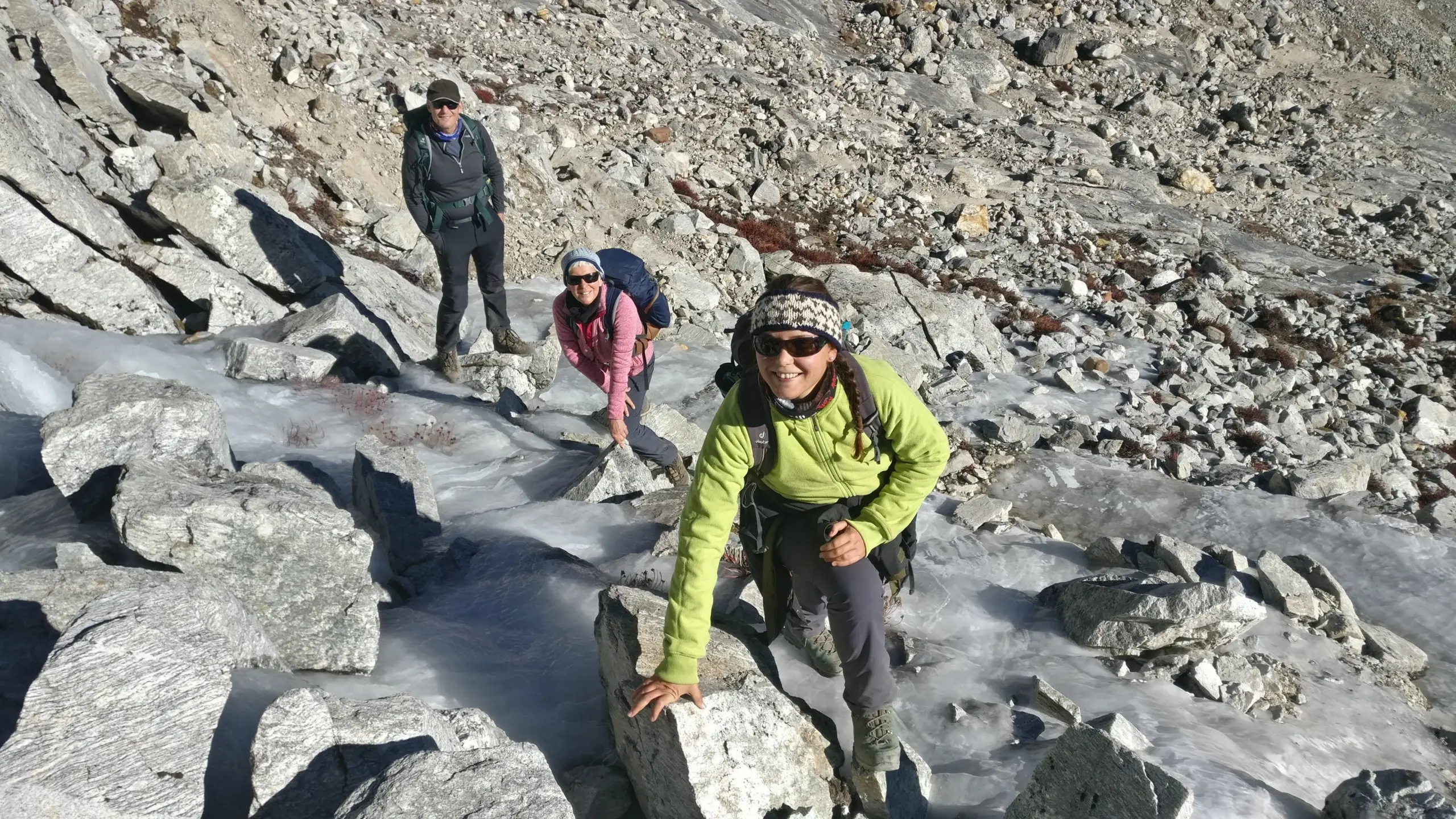
Why Everest Three Passes Trek Is the Ultimate Challenge in Nepal (2026/27 Group Trek) because you have to
- Crosses three high Himalayan passes above 5,000 m.
- Long trek of 21–24 days covering rugged terrain.
- High-altitude exposure increases risk of altitude sickness.
- Includes steep ascents, glacial paths, and rocky descents.
- Faces unpredictable weather with snow and strong winds.
- Offers iconic Everest and Himalayan views.
- Traverses remote, less-frequented areas.
- Combines trekking with real adventure challenges.
- Tests physical endurance and mental resilience.
- Provides ultimate achievement and trekking satisfaction.
You will get a chance to look 360° Himalayan panorama views of Everest, Lhotse, Makalu And Cho oyu. There is a remote village of sherpas with beautiful culture and religion. In this trek, There is less crowded than standard EBC route. You will get the full exploration of everest region in this trek. This trek is adventurous and challenging so physical fitness is necessary in this trek.
Nature Explore trek is giving you a biggest opportunities to trek in the Nepal’s Everest region with licensed guide, where you can trek in three high passes, EBC, Kala Patthar, etc. So, if you are interested then contact us for detailed information.
E-mail: [email protected]
Whatsapp: +977-9851131287