
 English
 Dutch
Dutch Japanese
 Hindi
Hindi Italian
 Spanish
 French
 German
 Chinese
 Korean
 Arabic
 Hebrew
 Russian
 Portuguese
 Danish
 Czech
Czech Polish
 Swedish
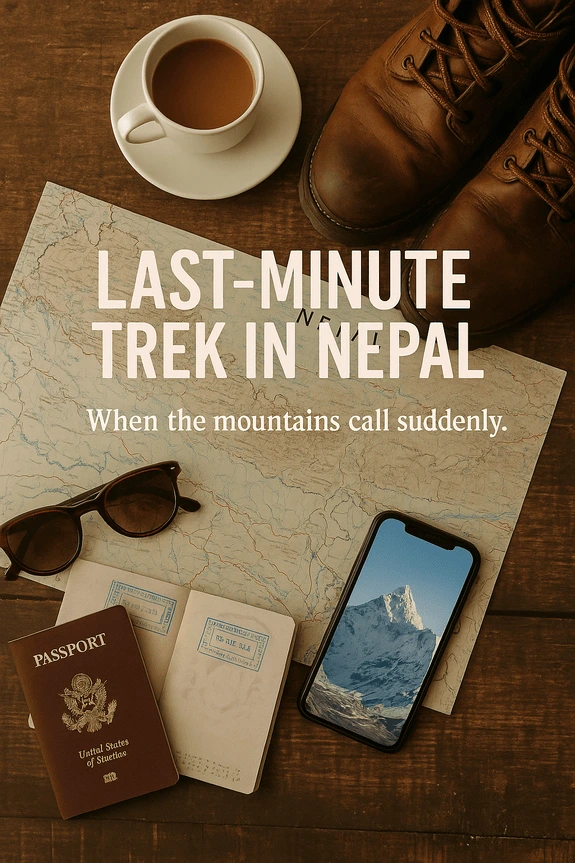
Last-minute trek in Nepal is easier than you’d think local guides, guesthouses, and gear rentals are readily available even on short notice.In today’s busy world, no matter how much you try to stick to your plans, there are always those spontaneous moments when you just say, “I’ll do it.” These days, social media also plays a huge role seeing similar content over and over can spark a sudden desire to go on an adventure.
In this blog, I’ll include everything you need to know if you’re planning a last-minute trek in Nepal.
Making a spontaneous decision to trek in Nepal can bring up a lot of questions. There are several important factors to consider, so read this blog thoroughly to get all the essential information.
Personally, I’m also a last-minute person. I act on impulse and truly believe in the idea of walking a path without knowing exactly where it leads. Going with the flow, without expectations, can be a beautiful experience.
Why go Trekking in Nepal on a Whim?
Let’s be honest, a lot of us are influenced by what we see on social media. The breathtaking Himalaya landscapes, serene villages, snow-capped peaks and that perfect shot from a mountain ridge its very tempting you know. You see someone else living it and something inside you says, Why not me?
Spontaneity adds a special flavour to your travel. It pushes you out of your comfort zone and into moments you can’t predict. And Nepal known for its welcoming culture and world-renowned trekking trails is one of the best places to embrace that spirits. People are often very friendly and welcoming .
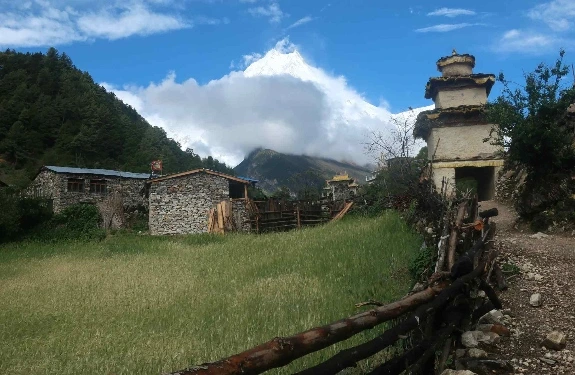
What to Consider for a last- Minute Trek in Nepal
1)Choose your Trek wisely
As you are doing your trek in last minute means you have to consider the trek like it menas you are not fully prepare for the trek which are of hard level like Annapurna Circuit Trek, Everest Base Camp Trek, Kanchenjunga Trek etc these trek requires physical endurance as well as mental preparation if you are ohysically fit or you do some hikes or any other sports activities or like exercising then you are exception . Choose trek which are less hard or if you really want to do EBC or hard trek then consider doing another trek right before the trek so that your body can get used to of the nepal trails and you’ll be somehow mentally prepared for it. Here are the suggested trek for last minute trek in Nepal
1) Ghorepani Poonhill Trek
If you want to bring in the himalayan vibes but are on short in terms of time, then simply the poon hill trek would be one of the best. This short trek can be done in about 3 days, but for a relaxed trek people like to trek from anywhere arond 4-6 days people people like to opt for anywhere around 4–6 days. It starts from Nayapul, only a little ride away from Pokhara, and goes through charming Gurung villages surrounded by terraced fields and rhododendron forests to be lit up during spring.
One of the highlights of this trek will be the early morning hike to Poon Hill for a magical Himalayan sunrise. As the first ray of sun touches the snow-capped peaks, Annapurna South, Machapuchare (Fishtail), Dhaulagiri, and other mountains start glowing with golden hues. Such moments feel as if they are straight out of a postcard.
The trek is mostly uphill, with lots of stone steps, but it is quite doable for a beginner with basic fitness. The maximum altitude is around 3,210 m and hence altitude sickness is not likely to occur. Plus, hospitality in local teahouses will make it a very comfortable trek for last-minute travelers.
2. Short Annapurna Base Camp Trek
For anyone who wants to experience the real Himalayas and yet is unwilling to spend days hiking into the mountains with all their gear, the relatively short ABC trek would be perfect. It generally takes a duration of 5 to 7 days starting from Pokhara. Onward from there, the trail passes through bamboo forests and along rivers down beautiful villages such as Chhomrong and Bamboo. This can be looked upon as a rather fast-track version of the complete ABC trek; it is not short on sights.
They say the climb is tough, yet the view is worth every ounce of sweat; now, the big question: Have you ever stood at Annapurna Base Camp (4,130 m), surrounded on all sides by towering snow-clad peaks: Annapurna I, Hiunchuli, at one side and Machapuchare on the other? The place is basically a giant natural amphitheatre of mountains. Considering that the place is high, it is attitudinally rewarding through gradual ascending that helps form the state of acclimatization very well.
The trek really makes for the perfect getaway for spontaneous adventurers because it’s easy enough to organize from Pokhara, with a ton of guides and gear shops around. One has to be moderately fit, and the trek comprises about 5-6 hours of walking every day-walking at a slightly faster pace.
3. Everest View Trek
Anyone who doesn’t have the time or doesn’t feel like walking all the way to Everest Base Camp can easily zip by with the Everest View Trek. It should take 5-7 days, short but truly worthy of getting into the heart of the Khumbu region. After flying into Lukla, you follow the valley trail through pine forests and Sherpa villages all the way to Namche Bazaar-the vibrant gateway to Everest.
From Namche, there is a considerable uphill hike to Hotel Everest View, which quite adequately affirms the name.Walking from Namche towards Hotel Everest View, which, through its name, promises spectacular views of Mount Everest, Lhotse, and Ama Dablam. The walking is, comparatively speaking, rather light with respect to the full base camp trek, but the feeling of being cast in the immense shadow of Everest stays with you. The altitude here is about 3880 meters, rather grippingly high but still not too risky for the first-timers.
This trek is excellent for last-minute plans since flights to Lukla are quite frequent, and many trekking agencies based either in Kathmandu or Pokhara could easily arrange guides, permits, and anything else you might need on short notice. This is the ideal way to absorb some of the magic of Everest without having to carve out time for, or physically endure, a longer expedition.
4. Mardi Himal Trek
For those who want to avoid the crowds and revel in the quiet, Mardi Himal Trek is an excellent late find. It usually takes between 4 to 6 days and commences from Kande, near Pokhara. The path will take you through beautiful forests, ridgelines, and serene teahouses that genuinely revive an atmosphere of adventure and solitude.
The beauty of this walk is truly enhanced by the proximity of views of Machapuchare (Fishtail); it really feels close from Mardi Himal Base Camp, around 4,500m. There are also superb views of Annapurna South, Hiunchuli, and the Annapurna range as you continue. In terms of altitude gain, the trail climbs reasonably fast but remains manageable for anyone with an average fitness level.
All arrangements could be made in Pokhara even a day before the trek starts since it is still considered to be an off-the-beaten-track one.
5) Khumai Danda Trek
Khumai Danda Trek is a hidden treasure near Pokhara that’s perfect for a spontaneous adventure. This trek usually takes like 3-5 days and starts from a short drive away in hemja . The trail then leads you through the peaceful forests, quiet villages and up to grassy ridges with hardly any crowds. It’s a lesser-known route , which makes it ideal if youre looking for a serenity and natural beauty.
The highlight of the trek is reaching Khumai danda, a ridge that offers breathtaking views of Machapuchare (fishtail) and the Annapurna range. You can also enjoy incredible sunrise and sunset moments from the ridge. The walk is moderate and suitable for beginners or those wanting a more laid-back hike.
Since it’s not commercial trail yet, the teahouse are basic but warm and welcoming. You dont need a lot of preparation and everything can be arranged quickly in Pokhara . The highest point is around 3,245m so the altitude is rarely an issue making this an ideal last-minute escape to mountains.
6)Langtang Valley Trek
The langtang valley trek is one of the most beautiful and accessible himalayan treks in kathmandu making it another ideal option for a last minute trek in Nepal. It usually takes 7-10 days and starts with a drive to syabrubesi, From there, you can walk through the lush forests , riverside trails and welcoming tamang villages gradually climbing into the alpine valley of lanftang valley.
What makes this trek even special is that mix of culture and landscapes. The local people have tibetan roots and you’ll get to experience their traditions and food along the way. The scenery keeps in changing from green forests to wide open meadows and finally to glacier-filled landscapes near kyanjin gompa. At the to you’ll see views of langtang lirung, dorje lakpa and even the langtang glacier.
The highest point of the trek is about 3,870m which is manageable for most of the hikers. The trail is well-marked and supported by comfortable teahouses, Since it’s not as remote as other treks, it’s fairly easy to arrange gear, permits and guides even at the last minute from kathmandu.
7)Upper Mustang Trek
If you’re looking for a trek that feels like steeping into another world, the upper mustang trek is a fantastic choice. It’s more remote and culturally unique often described as a mini-Tibet within Nepal. This trek takes about 10-14 days and requires a special permit but manu agencies in Pokhara or kathmandu can organoze it quickly for you even on short notice.
The trail passes through a dry, desert-like landscapes with colorful cliffs, ancient cave dwelling and centuries-old buddhist monasteries. You’ll visit the ancient walled city of Lo Manthang, which feels frozen in time. This region was once a restricted kingdom and still holds strong Tibetan traditions and a very different vibe from the green himalayan trails.
The highest point is around 3,800 meters , so the altitude isnot too extreme and the terrain is not very steep. Though it takes longer and costs a bit more due to the permits it’s absolutely worth it for a last-minute adventure into a place few people get to see.
8)Helambu Trek
Just a short drive form kathmandu , the Helambu trek is an ideal short trek that feels remote but doesnot require complicated planning . It can be completed in 5-7 days and is perfect for beginners or those who want a peaceful hike without going too high. The trail winds through lovely sherpa and tamang villages, forest and hillside paths with fantastic mountain views.
Though its close to the city , you’ll feel like you’re far away in a mountain village. The culture here is rich with Buddhist influence and you’ll come across old monasteries chortens and prayers flags fluttering in the wind, You’ll also get a chance to enjoy panoramic views of Langtang ganesh himal and Dorje lakpa on the clear days.
The treks highest point is around 3,650 m at Tharepati which is safe for most trekkers with no need for heavy acclimatzation . Since its less popular than other routes you’ll find quiet trails and welcoming locals.
9)Gosaikunda Lake Trek
Gosaikunda is a sacred alpine lake that draws both trekkers and pilgrims. This trek usually takes 5-7 dyas and starts from Dhunche or Sundarijal, both reachable by road from kathmandu. The trail climbs steadily through forests, meadows and small villages before reaching the lakeside at high altitude.
At the top , you’ll be rewarded with the views of the stunning Gosaikunda lake, a deep-blue glacial lake nestled among the mountains. It’s spiritual place and many Hindus make pilgormage here during the Full moon festival in August. On the way, you’ll get great views od langtang, ganesh himal and sometimes even glimpses of Manaslu in the distance.
The highest point is about 4,380m so you do need to pace yourself and stay hydrated. However the trail is well supported with teahouses and the route e can be arranged easily if you’re trekking on impulse. It’s a beautiful , meaning destination that combines nature , culture and bit of adventure.
10) Tsum Valley Trek
The Tsum valley trek is for those who want something remote, spiritual and truly off-the beaten-path. This trek takes 12-16 days and is a part of the larger Manaslu region. Although its remote many trekking agencies can organize it quickly and its great last-minute plan for those seeking a quieter trail
The valley was opened to trekkers only in 2008, so it retains a raw, untouched charm. You’ll walk through the forest, cross suspension bridges and pass through the villages that still practice ancient Tibetan buddhist traditions. Monasteries like Mu Gompa and Rachen Gompa offers the insight into the spiritual life in the himalayas.
You’ll see mountains like Ganesh himal and Shringi Himal and the highest point is about 3,700m. The trail is long but not very difficult, making it a peaceful and meaningful journey for those with a bit more time. If you are that kind of traveler who values authenticity and depth then Tsum valley would be a perfect pick for your last minute trek in Nepal.
2)Permits and Documentation
Even if you’re deciding to go trekking in Nepal spontaneously , there is one thing you cant ignore which is permit . These arenot just formalities they are mandatory and is enforced along every major trekking route. Depending on where you’re heading, you’ll need specific documents
TIMS card (Trekkers Information Management System ):
Regional Permits
Annapurna Region
If you’re trekking in the Annapurna region such as Annapurna Base Camp, the Circuit or Poon hill you must have
- TIMS Card
- ACAP (Annapurna Conservation Area Permit)
Everest Region
To trek to Everest Base Camp or nearby areas, you will be needed to get
- Sagarmatha National Park Permit
- Khumbu Pasang Lhamu Rural Municipality Permit
Langtang Region
If you are heading to Langtang Valley , Gosaikunda or Helambu you will need
- TIMS Card
- Langtang National Park permit
Manaslu Region (Restricted area)
To trek in the Manaslu region which includes Manaslu Circuit you will need
- Restricted Area Permit
- MCAP (Manaslu Conservation Area Permit)
- ACAP (If you exit through the Annapurna region )
- A licensed guide is mandatory and you must be in a group of two or more
Upper Mustang (Restricted Area)
For the culturally rich and remote Upper Mustang :
- Restricted Area Permit
- ACAP
- In this also licensed guide is mandatory as well as this is one of the most expensive permits.
Tsum Valley (Restricted Area)
To explore this peaceful hidden valley near Manaslu you’ll need to get
- Restricted Area permit
- MCAP
- Here again a guide is needed and at least two trekkers are required
Dolpo Region (Upper and Lower)
For the remoted trek like Dolpo you’ll need
- Restricted Area permit (For Upper Dolpo)
- Shey Phoksundo National Park Permit
- TIMS Card
- Permits are costly and guides are mandatory.
No matter where you go Annapurna , Everest, Langtang etc you must obtain the required permits before beginning of your trek. We also help you organize this permits so if you book your trek with us you dont need to worry about it.
If you’re going independent (Where is allowed ) then you have to be sure to bring:
- Your Passport
- Passport-size photos
- Enough cash in Nepali Rupees
- A copy of your itinerary
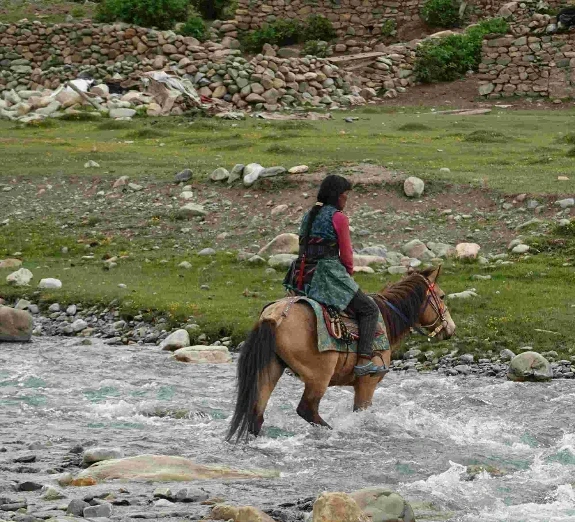
3) Gear Up Smartly
Let’s be honest packing for a trek at the last minute can feel a bit chaotic . From deciding what to wear to figuring out what gear you really need, it’s easy to feel overwhelmed. But you know whats the good news its that Nepal is incredibly well-prepared for trekkers even for spontaneous ones.
Whether you land in Kathmandu or in Pokhara you’ll find entire neighbourhood like Thamel and Lakeside dedicated to trekking supplies. These areas are full of trekking gear shops both national and international brands and many of the gears like down jacket, sleeping bag, trekking poles you can actually rent it .
What Gear you can get in Nepal
- Down Jackets
- Sleeping Bags
- Trekking poles
- Hiking boots
- Base layers and thermals
- Fleece and insulated mid-layers
- Winproof and waterproof jackets
- Backpacks and rain covers
- Gloves, beanies, buff and warm socks
- Headlampa or torched
- Crampons or micrispikes
Packing Tips – What you really need
Since trekking involves walking long hours at high altitude , your backpack should be light , functional and minimal .
Clothes
- Base Layer : Moisture-wicking (avoid cotten)
- Mid-layer: fleece or light down jacket
- Outer Shell : Water proof and windproof jacket
- Trekking pants
- Extras: Hat, gloves , scarf or buff , sunglasses
Essential gear to pack
- Reusable water bottle plus filter
- First Aid Kit (Basic supplies including altitude sickness tablets)
- Snacks
- Sun portection
- Toiletries
- Trekking permits and copies of passports
- Power banks and adapter
- Cash
4)Guides and Porter
When you are planning to trek in Nepal , especially at the last minute, one common question that comes up is : Do I really need a guide or a porter ? Technically speaking , for many trekking routes in Nepal , hiring a guide or porter is not mandatory particularly if you’ve already trekked in Nepal before, are confident with your route and are physically fit. However , if you are a first time visitor , not familiar with the trails or organizing your trek spontaneously then having a guide or porter by your side can make a huge difference.
A guide does far more than just lead the way. They help you navigate complex or poorly marked trails provide the insight into the local cutlureal and tradition assist with accommodation and food arrangements along the way and most importantly, ensure your safety especially when dealing with the altitude sickness , injuries or changing weather conditions. They also help take care of trekking permits and paperwork saving you time and potential confusion.
In certain regions like Manaslu , Upper mustang , Tsum Valley and Dolpi having a guide is not optional its mandatory and is legally required and you must go through a registered agency to obtain the necessary permits.
As for porter they are incredibly helpful if youre carrying a heavy backpack or trekking at higher elevation where physical exertion can quickly become exhausting. A porter typically carries your main gear (up tp 15-20 kg) allowing you to trek with just a small daypack. This not onnky reduces your physical strain but also allows you to enjoy the journey more fully . If you’re not used to trekking at altitude or over multiple days a porter can be truly a game changer . Some trekking agency even offer guide-porter service where one person do the both tasks however he/she carries limited load.
5)Weather and Season
Nepal experiences four distinct trekking seasons, offering an individual experience for anyone on a trek. Autumn (September to November) is generally considered the best season for trekking. It has clear blue skies, stable weather conditions, splendid mountain views after the air has been cleaned by the monsoon, dry trails, and pleasant temperatures-Water conditions at such a time make Everest and Annapurna wonderful trekking venues.
Spring (March to May), however, comes as the second-best season and bestows a whole different charm on the Himalayas. The hills are carpeted with blooms of rhododendrons and wildflowers; the temperatures remain warm during the afternoon and cool off in the night. Being a beautiful time for trekking, lower elevations do have some haze; however, this does not deter nature and photography enthusiasts.
Winter (December to February) can be very cold, mainly at higher altitudes, snow covering many high passes, though it is still a feasible time for lower-altitude treks like Ghorepani Poon Hill, Langtang Valley, or hikes around Kathmandu and Pokhara. Trails are much quieter at this time, while the crisp air sometimes allows for clear visibility—just make sure you take plenty of warm clothes with you.
The monsoon, on the other hand, runs from June until August, bringing rains and slippery trails, also putting out the leeches in full swing, particularly around the lower elevations. While it is not pretty the best of times for trekking at high altitudes for reasons of clouds and landslides, it can be a good time to explore rain-shadow areas like Upper Mustang or Dolpo, which lie beyond the reach of the monsoon rains. These regions stay relatively dry and are accessible even during the wet season.
6)Fitness Level
No need to be an elite athlete for trekking in Nepal, but you will require an average level of fitness. Even the so-called “easy” treks involve daily uphill and downhill walking, and mountain terrain can take your breath away at times — sometimes literally! That said, it is certainly okay if you have not spent months in training. In fact, many people have successfully completed these trekking routes without a strict training plan, especially if they maintain a moderate pace and spend time acclimatizing.
Taking it slow is important; take regular breaks, and above all else, listen to your body. The second biggest challenge is really just the altitude. High altitude can affect anyone regardless of how fit they may be. So symptoms like headaches, tiredness, or dizziness can come at you anytime, and that’s why it is advised to go slow, hydrate well, and definitely not go past your comfort level. Rest and acclimatization days can work wonders in helping you, and these rest days may directly reflect on your performance on the trail.
Should you choose the toughest trek, like Everest Base Camp or Manaslu Circuit, then some walking and hiking will greatly benefit you from a preparatory point of view. For shorter or lower-altitude routes, mental toughness, and pacing often count for more than peak physical fitness. Remember, though — for any trek in Nepal, it is never a race but an experience; so have fun cruising at your own pace as your body will surprise you.
7)Accomodation
Among the most fascinating and unique experiences in Nepal trekking is the Tea House system. Scattered around popular trekking regions such as the Annapurna, Langtang, and Everest areas, these little family run lodges offer warm shelter for weary trekkers. Usually, a tea house provides a very atmospheric room with two single beds, a dry shared bathroom, and thick blankets should it get cold. The meals are freshly cooked, mostly consisting of a few local specialities like dal bhat (rice, lentils, and vegetables), noodles, soups, and sometimes even pancakes or pizza. Plenty of hot tea is served, with everyone usually gathering around the stove or fireplace to warm up, have some fun, and share stories.
You usually don’t have to book accommodation beforehand unless you are trekking very busy times, such as October-November or March-April, or very busy routes, such as Annapurna Base Camp or Everest Base Camp. Most tea houses operate on a first-come, first-served basis, giving the whole trekking experience a little element of spontaneity and adventure. The tea houses don’t really boast fancy facilities, but what one loses in comfort is surely gained in warmth, hospitality, and memory-making experiences. This basic style of living among the tea houses also helps foster greater bonding between the local culture and the mountainous environment.
8)Visa on arrival
Nepal is wonderful to travel to, so why not make your trip hassle-free by obtaining the visa. With most countries eligible for the Visa on Arrival, tourists can land directly at the Tribhuvan International Airport or cross the Indo-Nepal Land Border crossing into Nepal.
Have the Visa application form ready before airport arrival and thus speeding up the procees. This can be done within 15 days of the date of travel. The official application form can be found:
https://nepaliport.immigration.gov.np/onlinevisa-mission/application
After landing at Kathmandu, you’ll enter the Visa on Arrival office. There is no worry if you haven’t filled up the form online; electronic kiosks exist in the airport to guide you smartly through it. Then you move to the cash counters to deposit your fee. Fees are differentiated by length:
- 15 days- $30
- 30 days-$50
- 90 days-$125
The best thing to do is bring along cash dollars or a major currency, although some counters do entertain payments by card. With your fees paid, continue to the Immigration counter with your receipt, passport, and visa form confirmation (if it was an online submission), and your visa will be stamped.
Ensure that your passport is valid for at least six months, and though they may not always require it, carrying a passport-sized photo is always handy, particularly at land borders.
This visa process is designed to be quick and traveler-friendly so you can spend less time at the airport and more time enjoying the mountains, temples, and warm hospitality of Nepal. Whether you’re here for trekking, culture, or adventure, your journey begins with a smooth and simple arrival.
9)Go With a Trusted Trekking Company
In case you are pressed for time and want your trek to go smoothly, trusting an efficient local agency can make all the difference. Nature Explore Trek, launched in 2015, arranges trekking, touring, and peak climbing services across Nepal, Bhutan, and Tibet. Starting off with an entrepreneur with more-than-20-years experience in the field, it’s safe to say that they know of what they speak.
We look after all those little things that arise.-from finding the right guide to arranging permits, and, most importantly, to your security and comfort on the path. The more experienced guides and helpful porters will make your last-minute vacation both memorable and smooth.