

 English
 Dutch
Dutch Japanese
 Hindi
Hindi Italian
 Spanish
 French
 German
 Chinese
 Korean
 Arabic
 Hebrew
 Russian
 Portuguese
 Danish
 Czech
Czech Polish
 Swedish

250 reviews in 


- Best price guaranteed
- Secure & easy online booking
- Flexible booking dates
- Decades of experience


Have Questions?




At a Glance

Destination
Nepal
Trip Difficulty
Easy
Max altitude
5238m
Group Size
1-12 Pax.
Activity
Trekking,hiking & sightseeing
Accommodation
Hotel in Kathmandu, lodge & tea houses during the trek.
Meals
Breakfast,Lunch and Dinner during the trek
Vehicle
Private car/bus/jeep and flightOverview of Lower Dolpo Trek-21 Days
Nature Explore Trek would like to define its Lower Dolpo trek as an astounding journey through a virtually untouched natural paradise of Nepal that still exists without tourism.
The remote region may be very rugged and untamed, but it doesn’t lack the pristine high mountains, wild gorges, high arid passes, authentic culture, and wild nature.
Opened to Western hikers since 1989, the Lower Dolpo trek is one of the most demanding journeys in Nepal, suited to experienced backpackers in the spring and autumn months.
Our Lower Dolpo trek itinerary will take you to western Nepal on the northern slope of the Himalayas, hiding behind the Dhaulagiri massif within the Shey Phoksundo National Park.
During this trek, you will also cross the two high Dolpo passes of Baga La (5214 m) and Numa La (5238 m), which are also the highest points of our Lower Dolpo trek.
Both the Passes are known for the very feasting Himalayan views that include Kanjirowa Himal (6883 m), Kagmara Peak (5978 m), Norbukang (6005 m), Dhaulagiri (8167 m), Churen Himal (7371 m), Norbung Kang (6085 m), Annapurna II (7937 m), and Gurja Peak (7193 m).
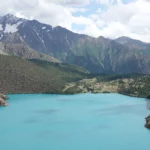
However, the highlight of the 21 days Lower Dolpo trek remains to be the turquoise-blue Phoksundo Lake (3600 m). Known to be the deepest lake of Nepal, the lake lies beneath the majestic mountain range of Kanjirowa. The landscape will remind you of the movie Caravan.
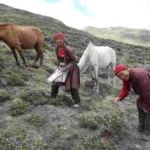
Additionally, the cultural richness will be another attraction of our Lower Dolpo trek. You will meet the Dolpopa (people of Dolpo) who follow the pre-Buddhist Bon religion.
Believing in the divine presence in nature, they often resemble the Tibetan Khampas. They still live a semi-nomadic life and earn their livelihood through ancient trade systems with Tibet.
As for our Lower Dolpo trek itinerary, we aim to include everyone as much as possible, which is why we have adopted a unique approach for our Lower Dolpo trek.
After two domestic flights to Nepalgunj and Juphal, we will follow the trail to Phoksundo Lake first. Once acclimatized to the 3600 m elevation, our trek will gradually lead you to the nearly 5300 m high passes of Bagala and Numa La.
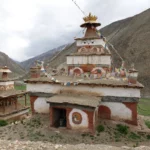
It will allow for a more relaxed hiking experience. On your way to Kathmandu, you will have a recovery day at Dho Tarap, where you can explore the ancient monasteries of Ship Chhok, Ribum, and Kakar Labrang.
Please note that you can engage in the Lower Dolpo trek only through a registered Nepalese travel agency like us, as the region is listed as a Restricted Area.
Also, it has limited facilities necessitating camping and sleeping in tents. Nature Explore Trek will provide you with a team of cooks, guides, porters, and helpers. Additionally, we will arrange the two flights needed to reach Lower Dolpo.
Highlights of Lower Dolpo Trek-21 Days
- An intriguing adventure to the mystical area of Lower Dolpo
- Conquering the two passes of Bagala and Numa La
- A journey through the unique, rugged desert-like mountains with green pasture, an intense blue lak
- A meeting with Dolopopa and their distinct Bon Po customs and culture
- An encounter with the landscape filmed in the Caravan Movie
- Lake Phoksundu and its serene peace
- A reversed and more acclimating approach on the trek
- Support of a professional hiking guide, expedition staff
- Two internal astounding yet very different flights
- Kathmandu and its treasures
- A camping experience in the vast wild natural terrain
Itinerary
1
Day 1 Arrival in Kathmandu, 1350 m, and Hotel Transfer
Today will be your arrival day in Kathmandu International Airport, where our team member will meet you with our private drive and driver. After you are in your hotel, you can rest from your tiring flight.
Then, you can explore the historic corners of the capital. Later in the evening, our guide will discuss our Lower Dolpo trek itinerary with you and will also schedule a city tour planned for the next day.
Max altitude
1350Meals
BreakfastAccommodation
Hotel2
Day 2 Trek preparation day
Today, we will dedicate ourselves to preparing the special permit for our Lower Dolpo trek. It may take us around three hours, so in the meantime, you can explore the scenic sites of the capital, including Pashupatinath, Boudhanath, Swayambhunath, and Kathmandu Durbar Square.
If you need to make any purchases regarding any gear, we will take care of that today
Meals
BreakfastAccommodation
Hotel3
Day 3 Fly to Nepalgunj, alt 150 m., 1 hour
Our Lower Dolpo trek will begin today with a pleasant one-hour long flight to Nepalgunj, a very important town in the flat Terai region of Nepal near India.
Since boarding a Jufal flight will not be possible today, we will stay in the town and explore the Muslim market, small zoo, Bageswori Temple, and other nearby villages.

Duration
1Max altitude
150mMeals
Breakfast, LunchAccommodation
Local Teahouse4
Day 4 Fly to Juphal (2,475 m), 35 minutes, and trek to Dunai, alt 2,140 m, 3-4 hrs
We will have yet another remarkable flight early in the morning today that will transition us from the hot, humid Terai to the cool breeze of Juphal, at Dolpo’s Airport.
Dhaulagiri and Annapurna will greet us on our way, while we will begin our first trekking adventure of our Lower Dolpo trek. A wide trail from Juphal will take us to Kalagauda village first.
Then, we will pass the Thulo Bheri River and pass the settlement of Roop Ghar to reach Dunai, where the military camp will check our permit for the Lower Dolpo trek. We will spend the night in the administrative center of the Dolpo region.
Duration
4-5Max altitude
2,475 mMeals
Breakfast, Lunch, DinnerAccommodation
Local Teahouse5
Day 5 Trek Dunai to Chhepka, alt. 2687 m, 6 hours
Continuing our trek from Dunai, the wild trail beside the Bheri River will guide us west. Here, we will meet a 99 m long steel bridge over the river. Once we emerge from this bridge, the northern trail will direct us to Suligad.
This village will lead us into the SPNP (Shey Phoksundo National Park), where we will have to register for the park permit. Now, the wild park trail will start to follow the enormous currents of the Phoksundo River, guiding us through Kageni, Jutung, and Shangta.
Here, we can see the marvelous junction of the untamed waters of the Phoksundo and the Maiba rivers. After crossing this point over a bridge, we will follow north along the wild jungle trail.
It will now elevate steeply for around 30 minutes till we are Chhepka Village. Enjoy the landscape, waterfall, and the Buddhist traces in the village.
Duration
6Max altitude
2687mMeals
Breakfast, Lunch, DinnerAccommodation
Local Teahouse6
Day 6 Trek to Chunuwar / Amchi Hospital, alt. 3110 m, 6 hours
The trail from Chhepka will run along the beautiful jungle route of the ancient fir and pine forest. The trail will continue on to rise gently for around 4 hours till we reach the stunning Rechi Village (3010 m).
A small, delicate tea house will offer us a moment of rest and warm tea. Chunuwar Village is only two hours away, leading us through Sulligad Dovan and a long bridge spanning over the junction of the Phoksundo and Yulung rivers.
Besides the Chunuwar village, we can visit the Amchi Hospital, the traditional Tibetan herbal hospital serving the community for many years.
Duration
6Max altitude
3110mMeals
Breakfast, Lunch, DinnerAccommodation
Local Teahouse7
Day 7 Trek to Phoksundo Lake, alt 3600 m, 5-6 hours
We will be reaching one of the most beautiful locations on our Lower Dolpo trek. The route after Chunuwar village will start to rise graciously along the more scattered vegetation.
Take a moment to see the 6883 m altitude of the Kanjirowa Peak at a distance. Pressing onward, we will keep on ascending till we can cool ourselves with the calm waters of the Pungmo Khola.
We will take the western route beside the river and cross the bridge, after which we will be resting for a while at Palam. It will prepare us for the steepened trail leading us to an altitude of 3700 m.
Standing atop here for some time will bestow us the gorgeous view of the Phoksundo waterfall, cascading at 167 m. A descent from here will be quite easy as we reach the Ringmo Village.
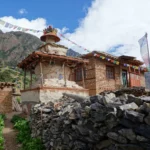
The earthen mud houses and Buddhist chortens are surely a delight. We will proceed to the stunning Phoksundo Lake lying beneath the Kanjiroba Himal mountain range.
We will establish a comfortable tent beside the lake bank for the astounding calmness the lake offers.
Duration
5-6Max altitude
3600mMeals
Breakfast, Lunch, DinnerAccommodation
Local Teahouse8
Day 8 Rest and explore day
An early morning wake-up by the scenery of clear blue lake water, rocks, and most of all the silence in the surrounding is truly moving and evocative.
Nepal’s deepest lake, of Dolpo, is most alluring while the reflection of the towering Himalayan range on its surface is simply breathtaking. Look around the landscape, which may seem familiar from the movie Caravan.
We may also encounter the yak caravans while we make our way towards the small monastery nearby. This monastery is the 9-century-old Tshowa Gompa, the Bon Monastery that houses the impressive statue of Tonpa Shenrab Miwoche, the respected founder of Bon.
Afterward, we may proceed to the Ringmo Village for an overnight stay, or we can stay by the lake for one more night.
Meals
Breakfast, Lunch, DinnerAccommodation
Local Teahouse9
Day 9 Trek to Bagala High camp, alt 4921 m, 5 to 6 hours
After our delightful stay at Lake Phoksundo, we will now set forth today with the aim of reaching the High Camp of one of the highest passes on our Lower Dolpo trek.
From the lake, we will walk steadily through Ringmo Village and pass Yak Kharka (3982 m) near the Maduwa Khola. From here, the steep terrain along the ridge line will lead us to Bagala Phedi and the High Camp of the pass, where we will rest and take enough rest so we can prepare ourselves to face the challenge of the enormous pass tomorrow
Duration
5 to 6 hrsMax altitude
4921 mMeals
Breakfast, Lunch, DinnerAccommodation
Local Teahouse10
Day 10 Trek to Danighar, 4510 m, via Bagala Pass, alt. 5214 m, 6 hours
A very hard day is upon us today as we have to set out to cross the arid mountain pass that towers up to nearly 5300 m altitude on the Lower Dolpo trek trail.
Starting our adventure early in the morning, we will engage in a steep climb from the High Camp that may last up to 2 to 3 hours till we reach the top of the pass summit.
The journey may be arduous and may leave us gasping, but the sights awaiting us are spectacularly gorgeous. Below, Lake Phoksundo glistens while up front, the Kanjirowa Himal (6883 m), Kagmara Peak (5978 m), Norbukang (6005 m), and other glistening mountains lie before us.
Now, we will have to face a long descent from the pass that will guide us to Danighar, our overnight stop, before we prepare to tackle another remarkable pass on the Lower Dolpo trek.
Duration
6 hoursMax altitude
5214 mMeals
Breakfast, Lunch, DinnerAccommodation
Local Teahouse11
Day 11 Trek to Numala Phedi, alt 4800 m, 3 to 4 hours
Today, we have a short day ahead of us, which is more precisely an acclimatization hike that will allow our bodies to adjust well to the higher grounds before we tackle another impressive altitude of nearly 5300 m tomorrow (one more).
Our ascent today from Danighar will be a gentle one, when we will gain only around 300 meters as we calmly climb through the lovely alpine meadows to arrive at Numala Phedi, situated right at the base of the towering Numala Pass. From this point, we can already see the stunning sights of Annapurna and Dhaulagiri
Duration
3 to 4 hoursMax altitude
4800 mMeals
Breakfast, Lunch, DinnerAccommodation
Local Teahouse12
Day 12 Trek to Tokyu Gaon, 4200 m, via Numa La Pass, alt. 5238 m, 7 to 8 hours
Beginning our adventure very early in the morning, we will set out to ascend the terrain that resembles the Grand Canyon. Along our path, we may spot a few Bharals.
Our climb will take us along the snow-covered slopes of Numa La. By the end of the morning, we will reach the summit of Numa La, a wide saddle-like top that is decorated with chortens and prayer flags.
Standing from this height, we can see the gray and reddish-brown mountains of Inner Dolpo and Tibet. And, as for the peaks, Dhaulagiri, Churen Himal, Norbung Kang, Annapurna II, Gurja Peak, along with the Kanjirowa range, will be in our view.
We will now descend from the pass gradually to reach the Tokyu Gaon situated at the foot of the Numa La pass in the Tarap Valley for our overnight sleep.
Duration
7-8 hrsMax altitude
5238 mMeals
Breakfast, Lunch, DinnerAccommodation
Local Teahouse13
Day 13 Trek to Dho Tarap, alt.3940 m, 2 to 3 hours
From Tokyu Gaon, we will begin our descent along the Tarap Khola to reach Dho Tarap in about 2 to 3 hours. During this enchanting journey, we will encounter charming villages, sheep, and yaks along with their local herders.
We will also come across the respected Crystal Mountain School, funded by the French NGO. Dho Tarap is only half an hour farther from this school, which is a very fascinating village and is home to a diverse mix of tribes, including Tibetan and the Magar hill tribes.
Later in the day, we can go on to the Ribum Gompa, a site that has stood for more than 500 years.
Duration
2-3 hrsMax altitude
3940 mMeals
Breakfast, Lunch, DinnerAccommodation
Local Teahouse14
Day 14 Rest and explore day
Today is the day of recovery from our extensive and exhausting Lower Dolpo trek trail. We will immerse ourselves in the surreal world of the Dho Tarap and tour around the Ship Chhok gompa and Kakar Labrang Monastery located above the Dho Village.
Meals
Breakfast, Lunch, DinnerAccommodation
Local Teahouse15
Day 15 Trek to Ghyamagar, alt. 3759 m, 6 to 7 hours
A long descending journey awaits us today on our Lower Dolpo trek. After Dho Tarap, our trail will keep going down following the Tarap Chu River waters.
As we reach Karma Kharka, this river will meet with the Lang River, guiding us to the Langa Village, where we will stop for a moment near a beautiful waterfall. Now, we will descend through Sisaul and turn south to reach Kesila Village.
Soon enough, we will find ourselves resting for the evening at Ghymagar.
Duration
6-7 hrsMax altitude
3759 mMeals
Breakfast, Lunch, DinnerAccommodation
Local Teahouse16
Day 16 Trek to Chhyugar, alt. 3440 m, 6 hours
Today also we will have a regular stage of descending along the Tarap Chu River, which we will cross multiple times using bridges and even a ladder.
The area is adorned with juniper and rhododendron vegetation. Our journey will soon take us to Toltol, which means a Hole or Cave in Nepali. We can certainly see the holes in the mountains.
We will continue descending for a while, spotting blue Sheep till we reach Chhyugar, our overnight destination for tonight.
Duration
6 hrsMax altitude
3440 mMeals
Breakfast, Lunch, DinnerAccommodation
Local Teahouse17
Day 17 Trek to Tarakot, alt. 2540 m, 6 hours
We will now advance down to Nawarpani and then ascend gradually to Lamachaur, from which we will hike through the beautiful meadow of Laina Village.
Now, a descending trail will walk us through Chendul, where we will meet a metal bridge over the Tarap River. Now, the cool woodland will guide us through Lashicap.
Again, a 120 m long steel bridge will be in front of us that this time spans over the Thulo Bheri River, a river that accompanies us at the beginning of our Lower Dolpo trek.
The path now predominantly leads downstream, directing us to Tarakot, where Khang Tokal Peak shines brightly in front of us.
Duration
6 hrsMax altitude
2540 mMeals
Breakfast, Lunch, DinnerAccommodation
Local Teahouse18
Day 18 Trek to Juphal, alt.2500 m, 5 hours
From Tarakot, we will proceed towards the bank of the Thulo Bheri River. Soon enough, the massive Bheri River will welcome us, directing us to Lawan Village.
From this point, we will climb slowly to Byas Gadi and follow the west trail that will lead us to Dunai via Lochakhola Gaon. From Dunai, a downhill terrain will follow the terraced farms of Roop Ghar and Kala Gauda before taking us to Juphal.
Duration
5 hrsMax altitude
2500 mMeals
Breakfast, Lunch, DinnerAccommodation
Local Teahouse19
Day 19 Fly to Nepalgunj, alt. 150 m, 35 minutes
Our Lower Dolpo trek is now coming to its beautiful conclusion. Early morning, a short but remarkable flight will take us to Nepalgunj, where we will have enough time to see all the colorful Indian influenced markets and temples.
Duration
35minMax altitude
150mMeals
Breakfast, Lunch, DinnerAccommodation
Local Teahouse20
Day 20 Fly to Kathmandu. alt.1350 m., 1 hour
Early in the morning, we will fly back to Kathmandu via the spectacular airport of Nepalgunj. Once in Kathmandu Airport, our team will be picking you up to take you back to your hotel. Reminisce about your unique Lower Dolpo trek once you are well rested.
Duration
1 hrsMax altitude
1300mMeals
BreakfastAccommodation
Local Teahouse21
Day 21 Departure
You have reached the final day of our extraordinary Lower Dolpo trek. We will now say our goodbyes and take you to TIA in a comfortable transfer.
Meals
BreakfastAccommodation
Excluded
Is this offered itinerary not suitable for you?
Inclusion/Exclusion
Trip Information
Why is the Lower Dolpo Trek Restricted?
The Lower Dolpo trek is restricted because of its delicate location very near to Tibet, the need to protect the vulnerable ecosystem of Shey Phoksundo National Park, and to preserve the unique Bon Po tradition of the local community from mass tourism.
These restrictions are in place through the necessity of obtaining a special permit, which is quite costly, thus controlling the number of visitors to Lower Dolpo.
Therefore, the Lower Dolpo trek must be booked through a licensed travel agency like ours, as individual treks are not permitted in Lower Dolpo. Permits will be issued to the travel agency, and you are required to trek with a licensed local guide, accompanied by at least two people.
Best Season for the Lower Dolpo Trek
The best times for the Lower Dolpo trek are from early March to early May (Spring) and from late August to October (autumn) when the scenery of the region is crystal clear, wildflowers bloom, and the invigorating Himalayan air refreshes the spirit.
Surprisingly, the Lower Dolpo trek is also a monsoon trek from June to mid-August in Nepal due to the region’s minimal precipitation. This is also when the local communities are most engaged in their fields, villages, and monasteries.
However, the flights to Nepalgunj and Juphal are prone to delays and cancellations. In winter (November to February), the temperature in Lower Dolpo often dips down to -15 °C.
The local communities shift to lower areas and some even migrate to India, thus closing all the lodges, making the trek almost impossible.
Difficulty Grade of the 21 Days Lower Dolpo Trek
The 21 days Lower Dolpo trek offers a Category IV nontechnical trekking experience in one of Nepal’s most isolated and rugged areas that reaches an elevation close to 5300 m.
The trek involves crossing of the two vast arid passes and covers around 200 km in length. The landscape is also diverse, from deep forests, gorges, lush grasslands, to red canyons like terrain.
The air is also dry, and temperatures can be harsh during the day and chillier at night. Walking stages each day also generally range from 5 to 7 hours.
Due to the limited facilities, the Lower Dolpo trek also requires camping under the open sky. However, our Lower Dolpo trek itinerary is both reasonable and considerate, which ensures you acclimatize effectively before ascending over 5000 m.
Still, there is a moderate probability of altitude sickness in the Lower Dolpo trek. Therefore, the Lower Dolpo trek is a demanding adventure suitable for experienced backpackers with strong physical endurance and good health.
We suggest our new backpackers not to attempt the Lower Dolpo trek as their first high-altitude adventure in Nepal.
Altitude Sickness/Acute Mountain Sickness/AMS
Our Lower Dolpo trek is undeniably a high-altitude mountain journey taking place in the harsh and dry area of Nepal. So there is a chance of the AMS during the trek, but not everyone will face the AMS; however, many might.
Our Lower Dolpo trek itinerary intends to minimize the risk of altitude sickness for healthy trekkers who follow our acclimatization plan. We will climb higher during the day and rest at lower elevations at night.
Although we will ascend slowly, symptoms can still occur. Mild headaches and slight appetite loss are quite common. At this point, drinking plenty of water and informing our guide is super important.
If the symptoms do not go away in a few hours, it is best for you to progress. You may need to take a rest day or even descend 200-400 meters.
We suggest you take Diamox only if you experience severe altitude sickness symptoms, which include severe headaches, dizziness, loss of coordination, shortness of breath, persistent vomiting, and loss of consciousness. Our guides are well-trained to know these symptoms and know the right steps to take.
Preparation and Fitness
The 21 days Lower Dolpo treks need an exceptional level of endurance and excellent health, as it involves daily treks of six to seven hours and several high pass crossings.
Thus, it is important that you initiate your physical training at least two months ahead of your selected departure date. At first, you can engage in a simple routine such as walking, jogging, swimming, running, and cycling. For the high pass crossings, stair climbing will be the most effective exercise.
Then, you can participate in actual hikes in the mountains to acclimatize to the high altitude just before the trek.
The Lower Dolpo trek will also be testing your mental strength, so you should ready yourself for the minimal living conditions, abrupt weather changes, forceful winds, and colder nights.
Alternate route to the Lower Dolpo Trek and possible extension of the Itinerary
Another option for the Lower Dolpo trek is to choose to face the two passes at the beginning and then reach Shey Phoskundo Lake later on. This approach is completely opposite to our Lower Dolpo trek itinerary and will be more demanding due to the concern of altitude and AMS.
After flying to Nepalgunj and Juphal, you can follow the path through Tarakot to Dho Tarap. You will then overcome the imposing elevations of the Numi La and Bagala Passes, after which you will arrive at Lake Phoksundo and then return to Kathmandu.
If you wish to extend your Lower Dolpo trek, you can trek further to Upper Dolpo and explore its Shey Gompa and Yangjer Gumba. You can also connect your route to Jomsom in Mustang after visiting Shey Gompa and trek further up to Upper Mustang.
Accommodation, Food, and Transportation
Nature Explore Trek will offer you a medium-range three-star hotel accommodation in Kathmandu and Nepalgunj in its double bedroom with morning breakfast every day.
On the trek, you will have a night shelter in a simple tea house or at the home of locals. The amenities will be very modest with just a bed, a few basic furniture, and no heating. Your own sleeping bag will be handy for nights.
When camping, a double-person tent provided by our company will offer you warm nights. You will also have individual tents set up for eating, cooking, and a latrine.
On the trek and camping, breakfast, lunch, and dinner will be offered at tea houses and tents. Beverages are, however, not part of our Lower Dolpo trek package.
Tibetan cuisine will be the main course for you on the Lower Dolpo trek trail, including bread, buttered salted tea, porridge, dal vat, tsampa, and sometimes noodles.
As for your traveling, our own private vehicle will be used for all your overland transfers to the airport and hotel travels and also for looking around Kathmandu.
Additionally, we will also organize a Kathmandu-Nepalgunj-Juphal and Juphal-Nepalgunj-Kathmandu flight for you.
Cellular Communication, Charging, and Internet/WiFi
There are mainly two carriers in Nepal that will offer you cellular communication in all of Nepal, which are the NCELL and Namaste/NTC networks.
For the Lower Dolpo trek, we recommend that you get the NTC SIM Card for better reception. However, keep in mind that reception will be limited up to Tarakot.
The internet signal of 3G or 2G will also be quite weak after these villages. Therefore, our team will provide you with satellite phones when an urgent conversation is needed at an additional price.
For charging, you can utilize the solar chargers or energy supplied by the solar panels at the tea houses, for which you will have to pay a modest extra sum on site.
No reliable WiFi will be accessible in Lower Dolpo, which is a benefit as our Lower Dolpo trek is about connecting with nature and culture, so that you can detox yourself from the digital noise.
Travel Insurance
Please understand that you must provide us with the reference number and copies of your travel insurance for our Lower Dolpo trek. Then only, we can obtain the special permit required for trekking in the restricted area of Lower Dolpo.
This requirement for travel insurance has been mandated by the government because of the lack of road access to Lower Dolpo. Here, helicopters are the only means of transport for emergency evacuations should any misfortune occur in the form of illness, AMS, accidents, or injuries.
Therefore, add some extra coverage to your standard travel insurance that should include coverage for helicopter search and rescue operations up to an altitude of 5300 meters in the mountains and passes.
Additionally, do not forget to include coverage for medical expenses, accidents, trip and flight postponements, cancellations, extra stays, luggage loss or theft, and third-party liabilities.
Permits for the Lower Dolpo Trek
The Lower Dolpo trek needs two mandatory permits, which are as follows:
- The Lower Dolpo Restricted Area Permit: USD 20 per person per week
- The Shey Phoksundo National Park Permit: USD 30 per person
The Nature Explore Trek team will organize the acquisition of these permits from the Immigration Department and Nepal Tourism Board on your behalf and will also be covering the cost
Lower Dolpo Trek-21 Days FAQ'S
Q
What exactly is the Lower Dolpo trek?
The Lower Dolpo trek is a very special remote trekking journey in Nepal that will lead you to the Lower Dolpo region of Nepal, known particularly for its wild nature, one-of-a-kind Bon Po tradition, outstanding flora and fauna of Shey Phoksundo Lake and national park, along with the extraordinary mountain views of western Nepal.
Q
What is the best month for the Lower Dolpo trek?
April and October are excellent months for the 21 days Lower Dolpo trek.
Q
How challenging is the Lower Dolpo trek itinerary?
It is a category IV nontechnical hiking journey of Nepal suitable only for the experienced high-altitude trekkers.
Q
What is the highest altitude of the Lower Dolpo trek?
The highest point of the Lower Dolpo trek is the Numa La Pass, which stands at an elevation of 5238 m.
Q
What is the starting point of the Lower Dolpo trek?
The small town of Juphal is the starting point of the Lower Dolpo trek.
Q
How will I reach the starting location of the Lower Dolpo trek?
You will first fly to Nepalgunj from Kathmandu and then to Juphal airport
Q
What type of accommodation is available during the Lower Dolpo trek?
Three-star hotel in Kathmandu and Nepalgunj, simple tea houses and tent camps on the trail will be your accommodations during the 21 days Lower Dolpo trek.
Q
What should I pack to get comfortable on your Lower Dolpo trek itinerary?
Hiking gear, warm layered clothing, sleeping bag, first aid box, and personal items
Q
What about drinking water on the Lower Dolpo trek trail?
We will be providing you with treated drinking water on the trail. Additionally, you can also carry water purification tablets or a purifier
Q
What type of meals should I expect during the Lower Dolpo trek?
Freshly prepared organic meals with Dal vat and Tibetan cuisine will be available on the trek.
Q
Can I undertake the Lower Dolpo trek on my own?
No, individual treks in any remote parts of Nepal are now not allowed.
Q
What wildlife may I spot during the Lower Dolpo trek?
Blue sheep, snow leopard, musk deer, hyenas, jackals, various birds, and butterflies are some of the wildlife you may spot on the Lower Dolpo trek.
Q
Why did you not take the common route for the Lower Dolpo trek itinerary?
Because our itinerary offers the best opportunity for timely acclimatization on the trek.
Q
What type of cultural experience will I have on the Lower Dolpo trek?
You will meet the pre-Buddhist Bon Pos and Chaiba cultures during our Lower Dolpo trek.
Q
How will you organize the emergency helicopter evacuation process if needed during the Lower Dolpo trek?
Our guide will immediately contact us, and we will organize the heli rescue to your distressed location. We will also contact your insurer, verify your reference number, and inform them about the immediate rescue. Please keep the heli service receipt safe, which you have to show to your insurer to claim the refund.
Q
Is trekking to Lower Dolpo like going to Tibet?
From the landscape point of view, yes, but not from a facility-wise point of view. Also, the nature in the Lower Dolpo is more rugged, untouched, and the culture is also Bon Po, different from that in Tibet.
Q
Do you allow last-minute booking for the Lower Dolpo trek?
Since we have to arrange for the special Lower Dolpo permit, we request all our guests to book our Lower Dolpo trek a month or two ahead of their chosen departure date. However, it is not possible, so please contact us as soon as you can so we can fit you into the group for the Lower Dolpo trek.
Q
Will there be any extra charges for the last-minute booking of the Lower Dolpo trek?
There will not be any extra charging, but 100% immediate payment is a must.

Got a question about Lower Dolpo Trek-21 Days?
Reach out to our travel experts.Customer Reviews
250 Excellence Reviews
- Best price guaranteed
- Secure & easy online booking
- Flexible booking dates
- Decades of experience