
 English
 Dutch
Dutch Japanese
 Hindi
Hindi Italian
 Spanish
 French
 German
 Chinese
 Korean
 Arabic
 Hebrew
 Russian
 Portuguese
 Danish
 Czech
Czech Polish
 Swedish

250 reviews in 


19
Days
Days
- Best price guaranteed
- Secure & easy online booking
- Flexible booking dates
- Decades of experience


Have Questions?




At a Glance

Duration
19 days
Destination
Nepal, Tibet, Bhutan
Trip Difficulty
Moderate
Max altitude
5,220m (17,126 ft) at Gyatso La Pass
Group Size
2-25 Pax.
Activity
Tour/Seightseeing/Hiking
Accommodation
Hotel/Guesthouse / Teahouse
Meals
Breakfast,Lunch and Dinner during the tour
Vehicle
Private car/bus/jeep and flightOverview of Nepal Bhutan Tibet Tour
Nepal Bhutan Tibet Tour is an excellent trip in the three most interesting areas of the Himalayas. This 19-day adventure is a mix of spectacular landscapes, cultural enrichment and memorable experiences with the locals. Starting in Kathmandu, the capital city of Nepal, at 1,400 m (4,593 ft) and going up to the high plateaus in Tibet and the green valleys in Bhutan, this tour is an ideal harmony of nature and religious experience.
You will be visiting ancient temples, palaces and the UNESCO World Heritage sites located in Kathmandu Valley in Nepal. The tour will involve picturesque visits and small treks, like taking a stroll through the trees of Nagarkot at 2,175 m (7,136 ft) to appreciate the Himalayan panoramas.
Going into Tibet, you arrive at Lhasa at 3,656 m (11,998 ft) and go further to stand in the base of Mount Everest at 5,200 m (17,060 ft) and gaze up at the north face of this great mountain, a sight beyond words. This part of the tour will be a mixture of overland travel and tours of cultural sites such as monasteries, prayer halls and Tibetan settlements.
The peaceful contrast to the green valleys and the traditional dzongs is provided by Bhutan. You will go to Thimphu at 2,334 m (7,657 ft), Punakha at 1,200 m (3,937 ft), and hike to the legendary Tiger Nest Monastery at 3,120 m (10,236 ft). The Himalayan adventure is enhanced by distinctive festivals, architecture and friendliness of the people in Bhutan, which includes a rich cultural experience.
The Nepal Bhutan Tibet Tour is designed to fit the needs of a traveller who wants to explore and yet have comfort, and the trip is balanced with sightseeing, a little hiking, and an overland journey. It is a perfect trip that allows one to enjoy the best mountains in the world, ancient cultures, and traditions at the same time in a smooth trip. Each day will be well organised to provide security, familiarity with the high altitudes and the opportunity to make life-long memories.
Highlights of Nepal Bhutan Tibet Tour
- Experience the magic of the Himalaya by witnessing the first light touching Mount Everest (5,200 m / 17,060 ft).
- Explore the traditional Potala Palace and Jokhang Temple and experience the Tibetan culture at 3,656m (11,998ft).
- Explore the ancient temples, palaces and bustling local bazaars in the historic capital of Nepal at 1,400 m (4,593 ft).
- Stop at the 3100 m (10,170 ft) mountain pass to view 108 stupas and panoramic views of the Himalayan mountains in Bhutan.
- Hike to the monastery at 3,120 m (10,236 ft) on the cliff to get an adventure of spiritual and scenic experience in Paro Valley.
- Explore the architectural wonder of Bhutan and go to Chimi Lhakhang, which is surrounded by the green rice fields at an altitude of 1,200 m (3,937 ft).
- Experience festivals, local food and people in Nepal, Tibet and Bhutan.
Itinerary
01
Day 01 Arrive in Kathmandu and Transfer to Your Hotel – 1,300m (4,265 ft)
You arrive in Nepal, the gateway of your wonderful Nepal Bhutan Tibet Tour.
Upon arrival at the Tribhuvan International Airport, you are accompanied by our representative to the hotel in Kathmandu. The city is 1,300m (4,265 ft) above sea level.
As you drive through the bustling streets, you will observe a combination of old temples, colourful shops and local life. The valley is encircled by green hills, and on a clear day, Himalayan peaks in the distance can be seen.
Once you have checked into the hotel, you can have some time to rest and unwind after travelling. If you are not tired, you can venture around Thamel, which is a place of cafes, handicraft stores and trekking stores. It is an excellent place to experience the first touch of Nepal.
In the evening, you will have a special welcome dinner in a traditional Nepali restaurant. You are going to experience local food and see a cultural dance I possible.
It is also an opportunity to meet your guide and other travellers to proceed with your Nepal Bhutan Tibet Tour adventure
Max altitude
1,300m (4,265 ft)Meals
BreakfastAccommodation
Hotel02
Day 02 Kathmandu Sightseeing – Durbar Square, Pashupatinath & Boudhanath
It’s a day dedicated to experiencing Nepal’s rich culture during your Nepal Bhutan Tibet Tour.
Following breakfast, you visit UNESCO World Heritage Sites in Kathmandu. The first one is Kathmandu Durbar Square, formerly the royal palace.
There are old temples, courts and statues that demonstrate the rich history of Nepal. Your guide tells you about the history of Nepal and the importance of the Living Goddess Kumari.
Then you go to Pashupatinath Temple, which is the most respected Hindu Temple in Nepal. This is a sacred place that is situated along the river Bagmati. You can get a view of the cremation ghats at a polite distance here.
It is a significant site for learning the local beliefs.
You then visit the Boudhanath Stupa, which is one of the largest stupas of Buddhism in the world.
Monks and pilgrims make circles around the white dome, turning the prayer wheels and chanting. You can have a relaxing time at a cafe on the roof and have a tranquil environment. Sightseeing is followed by a rest in the hotel.
Max altitude
Highest Altitude: 1,300m (4,265 ft)Meals
BreakfastAccommodation
Hotel03
Day 03 Patan and Kathmandu Tour – Patan Durbar, Swayambhunath & Narayanhiti Museum
This day focuses on further cultural attractions of Kathmandu. Once you have breakfast, you move to Patan, also known as Lalitpur.
The Patan Durbar Square is renowned for its beautiful temples and fine Newari architecture. You see the Krishna Temple, the royal palace and numerous stone carvings which depict ancient expertise.
Then you go to Swayambhu Stupa, which is situated on a hill above Kathmandu. You ascend steps made of stones to get to the stupa, and you can see expansive valley views from here.
The spinning wheels and prayer flags make the place serene.
During the afternoon, you visit the Narayanhiti Palace Museum. This is the last palace of the royal family of Nepal, which displays the modern history of Nepal and the life of the monarch.
You pass big halls and rooms that were being occupied by the royal family. A full day after, you are back in your Kathmandu hotel to rest.
Max altitude
1,400m (4,593 ft)Meals
BreakfastAccommodation
Hotel04
Day 04 Bhaktapur Sightseeing and Sunset at Nagarkot
Today, you depart Kathmandu and head to Nagarkot. You proceed after breakfast to an old city called Bhaktapur, which boasts a rich culture. You visit Bhaktapur Durbar Square, a place full of temples, palaces and courtyards.
You can see the 55-Window Palace and the tall Nyatapola Temple. Potters and woodcarvers still work in the traditional way here.
Then, you drive up to Nagarkot on the hills, 2,175m (7,136 ft). The highway cuts across villages and agricultural land with magnificent views. You can walk to a vantage point in the evening to watch the sunset over the Kathmandu valley.
The serene location is ideal after sightseeing. You spend the night in Nagarkot, in the wilderness and pure mountain aroma.
Max altitude
2,175m (7,136 ft)Meals
BreakfastAccommodation
Hotel05
Day 05 Nagarkot to Chisapani Trek – 2,300m (7,546 ft)
Today is the trekking day during your tour. In Nagarkot, 2,175m (7,136 ft), you rise early in the morning and watch the sunrise on the Himalayas.
You start the trek after having breakfast towards Chisapani. The track runs through woodland, little villages and ridge tracks with magnificent mountain scenery.
You go to Shivapuri National Park, where you would encounter birds and local wildlife.
The hike requires about 7-8 hours at a slow pace. You go through terraced lands and meet people on the way. Your guide guarantees frequent rest and photo stops. It is a nice trek because of the fresh air and the tranquillity of nature.
At the end of the afternoon, you arrive at Chisapani at 2,300m (7,546 ft), a small village in the hills. You pass the night in a lodge, have dinner, and sleep after a gratifying day of walking.
Max altitude
2,300m (7,546 ft)Meals
Breakfast, Lunch, DinnerAccommodation
Local Teahouse06
Day 06 Chisapani to Sundarijal Hike – Return to Kathmandu
On the final day of your trek, you will end it with a nice descent. You are up in Chisapani in the morning, and have breakfast in the pure mountain air.
The path to Sundarijal passes by Shivapuri National Park, an oak and rhododendron forest.
You might hear birds and little villages that you pass by. The trail is primarily downward, and the hike is not as challenging as yesterday.
Local people walk with baskets and animals, and that is a feeling of the countryside life.
About 4-5 hours later, you reach Sundarijal, which is a place of waterfalls and streams. You take a vehicle and drive back to Kathmandu at 1,300m (4,265 ft).
You can either rest or sightsee the city after checking into the hotel. It is a relaxing hiking day that will be a good ending to your Nepal trekking adventure as you proceed with your Nepal Bhutan Tibet Tour.
Max altitude
2,300m (7,546 ft)Meals
Breakfast, Lunch, DinnerAccommodation
Hotel07
Day 07 Fly to Lhasa, Tibet – 3,656m (11,995 ft)
This is the start of your Tibet section of the tour. In the morning, you drive to Tribhuvan International Airport and take a scenic flight to Lhasa.
Through the window, you can observe Everest and most of the Himalayan mountains during the 1.5-hour ride, if the weather is nice and clear. It is among the most scenic flights in the world.
You arrive at Gonggar Airport and meet your Tibetan guide. It takes one hour of driving on the Yarlung Tsangpo River to reach the city of Lhasa at 3,656m (11,995 ft). The remaining day is to be spent acclimatising due to the high elevation.
You need to walk, drink water and be at ease. You can go on a quick stroll around the area, close to the hotel, and might even notice the Potala Palace in the distance. During the night, you can have a welcome dinner and get a lot of sleep before sightseeing in Tibet.
Max altitude
3,656m (11,995 ft)Meals
Breakfast, Lunch, DinnerAccommodation
Hotel08
Day 08 Lhasa City Tour – Potala Palace, Jokhang, Barkhor & Sera
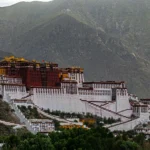
We explore Lhasa today, the spiritual heart of Tibet. A visit to the renowned Potala Palace follows breakfast at an altitude of 3,656m (11,995 ft). The Dalai Lamas lived in this great fortress. It is located up on the hill, and because of the height, you can get spectacular views of Lhasa city.
Then there comes the Jokhang Temple, which is the most sacred temple in Tibet. Pilgrims go around Barkhor Street, rotating prayer wheels and chanting prayers.
You may stroll in the bustling market where Tibetan handicrafts and prayer articles can be found.
Afternoon, drive to Sera Monastery. Here, you visit serene courtyards and monks talk about the Buddhist philosophy and tradition.
This day is a worthwhile cultural day; you go back to your hotel to sleep and acclimatise to the altitude
Max altitude
3,700m (12,139 ft)Meals
Breakfast, Lunch, DinnerAccommodation
Hotel09
Day 09 Lhasa to Shigatse Drive – 3,845m (12,615 ft)
Today, your overland journey in Tibet begins as you leave Lhasa and get on the highway that goes to Shigatse after breakfast. The highway cuts across mountainous areas, lakes and expansive plateau areas.
Prayer flag flutters at scenic points, and you pull up to take pictures of the snow-capped mountains.
It takes approximately five hours to travel 270 km to Shigatse at 3,845m (12,615 ft). It is the second biggest city in Tibet.
You go to Tashilhunpo Monastery, where there are statues and prayer halls of Lord Buddha and monks inside, doing rituals. The ambience in the monastery is calm and religious. The evening you enter your hotel, after a long but beautiful ride and sleep.
Max altitude
3,845m (12,615 ft)Meals
Breakfast, Lunch, DinnerAccommodation
Hotel10
Day 10 Shigatse to Everest Base Camp (Tibet) – 5,200m (17,060 ft)
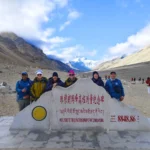
This is one of the key attractions of the Nepal Bhutan Tour package. You pass over the high altitude, dramatic landscapes after breakfast towards Mount Everest from Tibet side. The road ascends to Gyatso La Pass 5,220m (17,126 ft), and upon reaching there, you can see Everest and other Himalayan peaks.
You go on to Rongbuk Monastery at 4,980m (16,339 ft), the highest monastery on Earth. Here, the north side of Everest is very nearby.
You are at the Everest Base Camp on the Tibet side at 5, 200m (17, 060 ft). Walking, taking photographs, and watching the magnificent view of the tallest mountain in the world is also possible. It is chilly and windy, but it is a journey to remember. You remain in a basic guesthouse in base camp.
Duration
6-7 hrsMax altitude
5,220m (17,126 ft)Meals
Breakfast, Lunch, DinnerAccommodation
Local Teahouse11
Day 11 Sunrise at Everest Base Camp – Drive to Gyirong Town
Wake up early to witness a breathtaking sunrise at Everest Base Camp. As the first rays of sunlight touch the summit of Mount Everest, the snow glows with shades of pink and gold, creating a truly magical moment during your tour.
The good drive back towards Nepal after breakfast follows the high road again, with its stops in Tingri and other Tibetan villages.
Mountain passes are adorned with prayer flags and have panoramic views of the Himalayas.
As you move towards the Nepal border, the landscape transforms gradually and turns less cold and alpine to the greener valleys. In late afternoon, you enter Gyirong Town at 2,700m (8,858 ft), a beautiful town enclosed by forested hills.
Go into a guesthouse and sleep after a day of mountain sightseeing and extensive driving.
Max altitude
5,220m (17,126 ft)Meals
Breakfast, Lunch, DinnerAccommodation
Hotel12
Day 12 Cross Border into Nepal – Drive to Kathmandu
Today marks your departure from Tibet and your heading back to Nepal after a rich cultural and natural experience. After breakfast at Gyirong, cross the border at Rasuwagadhi. Your guide assists in the Chinese departure protocol, and upon crossing the bridge, you enter Nepal.
Starting at the border, continue on a picturesque journey through the Himalayan foothills with rivers, terraced farms and small towns to Kathmandu.
The highway goes through both valleys and hills, which give a view of the local countryside. Take lunch and short breaks at intervals on the 130km road.
In the evening, you reach Kathmandu at 1,300m (4,265 ft). Arrive and spend a good night at your hotel after you come to the end of the Tibet part of your trip. The night is at leisure to explore or rest.
Duration
6-7 hrsMax altitude
1,300m (4,265 ft)Meals
Breakfast, Lunch, DinnerAccommodation
Hotel13
Day 13 Rest Day in Kathmandu – Bhutan Trip Preparation
It is a free day in Kathmandu after several days of travelling on your Nepal Bhutan Tibet Tour package. Today you prepare to go to Bhutan.
Wake up at your own time and have breakfast at your hotel. You can take the day to rest, refill your bags, do laundry or even go on small walks around the city.
You can also visit the local markets to shop for souvenirs or see the nearby attractions in your own free time. In the meantime, your Bhutan arrangements are made by our team, which includes flight tickets and visa clearance.
Your guide then tells you about the Bhutan part of the tour in the evening, including the flight arrangements, cultural protocols, and expectations.
Get yourself to bed and sleep well at night, because tomorrow you’re going to the Land of the Thunder Dragon.
Max altitude
1,300 m (4,265 ft)Meals
BreakfastAccommodation
Hotel14
Day 14 Fly to Paro, Bhutan – Drive to Thimphu (2,334m / 7,661 ft)
Start the Bhutan part of your tour with a morning flight from Kathmandu to Paro, which takes about one hour. Have the most amazing Himalayan scenery on the plane journey, with mountains such as Everest and Kanchenjunga on a clear day.
On reaching the Paro International Airport, you are greeted by your Bhutanese guide and driver. It takes 55 km (about 1.5 hours) to reach Thimphu, the capital, which is surrounded by a beautiful river, pine forests and villages.
Along the route, you can visit Tachog Lhakhang and the iron chain bridge.
In the afternoon, you arrive in Thimphu at 2,334m (7,661 ft) and check into your hotel and make an optional visit to the city centre market.
You can take an optional walk or observe people playing archery, the national sport in Bhutan. Have dinner in your hotel and go to bed.
Duration
1 hrs flight and 2-3 hrs driveMax altitude
2,334 m (7,661 ft)Meals
Breakfast, Lunch, DinnerAccommodation
Hotel15
Day 15 Thimphu Sightseeing – Cultural Highlights of the Capital
On this day, you explore Thimphu. You go to the National Memorial Chorten, a white stupa where people pray and turn prayer wheels. Then take a ride to the Buddha Dordenma, which is a giant golden statue of Buddha that looks down on the valley at an elevation of 2,334m (7,661 ft).
This is the hilltop where one enjoys panoramic views of Thimphu.
Go back to the city to the Folk Heritage Museum, which displays the traditional Bhutanese rural life and culture of farming. Next, visit the fortress-monastery of Throngkow in the city centre, called the Tashichho Dzong.
In the afternoon, visit the offices of the King and the main monks. Go around its courtyards and gardens and get to know its history.
On a pleasant note, conclude the day with a very delicious dinner in Thimphu, reminiscing about the culture, heritage and spirituality that you have learned.
Duration
3-4 hrsMax altitude
2,334 m (7,661 ft)Meals
Breakfast, Lunch, DinnerAccommodation
Hotel16
Day 16 Thimphu to Punakha – Via Dochula Pass
Your tour continues after breakfast with a drive to Punakha. The scenic highway ascends to pine forests to the Dochula Pass, which is 3,100m (10,171 ft). Stop the drive to look at the 108 memorial chortens and at the Himalayan mountains above the clouds if the day is clear.
Drive down the Punakha Valley with its warm and fertile soil. Along the route, there is a brief stroll through rice fields to the fertility temple (Chimi Lhakhang) constructed by Lama Drukpa Kunley.
Reach Punakha at 1200m (3,937 ft) and see Punakha Dzong, which is an architectural marvel at the confluence of two rivers. See its luxurious prayer halls and courtyards. Spend the night in your hotel, and have a good view of the valley.
Duration
5-6 hrsMax altitude
3,100 m (10,171 ft)Meals
Breakfast, Lunch, DinnerAccommodation
Hotel17
Day 17 Punakha to Paro – Return via Thimphu
In the morning, spend the time driving between Punakha and Paro, going over Dochula Pass at 3,100m (10,171 ft). In the afternoon, visit the National Museum (Ta Dzong) of Paro, which was once a watchtower and displays artefacts, Bhutanese art, and history.
Next visit Rinpung Dzong (Paro Dzong), where the traditional wooden bridge leads into the courtyard of the fortress-monastery and one wonders at the architecture of the latter.
During the evening, walk around Paro town, shop for local handicrafts, or have a rest in a cafe. This scenic trip and cultural sightseeing will provide you with insight into the heritage of Bhutan and will prepare you for the next iconic hike to Tiger Nests the following day on your Nepal Bhutan Tibet Tour.
Duration
6-7 hrsMax altitude
3,100 m (10,171 ft)Meals
Breakfast, Lunch, DinnerAccommodation
Hotel18
Day 18 Hike to Tiger’s Nest Monastery – Paro
After breakfast, we start a hike to the famous Taktsang Monastery (Tiger’s Nest). The hike begins at the trailhead of Paro and takes 4-5 hours round-trip into the pine forest with prayer flags.
On the route, visit sights like the viewpoint, a tiny cafe to enjoy the view of the monastery on a cliff at 3,120m (10,236 ft). Know the myth of Guru Rinpoche flying to this place on a tigress. At the monastery, visit religious caves, temples, butter lamps and murals.
The hike provides a spiritual and physical experience.
In the afternoon, return to Paro at 2,280m (7,480 ft). Congratulate yourself on visiting this iconic place, have a relaxing evening in town and then a farewell dinner to remember your Nepal Tibet and Bhutan Tour.
Duration
3-4 hrs hike and 4-5 hrs driveMax altitude
3,120 m (10,236 ft)Meals
Breakfast, Lunch, DinnerAccommodation
Hotel19
Day 19 Departure from Paro – Farewell to Bhutan
And now your Nepal Bhutan Tibet Tour ends here. You depart after breakfast for the Paro International Airport. Your Bhutanese guide will see you off, and you can have one last glimpse of the Himalayan peaks around you from the flight.
In case of flying back to Kathmandu, have one final aerial sight of mountains, rivers and valleys. Consider the memory of the incredible experiences of having seen the Everest Base Camp, Lhasa, and Tiger Nest on foot.
Bring back memories of the rich cultures, breathtaking landscapes, and spiritual places that you have seen in Nepal, Tibet and Bhutan. Safe journeys, and may the journey be an inspiration to your forthcoming journeys!
Meals
BreakfastAccommodation
Excluded
Is this offered itinerary not suitable for you?
Inclusion/Exclusion
What's Included?
Nepal
- Airport pick up and drop off
- Tourist standard hotel in Nepal with daily breakfast.
- Guided sightseeing tours according to the itinerary in Kathmandu Valley.
- English-speaking professional tour guide for Nepal tours and hikes.
- Entrance fees and tickets to the Nepal monuments.
- Guide for Hiking
- Accommodation during the hiking
- Daily one bottle of mineral water per person on sightseeing.
- All ground transport is in a private car/jeep/bus (depending on group size).
- Welcome dinner in Kathmandu
Bhutan
- Airport drop-off and pickup at Paro
- Bhutan visa processing and visa clearance fee (inclusive of visa clearance)
- All meals (Breakfast, Lunch and Dinner every day), including hot tea and coffee.
- English-speaking Bhutanese professional tour guide.
- Any entry fee in the monasteries, temples, and museums in Bhutan.
- All private transportation (car/van/bus, according to the number of people) is included.
- The traditional cultural program/performance (where possible)
- All sightseeing trips according to the itinerary.
- Tourist standard Bhutanese hotels (twin sharing basis, according to itinerary)
Tibet
- Pickup at the airport in Lhasa.
- Tibet permit fees and group visa fees (all the requisite Tibet travel permits)
- Standard tourist hotel (inclusive of breakfast daily with hot tea and coffee)
- Professional English-speaking Tibetan guides.
- Entry fees in all monasteries and museums in Tibet.
- Private transportation in Tibet (jeep/van/bus, depending on the number of people)
- Every sightseeing tour in Tibet follows the itinerary.
- Welcome dinner in Lhasa
- Transfer of overland of Tibet Nepal border (Gyirong) to Kathmandu by private jeep.
What's Excluded?
- Airfare (flights in/out of Nepal, and the last flight in Bhutan)
- Flight Kathmandu to Lhasa (Tibet)
- Travel insurance (compulsory, has to be purchased separately)
- Lunches and dinners in Nepal and Tibet
- Personal drinks, alcoholic drinks and cold drinks.
- The gifts/tips to guides, drivers and support staff.
Trip Information
How Difficult is the Nepal Bhutan Tibet Tour?
The Nepal Bhutan Tibet Tour is regarded as a moderate trip. It is not an extreme trek but has a certain portion of walking, hiking, and travelling at high altitudes. The tour is mainly sightseeing and scenic tours, which can be done by travellers of various ages. The more difficult ones are the hikes and high altitudes.
In Nepal, you will walk from Nagarkot to Chisapani (7-8 hours) and in Bhutan, you will walk to Tiger Nest (4-5 hours round trip). The trails are also well-defined and can be handled with simple fitness.
Tibet is characterised by elevation, where Lhasa is at 3,656 m (11,995 ft) and Everest Base Camp is at 5,200 m (17,060 ft). We add acclimatisation days, and recommend walking slowly, having a rest and being hydrated.
In general, if you are fit and have some adventurous spirit, you can complete this multi-country tour, and our team will be there to guide you back and forth.
Visa and Permit Requirements
This Nepal Bhutan Tibet Tour will need individual visas and permits for each of the countries, which our team will obtain.
Nepal: A visa is granted to most nationals upon arrival at Kathmandu airport. You should be issued a multiple-entry tourist visa as you will be leaving for Tibet and coming back. It will be required to have a valid passport for 6 months and your passport-sized photos.
Tibet (China): You will need a Tibet Travel Permit and a Chinese Group Visa. Your guide takes care of all the paperwork as you enter Nepal. You send your passport and photo upfront; the cost of these permits and visa is a part of the Nepal Bhutan Tibet Tour package.
Bhutan: A pre-arranged visa is required for visitors. It is processed by a licensed agency like us. The visa stamp is issued upon arrival in Paro. Restricted area fee and entry permits are also required.
We will obtain all the visas (except Nepal visa) and documentation for you, which makes crossing the borders hassle-free, hence you can concentrate on your adventure.
Food & Drink
The Nepal Bhutan Tibet Tour has a wide range of local foods.
Nepal: Hotels include daily breakfast. In Kathmandu, you have to eat lunch and dinner independently, and the cuisine includes dal bhat (rice with lentils), momos, curries, and stir-fries. Street food is good when cooked fresh.
Tibet: Hotels include breakfast here, too. Lunch and dinner are on your own. Taste thukpa (noodles soup), yak meat, momos and butter tea. Dinners are easy, even at distant destinations such as Everest Base Camp. There is a special welcome dinner included in the package.
Bhutan: Everything is covered with buffet breakfast, lunch and dinner with red rice, ema datshi, stews, mild or spicy food. It serves tea and coffee, and the local beverages such as suja or aar are optional. It is recommended that you use bottled or boiled water.
This diversity adds flavour to your Nepal Bhutan Tibet Tour.
Language & Communication
Your Nepal Bhutan Tibet Tour has a great deal of English-speaking guides, and local guides can help you communicate.
Nepal: Nepali is the official language, although hotel personnel and the shopkeepers in Kathmandu tend to use English. Simple forms of greetings, such as Namaste, are welcome.
Tibet: Common languages are Tibetan and Mandarin. English is limited, but your guide speaks English and the local language, and people at hotels, checkpoints and restaurants also use
English. It is pleasant to learn Tashi Delek (hello/blessing).
Bhutan: The official language here is Dzongkha, though English is commonly spoken. Hotel staff, locals and guides are friendly. The word Kuzuzangpo (Hello) leaves one smiling.
In general, it is possible to state that the issue of language will not be an obstacle in Nepal, Bhutan, and Tibet due to professional guides and friendly locals.
Mobile Network, Internet & Charging Facilities
Depending on your Nepal Bhutan Tibet Tour, connectivity is different.
Nepal: Kathmandu connects well both on mobile and Wi-Fi, as most hotels provide Wi-Fi. There might be a poor signal in trekking places such as Chisapani. Electricity is 230V (Type D). Carry a power bank.
Tibet: Wi-Fi and networks are available in Lhasa and Shigatse; network censorship is applicable, so applications like Google and WhatsApp are blocked. Connection is not much in the Everest Base Camp.
Bhutan: Mobile services coverage is excellent in Paro, Thimphu and Punakha. Hotels provide Wi-Fi. Electricity is 230V (Type D/F/G). Power banks and adapters are also suggested in case of continuous charging during your multi-country trip.
What Not to Do during a Nepal Bhutan Tibet Tour
When visiting Nepal, Bhutan, and Tibet, one should not disrespect the local customs and laws. Never be offensive to religious places and dress decently, take off your shoes when entering temples and houses, and do not point your feet at the altars.
In Tibet, avoid talking about politically sensitive issues and avoid taking photos of police, military and checkpoints. Public smoking is unlawful, and showing affection is not expected in all three countries. Never hand out money or candy to children, but give away through schools or charities.
You should never drink tap water, and you should have your passport and permits, particularly at the borders and restricted areas. It is always best to be respectful, inquisitive, and open-minded to have an easy time.
Inclined to uncertainty, consult your guide, who will give you tips on how to go about local manners, and this way you will see your Nepal Bhutan Tibet Tour go by without any problem related to culture.
Trip Extensions & Side Trips
The Nepal Bhutan Tibet Tour can be further expanded to cover the entire Himalayas and cultural attractions, provided time permits. In Nepal, you may go to Pokhara to go boating, paragliding, or do some short treks, or to Chitwan National Park to have a jungle safari.
In Tibet, you can spend more time in Lhasa to visit other monasteries, or you can visit Namtso Lake. Energetic tourists can proceed by land to China through Lhasa.
In Bhutan, there might be an extension to Bumthang, Phobjikha Valley or Haa Valley in order to have a deeper understanding of the culture or even to coincide with local festivals (tshechu).
International extensions are available, like the Golden Triangle of India (Delhi, Agra, Jaipur) or Darjeeling/Sikkim. Any extensions must be planned in terms of visas, permits, and accommodation.
Planning with us would mean that logistics are not hindered. Trip extensions are a more personalised and deeper insight into your Nepal Bhutan Tibet Tour, which can see more mountains, culture, and wildlife than the typical itinerary.
Travel Insurance
The Nepal Bhutan Tibet Tour requires travel insurance because of the elevated altitudes and isolated places. High-altitude areas as far as the Everest Base Camp (5,200 m / 17,060 ft) and the Bhutan mountains (3,120 m / 10,236 ft at Tiger’s Nest) should be included in a complete policy.
This would be essential in emergency medical evacuation in remote areas, since a severe sickness or accident in remote areas might involve the use of helicopters or overland transport to transport patients to any Nepal or Tibet hospitals.
Trip interruptions, cancellations due to flight delays, weather or personal emergencies should also be insured. Insurance is mandatory, and it is recommended to carry a copy of the insurance with your emergency contact number.
Although you might not have anything wrong, with travel insurance, you are guaranteed peace and security as you have your adventure in Nepal, Tibet and Bhutan, which makes this tour worry-free.
Your Extra Expenses
Although the Nepal Bhutan Tibet Tour package includes most of the necessities, there are additional expenses that should be included.
Nepal and Tibet (except special welcome/farewell dinners) are self-serving meals, meaning you will have to pay for them on your own, which tend to cost between 5 and 15 USD per meal. There are additional drinks like soda, beer or coffee.
- On arrival, the fees of Nepal visa are paid ($30-50 USD).
- Additional sightseeing, handicrafts and souvenirs costs are optional.
- Guide, driver, and hotel staff tips are also standard, and can be $5-10/day (guides) and $3-5/day (drivers).
- Personal expenses are laundry, SIM cards, snacks, or any other optional recreation.
- Every cost will depend on the preferences of the traveller.
- It is best to plan on spending a budget of 300-500 USD on extras in a span of 19 days.
- Knowing how much you are likely to spend will mean you will have a hassle-free and pleasant experience when you do your Nepal Bhutan Tibet Tour.
Health and Safety
The Nepal Bhutan Tibet Tour is health and safety conscious. The elevation may have an impact on you, particularly in Lhasa (3,656 m / 11,995 ft) and Everest Base Camp (5,200 m / 17,060 ft). They are accompanied by acclimatisation days; however, pay attention to headache, nausea, dizziness, or fatigue.
Consume only bottled or boiled water and do not consume raw food, which has been washed using tap water. Carry personal medicines, first-aid, and report health conditions to guides.
Overall, the area is safe, crime rates are low, but one needs to be vigilant where there are crowds of people or in traffic, especially in Kathmandu. Observe precautions on hiking, crossing roads, and crossing the border.
You can have a healthy and safe Nepal Bhutan Tibet Tour by being precautionary and listening to guides, where adventure, culture, and Himalayan sceneries are the main attractions.
Photography & Drone Rules
You can have a wonderful time capturing memories on your Nepal Bhutan Tibet Tour through photography, but you must not violate local rules. It is also important to seek permission to take photographs of people, particularly monks or villagers and not to take photographs of interiors of temples, dzongs or prayer halls. Landscape and monument photography outdoors is mostly fine.
- Do not take pictures of military zones, soldiers, and roadblocks.
- Drones are highly discouraged: Bhutan prohibits drones among tourists, Tibet issues permits, and Nepal limits the use of drones in the proximity of heritage or military sites.
- Carry spare batteries when going to cold high altitudes, and shield cameras against dust and moisture in Tibet or humidity in Bhutan.
- When taking pictures in the mountains, keep your balance on the mountain trails or roads to be safe.
- Guides will direct you to the most suitable places to do photography and where you can take photographs.
- These rules will keep your Nepal Bhutan Tibet Tour safe, respectful, and full of images to be remembered.
Cultural Festivals in Nepal, Bhutan & Tibet
Local festivals would enhance the cultural experience of your Nepal Bhutan Tibet Tour. In Nepal, such festivals as Dashain and Tihar (September-October) include lighting, rituals and family festivals, and Holi (February-March) is a good idea to have fun in colours.
Saga Dawa (May-June), the birthday, enlightenment, and death of Buddha, and the Shoton Festival (August), with thangka unveilings and Tibetan opera, are celebrated in Lhasa, Tibet.
Masked Cham dances, traditional music and Bhutanese history are displayed in the popular Tshechu festivals in Thimphu (fall) and Paro (spring) in Bhutan. Others are Punakha Drubchen and local tshechus.
Although you might not be visiting the country during some of the major festivals, there are smaller events or local markets where you can experience a lot of the culture of the country. The Guides will make sure that you participate in a respectful manner and witness traditions in a safe and meaningful way.
The experience of attending a festival gives the opportunity to communicate with the local population, acquire experience of the traditional clothing, and immerse oneself in the rituals. Festivals are the things that will enhance your Nepal Bhutan Tibet Tour to be more engaging and memorable.
Tips for First-Time Visitors to Nepal, Bhutan & Tibet
These tips would make a Nepal Bhutan Tibet Tour a smooth experience for first-time travellers.
- Pack according to the weather conditions: layer clothing in cold high mountains and warm sub-tropical valleys. Bring sunglasses, sunscreen and a sun hat.
- Familiarise oneself with the local currencies: Nepali Rupee (NPR), Chinese Yuan (CNY), and Bhutanese Ngultrum (BTN), and have small bills to give as tips or buy small things.
- Respect local cultures, use both hands when receiving/giving things, take off shoes when necessary, and receive blessings or scarves with thanks.
- Take care in taking pictures; seek authorisation before you take pictures of monks or temples.
- Bring tissues, hand sanitiser, and personal hygiene products to remote places.
- Be flexible: flights, roads, or schedules will change in the Himalayas, and patience is the key.
- Trust your guides as they are the ones who offer local insight, logistics assistance and safety.
- With these tips, you will be able to appreciate the culture, landscapes and experiences in your Nepal Bhutan Tibet Tour.
Nepal Bhutan Tibet Tour FAQ'S
Q
Which is the most appropriate time to make a Nepal Bhutan Tibet Tour?
This multi-country tour is best adapted to spring (March-May) and autumn (September-November), which provide the best weather conditions and a clear view of the mountains, but can be done throughout the year.
Q
What type of hotel is going to be my accommodation during the tour?
Hotels in cities (Kathmandu, Lhasa, Thimphu) of standard 3-4 star and guesthouses/teahouses in the countryside (Chisapani, EBC).
Q
Do we have meals during the Nepal Bhutan Tibet Tour?
In Bhutan, all the meals are covered, breakfast is provided in Nepal and Tibet, and the rest of the meals are on your own.
Q
Does the package include flights in Nepal, Tibet and Bhutan?
No. The Kathmandu-Lhasa flight, Kathmandu Bhutan flight, is not included; you do book that separately.
Q
What are the documents do I need when visiting this multi-country tour?
Passports, Bhutan visa clearance (we do it), Tibet permit (we do it), travel insurance information, and some passport photos.
Q
Does it have ATMs, and can I use a credit card on the trip?
In the big cities (Kathmandu, Lhasa, Thimphu), there are ATMs. Hotels and large shops accept credit cards, though it is wise to have some cash.
Q
Which is the currency of Nepal, Bhutan and Tibet?
Nepal utilises the Nepali Rupee, Bhutan follows the Ngultrum, and Tibet uses the Chinese Yuan. EUR and USD cash are easily exchangeable.
Q
Will there be a tour guide in every country?
Yes. In Nepal, you will be escorted by well-informed local guides, in Tibet by a different guide and in Bhutan by another guide.
Q
How large are the tour groups?
Our small groups consist of 4 to 12 individuals with a more personalised experience.
Q
Can I join as a solo traveller?
Absolutely. Individuals can come; you can either be in a small group departure or even book a personal tour
Q
Does it have an age restriction on this tour?
Not strictly. We have had tourists as young as toddlers and up to their 70s. Any person of reasonable fitness and health can join.
Q
Do I need to give tips, and how much should I set aside?
Tipping is customary. Numerous tourists pay approximately $5-10 a day for guides and $3-5 a day for drivers (pay at the end of the tours).
Q
Is it possible to tailor the Nepal Bhutan Tibet Tour program?
Yes. The itinerary can be customised to suit any private trips, days can be added, change activities, or add other destinations, though this has to be done beforehand.
Q
Which items do I need to bring on this multi-country Himalaya tour?
Pack Light shirts, comfortable walking shoes, a warm hat, gloves, sunscreen, sunglasses, and a universal travel plug.
Q
Will any vaccinations be needed or recommended towards Nepal, Bhutan and Tibet?
No compulsory vaccinations; however, Hepatitis A, Typhoid, and regular immunisations are recommended. Get personal recommendations with a travel doctor.
Q
Will this tour take me to the base of mountain Everest?
Yes! You will view Everest (weather permitting) from Nagarkot in Nepal, and you will get to the base camp of Mount Everest in Tibet.
Q
Is travelling to Nepal, Bhutan and Tibet safe?
Yes. The three countries are generally very secure for tourists, and you will be accompanied by experienced guides in the course of the journey.
Q
Is there any time to shop for souvenirs?
Yes. You will be free in Kathmandu, Thimphu, Paro, etc. and mainly during evenings, when you can go shopping for crafts and souvenirs.
Q
What is the best time to book a Nepal Bhutan Tibet Tour?
Ideally, 2-3 months ahead. The visa for Bhutan and Tibet takes time to process, and early booking gets you your desired dates (particularly during the peak season).
Q
What is the temperature at the Everest Base Camp?
Nights at EBC (5, 200 m) in summer can be below -10 °C. It is sunny but cool during the day, so wear warm clothes.
Q
Am I allowed to travel solo in Tibet and Bhutan?
No. Bhutan and Tibet also need people to be on a guided tour by a licensed guide and to have pre-allotted permits. Independent travel is not permitted.
Q
What type of ground transportation will be involved?
We drive personal, contemporary cars. A car/SUV will serve small groups, and a comfortable van/mini-bus will serve large groups.
Q
What is the weight limit of luggage on the tour?
Pack light. A carry-on and a suitcase (20kg) are encouraged. Note: Kathmandu-Lhasa and Paro flights will usually accommodate approximately 20kg of checked baggage.
Q
Should I carry a sleeping bag or camping equipment?
No, the accommodation does not include bedding. A bag liner will be optional, but it is not essential.
Q
Is there a dress code when visiting a temple or monastery?
Simply wear decently: cover shoulders and knees (no shorts and tank tops). Take off shoes and hats when going into religious premises.
Q
What if I am unable to walk up to Tiger Nest?
You may get one of the horses to ride halfway. In case you are not in the mood, you can have the valley view at the midway point- the Tiger Nest hike is not mandatory.
Q
What kind of power plugs do you have, and should I have an adapter?
Nepal and Bhutan operate on 230 V with Type D (Indian-style) outlets, and Tibet operates on 220 V with Chinese outlets. Carry a universal adapter to play on the safe side.
Q
Is it possible to accommodate vegetarian or any other special diets?
Yes. We are able to prepare vegan, vegetarian or special meals. We will also take care of your food preferences in every country, so inform us beforehand.

Got a question about Nepal Bhutan Tibet Tour?
Reach out to our travel experts.Customer Reviews
250 Excellence Reviews
19
Days
Days
- Best price guaranteed
- Secure & easy online booking
- Flexible booking dates
- Decades of experience