
 English
 Dutch
Dutch Japanese
 Hindi
Hindi Italian
 Spanish
 French
 German
 Chinese
 Korean
 Arabic
 Hebrew
 Russian
 Portuguese
 Danish
 Czech
Czech Polish
 Swedish
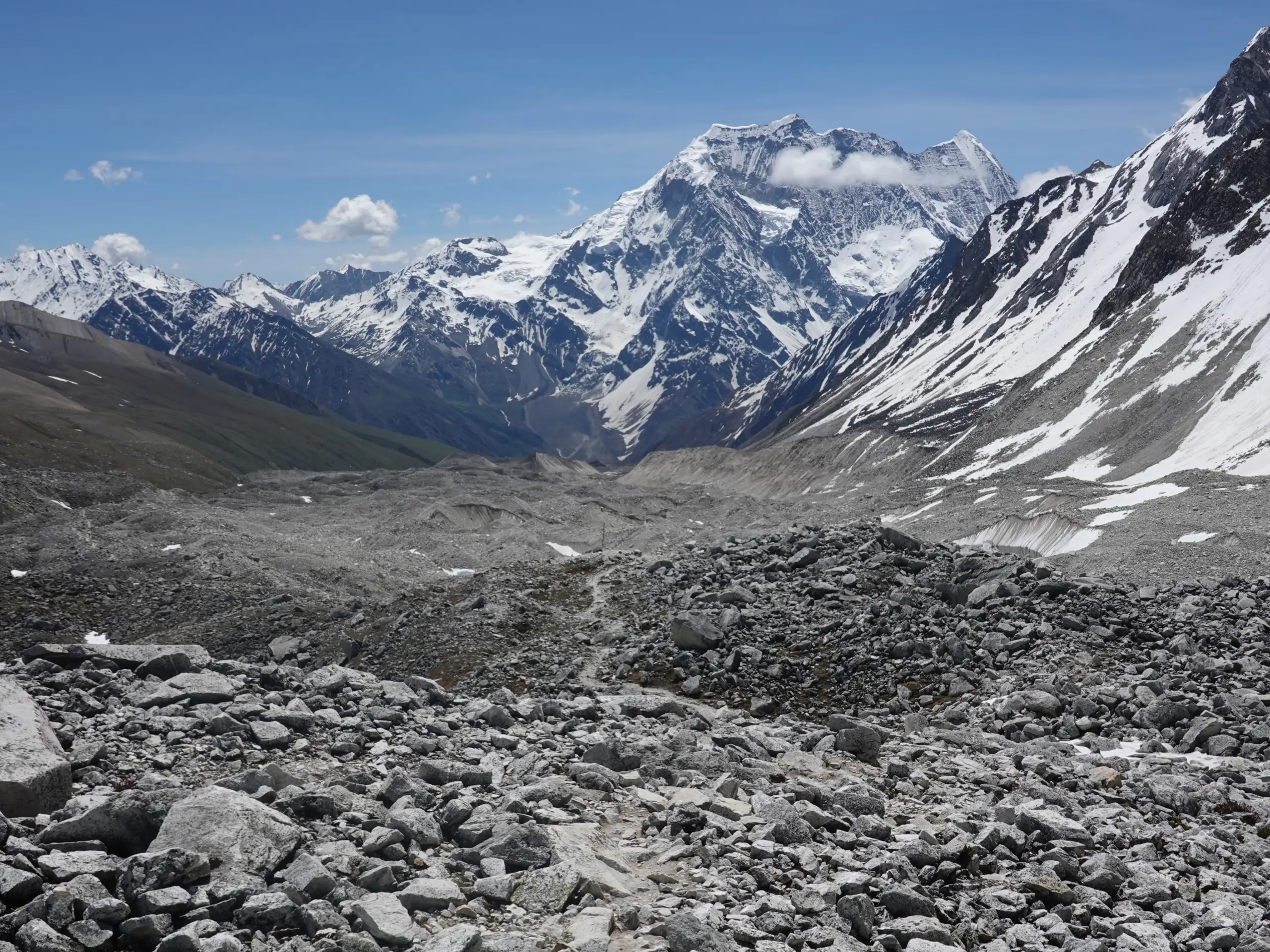
The Manaslu Circuit Trek in Autumn is one of the best trekking experiences in Nepal that offers people the dramatic mountain views, the true Himalayan culture and a relatively quiet trail compared to Everest or Annapurna. It follows Mount Manaslu (8,163 m /26,781 ft), the eighth-highest mountain in the world, around some of the most remote valleys, thick forests, traditional villages, Buddhist monasteries, high alpine meadows and the spectacular Larke Pass. Autumn is generally regarded as the best season, as the weather is stable after the monsoon, the skies are clear and the mountain views are at their best.
Even though the Manaslu region has been getting more and more popular over the past 10 years, it remains much less commercialized compared to the rest of Nepal’s trekking locations. The trail is based on the old trade routes previously used by merchants who travelled between Nepal and Tibet. In the process, trekkers have a chance to see the evolving scenery, exotic cultures and splendid Himalayan views that vary on a daily basis.
This guide will cover all the information you require before setting out on the trek, such as route, permits, weather, daily schedule, places of stay, food, transport and valuable preparation information.
Why Autumn is the Best Season
Autumn Trekking on the Manaslu Circuit is typically done from the end of September to the end of November. The heavy monsoon rains have already died off during this time, and the fresh mountain air and perfect visibility remain.
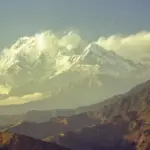
The best month is usually October since the weather is comfortable and the skies are usually clear. The morning scenes of Mount Manaslu, Himalchuli, Ngadi Chuli, Cheo Himal, Himlung Himal, Kang Guru and Annapurna II are usually extraordinary.
In lower villages below 2,000 m (6,562 ft), day temperatures are between 18 C and 24 C. In higher areas like Samagaon (3,530 m /11,581 ft), daytime temperatures are colder, ranging between 8 C and 15 C, and at altitudes close to Larke Pass (5,106 m /16,752 ft), temperatures are below zero before the sun rises, but day crossings are comfortable on sunny days.
The other benefit of autumn is the safety of trails. The monsoon season reduces landslides, rivers can be crossed with ease and the walking conditions are significantly better.
There are also local festivals like Dashain and Tihar, which occur during the fall season, and visitors can see the Nepalese culture in addition to the trekking experience.
Overview of the Trek
The Autumn Manaslu Circuit Trek itineraries are 13-16 days in length, depending on acclimatization days and means of transportation.
This trip begins with a road trip between Kathmandu and Machha Khola. The route then narrowly follows the Budhi Gandaki River into forests, falls, suspension bridges and terraced fields and then into the valleys of the higher Himalayas. Famous villages on the path are Jagat, Deng, Namrung, Lho, Samagaon, Samdo, Dharamsala, Bimthang, Tilije and Dharapani.
The Manaslu Circuit does not increase in elevation at unnatural speeds as in some trekking routes. This gradual climb assists trekkers in adapting to it naturally before reaching the Larke Pass. This is the end of the pass and the picture is totally different. Snow-covered mountains gradually give way to alpine forests before the trail joins the Annapurna Circuit at Dharapani.
Detailed Route Description
The initial day of trekking typically starts at Machha Khola (930 m /3,051 ft). The trail is made of stone steps, rocky paths, villages along the rivers and a lot of suspension bridges.
The official checkpoint is Jagat (1,340 m /4,396 ft), where trekking permits are inspected before entering the restricted area. The landscape beyond Jagat is quite different. Forests become denser, and waterfalls and cliffs prevail in the scene. Deng (1,860 m /6,102 ft) is the lower Hindu settlements are replaced by villages where Tibetan Buddhism is more prevalent.
Namrung (2,630 m /8,629 ft) offers the first panoramas of the mountains. The path then leads to Lho (3,180 m /10,433 ft), where Mount Manaslu is towering above the village.
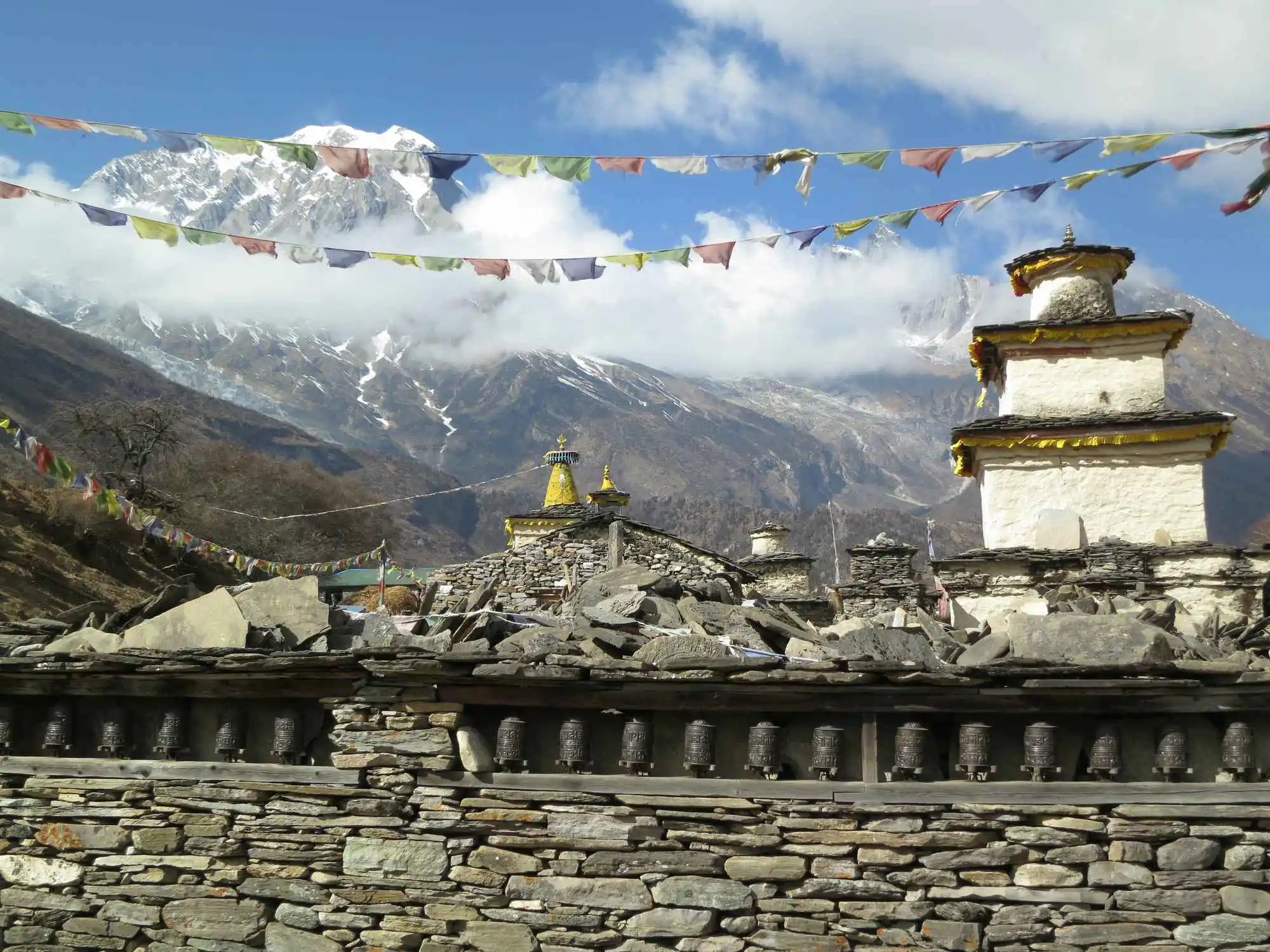
According to many trekkers, Samagaon (3,530 m /11,581 ft) is the cultural center of the trek. The old monasteries, yak fields, prayer wheels, stone houses and the glaciers around it make up a memorable scene. The majority of itineraries will incorporate an acclimatization day in Samagaon. Trekkers frequently walk to Birendra Lake or Manaslu Base Camp, where the body can get used to rising.
Samdo (3,875 m /12,713 ft) is the next village which is a short distance to the Tibetan border. The landscape around is drier and has fewer trees and broader valleys.
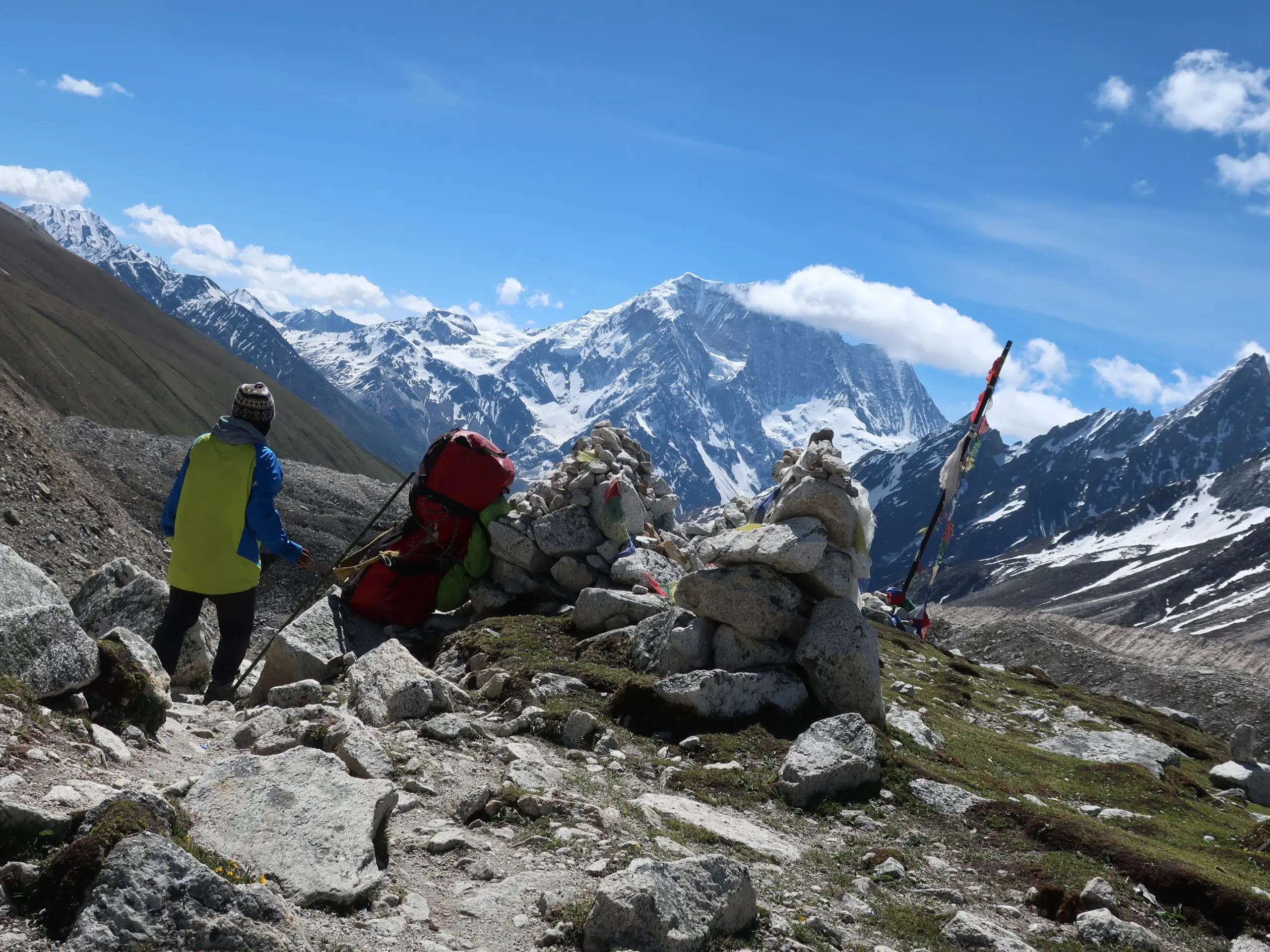
Dharamsala (4,460 m /14,633 ft) is the last point of rest before the Larke Pass. The ascent of the Larke Pass starts before sunrise. This is the most lengthy day of the trek, but as the peak is reached at 5,106 m (16,752 ft), trekkers are rewarded with the spectacular views of a number of Himalayan ranges.
Beyond the pass, the trail goes down to Bimthang (3,590 m /11,778 ft), where forests slowly reappear and the climate is a little warmer.
Manaslu Circuit Trek Permit
All foreigners planning to trek in the Manaslu Circuit Trek Permit require one to go through a registered trekking company since independent trekking is not yet permitted within the restricted zone.
There are three permits necessary. A Restricted Area Permit is compulsory. In autumn, from September to November, the permit will be USD 100 per individual during the first seven days. Each extra day is USD 15.
The Manaslu Conservation Area Project Permit is also required by Trekkers. This permit is charged NPR 3,000 for foreigners. Lastly, it will be necessary to have the Annapurna Conservation Area Project Permit since the trail will be leaving the Annapurna region after crossing the Larke Pass. This permit also costs NPR 3,000.
All permits are usually arranged by your trekking agency. All you need to do is give your passport, Nepal visa details, passport photographs and travel insurance information.
Trek Difficulty
The Manaslu Circuit Trek in Autumn is rated as moderately challenging. Though there is no technical climbing involved, trekkers must anticipate long walking days of between six and eight hours. The crossing of the Larke Pass is apt to require nine or ten hours, according to weather and trail conditions.
The biggest challenge is altitude as opposed to steep climbing. An extra day of acclimatization at Samagaon is very beneficial in terms of safety and adds to the possibility of making a successful attempt.
Individuals who already have experience in previous multi-day hiking are relatively sure that they can manage the route, whereas beginners ought to train by walking, ascending stairs, and engaging in cardiovascular activities for several weeks before arrival.
Accommodation
There are mainly family-operated teahouses in the accommodation. The lower villages offer comfortable twin-sharing rooms, bathrooms, and dining halls, which are warmed up in the evening using traditional stoves.
The more a village is elevated, the less complex its facilities are, since it becomes harder to transport building materials.
In the majority of rooms, there are two single beds, pillows, blankets, and simple furniture. In most villages, there are hot showers, charging, and internet services, which are charged. In spite of the absence of luxury accommodation, the hospitality of the local families makes the trek very welcoming.
Food On the Trek
Food choices are surprisingly varied. Dal Bhat is the most common dish as it includes an unlimited amount of rice, lentil soup, vegetables and seasonal curry. Fried rice, noodles, pasta, momos, Tibetan bread, pancakes, porridge, eggs, soup, potatoes, chapati and simple desserts are other dishes commonly found.
The route has tea, coffee, hot chocolate, lemon tea, ginger tea and bottled or boiled drinking water. Menu prices slowly increase with the altitude since all supplies are carried by porters, mules, or helicopters to the menu. Freshly cooked local food and consumption of a lot of fluids are good to keep the energy levels at par during the trek.
Transportation
The majority of itineraries start with a private jeep or shared jeep from Kathmandu to Machha Khola. The journey normally requires eight to ten hours based on the road conditions. Upon the completion of the trek, the visitors usually drive between Dharapani and Besisahar and then proceed to Kathmandu.
Even though the conditions of roads have been getting better year in year out, some parts of the roads are still considered to be rough, especially after a downpour. It is more comfortable and flexible to ride in a private jeep than to take local buses.
Manaslu Circuit Trek Cost
Knowing the Manaslu Circuit Trek Cost is a significant aspect of planning your trip. The overall budget will be determined by the size of your group, trekking agency, transport, lodging, guide, porter services and individual expenditures. As the Manaslu region is a restricted trekking region, the trek needs to be organized by a registered trekking company, hence the total cost is usually more than unrestricted trekking paths.
To most trekkers who are part of a small group, the overall cost is normally USD 1,200 to USD 1,800 per person. This cost typically incorporates permits, a licensed guide, lodging in teahouses, three meals a day on the trek, land travel and government taxes.
Individual trip tend to be pricier since travel and guiding costs are not distributed among several individuals. A private trek may vary in price depending on the level of service between USD 1,700 and USD 2,500 per person.
Should you contract a porter, you should probably have to spend around USD 25 to USD 35 a day, and a licensed English-speaking guide costs around USD 35 to USD 45 a day. Guide and porter services are often included in the trekking packages of many agencies.
Other than the price of the package, trekkers are advised to bring their own money to spend. They are not usually inclusive of drinks, snacks, charging electronic devices, Wi-Fi, hot showers, laundry and tips.
A personal spending of USD 250 to USD 400 is usually enough to carry around the entire trek.
The Manaslu Circuit Trek Cost is a little more expensive than other trekking paths in Nepal, but the limited accessibility, breathtaking views and the authentic mountain culture make it a valuable experience for many visitors.
Sample Budget Breakdown
Making a realistic budget will prevent any surprises on the trek. The permit fee amounts to an average of NPR 6,000 and the Restricted Area Permit fee is USD 100 within the first seven days of the fall season, with an extra USD 15 per day.
The cost of transportation between Kathmandu and Machha Khola in a private jeep is usually higher than taking a shared jeep, but it is more comfortable. Once the trek is completed, the journey between Dharapani and Besisahar to Kathmandu is usually part of organised packages.
Food on the trek is also more expensive with the elevation. Breakfast costs USD 5-10, lunch USD 6-10 and dinner USD 7-12, depending on the area. The average cost of hot showers is USD 2-5, whereas the average cost of charging batteries is USD 2-4 per device. There are a few villages where internet services can be accessed; however, at elevated levels, the services become unreliable.
Packing for an Autumn Trek
The Manaslu Circuit Trek in Autumn is made a lot more comfortable with proper packing. The climate in Autumn varies greatly with the elevation so, it is best to layer up.
Highly recommended are a moisture-wicking base layer, warm fleece jacket, insulated down jacket, waterproof outer shell, trekking trousers, thermal underwear, gloves, wool hat, neck gaiter, sunglasses and a warm sleeping bag that is rated below freezing.
Shoes are also significant. Good ankle support, well broken-in waterproof trekking boots minimise the likelihood of blisters and injuries. Evenings in the teahouses can be helpful with comfortable camp shoes or sandals.
The size of the backpack required is 30-40 litres when a porter is used. Those carrying all their own equipment may prefer a larger backpack.
Additional items that come in handy are sunscreen, lip balm, trekking poles, reusable water bottle, water purification tablets, headlamp, power bank, personal medications, quick drying towel and basic first aid kit.
Altitude Sickness
One of the primary issues when climbing the Manaslu Circuit Trek during Autumn is altitude sickness since the trail rises over 5,000 m (16,404 ft). The symptoms might include headache, nausea, dizziness, loss of appetite, unusual tiredness and sleeplessness. These are indications that must not be overlooked.
Gradual ascent is the best preventive. An acclimatization day at 3,530 m (11,581 ft) in Samagaon will allow the body to become accustomed to high altitudes prior to climbing to a higher altitude. Risk reduction can also be achieved by drinking a lot of water, having frequent meals, avoiding alcohol and walking slowly.
In case of the symptoms turning serious or even getting worse, the only solution is to go down to a lower altitude. Guides are given basic training on altitude sickness and scout the trekkers during the trip.
Weather During Autumn
Among the greatest reasons why people prefer to go to Autumn in the Manaslu Circuit Trek is the weather. It is usually at the end of the monsoon season in September when the green hills appear. The most popular month is often October, when the skies are clearest, and the weather is most stable. November is a great month since the visibility is good, but temperatures are colder, especially in the mornings and nights.
Snow may fall on or near Larke Pass at 5,106 m (16,752 ft) during late November, although the road is typically open unless a significant storm takes place. Since the weather in the mountains varies rapidly, trekkers are recommended to have warm clothes and waterproofs at all times, irrespective of the weather prediction.
Fitness and Preparation
The trek is made more pleasant with good preparation. The training must commence at least 6-8 weeks before departure. Frequent walking, hiking, climbing stairs, bicycling, jogging and weight-strengthening exercises enhance endurance and leg power.
Training with a heavy pack is also a good idea to train for the long walking days. Though past trekking experience is helpful, it is not mandatory, provided that you are physically fit and have a well-thought-out itinerary.
It is also necessary to be mentally prepared. The conditions in the mountains may vary without any prior notice and flexibility is usually required in the trek.
Travel Insurance
Travel insurance is highly suggested to all people who will be doing the Manaslu Circuit Trek during Autumn. High altitude trekking over 5,100 m (16,732 ft) and emergency helicopter evacuation, medical care and trip interruption should also be included in your policy.
Trekking at high altitude is not a standard feature of many standard travel insurance policies, so make sure you always read the fine print before buying.
Responsible Trekking
The Manaslu region is still one of the most ecologically and culturally important trekking areas in Nepal. As a trekker, one must observe local cultures and the dress code in the villages, seeking permission before taking pictures of the locals and act respectfully within monasteries.
Waste can be reduced by using refillable water bottles in place of single-use plastic bottles. Dumping rubbish until there are good dumping facilities also helps save the delicate mountain environment. The direct impact of assisting locally owned teahouses, guides and porters benefits mountain communities that rely on trekking tourism.
Frequently Asked Questions
Can the beginner do the Manaslu Circuit Trek in Autumn?
Yes. Beginner who are relatively fit can do the trek as long as they train hard and have a schedule that incorporates acclimatization.
Does the trek have mobile network coverage?
Some of the villages in the lower areas have mobile networks, but the service becomes inaccessible at the higher altitudes. Several teahouses have Wi-Fi, which is charged at a higher rate, albeit with a slow connection.
What is the number of days in the Manaslu Circuit Trek?
The average duration of the itineraries is between 13 and 16 days, including transport to and from the trailhead by road and acclimatization days.
Which is better for the Manaslu Circuit Trek in Autumn, October or November?
The month of October is usually the most popular month as it is characterized by steady weather, clear skies and slightly higher temperatures. November is also a great month to hike, as there are fewer people, spectacular mountain scenes and mornings and evenings are cooler.
Conclusion
Autumn Manaslu Circuit Trek is a splendid blend of the Himalayan beauty, enchanting mountain culture and an adventurous trail, which is not as populated as many other popular trekking spots in Nepal. Strolling along old villages, over suspension bridges, through old monasteries and standing on Larke Pass (5,106 m /16,752 ft) is an experience that will remain with trekkers long after they go home.
The trick of a successful journey is to plan it.
Learning the Manaslu Circuit Trek Permit procedures, making a realistic Manaslu Circuit Trek Cost budget, training on the physical aspects and carrying appropriate equipment will help in making the adventure a safe and enjoyable experience.
The Manaslu Circuit is one of the best destinations that travellers can choose to experience during the autumn season in Nepal due to its ability to give them a rewarding experience in the Himalay