
 English
 Dutch
Dutch Japanese
 Hindi
Hindi Italian
 Spanish
 French
 German
 Chinese
 Korean
 Arabic
 Hebrew
 Russian
 Portuguese
 Danish
 Czech
Czech Polish
 Swedish
Annapurna Base Camp Trek in Spring is one of the most pleasant trekking activities in Nepal. Thousands of trekkers go to the Annapurna region every year in the months of March through May to have a clear view of the mountain, the warm weather, and forests with the rhododendron flower blooming. The trail is not the one that is used in the other seasons, but instead it is the one that turns green hills into colorful landscapes with red, pink, white and purple flowers all over the forests around.
The spring is said to be the busiest time of the year in the trekking sector due to the fact that the weather is usually stable, visibility is great and nature is at its best. There is still snow in the high mountains and lower areas are turning greener and warmer. The combination forms beautiful scenery along the way.
In contrast to the colder seasons of the year or the rainy summer, spring offers pleasant conditions to walkers, both beginner and experienced trekkers. Most of the trails are dry, tea houses are completely open and transportation is more stable. These factors render the Annapurna Base Camp Trek in Spring the right choice for individuals who desire to have a mix of adventure, comfort and nature.
This guide tells you all you need to know before you plan to trek. You will hear about the time the crops are in blossom, the weather, conditions on the trail, wildlife, photography, accommodation, preparation and common-sense travel tips. If it is your first trek in the Himalayas or in Nepal in general, you have to know what spring has to offer, so that you can plan a satisfying experience.
Why Spring Is the Best Season for Annapurna Base Camp
Visiting the Annapurna region during the Spring season is generally regarded to be the best period to visit the Annapurna Base Camp trek due to good weather, colorful scenery and clear mountain view. It is not like winter and the weather is pleasant enough to spend days trekking, and the weather is usually clear to see panoramic Himalayan views. The spring also brings changes to the forests through rhododendrons, the national flower of Nepal, which is in blossom and brings a colorful landscape, which is exclusive to the season.
The increase in the length of the daylight period allows trekkers to walk more slowly and enjoy the environment. Farming activities start after winter and make villages lively and wildlife becomes lively. Stable weather also implies that there are fewer transportation interruptions, and spring is one of the most consistent times to accomplish the trek.
Understanding the Rhododendron Bloom Season
The Rhododendron Bloom Trek in Nepal is influenced by the season as well as the altitude of the trail. The rhododendron blossoms tend to bloom in early March and last until late April or early May. Lower areas warm up and so the flowers bloom several weeks earlier than higher forests, which hit their peak several weeks later. This slow flowering enables trekkers who will be visiting at various times to enjoy colorful forests somewhere along the route.
There are several rhododendron species in the Annapurna Conservation Area having red, pink, white and purple flowers. Hot weather can cause an earlier bloom, whereas cold winters can delay the flowering. Strolling in these woods in spring brings color and freshness to all the parts of the walk.
Where You Will See the Best Rhododendron Forests
The rhododendron forests are experienced on a large part of the lower and middle part of the route by trekkers on the Annapurna Base Camp Trek in Spring. Most stunning areas of blooming are typically located between 1,800 meters (5,906 feet) and 3,000 meters (9,843 feet), and the climate of the areas is very favorable to these trees. Other villages, such as Ghandruk, Chhomrong, Sinuwa, Bamboo and Dovan lie in the forests filled with bright flowers in spring.
Above Deurali, 3,230 meters (10,597 feet), the rhododendron trees slowly vanish, and the scenery of alpine origin takes over the trail. When trekkers finally arrive at the Annapurna Base Camp at 4,130 meters (13,550 feet), glaciers and Himalayan peaks of great heights stand in the place of the flowering forests.
Weather During the Annapurna Base Camp Trek in Spring
Annapurna Base Camp Trek Weather in the Annapurna Base Camp Trek in Spring is normally stable and thus, it is one of the most comfortable seasons to do a trek. March is cool and mornings and evenings are chilly, with daytime temperatures in lower altitudes typically ranging between 10 °C and 20 °C. On higher altitudes, it might still snow occasionally and might be as cold as 3,000 meters (9,843 feet) and above.
It is usually thought that the best month of the year is April since the weather is warmer and the rhododendron forests are at their peak. In May, afternoons are a little warmer and clouds are more frequent with the monsoon season at hand. Though spring is generally a good season, it can often turn out to be erratic in the Himalayas, meaning that waterproof outfits and warm-ups must always be in your backpack.
Mountain Views in Spring
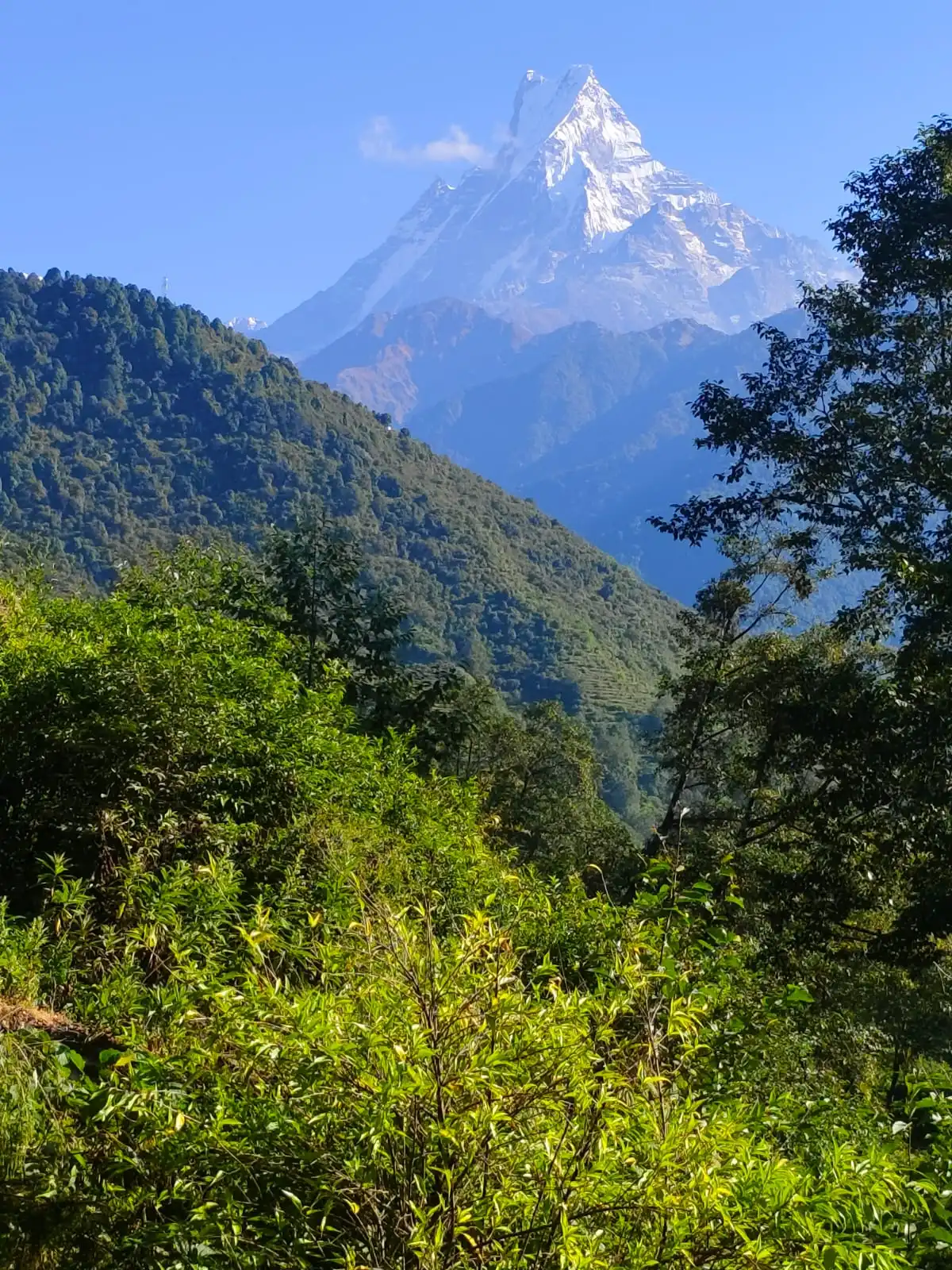
The Spring Annapurna Base Camp Trek is a trek that offers excellent scenery of the Annapurna mountain range to the trekkers as they go. Mornings are often clear with good visibility, hence visitors can have snow-capped peaks before the afternoon clouds form. As you ascend the mountain, Annapurna South, Machapuchare, Hiunchuli, Gangapurna and Annapurna I are seen in various positions. The scenery is always changing as each day has a different angle of these mountains.
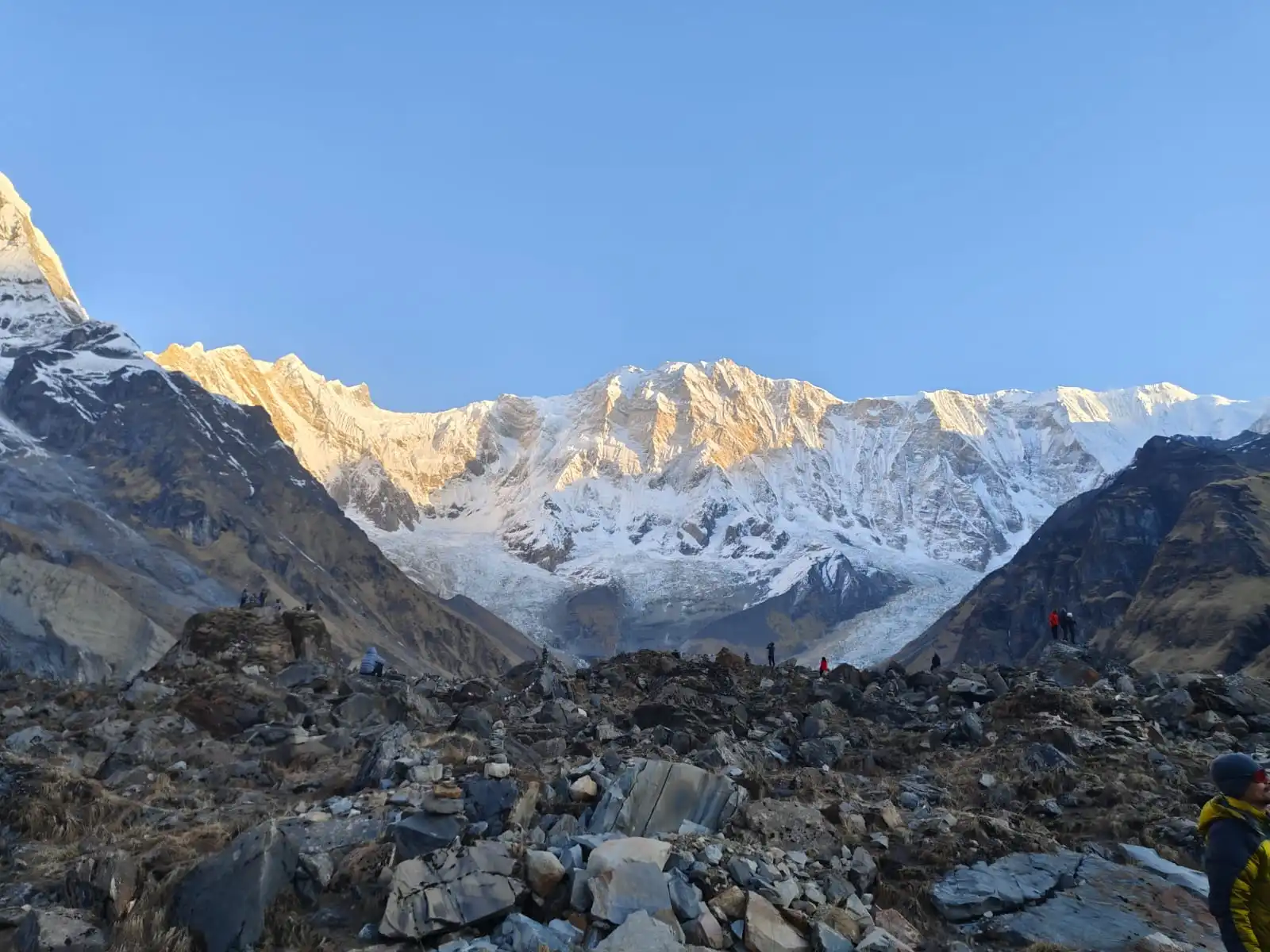
Sunrise is mainly used in photography due to the fact that the first light washes the snow-covered peaks with beautiful colors. Once they arrive at the Annapurna Base Camp at 4,130 meters (13,550 feet), the trekkers are engulfed by enormous mountains, glacier and spectacular cliffs and this is one of the most stunning mountainous landscapes in Nepal.
Trail Conditions During Spring
Another factor that makes the Annapurna Base Camp Trek a favorite destination during the Spring is the weather at the base camp. The majority of the trail is dry and easy to hike as opposed to the slippery weather encountered during the monsoon season. There are usually well-maintained stone stairs, suspension bridges and forest trails and mountain paths that are safe enough to be trekked upon.
Little muddy spots can be found at elevations nearer to the surface between Deurali and Machapuchare Base Camp (3,700 meters /12,139 feet), where the trail is occasionally impacted by melting snow. Crossings of rivers are generally easy due to the fact that the water is not as high as in summer. Good-quality trekking boots with good grip are beneficial in making the whole journey comfortable and safe.
Flora and Wildlife Along the Trail
In addition to purple rhododendrons, the spring is full of greenery and flowering plants in the Annapurna area. It is also possible to view wildlife in the Annapurna Conservation Area during the Rhododendron Bloom Trek in Nepal. On a stroll through the serene forests, trekkers can see Himalayan monals, the national bird of Nepal; colorful pheasants; langur monkeys; and different types of butterflies.
The forest floor is covered with wild orchids, ferns, mosses and flowering shrubs that make the forest rich in nature. Though the conservation area has Himalayan black bears and leopards, they are seldom observed, as they tend to avoid trekking paths. Birdwatching is usually done in the morning, but most birds are most active soon after the sun rises.
Accommodation During Spring
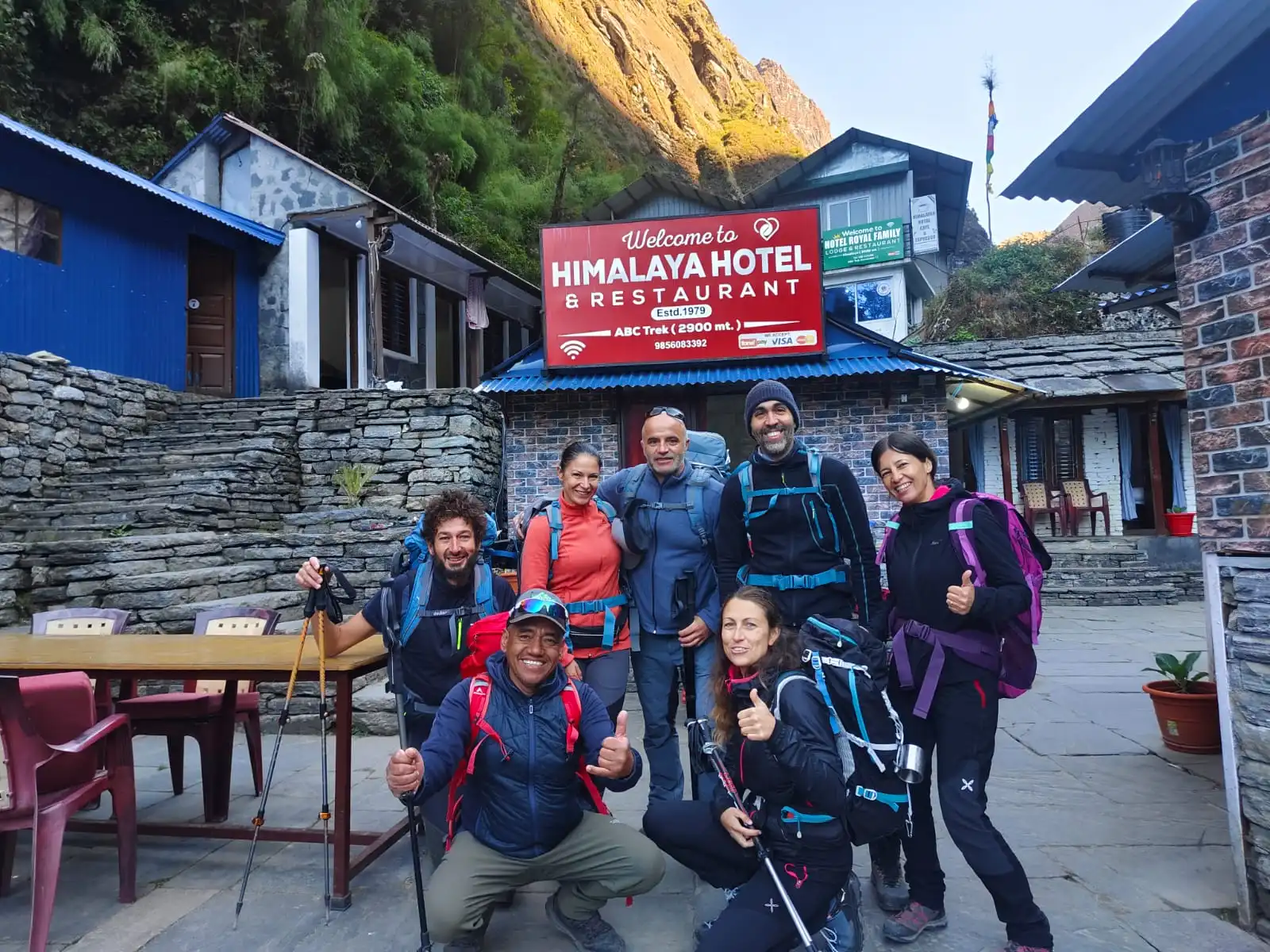
The only areas where accommodation can be made during the Annapurna Base Camp Trek in Spring are in the locally operated tea houses, which offer a good place to have a rest after the day’s walk. These lodges have simple room sharing of twins where there are beds, pillows, blankets and shared bathrooms. Trekking season is mainly the busiest during spring in late March and April and therefore, tea houses tend to be full. Booking a room via a trekking agency or arriving at your destination early in the afternoon will make you more likely to find a room.
Dining halls are typically warmed by a central stove in the evening and provide a cozy environment in which the trekkers may rest and socialise. The higher you are, the simpler the facilities are, as supplies are delivered by porters or mules. The luxury services are few, but the hospitable treatment and the serene mountain environment make any stay a pleasant experience of the trek.
Food and Drinking Water
Consuming healthy food is a factor that will help to stay energized during the Spring Annapurna Base Camp Trek. Tea houses also have freshly cooked food every day with menus containing both Nepali and simple international food. Dal Bhat, which is comprised of rice, lentil soup, vegetables and pickles, is the most popular meal as it offers long-lasting energy and is usually served on a free-refill basis.Fried rice, noodles, pasta, soups, potatoes, eggs, pancakes, porridge and bread are other popular options.
Hot beverages like ginger tea, lemon tea, coffee and hot chocolate are easily accessible and keep trekkers warm. The consumption of sufficient water is also essential in higher altitudes. Reusable bottles are refilled and water is purified by use of a tablet, filter or ultraviolet purifier by most trekkers whilst boiled drinking water is found in most tea houses.
Photography During the Rhododendron Bloom
The Rhododendron Bloom Trek in Nepal offers great chances to the photographers since the path is a combination of the colorful forests and dramatic Himalayan landscapes. In the springtime, rhododendron trees are in blossom and form colorful foregrounds that are contrasted with snow-covered mountains. The most suitable time to take photographs is early in the morning since the views of the mountains are clear and the sun is giving a soft, natural color. Late afternoon is also a good time to give good lighting since the sun is shining through the flowering forests.
In popular photography, Ghandruk to Chhomrong, Sinuwa and Bamboo forests, and the open valley near Machapuchare Base Camp at 3,700 meters (12,139 feet) are popular photography sites. The altitude of Annapurna Base Camp is 4,130 meters (13,550 feet) and offers a breathtaking view. It is advisable to carry additional camera batteries and a light tripod due to such cold conditions that may shorten battery life.
Crowds During Spring
The Spring season of the Annapurna Base Camp Trek has a lot of trekkers due to the favorable weather,
forests in blossom and the superb views of the mountain. Consequently, late March until April are the busiest times of the trails. Tea houses, vantage points and common resting points usually turn into an active activity at this time and the atmosphere becomes very cordial as visitors from various parts of the world interact with one another and exchange their experiences.
Although more trekkers are present, the trail seldom seems congested all day due to the natural dispersal of groups on the trail. It is best to walk early in the morning when there are fewer people around to enjoy quieter parts of the walk before other large groups. It is also a good idea to make a booking in accommodation in advance during the peak weeks to avoid the problem of not finding rooms available at the end of each day of the trek.
Fitness Preparation for Spring Trekking
Getting ready to make an Annapurna Base Camp Trek in Spring will make the trip much safer and enjoyable. The trek does not entail any technical climbing experience; however, it contains several days of uninterrupted walking, steep ascending trails, descending trails and long stone steps. It is strongly advised to develop your fitness 4-6 weeks before departure. Hiking, brisk walking, jogging, cycling, swimming or climbing stairs are some activities that enhance stamina and leg strength.
Even basic exercises such as squats and lunges will train your muscles on uneven mountain terrain. When on the trek, it is better to walk slowly and steadily than to hurry. A comfortable pace will enable your body to save energy as you slowly adapt to the rising altitude in the journey.
Altitude and Acclimatization
The Annapurna Base Camp Trek has a peak of Annapurna Base Camp (4,130 meters /13,550 feet). The higher you go, the less oxygen there is and therefore acclimatizing is also a significant aspect of the hike. Most trekkers do not have any significant issues, although some can have mild symptoms, including headache, fatigue, loss of appetite or sleep disturbance. These symptoms are usually relieved through slow walking, drinking as much water as possible and balancing eating and giving time to your body to adapt.
There is also a risk of altitude sickness which can be avoided by avoiding alcohol and getting enough sleep. In case symptoms are severe or are still worsening, it is safer to move to a lower elevation. It is important to be conscious of your body and to obey your guide to make sure that you have a safe and enjoyable trekking experience.
What to Pack for Spring
To have a comfortable Annapurna Base Camp Trek in Spring, it has to be packed wisely as the climate of the lower villages and the higher mountain regions differ significantly. The most effective one is layered clothing, which will enable you to adapt to fluctuating weather patterns throughout the day. Thin trekking outfits come in handy on warm afternoons, but thermal garments, insulated jackets, gloves, warm hats and heavyweight socks are used on cold afternoons and evenings. A waterproof jacket and rain cover are handy since there might be some rain showers occasionally in the spring.
A good pair of comfortable trekking boots with good grip will be required for walking on stone steps and rough trails. Trekking poles help to take the pressure off your knees on long descents. Other items that should be included are sunglasses, sunscreen, lip balm, reusable water bottle, headlamp, power bank, personal medicines and a basic first aid kit.
Permits Required for the Trek
Trekking companies are required to get the necessary permits before commencing the Annapurna Base Camp Trek in Spring. The primary one is the Annapurna Conservation Area Permit (ACAP) that permits entrance into the conservation area. A Trekkers Information Management System (TIMS) card might also be necessary, depending on the new trekking regulations. Permit regulations are subject to change, so the latest ones should be consulted before travelling, or they can be obtained by registering with the trekking agency.
Remember to carry printed copies of your permits and passport since they are inspected at various locations on the route. The paperwork can be done in Kathmandu or Pokhara before the journey and this makes the journey a lot easier.
Transportation to the Trailhead
The Annapurna Base Camp Trek in the Spring begins with most of the trekkers arriving at Kathmandu and then proceeding to Pokhara. You have an option of a domestic flight (approximately 25 minutes) or a tourist bus (six to eight hours on average, depending on the road conditions). A jeep or personal car will drive you to the trailhead in Pokhara.
Depending on your itinerary, popular entries are Nayapul, Kimche, Ghandruk and Jhinu Danda. Upon finishing the trek, the majority come back to Pokhara via Siwai or Jhinu Danda. Most of the time, the roads are good in spring but some slight delays may be experienced due to maintenance or weather.
Responsible Trekking During the Blooming Season
The Rhododendron Bloom Trek in Nepal traverses through the conserved Annapurna Conservation Area; thus, responsible trekking is a necessity. Tourists are advised not to walk off the trails to protect delicate plants and not to pick rhododendron flowers or to disturb the animals. The reusable water bottle will reduce the amount of waste generated by people in the mountain villages by carrying the water bottles with them rather than purchasing single-use plastic bottles.
Any rubbish must be packed or disposed of in the right collection points. Local communities also receive support through supporting tea houses locally owned, employing licensed guides and porters. Caring about the surroundings and adherence to the local practices can ensure that future generations of trekking enjoy the natural beauty of the area.
Local Culture Along the Route
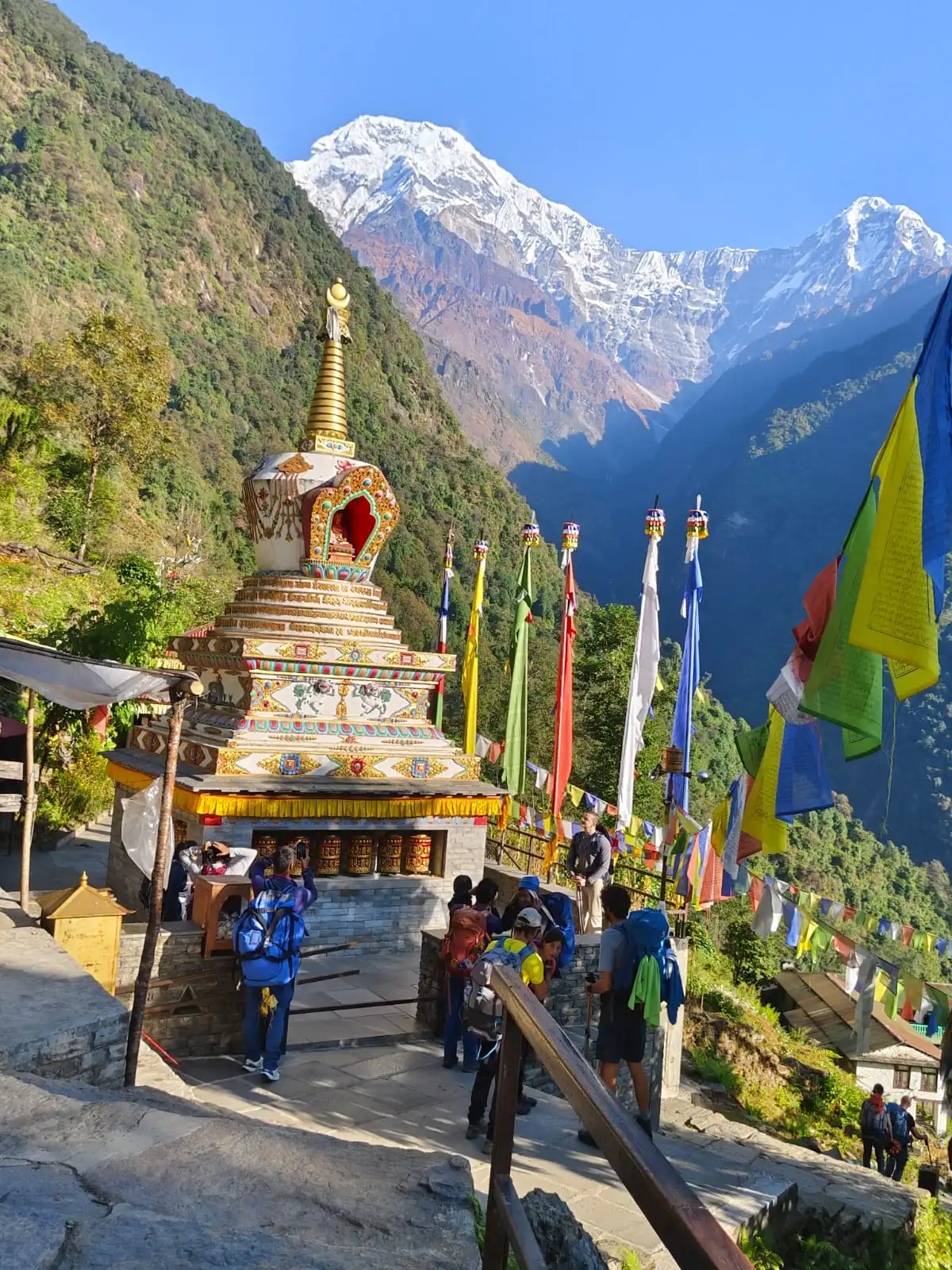
The Annapurna Base Camp Trek in Spring has more than just beautiful scenery to offer. It is also a chance to get a feel of the Gurung and Magar cultures. Ghandruk and Chhomrong are villages with traditional stone houses, terraced farms and friendly tea houses that are operated by local families. The cultural heritage of the area can be noticed in prayer flags, small monasteries and local shrines.
In spring, farmers get to work in the fields, bringing more life to the village. Trekkers ought to adhere to the local traditions by treating people with courtesy, seeking their permission before capturing pictures of people and patronizing local businesses during the trip.
Common Challenges During Spring
Even though the conditions in the Spring Annapurna Base Camp Trek are great in terms of trekking, visitors must anticipate a handful of seasonal difficulties. Tea houses are usually full during the month of April and it is good to arrive early or make a reservation. Mornings are usually bright and clouds often grow up in the afternoon, making the mountains less visible. Early morning walking offers the most excellent opportunities for clear views.
Pollen of flowers can also be a problem for some trekkers, as they might have allergies; it is better to carry allergy medication in case of necessity. The weather can also fluctuate rapidly between the lower villages and higher altitudes, and multi-layered clothing is also significant to help keep one comfortable during the trek.
Is Spring Better Than Autumn?
When reserving the most favorable season to visit the Annapurna Base Camp Trek, many trekkers compare autumn and the season of spring in the same year. Both are good places to have nice weather and good trekking conditions, although they have varied advantages. Spring is characterized by colorful rhododendron forests, fresh plants and pleasant temperatures during the day.
There is also an increase in the activities of wildlife following the winter period and the landscape appears alive. Autumn is an ideal time to see them slightly better due to the fact that the monsoon has already passed, but the trees are not full of flowers. Spring can be a better season to choose if you are fond of colorful landscapes and moderate temperatures.
Who Should Choose This Trek in Spring?
The Annapurna Base Camp Trek in Spring is suitable for beginners, experienced trekkers, families with older children, couples, solo travelers and small groups. The trek can be done by anyone who has a fair degree of fitness in terms of being able to walk at a slow pace, using a well-thought-out itinerary. Spring is characterized by pleasant weather, scenic views and favorable trail conditions and first-time trekkers will find it easier to enjoy the experience.
A professional guide will enhance safety and can also offer valuable information about the local culture, wildlife in the mountain, and the natural environment. Spring is a great option for people who want to have a rewarding Himalayan experience.
Final Thoughts
The Annapurna Base Camp Trek in Spring is a mixture of stunning rhododendron forests, mild weather, hospitable villages and amazing Himalayan scenery into a memorable trek experience. The landscape varies with each day, and there is something new to be experienced as we travel into the green valleys up to the base camp of Annapurna (4,130 meters /13,550 feet).
Adequate preparation, appropriate attire and time to acclimatize make the journey safe and comfortable. The experience is also improved with respect to local culture and conservation of the natural environment. When you wish to experience colorful forests with fantastic mountainous scenery, spring is among the ideal seasons to visit the Annapurna region.